
For decades, career success followed a familiar formula.
Study hard. Get hired. Climb steadily. Retire comfortably.
That model is beginning to collapse.
Artificial intelligence is automating repetitive work, companies are restructuring faster than ever, and the traditional idea of job security is becoming increasingly fragile. In response, one category of skills is quietly becoming more valuable than almost any university credential or technical certification.
Entrepreneurial skills.
Once viewed as abilities reserved for startup founders and business owners, entrepreneurial thinking has now become essential across nearly every sector of the modern economy.
In 2026, entrepreneurship is no longer simply about building companies.
It is about learning how to create value independently when markets stop behaving predictably.
What Are Entrepreneurial Skills?
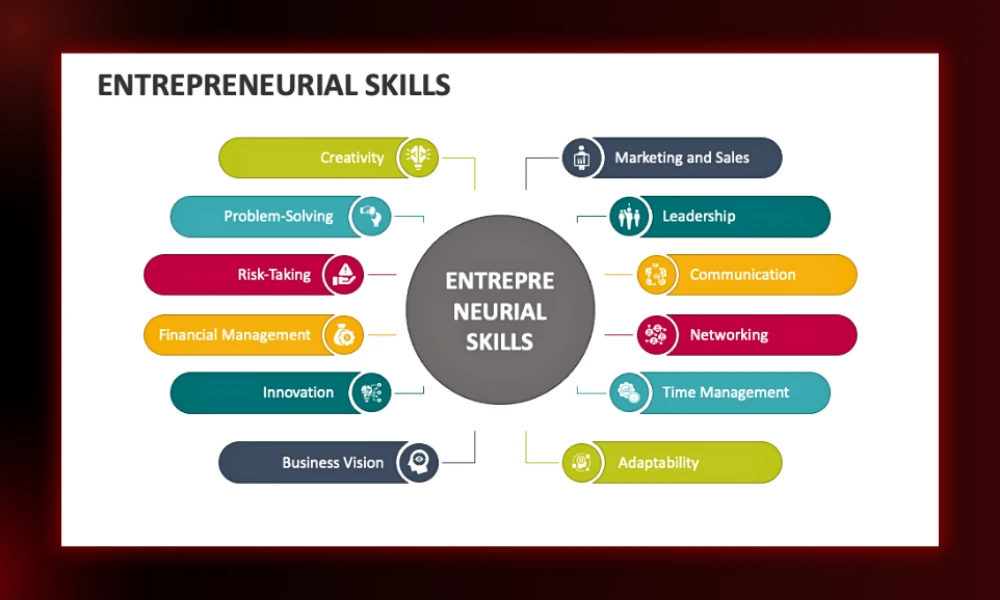
Entrepreneurial skills are the practical abilities that allow individuals to identify opportunities, solve complex problems, manage uncertainty, and transform ideas into value-generating outcomes.
Unlike traditional professional skills that focus primarily on execution, entrepreneurial skills center around ownership.
The ability to think independently rather than simply follow systems.
According to Indeed Career Guide, entrepreneurship combines leadership, financial literacy, communication, strategic thinking, and business management into one highly transferable skill set.
But in today’s economy, the definition has expanded far beyond that.
The Modern Economy Is Rewarding Entrepreneurial Thinking
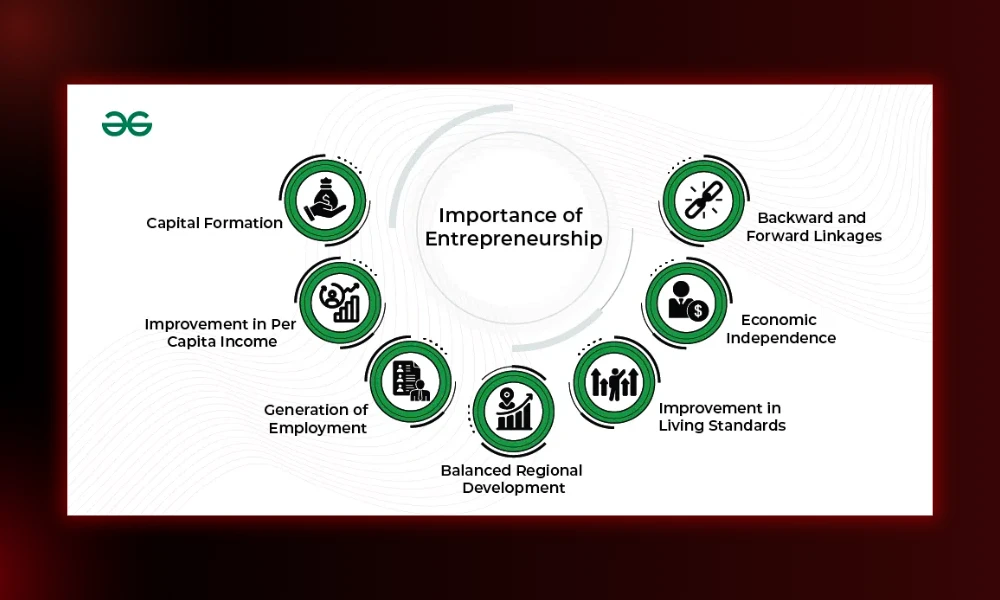
The biggest misconception around entrepreneurship is assuming only founders need entrepreneurial skills.
That is no longer true.
Large corporations increasingly seek employees who think like founders internally.
This shift has created growing demand for what business strategists call intrapreneurship, employees who can solve problems independently, identify growth opportunities, and operate with minimal supervision.
Companies no longer reward execution alone.
They reward initiative.
Organizations such as Google and Amazon have spent years building internal cultures designed around entrepreneurial decision-making because innovation rarely comes from rigid systems.
It comes from individuals willing to think independently.
10 Entrepreneurial Skills Defining Success in 2026
1. Opportunity Recognition
Most professionals react to information.
Entrepreneurs identify patterns.
Recognizing emerging consumer behavior before markets fully adjust often becomes the difference between scalable growth and irrelevance.
Companies like Airbnb and Uber were built because founders saw behavioral shifts before established industries noticed them.
Opportunity recognition remains one of the most valuable modern business skills.
2. Financial Intelligence
Poor financial understanding continues to destroy more businesses than bad products ever will.
Strong entrepreneurs understand:
- cash flow management
- operating margins
- capital allocation
- customer acquisition costs
- profitability forecasting
Research published by McKinsey Digital Insights consistently shows financially disciplined businesses outperform competitors chasing aggressive unsustainable growth.
Revenue without financial discipline creates fragile businesses.
3. Sales Ability
Every entrepreneur eventually becomes a salesperson.
Before products scale, founders constantly sell ideas.
They sell to:
- customers
- investors
- employees
- partners
- suppliers
- media outlets
No matter how innovative a business becomes, sales remain the engine behind survival.
No revenue means no company.
4. Adaptability
Markets now change faster than planning cycles.
Entire industries are restructuring every quarter.
The rise of generative AI has accelerated this process dramatically.
Businesses unable to pivot fast enough are disappearing.
Adaptability has quietly become one of the strongest competitive advantages modern entrepreneurs possess.
Rigid thinking is becoming economically expensive.
5. Strategic Problem Solving
Entrepreneurs constantly make decisions with incomplete information.
Unlike traditional corporate environments where systems already exist, entrepreneurship often means building solutions under uncertainty.
Successful founders develop the ability to make imperfect decisions quickly while minimizing downside risk.
In rapidly shifting markets, speed often matters more than certainty.
6. Leadership
Scaling any business eventually becomes a people problem.
Founders must learn how to:
- recruit strong talent
- delegate effectively
- create accountability systems
- build execution culture
- align teams around shared goals
Leadership determines whether a company can scale beyond its founder.
The best ideas rarely fail because of product weakness.
They fail because leadership breaks down.
7. Marketing Intelligence
Modern business competition begins long before transactions happen.
The internet has created an attention economy where visibility often matters as much as product quality.
Entrepreneurs increasingly need strong understanding of:
- search engine optimization
- content marketing
- paid advertising
- consumer psychology
- brand positioning
The companies controlling attention often control market share.
Distribution now drives growth.
8. Digital Literacy
Modern entrepreneurs increasingly operate through software rather than physical infrastructure.
Understanding digital systems allows businesses to scale faster with lower operational overhead.
Founders now rely on platforms such as:
Digital literacy has become operational leverage.
Technology compounds execution speed.
9. Resilience
Startup failure is often psychological before it becomes financial.
Entrepreneurs regularly face:
- rejection
- slow growth
- financial pressure
- uncertainty
- market resistance
The ability to maintain momentum through prolonged uncertainty often separates long-term winners from early exits.
Resilience rarely gets attention.
But it quietly determines survival.
10. Independent Decision Making
The modern workforce increasingly rewards individuals who require less oversight.
Entrepreneurial thinking means learning how to make decisions independently while accepting accountability for outcomes.
This applies far beyond startup founders.
Increasingly, companies value employees who think like operators instead of task executors.
Ownership mentality is becoming career leverage.
Why AI Is Changing Which Skills Matter
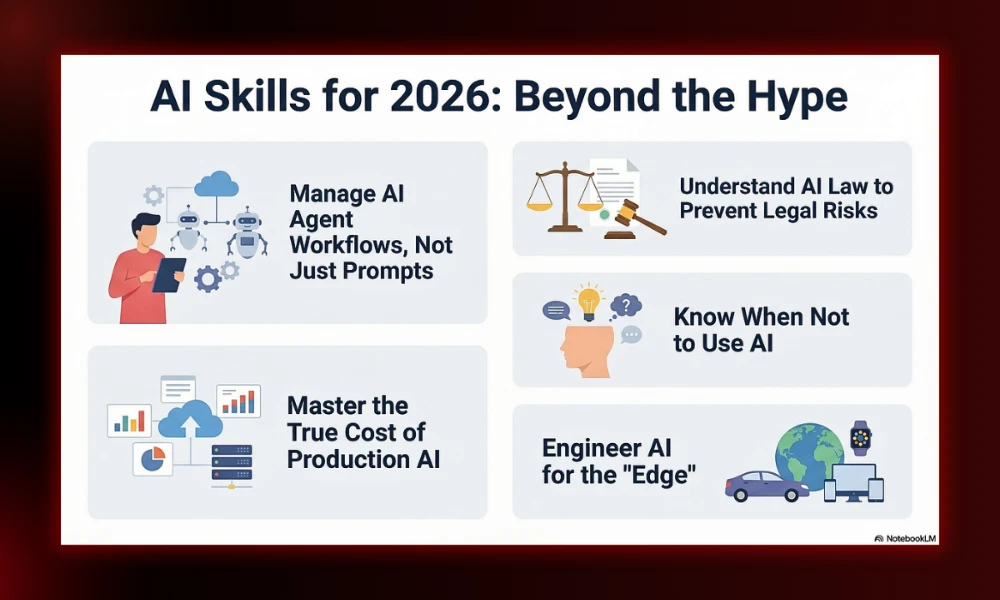
Artificial intelligence is fundamentally changing labor economics.
AI can now:
- write content
- analyze large datasets
- generate code
- automate customer support
- process repetitive workflows
But AI still struggles with human judgment.
It cannot fully replace:
- creativity
- leadership
- emotional intelligence
- strategic thinking
- long-term decision making
- risk management
This is creating a major workforce transition.
The professionals who combine AI systems with entrepreneurial thinking will dominate the next decade.
Execution is being automated.
Decision making is becoming more valuable.
Why Companies Now Want Entrepreneurial Employees
One major shift traditional educational resources often ignore:
Companies increasingly hire for entrepreneurial behavior.
Modern employers value professionals who can:
- identify growth opportunities
- improve internal systems
- solve operational bottlenecks
- experiment independently
- think commercially
This shift explains why entrepreneurial skills now matter even for people who never intend to launch businesses.
The future employee increasingly looks like a founder.
How To Develop Entrepreneurial Skills Faster
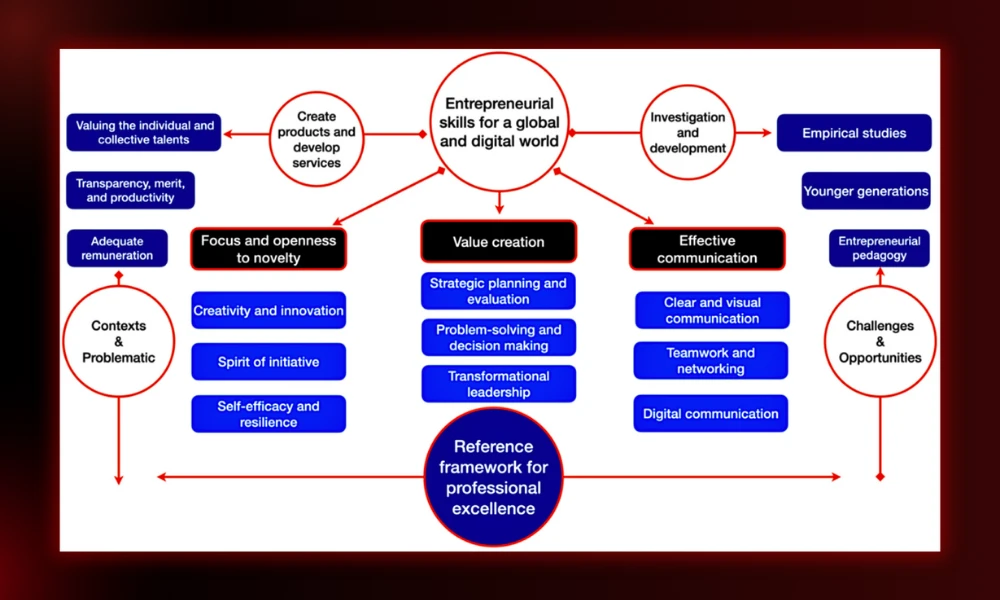
Entrepreneurship is not learned through theory alone.
The fastest growth comes through direct execution.
Strong ways to build entrepreneurial skills include:
- launching side projects
- learning financial modeling
- studying startup case studies
- building online businesses
- improving communication ability
- joining founder communities
- learning digital marketing systems
Platforms like Coursera and edX continue to provide structured business education, but practical execution remains the fastest teacher.
Experience compounds faster than theory.
Entrepreneurial Skills Are Becoming Economic Advantage
The economy is changing faster than institutions can adapt.
Artificial intelligence is automating execution work.
Traditional job security is weakening.
Companies are restructuring aggressively.
Competition is becoming increasingly global.
In this environment, entrepreneurial skills are becoming less about starting companies and more about maintaining economic independence.
The individuals capable of identifying opportunities, solving problems independently, and creating value without waiting for permission will increasingly control future economic outcomes.
Entrepreneurship is no longer simply a career path.
It is becoming a survival strategy.
Frequently Asked Questions
What are entrepreneurial skills?
Entrepreneurial skills are abilities that help individuals identify opportunities, solve problems, manage uncertainty, and create economic value through independent decision-making
What are the most important entrepreneurial skills?
The most important include leadership, financial literacy, adaptability, communication, sales ability, and strategic thinking.
Why are entrepreneurial skills important in 2026?
Because automation and AI are reshaping work, entrepreneurial thinking helps individuals remain adaptable and economically competitive.
Can employees benefit from entrepreneurial skills?
Yes. Companies increasingly reward employees who think independently, solve problems proactively, and identify business opportunities.
How do entrepreneurs build these skills?
Entrepreneurs develop skills through real-world execution, startup experience, business education, networking, and continuous experimentation.
Are entrepreneurial skills only useful for startups?
No. Entrepreneurial thinking is becoming valuable across corporations, freelancing, consulting, leadership roles, and digital business environments.