AI Summary
This article walks through the best brand ads and campaigns of the FIFA World Cup 2026, the first joint-hosted World Cup across the United States, Canada, and Mexico. It covers the standout work from the tournament LEGO’s 314-million-view trophy-building spot with Messi, Ronaldo, Mbappé, and Vinícius Jr.; Adidas’s “Backyard Legends” cinematic featuring Messi; Nike’s “Rip the Script” starring Lamine Yamal and Rodrygo Goes; Coca-Cola’s “All the Feels” anthem featuring J Balvin, Amber Mark, Steve Vai, and Travis Barker; Lay’s celebrity WhatsApp group featuring Messi, Beckham, and Steve Carell; Budweiser’s “Budstalgia” 40-year sponsorship anniversary; Michelob Ultra’s official beer campaign; and Brahma’s Brazilian national pride campaign. It also explains what tied the best campaigns together a shift from “sponsorship visibility” to “cultural participation” that defined 2026 World Cup marketing. Written for marketers, brand strategists, and anyone curious about what actually broke through in the biggest advertising moment of the year.
The Short Version
The 2026 World Cup was the biggest brand marketing moment of the year.
Three host countries. Forty-eight teams. Argentina vs. Spain in the final. And more than $2 billion in brand ad spending across the sponsors trying to be part of it.
Most of the campaigns disappeared into the noise.
A few of them broke through so hard they became the story.
This is the article about which brands got it right.
Key Takeaways
- LEGO’s “Trophy Build” film with Messi, Ronaldo, Mbappé, and Vinícius Jr. hit 314 million views in 24 hours across the players’ social accounts, the highest single-day reach of the tournament.
- Adidas dropped first with “La Preparación Americana” and “Backyard Legends,” ultimately selling roughly $292 million in 2026 World Cup products before kickoff.
- Nike’s “Rip the Script” starring rising stars Lamine Yamal and Rodrygo Goes visualized their training as cultural art forms from their home countries.
- Coca-Cola’s “All the Feels” platform anchored its campaign in a reworked version of Van Halen’s “Jump” featuring J Balvin, Amber Mark, Steve Vai, and Travis Barker.
- Lay’s ran the year’s most talked-about celebrity activation a fan WhatsApp group featuring Messi, Beckham, Steve Carell, Alexia Putellas, and Thierry Henry.
- Budweiser’s “Budstalgia” celebrated 40 years of World Cup sponsorship with a nostalgia-driven campaign featuring Haaland and Klopp.
- The tournament’s biggest shift: brands moved from sponsorship visibility (logo on the field) to cultural participation (creating the moments fans actually talked about).
What Changed at This World Cup
Every World Cup redefines what brand marketing looks like at the highest level.
At the 2010 South Africa World Cup, it was Nike’s “Write the Future” a single epic film that carried the entire sponsorship story.
At 2014 Brazil, it was Adidas’s “House Match” and the emergence of digital campaigns as central rather than supplementary.
At 2018 Russia, brands started leaning into cultural moments in real time.
At 2022 Qatar, everything went social-first and creator-native.
At 2026, a genuinely new pattern emerged: the campaigns that worked treated sponsorship as an invitation to cultural participation, not visibility.
The best ads of 2026 weren’t the biggest logos on the field. They were the moments fans wanted to be part of. The WhatsApp group they wanted to be in. The LEGO set they wanted to build. The commercial they wanted to share not because it was clever, but because it made them feel something specific about football.
That’s the story of this tournament’s brand work.
The Big Winners
LEGO: The 314-Million-View Trophy Build
The campaign that broke through hardest wasn’t from a beer brand or a sportswear company.
It was from LEGO.
The film placed Messi, Ronaldo, Mbappé, and Vinícius Jr. around a table together an unthinkable combination in any other context building a LEGO version of the World Cup trophy. The four of them, quiet, focused, doing the work.
At the end of the film, a child completes the build.
That was the whole ad.
Created by LEGO’s in-house team and Wieden+Kennedy Amsterdam, the campaign generated 314 million views across the players’ social accounts within 24 hours. Fans described it as a moment “generations will talk about.”
What made it work: LEGO didn’t lean on football culture. They put A-list players in service of what LEGO actually stands for creativity, patience, the joy of building. The child at the end wasn’t just a cute ending. It reconnected the whole star-studded cast to the brand’s actual meaning.
Most sponsor campaigns try to make their brand about football. LEGO made football about their brand.
That’s the difference.
Adidas: Backyard Legends and Winning the Merchandise War
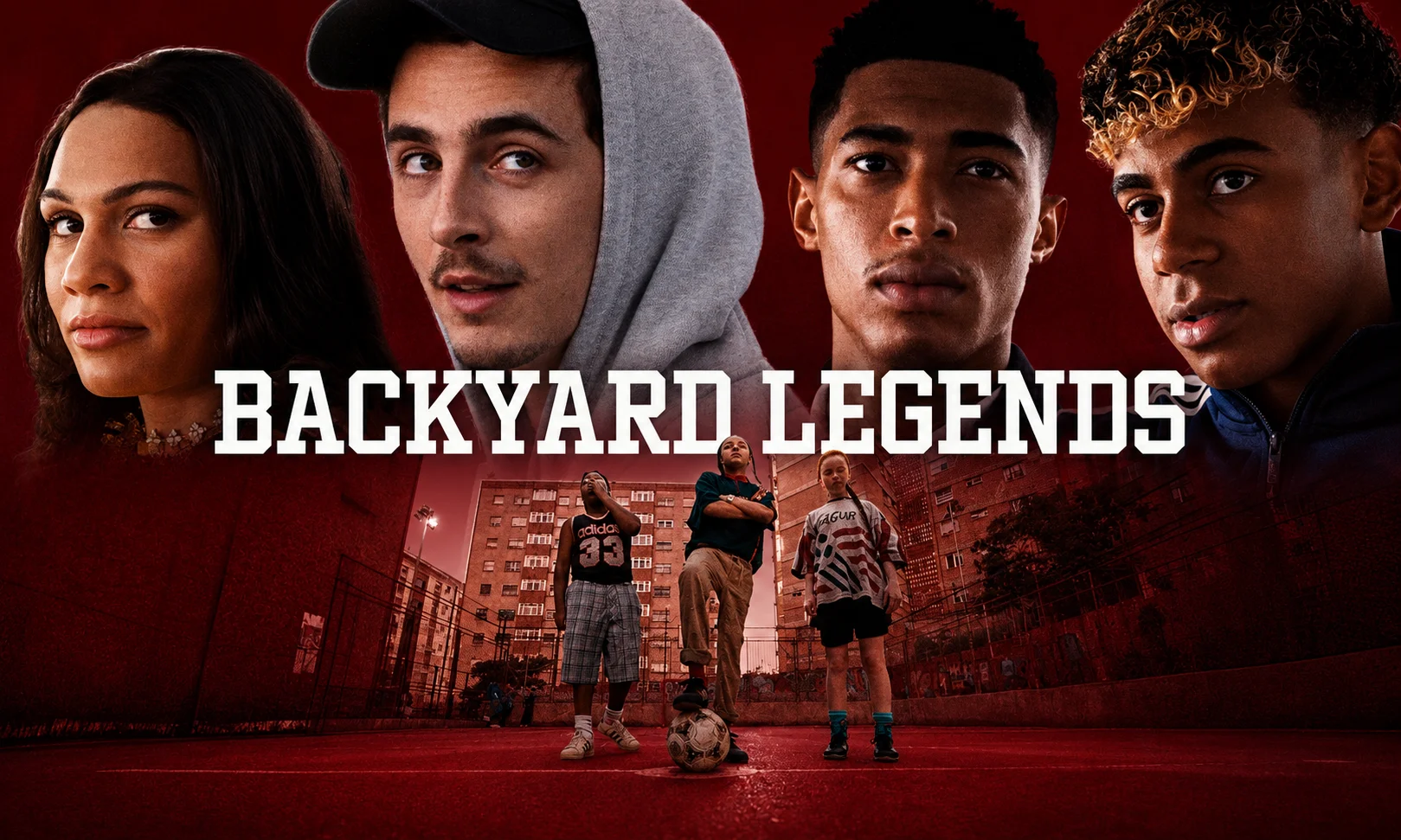
Adidas was first out of the tunnel with “La Preparación Americana,” a cinematic build-up film featuring Lionel Messi.
They followed it with “Backyard Legends,” a longer film blending football nostalgia, celebrity culture, and street-football mythology.
But the real story is the numbers.
By kickoff, Adidas had already sold approximately $292 million in 2026 World Cup products jerseys, boots, training kits. CEO Bjørn Gulden publicly identified the U.S. as the brand’s biggest long-term opportunity, calling the North American market central to the company’s next decade.
Campaigns as culture-shaping is one thing. Campaigns as commerce is another. Adidas ran both.
Nike: Rip the Script
Nike’s answer to Adidas was “Rip the Script,” built around the idea of encouraging soccer’s biggest stars to throw away the playbook.
The campaign starred rising stars Lamine Yamal and Rodrygo Goes, visualizing their training as cultural art forms from their home countries Spanish flamenco imagery for Yamal, Brazilian carnival aesthetics for Rodrygo.
Created by WPP Open X and led by AKQA, the campaign opened a four-year sponsorship cycle running through the Women’s World Cup 2027 and the LA 2028 Olympics.
That’s the smart move Nike made most brands didn’t: they didn’t build a campaign that peaked in July. They built a campaign that gets to run for two more years.
Coca-Cola: All the Feels (and a Van Halen Cover)
Coca-Cola’s “All the Feels” platform was three films, launched sequentially in the months leading up to the tournament.
The first “Bubbling Up” depicts a fan’s pre-tournament excitement literally taking over a crowded elevator, complete with strangers joining in.
The anthem is a reworked version of Van Halen’s “Jump” featuring J Balvin, Amber Mark, Steve Vai, and Travis Barker.
Getting a rock icon like Vai to play alongside a Colombian reggaeton superstar and a hip-hop producer on the same track is the specific move that makes this campaign 2026: brands are now confident enough to combine genres and audiences that would have been treated as separate five years ago.
The whole platform was developed with WPP Open X.
Lay’s: The Celebrity WhatsApp Group
Lay’s was the Official Snack of FIFA World Cup 2026 a category most brands would activate with predictable stadium signage and TV spots.
Lay’s did something else.
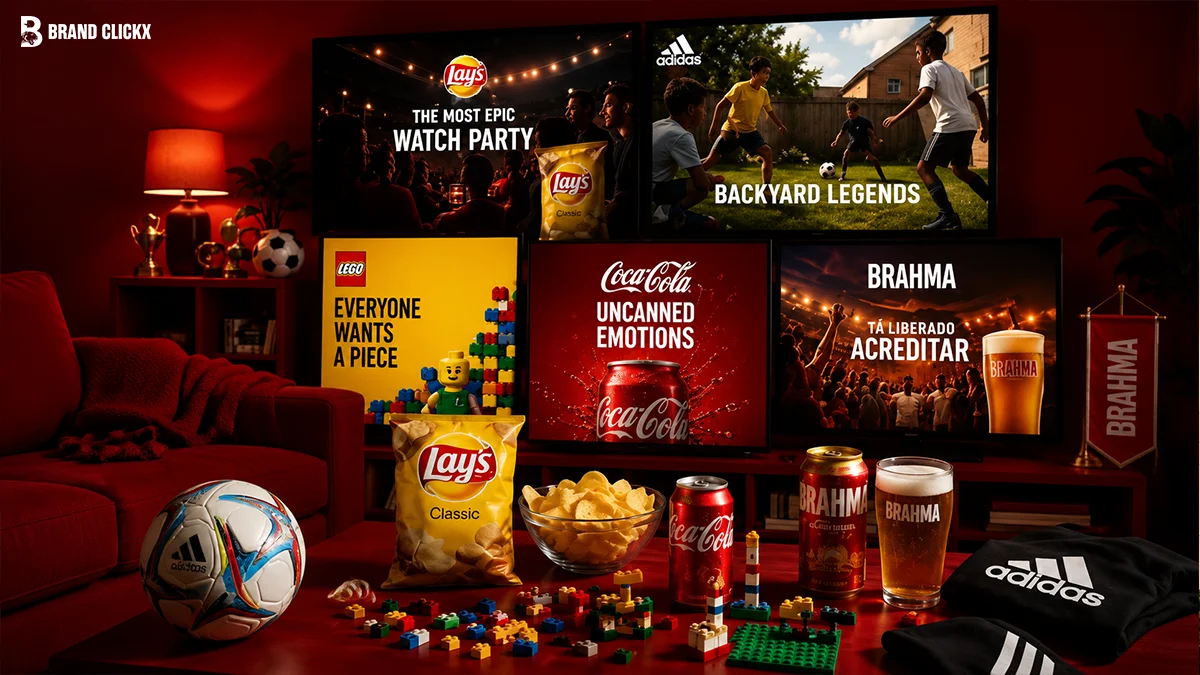
They created a fan-access WhatsApp group chat featuring Alexia Putellas, Lionel Messi, Sir David Beckham, Steve Carell, and Thierry Henry a group that ran Watch Party sessions with fans during matches.
Steve Carell is not a footballer. That’s the point. Lay’s understood that “Official Snack” is a category most people ignore, so they made the sponsorship a piece of content people actually wanted to be in.
The campaign name “No Lay’s, No Game” pushes the same idea: if you don’t have chips at your Watch Party, you’re doing the World Cup wrong.
Budweiser: 40 Years of “Budstalgia”
Budweiser has been a World Cup sponsor for 40 years. For the 2026 tournament, they turned that heritage into the campaign itself.
The “Budstalgia” platform ran across 40+ countries. The hero film featured Erling Haaland playing in his first World Cup and Jürgen Klopp, whose retirement from club football conveniently kept the partnership neutral during a competition built on national identity.
The strategic choice worth flagging: Klopp is universally beloved across football but currently attached to no country’s national team. That makes him the perfect brand ambassador for a global campaign where taking sides would alienate half the audience.
That’s the kind of small casting decision that separates a good campaign from an obvious one.
Michelob Ultra: Playing the Long Game
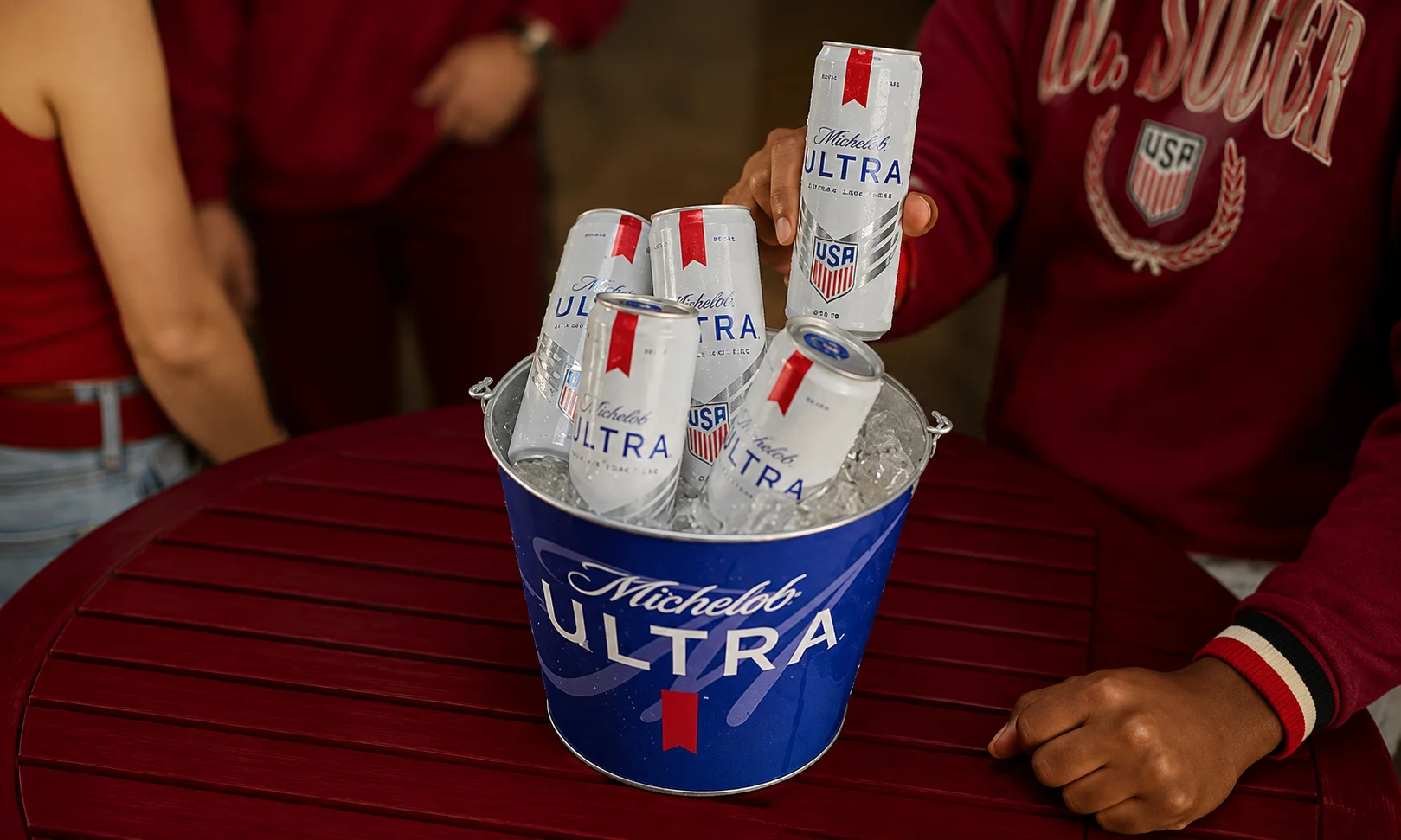
Michelob Ultra was the Official Beer Sponsor of the FIFA World Cup 2026 one of the highest-profile sponsorship categories at the tournament.
The brand ran several spots throughout the games, positioning itself as the beer of active fans (in contrast to Budweiser’s more traditional football fan positioning). Where Budweiser leaned on 40 years of nostalgia, Michelob Ultra leaned on the version of football fandom that overlaps with wellness culture the fan who runs the morning of the match, then meets friends at the bar.
Both worked. In different lanes.
Brahma: Brazilian National Pride
Not every winning campaign was global.
Brahma —AB InBev’s Brazilian brand ran a tournament-specific campaign built entirely around Brazil’s emotional relationship with football.
The film blended archival-style visuals, street-party energy, and fan rituals. Rather than centering individual players, the campaign celebrated supporters and the role football plays in Brazilian identity.
The strategic reasoning: Brazil hadn’t won a World Cup since 2002. The 2026 tournament represented a shot at redemption. Brahma didn’t try to promise victory they positioned the brand as a symbol of collective hope, whatever the outcome.
The campaign was developed by Africa Creative, AB InBev’s longtime Brazil agency partner, with production by Saigon Filmes. It launched in mid-May 2026 across TV, digital, and live fan experiences.
Visa and Wells Fargo: The Christian Pulisic Play
Visa’s tournament activation included partnering with Wells Fargo on the next chapter of the “Game Changing Card” Active Cash® campaign, featuring U.S. Men’s National Team captain Christian Pulisic.
The move was strategic. With the tournament co-hosted in the U.S., activating around the U.S. captain gave both brands direct relevance to the home audience regardless of how the U.S. team ultimately performed.
Pulisic is a specific choice. He’s genuinely famous in the U.S. and genuinely respected by international football audiences. That double relevance is rare and hard to fake.
What Tied the Best Ads Together
Look at the winners.
LEGO didn’t just show football stars they put the stars in service of what LEGO actually does. Lay’s didn’t just sponsor the tournament they created a piece of content fans wanted to be in. Adidas didn’t just make a film they built a $292 million commerce funnel behind it. Nike didn’t build a campaign for July they built one for the next two years. Budweiser didn’t just celebrate 40 years they cast the campaign to stay neutral in a nationalist competition.
Every one of these worked because the sponsorship was structural, not decorative.
The brands that lost this cycle were the ones that treated the World Cup as a media placement. The brands that won treated it as an invitation to build something that mattered on its own terms.
Sponsorship visibility is dead. Cultural participation is what actually works now.
What This Means For Any Brand Sponsoring an Event Now
The 2026 World Cup will be studied by marketers for years.
The lesson worth taking is not “spend more” or “use bigger celebrities.” It’s the shift underneath both.
The best campaigns treated the event as a moment their brand had a specific right to be part of because they had something authentic to add rather than as a moment they could rent visibility inside.
If you’re sponsoring anything big a tournament, a festival, a cultural moment the diagnostic question is the same one LEGO asked and the same one most sponsors don’t.
What can our brand actually add to this event that nobody else can?
If the honest answer is “nothing, we just want the audience,” the sponsorship will look like a sponsorship. If the answer is specific creativity, celebration, nostalgia, community the sponsorship becomes the campaign.
That’s the whole game now.
FAQs
What was the most viral brand ad of the 2026 World Cup?
LEGO’s trophy-building film with Messi, Ronaldo, Mbappé, and Vinícius Jr. hit 314 million views in 24 hours across the players’ social accounts the highest single-day reach of the tournament.
Which brand sold the most World Cup 2026 merchandise?
Adidas sold approximately $292 million in 2026 World Cup products before kickoff, driven by their “La Preparación Americana” and “Backyard Legends” campaigns starring Lionel Messi.
Who were the official sponsors of the FIFA World Cup 2026?
Official sponsors included Adidas, Coca-Cola, Budweiser, Michelob Ultra, Lay’s, Visa, and Powerade, among many others. Nike, though not an official FIFA sponsor, ran major campaigns through its national team partnerships.
Which campaign used the most star power?
Lay’s “No Lay’s, No Game” featured Messi, Beckham, Steve Carell, Alexia Putellas, and Thierry Henry in a fan WhatsApp group. LEGO’s trophy build combined Messi, Ronaldo, Mbappé, and Vinícius Jr. in a single film.
What was the biggest trend in World Cup 2026 marketing?
A shift from sponsorship visibility (logos on the field) to cultural participation (creating moments fans actually wanted to be part of). The best campaigns treated the tournament as an invitation to build something that mattered on its own terms.