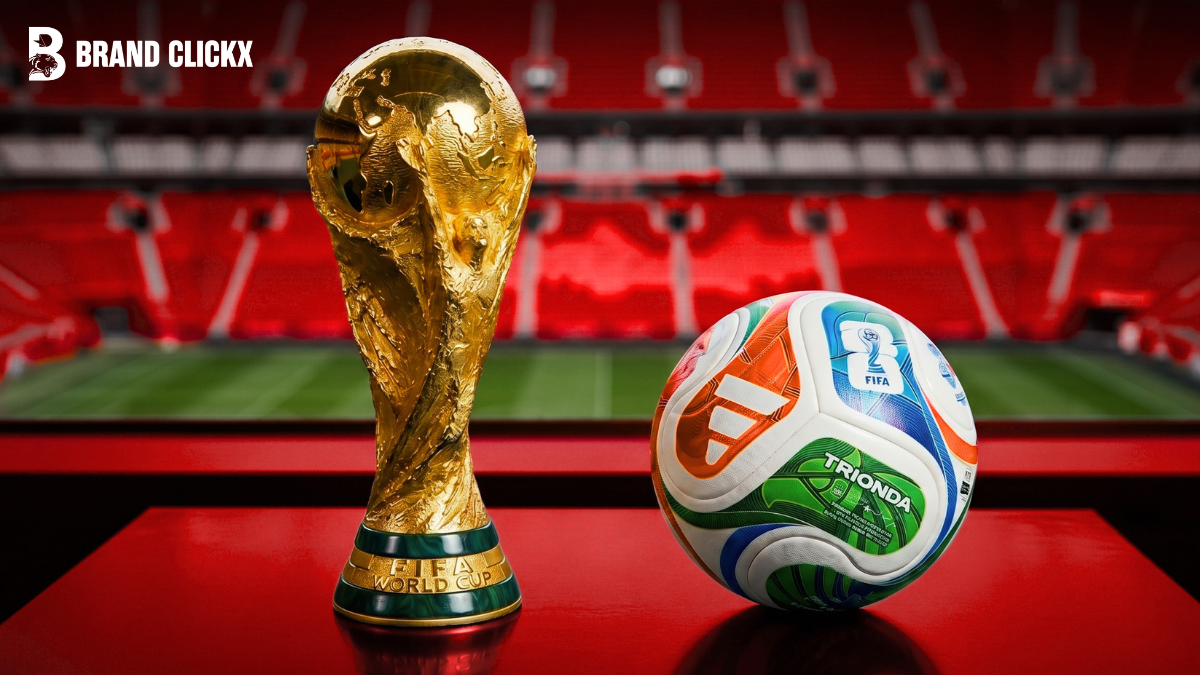
The whistle has blown. The biggest sporting event in history is underway, and the real contest for marketers is not on the pitch.
FIFA World Cup 2026 marketing is a battle for the attention of billions, and the rules just changed.
The tournament kicked off on June 11, 2026, spanning the United States, Canada, and Mexico. With a first-ever 48-team format and 104 matches, it is projected to draw around 6 billion cumulative viewers. Industry estimates suggest brands will spend more than $10 billion globally on advertising tied to it.
Why it matters: for 40 straight days, the World Cup turns into a global party that brands cannot buy their way into with logos alone. The fans are younger, more digital, and far more skeptical than the audiences of past tournaments. So the playbook that worked in 2018 will not win in 2026.
This is a breakdown of who is spending, what is working, why ambush marketing has become the smart money, and how the best brands are turning the summer of soccer into real business results.
The Scale: A Marketing Event Like No Other
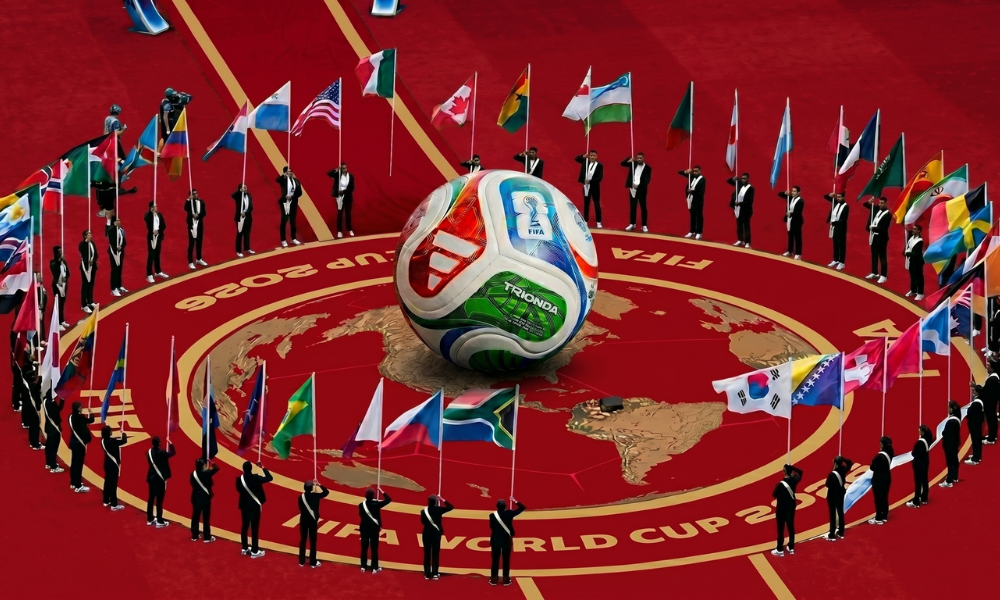
Start with the sheer size, because it reframes every decision a marketer makes. This is not a bigger version of the last World Cup. It is a different animal.
The 2026 edition expanded to 48 teams across 16 host cities in three countries. That means more matches, more markets, more cultural contexts, and a far longer marketing window than the tournament has ever offered.
The money behind it is staggering. The event is expected to generate roughly $13 billion in revenue for FIFA across the cycle, with direct fan spending near $14 billion and a global GDP contribution above $40 billion. FIFA projects up to 5.5 million stadium attendees, smashing the 1994 record.
Market Observation: broadcasting is the engine of FIFA’s commercial model, and it tells you where attention concentrates. Media rights for this cycle reportedly climb toward $4.26 billion, up sharply from Qatar, helped by North American prime-time windows. When broadcasters pay that much, advertisers follow the eyeballs.
The tri-nation hosting model is the quiet game-changer. It lets brands localize campaigns across multiple markets while still operating on a global stage. That flexibility is new, and the brands that understand it early have a structural edge.
Who Paid for the Badge: The Official Sponsors
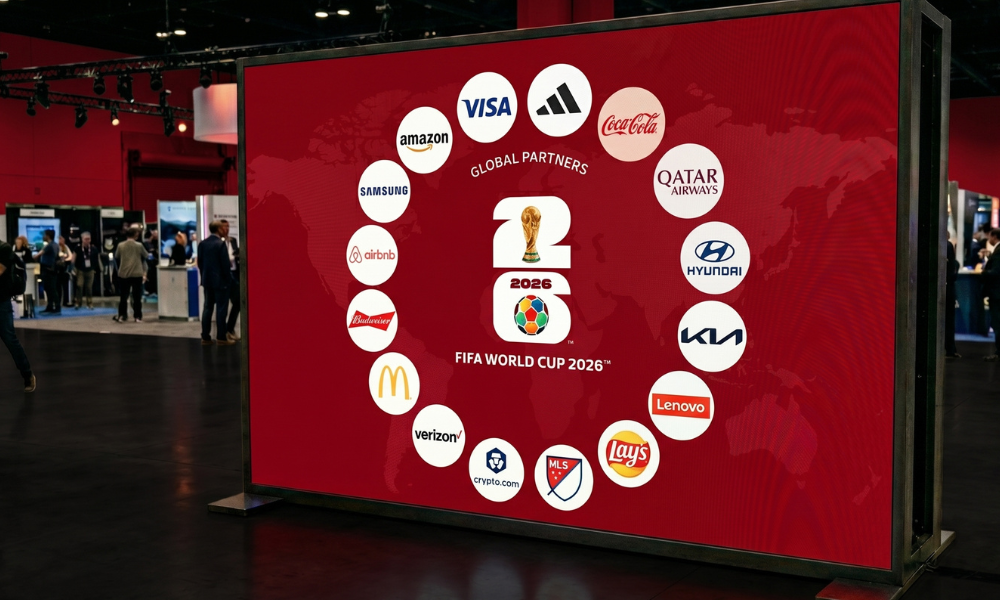
Let us name the players who wrote the biggest checks. The official sponsor roster reads like a who’s who of global brands.
The top-tier FIFA Partners include Visa, Adidas, Coca-Cola, Qatar Airways, Aramco, Hyundai and Kia, and Lenovo. Bank of America serves as the official bank sponsor and Verizon as the official telecom sponsor. Lay’s, McDonald’s, Budweiser, and Airbnb fill out the wider tournament roster.
The cost of that access is severe. Top-tier sponsorship deals are estimated between $80 million and $100 million, and even smaller premium packages reportedly start around $15 million.
Strategic Breakdown: FIFA restructured its commercial model for 2026 into three tiers. Global partners that sponsor all FIFA events sit at the top, tournament-specific sponsors come next, and tournament supporters get country-specific activation rights.
That design lets FIFA sell more flexibly and lets brands buy closer to the markets they care about.
The newcomers are telling. Saudi oil company Aramco, Chinese tech giant Lenovo, and a prediction-market platform partner all joined the global tier. The mix signals where commercial power and ambition are flowing in 2026.
The Campaigns Setting the Pace
Spending is one thing. Resonance is another. The campaigns earning real attention share a single trait: a clear answer to what role the brand plays in the fan’s experience.
Adidas set the highest bar with “Backyard Legends”, a cinematic film starring Lionel Messi, Lamine Yamal, Jude Bellingham, Trinity Rodman, and even Timothée Chalamet and Bad Bunny. The idea is simple and sticky. Legends are born in backyards and neighborhood games, under the line “You Got This.”
Nike took the opposite route. Instead of a single hero film, it rolled out a 12-week content campaign, opening with 42 autographed Polaroids of stars posted across social. It is a slow build designed for feeds, not just television.
Other brands found their lane through fan experience rather than star power.
- Home Depot launched “We All Have a Name” with USMNT striker Ricardo Pepi and its own associates, plus viewing parties and DIY fan zones across host cities from Monterrey to Toronto.
- Dove Men+Care built immersive “Ritual House” activations in Kansas City, New York, and Miami.
- McDonald’s leaned into culture with Spotify watch-party playlists, positioning itself as a host of football culture rather than a logo on a board.
- AT&T’s “Knock on the Block” skipped stadiums and stars for a real family inviting neighbors in to watch, using a real neighborhood instead of actors.
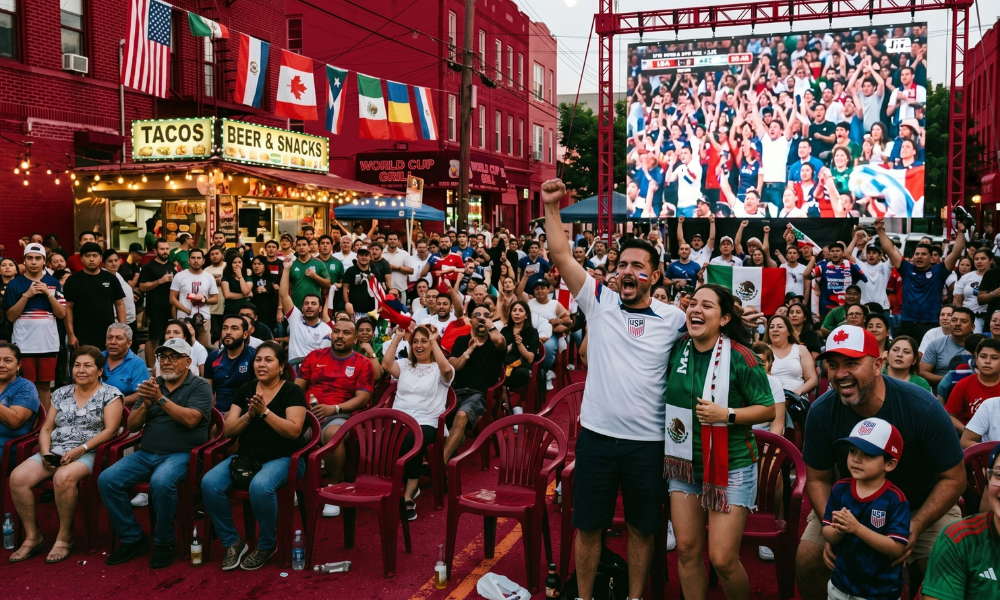
Expert Insight: notice the pattern. The standout work is experiential and human. It puts the fan, the neighborhood, and the shared moment at the center, and treats the brand as a guest at the party rather than the headliner. That is the heart of modern experiential marketing.
The Ambush Game: Winning Without the Badge
Here is the most interesting shift in FIFA World Cup 2026 marketing. The smartest money may not be buying official rights at all.
Ambush marketing, associating with the tournament without paying for protected names and logos, has moved from cheeky stunt to rational strategy. The reason is pure economics.
The legend that defines it is Nike’s 1998 airport ad, where Brazil’s national team juggled through a terminal. Nike was not a World Cup sponsor. Adidas was. Yet by 2014, around 30 percent of fans wrongly believed Nike was the official partner. That is the ambush dream in one statistic.
Industry Impact: the math now favors the ambush even more. Official packages are priced near $50 million per premium slot, while Fox and Telemundo are forecast to pull $850 million in combined US ad revenue with CPMs approaching Super Bowl levels.
A challenger brand can buy into the surrounding conversation for a fraction of an official fee and still capture share of voice.
The best ambush plays treat it as a media-buying mechanism. They use earned coverage as inventory and paid amplification as the placement. Paddy Power’s England-versus-US comedy with Danny Dyer and Rob Lowe is a textbook example of provoking the conversation without paying for the badge.
A caution sits underneath the opportunity, though. Ambush works only when the brand has permission to be playful and the category is clear. Done clumsily, it reads as theft rather than wit.
The $10 Billion Question: Is Sponsorship Still Worth It?
This is the uncomfortable question every CMO is asking. If ambush is so effective, is the official badge still worth the premium?
The data is sobering for rights holders. The 2026 tournament is forecast to add about $10.5 billion to global ad spend, a 1.1 percent rise. Compare that to 2018, which delivered $12.6 billion and a 2.8 percent rise. The uplift is being redistributed across many touchpoints, not expanded.
The cost of official association climbs every cycle. The distinction it buys keeps shrinking. In the UK, the broadcast uplift brands once banked is forecast at well under one percent, while sports rights costs grow far faster than the ad revenue tied to them.
Enterprise Perspective: this does not mean sponsorship is dead. It means the question changed. It is no longer how much inventory to buy. It is where buying still earns its place.
For brands with global ambition and deep pockets, the badge still confers trust and scale. For challengers, the surrounding conversation often delivers more value per dollar.
So the official sponsorship calculation now demands the same rigor as any performance channel. Brands that treat the badge as automatic prestige are overpaying. Brands that treat it as one option among many are thinking clearly.
The New Fan: Younger, Digital, and Skeptical
Behind every spending decision is a changed audience. The 2026 fan does not watch the way the 2018 fan did, and that rewires everything.
Roughly 76 percent of football fans are Millennials or Gen Z, and a strong majority track sponsors and prefer sponsor brands when buying. Global football video views have surged over recent years, which makes digital and social platforms essential rather than optional.
The hosting geography reshapes viewing too. North American prime-time windows favor US audiences, but fewer than half the matches air during European daytime. That pushes engagement toward evenings, second screens, and at-home gatherings in many markets.
The Bigger Shift: the modern fan expects participation, authenticity, and cultural relevance, not polished interruption. They will ignore or mock marketing that feels hollow. The brands winning attention are becoming part of the conversation instead of advertising around it.
That is why experiential activations, fan zones, and social-first content are outperforming traditional spots. The fan wants to be in the moment, and the brand that helps them feel it wins the memory.
The Tri-Nation Localization Play
The three-country format is not just logistics. It is a strategic gift for marketers who use it well.
The expanded model lets brands localize across the US, Canada, and Mexico while staying global. A campaign can speak to Monterrey, Atlanta, and Toronto in their own cultural voice, then ladder up to a single worldwide story.
Tactical Framework for localizing World Cup marketing:
- Lead with the host-city culture, since fan zones and city centers draw bigger crowds than stadiums.
- Respect clean-zone rules around venues, which limit non-sponsor activity near official sites.
- Build for evening and second-screen viewing in markets where matches fall outside daytime.
- Use local ambassadors and community partners so activations feel native, not imported.
- Localize creative for each market rather than translating one global spot across all three.
The brands treating the tournament as a single event are leaving value on the table. The ones treating it as dozens of connected local moments are compounding their reach.
The Digital and AI Layer
The 2026 tournament also arrives deeper into the AI and digital era than any before it, and that opens new ground for brands.
FIFA has built more digital surfaces than ever, from streaming to connected TV to social. One global partner is even building a prediction-market platform around the tournament, a sign of how data and real-time engagement are entering the fan experience.
Future Outlook: expect AI to shape this World Cup behind the scenes and in front of fans. Real-time content generation, personalized highlights, AI-assisted social moments, and prediction features all turn passive viewing into participation.
The brands experimenting with these tools now are learning a playbook that will define the next decade of sports marketing.
The lesson is consistent with where marketing is heading broadly. Attention is fragmenting across screens and formats, and the winners meet fans inside the moment rather than waiting for them in front of a television.
What Happens Next
The tournament runs for weeks, and the marketing story is still being written. Here is what to watch as it unfolds.
- Whether the experiential and social-first campaigns convert attention into measurable sales lift.
- How ambush brands fare against official sponsors in unaided brand recall after the final.
- Whether the official sponsorship model holds its premium or faces pressure in future cycles.
- How AI-driven and prediction-market features change fan participation in real time.
- Which host-city activations travel furthest on social and earn the most organic reach.
Each of these will teach marketers more than the trophy lift itself.
COMPARISON TABLE: OFFICIAL SPONSORSHIP VS AMBUSH MARKETING
| Factor | Official Sponsorship | Ambush Marketing |
| Cost | $15M to $100M+ for rights | A fraction of an official slot |
| Rights | Logos, stadium presence, integrations | No protected names or logos |
| Risk | High cost, shrinking uplift | Legal limits, reputational risk |
| Upside | Trust, scale, official association | Share of voice, cultural buzz |
| Best for | Global giants with deep budgets | Challenger and social-first brands |
| Classic example | Adidas as official partner | Nike’s 1998 airport ad |
KEY TAKEAWAYS
- FIFA World Cup 2026 marketing is a $10 billion-plus global battle around a tournament that kicked off June 11 across the US, Canada, and Mexico.
- The expanded 48-team, tri-nation format rewards brands that localize across markets while telling one global story.
- Official sponsorship costs $80 million to $100 million at the top tier, but the uplift it delivers is shrinking as audiences fragment.
- Ambush marketing has become a rational strategy, letting challenger brands capture share of voice for a fraction of an official fee.
- The winning campaigns are experiential and human, putting the fan and the shared moment at the center rather than the logo.
- The 2026 fan is younger, more digital, and more skeptical, so social-first content and real activations beat traditional spots.
Frequently Asked Questions
Who are the official sponsors of the FIFA World Cup 2026?
Top FIFA Partners include Visa, Adidas, Coca-Cola, Qatar Airways, Aramco, Hyundai and Kia, and Lenovo. Bank of America, Verizon, Lay’s, and McDonald’s are among the tournament sponsors.
How much does it cost to sponsor the FIFA World Cup 2026?
Top-tier FIFA Partner deals are estimated at $80 million to $100 million. Smaller premium packages reportedly start around $15 million, depending on the level of rights.
What is ambush marketing at the World Cup?
Ambush marketing is when a brand ties itself to the World Cup without paying for official rights, using clever ads and social moments. Nike’s 1998 airport spot is the classic example.
How much are brands spending on World Cup 2026 advertising?
Industry estimates put global World Cup-tied ad spend above $10 billion. WARC forecasts the tournament adds about $10.5 billion to global ad spend in Q2 2026.
When does the FIFA World Cup 2026 start?
The FIFA World Cup 2026 kicked off on June 11, 2026, across the US, Canada, and Mexico. It features 48 teams playing 104 matches over roughly 40 days.
How many people will watch the FIFA World Cup 2026?
FIFA projects around 6 billion cumulative viewers across 104 matches, though some analysts note linear TV reach has declined as audiences shift to streaming and social.
CONCLUSION
The summer of soccer is here, and the marketing has already outpaced the football for sheer ambition. FIFA World Cup 2026 marketing is the clearest snapshot we have of where brand building is heading.
The old model assumed that paying for the badge bought distinction. That assumption is breaking. The badge still carries trust and scale, but it costs more and returns less, and a clever challenger can borrow the moment for a fraction of the price.
Future Outlook: the brands that win this World Cup will not be the ones that spent the most. They will be the ones that understood the fan best. Expect experiential activations, localized storytelling, and AI-driven participation to define the cycle, while pure logo placement quietly loses ground. The next four years of sports marketing will be written in the lessons of this summer.
For marketers, the takeaway travels far beyond football. Attention is earned in the moment now, across screens and cities and communities, not rented in front of a single broadcast. The fan decides who belongs in the conversation, and the brands that show up with something real are the ones who stay.
At BrandClickX, we read these moments the way operators do. Not as a highlight reel, but as a live test of which strategies actually move people and markets. The World Cup is the world’s biggest stage, and the brands treating it as a relationship rather than a transaction are the ones lifting their own trophy.
The matches will crown one champion. The marketing will crown several. The difference, as always, is who understood the game being played off the pitch.