

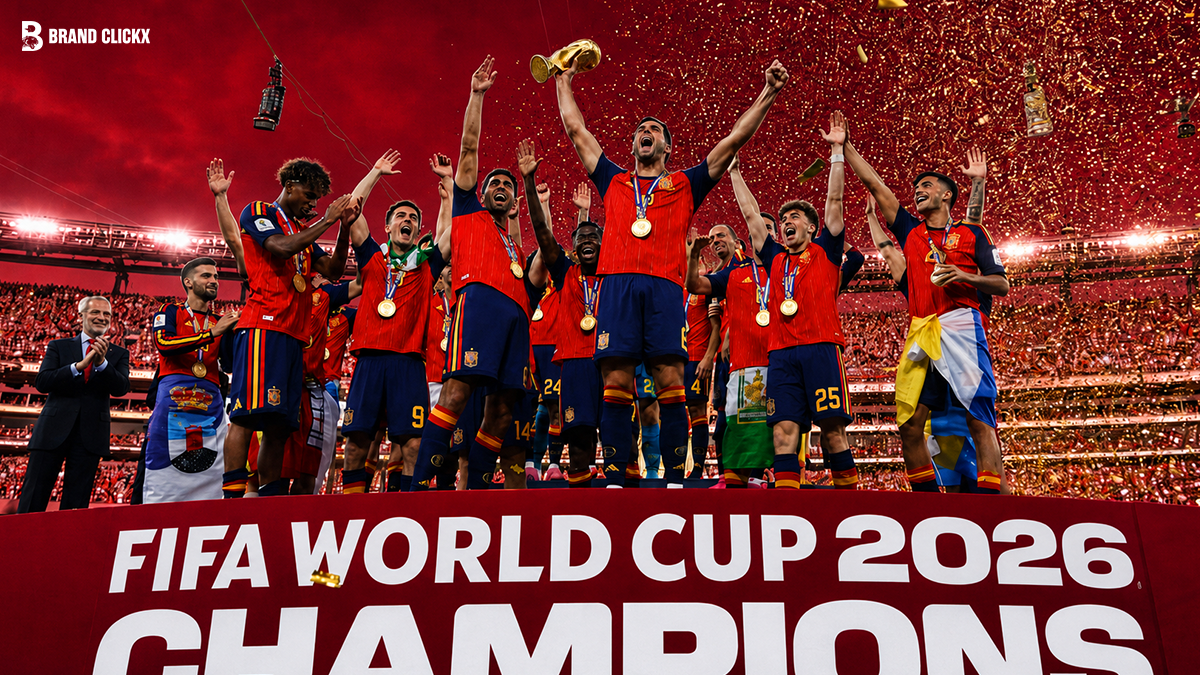
Few football finals are remembered for endless goals. Some are remembered because one moment changes history.
Spain defeats Argentina 1-0 to win the World Cup, and that single goal from Ferran Torres in extra time was enough to crown Spain as world champions once again.
If you searched for the result, you probably want more than just the score. You want to know how Spain won, why Argentina struggled, who stood out, and what this victory means for both nations.
This match delivered all of that.
Spain controlled possession, created the better chances, and finally broke through in the 106th minute. Argentina, the defending champions, fought hard but failed to record a single shot on target over 120 minutes, underlining Spain’s defensive dominance.
The victory gives Spain its second men’s FIFA World Cup title after their historic success in 2010. It also completes an extraordinary run under Luis de la Fuente, who has now guided Spain from European champions to world champions.
AI Overview
Spain defeats Argentina 1-0 to win the World Cup after Ferran Torres scored the decisive goal in the 106th minute of extra time at MetLife Stadium on July 19, 2026. The victory secured Spain’s second FIFA World Cup title, ending a 16-year wait since their triumph in 2010.
Spain dominated the final with sustained possession and attacking pressure, while Argentina failed to register a single shot on target across 120 minutes. The result also ended Lionel Messi’s final World Cup campaign and confirmed Spain as champions of the first 48-team FIFA World Cup.
Key Takeaways
- Spain beat Argentina 1-0 after extra time to win the 2026 FIFA World Cup.
- Ferran Torres scored the winning goal in the 106th minute.
- The final was played on July 19, 2026, at MetLife Stadium in East Rutherford, New Jersey.
- Argentina finished with 10 players after Enzo Fernández received a second yellow card.
- Spain conceded only one goal throughout the entire tournament.
- Rodri won the Golden Ball, Unai Simón claimed the Golden Glove, and Pau Cubarsí received the Best Young Player award.
Who won the 2026 FIFA World Cup?
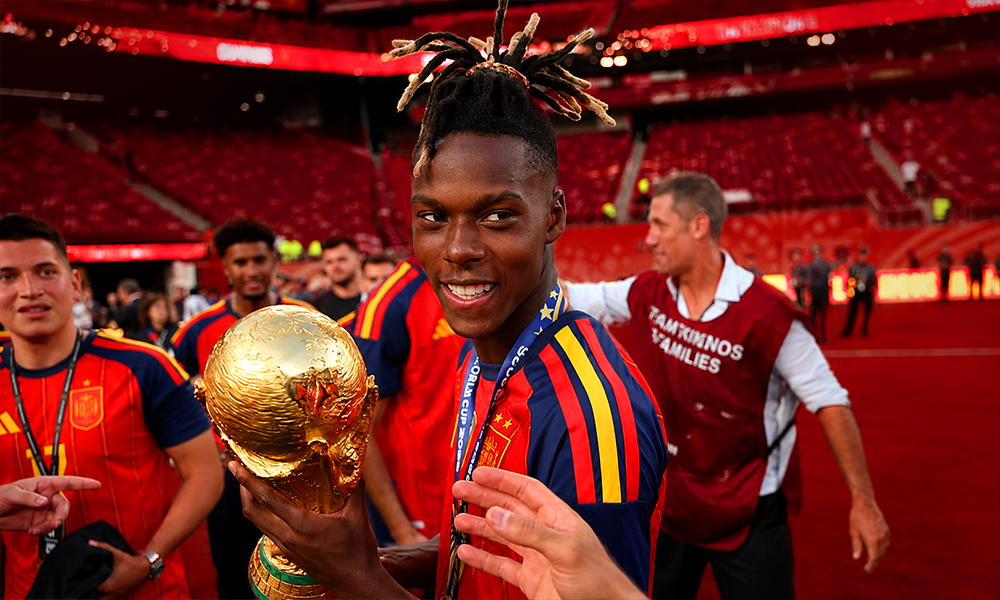
Spain defeats Argentina 1-0 to win the World Cup after Ferran Torres scored in the 106th minute of extra time. The final took place at MetLife Stadium on July 19, 2026, giving Spain its second FIFA World Cup title after previously winning the tournament in 2010.
Spain Defeats Argentina 1-0 to Win the World Cup: Match Summary
The 2026 FIFA World Cup final was played on Sunday, July 19, 2026, at MetLife Stadium in East Rutherford, New Jersey.
After 90 minutes without a goal, both teams entered extra time. Spain continued to press while Argentina defended deep and looked for opportunities on the counterattack.
The breakthrough finally arrived in the 106th minute.
Pedro Porro delivered a dangerous cross into the penalty area. Nico Williams headed the ball back across goal, where Ferran Torres arrived to fire an unstoppable finish beyond Emiliano Martínez.
That proved to be the only goal of the final.
Spain comfortably managed the closing stages and lifted the World Cup trophy after one of the most disciplined defensive displays seen in a modern final.
Match Facts
| Match Detail | Information |
| Result | Spain 1-0 Argentina (AET) |
| Tournament | FIFA World Cup 2026 Final |
| Date | July 19, 2026 |
| Venue | MetLife Stadium, East Rutherford, New Jersey |
| Winning Goal | Ferran Torres (106′) |
| Champions | Spain |
| Runner-up | Argentina |
How Spain Won the World Cup Final
The scoreline suggests a closely fought contest, but the match itself told a different story.
Spain dictated possession for long periods, moved the ball patiently, and repeatedly forced Argentina into defending deep inside their own half.
Argentina relied heavily on Emiliano Martínez, who produced several important saves to keep the score level during normal time.
The turning point came late in regulation when Enzo Fernández was sent off after receiving a second yellow card, leaving Argentina to finish with 10 players.
Spain immediately increased the pressure.
Only minutes into extra time, Nico Williams thought he had scored, but VAR ruled the goal out after Mikel Merino was judged to have fouled Nicolás Otamendi during the build-up.
Instead of losing momentum, Spain continued attacking.
Ten minutes later, the move involving Pedro Porro and Nico Williams ended with Ferran Torres scoring the winning goal that secured Spain’s place in football history.
Match Statistics: Why Spain Deserved the Victory
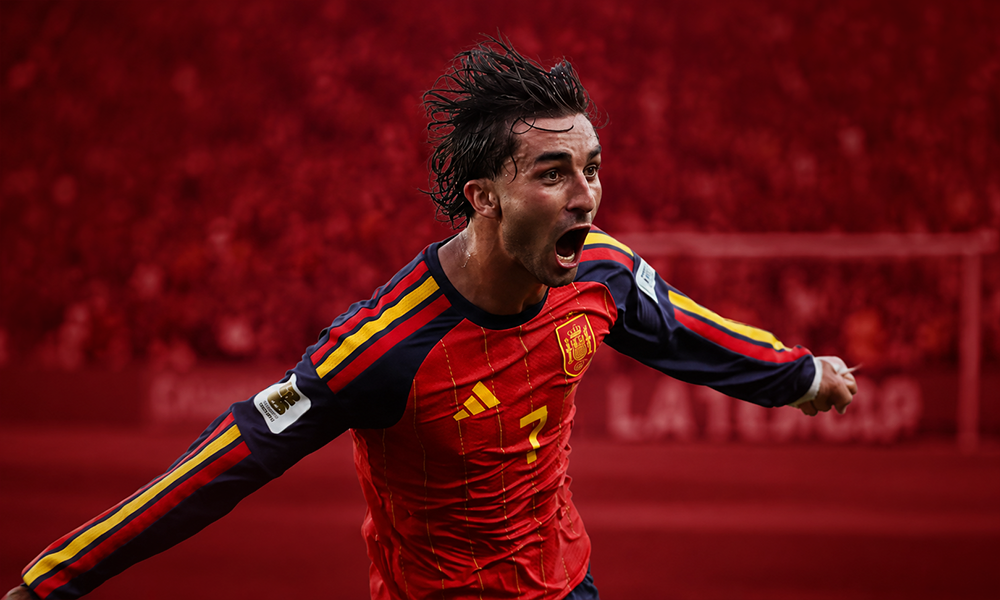
The final score was only 1-0, but the statistics reveal how much control Spain had throughout the match.
Argentina defended bravely, yet they struggled to build attacks or create meaningful opportunities. Spain consistently dictated the tempo and forced Argentina to spend long periods without the ball.
Match Statistics
| Statistic | Spain | Argentina |
| Final Score | 1 | 0 |
| Goals | 1 | 0 |
| Shots on Target | Multiple | 0 |
| Winning Goal | Ferran Torres (106′) | — |
| Red Cards | 0 | 1 (Enzo Fernández) |
| Tournament Titles | 2 | 3 |
One statistic stood above the rest.
According to Sky Sports and multiple post-match reports, Argentina failed to register a single shot on target across 120 minutes. It was one of the clearest signs of Spain’s defensive control.
Spain also found the net twice in extra time, although Nico Williams’ first effort was ruled out by VAR before Ferran Torres finally broke the deadlock.
Key Moments That Decided the Final
The match remained tense from start to finish, but a handful of moments shaped the outcome.
Early Warning from Spain
Lamine Yamal forced the first save of the match in the fifth minute, showing Spain’s attacking intent from the opening whistle.
Although Argentina stayed compact, Spain looked the more dangerous side whenever they entered the final third.
Emi Martínez Keeps Argentina Alive
As pressure increased, Emiliano Martínez produced several outstanding saves.
He denied Mikel Oyarzabal before later stopping efforts from Pedro Porro, Pau Cubarsí and Lamine Yamal, allowing Argentina to reach extra time.
Argentina Reduced to Ten Players
The biggest turning point arrived in stoppage time.
Enzo Fernández received a second yellow card after a reckless challenge on Pau Cubarsí, forcing Argentina to play the remainder of the match with ten men.
Spain immediately increased the tempo, stretching Argentina’s defense from side to side.
VAR Drama Before the Winner
Extra time brought another dramatic moment.
Nico Williams appeared to have given Spain the lead, but VAR ruled the goal out after Mikel Merino was judged to have fouled Nicolás Otamendi during the attacking move.
Instead of losing confidence, Spain kept attacking.
Ferran Torres Makes History
In the 106th minute, Pedro Porro delivered an accurate cross toward the far post.
Nico Williams headed the ball back into the danger area, where Ferran Torres arrived and smashed his finish beyond Emiliano Martínez.
That goal secured Spain’s second FIFA World Cup title and instantly became one of the defining moments in Spanish football history.
Tactical Analysis: Why Spain Controlled the Final
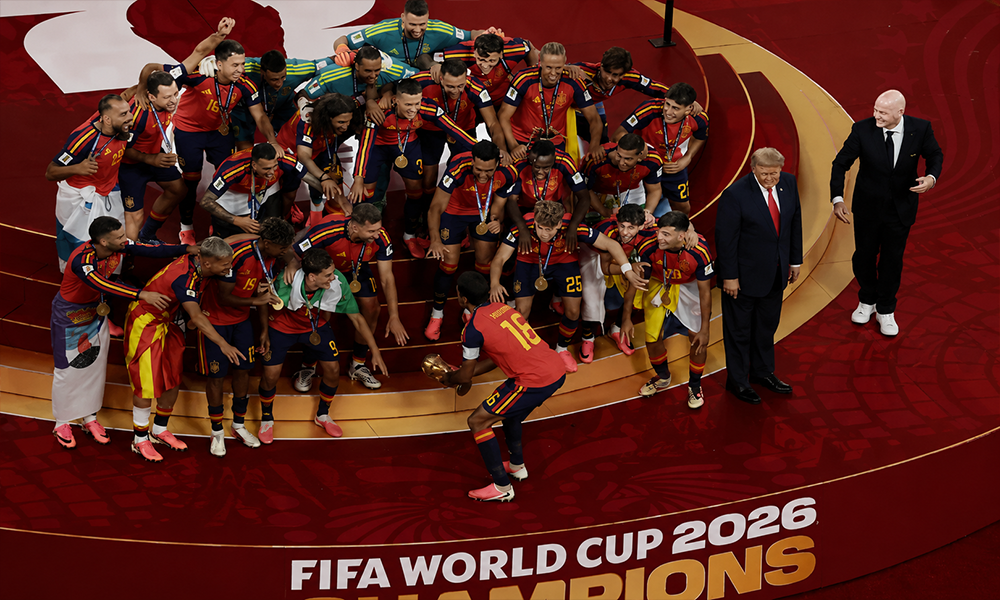
Spain did far more than simply keep possession.
Their structure prevented Argentina from finding space between the lines and limited Lionel Messi’s influence throughout the match.
Spain Dominated Without Taking Risks
Luis de la Fuente’s team remained patient in possession.
Rather than forcing attacks, Spain recycled the ball, stretched Argentina’s defensive shape and waited for openings.
This approach eventually wore Argentina down during extra time.
Argentina Could Not Feed Messi
Lionel Messi entered the final hoping to defend Argentina’s World Cup crown.
Instead, he spent much of the game isolated.
According to Sky Sports, Messi touched the ball only 54 times, while Argentina managed 34.9% possession and finished the match without a single shot on target.
Without service into dangerous areas, Argentina’s captain rarely had the opportunity to change the game.
A Complete Team Performance
Former England defender Gary Neville described Spain as the best collective team rather than simply the team with the biggest stars.
Their technical quality, tactical discipline and intelligent movement allowed them to control nearly every phase of the final.
That collective approach ultimately separated the champions from the defending title holders.
Spain’s Road to the World Cup Title
Spain’s triumph was no surprise to those who followed their tournament.
From the opening match to the final, they remained organized, patient, and difficult to break down. Their consistency became their biggest strength.
Spain’s Tournament Journey
| Stage | Result |
| Group Stage | Opened with a draw against Cape Verde |
| Knockout Stage | Progressed comfortably |
| Semi-final | Defeated one of the tournament favorites |
| Final | Beat Argentina 1-0 after extra time |
Spain also made history defensively.
According to NPR, they conceded only one goal in eight matches, becoming the first men’s World Cup champion to win the tournament while allowing just one goal.
The expanded 48-team format also meant Spain had to play eight matches, one more than champions in previous editions.
The Players Who Made the Difference
Championships are won by teams, but certain players define the biggest moments.
Spain had several standout performers throughout the tournament and especially in the final.
Ferran Torres Delivers the Winning Moment
Ferran Torres will forever be remembered for his 106th-minute winner.
Coming off the bench, he timed his run perfectly to meet Nico Williams’ header and powered the ball beyond Emiliano Martínez.
After the match, Torres said destiny had been written for Spain to win and dedicated the victory to the people of Spain.
Rodri Leads from Midfield
Rodri controlled the rhythm of the game from midfield.
His calm passing, defensive positioning and leadership helped Spain dominate possession and prevent Argentina from building attacks.
His performances throughout the tournament earned him the Golden Ball as the competition’s best player.
Nico Williams Changes the Match
Although his first goal was ruled out by VAR, Nico Williams remained one of Spain’s most dangerous attackers.
His awareness to head Pedro Porro’s cross back across goal created the winning opportunity for Torres.
His energy stretched Argentina’s defense throughout extra time.
Unai Simón Anchors the Defense
Unai Simón enjoyed one of the best tournaments of his career.
He finished the competition with the Golden Glove, reflecting Spain’s outstanding defensive record and composure under pressure.
Pau Cubarsí Continues His Rise
The young defender impressed well beyond his years.
His performances throughout the tournament earned him the Best Young Player Award, highlighting Spain’s bright future alongside its present success.
World Cup Awards
Spain dominated not only the final but also the tournament’s individual honors.
| Award | Winner |
| Golden Ball (Best Player) | Rodri |
| Golden Glove | Unai Simón |
| Best Young Player | Pau Cubarsí |
| Golden Boot | Kylian Mbappé (France) |
The distribution of these awards reflected Spain’s balance.
While France produced the tournament’s top scorer, Spain’s strength came from teamwork, defensive discipline, and consistent performances across every position.
What This Victory Means for Spain
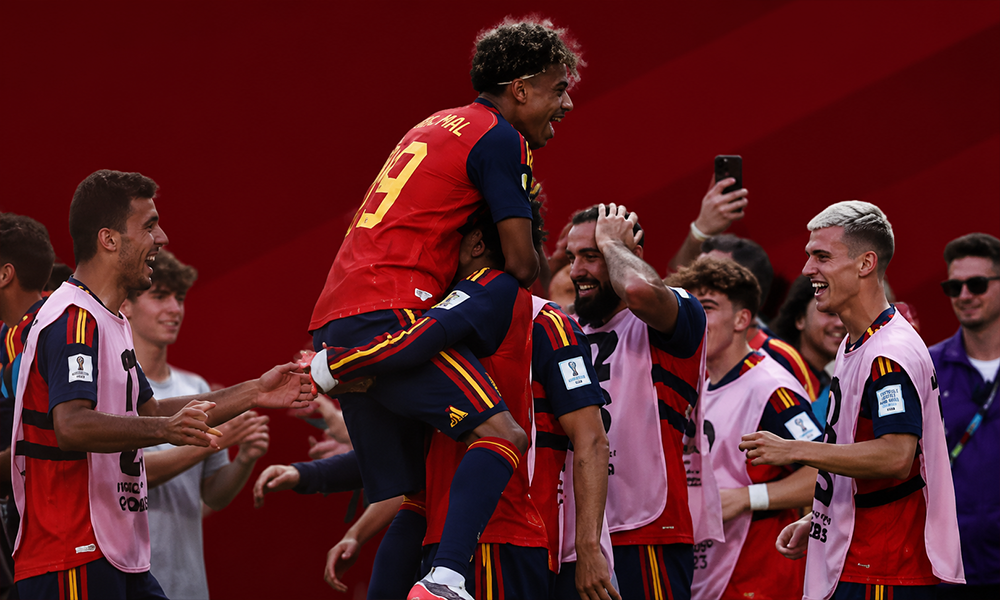
This title represents far more than another trophy.
Spain had already established itself as one of Europe’s strongest sides by winning UEFA Euro 2024. Adding the World Cup confirms that success was not temporary.
Manager Luis de la Fuente has now guided Spain through an unbeaten run in tournament football, building a squad capable of controlling matches against the world’s best teams.
The victory also highlights the success of Spain’s next generation.
Players such as Lamine Yamal, Nico Williams, Pau Cubarsí, Pedri and Rodri have created a foundation that could keep Spain among the favorites for major tournaments over the coming years.
For Spanish football, the 2026 World Cup is not simply another championship.
It signals the beginning of a new era built on technical quality, tactical discipline and exceptional squad depth.
What the Final Means for Argentina
Losing a World Cup final is always painful, but Argentina’s campaign should not be judged by one result.
They arrived as the defending champions after winning the 2022 World Cup and once again reached the biggest stage in international football.
A Difficult Night for Lionel Messi
Much of the attention focused on Lionel Messi, with many expecting this to be his final World Cup appearance.
Spain’s tactical discipline limited his influence throughout the match.
According to Sky Sports, Messi touched the ball only 54 times, while Argentina managed just 34.9% possession and failed to register a shot on target.
It was a frustrating ending for one of football’s greatest careers, but it does not diminish everything he achieved for Argentina, including the 2022 World Cup title.
Spain’s Defense Made the Difference
Argentina’s attack rarely found space.
Every time Messi or Julián Álvarez tried to receive the ball between the lines, Spain’s midfield and defense quickly closed the gaps.
The result was a final in which Argentina spent most of the game defending rather than attacking.
Why Spain’s Victory Was Historically Significant
Spain did more than lift another trophy.
They produced one of the strongest defensive World Cup campaigns in modern football.
According to NPR, Spain conceded just one goal in eight matches, the fewest ever by a men’s World Cup champion.
The 2026 tournament was also the first to feature 48 teams, meaning Spain had to win eight matches instead of the traditional seven to become champions.
The final itself echoed Spain’s famous 2010 victory.
Both World Cup titles were secured with a 1-0 extra-time victory, proving once again that patience, organization and discipline can decide the biggest matches.
Practical Takeaways From Spain’s Success
Whether you’re a football coach, player or fan, Spain’s campaign offers valuable lessons.
Build a Team Before Building Stars
Spain showed that a balanced squad can outperform a team built around individual brilliance.
Every player understood their role, making the system stronger than any single individual.
Stay Patient Under Pressure
Spain created chances throughout the match but never abandoned their game plan.
Instead of forcing risky attacks, they trusted their structure until the breakthrough finally came in extra time.
Strong Defending Wins Championships
The tournament reinforced an old football truth.
Conceding only one goal across eight matches gave Spain a platform to win even when games were tight.
Squad Depth Matters
The winning move involved substitutes.
Pedro Porro’s delivery, Nico Williams’ awareness and Ferran Torres’ finish demonstrated how quality from the bench can change a final.
Conclusion
Football finals are often remembered for one defining moment.
For Spain, that moment arrived in the 106th minute when Ferran Torres calmly finished the move that secured another place in football history.
Spain defeats Argentina 1-0 to win the World Cup not because of one goal alone, but because of an outstanding tournament built on teamwork, tactical discipline and defensive excellence.
Years from now, many fans may remember the score first.
Those who watched the match will remember something even bigger—a Spanish team that controlled the world’s biggest game from start to finish and deserved to lift the trophy.
Frequently Asked Questions
Who won the 2026 FIFA World Cup final?
Spain defeats Argentina 1-0 to win the World Cup after Ferran Torres scored in the 106th minute of extra time. The final was played on July 19, 2026, at MetLife Stadium in East Rutherford, New Jersey.
Who scored the winning goal for Spain?
Ferran Torres scored the only goal of the match in the 106th minute.
He finished from close range after Pedro Porro’s cross was headed back across goal by Nico Williams.
Did the 2026 World Cup final go to penalties?
No.
The match was decided during extra time when Ferran Torres scored, so a penalty shootout was not required.
Why did Argentina struggle in the final?
Spain controlled possession, defended aggressively and restricted Argentina’s attacking opportunities.
According to match reports, Argentina finished the match without registering a single shot on target despite playing 120 minutes.
How many World Cups has Spain won?
Spain has won two FIFA Men’s World Cup titles.
Their first came in 2010, while the second arrived in 2026 after defeating Argentina 1-0 in extra time.
Who won the major individual awards?
Spain dominated the tournament awards.
Rodri won the Golden Ball, Unai Simón received the Golden Glove, and Pau Cubarsí was named Best Young Player. France’s Kylian Mbappé finished as the Golden Boot winner.