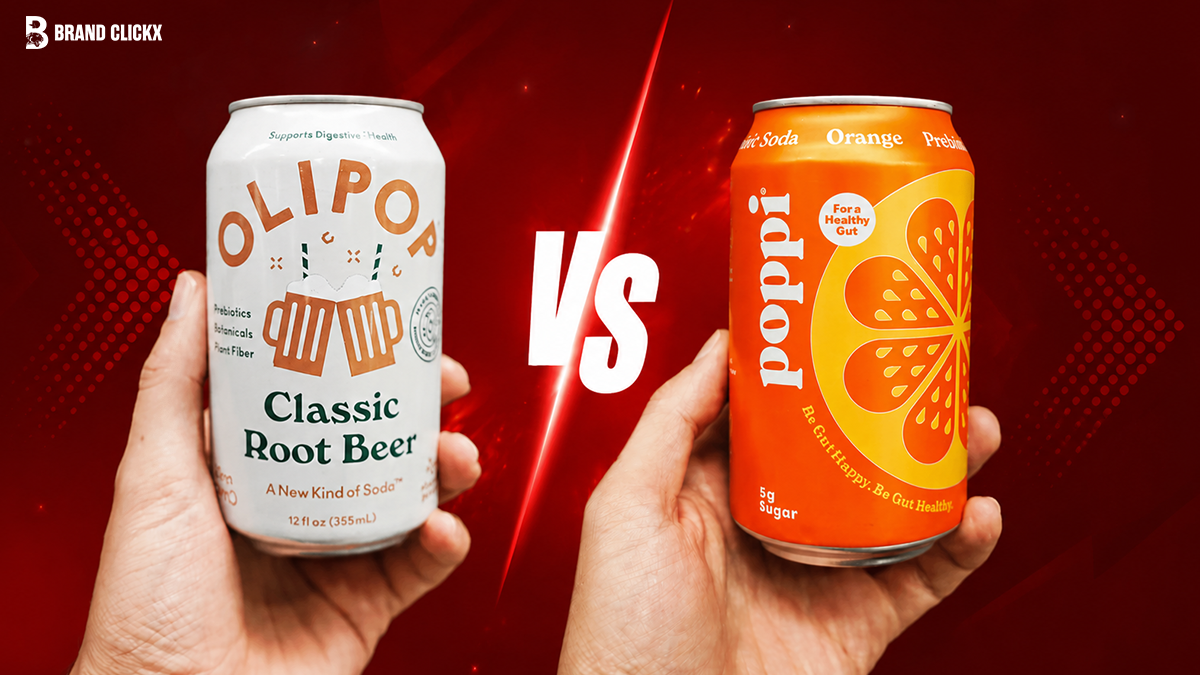
Two brands. Same shelf. Similar cans. Nearly identical price. But Poppi and Olipop are genuinely different products underneath the colorful packaging and knowing which one fits your goals takes more than reading the front of the can.
This is the full breakdown: ingredients, nutrition, taste, gut health, price, lawsuits, and a clear verdict on who should buy which.
Quick Answer
Choose Olipop if gut health is your main reason for switching from regular soda. It delivers 9 grams of prebiotic fiber per can more than four times what Poppi offers.
Choose Poppi if you want something lighter, familiar-tasting, and easier on a sensitive stomach. It has fewer calories, less fiber, and a sweetness profile closer to regular soda.
Both are solid upgrades over Coca-Cola or Pepsi. Neither is a miracle health product.
Brand Background
Both brands were founded in 2018 and both helped create the prebiotic soda category. That’s where the similarities end.
Olipop was built by Ben Goodwin and David Lester with a focus on digestive health from day one. Goodwin spent over a decade formulating prebiotic beverages before landing on the Olipop formula. He still develops every flavor himself. The brand grew from under $1 million in revenue in 2019 to $400 million in 2024, becoming the fastest-growing non-alcoholic beverage brand in the US. In February 2025, Olipop closed a $50 million Series C at a $1.85 billion valuation. It remains independent — when Coca-Cola and PepsiCo both approached Olipop about an acquisition in 2023, the company declined both offers.
Poppi was started by husband-and-wife team Allison and Stephen Ellsworth. It began as a home-brewed apple cider vinegar drink sold at farmers’ markets, appeared on Shark Tank, secured funding, and rebranded from “Mother Beverage” to Poppi. By 2023, annual sales had crossed $100 million. In March 2025, PepsiCo acquired Poppi for approximately $1.95 billion, completing the deal in May 2025. Poppi now operates under PepsiCo’s distribution network, giving it significant reach into gas stations, convenience stores, and vending machines that Olipop doesn’t yet cover.
Ingredients: What’s Actually Inside
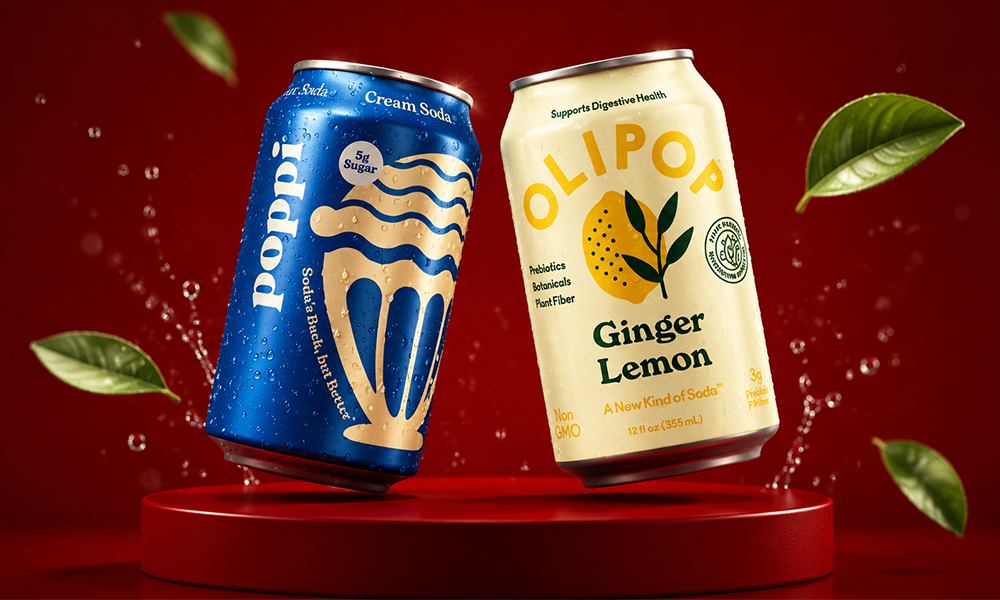
This is where the two products are most different.
Olipop Ingredients
Olipop’s functional core is a proprietary blend called OLISMART, which contains:
- Cassava root fiber
- Chicory root inulin
- Jerusalem artichoke inulin
- Nopal cactus extract
- Marshmallow root extract
- Calendula flower extract
- Kudzu root extract
Other base ingredients include carbonated water, a small amount of apple juice concentrate, natural flavors, Himalayan pink salt, and stevia leaf extract. Select flavors Vintage Cola, Cherry Cola, Doctor Goodwin, and Ridge Rush contain 50mg of caffeine from green tea.
Poppi Ingredients
Poppi’s formula is simpler. Its functional ingredients are apple cider vinegar and agave inulin (the source of its 2 grams of fiber). Other ingredients include carbonated water, organic cane sugar, fruit juice, and natural flavors. Poppi uses real cane sugar rather than stevia.
Key Ingredient Difference
Olipop is built around prebiotic fiber from multiple plant sources. Poppi is built around apple cider vinegar, with fiber playing a secondary role. Apple cider vinegar has a long wellness reputation, but at the amount found in a single can, it lacks strong clinical evidence for meaningful microbiome impact. Olipop’s 9-gram fiber dose is in the range where prebiotic research actually shows effects on gut bacteria.
Nutrition Facts: Head-to-Head
| Nutrient | Olipop | Poppi |
| Calories | 35–50 per can | 25 per can |
| Total Sugar | 2–5g | Up to 5g |
| Prebiotic Fiber | 9g (32% Daily Value) | 2g (7% Daily Value) |
| Sweetener | Stevia + cassava syrup | Organic cane sugar |
| Apple Cider Vinegar | No | Yes |
| Caffeine options | Yes (select flavors) | No |
| Sodium | 20–35mg | Varies by flavor |
The fiber gap is the single most important number here. Most Americans get roughly 15 grams of fiber per day about half the recommended amount. One can of Olipop covers nearly a third of your daily target. One can of Poppi covers 7%. That difference matters if gut health is actually your goal.
It’s also worth noting that Poppi has slightly more added sugar per can despite having fewer total calories. Olipop’s calories come packaged with 9 grams of fiber fiber that slows digestion and feeds gut bacteria. Poppi’s calories are more straightforward sugar calories.
Taste Comparison
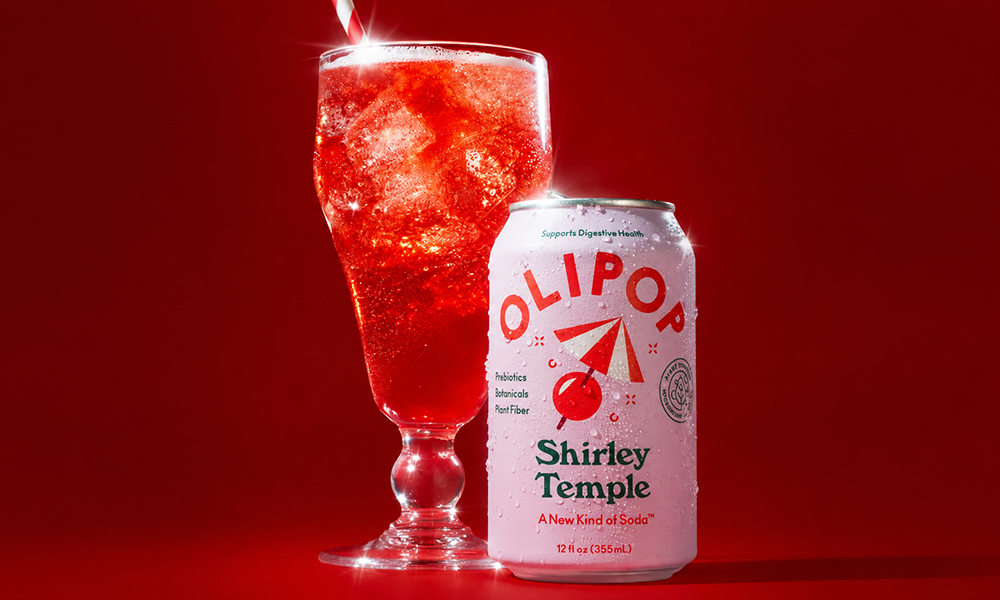
Taste is personal, but patterns show up consistently across reviews and taste tests.
Olipop tends to taste more complex and closer to traditional soda. Flavors like Vintage Cola and Classic Root Beer have a herbal depth from the botanical extracts in the fiber blend. The stevia sweetness is noticeable in some flavors if you’re sensitive to stevia’s aftertaste, you may pick up on it. The carbonation is strong and the mouthfeel is slightly thicker than Poppi due to the higher fiber content.
Poppi tastes lighter and brighter. The cane sugar sweetness feels more familiar, closer to what regular soda drinkers expect. Flavors like Strawberry Lemon and Orange are vivid and fruit-forward. The apple cider vinegar is subtle in most flavors, though some people notice a mild tartness, especially in flavors like Cherry.
In Tasting Table’s published taste test ranking of 12 prebiotic and probiotic drink brands, Poppi came out above Olipop, praised for delivering better flavor balance across multiple flavors. If you’re transitioning away from regular soda, Poppi is the easier on-ramp. If you’ve already moved past needing drinks to taste exactly like mainstream soda, Olipop rewards you with more interesting flavor profiles.
Flavors Available
Olipop — 16+ Flavors (2026): Vintage Cola, Cherry Cola, Classic Root Beer, Cream Soda, Grape, Orange Squeeze, Strawberry Vanilla, Tropical Punch, Watermelon Lime, Banana Cream, Doctor Goodwin, Ridge Rush, Ginger Lemon, Cherry Vanilla, and rotating seasonal editions.
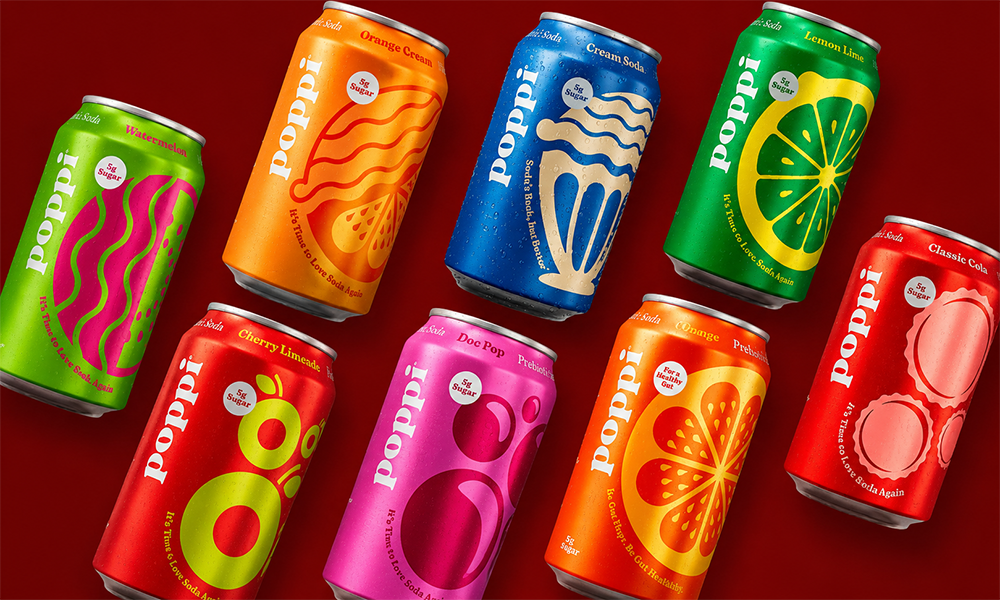
Poppi — 15 Flavors (2026): Classic Cola, Root Beer, Doc Pop, Orange, Orange Cream, Cherry Limeade, Cherry Cola, Grape, Watermelon, Wild Berry, Strawberry Lemon, Raspberry Rose, Ginger Lime, Lemon Lime, and Alpine Blast.
Both lineups include nostalgic soda copy-cats and fruity originals. Olipop’s range skews slightly more complex; Poppi’s flavors tend to be brighter and more juice-forward. Both brands offer variety packs a smart way to try multiple flavors before committing to a case.
Price Comparison
| Format | Olipop | Poppi |
| Single can (in-store) | $2.00–$3.00 | $2.00–$2.50 |
| 12-pack on Amazon | ~$35.99 (~$3.00/can) | ~$26.99 (~$2.25/can) |
| Costco / Sam’s Club | Available | Available |
Poppi runs slightly cheaper, especially in multipacks. Both are significantly more expensive than mainstream soda a 12-pack of Coca-Cola typically costs under $7. You’re paying for the functional ingredients and brand positioning, so understanding what you’re actually getting per can matters.
Gut Health: What the Science Says
Both brands market themselves as gut-friendly. The reality is more nuanced than the label claims suggest.
Prebiotic fibers the kind found in both drinks are real and researched. When they reach the large intestine, they feed beneficial bacteria, supporting a healthier gut microbiome. The research on inulin specifically is solid: it reliably increases beneficial Bifidobacteria in controlled studies. But dose matters. Studies typically use doses starting around 5 grams daily to see meaningful effects.
Olipop’s 9 grams per can is within that meaningful range. Poppi’s 2 grams is not, on its own, enough to shift the microbiome significantly. A 2015 study published in the Journal of Nutrition found positive gut microbiome changes from 5 to 7.5 grams of agave inulin daily over 21 days more than twice what Poppi delivers in a single can.
Poppi’s apple cider vinegar has smaller supportive studies around glycemic response and satiety, but it is not a prebiotic in the same way inulin is, and it doesn’t substitute for fiber when the goal is feeding gut bacteria.
One important caveat for Olipop: its prebiotic fibers, particularly chicory root and Jerusalem artichoke inulin, are classified as FODMAPs a group of carbohydrates known to worsen symptoms in people with irritable bowel syndrome. If you have a sensitive digestive system, IBS, or SIBO, Poppi’s lower fiber content is far less likely to cause problems. Olipop themselves recommend starting with one can and gradually increasing to let your gut adjust.
Neither product is a substitute for a fiber-rich whole foods diet. Vegetables, legumes, fruits, and whole grains remain the best sources of fiber. These sodas are a better choice than Coca-Cola, but a supplement to good eating habits not a replacement.
Lawsuits and Health Claims: What You Should Know
Poppi faced a class-action lawsuit filed in June 2024, alleging that the brand’s gut health marketing claims were misleading given that its cans contain only 2 grams of prebiotic fiber an amount the lawsuit argued was too low to deliver meaningful gut health benefits. Poppi settled the case for $8.9 million in 2025. The settlement covered US residents who purchased Poppi products. Poppi’s original cans read “be gut healthy” language that has since been revised.
Olipop is not facing the same type of class action over fiber content or gut health claims. The brand did settle a separate California Proposition 65 case in 2025 related to lead and mercury warning labels a different issue entirely. As of 2026, no verified consumer class action over Olipop’s gut health claims has been formally filed or resolved.
The broader lesson: the prebiotic soda category has a marketing-reality gap. Read the nutrition label rather than the front of the can. Olipop’s higher fiber content gives it a stronger factual basis for its gut health positioning than Poppi’s does.
Availability and Where to Buy
Both brands are available at:
- Walmart, Target, Costco, Sam’s Club
- Whole Foods, Kroger, and most major grocery chains
- Amazon (multipacks and variety packs)
- Brand websites with subscription options
Poppi has a growing distribution advantage following the PepsiCo acquisition. Expect to see it in more convenience stores, vending machines, and gas stations through 2026 and beyond as PepsiCo integrates the brand into its network.
Olipop is available across 50,000+ US retail outlets as of 2026, and in limited capacity in Canada. It originally required refrigeration, though it introduced shelf-stable versions in 2024 using a revised fiber blend.
Who Should Buy Which
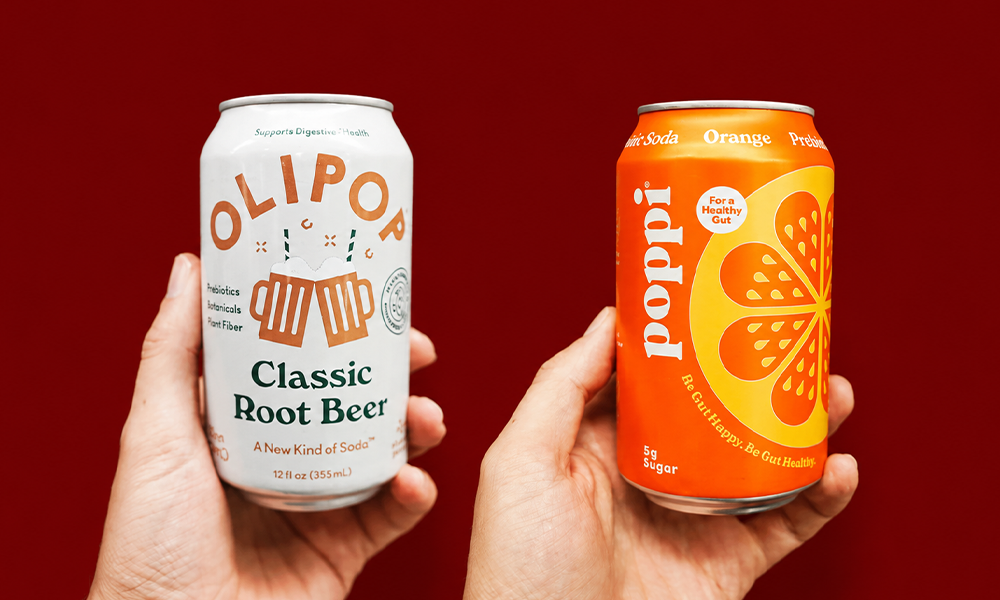
Choose Olipop if:
- Gut health is your main reason for switching from regular soda
- You’re already comfortable with stevia-sweetened drinks
- You enjoy complex, craft-soda-style flavors
- You don’t have IBS, SIBO, or FODMAP sensitivities
- You want the most nutritional return per can
Choose Poppi if:
- You’re transitioning away from regular soda and want something familiar
- You prefer the taste of real cane sugar over stevia
- You have a sensitive stomach or digestive sensitivities
- You want fewer calories per can
- You like the idea of apple cider vinegar as a functional ingredient
Be cautious with both if:
- You have a diagnosed digestive condition speak to a registered dietitian before adding high-fiber drinks
- You’re treating either product as a replacement for eating whole food sources of fiber
Scorecard Summary
| Category | Winner |
| Prebiotic fiber content | Olipop (9g vs 2g) |
| Lower calories | Poppi |
| Taste — accessibility for soda drinkers | Poppi |
| Flavor complexity | Olipop |
| Price per can | Poppi |
| IBS / sensitive stomach friendly | Poppi |
| Distribution reach | Poppi (PepsiCo-backed) |
| Gut health marketing backed by fiber dose | Olipop |
| Remains independent | Olipop |
FAQs
Is Olipop or Poppi better for gut health?
Olipop, by a meaningful margin. Its 9 grams of prebiotic fiber per can falls within the dose range that research associates with real gut microbiome benefits. Poppi’s 2 grams is unlikely to produce significant effects on its own.
Is Poppi owned by PepsiCo?
Yes. PepsiCo completed its acquisition of Poppi in May 2025 for approximately $1.95 billion. Poppi continues to operate under its own brand name.
Which has less sugar Poppi or Olipop?
They’re nearly identical. Both have 2 to 5 grams of sugar per can. Olipop uses stevia and cassava syrup; Poppi uses organic cane sugar.
Can I drink Olipop or Poppi every day?
Most healthy adults can drink one to two cans daily. With Olipop, introduce it gradually the 9 grams of fiber can cause gas or bloating initially as your gut adjusts. People with IBS or FODMAP sensitivities should start with half a can or consult a healthcare provider first.
Which tastes better Poppi or Olipop?
It depends on what you’re used to. Poppi tastes closer to a lightly sweetened sparkling juice, familiar to regular soda drinkers. Olipop has a more complex, herbal profile similar to craft soda. Poppi tends to win with newcomers; Olipop wins with repeat buyers who want something interesting.
Which is cheaper?
Poppi. It typically runs around $2.25 per can in multipacks versus around $3.00 for Olipop on Amazon. Both cost more per can than conventional soda.