
When people land on your website, they’re making fast judgments. They want to know what you do, who you do it for, and why it matters, all within seconds.
If your brand doesn’t answer those questions clearly and quickly, most visitors will move on without a second thought.
A clear brand helps people understand your business without having to dig around or ask follow-up questions. That means knowing what to say, how to say it, and where to put it. It also means staying consistent across every page, platform, and touchpoint. Get those things right, and your brand starts doing a lot more of the work for you.
To help you achieve that, we’ll go through the practical steps that make a real difference.
Make Your Value Obvious
One of the fastest ways to make your brand easier to understand is to make your value obvious. People shouldn’t have to interpret vague taglines, decode industry jargon, or guess how your product fits into their lives.
Clear value statements reduce friction and help visitors decide whether your offer matches their needs.
There’s another advantage to this approach. When a brand communicates its offer in direct language, it signals confidence. Businesses that understand their strengths can explain them clearly. That confidence makes messaging more persuasive because people can quickly see what the company delivers and why it matters.
To put this into practice:
- Review your homepage, social profiles, and key landing pages.
- Answer three questions within the first few seconds of a visit: What do you offer? Who is it for? What result can customers expect?
- Replace broad claims with specific language that highlights outcomes.
- Keep your primary message visible above the fold and use supporting copy to reinforce it.
- If someone unfamiliar with your business can’t explain your offer after a brief visit, keep simplifying.
- Regular customer interviews and usability tests can reveal confusing language before it spreads widely online.
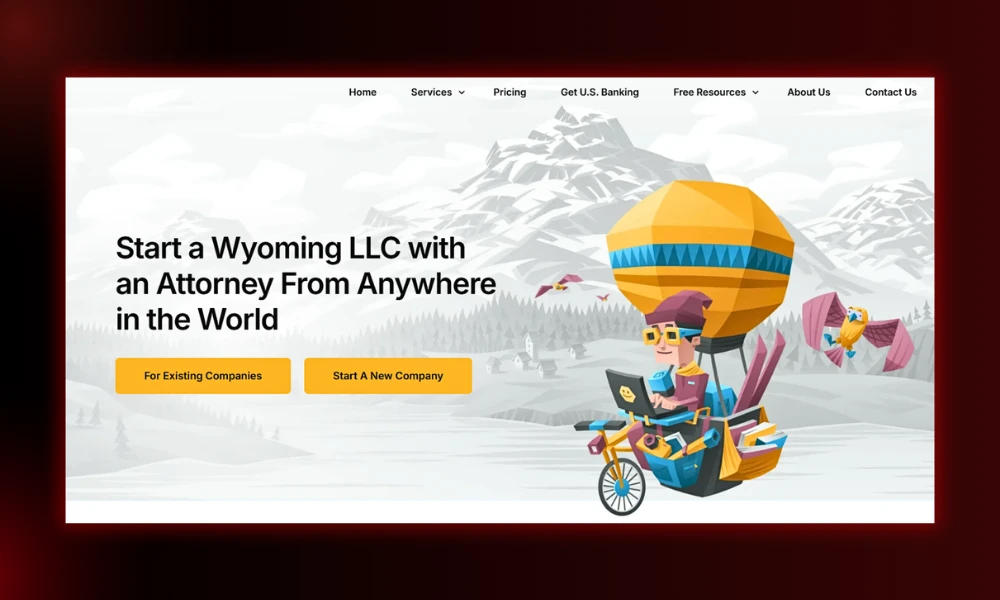
Here’s a strong example of this method by a successful brand. Start in Wyoming is a company that helps entrepreneurs form Wyoming LLCs and access registered agent services.
Their website quickly tells visitors what they do and who they help. The header immediately explains the service, the intended audience, and the benefit. Visitors don’t need to search through multiple pages to understand the offer.
That clarity creates a smoother user experience and helps potential customers determine whether the service meets their needs within moments.
Source: startinwyoming.com
Turn Complexity Into Clarity
Complexity often creates hesitation. When customers encounter too many options, unclear instructions, or complicated explanations, they spend more time figuring out the process than evaluating the offer itself.
Brands that simplify complex information help people make decisions faster and with greater confidence.
To put this into practice:
- Map the customer journey from beginning to end.
- Identify every step a customer must take to achieve a result, then look for opportunities to simplify explanations, reduce unnecessary choices, and organize information logically.
- Present processes in a sequence that feels natural and easy to follow.
- Use short headings, concise descriptions, and visual cues that guide people from one stage to the next.
- Replace internal language with customer language. Teams often describe products and services using technical terms that make sense inside the business but create confusion outside it.
- Review your website, sales materials, and onboarding resources to ensure every step is written in plain language.
- Whenever possible, explain actions, timelines, and outcomes upfront so customers know exactly what to expect.
Custom Sock Lab provides an excellent example of this approach. The company specializes in creating custom socks for businesses, organizations, events, and individual customers.
Product customization can involve multiple decisions, design revisions, and production steps, which can feel overwhelming without clear guidance. Custom Sock Lab simplifies the experience by breaking the process into straightforward stages that customers can easily understand. They make it easy to see how to move from a concept to a finished product.
This simplification allows the brand to remove uncertainty and helps customers move forward with confidence.
Source: customsocklab.com
Show, Don’t Just Tell
People process visual information quickly. While strong copy plays an important role in branding, images, videos, diagrams, and examples often communicate ideas faster.
When customers can see a product, service, or outcome in action, they spend less time imagining possibilities and more time evaluating whether the offer fits their needs.
To put this into practice:
- Select areas where customers commonly have questions or uncertainty.
- Instead of relying solely on written explanations, use visuals to provide answers.
- Product photos, before-and-after examples, screenshots, walkthrough videos, comparison charts, and case studies can all make information easier to understand. The goal is to reduce the effort required to picture the result.
- Match visuals with customer expectations. Generic stock photography rarely helps people understand what they’re buying. Real examples create stronger connections because they show actual outcomes.
- Demonstrate how your product works, how your service is delivered, or what customers can achieve after working with your business. Clear visual evidence helps support your message and improves comprehension across different audience types.
A brand that nails this method is Pergola Kits USA, a company that designs and sells ready-to-assemble pergola and pavilion kits for residential and commercial outdoor spaces.
Their website uses product imagery and visual examples to help visitors understand exactly what they can expect. Instead of requiring customers to rely on descriptions alone, the brand shows completed structures in real-world settings. This gives visitors a quick insight into design options, installation outcomes, and potential uses.
This visual approach simplifies decision-making because customers can connect the product to their own space. It makes the offer easier to understand and easier to evaluate.

Source: pergolakitsusa.com
Create a Brand People Can Explain
Some brands gain attention through advertising, while others grow because customers can easily describe them to friends, colleagues, and online communities.
When people understand what a business does in a matter of seconds, they can repeat that message accurately. Clear, repeatable messaging improves recognition, strengthens word-of-mouth marketing, and helps potential customers remember your brand when they need a solution.
To put this into practice:
- Simplify your core message.
- Ask yourself how a customer would describe your business in a single sentence.
- Remove unnecessary jargon, broad promises, and complicated explanations.
- Focus on the specific service, product, or outcome you provide.
- Test your messaging with people outside your industry and ask them to summarize what your company does after a brief visit to your website. If their answers vary widely, your message likely needs refinement.
- Consistency also matters. Use the same core language across your homepage, product pages, social media profiles, and marketing materials.
- Repetition helps people remember key ideas and makes your brand easier to describe. Strong messaging gives customers a clear explanation they can confidently share with others.
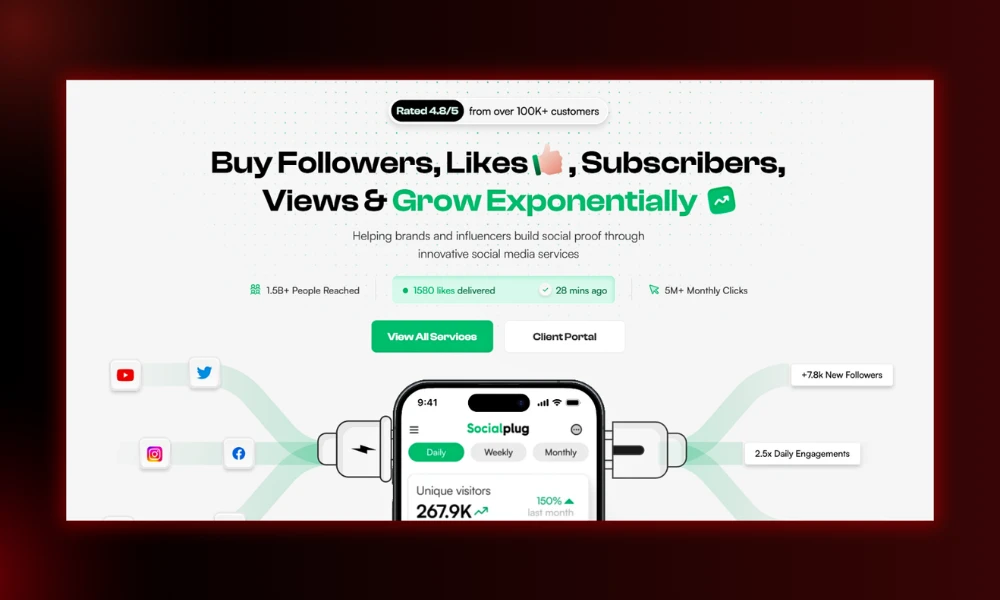
Socialplug demonstrates this approach effectively. The brand operates in the social media growth services space, offering followers, subscribers, likes, views, and comments for various platforms.
Instead of relying on vague claims about helping customers achieve social media success, the brand communicates its services directly. They quickly tell you what is available and what you can purchase.
That straightforward approach turns a complex category into a simple value proposition. Customers can easily explain the service to someone else because the message is clear, specific, memorable, and easy to repeat across different online audiences.
Source: socialplug.io
Say Less, Communicate More
Complexity slows decisions. When users encounter too many elements on a page, they pause, scan without focus, and often leave before acting. Simple communication removes that friction and keeps attention on what matters.
Reducing cognitive load doesn’t just make your website more pleasant to browse. It strengthens your entire business pipeline, from that first curious touch all the way to a renewed commitment from a returning customer.
A mind at ease processes information faster, remembers your value longer, and decides more confidently.
To put this into practice:
- Audit every page of your site and remove anything that does not support a clear decision.
- Focus each section on one idea and avoid stacking multiple messages in the same space.
- Use short headings, direct language, and consistent layout patterns so users always know where to look next.
- Replace dense paragraphs with structured blocks that highlight key actions and outcomes.
- Limit visual noise by reducing unnecessary colors, fonts, and decorative elements that distract from the message.
- Test clarity by asking users to explain what your page offers after a short glance.
TeuxDeux, a to-do app and daily organizer, embodies this minimalist philosophy beautifully.
Its homepage uses minimal design with a few headlines and simple visuals that present the tool without distraction. Clean fonts, soft colors, and tons of whitespace guide attention toward the main message and reduce the effort needed to understand the product.
This structure helps visitors grasp value quickly and supports confident decision-making from the first visit onward. Every element reinforces simplicity, ensuring customers focus only on what the product does and how it helps them stay organized without distraction or confusion.
This keeps navigation straightforward and easy to follow across the entire experience for all users.
Source: teuxdeux.com
Final Thoughts
Clarity isn’t a finishing touch you apply after the real branding work is done. It is the actual work.
Every tactic we’ve explored here, from making your value obvious to saying less while communicating more, shares a common thread: respect for the person on the other side of the screen.
When you commit to being understood instead of just being impressive, you transform your brand from something people puzzle over into something they instantly recognize and trust. That trust compounds. Clear brands earn faster decisions, louder advocacy, and deeper loyalty because they never ask their audience to do the heavy lifting of interpretation.
Start anywhere. Rewrite one confusing headline. Strip one cluttered page. Ask one customer to describe what you do and listen to their words. Each small step toward clarity makes your brand easier to grasp, easier to share, and harder to forget.