The Direct Answer
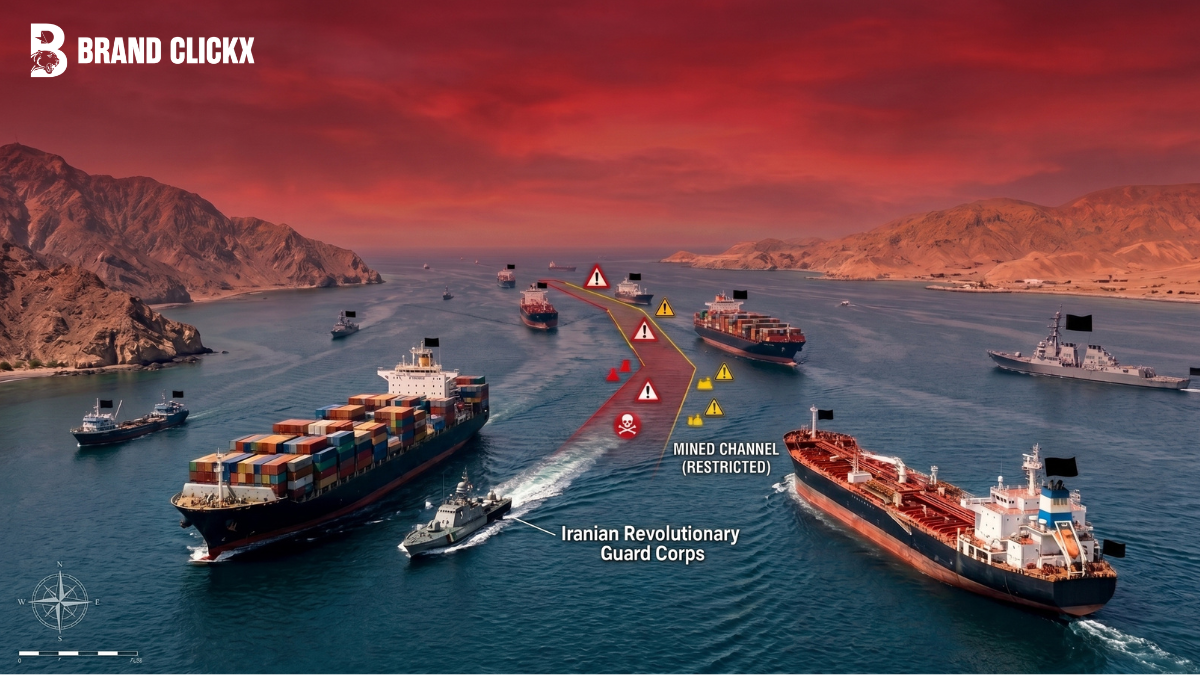
The Strait of Hormuz is partially and contestedly open, not fully closed and not fully normal. Commercial traffic is moving, but at levels well below pre-crisis volumes, the central shipping channel remains mined, and US and Iranian officials are currently giving directly conflicting public statements about its status.
There is no single, undisputed “open” or “closed” answer right now that contradiction is itself the main reason this question is trending.
Why This Is Trending Right Now
Search interest in this question has spiked because of a string of conflicting signals within the same 48–72 hour window:
- On June 25, 2026, a cargo vessel was struck by a projectile off Oman, which the US says Iran fired. This forced the UN’s International Maritime Organization (IMO) to pause its coordinated evacuation of ships sheltering in the Gulf.
- Iran’s IRGC has asserted control over which routes are “safe,” directing vessels to Iran-designated paths and turning back ships attempting to use the Omani route.
- At the same time, ship-tracking data shows commercial traffic had been rebuilding in the days prior Kpler recorded 70 Hormuz crossings on June 24 alone, more than double the count from the day before.
- US officials and Iranian officials are making opposite public claims about the same days of activity, which has been widely reported as an unresolved contradiction rather than a settled fact.
How the Strait Got to This Point
A brief, dated timeline of how the current situation developed:
- February 28, 2026: The US and Israel launched a military campaign against Iran (“Operation Epic Fury”). Iran’s IRGC responded by effectively shutting the strait to commercial shipping, laying sea mines, and attacking merchant vessels.
- Early March 2026: Iran issued a formal closure declaration. Before this crisis, the strait carried roughly 25% of global seaborne oil trade and 20% of global LNG trade, with no prior history of being fully closed.
- April 13 – May 29, 2026: The US separately blockaded Iranian ports, creating a period where both sides were simultaneously restricting traffic.
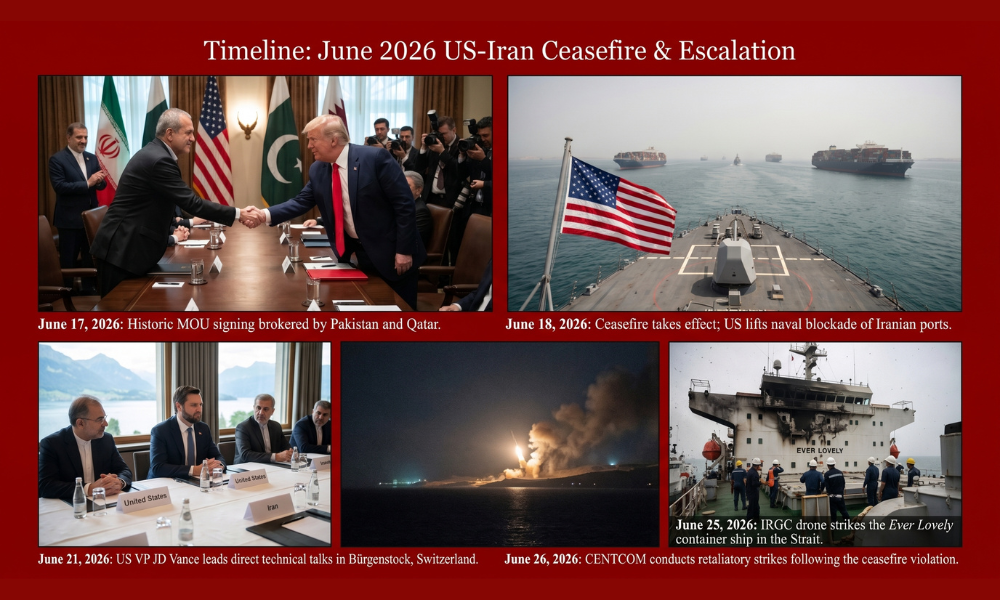
- June 17, 2026: The US and Iran signed the Islamabad Memorandum, a 14-point framework brokered by Pakistan with Qatar, Saudi Arabia, Turkey, and Egypt facilitating. Its terms required Iran to reopen the strait toll-free for 60 days and end the US naval blockade.
- June 18–24, 2026: Commercial traffic began rebuilding. Reported daily transit counts varied by source but showed a clear upward trend compared to the near-total halt of the preceding months.
- June 20, 2026: Iran’s top military command declared the strait closed again, citing Israeli strikes in Lebanon, while Iran’s own Foreign Ministry said shipping was “operating normally” the same day a contradiction inside Iran’s own government, separate from the US-Iran disagreement.
- June 25, 2026: The vessel strike off Oman occurred, prompting the IMO’s evacuation pause described above.
What’s Actually Confirmed vs. Disputed
Confirmed facts
- The central shipping channel through the strait remains mined and has not been fully cleared.
- Multiple large container shipping carriers suspended Hormuz transits earlier in the crisis or rerouted via the Cape of Good Hope, adding roughly two weeks to affected voyages.
- War-risk insurance premiums for vessels transiting the strait remain elevated compared to pre-crisis levels.
- The June 17 Islamabad Memorandum is a real, signed agreement between the US and Iran, with Pakistan as the primary mediator.
- Roughly 500–790 ships were reported stranded on either side of the strait at various points during the crisis, awaiting safe passage.
- The IMO paused its vessel evacuation effort following the June 25 strike off Oman.
Disputed or contradictory
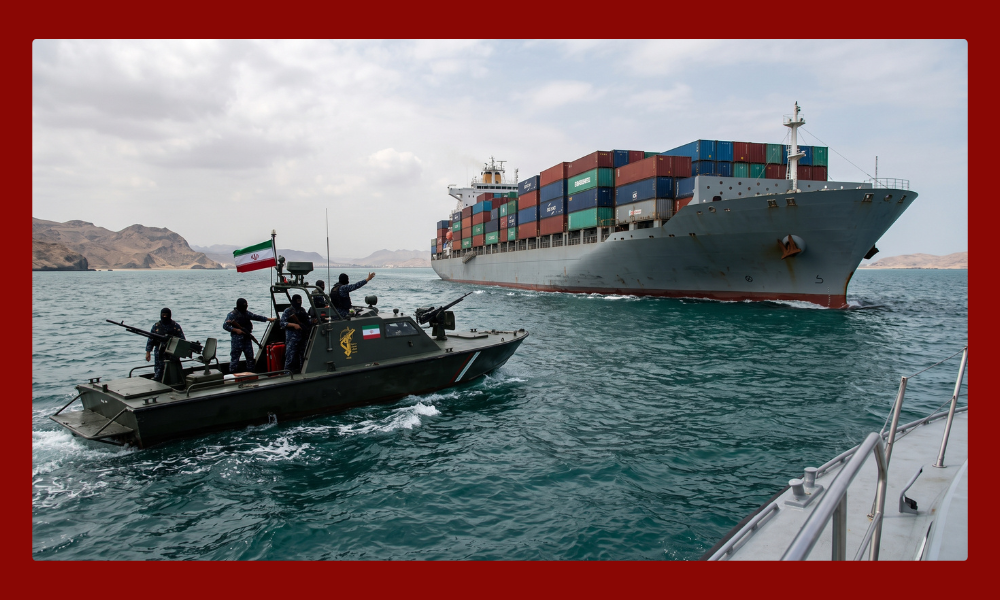
- Whether the strait is currently “open.” CENTCOM has repeatedly stated that transit remains “intact” and safe passage continues, citing specific daily transit counts (a CENTCOM release on June 20 cited 55 merchant ships transiting that day). Iran’s military command has separately declared the strait closed on more than one occasion during this same period, while Iran’s own Foreign Ministry has sometimes contradicted that closure claim within the same news cycle.
- The actual transit count on any given day. Different data providers report meaningfully different numbers. One tracking source’s published figure for June 21 recorded 5 vessel transits against a pre-crisis baseline of roughly 93 per day, while other sources reported dramatically higher counts for similar dates. Differing methodology and what counts as a “transit” explain at least some of this gap, but it has not been fully reconciled across sources.
- Whether tolls will apply. The Islamabad Memorandum specifies Iran cannot charge tolls for 60 days, but maritime legal experts have stated that any future toll regime imposed unilaterally by Iran outside that window would likely violate international navigation law, since fees can generally only be charged for specific services requested by a vessel, not for the act of transit passage itself.
Why Official Sources Disagree
Part of the disagreement comes down to who is making the claim and why. CENTCOM’s statements emphasize that US naval operations are actively supporting freedom of navigation and that transit is “intact.” Iran’s military and political branches have, at different points during this crisis, given inconsistent public statements to each other, not just to the US, reflecting genuine internal disagreement between Iran’s regular military, the IRGC, and its Foreign Ministry over how to characterize the strait’s status.
Maritime analysts have pointed out that neither government’s statement is ultimately the deciding factor. As one Eurasia Group analyst put it in coverage of the June 20 contradiction, it isn’t Iran or the US that decides whether the strait is functionally open, it’s the shipping and insurance companies that determine whether they’re willing to send vessels through. By that measure, the picture is also mixed: some shipping lines have resumed transits, while others, including major carriers, have reported no immediate plans to move stranded vessels despite the announced reopening.
What “Open” Would Actually Require
Based on reporting from energy and maritime analysts, a full return to normal operation requires several distinct steps, most of which are still incomplete:
- Mine clearance of the central shipping channel, which has not been completed.
- Resolution of the IMO evacuation pause, triggered by the June 25 strike.
- Consistent, verifiable safe-passage guarantees that hold regardless of unrelated regional events, such as the Israel-Lebanon situation that has repeatedly triggered renewed Iranian closure declarations.
- Insurance market normalization, since elevated war-risk premiums independently discourage shipping even where transit is technically possible.
- Resolution of the longer-term toll and administration question, the Islamabad Memorandum is a 60-day interim arrangement, not a permanent settlement of who controls and administers the strait going forward.
Analysts cited in multiple reports estimate that even with a durable agreement in place, full normalization of traffic volumes would likely take additional months, not days or weeks.
Frequently Asked Questions
Is the Strait of Hormuz open or closed right now?
Neither cleanly. Commercial transit is occurring at reduced volumes, but the central channel remains mined, official US and Iranian statements directly conflict on its status, and a June 25 vessel strike off Oman has further disrupted operations.
Why is “is the Strait of Hormuz open” trending?
Because of conflicting signals within the same short window: rebuilding transit data, a fresh vessel attack on June 25, an IMO evacuation pause, and contradictory public statements from US and Iranian officials about the same days of shipping activity.
Did the US and Iran sign a deal to reopen the strait?
Yes. The Islamabad Memorandum, signed June 17, 2026 and brokered by Pakistan, required Iran to reopen the strait toll-free for 60 days and end the US naval blockade, though implementation has been disrupted by subsequent incidents.
Is the central shipping channel safe to use?
No. The central channel remains mined and has not been fully cleared, which is why vessels have been using alternate northern (Iranian waters) and southern (Omani waters) routes instead.
When will the Strait of Hormuz return to normal?
There’s no confirmed date. Analysts estimate full normalization could take additional months even under a stable agreement, due to mine clearance, insurance market recovery, and unresolved questions about long-term toll and administration arrangements.