
Key Takeaways
- What is entrepreneurship? It is the process and activity of identifying opportunities, creating value, and developing or expanding economic activity.
- An entrepreneur does not simply have an idea. They take action, test assumptions, manage resources, solve problems, and respond to customers and market conditions.
- Entrepreneurship can take many forms, including small businesses, scalable startups, social enterprises, digital businesses, and innovation within established organizations.
- Most importantly, you do not need to begin with a huge company or a perfect plan. A practical problem, a useful solution, careful testing, and a willingness to learn can provide a much stronger starting point.
Quick Answer: What Is Entrepreneurship?
Entrepreneurship is the process of finding an opportunity, creating value through a product or service, and organizing resources to turn an idea into a real economic activity.
An entrepreneur may start a business independently, build a scalable startup, introduce an innovative product, or create a social enterprise.
In simple words, entrepreneurship means seeing a problem or opportunity and taking practical action to create something valuable from it.
What Is an Entrepreneur?
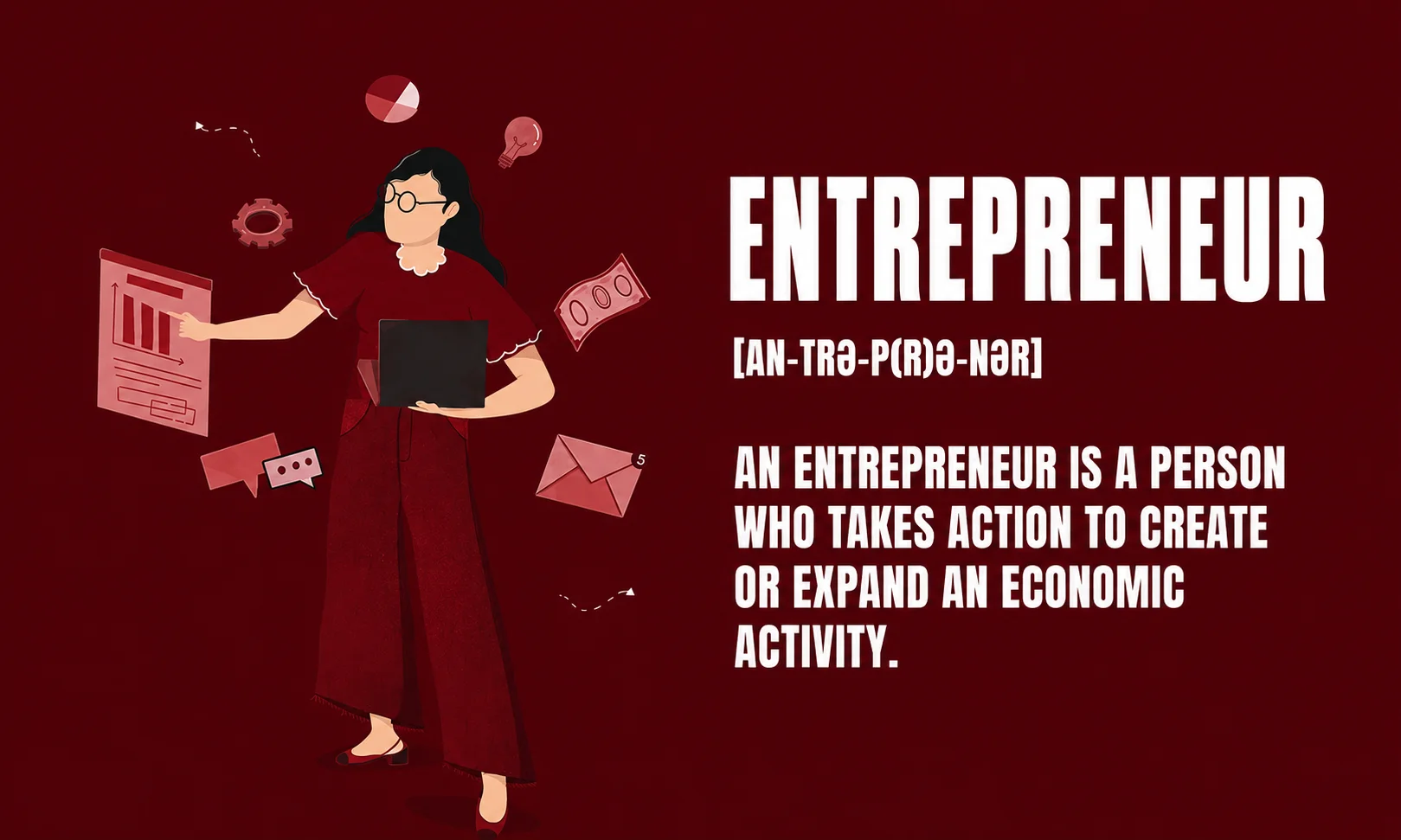
An entrepreneur is a person who takes action to create or expand an economic activity.
For example, imagine someone notices that small restaurants in their city struggle to manage online orders. They create an affordable ordering platform and offer it to local restaurants. That person is acting as an entrepreneur because they identified a problem and developed a solution.
Importantly, entrepreneurship does not always mean working alone. A person can demonstrate entrepreneurial behavior inside an established company, while organizations can also engage in entrepreneurial activities.
How Does Entrepreneurship Work?
Entrepreneurship usually starts with an opportunity rather than a finished business.
1. Identify a Problem or Opportunity
Successful entrepreneurs often begin by asking what people need, what frustrates customers, or what could be improved.
The opportunity could be a completely new idea. Alternatively, it could be a better, faster, cheaper, or more convenient way to provide an existing product or service.
2. Develop a Solution
Once an opportunity is identified, the entrepreneur creates a possible solution.
This might be a physical product, mobile application, website, consulting service, restaurant, online store, or another type of business.
3. Understand the Market
Before investing heavily, an entrepreneur needs to understand potential customers.
This includes researching competitors, customer needs, pricing, demand, and the factors that could make the idea succeed or fail.
4. Test the Idea
Instead of immediately building a large company, entrepreneurs can test their assumptions with a small version of the idea.
For example, someone planning an online clothing store could begin with a limited collection and measure customer interest before expanding.
5. Build and Improve
If customers respond positively, the entrepreneur can improve the product, develop operations, attract employees, and expand the business.
Innovation can involve a new or significantly improved product or business process that is introduced to the market or put into use.
Main Types of Entrepreneurship
There is no single form of entrepreneurship. Different entrepreneurs have different goals, resources, industries, and approaches.
| Type | Main Focus | Simple Example |
|---|---|---|
| Small business | Sustainable independent business | Local bakery |
| Scalable startup | Rapid growth | Software startup |
| Social entrepreneurship | Solving social problems | Affordable education service |
| Digital entrepreneurship | Online or technology-enabled activity | SaaS platform |
| Innovative entrepreneurship | New products or approaches | New technology product |
| Large company entrepreneurship | Innovation within established firms | New product division |
Small Business Entrepreneurship
Small business entrepreneurs usually focus on serving a specific market rather than pursuing extremely rapid growth.
Scalable Startup Entrepreneurship
These entrepreneurs aim to build businesses that can grow quickly into larger markets.
Technology companies are common examples because digital products can sometimes serve many customers without increasing costs at the same rate.
Social Entrepreneurship
Social entrepreneurs combine business activity with a social or environmental purpose.
The goal can be financial sustainability while also addressing a problem such as education, accessibility, employment, or environmental protection.
Digital Entrepreneurship
Digital entrepreneurship uses digital technology, online platforms, or ICT-enabled products and services.
The OECD notes that digital entrepreneurship is not limited to technology companies. It can also involve traditional self-employed people using digital technologies to improve productivity.
Why Is Entrepreneurship Important?
Entrepreneurship matters because it can contribute to innovation, economic activity, competition, and new opportunities.
When entrepreneurs introduce new products or improve existing processes, consumers may gain more choices and businesses may become more efficient.
Entrepreneurial ecosystems also involve factors such as access to finance, skills, markets, networks, institutions, and other conditions that can support or restrict entrepreneurial activity.
The OECD also notes that the outcomes of entrepreneurship are not always financial — they may relate to increasing employment, tackling inequalities, or addressing environmental issues.
Entrepreneurship Can Create Jobs
Growing businesses often need additional employees.
However, job creation depends on the type of business, its growth, industry, location, and economic conditions. Therefore, entrepreneurship should not automatically be treated as a guarantee of employment growth.
Entrepreneurship Encourages Innovation
Entrepreneurs frequently look for ways to improve existing solutions.
That could mean creating a completely new product or making an existing service easier to use.
Entrepreneurship Can Increase Consumer Choice
New businesses can introduce alternative products, services, prices, and experiences.
As a result, customers may have more options when deciding where to spend their money.
Benefits of Entrepreneurship
Entrepreneurship can offer several personal and business benefits.
Independence
Business owners may have greater control over their work, decisions, and direction.
However, independence also comes with responsibility because important financial and operational decisions cannot simply be passed to an employer.
Opportunity for Growth
A successful business can expand into new products, markets, locations, or customer groups.
Growth, however, requires planning and does not happen automatically.
Problem Solving
Entrepreneurs constantly face challenges.
Consequently, entrepreneurship can strengthen skills such as decision making, communication, negotiation, planning, and problem solving.
Personal Development
Running a business can push people outside their comfort zone.
Over time, entrepreneurs can develop practical knowledge that is difficult to gain from theory alone.
Challenges of Entrepreneurship

Understanding what entrepreneurship is also means understanding its difficult side.
Financial Risk
Starting a business can require personal savings, loans, investment, or other resources.
There is no guarantee that the business will generate enough revenue to recover those costs.
Uncertainty
Customer demand, competitors, regulations, technology, suppliers, and economic conditions can change.
Therefore, entrepreneurs need to make decisions even when they do not have perfect information.
Time and Responsibility
Entrepreneurs may need to handle marketing, finances, customer service, operations, hiring, and strategy.
Consequently, managing time and priorities becomes extremely important.
Competition
A good idea is not enough by itself.
Other businesses may offer similar products, lower prices, stronger branding, better customer service, or greater convenience.
Entrepreneur vs. Business Owner
These terms are often used interchangeably, but they can describe different ideas.
| Entrepreneur | Business Owner |
|---|---|
| Often focuses on opportunities and value creation | May focus primarily on operating an established business |
| May introduce new products or processes | May use an existing business model |
| Can pursue rapid growth or innovation | May prefer stable and predictable operations |
| Often accepts calculated uncertainty | Can focus on reducing operational risk |
| May build something new | May purchase or inherit an existing business |
The distinction is not absolute. A business owner can also be an entrepreneur, especially when they actively identify opportunities, innovate, or expand their economic activity.
What Skills Does an Entrepreneur Need?

You do not need to be born with every entrepreneurial skill.
Many useful abilities can be developed through education, practice, experience, and feedback.
Communication
Entrepreneurs need to explain ideas clearly to customers, employees, suppliers, partners, and investors.
Financial Awareness
Understanding revenue, costs, cash flow, pricing, and profit is essential for making sensible decisions.
Problem Solving
Business rarely follows a perfect plan. Entrepreneurs need to identify problems and find workable solutions.
Adaptability
Markets change. Customer preferences change. Technology changes.
Therefore, entrepreneurs need to learn, test, adjust, and sometimes change direction.
Decision Making
Entrepreneurs frequently have incomplete information.
Good decision making means considering evidence, risks, potential rewards, and available resources before taking action.
How to Become an Entrepreneur
You do not necessarily need a large investment to begin learning entrepreneurship.
Start by observing problems around you and identifying areas where people need better solutions.
Next, choose one problem and research the potential customers. Find out whether people actually experience the problem and whether they would pay for a solution.
Then create a simple version of your product or service. Test it with real users, collect feedback, and improve it.
Finally, create a basic business plan covering your customer, solution, competitors, pricing, costs, marketing approach, and short-term goals.
Most importantly, start small enough that you can learn without taking unnecessary financial risks.
Common Mistakes New Entrepreneurs Make
Starting Without Understanding Customers
An idea may sound exciting but still have little market demand.
Customer research should come before major spending.
Spending Too Much Too Early
New entrepreneurs sometimes invest heavily in branding, equipment, offices, or technology before proving that customers want the product.
A smaller test can provide useful evidence first.
Ignoring Cash Flow
Profit and cash flow are not exactly the same.
A business can appear profitable on paper while still struggling to pay its immediate bills.
Trying to Do Everything Alone
Entrepreneurs often need accountants, designers, developers, marketers, mentors, lawyers, or other specialists.
Getting appropriate help can prevent expensive mistakes.
Confusing Risk With Recklessness
Entrepreneurship involves risk, but successful decision making is not about taking every possible risk.
Calculated experiments are generally more useful than uncontrolled bets.
Is Entrepreneurship Only About Starting a Business?
No.
This is one of the most important points when understanding what entrepreneurship is.
Entrepreneurial behavior can appear in startups, established companies, social enterprises, public organizations, and even within an employee’s role. The OECD definition focuses on entrepreneurial action and value creation rather than simply registering a company — noting that entrepreneurial forces can be found in many existing businesses.
Therefore, someone can think and act entrepreneurially without immediately becoming a full-time business owner.
Frequently Asked Questions
What is entrepreneurship in simple words?
Entrepreneurship means finding an opportunity or problem and taking action to create value through a product, service, process, or business activity.
What is the difference between an entrepreneur and entrepreneurship?
An entrepreneur is the person taking entrepreneurial action, while entrepreneurship refers to the broader activity or process associated with creating and expanding economic value.
Do entrepreneurs have to start a company?
No. Entrepreneurial activity can happen inside established organizations as well as through new businesses.
Is entrepreneurship risky?
Yes, entrepreneurship can involve financial and operational uncertainty. However, entrepreneurs can reduce unnecessary risk through research, testing, budgeting, and gradual investment.
Can a student become an entrepreneur?
Yes. Students can start with small projects, freelancing, digital services, online stores, content businesses, software projects, or other practical ventures.
What is digital entrepreneurship?
Digital entrepreneurship involves creating or expanding economic activity through digital or ICT-enabled products, processes, services, or markets.
What is the most important entrepreneurial skill?
There is no single skill that guarantees success. However, problem solving, customer understanding, communication, financial awareness, adaptability, and decision making are all valuable.
Beginner Entrepreneurship Checklist
- Identify a real problem
- Define the people who experience it
- Research competitors
- Create a simple solution
- Test your idea with real users
- Calculate basic costs
- Decide how the business can earn revenue
- Collect feedback
- Improve the product or service
- Track money carefully
- Start small and scale when the evidence supports growth
Conclusion
Understanding what entrepreneurship is becomes much easier when you look beyond the idea of simply “starting a business.”
At its core, entrepreneurship is about recognizing opportunities, creating value, taking informed action, and adapting when circumstances change. It can lead to a small independent business, a rapidly growing startup, a digital venture, or innovative work within an existing organization.
For beginners, the best approach is usually to start with a real problem rather than chasing a trendy business idea. Research your audience, test your solution, control your costs, listen to feedback, and improve step by step.
At BrandClickX, the goal is to make complex business and digital topics easier to understand and apply. Whether you are a student exploring entrepreneurship, an aspiring founder, or simply curious about how businesses are created, learning the fundamentals is a practical first step toward making better decisions.