Making money online in 2026 is no longer limited to filling out surveys or chasing questionable side hustles.
We can sell professional skills to clients in other countries, work remotely for companies, teach students through video calls, publish specialized content, build digital products, operate online stores, and create audiences that support multiple income streams.
This opportunity truly exists, but not everyone can take the same path to pursue it.
Some of us need income as quickly as possible. Others can spend months developing an audience, building a website, creating a product, or developing a specialized skill. The right choice depends on what we can do, how much time we have, how much money we can invest, and whether we want employment, freelancing, or a scalable business.
This guide covers 20 legitimate ways to make money online in 2026, with practical information about startup requirements, earning models, advantages, challenges, and the best way to get started.
Important: Online income is not guaranteed. We should evaluate every opportunity based on the value we provide, the demand for that value, the costs involved, and the credibility of the people or companies involved.
Quick Comparison: 20 Ways to Make Money Online
| Online Income Method | Best For | Startup Cost | Time to Build | Scalability |
| Freelance Writing | Writers and researchers | Low | Short–Medium | Medium |
| Graphic Design | Designers | Low | Short–Medium | Medium |
| Virtual Assistance | Organized workers | Low | Short | Medium |
| Online Tutoring | Teachers and experts | Low | Short | Medium |
| Digital Products | Creators and specialists | Low | Medium | High |
| Affiliate Marketing | Content creators | Low | Medium–Long | High |
| YouTube | Video creators | Low–Medium | Long | High |
| Blogging | Writers and publishers | Low–Medium | Long | High |
| Social Media Management | Content specialists | Low | Short–Medium | Medium |
| Video Editing | Editors | Low–Medium | Short–Medium | Medium |
| E-Commerce | Entrepreneurs | Medium | Medium | High |
| Online Courses | Experts | Low–Medium | Medium | High |
| Remote Customer Support | Job seekers | Low | Short | Low–Medium |
| Web Development | Developers | Low | Medium | High |
| Print-on-Demand | Designers | Low–Medium | Medium | Medium |
| Stock Photography | Photographers | Low–Medium | Long | Medium |
| Transcription | Typists and language workers | Low | Short | Low–Medium |
| User Testing | Beginners | Low | Short | Low |
| Consulting | Professionals | Low | Medium | High |
| Newsletters | Writers and experts | Low | Medium–Long | High |
How to Make Money Online in 2026
We can earn online income through four main categories of methods:
- Sell a skill
- Sell a product
- Build an audience
- Work remotely for an employer
The distinction matters because each model has a different path to income.
For example, freelance writing is primarily a service business. We perform work for a client and receive payment. A digital product works differently: we create an asset and sell copies of it to multiple customers.
YouTube, blogging, and newsletters are audience businesses. We first build attention and trust, then connect that audience to advertising, sponsorships, products, subscriptions, affiliates, or services.
Remote customer support is closer to traditional employment. We perform defined responsibilities for an employer and receive wages or salary.
Understanding these differences helps us avoid one of the most common mistakes in online work: expecting every method to produce results on the same timetable.
How to Choose the Most Suitable Online Money-Making Method for Yourself

Before selecting an online income method, we should evaluate five things.
1. Our Existing Skills
If we already know how to write, design, teach, edit videos, code, manage social media, or analyze business problems, selling that skill may be faster than starting an entirely new business.
2. Available Time
Someone with only five hours per week should not necessarily choose the same model as someone who can work online full-time.
Service work can often be organized around available hours. Content businesses may require consistent publishing for a much longer period.
3. Startup Budget
Some online businesses can begin with little more than a computer, internet connection, and free software.
Others require inventory, advertising, specialized equipment, software subscriptions, or other expenses.
4. Income Timeline
We should distinguish between earning sooner and building something valuable over time.
Freelancing or remote employment may provide a more direct route to paid work. Blogging, YouTube, affiliate marketing, and newsletters usually require more time to develop an audience.
5. Long-Term Goal
We should decide whether we want:
- A remote job
- Freelance income
- A small online business
- A scalable digital business
- Multiple income streams
A clear goal makes it easier to choose the appropriate model.
1. Freelance Writing
Freelance writing is one of the most accessible ways to make money online because businesses constantly need written communication.
We can write:
- Blog articles
- Website pages
- Product descriptions
- Email newsletters
- Case studies
- White papers
- Social media content
- Scripts
- Technical documentation
- Industry reports
The strongest opportunity usually comes from solving a specific business problem rather than simply announcing that we are “writers.”
A technology company may need technical articles. A financial company may have a need for education-related content. A software company may need product tutorials and comparison pages.
How We Can Start Freelance Writing
We can begin by selecting one or two areas in which we can demonstrate knowledge.
Then we can create three to five strong samples.
Those samples do not necessarily need to come from previous clients. We can create realistic portfolio pieces that demonstrate our ability to research, organize information, explain complex subjects, and write clearly.
After that, we can approach potential clients directly or use freelance marketplaces.
When using a marketplace, we should calculate platform fees before setting our prices. For example, Upwork currently states that its freelancer service fee ranges from 0% to 15% per contract, with the applicable percentage shown before the contract begins.
A Better Freelance Writing Strategy
Instead of competing solely on price, we can specialize.
Examples include:
- SEO content writing
- Financial writing
- Technology writing
- B2B writing
- SaaS content
- Technical writing
- E-commerce copywriting
- Email marketing
- Research-based articles
Best for: Writers, researchers, journalists, and strong communicators.
Main advantage: Low startup cost.
Main challenge: Finding consistent clients and building a reputation.
2. Offer Graphic Design Services
Graphic design gives us another way to turn a creative skill into online income.
Businesses need visual material for websites, advertisements, social media, presentations, product listings, newsletters, and branding.
We can offer services such as:
- Logo design
- Social media graphics
- YouTube thumbnails
- Presentation design
- Advertisement creatives
- Brand identity
- Website graphics
- Infographics
- Marketing materials
How We Can Build a Design Portfolio
We do not have to wait for a client before creating examples.
We can invent several fictional businesses and design complete visual packages for them.
For example, we could create:
- A restaurant brand
- A technology startup
- A clothing company
- A consulting firm
- An online education business
Each project can demonstrate a different ability.
The goal is to make potential clients immediately understand what we can produce.
Best for: Designers and visually creative professionals.
3. Become a Virtual Assistant

Virtual assistance is particularly suitable for people who are organized, dependable, and comfortable with digital tools.
A virtual assistant may manage:
- Calendars
- Appointments
- Spreadsheets
- Online research
- Customer messages
- Data organization
- Basic social media tasks
- Administrative work
- E-commerce operations
The work can vary significantly from one client to another.
A small business owner might need someone to organize appointments, while an online store might need help with customer messages and product listings.
How We Can Move Beyond Basic VA Work
After gaining experience, we can specialize.
Possible niches include:
- Executive virtual assistance
- Real estate assistance
- E-commerce assistance
- Social media assistance
- Podcast assistance
- Research assistance
- Online business administration
Specialization can allow us to market ourselves around a particular problem rather than competing with every virtual assistant.
Best for: Organized beginners and administrative professionals.
4. Teach Students Online
Online tutoring turns knowledge into a service.
We can teach:
- Mathematics
- English
- Science
- Programming
- Languages
- Writing
- Test preparation
- Academic subjects
- Professional skills
The key is not simply knowing a subject.
We also need to explain concepts clearly, identify mistakes, adapt to different learning speeds, and provide useful exercises.
How to Make Online Tutoring More Valuable
Instead of offering an extremely broad service, we can target a specific learner.
For example:
English conversation for professionals
is more specific than:
English tutoring.
Likewise:
Beginner Python lessons for high-school students
communicates a clearer audience and outcome than:
Programming classes.
Best for: Teachers, graduates, professionals, and subject specialists.
5. Sell Digital Products
Digital products are attractive because we can create an asset and sell it electronically without managing traditional physical inventory.
Examples include:
- Ebooks
- Templates
- Checklists
- Spreadsheets
- Planners
- Study guides
- Printable resources
- Design assets
- Business templates
- Research documents
The most important principle is problem-solution fit.
A generic product may be difficult to sell because customers cannot immediately see why they need it.
A specific product can be easier to position.
For example:
Monthly household budget spreadsheet for families
communicates a clearer purpose than:
Finance spreadsheet.
Digital Product Formula
We can think about the process like this:
Specific problem → Useful solution → Simple product → Targeted audience → Distribution → Customer feedback → Improved product
The product does not need to be complicated.
Sometimes a well-designed template that saves someone an hour of work can be more useful than a large collection of unnecessary features.
Best for: Creators, researchers, designers, educators, and professionals with specialized knowledge.
6. Start Affiliate Marketing
Affiliate marketing allows us to earn a commission when people purchase products or services through qualifying referrals.
The model can work with:
- Blogs
- YouTube channels
- Newsletters
- Social media
- Comparison websites
- Tutorials
- Product reviews
The strongest affiliate content is generally useful even before the reader clicks a commercial link.
Content That Can Support Affiliate Income
We can create:
- Product comparisons
- Buying guides
- Tutorials
- Reviews
- “Best tools for…” articles
- Alternatives pages
- Setup guides
- Problem-solving content
Trust is particularly important.
If every article appears designed only to generate a commission, readers have little reason to believe our recommendations.
We should explain limitations as well as benefits and clearly disclose commercial relationships where required.
Best for: Publishers and creators who can build an audience.
Main challenge: Traffic and trust usually take time to develop.
7. Build a YouTube Channel
YouTube can turn expertise, education, entertainment, commentary, demonstrations, or storytelling into a business.
Potential niches include:
- Technology
- Education
- Finance
- Gaming
- Business
- Cooking
- Travel
- Tutorials
- Product reviews
- Career advice
- Industry analysis
Revenue can come from multiple sources rather than advertising alone.
Depending on eligibility, YouTube’s Partner Program can provide access to advertising revenue and other monetization features. Current YouTube requirements include different thresholds for features; for full ad revenue eligibility, YouTube lists 1,000 subscribers plus either 4,000 valid public watch hours in the previous 12 months or 10 million valid public Shorts views in the previous 90 days, followed by a channel review.
YouTube Income Streams
A mature channel can potentially combine:
- Advertising
- Sponsorships
- Affiliate marketing
- Memberships
- Products
- Services
- Courses
- YouTube Shopping
- Premium-related revenue
We should not build a channel around subscriber numbers alone.
A smaller audience with strong trust and a clear commercial need can sometimes be more valuable than a much larger audience with little connection to the subject.
Best for: Video creators, educators, entertainers, and experts.
8. Start a Blog
Blogging remains a potential long-term online business when we build a useful publication around a clearly defined audience.
Possible niches include:
- Technology
- Finance
- Careers
- Education
- Business
- Travel
- Hobbies
- Software
- Professional industries
A blog can eventually support several revenue streams.
Blog Monetization Methods
We can use:
- Advertising
- Affiliate marketing
- Sponsored content
- Digital products
- Courses
- Consulting
- Services
- Paid subscriptions
What Makes a Blog More Valuable?
Publishing more articles is not automatically the answer.
We should focus on:
- Original research
- Accurate information
- Clear explanations
- First-hand experience where possible
- Strong organization
- Useful examples
- Updated information
- Author expertise
- Relevant internal links
- Clear sourcing
Google’s guidance emphasizes people-first content that provides substantial, complete information and demonstrates appropriate expertise rather than content created primarily to manipulate rankings.
Google also states that its fundamental SEO practices remain relevant for AI features such as AI Overviews and AI Mode; there is no separate special optimization requirement for appearing in those experiences.
That makes the objective straightforward: create pages that genuinely help someone understand or accomplish something.
9. Manage Social Media for Businesses

Many businesses know they need social media but do not have enough time to manage it consistently.
We can provide:
- Content calendars
- Caption writing
- Post creation
- Scheduling
- Community management
- Basic analytics
- Trend research
- Short-form content
- Profile optimization
How We Can Find Social Media Clients
We can look for businesses with obvious gaps.
For example:
- Inconsistent posting
- Poor-quality graphics
- Unclear captions
- Outdated profiles
- Weak content variety
- No visible content strategy
Instead of sending a generic message, we can identify one specific weakness and propose a small improvement.
That makes the conversation about the client’s problem rather than our need for a job.
Best for: Social media specialists, writers, designers, and content creators.
10. Become a Video Editor
The growth of video-based communication creates opportunities for editors.
We can work on:
- YouTube videos
- Shorts
- Reels
- Advertisements
- Podcasts
- Interviews
- Educational videos
- Corporate content
- Online courses
Useful skills include:
- Cutting
- Audio cleanup
- Captions
- Pacing
- Story structure
- Transitions
- Basic motion graphics
- Thumbnail coordination
How to Build a Video Editing Portfolio
We can create sample edits from legally usable footage or our own recordings.
A portfolio should show transformation.
Rather than only writing:
Professional video editor
we can demonstrate:
Raw footage → cleaned audio → tighter pacing → captions → finished video.
The client should be able to see the result.
11. Build an E-Commerce Business
E-commerce allows us to sell physical products through an online store or marketplace.
Potential models include:
- Handmade products
- Branded products
- Niche products
- Private-label products
- Customized products
- Marketplace selling
But sales alone do not tell us whether an e-commerce business is successful.
We need to calculate the economics.
E-Commerce Profit Calculation
A simple model is:
Net Profit = Revenue − Product Cost − Shipping − Platform Fees − Advertising − Returns − Operating Expenses
This distinction is critical.
A store generating $10,000 in sales may be less profitable than another store generating $5,000 if the first business has much higher costs.
What We Should Research Before Launching
We should examine:
- Customer demand
- Competition
- Product quality
- Supplier reliability
- Shipping
- Return rates
- Platform fees
- Advertising economics
- Gross margin
- Customer acquisition cost
Best for: Entrepreneurs who understand products, customers, and basic business economics.
12. Create an Online Course
An online course allows us to package specialized knowledge into a structured learning experience.
Potential subjects include:
- Coding
- Writing
- Design
- Photography
- Marketing
- Languages
- Business
- Academic subjects
- Professional skills
The strongest courses usually promise a clear learning outcome.
Instead of:
Complete Marketing Course
we can create something more specific such as:
Build a Basic Content Marketing Strategy for a Small Business.
The second version tells prospective students more about the problem and outcome.
What a Strong Online Course Can Include
A useful course can contain:
- Clear learning objectives
- Short lessons
- Demonstrations
- Practical exercises
- Examples
- Templates
- Assignments
- Progress checks
- A final project
We should teach the student how to perform a task, not simply provide information.
13. Find Remote Customer Support Jobs
Remote customer support can be one of the more accessible routes for people who prefer employment rather than freelancing.
Depending on the company, we may communicate with customers through:
- Live chat
- Phone
- Help-desk systems
- Social media
- Community platforms
Useful skills include:
- Clear communication
- Patience
- Problem-solving
- Product knowledge
- Computer literacy
- Organization
Unlike many entrepreneurial models, remote employment can provide a defined schedule and clearer responsibilities.
Best for: People seeking structured online employment.
14. Learn Web Development
Web development requires more technical learning than many beginner-friendly online income methods, but it can lead to higher-value services.
We can build:
- Business websites
- Landing pages
- E-commerce websites
- Web applications
- Dashboards
- Internal tools
- Custom features
A Practical Learning Path
A beginner can work through:
HTML → CSS → JavaScript → APIs → Frameworks → Databases → Real Projects
The exact technologies can change, but the principle remains the same: we should learn by building.
A portfolio containing functioning projects gives potential clients evidence that we can solve real problems.
How Developers Can Increase Their Value
Instead of selling:
Website development
we can eventually specialize in a business problem.
Examples:
- Websites for local businesses
- Landing pages for SaaS companies
- E-commerce development
- Conversion-focused landing pages
- Website performance improvements
- Custom dashboards
Best for: People willing to invest significant time in technical skills.
15. Try Print-on-Demand
Print-on-demand allows us to sell customized products without purchasing large quantities of inventory before receiving orders.
Possible products include:
- T-shirts
- Hoodies
- Mugs
- Posters
- Notebooks
- Accessories
The biggest challenge is differentiation.
A store filled with generic designs has little reason to attract customers.
A stronger approach is to understand a specific audience.
We might create products around:
- A hobby
- A profession
- A sport
- A community
- A lifestyle
- A specific interest
We should also calculate the actual margin after manufacturing, platform costs, shipping, refunds, and marketing.
Best for: Designers and niche-focused entrepreneurs.
16. License Stock Photos and Videos
Photographers and videographers can upload commercially useful media to stock platforms and potentially earn licensing revenue.
Useful categories can include:
- Business
- Technology
- Healthcare
- Food
- Travel
- Transportation
- Workplaces
- Education
- Everyday activities
Think in Terms of a Library
Stock media generally works better as a portfolio-building activity than as an expectation of instant income.
We can gradually develop a library around subjects that buyers repeatedly need.
For example, instead of uploading unrelated photographs, a creator might develop collections covering:
- Modern offices
- Remote work
- Business meetings
- Technology use
- Online education
A larger and more relevant portfolio can create more opportunities for licensing.
17. Offer Transcription and Captioning
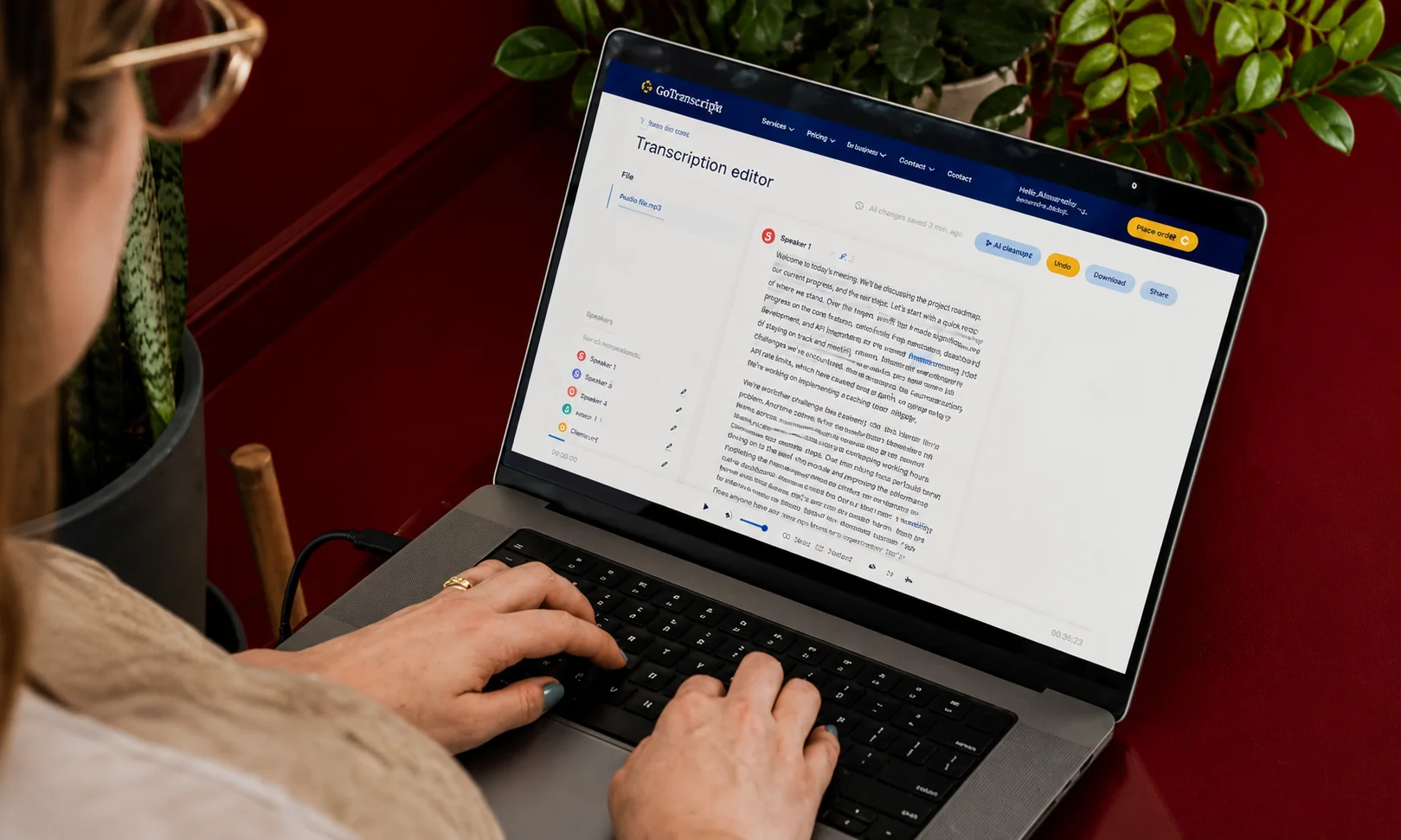
Transcription converts spoken material into written text.
Captioning adds synchronized text to video.
Potential clients include:
- Podcasters
- YouTubers
- Educators
- Businesses
- Researchers
- Media organizations
- Course creators
AI-assisted transcription has reduced the amount of manual typing required, but that does not eliminate the need for quality control.
Human review can still be valuable for:
- Speaker identification
- Names
- Technical terms
- Poor audio
- Punctuation
- Formatting
- Timing
- Context
The opportunity therefore becomes less about typing every word manually and more about delivering a reliable final transcript.
Best for: Detail-oriented people with strong listening and language skills.
18. Participate in User Testing
User testing allows companies to observe how people interact with websites, applications, and digital products.
A typical test may ask us to perform a task and explain what we find confusing or intuitive.
We might be asked to:
- Navigate a website
- Search for a product
- Complete a checkout process
- Find information
- Test an application
- Explain our reaction to a design
User testing should generally be viewed as supplemental income rather than guaranteed employment.
Availability can vary, and not every participant will qualify for every test.
We should also verify the legitimacy of any platform before providing personal information.
19. Offer Professional Consulting
Consulting can be particularly valuable when we already possess specialized experience.
Possible areas include:
- Marketing
- Sales
- Business strategy
- Technology
- Operations
- Finance
- Career development
- Education
- Industry-specific expertise
Consulting is different from simply selling information.
Clients may be paying for:
- Analysis
- Experience
- Strategic thinking
- Problem-solving
- Decision support
- Implementation guidance
How We Can Build Consulting Credibility
We can demonstrate expertise through:
- Case studies
- Previous results
- Professional experience
- Research
- Educational articles
- Presentations
- Testimonials
- Demonstration projects
A focused consulting offer is usually easier to explain than a vague promise to “help businesses grow.”
20. Start an Online Newsletter
A newsletter creates a direct communication channel with an audience.
We can build a newsletter around:
- Technology
- Artificial intelligence
- Business
- Finance
- Careers
- Education
- Industry news
- Professional research
- Specialized hobbies
Newsletter Monetization
Possible revenue sources include:
- Sponsorships
- Paid subscriptions
- Affiliate marketing
- Digital products
- Courses
- Consulting
- Services
The key question is not simply how frequently we can send emails.
It is:
Why should someone keep opening them?
A focused newsletter that consistently delivers valuable information can be easier to position than one that tries to cover every subject.
The Best Online Income Methods by Goal
Different goals require different approaches.
Best Online Jobs for Beginners
For beginners, we can consider:
- Virtual assistance
- Remote customer support
- Transcription
- Online tutoring
- Freelance writing
- Social media assistance
- User testing
These options can be relatively accessible because we can begin by selling a practical service or applying for defined work.
Best Ways to Make Money Online Without Investment
When our budget is limited, service-based models are often easier to start.
Examples include:
- Freelance writing
- Virtual assistance
- Online tutoring
- Consulting
- Social media management
- Remote customer support
We should remember that “no investment” does not mean “no resources.”
We still need time, internet access, a device, skills, and the ability to communicate professionally.
Best Online Businesses for Long-Term Growth
If we are prepared to wait longer for results, we can consider models that create reusable assets.
These include:
- Blogging
- YouTube
- Digital products
- Online courses
- Newsletters
- Affiliate websites
- E-commerce
The attraction is scalability.
A freelancer generally sells hours or projects. A digital product, course, video library, or publication can potentially serve many customers without requiring us to repeat exactly the same work for every customer.
Service Business vs. Audience Business
| Factor | Service Business | Audience Business |
| Examples | Writing, design, consulting | Blog, YouTube, newsletter |
| First priority | Find clients | Find readers/viewers |
| Income source | Client payments | Ads, sponsors, products, affiliates |
| Startup cost | Usually low | Usually low–medium |
| Time to first opportunity | Often shorter | Usually longer |
| Scalability | Moderate | Potentially high |
| Main asset | Skill + reputation | Audience + content library |
Neither model is automatically superior.
A practical strategy can be to start with a service, generate income, develop expertise, and gradually build an audience or product around that expertise.
A Simple Online Income Roadmap
flowchart TD
A[Assess Skills, Time and Budget] –> B{Need Income Soon?}
B –>|Yes| C[Choose a Service or Remote Job]
B –>|No| D[Build an Audience or Product]
C –> E[Create Portfolio or Resume]
E –> F[Find Clients or Employers]
F –> G[Complete Initial Work]
G –> H[Collect Experience and Feedback]
H –> I[Specialize and Raise Value]
D –> J[Choose a Specific Audience]
J –> K[Create Useful Content]
K –> L[Build Trust and Distribution]
L –> M[Introduce Products, Services or Monetization]
M –> N[Measure Results]
I –> N
N –> O[Improve and Build Multiple Income Streams]
How to Start Making Money Online Step by Step

Step 1: Choose One Primary Method
We should avoid launching five unrelated projects at the same time.
Choose one method based on our strongest combination of:
- Skill
- Demand
- Available time
- Budget
- Interest
Step 2: Choose a Specific Market
“Writing” is broad.
“Financial content writing for B2B companies” is more specific.
“Graphic design” is broad.
“YouTube thumbnail design for technology channels” is more specific.
Specific positioning can make it easier for potential customers to understand what we offer.
Step 3: Build Proof
Create:
- Portfolio samples
- Demonstration projects
- Case studies
- Tutorials
- Before-and-after examples
- Testimonials when available
Proof reduces uncertainty for potential customers.
Step 4: Create a Clear Offer
A strong offer should answer:
What do we provide?
Who is it for?
What problem does it solve?
What does the customer receive?
Step 5: Find Customers or Employers
Depending on the model, we can use:
- Freelance marketplaces
- Company career pages
- Professional networks
- Direct outreach
- Personal websites
- Social platforms
- Communities
- Referrals
We should focus on relevant opportunities rather than sending hundreds of identical messages.
Step 6: Deliver Excellent First Projects
The first projects are more than transactions.
They can create:
- Experience
- Testimonials
- Case studies
- Referrals
- Repeat customers
- Better portfolio material
Step 7: Specialize
Once we discover where we perform well, we can narrow our focus.
Specialization can improve:
- Positioning
- Pricing
- Marketing
- Expertise
- Client trust
Step 8: Build a Second Income Layer
Once the first income stream becomes stable, we can add a complementary one.
For example:
Freelance writer → blog → affiliate content → digital product
or:
YouTube editor → YouTube channel → course → consulting
The second stream should ideally reinforce the first rather than create an entirely unrelated workload.
How We Can Combine Multiple Online Income Streams
The strongest online businesses often connect several activities.
Consider a writer.
The writer can first sell articles as a service.
Then the writer can publish a blog demonstrating expertise.
The blog can attract readers.
Those readers can join a newsletter.
The newsletter can promote a digital product.
The same expertise can eventually become a course or consulting service.
This creates an ecosystem rather than a collection of unrelated side hustles.
flowchart LR
A[Professional Skill] –> B[Freelance Service]
A –> C[Public Content]
C –> D[Website or Blog]
C –> E[YouTube]
C –> F[Newsletter]
D –> G[Audience]
E –> G
F –> G
G –> H[Digital Products]
G –> I[Courses]
G –> J[Affiliate Income]
G –> K[Consulting]
B –> L[Experience and Credibility]
L –> G
How to Price Online Services
Pricing is one of the hardest decisions for new freelancers.
We should not look only at what competitors charge.
We should calculate:
- Time required
- Platform fees
- Software costs
- Taxes where applicable
- Revision time
- Communication time
- Research time
- Business expenses
- Desired profit
For example, if a project takes six hours but also requires two hours of communication and revisions, pricing it as a six-hour job understates the actual workload.
We should price around the complete delivery process.
As experience grows, we can also move from purely hourly pricing toward project-based or value-based structures when appropriate.
How to Find Online Clients
Finding clients is often more difficult than learning the technical skill.
We can use several approaches.
Direct Outreach
We identify businesses that have a problem we can solve and send a short, personalized proposal.
Freelance Platforms
Marketplaces can connect freelancers with customers, although competition and platform fees need to be considered.
Referrals
Satisfied customers can become a strong source of future work.
Content Marketing
We can publish useful information that demonstrates our expertise.
For example, a video editor can publish editing tutorials.
A financial writer can publish research-based financial explainers.
A web developer can publish website performance guides.
Content becomes evidence of competence.
How to Build an Online Portfolio
A portfolio does not need dozens of projects.
A focused portfolio can contain:
- Three to five strong examples
- Short descriptions
- The problem
- Our approach
- The final result
- Relevant tools
- Client feedback when available
The quality and relevance of examples matter more than simply filling a page with work.
How to Make Money Online With AI
Artificial intelligence can help us work faster, but the strongest opportunity is usually not simply producing generic AI-generated material.
We can use AI as a productivity tool for:
- Research organization
- Brainstorming
- Drafting
- Data organization
- Transcription
- Content repurposing
- Coding assistance
- Customer-support workflows
- Image ideation
- Document analysis
The valuable skill remains the ability to judge, edit, verify, improve, and apply the output to a real problem.
For example, a writer can use AI to accelerate research organization while remaining responsible for factual accuracy, structure, originality, and editorial judgment.
A developer can use AI-assisted coding while still testing and reviewing the resulting application.
A marketer can use AI to generate ideas while relying on customer knowledge and performance data to determine what actually works.
The tool is not the business.
The business comes from the problem we solve with the tool.
Common Mistakes When Trying to Make Money Online
Chasing Too Many Opportunities
Every new platform can look attractive.
Jumping from freelancing to dropshipping to YouTube to cryptocurrency to affiliate marketing prevents us from developing deep expertise.
Expecting Instant Income
A low-cost opportunity is not necessarily a fast opportunity.
Audience-based businesses often take longer to develop.
Competing Only on Price
Low prices can attract customers, but they can also create difficult economics and attract clients who are highly price-sensitive.
Building Without a Customer
We should not spend months creating a product before understanding whether people actually need it.
Confusing Revenue With Profit
Sales figures can look impressive while expenses consume most of the money.
Ignoring Skill Development
Online markets change.
We need to keep improving our ability to deliver useful results.
Copying Competitors
We can study successful businesses without reproducing their content, branding, products, or claims.
Our goal should be to identify what customers need and create a better solution.
How to Avoid Online Money-Making Scams
The internet contains legitimate opportunities and fraudulent ones.
We should be especially careful with offers involving:
- Guaranteed income
- Guaranteed profits
- Very high pay for almost no work
- Unexplained upfront fees
- Fake checks
- Requests to deposit money
- Recruitment-based payment schemes
- Unexpected job messages
- Requests for sensitive information before a legitimate hiring process
The U.S. Federal Trade Commission warns that legitimate placement firms generally do not charge job candidates upfront fees and recommends researching the company or recruiter before accepting an offer.
The FTC has also warned about fake remote-job recruiters who contact people through unexpected text messages and messaging platforms, sometimes eventually asking victims to send their own money.
A Simple Scam Test
Before accepting an opportunity, we should be able to answer:
- Who is paying us?
- What work are we performing?
- Why does the customer need that work?
- How will payment be made?
- What fees will we pay?
- What information are we being asked to provide?
- Can we independently verify the company?
If the business model remains unclear after basic research, we should not send money.
How Much Money Can We Make Online?
There is no universal income figure.
Earnings vary according to:
- Skill level
- Market demand
- Location
- Language
- Experience
- Pricing
- Number of clients
- Hours worked
- Audience size
- Product margins
- Business expenses
- Ability to retain customers
A beginner freelancer and an experienced specialist may perform the same category of work but operate at very different price points.
Likewise, two blogs can receive similar traffic but earn different amounts because their audiences, topics, products, and monetization models differ.
We should therefore judge an online business by its economics and sustainability, not by screenshots of another person’s income.
What Is the Fastest Way to Make Money Online?
For many beginners, selling an existing skill or obtaining remote employment can be more direct than building an audience from zero.
Potential starting points include:
- Freelance writing
- Virtual assistance
- Online tutoring
- Graphic design
- Video editing
- Remote customer support
- Transcription
However, “fastest” does not mean guaranteed.
We still need a marketable skill, a credible offer, and people willing to pay for it.
What Is the Best Way to Make Money Online for Beginners?
There is no single best method.
A beginner who writes well may be better suited to freelance writing.
Someone organized and dependable may prefer virtual assistance.
A teacher may prefer tutoring.
A designer may prefer graphic design.
Someone who wants stable employment may prefer remote customer support.
The best starting point is usually the method that matches an existing ability with a real market need.
Can We Make Money Online Without Investment?
Yes, several online income models can be started with relatively little financial investment.
Examples include:
- Freelancing
- Tutoring
- Virtual assistance
- Consulting
- Remote employment
- Social media management
- Writing
But we should separate low financial investment from low effort.
We may not need expensive equipment, but we still need to invest time in learning, creating a portfolio, finding customers, communicating professionally, and delivering quality work.
Can We Make Money Online From a Phone?
Some online activities can be managed from a smartphone, including:
- Social media management
- Content creation
- Affiliate content
- Customer communication
- Some user-testing tasks
- Basic freelance communication
However, a computer is generally more practical for professional writing, programming, graphic design, video editing, spreadsheet work, and many remote jobs.
A phone can be a useful starting tool, but it should not be confused with a complete professional workstation.
Is Blogging Still Worth Starting in 2026?
Blogging can still be valuable when the website provides information that readers genuinely need.
We should not build a blog simply by publishing hundreds of shallow pages around keywords.
A stronger publication focuses on:
- A defined audience
- Original information
- Useful analysis
- First-hand experience
- Accurate sourcing
- Clear authorship
- Strong editorial standards
- Helpful navigation
- Regular updates
Google’s current guidance specifically encourages original information, substantial coverage, first-hand expertise where appropriate, and content that leaves readers with a satisfying answer.
Is YouTube a Good Way to Make Money Online in 2026?
YouTube can be a strong long-term opportunity for creators who can consistently produce content that people want to watch.
But we should not assume that uploading videos automatically produces income.
We need:
- A clear topic
- Consistent publishing
- Strong titles and thumbnails
- Useful or entertaining videos
- Audience understanding
- Retention
- Community trust
- A monetization strategy
YouTube also has eligibility requirements and policy reviews before creators gain access to certain monetization features.
Is Freelancing Better Than Starting a Business?
Freelancing can be a business.
The difference is mainly in the structure.
As freelancers, we usually sell our expertise directly to clients.
As we grow, we can turn that expertise into:
- Productized services
- An agency
- A course
- Digital products
- Consulting
- Content
- Software
Therefore, freelancing does not have to remain a permanent exchange of hours for money.
It can be the first stage of a larger online business.
A Practical 90-Day Online Income Plan
Days 1–30: Build the Foundation
We choose one skill.
Then we:
- Learn the fundamentals
- Study the market
- Analyze potential customers
- Create portfolio samples
- Define one service
- Create a professional profile
- Prepare a basic outreach system
The objective is not to become an expert in everything.
It is to become capable enough to offer a useful solution.
Days 31–60: Start Selling
We begin contacting:
- Potential clients
- Employers
- Relevant communities
- Marketplace opportunities
We track:
- Applications
- Proposals
- Replies
- Calls
- Projects
- Rejections
- Questions from prospects
Rejection is useful data when we analyze the reason behind it.
Days 61–90: Improve the System
Once we have real conversations and projects, we can identify patterns.
Perhaps our offer is unclear.
Perhaps our portfolio is weak.
Perhaps our price does not match the market.
Perhaps we are targeting the wrong customers.
We improve the weakest part instead of randomly changing everything.
The Online Income Flywheel
A useful long-term model is:
Skill → Work → Results → Reputation → Audience → Products → More Revenue
This is more durable than constantly searching for a new “easy money” method.
flowchart TD
A[Develop a Marketable Skill] –> B[Sell the Skill]
B –> C[Deliver Useful Results]
C –> D[Build Reputation]
D –> E[Publish Expertise]
E –> F[Build an Audience]
F –> G[Create Products or Services]
G –> H[Increase Revenue]
H –> I[Reinvest in Skills and Distribution]
I –> A
20 Online Income Ideas at a Glance
| Method | Main Asset | Primary Revenue Source | Difficulty |
| Freelance Writing | Writing skill | Client fees | Beginner–Intermediate |
| Graphic Design | Design skill | Project fees | Beginner–Intermediate |
| Virtual Assistance | Organization | Client fees | Beginner |
| Online Tutoring | Knowledge | Session fees | Beginner–Intermediate |
| Digital Products | Product library | Product sales | Intermediate |
| Affiliate Marketing | Audience/content | Commissions | Intermediate |
| YouTube | Video library + audience | Ads/sponsors/products | Intermediate |
| Blogging | Website + content library | Ads/affiliates/products | Intermediate |
| Social Media Management | Client systems | Retainers | Beginner–Intermediate |
| Video Editing | Editing skill | Project fees | Intermediate |
| E-Commerce | Store + products | Product margins | Intermediate |
| Online Courses | Educational content | Course sales | Intermediate |
| Customer Support | Employment skill | Salary/hourly pay | Beginner |
| Web Development | Technical expertise | Project fees | Intermediate–Advanced |
| Print-on-Demand | Designs + store | Product margins | Beginner–Intermediate |
| Stock Media | Media library | Licensing | Beginner–Intermediate |
| Transcription | Language skill | Project payments | Beginner |
| User Testing | User feedback | Test payments | Beginner |
| Consulting | Expertise | Consulting fees | Advanced |
| Newsletter | Audience + publication | Sponsors/subscriptions | Intermediate |
Final Thoughts on Making Money Online in 2026
The most sustainable online income usually begins with something simple: we solve a problem that someone is willing to pay us to solve.
We can write for businesses, design their graphics, manage their administrative work, teach their employees, edit their videos, build their websites, answer their customers, or advise them on a specialized problem.
From there, we can build something larger.
A freelancer can develop an agency. A writer can build a publication. A YouTuber can create products. A teacher can create a course. A consultant can develop a digital product. A newsletter can become a media business.
The important distinction is between chasing opportunities and building capability.
Online platforms will change. Algorithms will change. Popular tools will change. Business models will change.
A useful skill, a clear offer, a real customer problem, and a reputation for delivering quality work remain much more durable.
For people who need income relatively soon, starting with a service or remote job can provide a practical foundation.
For those willing to build over a longer period, content, audiences, digital products, courses, newsletters, and online businesses can create assets that extend beyond individual hours of work.
The strongest approach is therefore not to search endlessly for the easiest way to make money online.
It is to choose one valuable skill, serve a specific market, create measurable value, earn trust, learn from real customers, and gradually build assets around what works.
That is how online work can move from a side income into a sustainable digital career or business.