

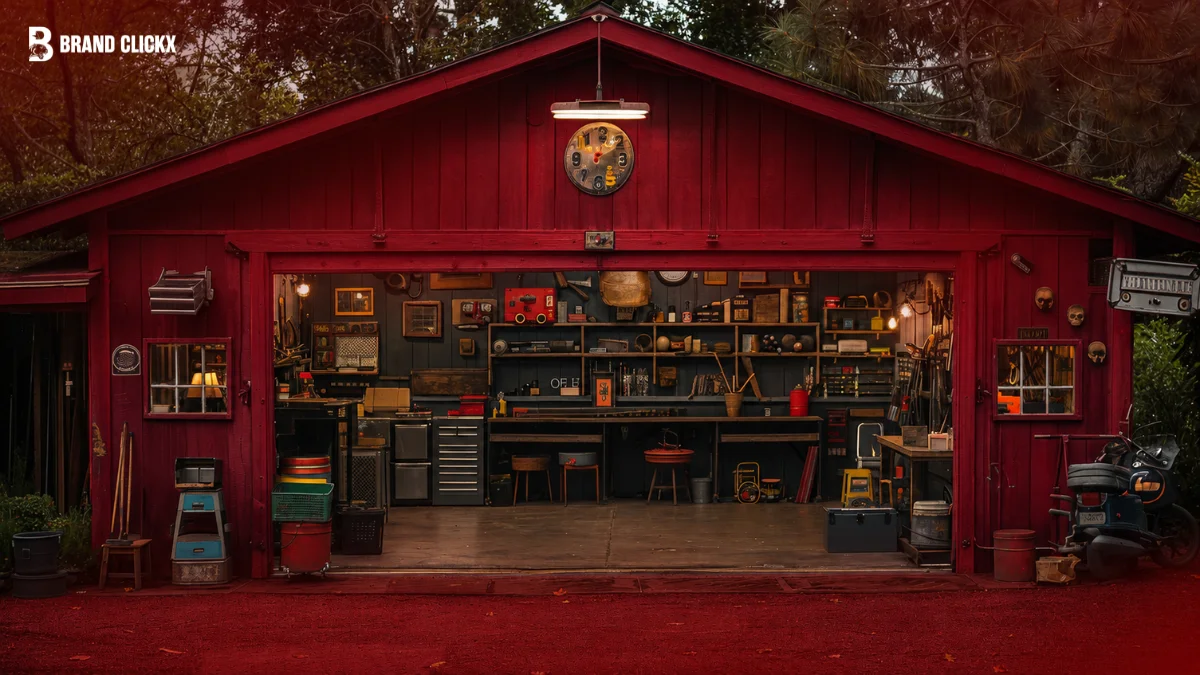
AI Summary
This article is a practical guide to 15 garage business ideas that can genuinely generate income in 2026 real businesses that operate out of an actual garage, not padded home business filler. It covers hands-on trades (auto detailing, mobile mechanic, motorcycle repair, small engine repair), workshop and manufacturing businesses (custom furniture, CNC work, 3D printing production, knife making), storage and rental businesses (self-storage, tool rental, workshop rental), and creative production businesses (photography studio, podcast studio, sign making, upholstery, custom apparel). Each business includes what it actually takes to start, realistic startup costs, revenue potential, common failure modes, and honest assessment of whether it’s worth pursuing. Written for anyone with a garage, some skills or ambition, and a real desire to build something rather than chase side-hustle noise.
The Short Version
You have a garage.
You could park a car in it. You could pile boxes in it. Or you could turn it into a business that pays you every month.
Not all garage businesses are real businesses. Some are internet fantasies dressed up as opportunities. But some of them are the exact way real people quietly build second incomes, and eventually full-time livelihoods, without ever leaving their property.
This article is about those. Fifteen of them. Real startup costs, real revenue ranges, real timelines.
Key Takeaways
- Auto detailing is the most reliable garage business low startup cost, immediate demand, and $2,000-$8,000/month potential.
- Custom furniture and woodworking produce the highest per-piece revenue but require real skill and time.
- CNC and 3D printing operations can be genuine six-figure businesses once you have the equipment and the customer base.
- Storage rental requires minimal ongoing effort but generates modest, steady income ($200-$800/month per parking spot or storage unit).
- Photography and podcast studios turn your garage into a service business with $75-$300/hour rates.
- The biggest garage business failures come from underestimating the physical space needed most people plan a business that outgrows their garage within a year.
- Zoning and HOA rules matter more than most guides mention check yours before you invest in equipment.
- The best garage businesses are ones you’d do anyway the skills you were going to build regardless become the business.
Why the Garage Business Model Actually Works
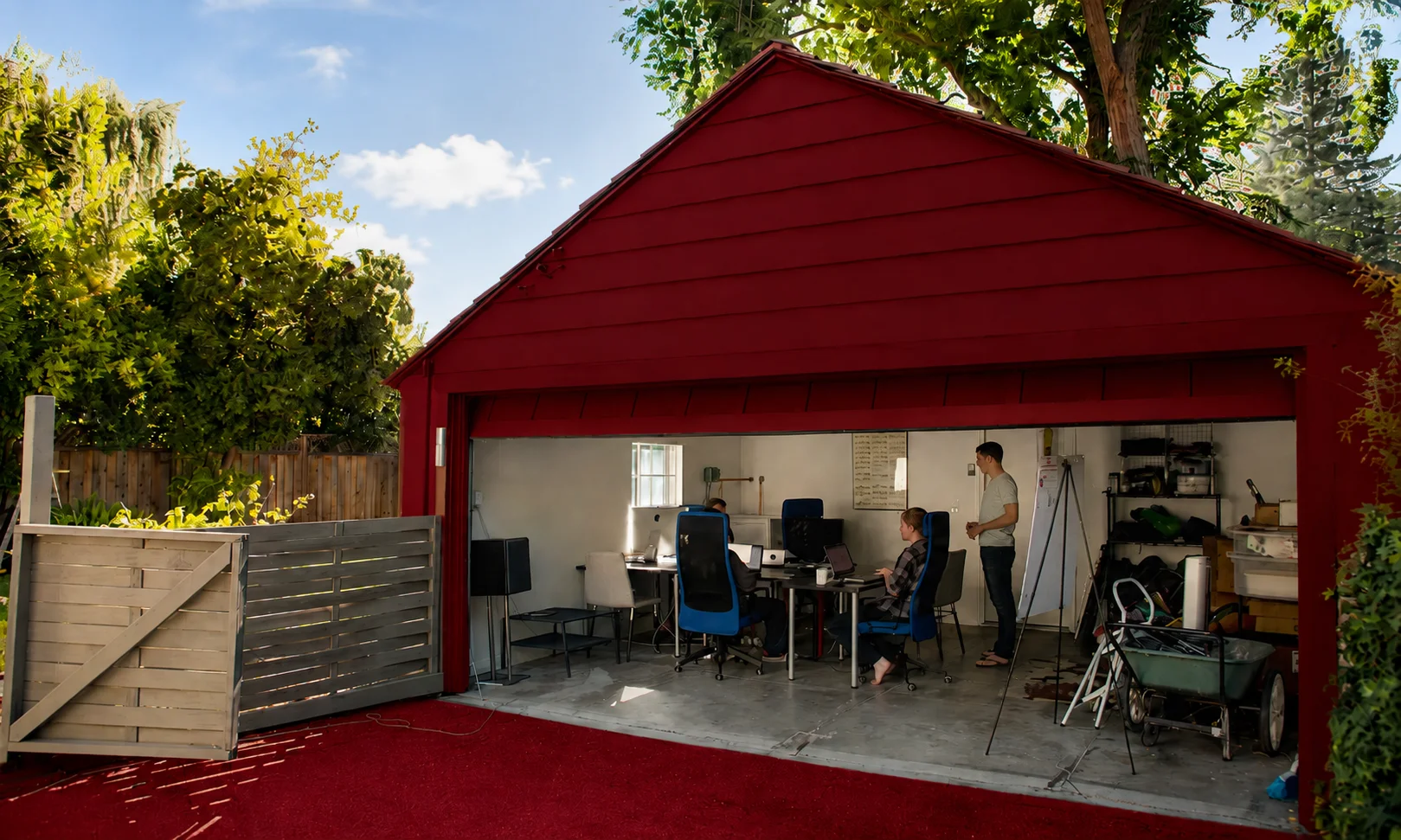
The garage business model has quietly become one of the most viable paths to a real second income in 2026.
Three specific reasons.
Commercial rent is expensive. Most small businesses fail because of overhead before they fail because of demand. A garage eliminates that risk.
Customers now trust home-based operations. The pandemic normalized businesses run out of homes. A garage business no longer looks unprofessional — it looks lean.
Digital marketing has become accessible. A garage detailer with a good Instagram beats a strip-mall detailer with a fading sign.
That’s the shift. The garage business isn’t a compromise anymore. For many trades, it’s the actual optimal setup.
The list below is only businesses that can run in a genuine one- or two-car garage, generating real income within twelve months.
Category 1: Hands-On Trades
The garage businesses where physical work is the product.
1. Auto Detailing

The most reliable garage business in America.
How to start: A pressure washer, polisher, vacuum, and quality chemicals — around $1,500-$3,000 in starter equipment. Mobile is possible, but garage-based detailing lets you work in any weather and command higher prices.
Startup cost: $1,500-$3,000.
Realistic monthly revenue: $2,000-$8,000 within 6-12 months.
Where the customers come from: Google Business Profile, Instagram (detailing is highly visual), local Facebook groups, referrals.
Honest reality: Auto detailing is one of the few garage businesses where demand outstrips supply in almost every American city. A basic full detail runs $150-$300; ceramic coatings run $500-$2,000. The ceiling is high, but the physical work is real.
2. Mobile Mechanic (Garage-Based)
Small engine repair, brake work, oil changes, diagnostics.
How to start: Real mechanical skill first. Tools accumulate over years starting kits from Snap-On or Harbor Freight run $2,000-$5,000. ASE certification isn’t required but helps.
Startup cost: $3,000-$8,000 (mostly tools).
Realistic monthly revenue: $3,000-$10,000 with steady customer base.
Where the customers come from: Word of mouth (dominant), local Facebook groups, Nextdoor, undercutting shop hourly rates.
Honest reality: Legitimate demand exists — most people hate the shop experience and would happily pay slightly less for the same work in your garage. The regulatory tension is real: many states require licensing for auto repair even in home shops. Check yours.
3. Motorcycle Repair and Restoration
Servicing bikes, restoring vintage motorcycles, custom work.
How to start: Deep motorcycle knowledge earned over years. Specialty tools accumulate over time.
Startup cost: $2,000-$5,000 in dedicated tools.
Realistic monthly revenue: $2,500-$10,000, higher if you’re doing custom builds.
Where the customers come from: Local motorcycle clubs, forums, Instagram (bikes are extremely photogenic), word of mouth.
Honest reality: Motorcycle work is a smaller market than cars but with more passion and less price sensitivity. Custom builders can command $5,000-$50,000 per project. The main risk is time — restorations always take longer than quoted.
4. Small Engine Repair
Mowers, chainsaws, generators, snow blowers, leaf blowers, pressure washers.
How to start: Basic mechanical aptitude and specialty tools ($500-$1,500).
Startup cost: $1,000-$2,500.
Realistic monthly revenue: $1,500-$5,000 seasonally, higher in spring and fall.
Where the customers come from: Nextdoor, Facebook Marketplace listings (“I fix mowers”), landscapers as regular clients.
Honest reality: This is a genuinely underserved market in most areas. Dealers charge shop rates most people won’t pay, so garage-based small engine repair fills a real gap. Landscapers as regular clients transform this from a hobby into a real business.
Category 2: Workshop and Manufacturing
The garage businesses where you make things and ship them.
5. Custom Furniture and Woodworking
Cutting boards, small tables, custom shelving, kids’ furniture, live-edge pieces.
How to start: Table saw, planer, jointer, drill press, and sanders. About $3,000-$8,000 for a working shop. Materials add ongoing cost.
Startup cost: $3,000-$8,000.
Realistic monthly revenue: $1,500-$6,000 depending on what you make and your marketing.
Where the customers come from: Etsy, Instagram, local craft shows, custom commissions from friends and neighbors, wholesale to boutiques.
Honest reality: Custom wood pieces command real premiums, but the margin per hour of work is often lower than people expect. Successful woodworkers usually specialize — cutting boards for high margins and fast production, or high-end custom pieces at $3,000+ each.
6. CNC Work
Custom signs, cabinetry components, small manufacturing, cutting boards, decorative pieces.
How to start: A hobby-grade CNC router runs $2,500-$8,000. Serious production machines run $10,000+. Design software (Fusion 360, VCarve) adds another few hundred dollars.
Startup cost: $3,000-$15,000.
Realistic monthly revenue: $2,000-$15,000 depending on scale and specialty.
Where the customers come from: Etsy, Instagram, local businesses needing custom signage, contract manufacturing for larger operations.
Honest reality: CNC is one of the most scalable garage businesses because the machine works while you sleep. But there’s real learning curve to CAD/CAM, and running a production machine in a residential garage creates noise and dust management challenges.
7. 3D Printing Production
Custom designs, product prototypes, tabletop gaming miniatures, cosplay props, replacement parts.
How to start: A quality 3D printer runs $300-$1,500. A farm of 4-8 printers runs $2,000-$8,000. Design skill matters more than the printer.
Startup cost: $2,000-$8,000 for a real production operation.
Realistic monthly revenue: $1,000-$6,000, higher for specialized markets like miniatures.
Where the customers come from: Etsy (miniatures dominate here), Instagram, local prototyping contracts, direct sales to cosplay and gaming communities.
Honest reality: Print farms can print 24/7, but you need real design skill to justify premium prices. Otherwise you’re competing on price with $2 prints against Chinese factories.
8. Custom Knives and Blades
Kitchen knives, outdoor knives, tactical, artistic.
How to start: A basic forge or belt grinder ($500-$2,000), quench tank, heat treatment gear, and steel supply.
Startup cost: $2,000-$5,000.
Realistic monthly revenue: $1,500-$8,000 once established, higher for known makers.
Where the customers come from: Instagram (knives are incredibly Instagram-native), knife shows, custom commissions, dedicated forums.
Honest reality: Custom knives command $200-$2,000+ per piece for established makers. But the learning curve is steep — expect 12 months of practice before your work justifies real prices.
Category 3: Storage and Rental
The garage businesses that produce passive income.
9. Private Vehicle Storage

Renting garage space to store cars, boats, motorcycles, or RVs.
How to start: A clean, secure garage. Basic insurance. Contracts.
Startup cost: $0-$500.
Realistic monthly revenue: $100-$400 per vehicle in most markets; $500-$1,500 in premium metros.
Where the customers come from: Neighbors with too many vehicles, Facebook Marketplace listings, Neighbor.com (a legitimate storage marketplace).
Honest reality: Genuinely passive income. Some people rent one bay of their garage for $200/month indefinitely. Contracts and insurance are the parts to get right — a fire in your garage with someone else’s car in it is a lawsuit waiting to happen without proper coverage.
10. Tool Rental
Renting out specific tools or equipment — power washers, floor sanders, generators, event equipment.
How to start: Buy tools people frequently need but don’t own. A pressure washer, floor sander, and generator run about $1,500 total.
Startup cost: $1,500-$5,000 depending on tool selection.
Realistic monthly revenue: $500-$2,500 depending on your area and tool mix.
Where the customers come from: Nextdoor, local Facebook groups, Google Business Profile.
Honest reality: This works better in smaller towns where Home Depot rentals aren’t nearby. In major metros, you’re competing with commercial rental companies. Some tools (heavy floor sanders, party equipment, moving dollies) still have genuine gaps.
11. Workshop Space Rental
Renting garage workshop time to people who don’t have their own space.
How to start: An equipped garage. Insurance. Booking system.
Startup cost: Whatever you already have.
Realistic monthly revenue: $500-$3,000 depending on setup.
Where the customers come from: Apartment dwellers with hobby projects, van conversion builders, small-time craftspeople.
Honest reality: This is a niche but real business. In cities where apartment dwellers can’t work on projects at home, garage workshops rent for $20-$50/hour. Requires trust and good insurance.
Category 4: Creative Production
The garage businesses where the space becomes a studio.
12. Photography Studio
Portrait sessions, product photography, family portraits, headshots.
How to start: Backdrops, lighting, camera gear you probably already own. About $1,500-$3,000 to convert a garage into a legitimate studio.
Startup cost: $2,000-$5,000.
Realistic monthly revenue: $2,000-$6,000 depending on what you shoot.
Where the customers come from: Instagram, local Facebook groups, Google Business Profile, referrals.
Honest reality: Garage photo studios are increasingly common. Product photography especially works well — you don’t need natural light, and small businesses need product photos constantly.
13. Podcast Studio Rental
Renting your garage as a professional podcast recording space.
How to start: Acoustic treatment ($500-$1,500), professional microphones and interface ($1,500-$3,000), a decent camera setup.
Startup cost: $3,000-$6,000.
Realistic monthly revenue: $500-$3,000 depending on booking rate.
Where the customers come from: Local podcasters, business owners recording marketing content, YouTubers.
Honest reality: Podcast studio rental is a newer garage business but rents range from $50-$150/hour. Works better in cities with lots of creators.
14. Sign Making and Custom Printing
Vinyl signs, custom banners, wedding signage, business signage.
How to start: A vinyl cutter ($300-$1,000), heat press ($200-$500), and design software.
Startup cost: $800-$2,000.
Realistic monthly revenue: $1,000-$4,000 with consistent marketing.
Where the customers come from: Local businesses needing signage, wedding market (huge for custom signs), event organizers.
Honest reality: Sign making has become crowded because equipment is cheap. Success requires design skill and a specific niche (weddings, sports team apparel, small business branding).
15. Upholstery and Reupholstery
Restoring chairs, sofas, dining sets, car interiors, boat cushions.
How to start: Real skill (this takes real learning). Industrial sewing machine ($500-$2,000), staple guns, tools.
Startup cost: $2,000-$5,000.
Realistic monthly revenue: $2,000-$8,000 for skilled work.
Where the customers come from: Word of mouth (dominant in this trade), Instagram, referrals from antique stores and interior designers.
Honest reality: Upholstery is a dying trade in most areas, which is exactly why it’s a real opportunity. Demand exists; supply is shrinking. Master upholsterers can charge $80-$150/hour. Learning curve is real — expect 12-18 months to justify real prices.
What Actually Kills Garage Businesses
Look at what usually goes wrong.
Zoning and HOA violations. Some cities restrict commercial activity from residential garages. Some HOAs ban business signage or customer visits. Check both before you invest in equipment. This is the single most common way garage businesses fail — six months in, a neighbor complains, and the city shuts you down.
Underestimating physical space. A garage feels large until you have equipment, inventory, and workspace. Most garage businesses outgrow the garage within 12-18 months if they succeed. Plan for it.
Not accounting for utilities. Air conditioning a garage in Texas summer costs real money. Running dust collection, air compressors, or CNC machines adds to your electricity bill in ways new business owners rarely budget for.
Missing insurance. Business insurance for home operations is genuinely affordable ($400-$1,500/year for most trades). Skipping it is the fastest way to lose everything you’ve built.
Choosing based on income projections instead of skill. The garage business you’ll succeed at is the one where you already have the skill. Chasing high-income garage businesses you’re not good at yet is a slower path to failure than picking a lower-income one you’re already skilled at.
How to Actually Start
Pick the business from the list where you already have half the skills.
Not the one with the highest income. Not the one that sounds most exciting. The one where you already know most of what you need to know.
Then spend the first month getting your garage set up properly clean space, good lighting, basic equipment, a workflow that makes sense.
Then start marketing before you feel ready. Post on Instagram. Tell your neighbors. Set up a Google Business Profile. Offer your first three jobs at cost or below cost in exchange for reviews and photos.
At month three, raise your prices. At month six, raise them again. At month twelve, you should have real revenue coming in monthly.
That’s the whole playbook.
FAQs
What is the best garage business to start?
Auto detailing has the lowest barrier to entry and most reliable demand. Woodworking has the highest ceiling for creative work. CNC and 3D printing have the highest scalability. The best for you depends on what skills you already have.
How much does it cost to start a garage business?
Most garage businesses start for $1,500-$8,000. Auto detailing, small engine repair, and storage rental are the lowest cost. CNC, custom furniture, and photography studios are the higher end.
How much can you actually make from a garage business?
$1,500-$10,000/month for a well-run garage business within 12-18 months. Full-time garage operations can produce $5,000-$25,000/month once established. Expectations of $50,000/month from a garage are usually unrealistic without scaling beyond the garage.
Do you need permits or a business license?
Yes, in most jurisdictions. A basic business license runs $50-$300/year. Check zoning laws for your specific type of business. Some businesses (auto repair, food) require additional permits and inspections.
What garage businesses require the least skill to start?
Auto detailing, private vehicle storage, tool rental, and basic 3D printing production have the lowest skill barriers. Businesses like custom knives, upholstery, and mechanical repair require years of skill development before they generate real income.