Quick Answer
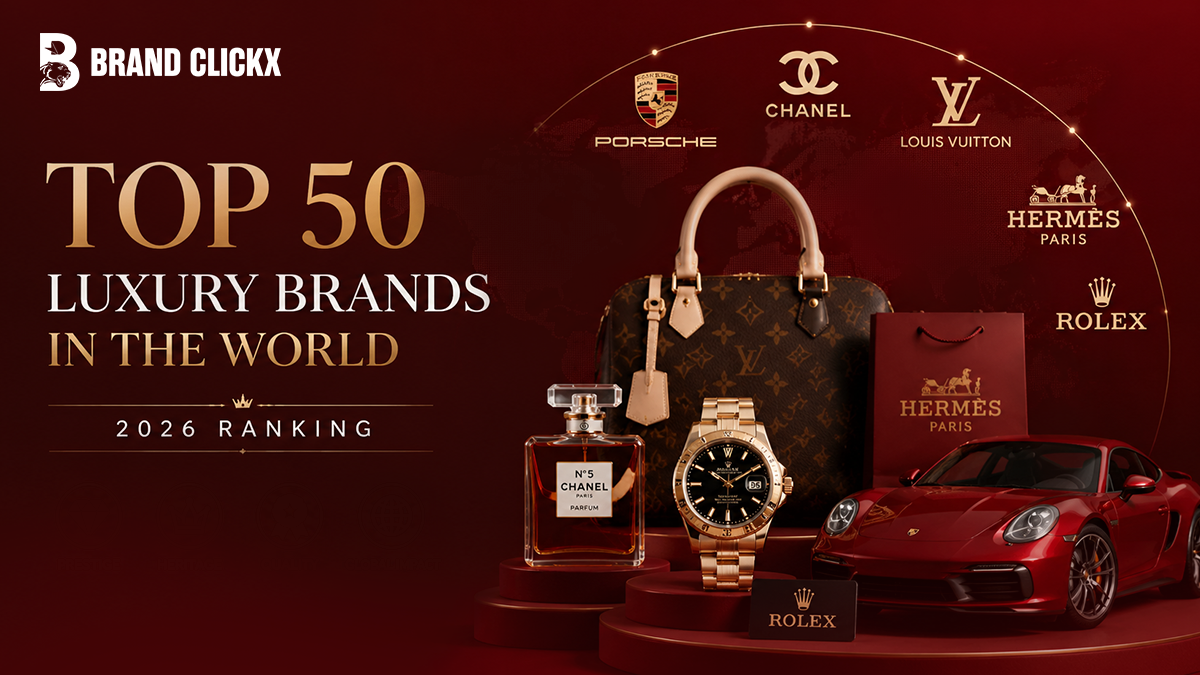
The world’s top luxury brands in 2026 are led by Porsche, Chanel, Louis Vuitton, Hermès, and Rolex, according to Brand Finance’s Luxury & Premium 50 report. Combined, the top 50 luxury brands carry a brand value of $317 billion, up 43% since 2019.
France dominates this luxury brand ranking among global luxury fashion brands, contributing 49% of total value, nearly triple Italy’s share. Apparel anchors the sector with 32 of the 50 famous luxury brands, accounting for 70% of total value.
How This Luxury Brand Ranking Was Built
This ranking draws on Brand Finance’s Luxury & Premium 50, Interbrand’s Best Global Brands, and Kantar BrandZ valuations, cross-checked against 2025 financial results. These are the same methodologies serious luxury companies and analysts use to track high-end brands year over year.
Brand value isn’t the same as revenue. It measures the financial weight of a name and image, calculated through royalty relief, the rate a company would pay to license its own brand. That’s why a private icon like Chanel can outrank brands with higher sales.
The Top 10 Luxury Brands in 2026
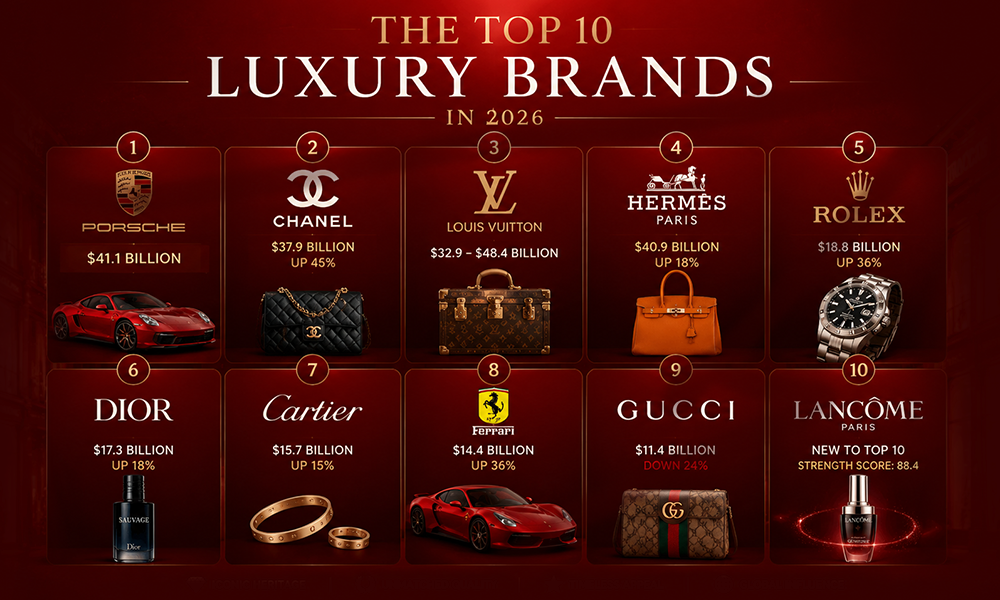
- Porsche — $41.1 billion brand value. The world’s most valuable luxury brand for the eighth consecutive year, scoring 9.3 out of 10 for price acceptance despite a 5% dip tied to weaker China and Europe demand.
- Chanel — $37.9 billion, up 45%, the fastest-growing name in the ranking. New creative director Matthieu Blazy, only the house’s fourth in 114 years, drove renewed momentum.
- Louis Vuitton — $32.9 billion (Brand Finance) to $48.4 billion (Interbrand), depending on methodology. Parent LVMH posted €80.8 billion in 2025 revenue. Still the most recognized name among top luxury brands worldwide.
- Hermès — Revenue of €15.2 billion with a 40.5% operating margin, the highest in the industry. Hermès overtook LVMH by market capitalization in 2025, and Interbrand values the brand at $40.9 billion, up 18%.
- Rolex — $18.8 billion, up 36%, the fifth fastest-growing brand. Rolex occupies what analysts call a “category of one” among luxury labels, anchored by waitlist demand and the new Land-Dweller collection.
- Dior — $17.3 billion, up 18%. Brand Finance named Dior the world’s strongest luxury brand overall, with a Brand Strength Index of 93.5 out of 100.
- Cartier — $15.7 billion, up 15%. The fastest climber at the top of fine jewelry, powered by enduring demand for the Love and Juste un Clou collections.
- Ferrari — $14.4 billion, up 36%. The second-strongest luxury brand by strength score, driven by scarcity-led pricing and premium customization.
- Gucci — $11.4 billion, down 24% as the house resets under new creative direction. Still a top 10 fixture and a key name in accessible luxury.
- Lancôme — Entered the strength top 10 for the first time, scoring 88.4 on brand strength, with exceptional performance in China.
Premium Brands Ranked 11 Through 25
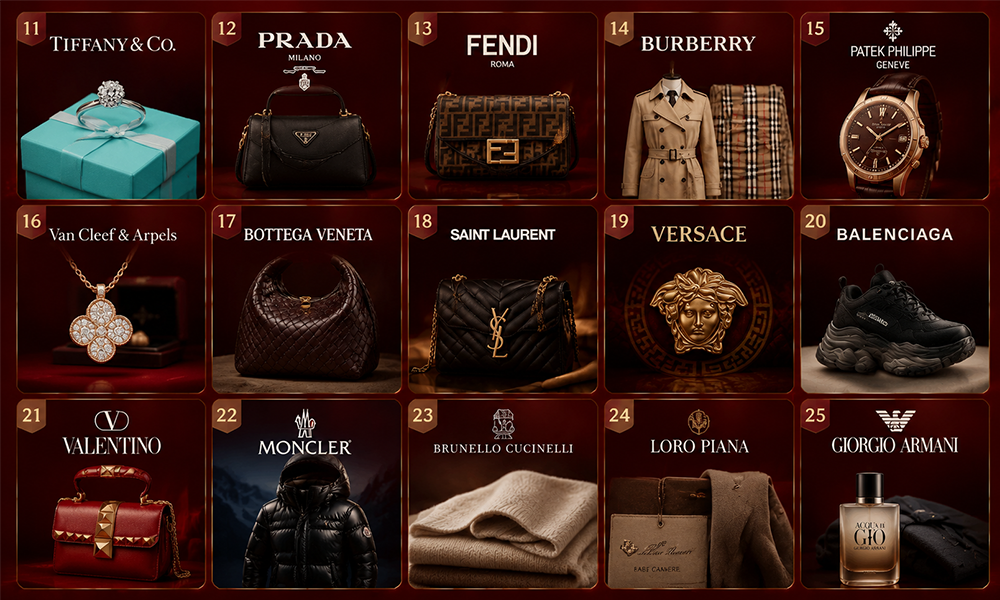
- Tiffany & Co. — LVMH-backed, still defined by its blue box and bridal heritage despite a cooling jewelry market.
- Prada — Minimalist positioning reinforced by the landmark €1.25 billion acquisition of Versace, creating Italy’s first homegrown luxury conglomerate.
- Fendi — Entered the top 10 by value for the first time, powered by the Baguette bag and LVMH-backed expansion.
- Burberry — British heritage house holding steady through trench coat and check-pattern recognition.
- Patek Philippe — Family-controlled watchmaking; intergenerational value keeps demand structurally tight.
- Van Cleef & Arpels — Richemont’s high jewelry maison, leaning on craftsmanship and discreet positioning.
- Bottega Veneta — Introduced a lifetime guarantee on bags, signaling durability over disposability.
- Saint Laurent — Kering-owned, expanding ready-to-wear under creative-director-led collections.
- Versace — Now under Prada Group ownership, repositioning around couture credibility.
- Balenciaga — Around $7.4 billion in prior valuations, holding a distinct, trend-forward identity.
- Valentino — Italian fashion house known for sleek lines and classic silhouettes under Valentino Garavani’s design legacy.
- Moncler — Outerwear-led luxury label with strong performance across Europe and Asia.
- Brunello Cucinelli — Quiet luxury cashmere house with steady, premium pricing power.
- Loro Piana — LVMH’s ultra-discreet textile and outerwear name, popular in quiet-luxury circles.
- Giorgio Armani — Long-standing Italian house with consistent global recognition across menswear and fragrance.
Famous Luxury Brands Ranked 26 Through 50
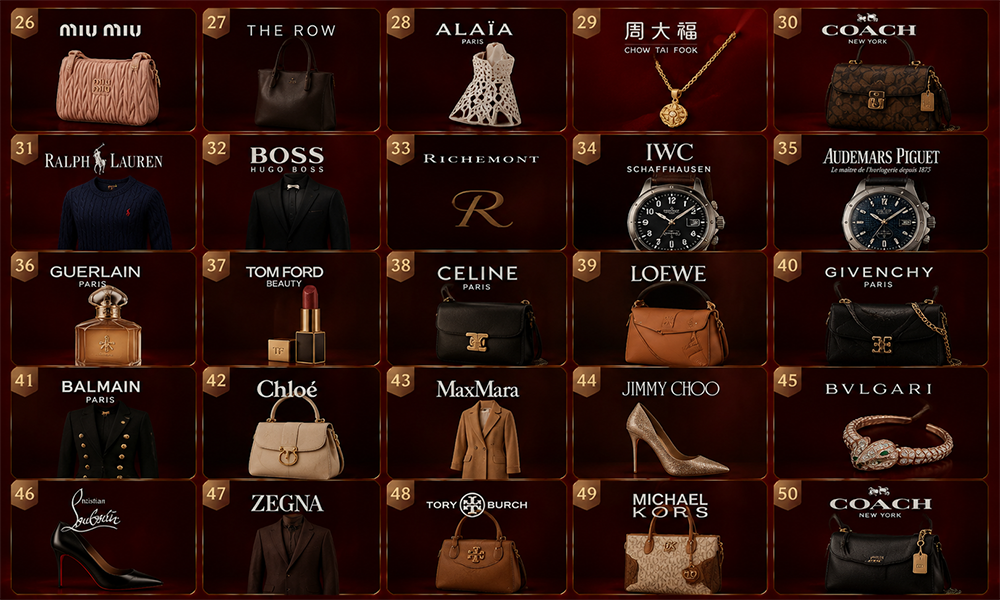
- Miu Miu — Prada Group’s fastest-growing line, turning micro-skirts into a real sales engine.
- The Row — Ad-free, logo-free, social-media-silent, built entirely on word of mouth.
- Alaïa — Sculptural design under Pieter Mulier, appealing to trend-resistant buyers.
- Chow Tai Fook — Asia’s leading jewelry group, benefiting directly from gold price gains.
- Tapestry (Coach) — Grew 5.1% in 2025 with an active push to elevate Coach further.
- Ralph Lauren — Crossed $8 billion in sales for the first time, Asia up over 20%.
- Hugo Boss — Mid-transformation under its “Claim 5 Touchdown” roadmap into 2027.
- Richemont Group houses — Parent to Cartier, Van Cleef & Arpels, and IWC.
- IWC Schaffhausen — Swiss watchmaking under Richemont, known for pilot-watch heritage.
- Audemars Piguet — Independent watchmaker with cult status around the Royal Oak.
- Guerlain — Re-entered the value top 10 with a 23% jump on fragrance momentum.
- Tom Ford Beauty — Estée Lauder-owned, leveraging name recognition into prestige beauty.
- Celine — LVMH-owned, holding a minimalist, design-forward identity in ready-to-wear.
- Loewe — LVMH’s Spanish leather house, known for craft-driven handbag design.
- Givenchy — Long-running French couture name repositioning under LVMH.
- Balmain — French house known for structured tailoring and red-carpet visibility.
- Chloé — Feminine, bohemian-leaning French label under Richemont ownership.
- Max Mara — Italian house known for timeless coats and steady global expansion.
- Jimmy Choo — Footwear-led label with strong red-carpet and bridal positioning.
- Bvlgari — LVMH-owned Italian jeweler known for bold, color-driven high jewelry.
- Christian Louboutin — Footwear house defined by its signature red sole.
- Zegna — Italian menswear house with vertically integrated wool production.
- Tory Burch — US premium brand bridging accessible luxury and classic style.
- Michael Kors — Capri Holdings name in accessible luxury, facing renewed pressure.
- Coach — Tapestry’s flagship label, rebuilding momentum on heritage leather.
What Separates the Top Luxury Brands From the Rest
Four traits define the top luxury brand ranking in 2026, regardless of category.
Identity outlasts personnel. Hermès and Chanel look like themselves no matter who’s designing, while brands tied too closely to one creative director struggle through transitions.
Innovation without dilution. Prada expanded by acquiring Versace; Hermès innovates while keeping its core untouched. Both routes work when brand identity stays intact.
Scarcity still sells. Rolex, Hermès, and Patek Philippe maintain tight supply on purpose, and resale data confirms it: the global luxury resale market hit roughly €50 billion in 2025, with one in three luxury buyers now participating.
Client relevance beats advertising. The Row has no ads and no social presence. Bottega Veneta sells durability with a lifetime guarantee. Cultural relevance, not media spend, increasingly decides which premium brands keep climbing.
Key Takeaways
- Porsche leads luxury and premium brands by value for the eighth straight year, but Chanel is the fastest-growing name, up 45% to $37.9 billion.
- France dominates the luxury brand ranking, contributing 49% of the top 50’s combined brand value.
- Apparel anchors the sector, representing 32 of 50 brands and 70% of total value.
- Scarcity and craftsmanship outperform volume. Hermès, Rolex, and Patek Philippe show the strongest resale value retention among luxury labels.
- Quiet luxury is gaining real share. The Row, Loro Piana, and Bottega Veneta prove cultural relevance can replace traditional advertising entirely.
FAQ: Top Luxury Brands
What is the most valuable luxury brand in 2026?
Porsche, valued at $41.1 billion by Brand Finance, holds the top spot for the eighth consecutive year among luxury and premium brands.
Which luxury fashion brand is growing fastest?
Chanel, up 45% to $37.9 billion in 2025, making it the fastest-growing name across the top 50 luxury brands.
Are Louis Vuitton and Hermès still the top luxury brands?
Both remain top-five luxury companies by every major methodology, though Hermès overtook LVMH in market capitalization in 2025.
What country dominates the global luxury brand ranking?
France, contributing 49% of total brand value across the top 50, nearly triple Italy’s share, the next largest contributor.
Why do some premium brands avoid advertising entirely?
Brands like The Row rely on scarcity and word of mouth instead, proving that cultural relevance can outperform traditional marketing in luxury.
The Bigger Picture
Luxury is recalibrating. For three years, roughly 80% of brand growth came from price increases, not volume, but that era is ending. The 2026 luxury and premium sector is shifting toward earned growth: better products, sharper storytelling, and disciplined scarcity.
The brands climbing this luxury brand ranking aren’t necessarily the loudest. Hermès grew through restraint. The Row grew through silence. Chanel grew through a single, well-timed creative bet.
That’s the real story behind the top 50 luxury brands of 2026: prestige no longer comes from price tags alone. It comes from brands disciplined enough to stay scarce, consistent enough to survive leadership change, and confident enough to let the product speak first.