Brand credibility has always been a crucial factor influencing consumers’ purchase decisions.
It’s just as important to buyers as product quality. It can justify higher prices, with 68% of people being willing to pay more for products sold by trustworthy businesses. Plus, it’s a key brand differentiator, especially in saturated markets and low-trust industries.
But the issue is that most businesses struggle to earn customer confidence. And it’s not just because shoppers are becoming increasingly distrustful (partly due to being constantly bombarded with marketing messages and AI content). Instead, one of the top reasons for low brand trust is that most businesses fail to optimize their websites to communicate credibility.
So if you’re looking to cash in on the trust factor, here’s how you need to adjust your web presence to earn customer confidence.
Make a Strong First Impression
When landing on a website, web users form impressions in less than a second. These initial opinions determine brand perceptions regarding trustworthiness, expertise, and even convenience.
So, if you want to win your target audience’s trust, do your best to make a strong first impression.
The most effective way to do this will be through aesthetic design. A beautifully designed, professional-looking homepage can communicate competence and dependability. More importantly, it can ensure high engagement rates, meaning that your web visitors will be invested in what your business has to say.
Apart from aesthetics, it’s just as essential that your site is user-friendly. Prioritize fast load speeds, mobile responsiveness, easy website navigation, and accessibility. Moreover, ensure that web visitors can reach their goals with as few obstacles as possible by removing complex UIs and in-depth testing to pinpoint (and remove) errors.
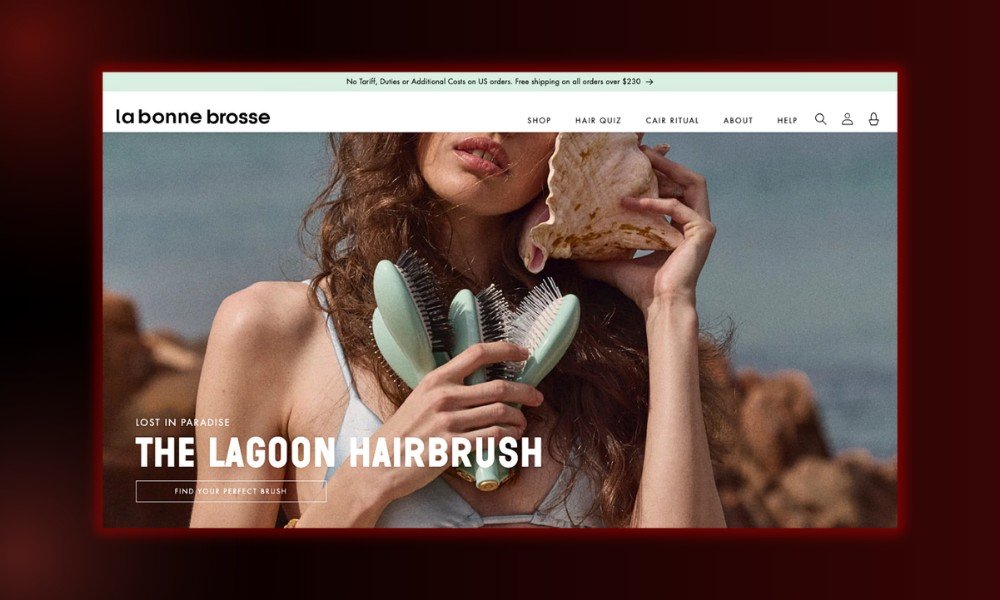
La Bonne Brosse is an excellent example of a visually stunning, highly usable website that makes a strong first impression. The brand does this through a highly aesthetic visual in the hero section. The top of the page features UI elements that communicate key customer benefits (which instantly build brand trust). Most importantly, the site’s structure adheres to conventional UX design rules. This means that customers can easily find what they need, making them feel more confident while shopping with the business.
Source: labonnebrosse.com
Clearly Explain What You Offer
In 2026, consumers don’t care about solutions that aren’t relevant to their specific needs. In fact, internet users are so heavily bombarded with marketing messages that they tend to ignore most of them.
Even more, when consuming online content, most internet users don’t read word-for-word. Rather, they skim and scan resources until their eyes land on a piece of info that seems ‘relevant’ to their wants and needs.
When optimizing your website for credibility, you can count on your web visitors having little patience. They don’t want to take a deep dive into your website content just to find out what you offer (then have to decide whether it’s the right choice for them). Instead, they want a super easy way to understand what you do, whether your solution will resolve their pain points, and to conclude what they can expect from your business.
In other words, your web design has to clearly and quickly explain what you offer. It should do so in terms that are accessible (even to non-expert consumers). And it should not force prospects to dig deep into your on-page content just to make basic conclusions about your solutions.
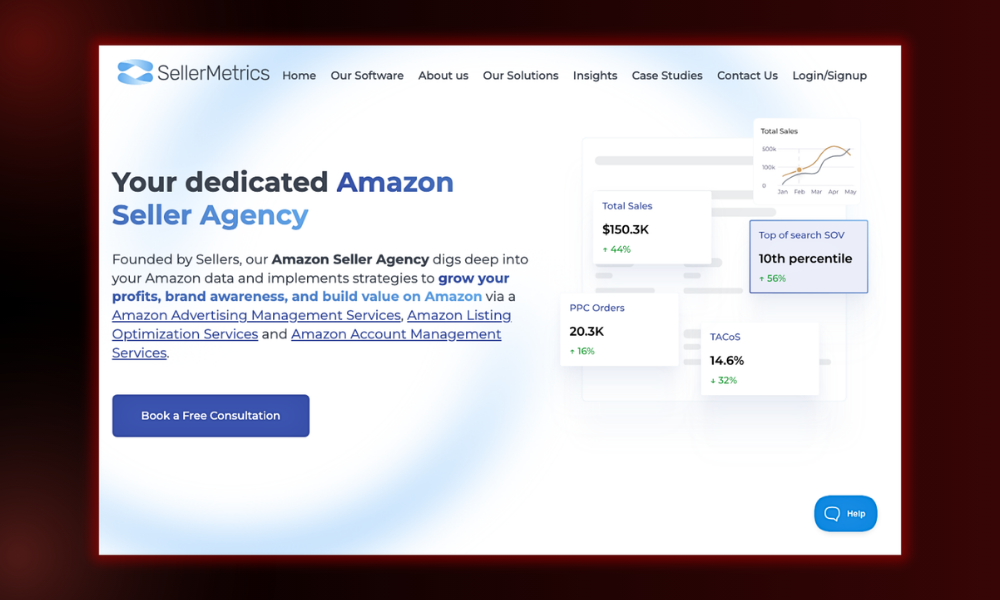
SellerMetrics does all of this with huge success. It uses the topmost section of its homepage to tell web visitors what it does (and how that can benefit customers). It shows off relevant trust signals that establish credibility and earn customer confidence. Finally, the brand lists the different service packages it offers, helping potential clients determine whether any of those meet their needs and drawing them into the sales cycle (with a strong focus on generating qualified leads).
Source: sellermetrics.app
Use Social Proof to Build Confidence
Most consumers don’t fully trust branded marketing messages. In fact, people nowadays are very good at knowing when they’re being sold to.
So, to ensure they’re getting the best value for their money (and to prevent future regrets), 99.5% of consumers research their purchases online at least sometimes. Most of the time, they do so by seeking out user-generated content, including reviews, CX content, and other formats of social proof.
With this in mind, one of the easiest methods to earn customer confidence on your website is to use social proof to build brand trust.
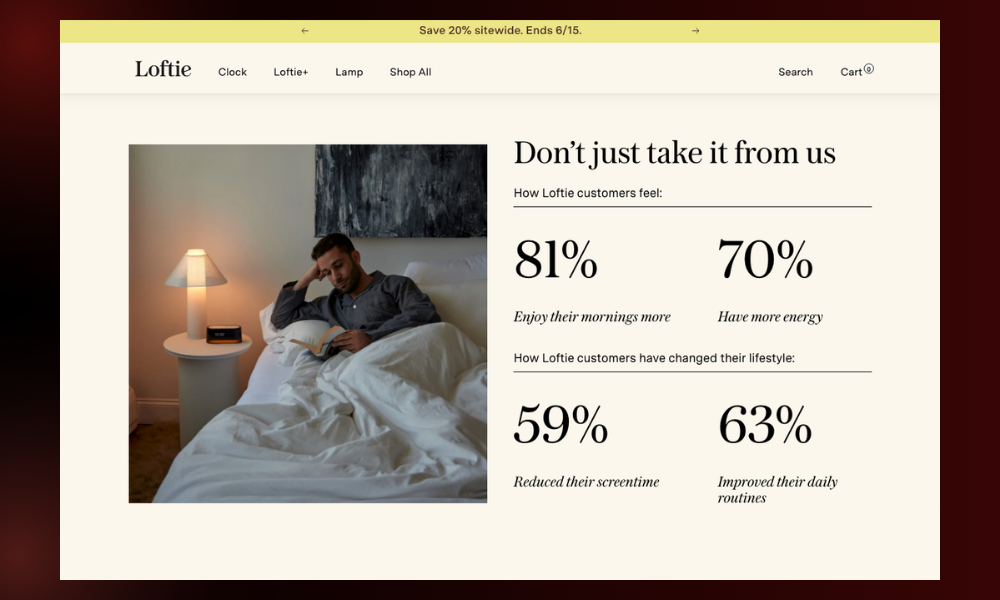
Loftie implements this trust marketing tactic beautifully. In addition to showcasing positive customer feedback about its products (through ratings and reviews), this business also transforms social proof into verifiable data. In doing so, it can make impressive brand claims backed by evidence, including statements that ‘81% [of consumers] enjoy their mornings more,’ that ‘70% have more energy,’ or that ‘63% improved their daily routines.’
Source: byloftie.com
Be Transparent and Authentic
Most consumers don’t want brand interactions that feel strictly transactional. Instead, they care deeply about how businesses treat them, with 88% of consumers saying they want to buy from businesses that meet their expectations.
Naturally, there are multiple pathways toward earning customer confidence in this way. But perhaps the easiest (and most effective) one is to prioritize transparency and authenticity in your website design.
If you can show your target audience that they can rely on your brand being true to its values and that they can count on your honesty even in difficult situations they’ll be far more likely to perceive you as trustworthy and move closer toward becoming your customers.
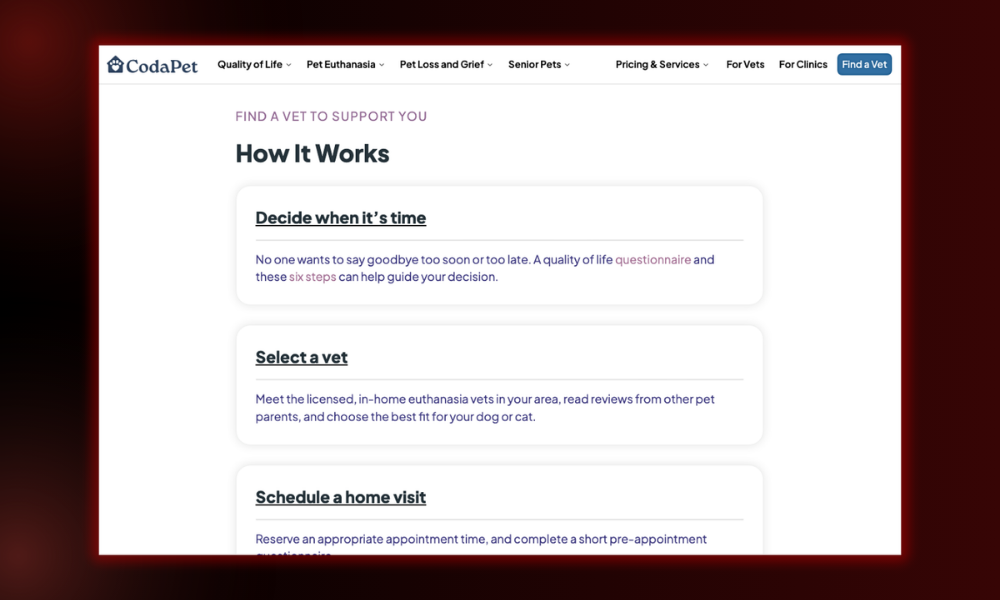
CodaPet, for instance, understands that its target audience needs compassion and understanding in an emotionally challenging time. So, it uses its web presence to position itself as an empathetic, honest, and human-centric brand. In doing so, the brand easily earns its customers’ trust. It has an easier time communicating its mission and explaining its process. And it prevents the unwanted outcome of sounding inauthentic or overly promotional, which are brand characteristics that would surely harm conversion intent for its ideal customers (who need support, not sales pressure).
Source: codapet.com
Show Your Expertise and Credibility
Who do consumers trust? According to research, the entities that are most commonly perceived as trustworthy and credible include scientists, brand experts, and peers.
And sure, you can’t become a friend to potential customers and influence their purchasing decisions through proximity. Nevertheless, you can show them that your business is a credible industry expert with a positive track record of resolving its customers’ pain points.
There are several methods to communicate expertise:
- Use storytelling to share your brand’s history (describing your unique experience to establish authority).
- Share your credentials and certifications, which add a third-party verification layer to your trust-building activities.
- Describe your past successes, which combine the power of social proof and credibility-earning content in a way that successfully earns customer confidence.
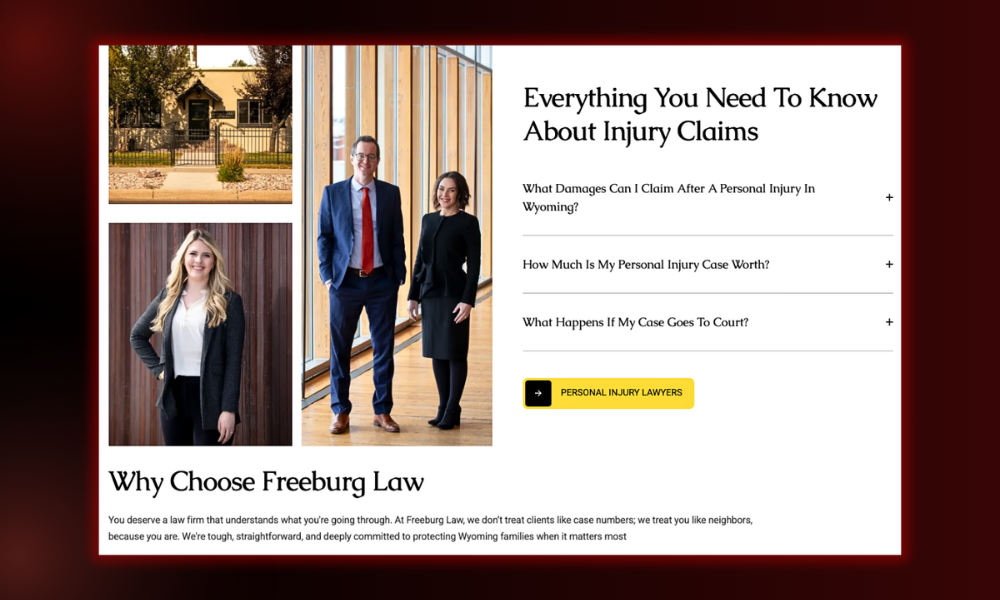
Freeburg Law does a tremendous job of implementing this strategy. The brand demonstrates credibility through professional positioning. It clearly communicates the legal team’s credentials and services. The site showcases specialized knowledge. And the design uses powerful trust signals to help visitors feel that they’re dealing with a qualified team of experts.
Source: tetonattorney.com
Publish Helpful, Trustworthy Content
In some cases, the best way to earn customer confidence isn’t necessarily to focus on branding and marketing activities. Instead, it’s to be genuinely committed to helping your ideal customers resolve their pain points even if that doesn’t directly benefit your business.
The connection between trust and helpfulness lies in proving benevolence. Seeing that consumers perceive helpful businesses as more honest (and therefore credible), they’re far more likely to choose to buy from them than from brands with a strictly sales-centric approach.
It’s also worth noting that valuable, high-quality content helps build brand and product awareness. Plus, it can enhance brand memorability all important factors in the typical buyer’s journey.
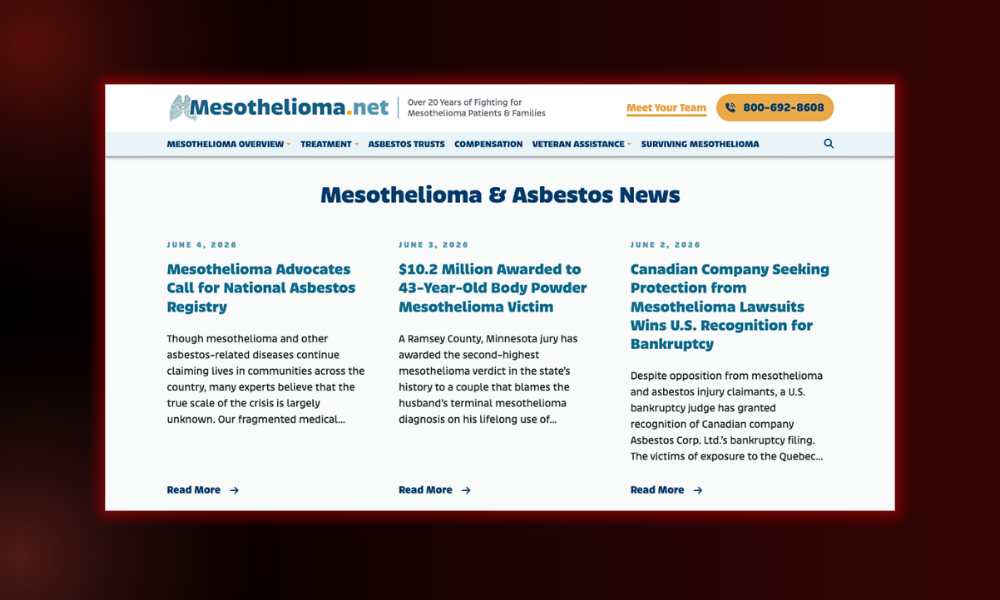
Mesothelioma.net is a strong example of a brand that uses educational content to build trust. This business targets an audience facing a complex and high-stakes situation. So, by prioritizing clear, comprehensive information that helps users make informed decisions, Mesothelioma.net earns its prospects’ confidence even before they’ve made a conversion decision.
Source: mesothelioma.net
Address Customer Concerns Up Front
Lastly, as you explore opportunities to earn customer confidence with trust-building web design strategies, don’t forget that brand credibility influences conversion outcomes throughout the entire buyer’s journey. And that includes the very moment of purchase (as well as post-purchase decisions).
If you look at the latest data, you’ll find that about 70% of shoppers abandon their carts before completing a purchase. So, why does this happen? Well, the most common reason is that brands fail to address and remove common customer concerns up front.
Conversion obstacles that cause cart abandonment often include concerns about payment security, shipping speed, and affordability. Furthermore, some consumers prioritize convenient shopping experiences, so UX mishaps (such as too many steps in the checkout process) can cause them to avoid a purchase.
Fortunately, you can prevent shoppers from abandoning the conversion funnel by addressing your target audience’s primary concerns early in the buyer’s journey.
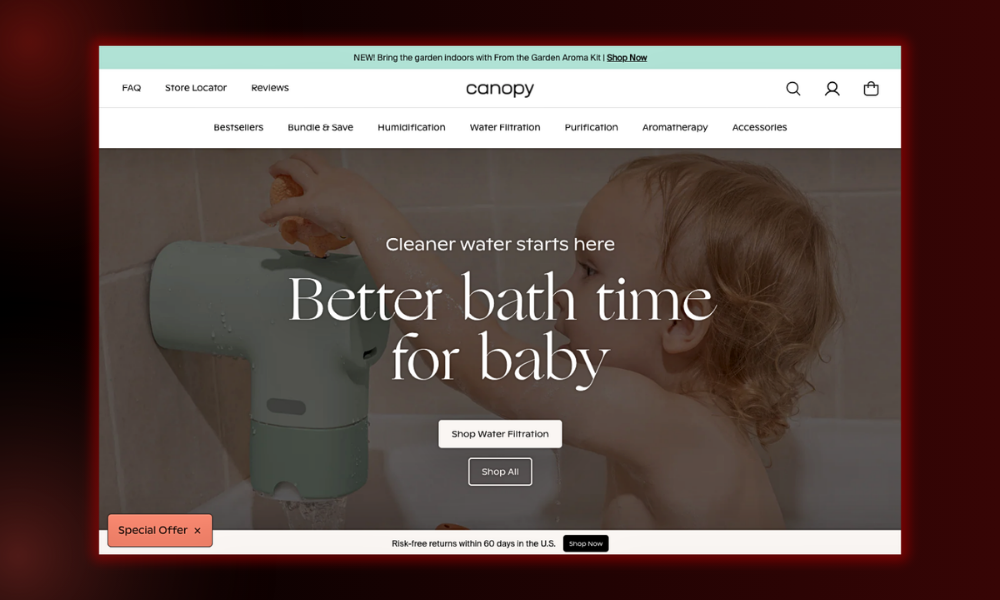
Canopy, for instance, uses a bottom-of-the-screen banner to communicate its 60-day risk-free returns policy a tactic that significantly reduces customer concerns and elevates brand trust to drive sales.
Source: getcanopy.co
Bottom Line
A trustworthy website is an asset that’s going to significantly boost sales. And the great thing is that incorporating trust marketing tactics into your design isn’t that challenging.
The strategies discussed in this guide can all help you build customer confidence. Whether you choose to address your prospect’s concerns, highlight brand expertise, clarify your offer, or show a high level of brand benevolence, rest assured that you’ll see returns. Combine these activities with customer-centric UX design, social media marketing, and SEO, and you’re sure to establish your industry authority, standing out as one of the best options for customers in your niche.