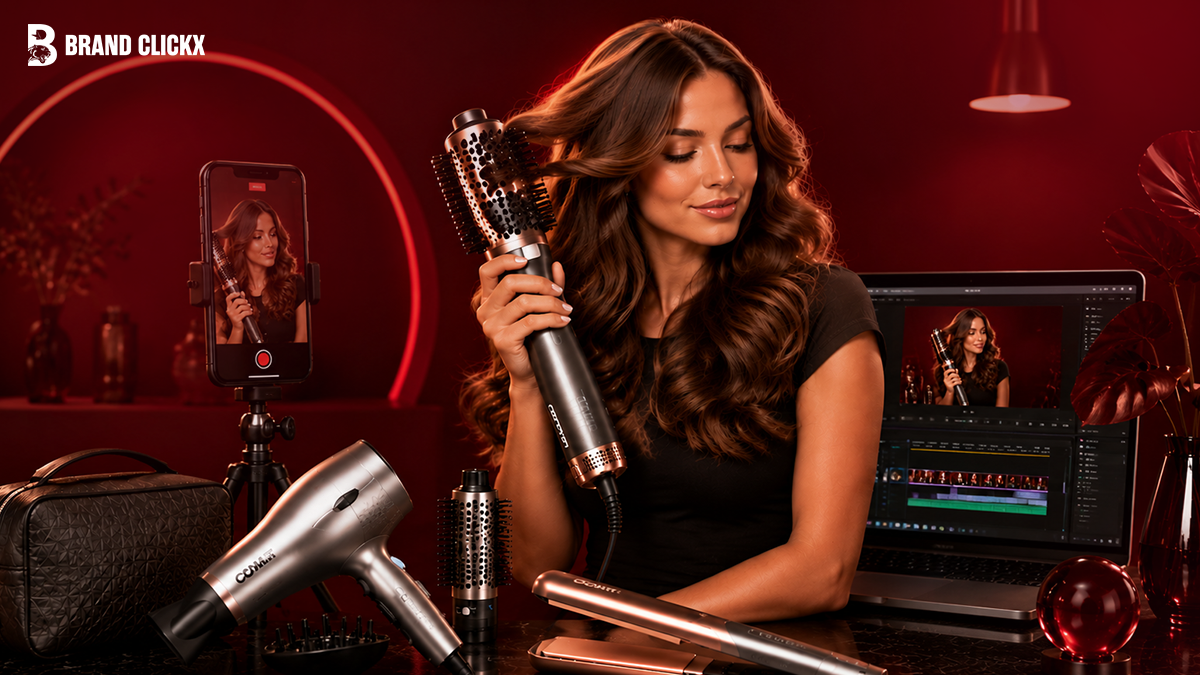
Conair didn’t announce a bold new creative strategy. It ran a 30-day A/B test on Amazon, got results it couldn’t ignore, and went public about what it found. That kind of transparency is unusual and the story behind the numbers is more instructive than the numbers themselves.
In May 2026, Conair’s e-commerce team tested Amazon’s Creative Agent a new AI tool that produces end-to-end ad campaigns by building a 15-second video to promote a Cuisinart food processor. The results came back with 18% higher detail page views and a 14% reduction in cost per detail page view compared to a traditionally produced brand video. The video took four weeks to produce. Without the AI tool, an equivalent video would typically take three to six months.
“We’re moving faster than some of our peers on this,” said Justin Swenson, Conair’s Senior Vice President of E-Commerce.
That sentence is the whole story.
AI Overview
Conair Corporation ran a 30-day A/B test of Amazon Ads’ Creative Agent in April and May 2026, using the AI tool to produce a 15-second video for its Cuisinart food processor line. The AI-assisted video delivered 18% higher detail page views and 14% lower cost per detail page view versus a traditionally produced brand video. Production time dropped from three to six months to approximately four weeks.
Creative Agent produced 80% of the video concept. The remaining 20% was completed by agency partner Global Overview, which made manual fixes adding logos, adjusting colors to match brand guidelines, and correcting AI errors including distorted characters, altered logos, and misrendered numbers and letters. The test was not a story of AI replacing human creative teams. It was a story of AI handling volume while humans protect brand identity.
Conair’s move sits within a broader industry shift: the IAB reported in January 2026 that 86% of media buyers either currently use or plan to use AI to build AI-generated video ads this year. The question is no longer whether to adopt it’s how to do it without diluting the brand.
Key Takeaways
| Detail | Data |
| Test period | April–May 2026 (30 days) |
| Product promoted | Cuisinart food processor, 14-cup capacity |
| Tool used | Amazon Ads Creative Agent |
| Agency partner | Global Overview (early Creative Agent adopter) |
| Video length | 15 seconds |
| AI contribution | 80% of the concept |
| Human contribution | 20% logo correction, color matching, error fixing |
| Production time (AI-assisted) | ~4 weeks |
| Production time (traditional) | 3–6 months |
| Detail page view lift | +18% vs. traditional brand video |
| Cost per detail page view reduction | –14% vs. traditional brand video |
| Source | Marketing Dive, July 6, 2026 (reported by Danielle McLean) |
What Conair Actually Did
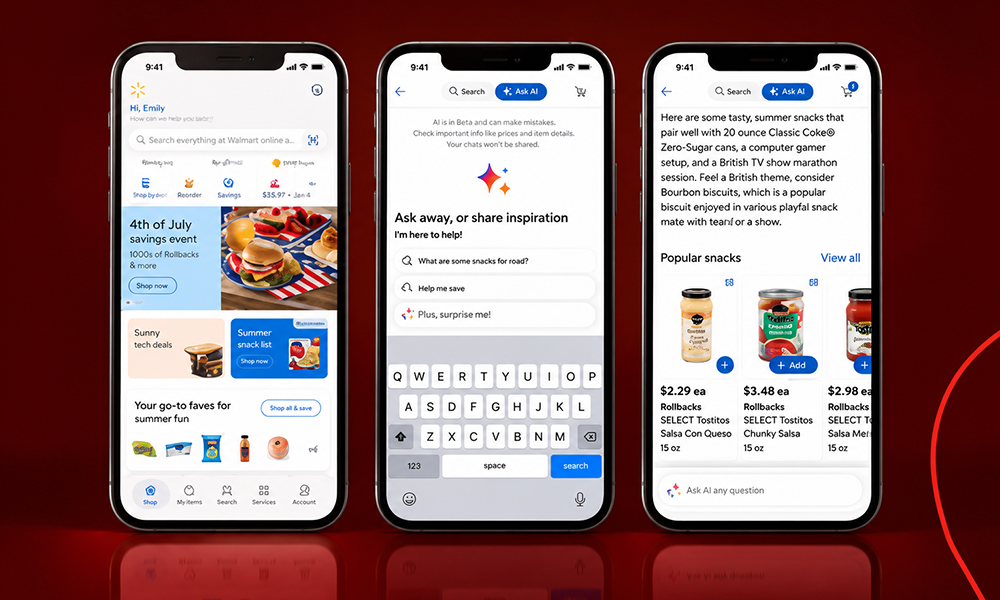
The test was strategically motivated, not experimental for its own sake. Conair’s e-commerce team was sitting on a backlog of video assets it couldn’t produce fast enough. As video engagement has grown across Amazon and more competitors have entered the space, the gap between the content the team needed and the content it could realistically produce had become a constraint on performance.
The Cuisinart test was a structured attempt to close that gap. Conair’s team provided Global Overview an agency that had already been testing Creative Agent with detailed creative briefs. Global Overview used those briefs to build multiple prompts for the AI tool and managed the asset development throughout the process.
The resulting video is, by most accounts, straightforward. A voiceover asks “Last minute dinner party?” over footage of a smiling AI-generated family chopping vegetables together in a kitchen and feeding them into the food processor. The voiceover explains the appliance can handle “everything from pesto to pie crust.” It is not a creative breakthrough. It is a reliable, brand-appropriate, performance-ready video asset and that is exactly what Conair needed.
Human finishing work was necessary throughout. Creative Agent produced errors that required manual correction: distorted logos, altered numbers and letters, and color inconsistencies that didn’t match Cuisinart’s brand guidelines. Global Overview handled all of those fixes. The 80/20 split AI handling 80% of the concept, humans doing 20% of the brand-critical finishing is the realistic current state of AI video production at the level Conair was operating.
The Strategic Logic: Why Speed Is a Performance Variable
The most important insight from Conair’s test is not about the tool. It’s about what happens to creative strategy when production time collapses.
Traditional production timelines three to six months for a video of this type turn creative into a planning artifact. You decide in Q1 what you’ll run in Q3. By the time the asset is live, the context has shifted, the competitive landscape has changed, and you’re committing to a strategy you built months ago.
When production time drops to four weeks, creative becomes something closer to a continuous optimization loop. ContentGrip’s analysis of the Conair case put it precisely: “When production time collapses, testing becomes the strategy, not a tactic.” On Amazon specifically, where creative wear-out is a calendar problem before it is an idea problem, the ability to refresh assets faster changes what a team can attempt.
The 18% detail page view improvement and 14% cost reduction are real results. But the deeper strategic value is the optionality that faster production creates the ability to respond to competitive moves, seasonal shifts, and algorithm changes with updated creative in weeks rather than quarters.
Kelsey Smithuysen, Conair’s director of Amazon advertising, framed the pressure clearly: “Conair has seen much stronger engagement with video content in general in recent years, and more competitors are entering the video space increasing the importance of AI tools to help with production.” The competitive dynamic is central to the decision. When your competitors are increasing their video output and your production queue is a six-month backlog, the math on AI adoption changes quickly.
The 80/20 Model: What This Means for Brand Teams
The 80/20 split that Conair described is becoming a working template for how brands are thinking about AI creative at scale and it reframes what brand and marketing teams actually need to do.
In the pre-AI model, human creative teams handled everything from concept through final delivery. The bottleneck was production capacity. The workflow was sequential.
In Conair’s model, AI handles the concept-to-first-draft stage for 80% of the workload. Human effort concentrates on the 20% that protects brand identity: logo integrity, color standards, voice consistency, and correcting the errors that AI systems reliably produce. As ContentGrip’s analysis observed: “Generative creative does not remove brand standards; it makes them measurable and repeatable.”
This changes what brand teams need to be good at. The emerging job is not execution management it is brief quality and brand standards enforcement. The brands that will get the most out of AI creative tools are the ones that have documented visual DNA, clear brand guidelines, and the review infrastructure to catch errors before assets go live.
Conair noted directly that Creative Agent can distort logos and characters. At the volume that AI enables which is dramatically higher than traditional production pipelines could support the risk is not one bad asset. It is many small inaccuracies that compound into eroded brand trust if review standards don’t scale alongside production volume.
The Industry Context: Conair Is Not Alone
Conair’s adoption sits within a broader acceleration that has moved from experimental to mainstream in 2026.
The IAB’s January 2026 report found that 86% of media buyers either currently use or plan to use AI to build video ads. StackAdapt and Ascend2’s study found that 60% of marketers now use AI for content creation the most widely adopted AI application in video marketing. Nearly 90% of advertisers are using generative AI for video ad creation or versioning, according to SEO Werkz’s 2026 analysis.
The video context compounds this. HubSpot’s 2026 State of Marketing report found that 93% of marketers say video is important to their strategy. AI tools have cut production costs by up to 91% and reduced production time by 50–80%, according to Pictory’s 2026 video marketing statistics report. Teams using AI produce up to 11 times more content per month than those that don’t.
But adoption is not uniform. Only 39% of agencies have significantly integrated AI into their day-to-day workflows, per StackAdapt’s research. 43% of marketers cite lack of in-house AI skills as their biggest barrier to generative AI adoption, according to LinkedIn’s B2B Marketing Benchmark. The gap between the brands moving fast like Conair and those still evaluating is widening in both production capacity and performance data.
Conair is also not alone in encountering friction. Blue Diamond’s Almond Breeze and other brands have faced consumer backlash and even mockery for AI-generated video ads that felt inauthentic or low-effort. The standard that Conair set human finishing work to maintain brand standards, detailed creative briefs, agency partnership with an experienced Creative Agent operator is specifically designed to avoid the quality gaps that have generated that criticism elsewhere.
What Amazon’s Creative Agent Actually Is
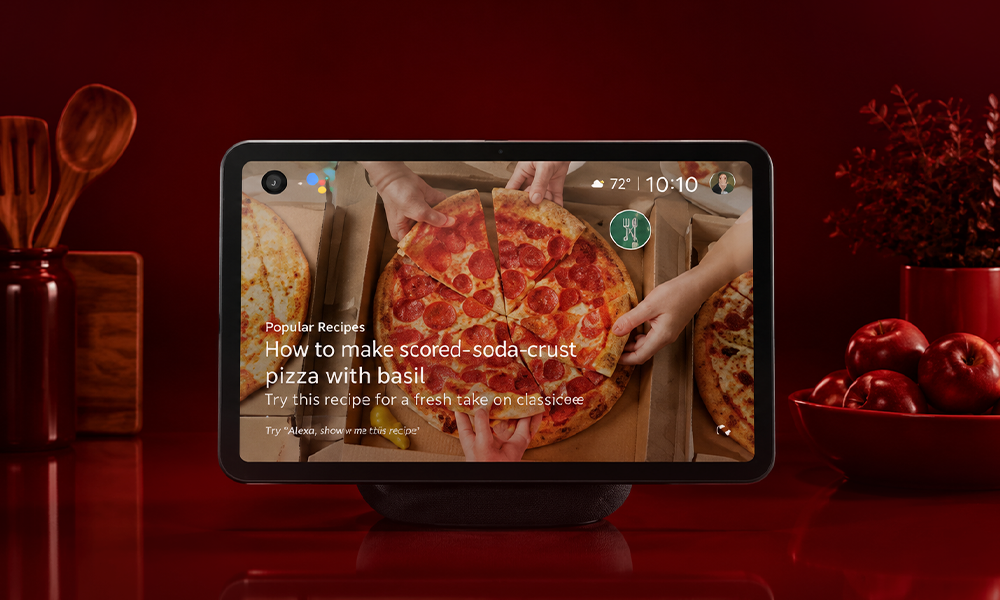
Amazon Ads Creative Agent, the tool Conair tested, is designed to produce end-to-end ad campaigns from creative briefs. It is not a video editing tool applied on top of existing assets it generates the concept, the visual execution, and the narrative structure from the prompt inputs it receives.
Amazon positions it specifically for e-commerce advertisers who need to maintain a high volume of product-specific video content across a large and frequently refreshed catalog. The tool is relatively new Global Overview was described as an “early adopter” and the Conair test is among the first published case studies with real performance data attached to it.
The creative output is not indistinguishable from traditionally produced brand content. Conair’s 80/20 split and the specific errors described distorted logos, altered characters are consistent with the current limitations of AI video generation. But the performance numbers suggest that on Amazon specifically, a well-briefed and properly finished AI-generated video can outperform a traditionally produced one on the metrics that drive e-commerce outcomes.
Three Strategic Observations for Brand and Agency Teams

Speed is a creative advantage until it isn’t. Conair’s four-week production timeline is a meaningful competitive edge right now because most competitors are still on three-to-six-month cycles. That gap will close as Creative Agent and tools like it become more widely adopted. ContentGrip’s analysis identified the likely end state clearly: “If Creative Agent becomes widely used, the advantage shifts to brief quality, testing discipline, and the speed of learning cycles. The scarce asset becomes judgment, not generation.” The window of first-mover advantage is real but finite.
The brief is the new creative brief. When AI handles 80% of the concept, the quality of the prompts and creative briefs that go into the AI becomes the primary creative differentiator. Conair’s team and Global Overview invested in detailed briefs that shaped what the AI produced. Brands that treat AI prompting as a technical task rather than a creative one will get generic output. Brands that treat brief quality as a core competency will get better results and more distinctive assets.
Review infrastructure has to scale with production volume. The error types that Conair encountered distorted logos, altered characters, color inconsistencies are predictable and correctable, but only if the review process catches them before the asset goes live. At the volume that AI enables (many more assets per month than traditional production could support), under-resourced review is how brand inconsistency accumulates at scale. The brands getting this right are building review ownership into the workflow from the start, not treating it as a downstream check.
What Comes Next for Conair
Swenson was direct about where the company goes from here: “Now it’s on us to figure out how to take this and scale it.”
That scaling problem is the next phase of the AI creative story for Conair and for most brands in a similar position. Running one test on one product line is proof of concept. Building a production infrastructure that consistently applies AI-assisted creation across a full product catalog, with the review standards and brief quality to maintain brand integrity at volume, is a different and harder challenge.
The results of the Cuisinart test suggest the direction is right. What Conair does next how it structures the agency relationship, how it builds brief development capability internally, how it scales review will determine whether the speed advantage of the test becomes a durable operational capability or a one-time win.
FAQs
What was Conair’s AI video ad test?
In April and May 2026, Conair tested Amazon Ads’ Creative Agent by producing a 15-second video for a Cuisinart food processor. The AI-assisted video delivered 18% higher detail page views and 14% lower cost per detail page view versus a traditionally produced video.
What is Amazon Creative Agent?
An AI tool from Amazon Ads that produces end-to-end ad campaigns concept, visuals, and narrative from creative brief inputs. It is designed for e-commerce advertisers managing high volumes of product-specific video content.
How long did Conair’s AI video take to produce?
Approximately four weeks, compared to the three to six months typically required for equivalent videos produced without AI assistance.
Did AI replace Conair’s human creative team?
No. Creative Agent produced 80% of the video concept. The remaining 20% was completed manually by agency partner Global Overview, which corrected errors and ensured the output met Cuisinart’s brand standards.
What errors did AI produce in Conair’s test?
Distorted logos, altered numbers and letters, and color inconsistencies that required manual correction before the asset met brand guidelines.
How does this fit into broader AI video adoption?
The IAB reported in January 2026 that 86% of media buyers currently use or plan to use AI for video ads. Conair’s test is among the first published cases with confirmed performance data from Amazon’s Creative Agent specifically.