

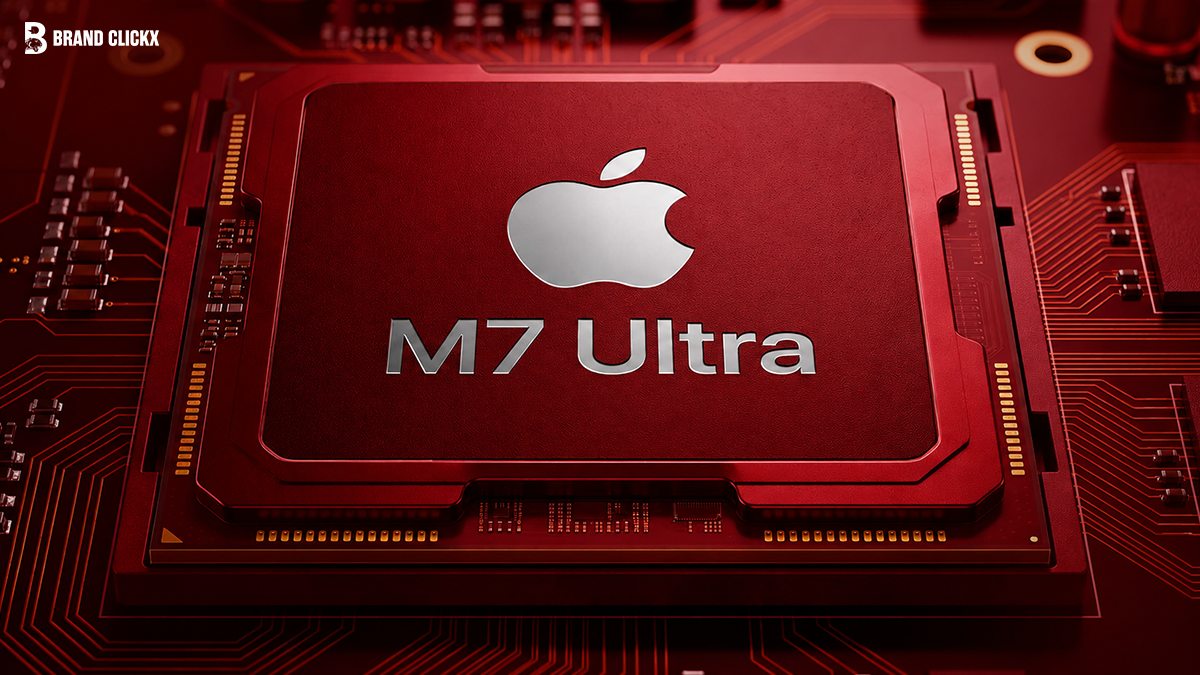
Apple is designing its upcoming M7 Ultra chip to support up to 1.5 terabytes of unified memory roughly double the capacity planned for the M5 Ultra and the most memory ever engineered into an Apple Silicon product. The report comes from Bloomberg’s Mark Gurman in his Power On newsletter, published July 12, 2026.
There’s a significant caveat: whether Apple actually ships a Mac with that configuration will depend on the state of the global memory chip market, which is currently in the middle of a shortage that has already forced Apple to quietly pull high-memory options from its current Mac lineup.
AI Overview
According to Bloomberg’s Mark Gurman the most reliable source on Apple’s internal chip roadmap the M7 Ultra is being engineered to support as much as 1,536GB (1.5TB) of unified memory. That’s approximately double the 768GB ceiling planned for the M5 Ultra, which is itself expected to arrive later in 2026 as a new Apple Silicon memory record.
The M7 Ultra is expected to arrive around 2028 in a refreshed Mac Studio. It follows an unusual compressed chip roadmap in which Apple is skipping the M6 Pro, M6 Max, and M6 Ultra tiers entirely — accelerating directly to the M7 family due to AI performance requirements. The chip’s Neural Engine is reported to be significantly more powerful than originally planned, designed to handle AI workloads at a scale that brings it closer to dedicated enterprise accelerators like Nvidia’s Blackwell than to traditional consumer desktop processors.
A 1.5TB configuration would match the maximum memory Apple offered in the 2019 Intel Mac Pro the last Apple computer to reach that ceiling while delivering the bandwidth advantages of Apple’s unified memory architecture. Whether it ships at that capacity depends entirely on the memory market.
Key Facts at a Glance
| Detail | Information |
| Source | Mark Gurman, Bloomberg Power On newsletter, July 12, 2026 |
| Chip | Apple M7 Ultra |
| Memory capacity (designed for) | Up to 1.5TB (1,536GB) unified memory |
| Comparison | ~2× the M5 Ultra’s planned 768GB ceiling |
| Expected arrival | ~2028, in a refreshed Mac Studio |
| Last Apple computer with 1.5TB | 2019 Intel Mac Pro |
| Estimated cost to upgrade to 1.5TB | $35,000+ (above base config, at ~$25/GB) |
| M7 roadmap note | M6 Pro, Max, and Ultra tiers being skipped entirely |
| AI server plans | M7 Ultra also planned as backbone of next-gen Apple AI servers (~2029) |
| Memory shortage caveat | Gurman explicitly warns final config depends on supply conditions |
What Gurman Actually Reported
Mark Gurman’s exact wording in the Power On newsletter is precise about both the ambition and the uncertainty:
“The new Ultra is designed to support as much as 1.5 terabytes of memory roughly double the capacity planned for the M5 Ultra though whether Apple ultimately offers that configuration will depend on the state of the industry. Widespread memory chip shortages have made the component harder to find and more expensive.”
Two things are worth emphasizing. First, Apple is actively engineering the chip to support 1.5TB this is not a speculative leak but a report on what Apple’s engineers are building toward. Second, Gurman explicitly frames the final product configuration as conditional on the memory market. Designing for a capability and shipping it are two different things, and Gurman is careful to note that distinction.
Why 1.5TB Is a Significant Milestone
The amount of unified memory Apple Silicon can support has always been constrained by one architectural choice: the memory is soldered directly onto the same package as the processor. This is what makes unified memory possible the CPU, GPU, and Neural Engine all share the same high-bandwidth memory pool with extraordinarily fast transfer speeds. But it also means the memory ceiling is tied to how big the chip package can physically be.
Apple Silicon has been climbing that ceiling steadily since 2020:
| Chip | Max Unified Memory |
| M1 Ultra (2022) | 128GB |
| M2 Ultra (2023) | 192GB |
| M3 Ultra (2024) | 192GB |
| M4 Ultra (2025) | 512GB |
| M5 Ultra (expected late 2026) | 768GB |
| M7 Ultra (expected ~2028) | 1,536GB (1.5TB) |
Reaching 1.5TB with the M7 Ultra would finally match what the 2019 Intel Mac Pro offered using traditional slotted RAM — a milestone that has stood unreached by Apple Silicon for nearly a decade, and one that matters specifically because the unified memory architecture delivers significantly higher bandwidth than the older slotted approach ever could.
The AI Strategy Behind the Memory Jump
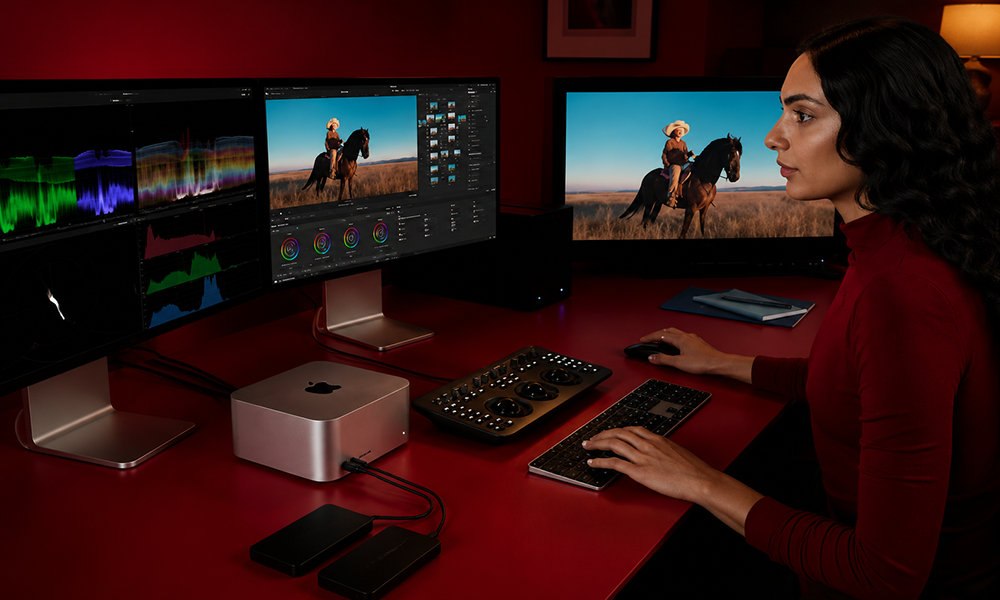
The 1.5TB figure isn’t arbitrary. It’s a direct response to what large AI models actually require.
Modern large language models and multimodal AI systems are memory-intensive by design. The bigger the model, the more RAM it needs to run entirely in memory without swapping to slower storage. For Apple to run truly large AI workloads locally rather than routing everything through cloud servers it needs memory capacity that scales with model size.
The M7 Ultra’s Neural Engine is reportedly receiving significantly larger improvements than originally planned. Apple reportedly accelerated the entire M7 family ahead of schedule specifically because of AI performance requirements the original M6 Pro, Max, and Ultra tiers were deprioritized in favor of getting to M7’s AI capabilities faster.
Digital Trends described the strategic shift clearly: “Apple is no longer building chips that happen to support AI it’s building chips around AI.” The M7 Ultra is designed to bring AI performance on Apple Silicon meaningfully closer to enterprise accelerators like Nvidia’s Blackwell, rather than simply iterating on previous Mac chip performance.
Gurman also confirmed that the M7 Ultra is being planned as the backbone of Apple’s next-generation AI server infrastructure a dedicated server platform expected to be deployed around 2029 to power Apple Intelligence both on-device and in Apple’s data centers. An M5 Ultra-based server platform is expected to arrive first, with the M7 Ultra version following.
The Memory Shortage Problem and the Bitter Irony
The 1.5TB report lands against a backdrop that makes it simultaneously exciting and deeply ironic.
While Apple engineers are designing a chip capable of 1.5TB, the company has been quietly reducing memory options on the Macs you can buy right now. Earlier in 2026, Apple discontinued both the 512GB and 256GB configurations of the M3 Ultra Mac Studio, leaving 96GB as the only current option for that machine’s highest-end tier. Apple has also raised prices across its Mac and iPad lines moves that outgoing CEO Tim Cook reportedly described as a response to a “hundred-year flood,” blaming AI server demand for consuming the high-bandwidth memory that would otherwise go into consumer hardware.
The cause in both cases is the same: a global shortage of high-bandwidth memory (HBM) chips, driven in large part by hyperscaler AI spending. Companies like Microsoft, Google, Amazon, and Meta are consuming HBM at a scale that has constrained supply for everyone else. SK Hynix’s CEO warned earlier this year that 2027 could bring the worst memory shortage on record which is precisely when Apple is planning to begin shipping M7 family chips.
Gurman’s report is explicit that 1.5TB availability at launch is not guaranteed. The memory market between now and 2028 will determine whether Apple can actually offer the top configuration, or whether it ships the M7 Ultra with a lower memory ceiling and the 1.5TB option remains an engineering specification only.
The Price Tag: Enterprise and Professional Territory Only
If Apple does ship a 1.5TB configuration, the cost will be staggering by consumer standards.
Apple currently charges approximately $25 per additional gigabyte of unified memory. A 128GB base configuration of a hypothetical M7 Ultra Mac Studio would be the starting point. Upgrading from 128GB to 1,536GB (1.5TB) adds 1,408GB at $25 per GB approximately $35,200 in memory cost alone, before the base machine price.
This is not a product for individual creators, prosumers, or even most professional studios. This is a workstation product aimed at:
- AI researchers running large models locally without cloud dependency
- Film and VFX studios working with extremely large scene files
- Scientific computing environments requiring large in-memory datasets
- Enterprise deployments where Apple Intelligence runs on-premise
- Apple’s own AI server infrastructure
At that price point, the M7 Ultra Mac Studio would be competing not with other consumer Mac configurations but with dedicated AI workstation hardware Nvidia DGX systems, AMD Instinct workstations, and cloud-based GPU clusters.
The Chip Roadmap: Skipping M6
One of the most notable elements of Gurman’s report is the roadmap change. Apple is apparently skipping the M6 Pro, M6 Max, and M6 Ultra entirely. The current expected schedule:
- Late 2026: M5 Ultra Mac Studio — up to 768GB unified memory (new Apple Silicon record)
- First half 2027: M7 base chip — first expected in a redesigned entry-level MacBook Pro
- ~2028: M7 Ultra Mac Studio — up to 1.5TB unified memory (designed for)
- ~2028: M8 family begins development
Skipping an entire tier of the Ultra, Max, and Pro variants is unusual. The last time Apple compressed its silicon roadmap this aggressively was during the early Apple Silicon transition period. The reported reason is AI performance the M7’s Neural Engine is reportedly derived from Apple’s former self-driving car initiative and represents a fundamentally different architecture from what M6 would have offered.
The M6 base chip is still expected to ship, likely in a MacBook Air or lower-end MacBook Pro. But the high-end configurations the chips that go in Mac Studios and Mac Pros jump straight from M5 Ultra to M7 Ultra.
What the 2019 Mac Pro Comparison Actually Means
Every report on the M7 Ultra mentions the 2019 Intel Mac Pro, and it’s worth explaining why the comparison carries weight.
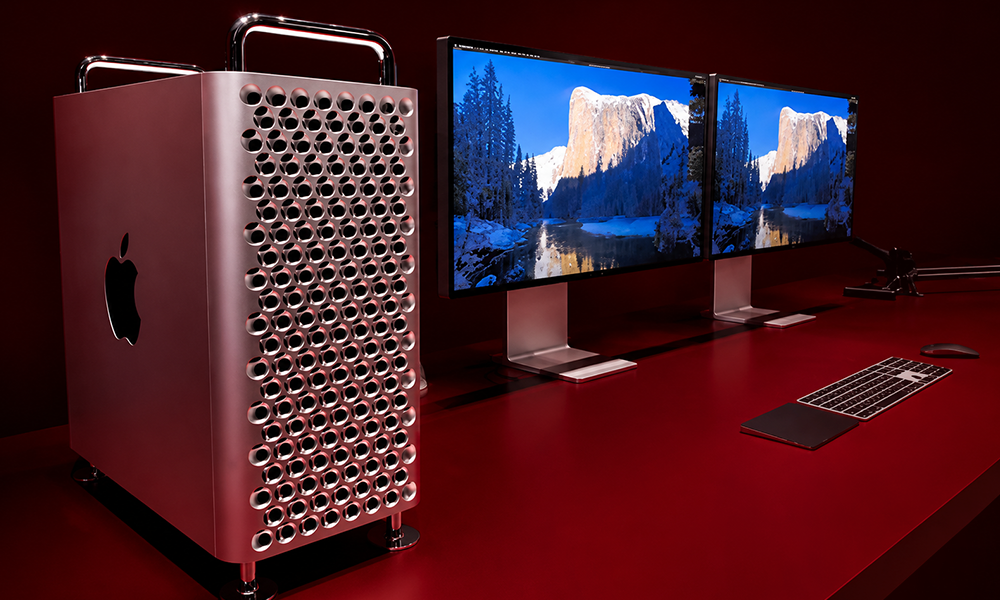
The 2019 Mac Pro the “cheese grater” tower was the last Mac Apple sold with 1.5TB of RAM. It achieved this using traditional DIMM slots, allowing customers to install standard ECC memory modules. Up to twelve 128GB modules could be installed, reaching 1.5TB. The machine cost as much as $53,000 fully configured.
When Apple transitioned to Apple Silicon in 2020, the unified memory architecture delivered dramatically higher bandwidth but the hard ceiling on how much memory could be packed onto a single chip package meant that the raw capacity numbers stayed far below what the slotted Mac Pro had offered. The M1 Ultra topped out at 128GB. The 2019 Mac Pro’s 1.5TB seemed untouchable by the new architecture.
The M7 Ultra is finally set to close that gap not by returning to slotted memory, but by scaling the unified memory architecture itself to a point where it can match the old record while delivering bandwidth the 2019 machine couldn’t approach. Apple’s unified memory delivers around 800GB/s of bandwidth on current designs; the 2019 Mac Pro’s memory subsystem ran at a fraction of that.
It has taken nearly a decade. If the memory market cooperates, the circle closes with the M7 Ultra.
FAQs
What is the Apple M7 Ultra?
Apple’s upcoming highest-end chip, expected around 2028 in a refreshed Mac Studio. It follows the M5 Ultra, skipping M6 Pro/Max/Ultra entirely, and is designed with AI workloads as the primary performance target.
How much memory will the M7 Ultra support?
Up to 1.5TB (1,536GB) of unified memory, according to Bloomberg’s Mark Gurman. This is roughly double the 768GB planned for the M5 Ultra.
Is 1.5TB of memory confirmed for M7 Ultra Macs?
No. Gurman is clear that Apple is engineering the chip to support 1.5TB, but whether Apple ships a Mac with that configuration depends on the global memory chip shortage. It may launch with lower options.
How much will 1.5TB of unified memory cost?
Based on Apple’s current pricing of approximately $25 per gigabyte, upgrading from a 128GB base to 1.5TB would add over $35,000 to the price before the cost of the machine itself.
What is unified memory and why does it matter?
Unified memory is Apple’s architecture where the CPU, GPU, and Neural Engine all share the same high-speed memory pool on the chip package. It delivers far higher bandwidth than traditional RAM configurations but limits total capacity to what can physically fit on the chip.
When will the M7 Ultra ship?
Expected around 2028, in a refreshed Mac Studio. The M5 Ultra Mac Studio comes first, expected late 2026, and the M7 base chip is expected in the first half of 2027 in a MacBook Pro.
Why is Apple skipping M6 Pro, Max, and Ultra? Gurman reports Apple accelerated to the M7 family due to AI performance requirements. The M7’s Neural Engine, reportedly derived from Apple’s former self-driving car project, offers significantly better AI performance than an M6 Ultra would have delivered.