Quick answer:
In the nvidia vs amd gpu fight, AMD wins value in 2026. The RX 9070 XT is the one to beat. Nvidia takes it for top ray tracing, DLSS, and creator work.
Here we go again with the nvidia vs amd gpu thing. It never ends. 2026 didn’t end it either. What this year did was make it closer than I figured, which is somehow more annoying than a blowout.
Both brands make good cards now. Both also charge a small fortune. Blame the memory shortage, mostly. So I quit asking which chip is fastest, because for normal people that’s the wrong question. Here’s the one I actually care about. The money was leaving your wallet anyway. Who gives you more card for it?
I look at these prices most weeks. This is where I keep landing.
The Short Version
Frames per dollar? AMD, and it’s barely a contest. The folks over at GamerTech end up in the same place in their 2026 rundown. The card everybody points at is the RX 9070 XT. You just want the most FPS your budget can buy, Radeon’s your answer.
Now flip it. Ray tracing, DLSS, video editing, that’s your real day? Nvidia, then. That same GamerTech piece hands Nvidia the win on ray tracing, DLSS, CUDA, streaming, creator work. AMD just keeps the raw gaming value crown with the 9000 cards.
So your amd gpu vs nvidia call is really one question. Value or features. Pick.
What Each Brand Is Actually Selling
Nvidia’s RTX 50 lineup starts tiny with the 5050 and works up. The 5060, then the 5060 Ti in two flavors, 8GB and 16GB (hold that thought, it matters), then the 5070, the 5070 Ti, the 5080, and the ridiculous 5090 sitting on top.
AMD keeps it short and sweet. RX 9060 XT, again 8GB or 16GB. Then the RX 9070. Then the star of the show, the 9070 XT.
Down at the bottom, don’t ignore Intel. BottleneckPC doesn’t mince words about it. Under four hundred bucks, the Arc B580 is the play.
And here’s the one that caught me off guard. Same BottleneckPC writeup says Nvidia rolled into CES 2026 with zero new GPUs. First time in five years. Nothing big on the horizon either. So this really is the menu. Nobody’s riding in to save your budget.
The Price Gap Tells the Whole Story
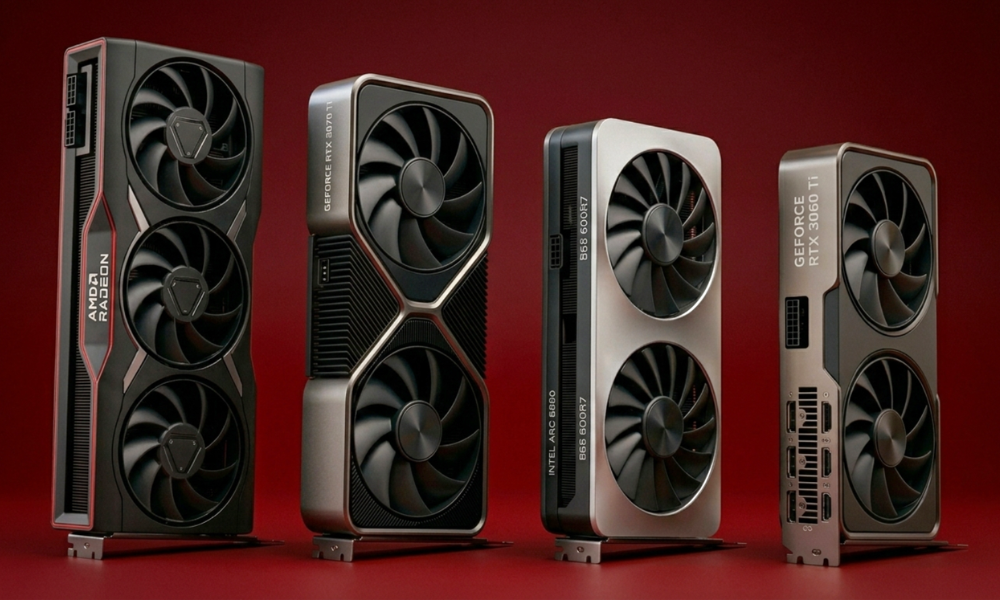
Okay, money. Best part and the worst part. Pricing got wrecked in 2026, and honestly the gap between these two brands tells you most of what you need.
Top shelf first. BottleneckPC had the 5080 sitting around twelve-fifty by spring. The 9070 XT? Down near seven-ten at Newegg. Do that math out loud. You’re paying something like three-quarters more for the 5080. And you get back, what, a quarter more at 4K? Maybe a hair over. Yeah.
Middle of the stack isn’t kind to Nvidia either. BestValueGPU has the 9070 XT running roughly forty percent ahead of the same-price RTX 5070 in 3DMark. Same money. Way more card. That’s not a close call.
Quick snapshot, mid-2026 street prices, all ballpark:
| GPU | Rough 2026 price | Best for |
| Intel Arc B580 | ~$260 | Budget 1080p |
| RTX 5060 Ti 16GB | ~$400 to $450 | 1080p, light 1440p |
| RX 9060 XT 16GB | ~$460 | 1080p, 1440p value |
| RTX 5070 | ~$600 to $635 | 1440p with features |
| RX 9070 XT | ~$655 to $710 | Best overall value |
| RTX 5070 Ti | ~$820 | Ray tracing sweet spot |
| RTX 5080 | ~$1,250 | Premium 4K |
| RTX 5090 | ~$3,600 | Max everything |
They move all the time. BottleneckPC figures most cards dropped somewhere between five and fifteen percent since the start of the year, and hardly any of them ever touch official MSRP anyway. Check the live price the day you buy. Seriously, please.
Where Each Card Actually Wins
Raw speed. No upscaling, no tricks, just the chip doing its job. Rasterization, if you want the fancy word. This lane belongs to AMD. Tom’s Hardware puts it plainly, the 9070 XT lands almost on top of the 5070 Ti for a chunk less cash. A chunk less. I’m saying it twice because they basically did.
Ray tracing? That was Nvidia’s untouchable trophy forever. Not anymore, or at least the gap shrank hard. That same Tom’s review gives RDNA 4 credit for patching AMD’s two old sore spots, ray tracing and AI grunt, and dragging both right up next to Nvidia.
Push to the ceiling, though, and Nvidia struts again. DropReference tested 4K with ray tracing cranked and only the 5080 stayed above sixty FPS with DLSS on. Something like a quarter more frames than the 9070 XT, give or take. Got a fancy 4K high-refresh panel and you max every slider? Sure, it earns its money there. The rest of us? Meh.
DLSS vs FSR, the Software Bit
Software keeps getting more important. It’s half this nvidia vs amd gpu argument at this point, easily.
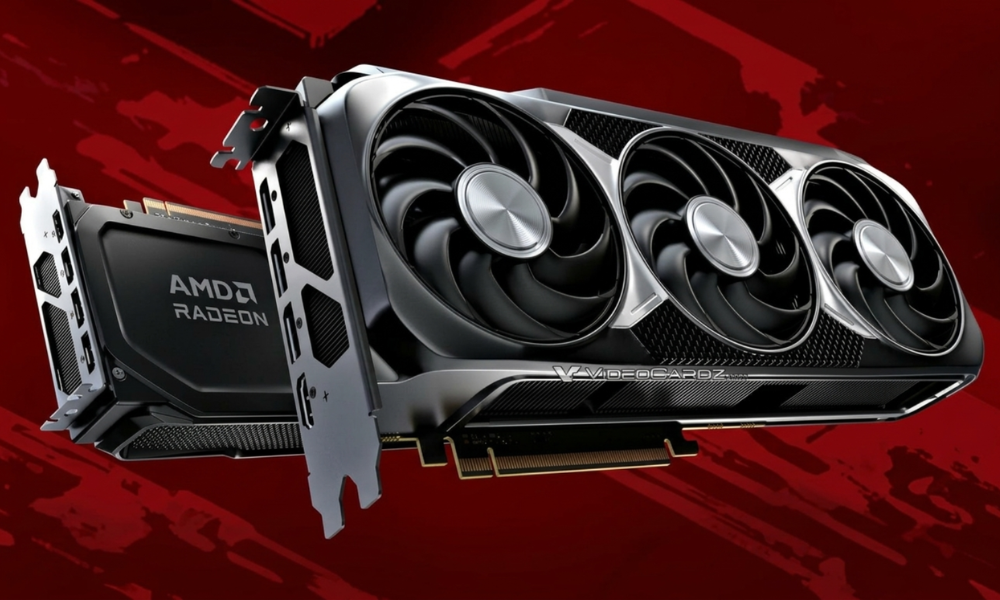
Nvidia’s DLSS is still the cleanest upscaler with the widest support. AMD punches back with FSR and its own frame generation, and both got a lot better on RDNA 4. PC Gamer caught the 9070 leaning on FSR and frame gen for a real lift at 1440p and 1080p.
But leave gaming behind and Nvidia just runs away. GamerTech says it straight, Tensor Cores plus CUDA plus broad support make it the stronger pick for local AI and machine learning. Edit, render, tinker with that stuff, and the ecosystem grabs hold of you. Annoyingly hard to leave.
AMD’s not useless on media, to be fair. GamerTech says Radeon handles modern encoding fine on the 9070 XT, AV1 and all. Streamers, you’re good.
Best GPU for Gaming, by Budget
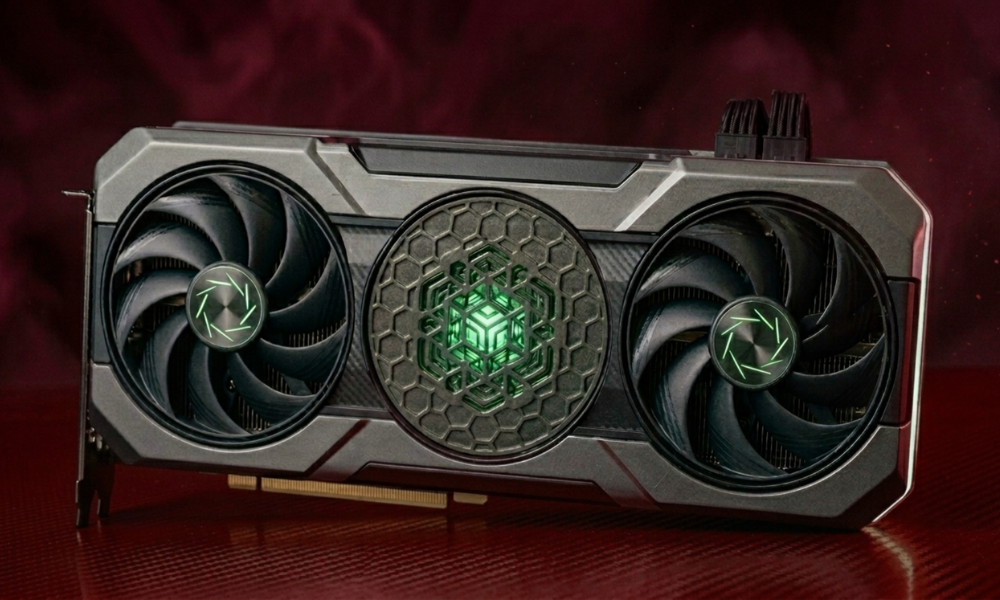
The best graphics card 2026 for you is just your screen plus your wallet. That’s it. No filler down here.
Under $400, the Arc B580 for pure value, or grab an RX 9060 XT 16GB if you want the VRAM headroom.
$600 to $750 is the sweet spot, full stop. BottleneckPC lays it out, RX 9070 XT for raster, RTX 5070 Ti if ray tracing actually matters to you. The 9070 XT is my pick for best gpu for gaming value. Easy.
$1,000 to $1,500, and BottleneckPC calls the 5080 near twelve-fifty a fair premium 4K buy these days.
$3,500 and up, the 5090. Only if that number doesn’t make you blink.
One more thing, because it quietly kills builds. Club386 warns that a card starved for memory doesn’t just dip a bit. It can lose half its performance or worse, because the GPU can’t grab data fast enough. So skip 8GB cards when you can. Shoot for 16GB at 1440p and up. Trust me here.
So, Which Do You Buy?
AMD if you want the most frames per dollar, you live at 1080p or 1440p, and chasing the bleeding edge of ray tracing isn’t your thing. The RX 9070 XT is the value king this year, no asterisk.
Nvidia if ray tracing is the whole point for you, or you want the slickest upscaling, or you create and poke at AI on the side. The 5070 Ti and 5080 earn their keep there.
Most gamers, AMD. Most creators, Nvidia. Match the card to your monitor, your games, and how long you want before the upgrade itch comes crawling back. That’s the whole thing. Stay tuned with BrandClickX for further info.
FAQs
Is AMD or Nvidia better value in 2026?
For most gamers, AMD, and it isn’t close. The 9070 XT gets you near 5070 Ti speed and leaves a few hundred bucks in your pocket.
Is the RX 9070 XT better than the RTX 5070?
For gaming, yeah. It’s about forty percent ahead in 3DMark for basically the same money, so the 5070 is a hard sell next to it.
Which GPU is best for ray tracing?
Still Nvidia. The 5080 and 5090 sit up top. AMD closed a ton of ground, but it slips back once you hit 4K.
What is the best budget GPU in 2026?
The Arc B580 under $400. Twelve gigs of memory and solid 1080p speed is what carries it.
Do I need more than 8GB of VRAM?
At 1440p on newer games, pretty much yeah. Go 16GB and you dodge those ugly performance cliffs.
Is Nvidia better for content creation?
It is. CUDA, Tensor Cores, and DLSS give it a clear lead across video, 3D, and AI work.