
What’s Confirmed
- Apple raised prices on the Apple TV streaming device worldwide on June 25, 2026.
- Apple TV (Wi-Fi): increased from $129 to $199, a 54% increase.
- Apple TV (Wi-Fi + Ethernet): increased from $149 to $249, a 67% increase.
- The price hike also hit HomePod ($299 → $349) and HomePod mini ($99 – $129) on the same day.
- Apple confirmed the increase is tied to a global memory chip (RAM/SSD) shortage, driven by surging demand from AI data centers.
- The hardware itself was not changed, same chip, same storage, same features as before the price increase.
- This is part of a broader Apple price increase affecting Macs, iPads, and the Vision Pro on the same day; iPhone, Apple Watch, and AirPods were not affected.
The Exact Price Changes
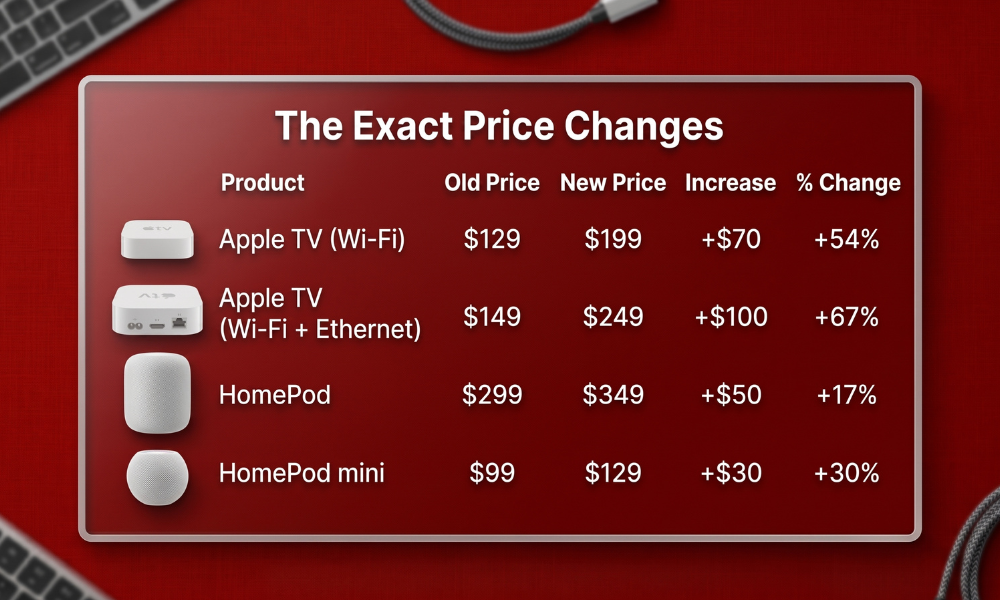
| Product | Old Price | New Price | Increase | % Change |
| Apple TV (Wi-Fi) | $129 | $199 | +$70 | +54% |
| Apple TV (Wi-Fi + Ethernet) | $149 | $249 | +$100 | +67% |
| HomePod | $299 | $349 | +$50 | +17% |
| HomePod mini | $99 | $129 | +$30 | +30% |
These changes apply to Apple’s online store and authorized retailers worldwide. The price increase went into effect immediately, with Apple’s online store briefly going offline the morning of the change before returning with the new prices already in place.
Why Apple Says It Raised Prices
Apple attributed the increase directly to a global shortage of memory and storage chips, driven by the rapid expansion of AI data centers, which has sharply increased demand for the same RAM and SSD components used in consumer electronics. In a statement shared with media outlets, Apple said it had never seen a component price increase this large or this fast.
Apple also said it had absorbed these rising costs internally for as long as it could before passing them on to customers, and that today’s increases mark the point at which it needed to begin raising prices on a number of products. Apple CEO Tim Cook had separately described the price increases as effectively unavoidable in comments made earlier in June 2026.
Market data supports the scale of the shortage: research firm TrendForce reported that DRAM prices climbed by roughly 98% in the first quarter of 2026 alone, with further increases expected in the following quarter.
This Isn’t Just Apple TV Here’s the Full List
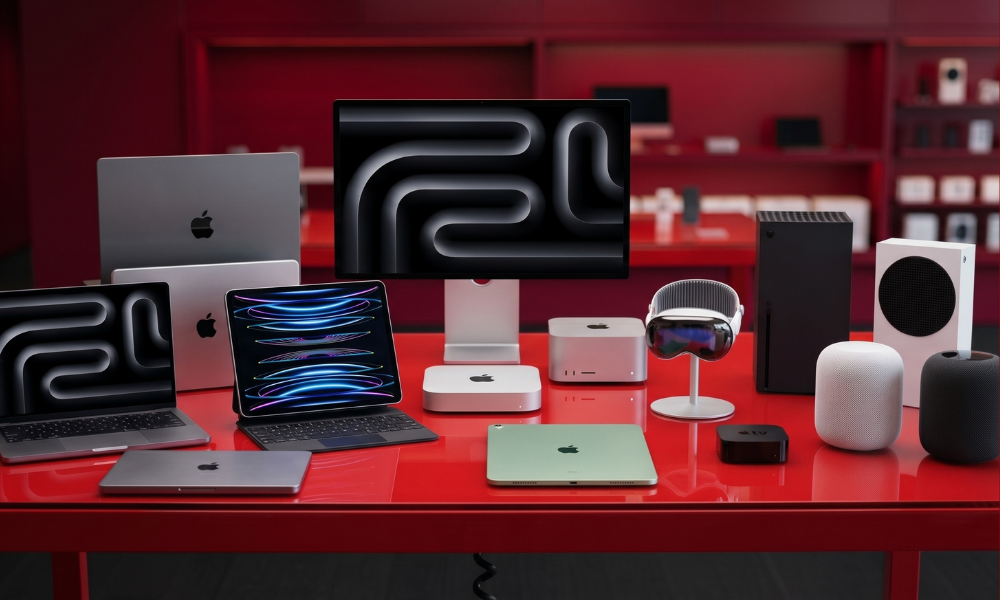
The Apple TV and HomePod price increases were part of a single, much larger pricing update affecting most of Apple’s hardware lineup on the same day:
- Mac: price increases across MacBook Air, MacBook Pro, MacBook Neo (formerly MacBook), Mac mini, Mac Studio, and Studio Display configurations
- iPad: price increases across iPad, iPad Air, and iPad Pro models and storage tiers
- Apple Vision Pro: increased from $3,500 to $3,700 for the base 256GB configuration
- Apple TV and HomePod: as detailed above
Apple explicitly left the following products untouched in this round: iPhone, Apple Watch, AirPods, and Studio Display in some configurations. Apple has not indicated whether or when those product lines might see similar increases.
Apple isn’t alone in passing on memory chip costs to consumers, other companies, including Microsoft, have also raised prices on hardware products in 2026 in response to the same chip shortage, with some Xbox console models increasing by as much as $150.
Why the Apple TV Took the Biggest Percentage Hit
In percentage terms, the Apple TV absorbed a larger price increase than almost any other product in this round, a 67% jump for the Wi-Fi + Ethernet model is sharply higher than the roughly 15–20% increases seen on most Mac and iPad models. Two factors explain this:
- Lower starting price. Because the Apple TV started at a relatively low price point ($129–$149) compared to Macs and iPads, even a moderate dollar increase translates to a much larger percentage jump.
- No major hardware refresh to offset it. Apple TV’s most recent hardware update dates to October 2022, meaning the device has gone roughly four years without a refresh. Unlike a new model launch, where a price increase can be framed as paying for new capability, this increase applies to unchanged, aging hardware.
This combination has driven a notably sharp public reaction. Discussion on Apple-focused forums has been largely critical, with many users specifically questioning why a four-year-old, unchanged device would see a 67% price increase if rising component costs were the sole driver, given that the Apple TV uses a relatively modest amount of RAM and storage compared to a Mac or iPad.
The Timing Isn’t a Coincidence
This price increase lands during an unusually long wait for new Apple TV hardware.
According to Bloomberg’s Mark Gurman, updated Apple TV and HomePod mini models have been ready to ship for months, but Apple has reportedly delayed their release until a more personalized version of Siri, currently in developer testing across iOS 27, iPadOS 27, macOS 27, and visionOS 27, is ready for public release.
Earlier reporting indicated the next Apple TV is expected to use Apple’s A17 Pro chip, the oldest chip that supports Apple Intelligence, along with Apple’s N1 chip for Wi-Fi 7, Bluetooth 6, and Thread support.
No major external design changes have been rumored, though the Siri Remote may see some refresh. Apple is also reportedly working on an all-new smart home hub.
One detail worth understanding: because new product versions are expected to launch at the same price as the now-increased current models, the “sting” of this increase will likely have faded from public attention by the time the new hardware actually ships, a pattern some industry observers have noted as a recurring one for Apple ahead of product refreshes.
What This Doesn’t Affect
To be precise about scope:
- This price increase does not affect Apple TV+, the streaming subscription service, which is a separate product from the Apple TV hardware device discussed in this article. Apple TV+ last raised its monthly subscription price in August 2025, from $9.99 to $12.99, a separate action roughly ten months earlier, unrelated to this hardware pricing update.
- This increase does not come with any new features, chip upgrade, or storage increase, the hardware is unchanged.
- This increase does not apply retroactively to devices already purchased before June 25, 2026.
What This Means If You’re Buying One Now
A few practical notes based on confirmed reporting:
- Existing retail stock at the old price may still be available. Some users reported finding third-party retailers, including big-box stores, still selling units at pre-increase pricing in the days immediately following the announcement, though this is expected to be temporary as stock sells through.
- Waiting for the next model carries its own tradeoff. If new Apple TV hardware is genuinely “nearly ready,” as Bloomberg’s reporting suggests, buying now means paying the new, higher price for hardware that’s about to be superseded, though Apple has not confirmed a release date.
- Analysts don’t expect prices to come back down. Market researchers, including Micron, expect the memory chip shortage to persist through 2027 at minimum, with some estimates extending into 2028 or later. Historically, Apple has rarely reversed a price increase once implemented, even after the underlying cost pressure eases.
Frequently Asked Questions
How much did the Apple TV price increase by?
The Apple TV (Wi-Fi) increased from $129 to $199, a 54% increase, while the Apple TV (Wi-Fi + Ethernet) increased from $149 to $249, a 67% increase. Both changes took effect on June 25, 2026.
Why did Apple raise Apple TV prices?
Apple attributed the increase to a global shortage of memory and storage chips, driven by surging demand from AI data centers, which has sharply increased the cost of RAM and SSD components used across its product lineup.
Did the Apple TV hardware change along with the price increase?
No. The Apple TV’s chip, storage, and features are unchanged. Customers are paying more for the same hardware that was available at a lower price before the increase.
Is this the same as the Apple TV+ price increase?
No, these are separate products. Apple TV+ is the streaming subscription service, which last increased from $9.99 to $12.99 per month in August 2025. This article covers the Apple TV hardware streaming device, which had a separate price increase on June 25, 2026.
Will Apple TV prices come back down once the chip shortage ends?
There’s no confirmation either way. Analysts expect the memory chip shortage to persist through at least 2027, and Apple has historically not reversed price increases once implemented, even after underlying cost pressures ease.