The Shift Happened Quietly (And Most Sellers Still Haven’t Noticed)
For 20 years, Amazon SEO was predictable. Stuff the right keywords in the right fields. Get reviews. Win the buy box. Rank higher.
Sellers knew the rules. Compete on those levers.
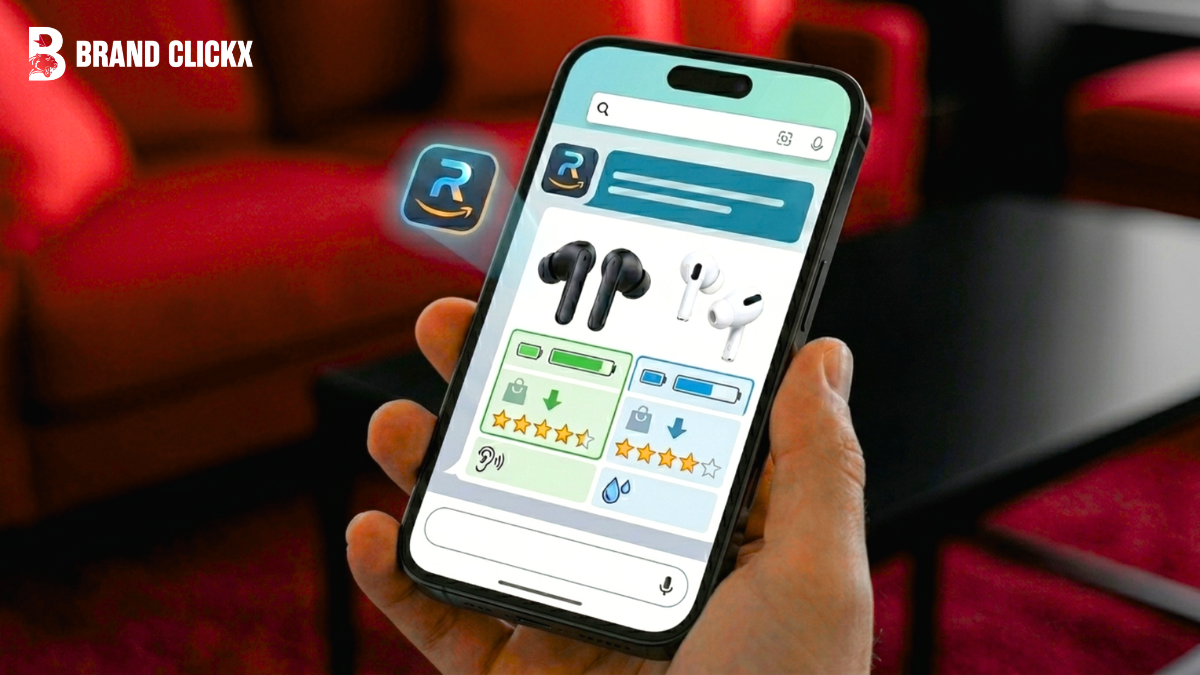
In 2024, Amazon introduced Rufus, an AI shopping assistant that changed how shoppers discover products on Amazon.
In May 2026, Amazon renamed it Alexa for Shopping and fully integrated it with their broader Alexa+ ecosystem.
And now, roughly 35% of Amazon searches go through AI instead of traditional keyword search.
Most sellers still haven’t updated their strategy.
They’re still writing listings for the A9 algorithm (Amazon’s traditional search) when they should be writing for semantic AI that reads like a human and understands context, intent, and comparative value.
The brands that adapted early to Rufus optimization are seeing something unexpected: they’re getting more traffic despite the crowded marketplace, while competitors stuck in keyword-stuffing mode are watching their visibility decline.
This is the biggest structural shift in Amazon search since A9 launched two decades ago.
And if you’re selling on Amazon in 2026, you need to understand it.
What Actually Changed (May 13, 2026)
The Rename: Rufus → Alexa for Shopping
On May 13, 2026, Amazon made an announcement that signals much bigger changes coming:
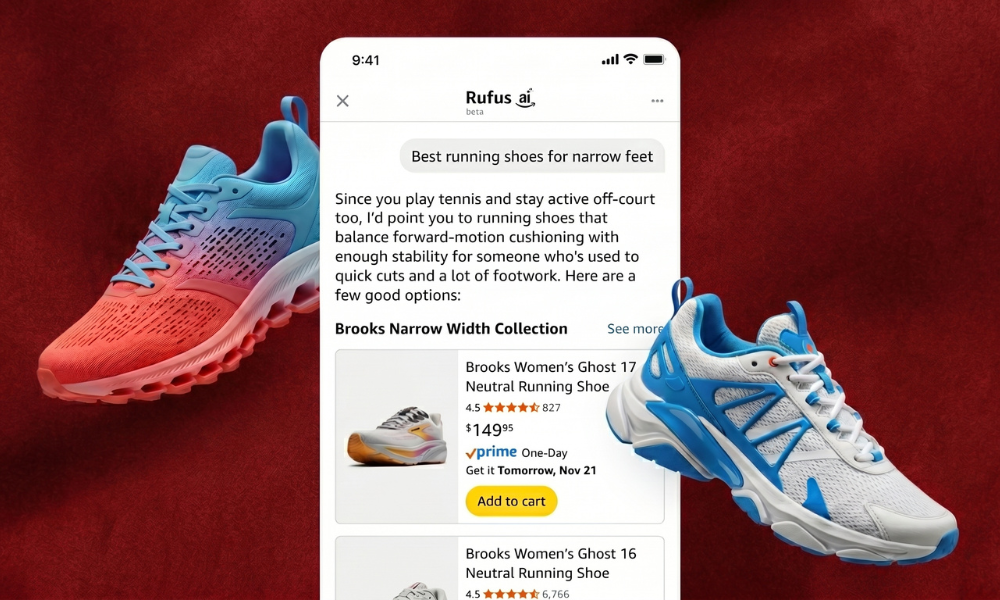
Rufus, the standalone AI shopping assistant, was renamed Alexa for Shopping and integrated with Amazon’s Alexa+ ecosystem.
What this means structurally:
Rufus was previously a separate tool within Amazon Shopping. You accessed it to ask product questions.
Alexa for Shopping is now unified with Alexa+ (Amazon’s broader assistant platform). Your shopping history, preferences, and behavior across Amazon echo devices now inform shopping recommendations.
Cross-ecosystem integration is coming: Kindle reading history, Prime Video viewing habits, Audible listening preferences, all will inform what Alexa suggests you buy.
For brands: You’re no longer just optimizing for product discoverability. You’re optimizing for predictive recommendation in a multi-dimensional user profile.
The Scale Reality
Amazon shared performance data:
- 250 million+ daily queries handled by Rufus/Alexa for Shopping
- 300+ million customers used Rufus in 2025
- Monthly active users up 115% YoY
- Engagement up nearly 400% YoY
- 35%+ of total Amazon search volume by end of 2025, growing into 2026
To put this in perspective: that’s roughly 1 out of every 3 Amazon searches going through AI instead of traditional keyword matching.
The Structural Shift: From Keywords to Semantic Understanding
This is where traditional sellers get confused. They think “oh, I’ll add more keywords to my listing and I’ll show up in Rufus too.”
That’s fundamentally wrong. The AI doesn’t work like keyword matching.
Traditional Amazon SEO (A9 Algorithm):
- Keyword appears in title → slight ranking boost
- Keyword appears in bullets → ranking boost
- Keyword appears in description → ranking boost
- Keyword density matters (more repetition = more visibility)
- Exact phrase matching increases relevance
Rufus AI Discovery:
- Does your listing answer the question a shopper is asking?
- Can the AI extract specific, useful information from your content?
- Is your information complete, consistent, and clear?
- Does external authority (off-Amazon mentions) support your claims?
- Do your reviews and ratings support the positioning?
Rufus reads your listing like a human, not a keyword scanner.
A shoppers asks Rufus: “What’s the best yoga mat for someone with back pain?”
Rufus doesn’t look for exact phrase matches. It understands:
- Does this product address back pain specifically?
- What material is it made of?
- What do customers with back pain say about it?
- How does it compare to alternatives?
- Is there external evidence this is actually good for back pain?
If your listing says “yoga mat” 50 times but never mentions back pain, joint support, or cushioning, Rufus won’t recommend it, even if you rank #1 in traditional search.
The Four Factors That Determine Rufus Visibility
Based on brands winning with Rufus optimization, there are four core factors:
1. Consistent Listing Data
Your title, bullets, description, A+ Content, and backend search terms should tell a coherent story about what the product is, what it does, and who it’s for.
What Rufus looks for:
- Does the title match the bullets?
- Do the bullets expand on the title?
- Does the description reinforce what the bullets said?
- Does A+ Content add depth without contradicting basics?
Common mistake: Sellers write vague titles (“Blue Widget”), then use bullets for keyword stuffing, then write a description that’s essentially marketing copy with no substance.
Rufus sees the inconsistency and deprioritizes you.
2. Clear Utility Context
Your listing needs to explicitly answer: What does this product do? Who is it for? Why do they need it?
What Rufus looks for:
- Specific use cases (not generic benefits)
- Who the ideal user is
- What problem it solves
- What makes it different from alternatives
Example of strong context: “Adjustable yoga mat for individuals with lower back pain. 1/4-inch thickness provides cushioning without over-softness. Non-slip surface prevents slipping during bent-knee poses. 75% recycled rubber + cork.”
Example of weak context: “Premium yoga mat. Great quality. Best value. 5-star rated.”
One tells Rufus exactly what it needs to know. The other forces Rufus to infer everything.
3. Stable Ratings & Review Quality
Product quality affects Rufus visibility in two ways:
First, products below 4.0 stars often get excluded from recommendations. Your listing quality matters, but your product quality matters more.
Second, the content of your reviews informs Rufus. When Rufus summarizes reviews for a shopper, it pulls themes from dozens or hundreds of reviews. If reviews repeatedly mention a specific benefit or concern, Rufus uses that to position your product.
Strategic implication: Review management is now a discovery lever, not just a conversion lever. Encourage customers to mention specific use cases and benefits in reviews. If your product has a standout feature, make sure reviews highlight it.
4. Complete Information Coverage
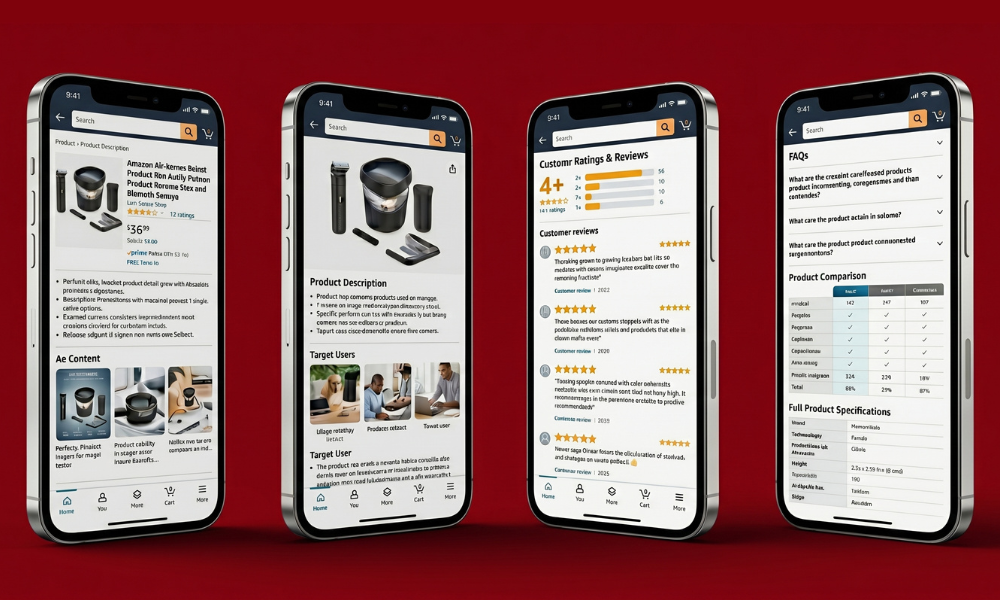
A+ Content, detailed descriptions, FAQ sections, comparison tables, all of this gives Rufus more anchors to understand and position your product.
Brands with minimal listings (title + bullets only) are at disadvantage because Rufus has limited context to work with.
Brands with comprehensive listings (title, bullets, description, A+, detailed FAQs) give Rufus multiple angles to understand the product.
The Off-Amazon Authority Advantage
Here’s the part that surprises most sellers: your Amazon listing is no longer the only factor in Amazon visibility.
Rufus pulls context from external sources:
- Industry blogs and trade publications
- Review sites and authority content
- Expert commentary
- News mentions
- Social proof signals
Amazon now displays “Researched by AI” sections that cite these external sources before showing your listing.
Real scenario: Two mattress brands have identical Amazon listings. Brand A is mentioned in one article on a sleep hygiene blog. Brand B has no external mentions.
Rufus surfaces Brand A first because it perceives external validation. The article wasn’t specifically about mattresses, but it was about sleep, contextually relevant.
This represents a massive structural shift. For 20 years, Amazon was an island, your Amazon listing quality determined your Amazon visibility. External authority was irrelevant.
Now, brands with strong off-Amazon presence get visibility boosts on Amazon.
Implications:
- PR and earned media now affect Amazon rankings
- Guest posts on industry blogs matter
- Trade publication mentions matter
- Being quoted as an expert elsewhere matters
- Your brand mentions across the web affect your Amazon visibility
The Traffic Difference: Exploratory vs. High-Intent
Here’s where many brands get surprised after Rufus surfaces their products: the traffic converts differently.
Traditional Amazon search is high-intent: “buy yoga mat” or “5mm yoga mat purple.”
Rufus traffic is more exploratory: “best yoga mat for back pain” or “yoga mat vs pilates mat.”
Case study: Skincare brand
A skincare brand noticed a 16% conversion drop when Rufus rolled out in the beauty category. They panicked, thought Rufus was broken.
Root cause: Their listings were optimized for high-intent searches (“buy retinol 0.5%”). The listings emphasized purchase readiness and variant selection.
Rufus was sending exploratory traffic (“what retinol strength should I start with?”). Those shoppers needed education, comparison, guidance, not variant selection.
Solution: They added FAQ sections answering beginner questions. Rewrote bullets to address hesitations. Added A+ content comparing retinol strengths.
Conversion recovered (8% improvement from low point). More importantly, they captured a new segment of shoppers they previously missed.
Strategic takeaway: Optimize your listing for both audience types. High-intent shoppers looking to buy. Exploratory shoppers gathering information.
How to Actually Optimize for Rufus in 2026
The Framework (Four Steps)
Step 1: Analyze Rufus Queries in Your Category
Open Amazon Search Query Performance. Look for conversational, long-tail queries (these are Rufus-driven):
- “best X for Y”
- “compare X vs Y”
- “X for people with Z condition”
- “how to choose X”
These queries indicate Rufus is actively recommending in your category.
Step 2: Build Semantic Content
Rewrite your listing to answer those conversational queries directly.
Instead of: “Premium quality, best value, highly rated”
Write: “Designed for people with lower back pain. Thickness provides cushioning without softness that causes sinking. Non-slip surface prevents movement during forward bends.”
Be specific. Be clear. Answer the actual questions shoppers ask.
Step 3: Complete Your Information Profile
- Title: Clear, benefit-focused, searchable
- Bullets: Specific features + benefits + use cases
- Description: Depth and nuance
- A+ Content: Comparisons, visual explanations, detailed specs
- FAQs: Answer the “best X for Y” questions
- Backend: Rich with semantic variations
Step 4: Build Off-Amazon Authority
- Guest post on relevant industry blogs (mention your product category)
- Get quoted as an expert in industry publications
- Build brand mentions on authority sites
- Engage in PR and earned media
- Support industry communities
The New Discovery Reality: Traditional Search + AI Layer
Important context: Traditional search is not dead.
As of Q1 2026, traditional keyword search still accounts for 65-80% of Amazon discovery traffic. Rufus/Alexa accounts for 20-35%.
The strategy isn’t “optimize for Rufus instead of traditional search.”
It’s “optimize for both simultaneously.”
The good news: strong semantic content + complete information coverage + clear benefits works for both.
- Traditional search rewards clear title, relevant keywords, good bullets
- Rufus rewards the same, but prioritizes clarity and utility context
- A listing optimized for Rufus almost always ranks better in traditional search
- A keyword-stuffed traditional SEO listing rarely performs well with Rufus
The bad news: keyword stuffing that worked for A9 10 years ago actively hurts you with Rufus.
The Competitive Reality: Brands Winning in Rufus
The brands capturing disproportionate share in 2026 share three characteristics:
- They optimized early (2024-2025)
Brands that adapted to Rufus in its first year have data, learning, and refined listings. They’re ahead.
- They build authority beyond Amazon
They’re not just selling on Amazon. They’re visible across industry, reviews sites, blogs, publications. Rufus picks them up there and recommends them on Amazon.
- They write for humans first, then AI
They understand that Rufus reads naturally-written content better than keyword-stuffed jargon. Their listings sound like they were written for people, which is exactly what AI wants to recommend.
Frequently Asked Questions
Should I stop doing traditional Amazon SEO and focus only on Rufus?
No. Traditional search is still 65-80% of discovery. But the optimization overlap is huge. Strong listing content works for both. Stop keyword-stuffing (hurts both), start writing clearly (helps both).
How do I know if Rufus is actually driving my traffic?
Look for sudden increases in impressions on conversational long-tail queries. Amazon Brand Analytics is starting to expose Rufus attribution for brand-registered sellers, but it’s still incomplete. Also watch for traffic from questions like “best X for Y” where you’re ranking but not bidding on ads.
Do I need to write different listings for Rufus vs. traditional search?
No. Write for humans first (clarity, specificity, benefit-focus). That works for both Rufus and A9. The key difference is Rufus needs complete, consistent information across all fields. Traditional search was more forgiving of minimal listings.
Will off-Amazon PR and press actually improve my Amazon rankings?
Yes. Rufus pulls context from external sources. If you’re quoted in industry publications or mentioned on authority blogs, Rufus will recognize that and factor it into recommendations. This is completely new for Amazon rankings.
Bottom Line
Amazon Rufus (now Alexa for Shopping) represents the biggest structural shift in product discovery since Amazon began.
Brands that adapt their listing strategy to semantic AI, build off-Amazon authority, and focus on complete information coverage are capturing disproportionate share.
Brands still optimizing for keyword-matching algorithms from 2010 are slowly losing visibility.
The shift isn’t sudden. It’s gradual. It’s subtle. Which is why most sellers haven’t noticed yet.
But if you’re paying attention to your analytics, you’ll see it: conversational queries are growing. Rufus-driven traffic is expanding. The rules have changed.
The question isn’t whether to adapt.
It’s how fast.