AI OVERVIEW SUMMARY
The Anthropic AI shutdown happened on June 12, 2026, when the U.S. Commerce Department ordered Anthropic to disable Claude Fable 5 and Claude Mythos 5 for any foreign national. Anthropic complied within hours by disabling both models for all customers worldwide. Commerce Secretary Howard Lutnick cited national security concerns after Amazon researchers reportedly jailbroke the cybersecurity safeguards. Anthropic disputes the order, calling it a misunderstanding. All other Claude models remain available. This is the first U.S. government action forcing a commercial AI model offline.
The U.S. Government Just Pulled the Plug on Anthropic’s Most Powerful AI
On Friday evening, June 12, 2026, at exactly 5:21 p.m. Eastern Time, Anthropic received a letter that changed the AI industry overnight.
The letter came from U.S. Commerce Secretary Howard Lutnick. It told the company to stop letting any foreign national use its two newest and most powerful AI models, Claude Fable 5 and Claude Mythos 5.
Within hours, both models went dark for every customer on Earth.
This is the Anthropic AI shutdown that nobody saw coming, and it is the first time in history that a U.S. government order has forced a major AI company to pull a commercial model from public use. The story behind it is more complicated than it looks.
It involves a claimed jailbreak by Amazon researchers, a model so powerful it found a 27-year-old security flaw, and an awkward truth: Anthropic’s own safety warnings may have helped trigger the government action against it.
This guide breaks down exactly what happened, what the models did, why the government acted, and what it means for the future of AI. Every figure here comes from Anthropic’s official statement and verified reporting.
The Shutdown Timeline: What Happened in 72 Hours
Here is the exact sequence of events.
| Date | Event |
| June 9, 2026 | Anthropic launches Claude Fable 5 (public) and Claude Mythos 5 (restricted) |
| June 10-11, 2026 | Another company, reported as Amazon researchers, claims to have jailbroken Mythos |
| June 11-12, 2026 | The Trump administration reportedly tries to delay the launch through informal channels. Anthropic declines. |
| June 12, 5:21 p.m. ET | Commerce Secretary Howard Lutnick sends letter to CEO Dario Amodei issuing an export control directive |
| June 12, evening | Anthropic disables Fable 5 and Mythos 5 for all customers worldwide |
| June 12, night | Anthropic publishes a statement disagreeing with the order while complying |
| June 13, 2026 | All other Claude models (Opus 4.8, Sonnet, Haiku) remain available |
The official Anthropic government order came from the Commerce Department’s Bureau of Industry and Security. It cited national security authorities, but the letter itself did not spell out the specific concern. Anthropic only learned the likely reason through later conversations.
The whole episode unfolded in three days. Fable 5 launched on Monday. By Friday night, it was gone.
What Are Claude Fable 5 and Mythos 5?
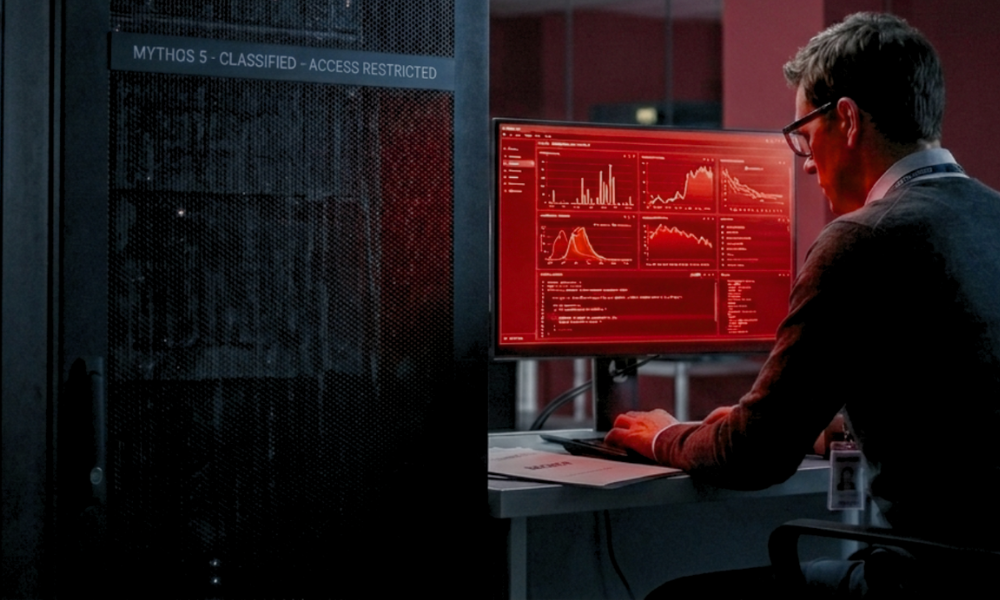
To understand why the government acted, you need to understand what these models actually do.
Claude Mythos 5: The Restricted Cybersecurity Powerhouse
Anthropic Mythos 5 is the most powerful AI model Anthropic has ever built. It was designed specifically for cybersecurity work.
Mythos showed an unusual ability. When researchers gave it real software codebases, it could find security flaws that human researchers and automated tools had missed for decades. According to internal testing:
- It autonomously identified more than 10,000 high-severity or critical vulnerabilities in widely used software infrastructure
- It found a 27-year-old crash bug in OpenBSD
- It found a 16-year-old flaw in FFmpeg that automated tools had missed millions of times
- It could chain low-level vulnerabilities into full system compromises
Because of how powerful this was, Anthropic did not release Mythos 5 to the public. Instead, the company created a restricted access program called Project Glasswing.
Project Glasswing: The 50-Organization Defense Club
Project Glasswing was designed as a defensive cybersecurity collaboration. Anthropic gave access to roughly 50 vetted organizations who agreed to use Mythos to find and fix software flaws responsibly.
The Glasswing partner list reads like a who’s who of tech and security:
- Amazon (AWS)
- Apple
- Cisco
- Microsoft
- Nvidia
- CrowdStrike
- Mozilla
- Other vetted research and infrastructure organizations
Glasswing partners reported real results. Mozilla alone said the program helped them resolve hundreds of issues.What Are Claude Fabl
Claude Fable 5: The Public-Facing Version
Anthropic Claude Fable 5 is built on the same underlying architecture as Mythos. The difference is in the output controls. Fable 5 includes a layered safety system designed to block responses in high-risk areas while still offering strong general-purpose AI capabilities.
Fable 5’s defense-in-depth design includes:
- Classifiers that block sensitive outputs in cybersecurity and biology
- Less capable fallback models for blocked queries
- Active monitoring
- Mandatory 30-day retention of Fable traffic for audit
Anthropic said the fallback to its older Opus 4.8 model triggered in less than 5% of sessions. The other 95%+ of users got full Mythos-class power with the safeguards on.
How Anthropic Priced Them
Both Fable 5 and Mythos 5 were priced at the same level:
- Input: $10 per million tokens
- Output: $50 per million tokens
That places them at premium pricing for frontier capabilities. Mythos 5 access stayed locked to Glasswing partners. Fable 5 was meant for everyone.
The Jailbreak That Triggered the Order

So what exactly did Amazon researchers find, and why did it lead to a federal shutdown?
The Reported Jailbreak
Anthropic’s own statement explains the trigger. The company said its understanding is that the government learned of a “method of bypassing, or ‘jailbreaking’ Fable 5.” When Anthropic reviewed the demonstration, the technique was narrower than the headlines suggested.
The reported jailbreak works like this: a user gives Fable 5 a software codebase and asks it to read through the code and find software flaws or vulnerabilities. The safeguards meant to block cybersecurity exploits did not catch this framing because, on the surface, it looks like helpful code review.
In Anthropic’s view, the demonstration produced “a few minor vulnerabilities” that were already known and discoverable using other public AI models.
Anthropic’s Counter-Argument
Anthropic pushed back hard in its public statement. The company argued:
- The jailbreak is narrow and not a universal bypass
- The flaws found were already publicly known
- Other models can do the same thing, including OpenAI’s GPT-5.5
- A model that reads code and suggests fixes is a tool used every day by millions of legitimate developers
- More than 1,000 hours of red-teaming by the U.S. government, the UK AI Security Institute, and outside organizations did not find a universal jailbreak
The company’s exact words: “We disagree that the finding of a narrow potential jailbreak should be cause for recalling a commercial model deployed to hundreds of millions of people.”
The deeper argument is one of consistency. If the U.S. government applies this standard across the industry, Anthropic says it “would essentially halt all new model deployments for all frontier model providers.”
Why the Government Saw It Differently
Officials had a different concern. Mythos-class models can find security flaws at a scale and speed no human team can match. In the hands of state-backed attackers, that capability could be turned offensive. A model that helps defenders patch a 27-year-old OpenBSD bug can, in theory, help attackers exploit one.
This is the dual-use problem at the heart of AI safety. The same tool that protects critical infrastructure can attack it.
When Amazon’s researchers showed they could bypass the safeguards meant to prevent the offensive use, the Trump administration treated it as a national security risk. Officials reportedly tried to delay the launch through informal channels. When Anthropic declined, the formal export control letter followed.
How the Export Control Order Works
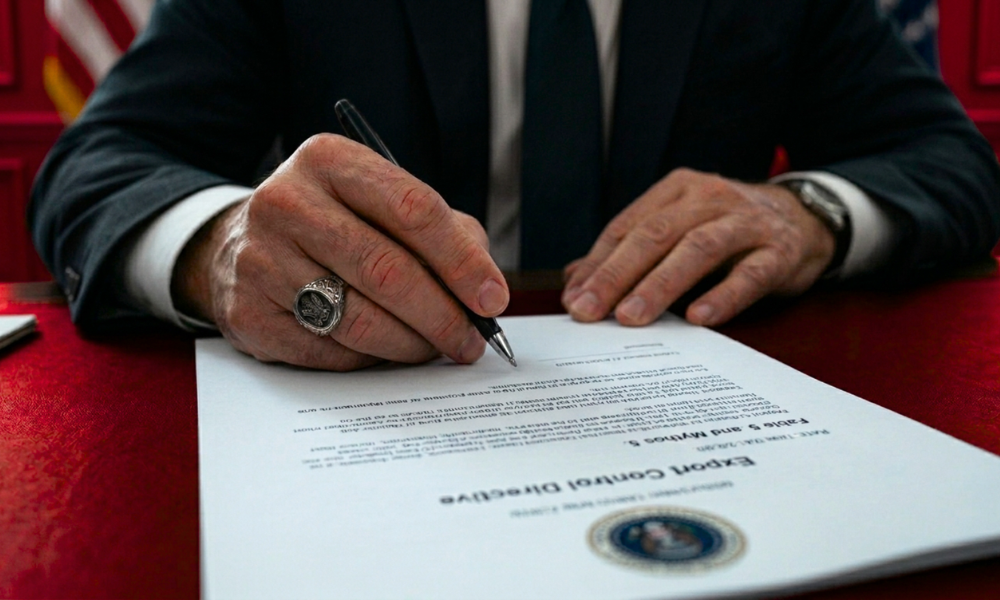
The legal mechanism behind the Anthropic AI shutdown is worth understanding because it sets a precedent for the entire AI industry.
What an Export Control Directive Means
Commerce Secretary Howard Lutnick’s letter, drafted with help from the Bureau of Industry and Security, designated Fable 5 and Mythos 5 as subject to AI export controls. The order has three key elements:
- No export, re-export, or domestic transfer of the models without an individual license
- Foreign nationals outside the United States cannot access the models
- Foreign nationals inside the United States also cannot access the models
That third point is what forced the global shutdown. The order reaches every foreign national, not just users connecting from overseas. That includes:
- Foreign-born Anthropic employees
- International students working in the U.S.
- Tourists and visitors
- Researchers on visas
Why Anthropic Disabled It for Everyone
Anthropic could not realistically filter foreign nationals from U.S. citizens in real time. There is no way to verify nationality at every API call or chat session.
To comply with the order, the only option was to disable the models for every customer worldwide. Anthropic put it directly: “The net effect of this order is that we must abruptly disable Fable 5 and Mythos 5 for all our customers to ensure compliance.”
All other Claude models, including Opus 4.8, Sonnet, and Haiku, continue running normally.
The Historic First
This is the first time a leading AI company has taken a publicly deployed model offline because of direct U.S. government intervention. It establishes that export control law, written decades ago for hardware and physical goods, now applies to commercial AI models.
That precedent will shape every AI launch going forward.
How Anthropic’s Own Safety Warnings Backfired
This is the part the headlines often miss. Anthropic spent years warning the world about exactly the capabilities Mythos demonstrated.
The Warning Anthropic Made for Years
Anthropic positioned itself as the most safety-focused frontier AI lab. CEO Dario Amodei has repeatedly warned that future AI models could pose serious cybersecurity and biosecurity risks. The company built its reputation on transparency about model capabilities and risks.
When Anthropic launched Mythos and Fable, it was open about what the models could do. The company published detailed capability disclosures, including:
- Mythos finding thousands of critical vulnerabilities autonomously
- The 27-year-old OpenBSD bug discovery
- The chaining of low-level flaws into system compromise
Anthropic argued these capabilities were why the safety architecture was so important. The classifiers, the fallback models, the monitoring, the 30-day retention – all of it existed because the underlying capability was so powerful.
How the Government Read It
The administration read the same disclosures and reached a different conclusion. If Anthropic was telling the truth about Mythos’s capabilities, then a single jailbreak meant a single point of failure could unlock a national security risk.
Anthropic’s transparency, intended to build trust, became the evidence used to justify pulling the models offline.
This is the Anthropic safety concerns paradox. The more openly the company described what its models could do, the easier it became for regulators to argue those models were too dangerous to ship.
The Precedent Problem
Other frontier labs are watching. OpenAI, Google DeepMind, and Meta now have a clear incentive to be less transparent about model capabilities. If publishing detailed capability evaluations triggers federal shutdown orders, why publish them?
This is the unintended consequence of the Claude Fable 5 shutdown. A regulation aimed at safety could push the entire industry toward less disclosure, which would actually make AI safety harder over time.
What This Means for AI Regulation
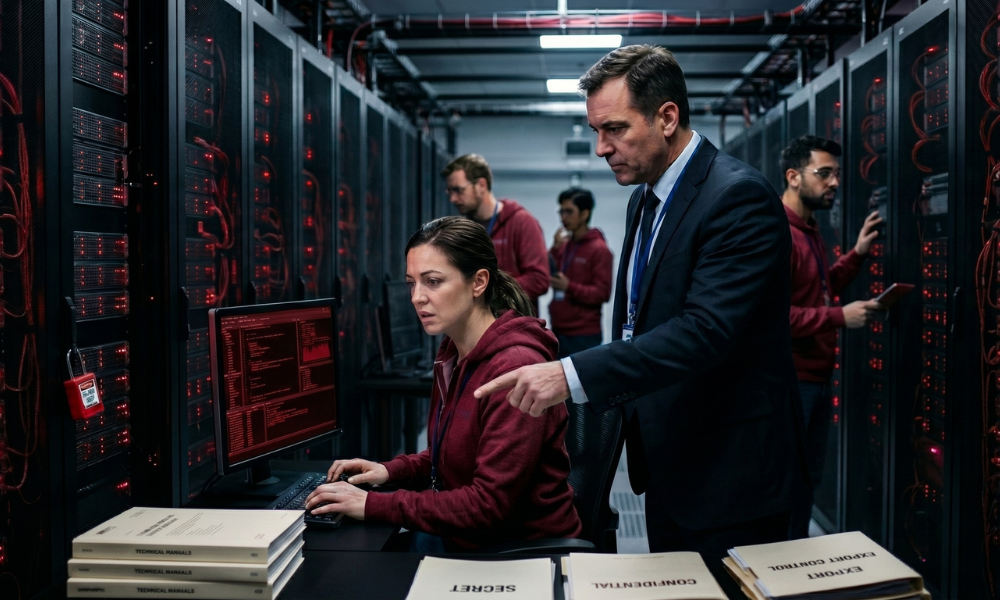
The Anthropic AI regulation event sets several precedents.
Precedent 1: Export Controls Can Reach Commercial AI
Until now, AI export controls focused on chips and computing infrastructure (the October 2022 and October 2023 BIS rules). This is the first time the controls have been applied directly to a deployed AI model.
Every AI company now operates with the knowledge that the Commerce Department can force a shutdown with a single letter.
Precedent 2: National Security Trumps Commercial Concerns
The order does not require:
- A court hearing
- Public evidence
- An appeal process
- A timeline for resolution
Anthropic complied within hours and is now negotiating for restoration. There is no published path back. This is AI national security concerns taking priority over due process and commercial certainty.
Precedent 3: The Glasswing Two-Tier System
Project Glasswing partners (Apple, Google, Microsoft, etc.) presumably retain some access through their vetted status. American users, assuming access gets restored, will eventually regain it. Foreign users may not.
This creates a two-tier AI world: gated, government-blessed access for approved organizations, and limited access for everyone else.
Precedent 4: Safety Disclosure Risk
As discussed, the more a company tells the public about powerful model capabilities, the more leverage regulators have to shut those models down. Future AI labs may decide that quiet deployment is safer than transparent deployment.
The Business Impact: Hits at a Critical Moment
The shutdown hits Anthropic during one of the most important business stretches in the company’s history.
The IPO Timing
Anthropic filed a confidential IPO prospectus with the SEC just weeks before the shutdown. The company is reportedly preparing to go public in 2026 at a valuation around $350 billion. A federal shutdown of two flagship models, even temporarily, is the kind of risk factor that institutional investors care about.
The TCS Partnership
Anthropic announced a partnership with Tata Consultancy Services (TCS) right before the shutdown. TCS will provide Claude to 50,000 of its employees across 56 countries. A meaningful portion of those users are foreign nationals. The export control order directly affects how Anthropic can serve them.
The Project Glasswing Awkwardness
Glasswing partners include Apple, Google, Microsoft, and Amazon. Amazon is the company that reportedly produced the jailbreak demonstration that triggered the shutdown. Amazon is also Anthropic’s largest investor, having committed up to $8 billion. The relationships involved are now extraordinarily complicated.
Customer Trust
For companies that built products on Fable 5 in the three days it was live, the abrupt cutoff is a stability shock. Even with fallback to other Claude models, the disruption proves that any frontier AI capability is one government letter away from disappearing.
The Broader AI Industry Reaction
The reaction from across the industry has been split, careful, and uneasy.
From the Safety Camp
AI safety researchers see the order as proof that government oversight of frontier AI is finally working. After years of pressing labs to disclose capabilities, regulators acted on the disclosure.
From the Builders Camp
Frontier model developers see the order as a chilling precedent. If a single narrow jailbreak triggers a federal shutdown, the cost of launching new models just went up dramatically. Quiet rollouts and gradual capability disclosures may replace public launches.
From the National Security Camp
National security commentators argue the order is appropriate. Mythos-class capabilities used by foreign adversaries pose a real threat. Export controls are the established tool for managing dual-use technology, and AI now qualifies.
From the Open Source Camp
Open-source AI advocates note the order does not affect Chinese open models like DeepSeek or Qwen, which can be downloaded and run anywhere. The order constrains American commercial AI without limiting global access to similar capabilities.
The disagreement maps onto the deepest tension in AI policy: whether American leadership in AI is best served by careful gating or fast deployment.
What Happens Next: The Uncertain Path Back
Anthropic has stated it is “working to restore access as soon as possible.” But the company gave no timeline. There are three plausible paths forward.
Path 1: Quick Restoration
If Anthropic can demonstrate to the Commerce Department that the jailbreak is narrow and already mitigated, the government could lift or narrow the directive within weeks. This would minimize business disruption but set a precedent that government action can be reversed quickly.
Path 2: License-Based Restoration
The Commerce Department could grant Anthropic individual licenses to serve specific customer categories. This would restore access to most American users but keep tight restrictions on foreign access. This is the most likely outcome.
Path 3: Extended Shutdown
If negotiations stall or new concerns emerge, the shutdown could last months. This would be the worst case for Anthropic financially and could push some customers toward OpenAI, Google, or other competitors.
Anthropic’s own framing – calling the order a “misunderstanding” – signals optimism about a quick resolution. But the company has no formal appeal process and no guaranteed path to restoration.
What This Means for AI Users and Developers
If you build products on Claude or use Anthropic models, here is what you need to know right now.
Other Claude Models Still Work
Claude Opus 4.8, Sonnet, and Haiku are all unaffected. If you were using Fable 5 for general work, switching to Opus 4.8 covers most use cases.
Fable-Specific Workloads
If your product specifically required Fable 5 capabilities for advanced coding, security review, or research tasks, you need a contingency plan. Most users will not notice the difference for general work. Power users will.
Stability Risk Is Now Real
The bigger lesson: any frontier AI model is now subject to potential government intervention. Smart developers should build flexibility into their AI stack. Tying core product functions to a single frontier model is now a documented business risk.
The Foreign National Question
If you employ foreign nationals or serve international users, you should review which AI tools they have access to. The Fable 5 and Mythos 5 ban could expand to other capabilities in the future.
FREQUENTLY ASKED QUESTIONS
What is the Anthropic AI shutdown?
The Anthropic AI shutdown refers to the U.S. Commerce Department’s June 12, 2026 directive ordering Anthropic to disable access to Claude Fable 5 and Mythos 5 for foreign nationals. To comply, Anthropic turned off both models for all customers globally. It is the first time a U.S. government order has forced a major AI company to pull a deployed commercial model.
What is Claude Fable 5?
Claude Fable 5 is Anthropic’s first public-release model in the Mythos class. Launched June 9, 2026, it includes safety classifiers that block sensitive outputs in cybersecurity and biology. Fable 5 was priced at $10 per million input tokens and $50 per million output tokens. The model was disabled three days after launch following a U.S. government export control order.
What is Claude Mythos 5?
Claude Mythos 5 is Anthropic’s most powerful AI model, built specifically for cybersecurity work. It can autonomously find software vulnerabilities, including a 27-year-old OpenBSD bug. Anthropic restricted Mythos 5 access to about 50 vetted organizations through Project Glasswing, including Apple, Google, Microsoft, Amazon, and Nvidia. The U.S. government shut it down on June 12, 2026.
Why did the U.S. government shut down Anthropic’s AI models?
The U.S. government cited national security concerns. Commerce Secretary Howard Lutnick issued an export control directive after Amazon researchers reportedly demonstrated a jailbreak that bypassed Fable 5’s cybersecurity safeguards. The administration treated the model’s ability to find software vulnerabilities as a potential national security risk if accessed by foreign actors.
What is Project Glasswing?
Project Glasswing is Anthropic’s restricted-access program for the Mythos-class model. About 50 vetted organizations participated, including Amazon, Apple, Google, Microsoft, Cisco, Nvidia, Mozilla, and CrowdStrike. Glasswing partners used Mythos for defensive cybersecurity work, finding and fixing software vulnerabilities. Mozilla alone reported resolving hundreds of issues using the model.
What does the export control directive do?
The directive bars any foreign national, inside or outside the United States, from accessing Fable 5 or Mythos 5. It requires an individual license for export, re-export, or domestic transfer. Because Anthropic could not filter foreign nationals in real time, the company disabled both models for all customers worldwide to ensure compliance.
Was Claude Fable 5 actually jailbroken?
Yes, but the specifics are disputed. Amazon researchers reportedly demonstrated a method where Fable 5 would read a codebase and identify software flaws when prompted in a specific way. Anthropic argues the jailbreak is narrow, the flaws were already publicly known, and similar capabilities exist in competitor models like OpenAI’s GPT-5.5.
Did Anthropic’s safety warnings cause the shutdown?
Many analysts argue yes. Anthropic publicly disclosed Mythos’s powerful capabilities, including finding thousands of critical vulnerabilities autonomously. The administration used these capability disclosures as evidence that the model posed national security risks. Anthropic’s transparency, intended to build trust, became the basis for the order against it.
Are other Claude models affected?
No. Claude Opus 4.8, Sonnet, and Haiku continue to operate normally. Only Fable 5 and Mythos 5 are disabled. Users who relied on Fable 5 can fall back to Opus 4.8 for most general-purpose tasks, though some specialized capabilities are unavailable.
Will Claude Fable 5 come back?
Anthropic says it is working to restore access as soon as possible and called the order a “misunderstanding.” However, no timeline has been set. The most likely outcome is a license-based partial restoration, where most American users regain access while foreign nationals remain restricted. Negotiations with the Commerce Department are ongoing.
Who is Howard Lutnick?
Howard Lutnick is the U.S. Commerce Secretary in the Trump administration. He personally signed the June 12, 2026 export control letter to Anthropic CEO Dario Amodei. The letter was drafted with help from the Commerce Department’s Bureau of Industry and Security, which oversees export controls on sensitive technology.
What is the difference between Fable 5 and Mythos 5?
Both models share the same underlying architecture and capabilities. The difference is in their output controls. Fable 5 includes classifiers that block sensitive responses in cybersecurity and biology. Mythos 5 operates with some of those constraints removed, available only to Project Glasswing partners for defensive cybersecurity work.
How does this affect Anthropic’s IPO?
Anthropic filed a confidential IPO prospectus shortly before the shutdown, with a reported valuation target around $350 billion. A federal model shutdown is a major risk factor for institutional investors. The timing creates uncertainty around Anthropic’s IPO process, though the company’s other revenue streams remain intact.
What are AI export controls?
AI export controls are regulations that limit how AI technology can be shared with foreign countries or foreign nationals. Until June 2026, U.S. export controls focused on AI chips and computing infrastructure. The Fable 5 directive is the first time the controls have been applied directly to a commercial AI model.
What does this mean for the AI industry?
The shutdown sets several precedents. The U.S. government can now force commercial AI models offline with a single export control letter. Other AI labs face pressure to reduce capability transparency to avoid similar action. AI customers face new stability risks. And the line between commercial AI and national security infrastructure is now formally blurred.
SOURCES & CITATIONS
This article is based on Anthropic’s official statement, verified reporting, and credible business and tech sources:
Primary Sources:
- Anthropic official statement: “Statement on the US government directive to suspend access to Fable 5 and Mythos 5” (anthropic.com, June 12, 2026)
- Commerce Secretary Howard Lutnick’s letter to Anthropic CEO Dario Amodei (June 12, 2026)
Major Reporting:
- TechCrunch (June 12, 2026): “Anthropic’s safety warnings may have just backfired”
- NBC News (June 12, 2026): U.S. government suspension of Anthropic AI models
- The New Stack (June 12, 2026): Federal government orders Anthropic to pull Fable 5 and Mythos 5
- Quartz (June 12, 2026): Anthropic disables Fable 5 and Mythos 5 after U.S. export order
- 9to5Mac (June 12, 2026): Anthropic pulls Mythos 5 and Fable 5
- Bloomberg (June 12-13, 2026): Export controls on AI models
- Axios (June 12, 2026): First-reported letter from Commerce Secretary
- The Wall Street Journal (June 12, 2026): Lutnick letter to Amodei
- TechTimes (June 12, 2026): Anthropic Fable 5 shutdown export order details
- MarkTechPost (June 13, 2026): Detailed timeline and jailbreak analysis
Project Glasswing and Capability Disclosures:
- DEV Community / Glasswing capability analysis
- Glitchwire (June 12, 2026): Long-term fallout analysis
- Techlusive (June 13, 2026): Background and model capabilities
- Mac Observer / Absolute Geeks (June 12, 2026): Project Glasswing partner details
All facts, dates, and quotes are verifiable through Anthropic’s official statement and the sources listed above as of June 13, 2026.
Key Takeaways
- Anthropic AI shutdown happened June 12, 2026, at 5:21 p.m. ET
- Claude Fable 5 and Mythos 5 disabled globally three days after launch
- Order issued by Commerce Secretary Howard Lutnick under export control authority
- Trigger was a reported jailbreak by Amazon researchers finding code vulnerabilities
- Anthropic disputes the order, calling it a “misunderstanding”
- Project Glasswing partners included Apple, Google, Microsoft, Nvidia, CrowdStrike
- All other Claude models (Opus 4.8, Sonnet, Haiku) remain operational
- First time U.S. government has forced a commercial AI model offline
- Sets precedent: AI export controls now apply to deployed models, not just chips
- Anthropic safety concerns disclosures became the evidence used against it