

Key Takeaways
- Who owns Disney Plus? The Walt Disney Company.
- Disney+ is not a separately traded public company.
- Who owns Disney? Disney’s shareholders collectively own the corporation.
- Vanguard held approximately 8.5% of Disney’s outstanding shares according to Disney’s 2026 proxy.
- BlackRock held approximately 6.9%.
- Disney owns the broader Hulu business.
- Hulu became Disney’s global general entertainment brand on Disney+ outside the United States in October 2025.
- Disney’s Hulu + Live TV business was combined with Fubo in 2025.
- Disney reported approximately 132 million paid Disney+ subscribers as of September 27, 2025.
- Disney stopped reporting quarterly Disney+ subscriber numbers beginning with fiscal 2026.
- Josh D’Amaro is Disney’s CEO as of August 2026.
- Disney is positioning Disney+ as a central part of a broader digital ecosystem connecting entertainment, sports, games, merchandise, and experiences.
Quick Answer:
The Walt Disney Company owns Disney+.
Disney+ is a direct-to-consumer streaming service operated within Disney’s Entertainment business. It is not an independent company listed on the stock market.
The distinction is important because people often search for the “owner of Disney Plus” as though Disney+ were a separate corporation. It is not.
Instead, when asking who owns Disney Plus, you are really asking which company controls the service. That company is The Walt Disney Company.
Disney is publicly traded on the New York Stock Exchange under the ticker DIS. Therefore, the ultimate ownership of the parent company is divided among its shareholders.
Who Owns Disney?
When people search who owns Disney, they may expect to find one person, family, or corporation.
There is no single private owner of Disney.
The Walt Disney Company is a publicly traded corporation, so its shareholders collectively own the company. The latest Disney proxy statement available in 2026 identified The Vanguard Group and BlackRock as the shareholders holding more than 5% of Disney’s outstanding common stock.
Based on Disney’s January 15, 2026 ownership information, Vanguard held approximately 8.5%, while BlackRock held approximately 6.9%. Disney also stated that, to its knowledge, no person or entity beneficially owned more than 5% of the company’s voting power.
| Owner or shareholder | Reported position |
|---|---|
| The Vanguard Group | 8.5% |
| BlackRock | 6.9% |
| Other institutional investors | Collectively hold remaining shares |
| Individual shareholders | Collectively hold remaining shares |
| Disney+ | Owned and operated by The Walt Disney Company |
These percentages refer to ownership in The Walt Disney Company, not separate ownership of Disney+.
That difference is worth remembering:
- Who owns Disney Plus? The Walt Disney Company.
- Who owns Disney? Its shareholders collectively.
Is Disney Plus a Separate Company?
No.
Disney+ is a streaming service operated within Disney’s broader corporate structure. It does not have its own publicly traded stock symbol, independent shareholder base, or separate public ownership structure.
Disney’s financial reporting treats Disney+ as part of its direct-to-consumer entertainment operations. The company has also been changing how it reports and manages its streaming businesses as its strategy has matured.
This is why saying that “shareholders own Disney+” can be misleading.
A shareholder owns Disney stock. That stock represents an ownership interest in The Walt Disney Company as a whole, which includes many businesses and assets.
Who Owns Disney Plus and Its Major Brands?
One of Disney+’s biggest advantages is the amount of entertainment intellectual property available to its parent company.
The platform brings together content associated with several globally recognized brands.
| Brand | Role in Disney’s streaming ecosystem |
|---|---|
| Disney | Core movies, series, and family entertainment |
| Pixar | Animated films and original programming |
| Marvel | Superhero films and series |
| Star Wars | Films and Disney+ original series |
| National Geographic | Documentary and factual programming |
| Hulu | General entertainment content |
| ESPN | Selected sports content and integration |
Disney’s own platform currently describes Disney+ as the streaming home for Disney, Hulu, ESPN, Pixar, Marvel, Star Wars, and National Geographic, although availability varies by market and subscription.
This collection is important because Disney does not have to build its entire streaming identity from scratch.
Instead, it can use characters, franchises, films, series, sports, and other content from across its wider portfolio.
How Did Disney Plus Start?
Disney+ launched on November 12, 2019, marking a major shift in Disney’s approach to digital entertainment.
Before Disney+, much of Disney’s content reached viewers through movie theaters, television networks, physical media, licensing agreements, and third-party streaming platforms.
The launch gave Disney a direct relationship with consumers.
That relationship became increasingly important as the streaming industry grew. Disney could now control more of the customer experience, subscription relationship, distribution strategy, and presentation of its own entertainment brands.
Over time, Disney+ expanded internationally and became one of the company’s most important direct-to-consumer products.
Why Hulu Is Important to Disney Plus
Hulu is one of the most important pieces of the answer to who owns Disney today.
Disney obtained control of Hulu through its acquisition of major 21st Century Fox assets. The company later completed the acquisition of Comcast’s remaining interest, making Hulu a wholly owned Disney subsidiary.
That ownership structure has now become closely connected to Disney+’s global strategy.
In October 2025, Disney announced that Hulu would become its global general entertainment brand on Disney+, replacing Star in international markets. Disney said the move was part of its work toward a more integrated streaming experience.
The change was more than a simple branding exercise.
Disney began introducing Hulu navigation, personalization, profiles, and other features within Disney+, while continuing to develop a more unified experience.
What Does Hulu’s Integration Mean?
For viewers, Hulu’s integration means Disney+ is becoming a broader entertainment destination.
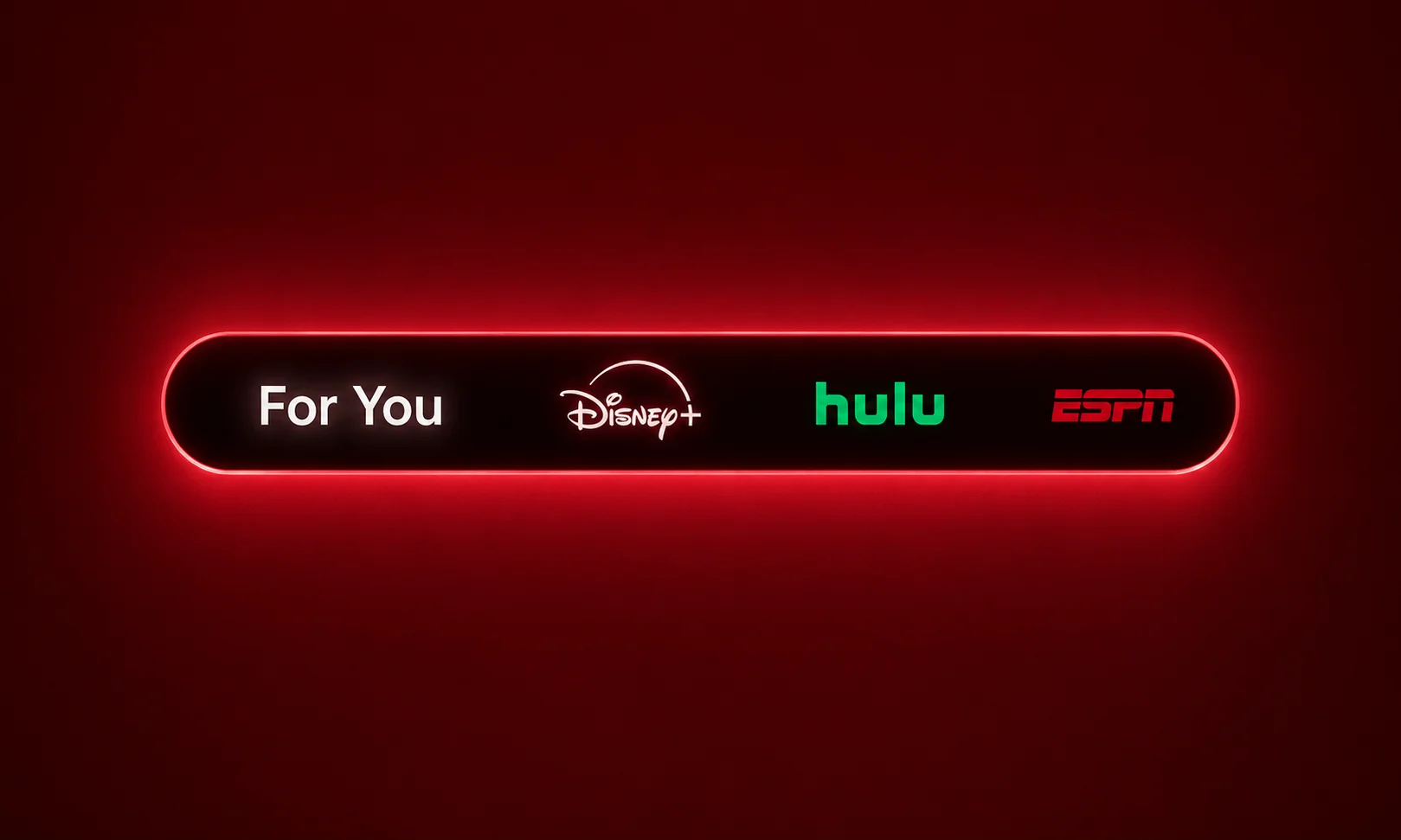
Disney’s redesigned experience includes dedicated areas for Disney+, Hulu, and ESPN depending on the subscriber’s plan. The company has also introduced a “For You” area designed around personalized recommendations.
In August 2026, Disney CEO Josh D’Amaro said the company had passed an important milestone by allowing Hulu standalone and bundle subscribers to link profiles and manage subscriptions through Disney+.
Disney has said that additional elements of its expanded digital ecosystem are expected to begin arriving in spring 2027.
The direction is clear: Disney+ is increasingly being positioned as the digital front door for a wider collection of Disney entertainment.
What Happened to Hulu + Live TV?
Hulu and Hulu + Live TV should not be treated as exactly the same business.
In 2025, Disney combined its Hulu + Live TV business with Fubo. Following completion of the transaction, Disney held approximately 70% of the combined company.
That transaction did not mean Disney sold Hulu as a whole.
Disney retained its broader Hulu business, while Hulu + Live TV became part of the combined Fubo operation.
This distinction matters because older articles can make the Hulu ownership structure sound different from the one that exists today.
How Big Is Disney Plus?
Disney+ has become a major global streaming platform.
Disney’s fiscal 2025 annual report estimated approximately 132 million paid Disney+ subscribers as of September 27, 2025. The company’s earlier quarterly reporting had shown 131.6 million subscribers, but the full-year figure was subsequently reported at approximately 132 million.
There is an important reason not to present older subscriber figures as current.
Disney announced in 2025 that it would stop providing quarterly Disney+ and Hulu subscriber counts beginning with fiscal 2026 because it believed those numbers had become less meaningful for evaluating the performance of its streaming businesses.
Therefore, a claim that Disney+ currently has a specific 2026 subscriber count should be treated carefully unless Disney itself has reported that figure.
For an accurate article, the latest confirmed figure should be identified by its reporting date rather than presented as a live August 2026 total.
Disney’s Streaming Business Has Changed
Disney’s streaming strategy has evolved considerably.
In earlier years, the company focused heavily on subscriber growth. More recently, Disney has emphasized profitability, engagement, content quality, personalization, international growth, and the broader value of its direct relationship with customers.
Disney reported that its Entertainment direct-to-consumer business became profitable in fiscal 2025, reflecting a significant improvement from the losses recorded earlier in the streaming push.
That change is important because it shows that Disney’s streaming strategy is no longer simply about adding as many subscribers as possible.
The company is trying to make streaming a sustainable part of its larger entertainment business.
Who Controls Disney?
Ownership and management are not the same thing.
Who owns Disney? Its shareholders collectively own the publicly traded corporation.
Who manages Disney? Its executives and board of directors are responsible for running and overseeing the company.
As of August 2026, Josh D’Amaro is Disney’s CEO. He became CEO in March 2026 after Bob Iger’s latest tenure as chief executive ended. Disney’s current leadership is pursuing what it describes as a more integrated “One Disney” operating model.
Robert A. Iger remains associated with Disney’s leadership history and corporate governance, but he is no longer the company’s CEO.
That distinction is especially important when answering who owns Disney because leadership does not automatically equal ownership.
Does Bob Iger Own Disney?
No.
Bob Iger has been one of Disney’s most influential executives, but he does not personally own Disney or Disney+.
Disney is a public corporation. Therefore, its ownership is spread among shareholders.
The 2026 Disney proxy also shows that Disney’s executive and director ownership is reported separately from the major institutional shareholders.
So, if someone asks whether Bob Iger personally owns Disney Plus, the answer is no.
Is Disney Owned by the Disney Family?
No.
The company was founded by Walt Disney and Roy O. Disney, which explains the strong connection between the Disney name and the corporation.
However, today’s Walt Disney Company is publicly traded.
The Disney family does not privately own the corporation or Disney+.
The company’s history remains central to its identity, but historical founders and modern corporate ownership are two different things.
What Makes Disney’s Streaming Empire Different?
Disney’s most unusual advantage is the way its entertainment businesses can reinforce one another.
A successful franchise can begin as a theatrical film, continue through Disney+, generate merchandise sales, appear in video games, and become part of a theme park or cruise experience.
Disney’s current CEO has emphasized this interconnected approach.
In August 2026, D’Amaro described Disney+ as the digital centerpiece of the company’s strategy and said Disney is working toward a connected ecosystem that can bring together films, series, games, merchandise, personalization, and other experiences.
The company calls this broader approach a connected Disney experience.
That makes Disney+ different from a streaming platform viewed only as a library of movies and television shows.
Disney Plus vs. Netflix vs. Amazon Prime Video
| Feature | Disney+ | Netflix | Amazon Prime Video |
|---|---|---|---|
| Parent company | The Walt Disney Company | Netflix | Amazon |
| Public company | Yes, through Disney | Yes | Yes, through Amazon |
| Major strength | Disney franchises and entertainment brands | Global original programming | Entertainment plus Amazon ecosystem |
| Family entertainment | Major focus | Broad mix | Broad mix |
| Global reach | International | International | International |
| Wider business ecosystem | Films, parks, products, sports, games | Primarily entertainment | Retail, cloud, devices, entertainment |
The comparison highlights why who owns Disney matters.
Disney+ can benefit from a much wider collection of entertainment assets than the streaming service itself.
Disney Plus and ESPN
Sports are becoming another important part of Disney’s streaming strategy.
ESPN remains part of Disney’s Sports business, while Disney is also bringing selected premium sports events to Disney+.
In its August 2026 commentary, Disney said ESPN remains the primary destination for daily sports content, while selected premium sports events can appear on Disney+.
This approach gives Disney another way to connect entertainment and sports audiences without treating every service as a completely separate experience.
The strategy also supports Disney’s broader goal of increasing engagement across its digital products.
Disney Plus Is Becoming More Personalized
Another major change is personalization.
Disney has been improving recommendations within Disney+, including its “For You” experience. The company says its recommendation system is designed to learn user preferences and make relevant programming easier to discover.
This matters because a larger library can also create a discovery problem.
If viewers cannot quickly find something they want to watch, having more content does not automatically create a better streaming experience.
Disney is therefore investing in technology alongside content.
Disney’s International Streaming Strategy
Disney+ is also focused on growing outside the United States.
In August 2026, D’Amaro acknowledged that Disney still has work to do in scaling Disney+ internationally, particularly in markets where the service is currently under-monetized.
Disney’s strategy includes working with regional partners and bringing local content onto Disney+ at greater scale.
That approach is important because streaming preferences differ between countries.
A global service cannot rely entirely on American programming if it wants strong long-term engagement across different markets.
The Disney Streaming Model in Simple Terms
The easiest way to understand the structure is to separate three things.
| Question | Answer |
|---|---|
| Who owns Disney+? | The Walt Disney Company |
| Who owns Disney? | Its shareholders collectively |
| Who runs Disney? | Disney’s executive leadership and board |
The distinction prevents most ownership confusion.
Vanguard and BlackRock are major Disney shareholders, but neither owns Disney+ as a separate business. Disney+ is an asset and service operated within Disney’s corporate structure.
Likewise, Josh D’Amaro runs Disney as CEO, but he does not personally own the company.
Common Mistakes About Who Owns Disney
Bob Iger owns Disney
This is incorrect.
Iger has played a major role in Disney’s leadership, but Disney is a publicly traded company owned collectively by shareholders.
The Disney family owns Disney
This is also incorrect.
The company’s founders were Walt Disney and Roy O. Disney, but modern Disney is publicly traded.
Netflix owns Disney+
Netflix is a competitor, not the owner of Disney+.
Hulu owns Disney+
The ownership relationship goes the other way.
Disney owns Hulu, and Hulu has increasingly been integrated into Disney+’s broader streaming experience.
Hulu + Live TV is the same as Hulu
This is outdated.
The Hulu + Live TV business was combined with Fubo, while Disney retained its broader Hulu business.
Disney’s latest subscriber number is always publicly available
It is not.
Disney changed its reporting approach and stopped providing quarterly Disney+ subscriber counts beginning with fiscal 2026.
Conclusion
So, who owns Disney Plus? The answer is The Walt Disney Company.
However, who owns Disney is a broader question. Disney is a publicly traded corporation, which means its ownership is divided among shareholders rather than concentrated in one individual or family.
That structure includes major institutional shareholders such as Vanguard and BlackRock, along with many other institutional and individual investors.
Disney+ itself has become much more than a place to watch Disney movies. The company is using the service as a central digital platform while bringing Hulu closer to Disney+, adding selected sports experiences, improving personalization, and preparing a wider ecosystem that can connect streaming with games, merchandise, and other Disney experiences.
For BrandClickX, the most important ownership point is simple: Disney+ belongs to The Walt Disney Company, while The Walt Disney Company belongs collectively to its shareholders.
That distinction gives a much clearer picture of how Disney’s streaming empire is structured in 2026.
Frequently Asked Questions
Who owns Disney Plus?
The Walt Disney Company owns and operates Disney+.
Who owns Disney?
The Walt Disney Company is publicly owned by its shareholders. The latest 2026 proxy identified Vanguard and BlackRock as the two shareholders holding more than 5% of Disney’s outstanding shares.
Does Disney own Hulu?
Yes. Disney owns the broader Hulu business.
Is Disney Plus a separate company?
No. Disney+ is a streaming service within Disney’s corporate structure.
Does Bob Iger own Disney Plus?
No. Bob Iger is a former Disney CEO and major company figure, but Disney+ is owned by The Walt Disney Company.
Who is Disney’s CEO in 2026?
Josh D’Amaro became Disney’s CEO in March 2026.
How many Disney Plus subscribers does Disney have?
Disney reported approximately 132 million paid Disney+ subscribers as of September 27, 2025. It subsequently stopped reporting quarterly Disney+ subscriber counts beginning with fiscal 2026.
When did Disney Plus launch?
Disney+ launched on November 12, 2019.
Is Disney Plus available around the world?
Yes. Disney+ operates internationally, although its content, pricing, bundles, and availability vary by market.
Does Disney Plus include Hulu?
The relationship depends on the market and subscription. Disney has been integrating Hulu into Disney+, and Hulu became Disney’s global general entertainment brand on Disney+ outside the United States in October 2025.
Does Disney Plus include ESPN?
Selected ESPN content and experiences are available through Disney+ depending on market and subscription. ESPN remains a separate major business within Disney’s Sports segment.