

If you are looking for one person behind Netflix, the answer is surprisingly simple: no single person owns Netflix.
Netflix, Inc. is a publicly traded company whose shares are held by institutional investors, funds, company insiders, and individual investors. Its stock trades on the Nasdaq under the ticker NFLX, so ownership changes as investors buy and sell shares.
That also means Reed Hastings, despite co-founding Netflix, is not its controlling owner. His formal role changed significantly in June 2026, when he left the board and Jay Hoag became chairman.
So who owns the biggest pieces? Does Vanguard or BlackRock own Netflix? And how did ownership move from its founders to today’s public shareholders?
Here is the current picture, based on the latest public filings and developments available through August 2026.
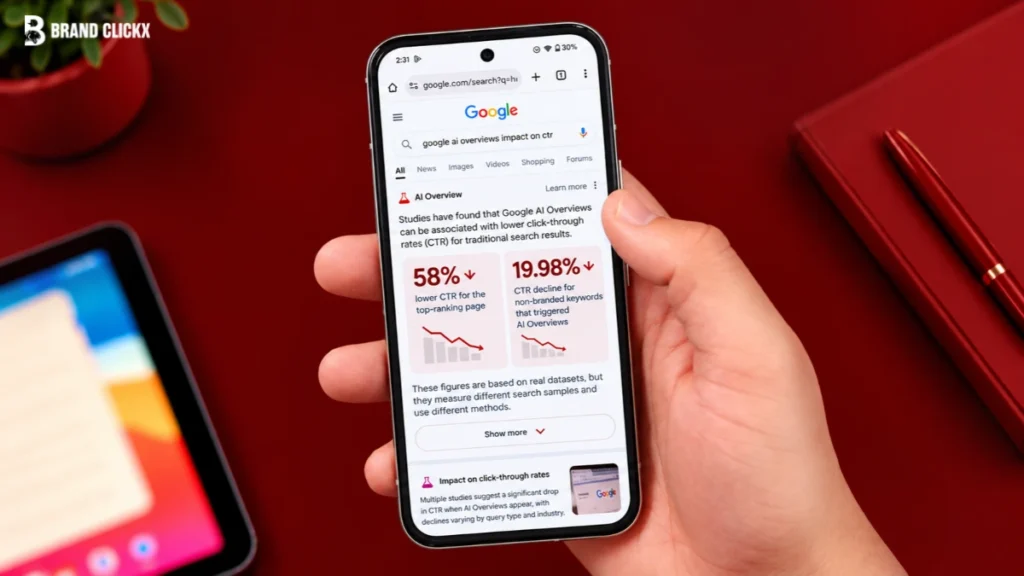
AI Overview
Netflix is an independent, publicly traded company listed on Nasdaq as NFLX. There is no single controlling owner. Ownership is spread among institutional investors, funds, insiders, and individual shareholders. Netflix’s 2026 proxy identifies Vanguard, BlackRock, and Fidelity among shareholders holding more than 5% of the company’s stock. Reed Hastings remains a major historical figure but left Netflix’s board in June 2026.
Key Takeaways
- Netflix is publicly owned, not privately controlled by one person or another entertainment company.
- Vanguard is the largest shareholder identified in Netflix’s 2026 proxy, with about 8.65% of shares.
- BlackRock held about 7.34%, while FMR LLC/Fidelity held about 5.29%, according to the same proxy.
- Netflix was founded by Reed Hastings and Marc Randolph in 1997.
- Netflix went public on May 23, 2002, at an initial price of $15 per share.
- Ted Sarandos and Greg Peters are Netflix’s co-CEOs.
- Reed Hastings left Netflix’s board in June 2026, and Jay Hoag became chairman.
- Bill Ackman’s Pershing Square disclosed a new Netflix investment in August 2026, showing that major investors continue to change their positions.
Featured Snippet
Netflix is owned by its shareholders because it is a publicly traded company. No single person or company owns a controlling stake. The largest disclosed shareholders include Vanguard, BlackRock, and Fidelity, while thousands of other institutional and individual investors also own Netflix shares. Reed Hastings co-founded Netflix but does not control the company.
Who Owns Netflix Today?
The clearest answer is that Netflix is owned collectively by its shareholders.
Unlike a private company controlled by a founder or family, Netflix has publicly traded common stock. Investors can buy NFLX shares through the market, and those shares represent ownership in the company.
Netflix’s 2026 proxy statement provides a useful snapshot. It reports beneficial ownership as of April 6, 2026, including shareholders known to own more than 5% of Netflix, along with the company’s directors and named executives.
The important distinction is this: the largest shareholder is not necessarily the party that runs Netflix.
Vanguard can own millions of Netflix shares without running Netflix’s operations. Day-to-day business decisions belong to Netflix’s management, while the board oversees the company on behalf of shareholders.
Who are Netflix’s largest shareholders?
Netflix’s 2026 proxy identifies several major institutional shareholders.
| Shareholder | Approximate stake reported in Netflix’s 2026 proxy |
|---|---|
| The Vanguard Group | 8.65% |
| BlackRock | 7.34% |
| FMR LLC / Fidelity | 5.29% |
| Other shareholders | Remaining shares |
These percentages come from Netflix’s own 2026 proxy disclosure rather than a constantly changing stock-ownership website. That distinction matters, because institutional ownership figures shift as funds buy, sell, or rebalance their holdings.
Does Vanguard own Netflix?
Vanguard is Netflix’s largest disclosed shareholder in the 2026 proxy, at approximately 8.65% of the company’s shares.
However, saying “Vanguard owns Netflix” is misleading. Vanguard manages investments for funds and clients, so its reported holdings do not mean Vanguard operates Netflix or holds majority control.
Does BlackRock own Netflix?
BlackRock is another major Netflix shareholder. The 2026 proxy reports it at approximately 7.34% ownership.
Like Vanguard, BlackRock’s position represents investment holdings rather than control of Netflix’s daily business.
Does Fidelity own Netflix?
Yes. FMR LLC, associated with Fidelity, was another shareholder above the 5% reporting threshold in Netflix’s 2026 proxy. The filing lists approximately 5.29% beneficial ownership as of April 6, 2026.
Does Reed Hastings Still Own Netflix?
Reed Hastings has continued to own Netflix shares, but his relationship with the company is very different from what it was in its early years.
Hastings co-founded Netflix with Marc Randolph in 1997 and later led the company through its transformation from DVD rentals into a global streaming business. He no longer runs it.
Netflix’s 2026 filings identify Ted Sarandos and Greg Peters as co-CEOs, while Hastings was still chairman at the time the 2026 proxy was prepared. The transition happened in stages:
- January 2023 — Hastings stepped down as co-CEO after 25 years at the helm, moving to Executive Chairman and passing co-CEO leadership to Greg Peters alongside Ted Sarandos.
- April 2025 — Hastings transitioned from Executive Chairman to non-executive Chairman.
- June 2026 — At Netflix’s June 4 annual meeting, Hastings did not stand for re-election to the board. Jay Hoag succeeded him as chairman.
That makes one point especially clear: being Netflix’s founder does not mean Hastings still controls the company.
Who runs Netflix now?

Ownership and management are two different things.
Netflix’s current operating leadership is built around co-CEOs Ted Sarandos and Greg Peters. Netflix says Sarandos became co-CEO in July 2020 and has been responsible for its content operations since 2000. Peters was named co-CEO in January 2023, after previously serving as chief operating officer and chief product officer.
Netflix’s 2026 annual filing also identifies Sarandos and Peters as co-chief executive officers and directors. The board provides oversight, while the co-CEOs handle executive management.
That is why “Who owns Netflix?” and “Who is the CEO of Netflix?” have different answers.
How Did Netflix Ownership Change?
Netflix did not begin as a widely held public company.
Reed Hastings and Marc Randolph founded Netflix on August 29, 1997, in Scotts Valley, California. The company initially focused on DVD rentals rather than the streaming service most people associate with Netflix today.
Netflix launched its DVD-by-mail business in 1998, introduced streaming in 2007, and began producing original programming with House of Cards in 2013.
The major ownership turning point came in 2002.
Netflix went public in 2002
Netflix completed its initial public offering on May 23, 2002, listing on Nasdaq under the ticker NFLX at $15 per share.
Going public changed the nature of Netflix ownership. Instead of remaining concentrated among founders and early investors, shares could now be bought and sold by public-market investors. Over time, institutional funds became significant shareholders.
The result is the structure you see today: a company with many shareholders rather than one dominant owner.
How Does Netflix Ownership Actually Work?
It helps to think of Netflix ownership as a chain rather than a single name.
- Netflix issues common stock, which trades publicly under NFLX.
- Institutional investors hold those shares directly or through investment funds. Individual investors can also buy Netflix stock through brokerage accounts.
- Shareholders have voting rights attached to their shares, subject to the company’s governing documents and applicable securities rules.
- The board of directors oversees management and represents shareholders’ interests in corporate governance.
This explains why a shareholder such as Vanguard can hold an 8.65% stake without becoming Netflix’s parent company.
Ownership vs. control: the distinction that gets blurred
This is one of the most important points when researching Netflix ownership.
Ownership means holding shares. Control means having enough voting power or other authority to direct the company.
A shareholder with 8% of a widely held public company may be influential, but that does not automatically make it the controlling owner. Netflix’s ownership disclosure shows no individual shareholder with anything close to a majority position.
The same distinction applies to private companies, where the question of who controls OpenAI is separate from who holds its equity.
That is why the most accurate answer remains: Netflix has no single controlling owner.
Why Do Institutional Investors Own So Much Netflix?
Large investment firms can hold substantial positions in public companies because they manage money through mutual funds, index funds, ETFs, pension investments, and other portfolios.
Netflix’s shareholder base therefore includes institutions holding stock on behalf of thousands or millions of underlying investors. This creates an important difference between economic ownership and corporate management: a fund benefits when Netflix performs well, while Netflix executives continue making operational decisions.
What does institutional ownership mean for Netflix?
Institutional investors can have meaningful voting power, because their holdings represent large numbers of shares. They may vote on matters such as director elections and shareholder proposals.
However, institutional ownership does not mean those institutions collectively operate Netflix. The board and executive management remain responsible for governance and operations.
Netflix’s 2026 proxy also demonstrates why ownership figures should always be tied to a date. The filing specifically uses April 6, 2026 as its beneficial-ownership reference date — a useful detail that many simplified “who owns Netflix” articles leave out.
Has Bill Ackman Bought Netflix?
Yes, in the sense that his fund bought shares.
In August 2026, Bill Ackman’s Pershing Square disclosed a new Netflix investment as part of a broader portfolio overhaul. Reuters reported on August 13 that Netflix was among six new investments added by Ackman’s funds.
This does not mean Ackman bought Netflix itself. It means Pershing Square bought Netflix shares.
That distinction matters, because a new institutional position can change the shareholder mix without changing who controls the company. The same principle applies to any other investment firm that increases or reduces its NFLX position.
Has Netflix Been Bought by Another Company?
No completed acquisition has turned Netflix into a subsidiary of another company.
There is, however, a recent development that can easily create confusion — and it runs in the opposite direction. Netflix was the would-be buyer, not the target.
What happened with the Warner Bros. deal
- December 2025 — Netflix and Warner Bros. Discovery announced a definitive agreement under which Netflix would acquire Warner Bros., including its film and television studios, HBO Max, and HBO. The transaction was valued at approximately $82.7 billion in enterprise value, including $72 billion of equity value.
- January 2026 — The transaction was amended to an all-cash structure.
- February 26, 2026 — After Warner Bros. Discovery’s board determined that Paramount Skydance’s proposal was superior, Netflix declined to raise its offer.
- April 23, 2026 — Warner Bros. Discovery stockholders approved the Paramount Skydance merger, a transaction reported at roughly $110 billion.
- July 13, 2026 — New York Attorney General Letitia James and 11 other state attorneys general sued to block the merger on antitrust grounds.
- July 2026 — A federal court issued a temporary restraining order, and the parties then agreed to delay closing until a ruling on the merits or June 1, 2027, whichever comes first.
So this should not be described as Netflix being bought by Warner Bros. Discovery. It was the opposite: Netflix was pursuing an acquisition of Warner Bros., and then walked away from it.
Netflix vs. Other Publicly Traded Entertainment Companies
The easiest way to understand Netflix’s ownership model is to compare it with other types of companies.
| Ownership feature | Netflix | Public entertainment company | Private company |
|---|---|---|---|
| Publicly traded | Yes | Yes | Usually no |
| Single controlling owner | No | Not necessarily | Often possible |
| Individual investors can buy shares | Yes | Yes | Usually no |
| Institutional shareholders | Major part of ownership | Common | Depends on company |
| Board oversight | Yes | Yes | Yes, but structure varies |
| Shares traded on public market | Yes, NFLX | Yes | No |
Netflix’s model is therefore closer to other large public corporations than to a privately owned streaming startup. A large private company Anthropic’s ownership structure is a useful comparison has no publicly traded shares at all, so its ownership is documented through funding rounds rather than market trading.
What About the Netflix Founders?
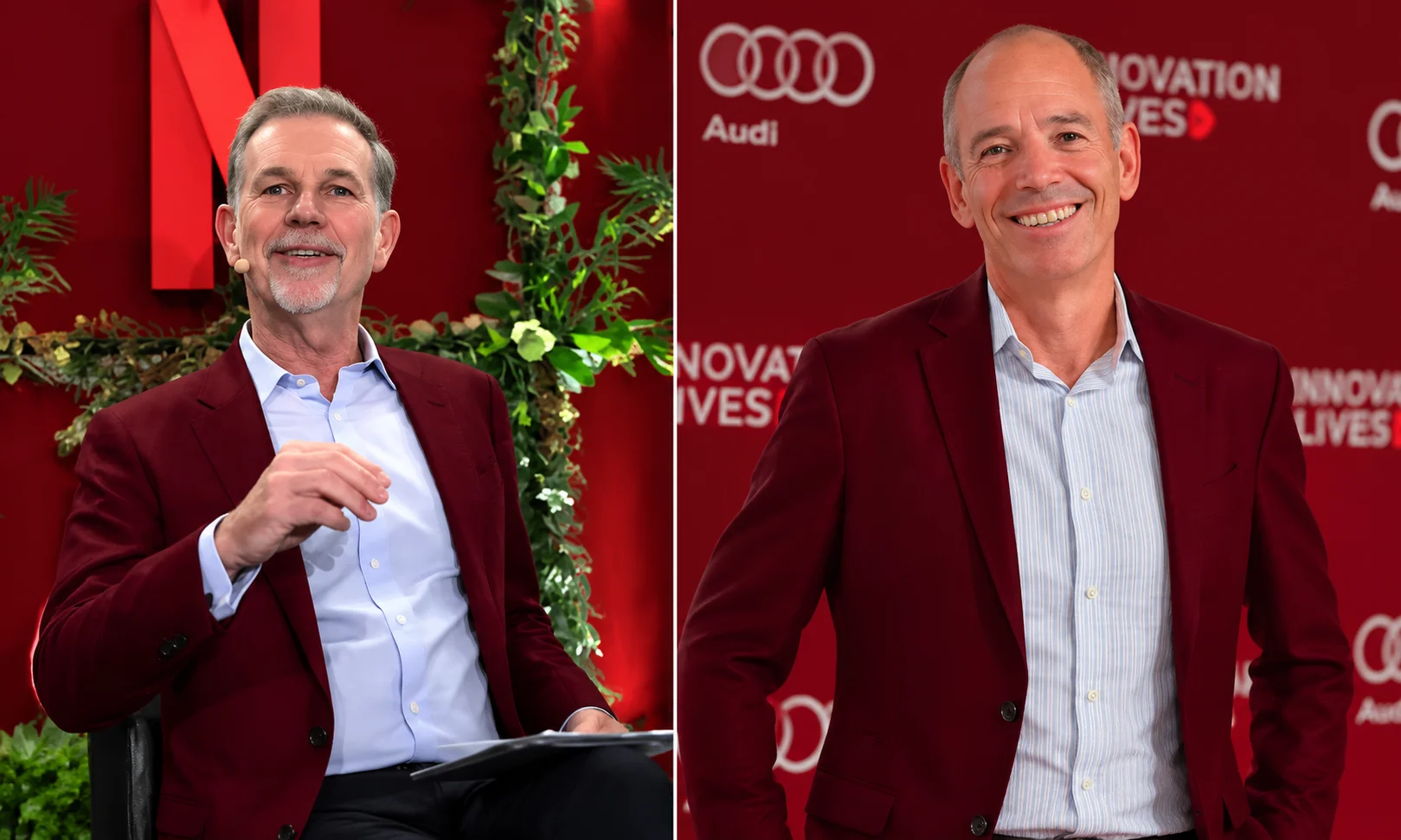
Reed Hastings and Marc Randolph remain central to Netflix’s history, but neither founder controls the company today.
Randolph was Netflix’s first CEO and co-founded the company with Hastings in 1997. Hastings remained with Netflix far longer and played a major role in its transformation.
Yet his formal connection changed again in 2026. After the June annual meeting, Hastings left the board and Jay Hoag became chairman.
That transition is a useful reminder that founder, shareholder, chairman, and CEO are four different concepts. A founder can remain an important historical figure without being the controlling shareholder.
Three Things to Check Before Trusting a Netflix Ownership Figure
Ownership data can look precise while actually referring to different dates. If you want the most reliable answer, use this simple framework.
1. Check the reporting date
A shareholder percentage from April may not hold in August.
Netflix’s proxy provides a specific beneficial-ownership date, while later filings can reflect subsequent changes. You can review Netflix’s SEC filings directly for these disclosures.
2. Separate ownership from management
A shareholder’s percentage tells you about stock ownership. It does not tell you who manages Netflix. For current management, Netflix identifies Sarandos and Peters as co-CEOs.
3. Check whether a transaction actually closed
An announced acquisition is not necessarily a completed acquisition.
The Warner Bros. situation is a prime example: Netflix announced a definitive agreement in late 2025, declined to match Paramount’s bid in February 2026, and WBD shareholders approved Paramount’s offer in April 2026 — which was then stalled by a multi-state antitrust action in July 2026.
The same test applies to any ownership headline, including PayPal’s reported takeover approach, where a proposal has not established a change in ownership.
Who should use this framework?
This approach is useful if you are researching Netflix shareholders, fact-checking a business article, studying corporate ownership, or trying to understand what NFLX investors actually own. It is especially useful when different websites show different percentages.
Who should avoid relying on a single ownership percentage?
You should not treat one stock-ownership website as a permanent answer. Institutional holdings change, reporting dates differ, and company filings provide more authoritative information than aggregated databases.
For investment decisions, ownership data is only one part of the picture and should not be treated as a recommendation to buy or sell Netflix stock.
So, Who Owns Netflix?
The answer has not changed at its core: Netflix belongs to its shareholders, not to one founder or parent company.
Its 2026 proxy identifies major institutional shareholders including Vanguard, BlackRock, and FMR LLC/Fidelity, while Netflix’s public filings show that the company continues to operate as an independent publicly traded corporation.
Reed Hastings built much of Netflix’s early history, but he no longer serves on its board. Jay Hoag became chairman after the June 2026 annual meeting, while Ted Sarandos and Greg Peters continue as co-CEOs.
That brings us back to the question at the start. Who owns Netflix? Not one billionaire, founder, or technology company. Its ownership is distributed among public shareholders, with large institutional investors holding significant individual positions.
The interesting part of Netflix’s ownership story is not finding one owner. It is seeing how a company that began with two founders became a widely held public corporation.
Frequently Asked Questions
Who is the main owner of Netflix?
There is no single main owner who controls Netflix. The company is publicly traded, and its shares are distributed among institutional investors, funds, insiders, and individual shareholders. Netflix’s 2026 proxy identifies Vanguard as the largest disclosed shareholder at about 8.65%, followed by BlackRock and FMR LLC/Fidelity.
Does Reed Hastings still own Netflix?
Reed Hastings has owned Netflix shares and remains one of the company’s most important historical figures. However, he left Netflix’s board after the June 4, 2026 annual meeting and no longer serves as chairman. Jay Hoag became chairman following Hastings’ departure.
Is Netflix owned by Disney?
No. Netflix and Disney are separate publicly traded companies. Disney operates its own entertainment and streaming businesses, while Netflix operates independently under its own corporate structure.
Is Netflix owned by BlackRock or Vanguard?
Neither BlackRock nor Vanguard controls Netflix. Both are major institutional shareholders, with Netflix’s 2026 proxy reporting approximately 8.65% for Vanguard and 7.34% for BlackRock as of April 6, 2026.
Who is the current CEO of Netflix?
Netflix has two co-CEOs: Ted Sarandos and Greg Peters. Netflix says Sarandos became co-CEO in July 2020, while Peters was named co-CEO in January 2023.
Is Netflix a private or public company?
Netflix is a publicly traded company. Its shares trade on Nasdaq under the ticker NFLX, allowing institutional and individual investors to buy and sell shares through the public market.
Who is the largest Netflix shareholder?
The Vanguard Group was the largest shareholder identified in Netflix’s 2026 proxy, with approximately 8.65% of shares as of April 6, 2026. BlackRock followed with approximately 7.34%, while FMR LLC/Fidelity held approximately 5.29%.
Can individuals buy Netflix stock?
Yes. Because Netflix is publicly traded, individual investors can purchase NFLX shares through a brokerage account. Buying shares gives an investor an ownership interest in Netflix, although it does not give that person operational control of the company.
Did Netflix buy Warner Bros.?
No. Netflix announced an agreement in December 2025 to acquire Warner Bros.’ film and television studios, HBO Max, and HBO. It later declined to raise its offer after Warner Bros. Discovery determined that Paramount Skydance’s proposal was superior, so the announced transaction should not be treated as a completed Netflix acquisition.
Does Netflix have a parent company?
No. Netflix is itself the publicly traded parent corporation. It is not a streaming subsidiary owned by Disney, Apple, Amazon, or another parent company.