
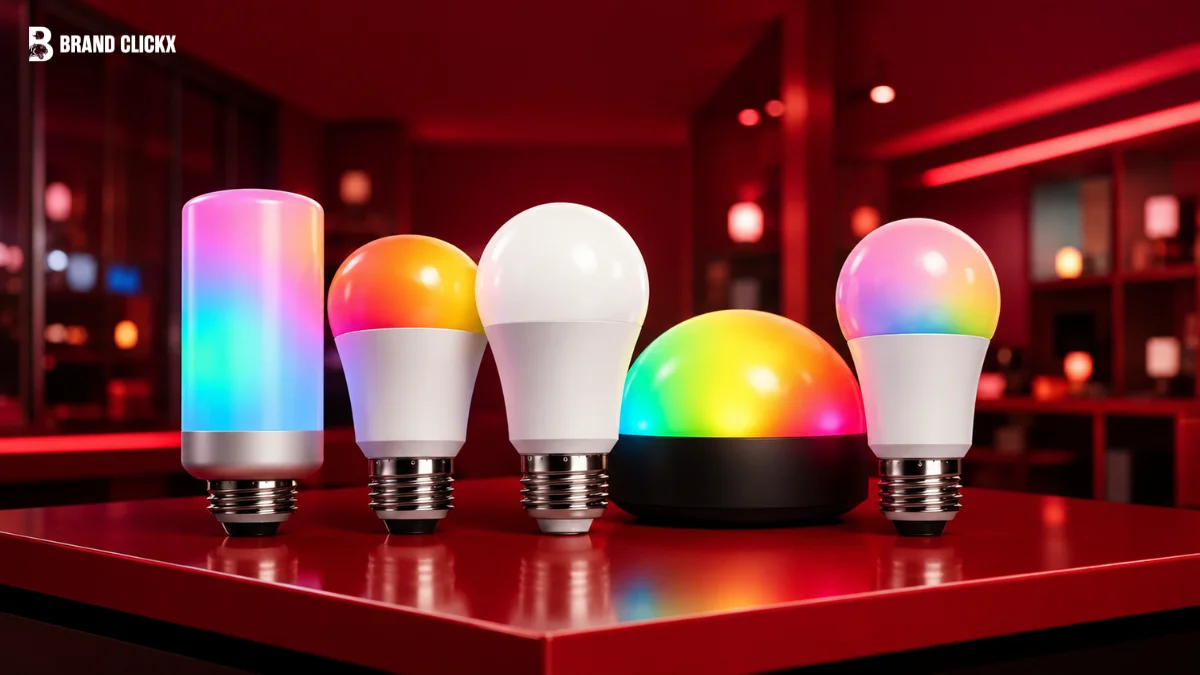
Smart lighting has moved far beyond simple color changing bulbs. The best models today can adjust brightness automatically, shift smoothly between warm and cool white tones, build custom scenes, sync with music and games, and connect cleanly with popular smart home platforms.
We tested a range of smart lighting products in real rooms over several weeks, evaluating brightness, color accuracy, app usability, connection stability, response time, scheduling tools, smart home compatibility and overall ease of setup. We also paid attention to something many buyers overlook: how useful a light remains once the novelty of changing colors wears off.
Our picks below cover different types of buyers, from people who want a complete whole home lighting system to those who just want an affordable colorful bulb for a bedroom, office or gaming setup.
Best Smart Lights in 2026
| Smart Light | Best For | Type | Color | Hub Required |
|---|---|---|---|---|
| Philips Hue White and Color Ambiance | Best overall | Smart bulb | RGB plus tunable white | Optional, recommended for larger setups |
| Wiz Connected Color Bulb | Best budget pick | Smart bulb | RGB plus tunable white | No |
| Govee Smart Lights | Best for color effects | Bulbs and strips | RGB and RGBIC | No |
| LIFX Color A19 | Best brightness | Smart bulb | RGB plus tunable white | No |
| Govee RGBIC LED Strip Lights | Best for gaming | Light strip | RGBIC | No |
1. Best Overall Smart Light: Philips Hue White and Color Ambiance
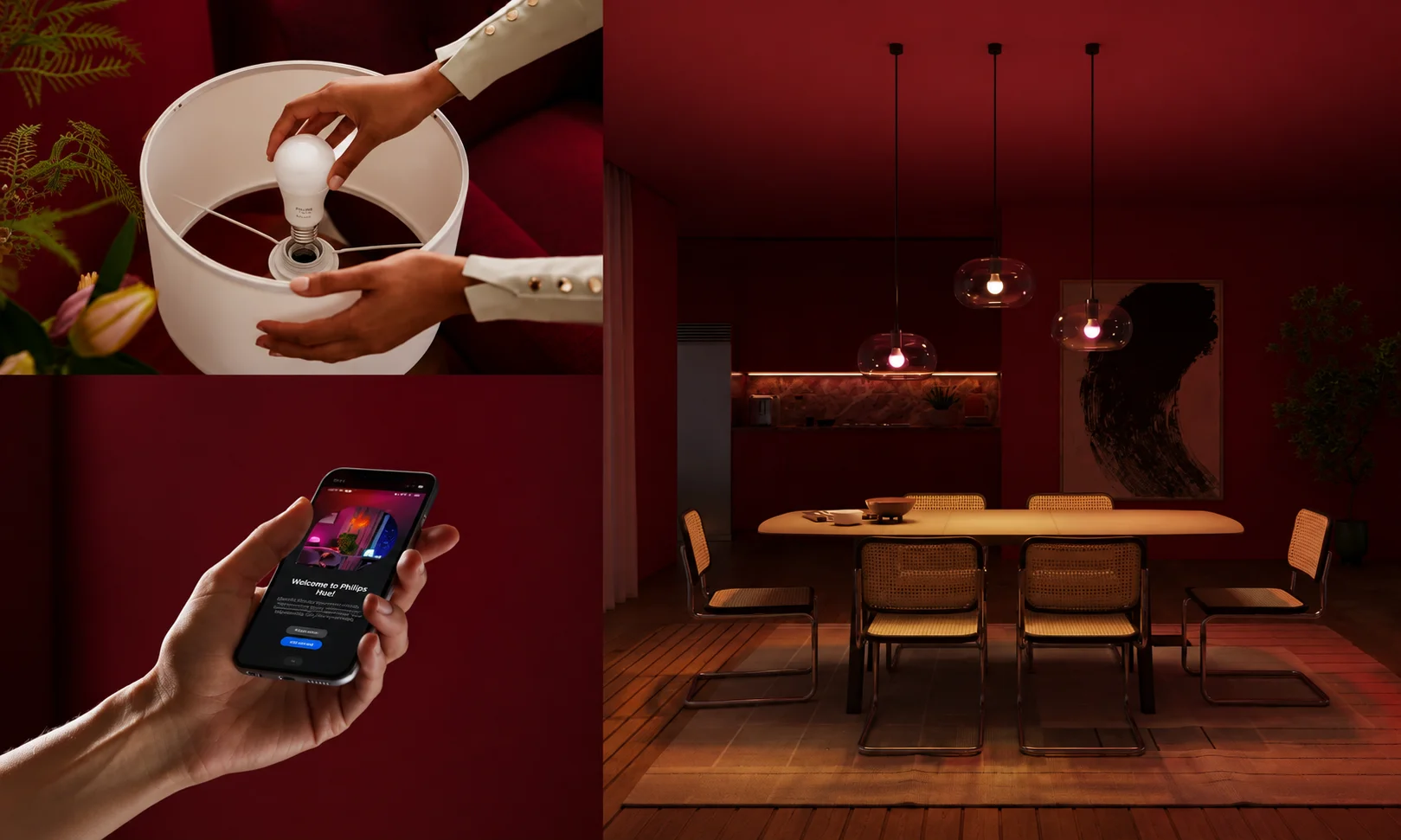
The Philips Hue White and Color Ambiance earns our top overall pick because it delivers the most complete balance of lighting quality, color range, automation and smart home flexibility of anything we tested this year.
Why We Like It
The Hue system feels refined from the first setup screen onward. Colors come through rich and natural rather than harsh or artificial, and the tunable white range makes it just as comfortable for daily tasks as it is for mood lighting in the evening. It is also one of the strongest choices for anyone planning to expand smart lighting across an entire home, since a single ecosystem can manage bulbs in multiple rooms without juggling separate apps.
Specifications
| Feature | Philips Hue White and Color Ambiance |
|---|---|
| Type | Smart bulb |
| Colors | RGB plus tunable white |
| Brightness | Up to 1,100 lumens depending on model |
| Connectivity | Bluetooth and Zigbee depending on setup |
| Hub | Optional for basic use, recommended for larger systems |
| Voice control | Yes |
| Scheduling | Yes |
| Scenes | Yes |
| Smart home support | Broad |
| Best for | Whole home lighting |
Pros
- Excellent color accuracy
- Strong everyday white light performance
- Reliable automation and scheduling
- Mature app with a large accessory lineup
- Scales well across many rooms
Cons
- More expensive than entry-level bulbs
- Larger installations benefit from a hub
- Some advanced features are limited to the Hue ecosystem
2. Best Budget Smart Light: Wiz Connected Color Bulb
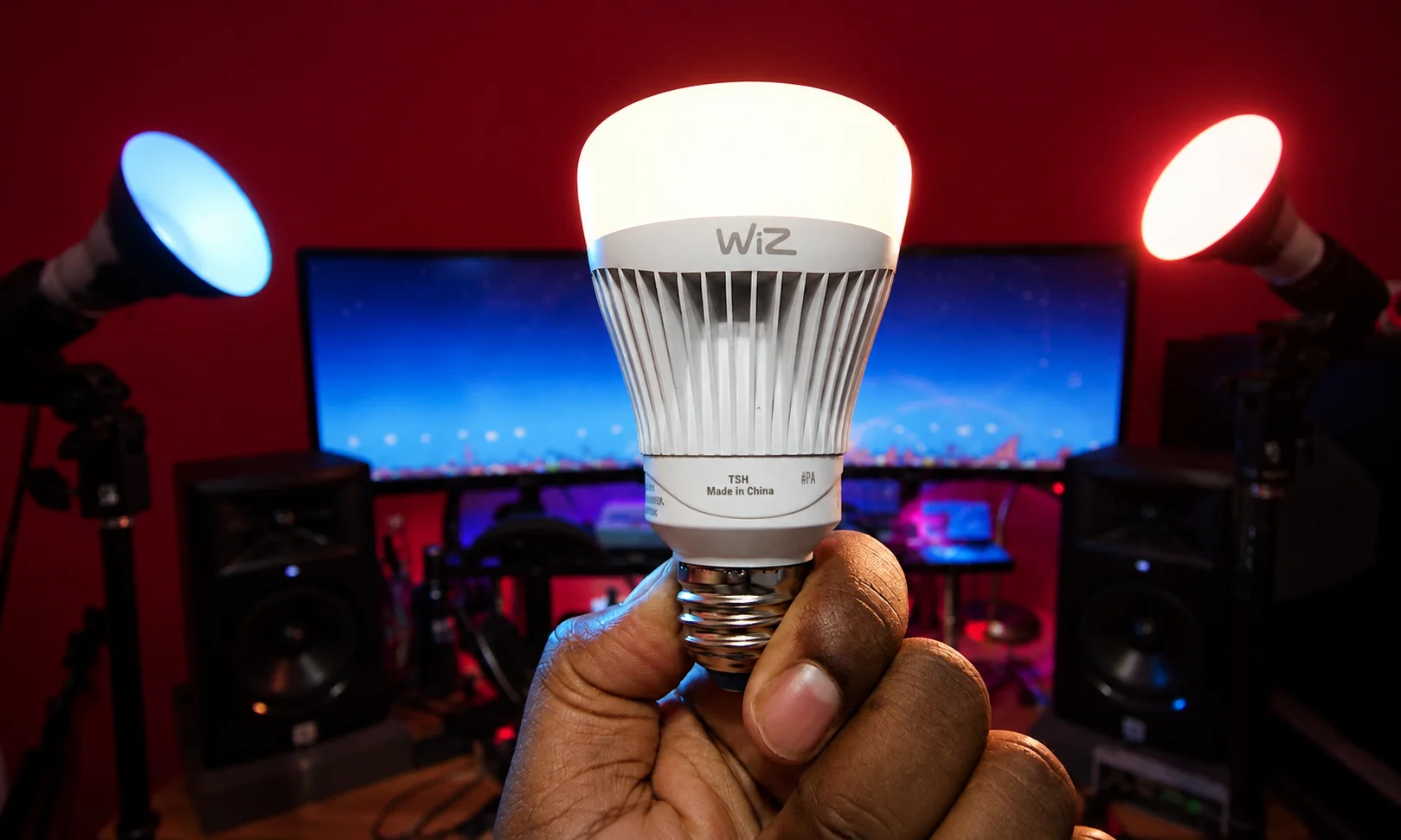
For anyone starting out with smart lighting or wanting to convert several fixtures without a big investment, the Wiz Connected Color Bulb is our pick.
Why We Like It
At roughly the price of a coffee, this bulb still manages Matter support for Alexa, Google Home and Siri without needing any extra hardware. It offers millions of color options along with dependable scheduling, and it can even act as a basic motion trigger for automations once a few bulbs are installed in the same space. It is not the brightest or most feature dense bulb on this list, but it is easily the simplest way to get started.
Specifications
| Feature | Wiz Connected Color Bulb |
|---|---|
| Type | A19 smart bulb |
| Colors | Millions of color options |
| Brightness | Around 800 lumens |
| Connectivity | 2.4GHz Wi Fi and Matter |
| Hub | No |
| Voice control | Yes |
| Scheduling | Yes |
| Motion automation | Yes, with multiple bulbs |
| Best for | Budget friendly upgrades |
Pros
- Very affordable
- No hub required
- Broad Matter compatibility
- Simple scheduling and motion-based features
- Easy to install throughout the home
Cons
- Lower brightness than premium bulbs
- Fewer advanced color effects than dedicated entertainment lighting
3. Best for Color Effects: Govee Smart Lights
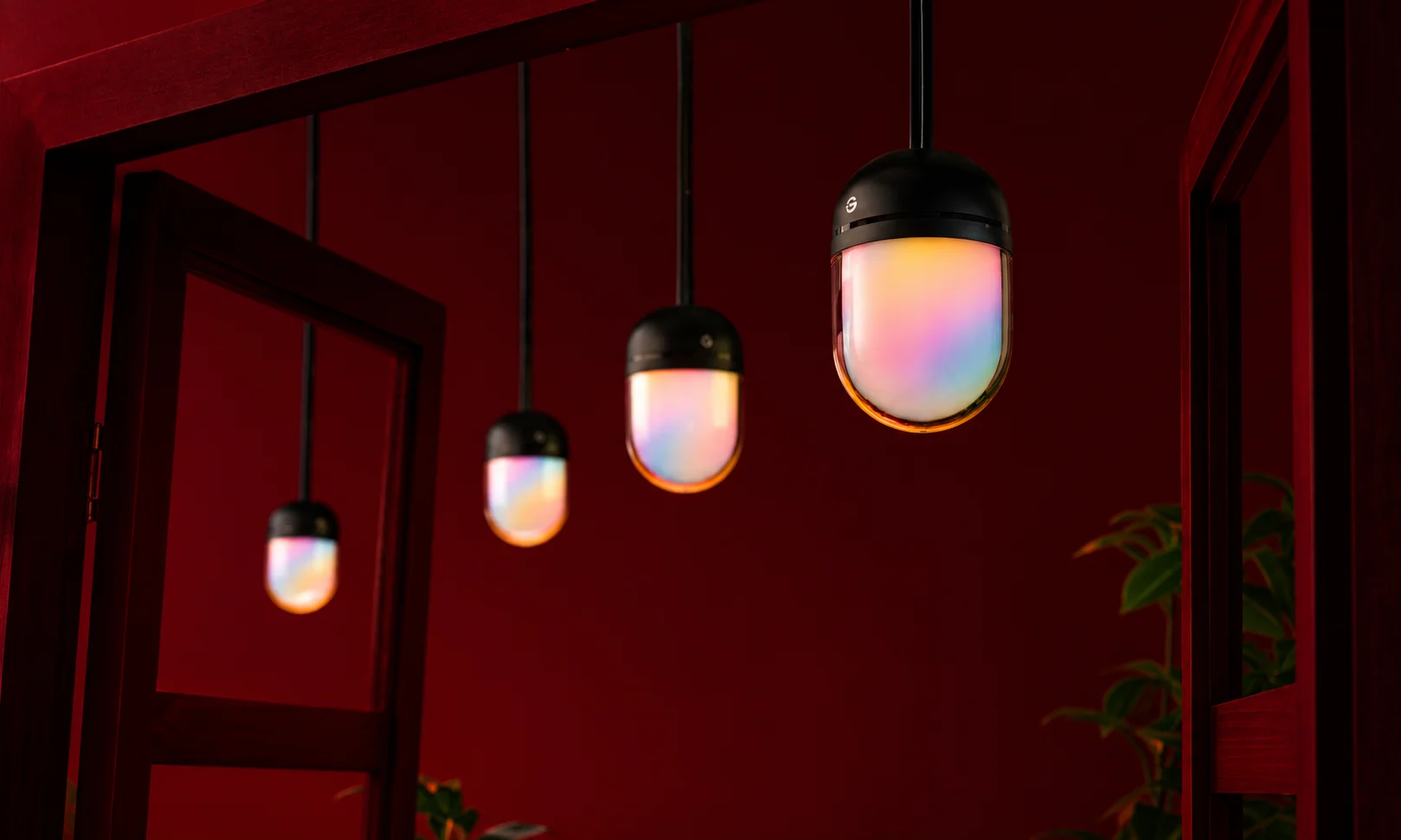
If colorful, expressive lighting is the priority, Govee Smart Lights are our favorite pick.
Why We Like It
Govee leans heavily into entertainment focused lighting, and it shows. During testing, the range of preset scenes and effects made it especially fun for bedrooms, desks and gaming corners without requiring hours of manual customization. The lineup spans bulbs, strips and lamps under one app, so it is easy to build out a room piece by piece as budget allows.
Specifications
| Feature | Govee Smart Lights |
|---|---|
| Type | Bulbs and lighting accessories |
| Colors | RGB or RGBIC depending on model |
| White light | Available on select models |
| Connectivity | Wi Fi or Bluetooth depending on model |
| Hub | No |
| Voice control | Yes |
| Music sync | Yes |
| Scheduling | Yes |
| Best for | Colorful and playful lighting |
Pros
- Strong value across the lineup
- Wide variety of products in one ecosystem
- Excellent music syncing
- Simple setup process
Cons
- App can feel cluttered with options
- White light quality varies by model
4. Brightest Smart Light: LIFX Color A19
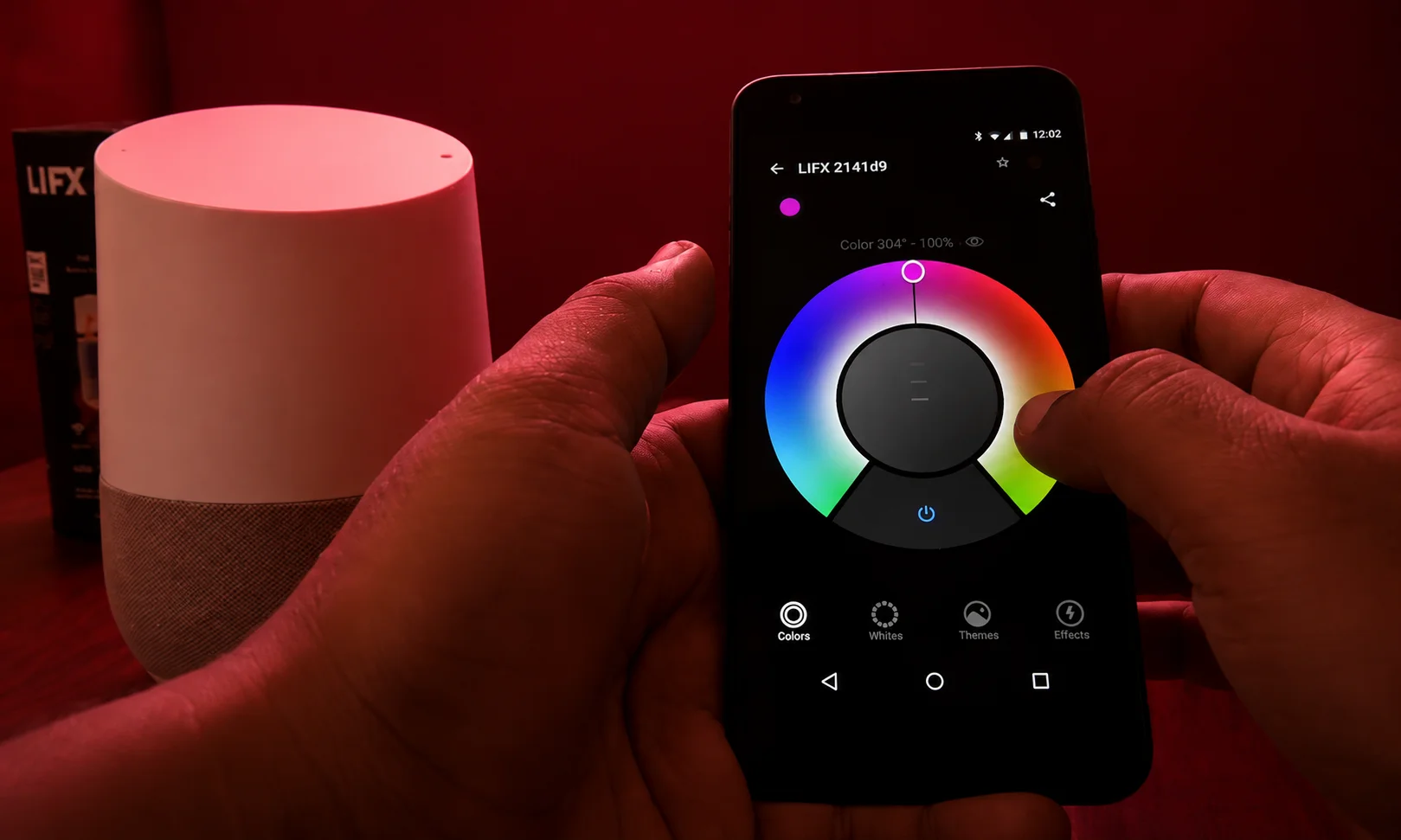
For rooms that need serious illumination alongside color options, the LIFX Color A19 is our top brightness pick.
Why We Like It
Plenty of color changing bulbs lose usefulness once you actually need bright, functional light. LIFX avoids that problem by delivering vivid color performance without sacrificing everyday brightness. It also skips the need for a separate hub, which keeps installation simple even for larger rooms.
Specifications
| Feature | LIFX Color A19 |
|---|---|
| Type | Smart bulb |
| Colors | RGB plus tunable white |
| Brightness | Up to 1,100 lumens |
| Connectivity | Wi Fi |
| Hub | No |
| Voice control | Yes |
| Scheduling | Yes |
| Scenes | Yes |
| Best for | Brightness paired with color |
Pros
- Very bright output
- Strong color saturation
- No hub needed
- Reliable performance in larger rooms
Cons
- Requires a stable Wi-Fi connection
- Pricier than basic bulbs
5. Best for Gaming: Govee RGBIC LED Strip Lights
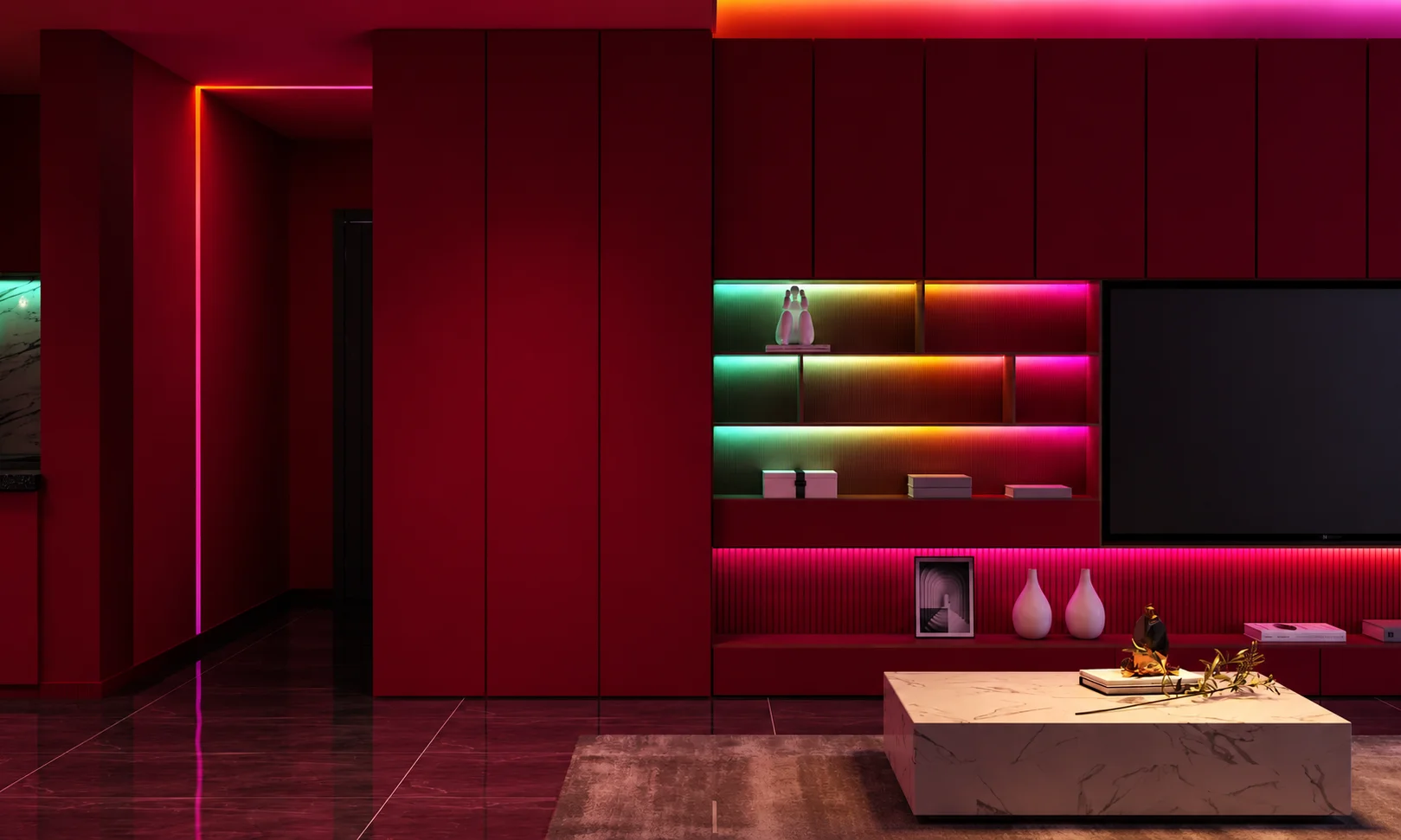
For desks, gaming setups and entertainment areas, the Govee RGBIC LED Strip Lights are our top pick.
Why We Like It
Unlike a standard strip that displays one uniform color, RGBIC technology lets different sections glow different colors at the same time, which makes for much more dynamic lighting during gaming and movie sessions. It is also one of the easiest ways to add dramatic ambient lighting without any permanent fixtures.
Specifications
| Feature | Govee RGBIC LED Strip Lights |
|---|---|
| Type | LED light strip |
| Lighting | RGBIC |
| White light | Depends on model |
| Connectivity | Wi Fi or Bluetooth depending on model |
| Hub | No |
| Music sync | Yes |
| Effects | Yes |
| Voice control | Yes |
| Installation | Adhesive strip |
| Best for | Gaming and entertainment spaces |
Pros
- Dynamic multicolor effects
- Strong music synchronization
- Easy adhesive installation
- Large library of preset effects
Cons
- Adhesive placement needs care
- Not intended as a primary room light
- Some effects can feel overly busy
Smart Lights Comparison
| Category | Our Pick |
|---|---|
| Best Overall | Philips Hue White and Color Ambiance |
| Best Budget | Wiz Connected Color Bulb |
| Best for Color Effects | Govee Smart Lights |
| Brightest | LIFX Color A19 |
| Best for Gaming | Govee RGBIC LED Strip Lights |
| Best Whole Home System | Philips Hue |
| Best for Smart Home Flexibility | Wiz with Matter support |
| Best for Everyday Brightness | LIFX |
What We Looked For When Testing Smart Lights
Choosing a smart light based only on its color count or advertised brightness can be misleading, so we focused on how each product performs during real everyday use.
Brightness
We tested lights under normal room conditions rather than relying only on advertised lumen figures. A good smart light should be bright enough for daily tasks while still dimming smoothly for a relaxed atmosphere.
Color Quality
We checked a range of common colors along with softer tones useful for ambient lighting, looking for consistency and richness rather than just a high color count on a spec sheet.
White Light Performance
A bulb can look impressive in color mode and still disappoint as an everyday light. We evaluated both warm evening tones and cooler daytime white light.
App Experience
Since most day to day control happens through an app, we looked at how easily each app handles room grouping, scheduling, scene creation and brightness adjustment.
Response Time
We measured how quickly each light reacted to commands sent through an app or voice assistant.
Connectivity
We tracked connection stability over several days of normal use, along with how reliably each light reconnected after a network interruption.
Smart Home Compatibility
We also considered how well each product worked with major smart home platforms, with particular attention to Matter support, since it increasingly allows a single bulb to work across multiple ecosystems.
Smart Bulbs Versus Smart Light Strips Versus Smart Panels
The right type of smart light depends on what you actually want to illuminate.
Smart bulbs work best as a direct replacement for a traditional bulb and are ideal for bedrooms, lamps, living rooms and kitchens where you need genuinely useful everyday light.
Smart light strips are better suited to decorative lighting behind desks, televisions, beds, cabinets and shelves. They can build an impressive atmosphere but generally should not serve as a room’s main light source.
Smart panels are designed mainly for decoration and work well when you want part of a wall itself to become a lighting feature.
Do Smart Lights Need Wi Fi
Not always. Some smart lights connect directly through Wi Fi, while others rely on Bluetooth, Thread or another smart home protocol. For one or two bulbs, a simple Wi Fi model is usually enough. For a larger installation, a dedicated lighting network can offer better reliability and reduce strain on your home Wi Fi.
Do Smart Lights Need a Hub
No, not in most cases anymore. Many current smart lights connect directly to Wi Fi or use Matter and Thread compatible equipment you may already own. That said, a hub can still be worthwhile for larger installations, since it often improves communication reliability and unlocks more advanced automation options.
Are Smart Lights Worth It
Yes, especially if you want real control over your home’s lighting rather than just a novelty. The biggest benefit is not the colorful effects themselves. Smart lights can turn on and off automatically, follow daily schedules, adjust brightness on their own and shift between different lighting scenes throughout the day. Bright white light in the morning, softer tones in the evening and automatic lighting when you arrive home are the kinds of everyday conveniences that make smart lighting genuinely useful rather than just fun to look at.
How to Choose the Best Smart Light for You
- Choose Philips Hue if you want the strongest overall ecosystem and plan to expand smart lighting throughout your home.
- Choose Wiz if you want an affordable, no hub entry point that still supports Matter and major voice assistants.
- Choose Govee bulbs and lamps if colorful effects and strong value matter most to you.
- Choose LIFX if brightness paired with vivid color is your top priority.
- Choose Govee RGBIC strips if your main goal is gaming, entertainment or decorative lighting.
Final Verdict
The Philips Hue White and Color Ambiance is our best overall smart light for 2026 because it combines strong lighting quality, dependable performance, mature automation tools and the widest smart home support of anything we tested.
The Wiz Connected Color Bulb is our top budget pick for anyone who wants a simple, affordable, hub free entry into smart lighting. Govee remains the strongest choice for colorful, playful lighting and solid value, while LIFX stands out when brightness is the deciding factor. For gaming rooms and entertainment spaces, the Govee RGBIC LED Strip Lights remain our favorite thanks to their dynamic, multi color effects.
The biggest lesson from our testing is simple. Do not choose a smart light based only on how many colors it can produce. Pay attention to brightness, white light quality, connection reliability, app usability, smart home compatibility and how well the light actually fits the room you plan to use it in.
Frequently Asked Questions
What is the best smart light in 2026?
The Philips Hue White and Color Ambiance is our best overall smart light in 2026. It offers excellent color quality, strong everyday brightness, reliable automation and a mature ecosystem that works well for both individual bulbs and whole-home setups.
What is the best budget smart light?
The Wiz Connected Color Bulb is our top budget pick. It is affordable, does not require a hub and supports Matter, making it a practical choice for people starting with smart lighting.
What are the best smart lights for gaming?
The Govee RGBIC LED Strip Lights are our top choice for gaming. RGBIC technology allows different sections of the strip to display different colors at the same time, creating more dynamic effects for gaming and entertainment.
Are smart lights worth buying?
Yes. Smart lights can do much more than change colors. They can automate schedules, adjust brightness, create scenes and work with voice assistants, making everyday lighting more convenient.
Do smart lights work without Wi-Fi?
Some smart lights can work without Wi-Fi by using Bluetooth, Zigbee, Thread or other connection methods. However, features such as remote control and some cloud-based automations may require an internet connection.
Do smart lights need a hub?
No. Many modern smart lights connect directly through Wi-Fi, Bluetooth or Matter. A hub can still be useful for larger setups because it can improve reliability and provide access to additional features.
Which smart lights are best for bright rooms?
The LIFX Color A19 is our top choice when brightness is the priority. It combines strong light output with vivid colors and does not require a separate hub.
Which smart lights have the best colors?
Philips Hue and Govee are both strong choices for color lighting. Hue stands out for balanced, high-quality colors and everyday use, while Govee is particularly good for colorful effects and entertainment lighting.
Are smart light strips good for main room lighting?
Generally, no. Smart light strips are better for accent and ambient lighting behind desks, TVs, beds, shelves and cabinets. A smart bulb or dedicated smart fixture is usually a better choice for primary room illumination.
Can smart lights sync with music and games?
Yes. Many smart lights can react to music, and some models can also synchronize lighting effects with games or other entertainment. Govee is particularly strong for music synchronization and gaming-focused effects.
Can smart lights work with Alexa and Google Home?
Yes. Many smart lights support Amazon Alexa and Google Home, while some also work with Apple Home and other smart home platforms. Matter-compatible lights can offer broader compatibility across supported ecosystems.
How long do smart lights last?
LED smart lights are generally designed to last for many years under normal use. Actual lifespan depends on the specific model, how often it is used and operating conditions.
What should I look for when buying a smart light?
Focus on brightness, color quality, white light performance, app usability, connectivity, smart home compatibility, automation features and price. If you are buying several lights, also consider whether the system can easily expand across multiple rooms.