
The violin is one of the most rewarding instruments you can learn and one of the most demanding. Most beginners quit in the first three months, not because violin is impossible, but because they start without a clear system.
This guide gives you that system. Everything from choosing your first instrument to mastering core techniques, finding the right teacher, and building a practice habit that actually sticks.
AI Overview
Violin lessons in 2026 are more accessible than at any point in history. Adult beginners, children, and returning players can choose from structured online courses, live one-on-one lessons with credentialed teachers over video call, self-paced app-based learning, or traditional in-person lessons and many successful students combine two or more methods.
Studies show that students receiving personalized, one-on-one instruction whether in-person or online improve up to 60% faster than those using only pre-recorded video lessons alone. The key factors for success are the same regardless of format: consistent daily practice, early attention to correct posture and bow hold, and a teacher or structured curriculum that prevents bad habits from forming in the first month.
You don’t need to be musical. You don’t need to read music on day one. You need a good instrument, a reliable method, and 20–30 minutes of focused daily practice.
Key Takeaways
| Topic | What You Need to Know |
| Best age to start | Any age —adults learn well with the right method |
| Time to first song | 2–4 weeks of consistent practice |
| Daily practice needed | 20–30 minutes minimum for steady progress |
| Beginner violin cost | $100–$300 for a starter outfit (instrument + bow + case) |
| Online lesson cost | $20–$80 per hour depending on teacher and platform |
| Best platform for adults | Violin Lab ($35/month, 800+ video lessons) |
| Best for live 1-on-1 | Lessonface, ArtistWorks, or Wiingy |
| Hardest beginner challenge | Bow control and producing a clean tone |
| First techniques to master | Bow hold, open strings, first-position finger placement |
| When to get a teacher | From day one if possible prevents bad habits early |
Can Adults Learn Violin? The Honest Answer
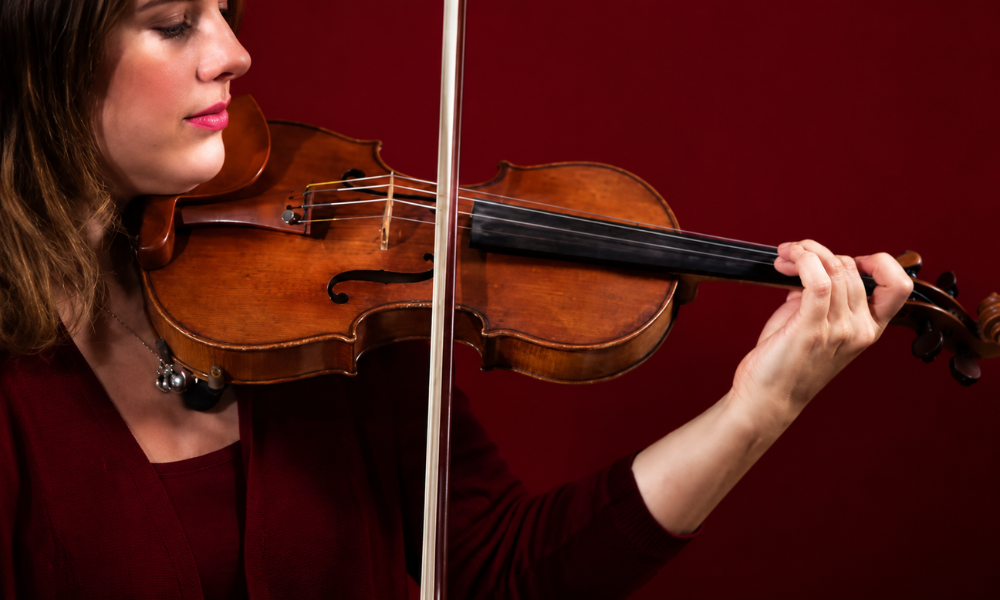
Yes and they often learn faster than children in the early stages because adults understand instruction, practice deliberately, and stay focused during shorter sessions.
The honest caveat: the violin has a steep initial learning curve. Your first few weeks will not sound beautiful. The bow produces scratchy, uneven tones until the muscles and coordination develop. This is normal, not a sign you lack talent. Every violinist goes through it.
Violin Lab, one of the most established online violin platforms, has helped over 40,000 adult learners since 2009 the majority of whom started with zero musical background. The question isn’t whether adults can learn violin. It’s whether you’re willing to practice through the uncomfortable early stage.
Choosing Your First Violin: What to Buy and What to Avoid
Size Matters First
Violins come in fractional sizes: 4/4 (full size), 3/4, 1/2, 1/4, and smaller. Adults and teenagers use a 4/4 full-size violin in almost all cases. Children are fitted based on arm length a violin teacher or music store can measure this in under a minute.
Playing on the wrong size creates tension and bad posture habits that take months to unlearn. Get the size right first.
What to Spend as a Beginner
| Budget | What You Get |
| Under $100 | Factory-made “violins” with poor playability avoid |
| $100–$300 | Decent beginner outfits with playable instruments |
| $300–$600 | Significantly better tone and playability worth the upgrade |
| $600–$1,500 | Intermediate instruments for students making serious progress |
A reputable beginner outfit typically includes the violin, a fiberglass or carbon fiber bow, a case, rosin, and sometimes a shoulder rest. Brands like Cecilio, Mendini, Stentor, and Yamaha offer reliable starter options in the $150–$350 range.
Avoid the cheapest instruments sold on general retail sites. Instruments under $80 often cannot be tuned or played in tune regardless of the player’s skill, which makes learning nearly impossible and discouraging.
New vs. Rented vs. Second-Hand
- Rent: Most music stores offer rental plans for $15–$30/month. This is smart for children who may outgrow sizes quickly. Many stores apply rental payments toward a purchase.
- Buy new: Best for adults who are confident they’ll commit. Get the instrument checked by a luthier or music store professional before purchase if buying online.
- Buy second-hand: Can offer excellent value at $200–$500 but requires expert inspection. Unrepaired cracks or warped necks can make an instrument unplayable.
What Else Do You Need?
- Rosin: Applied to the bow hair so it grips the strings. Comes with most outfits. Replace annually.
- Shoulder rest: Essential for most adults. Prevents neck and shoulder tension. The Kun collapsible and AcoustaGrip are popular choices.
- Tuner: Download a free tuning app (GuitarTuna or iStroboSoft work well for violin). Tune before every single practice session.
- Music stand: Protects your posture during practice. A basic stand costs under $20.
Beginner Violin Lessons: Where to Start
The Foundation: First 4 Weeks
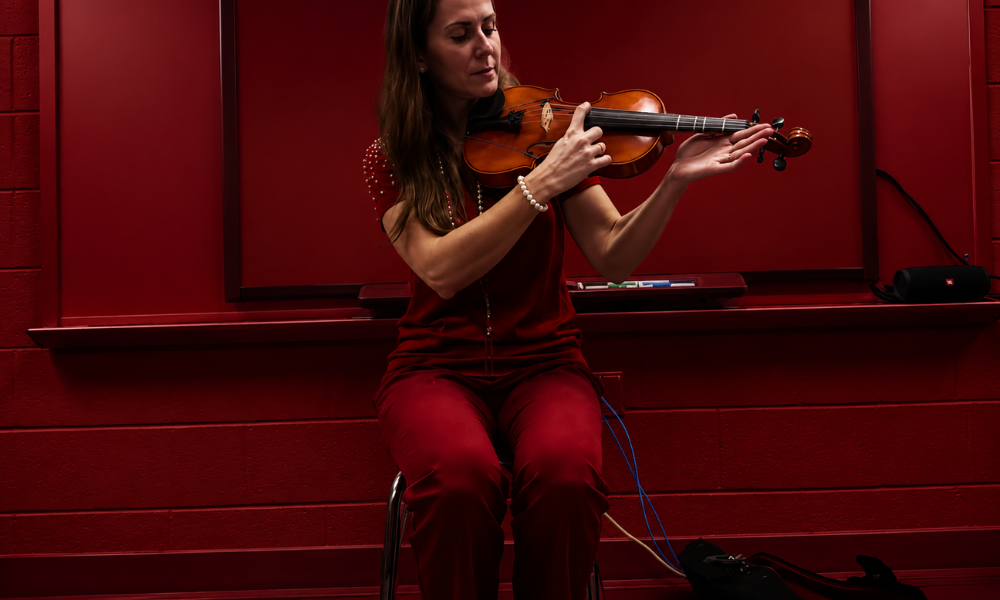
Before you play a single note, your teacher or course should cover these fundamentals:
Posture: Stand or sit with the violin resting on your left collarbone, supported by your left jaw. The chin rest takes the weight — not your left hand, which must remain free to place fingers. Tense shoulders are the most common beginner mistake and the root cause of most early injuries.
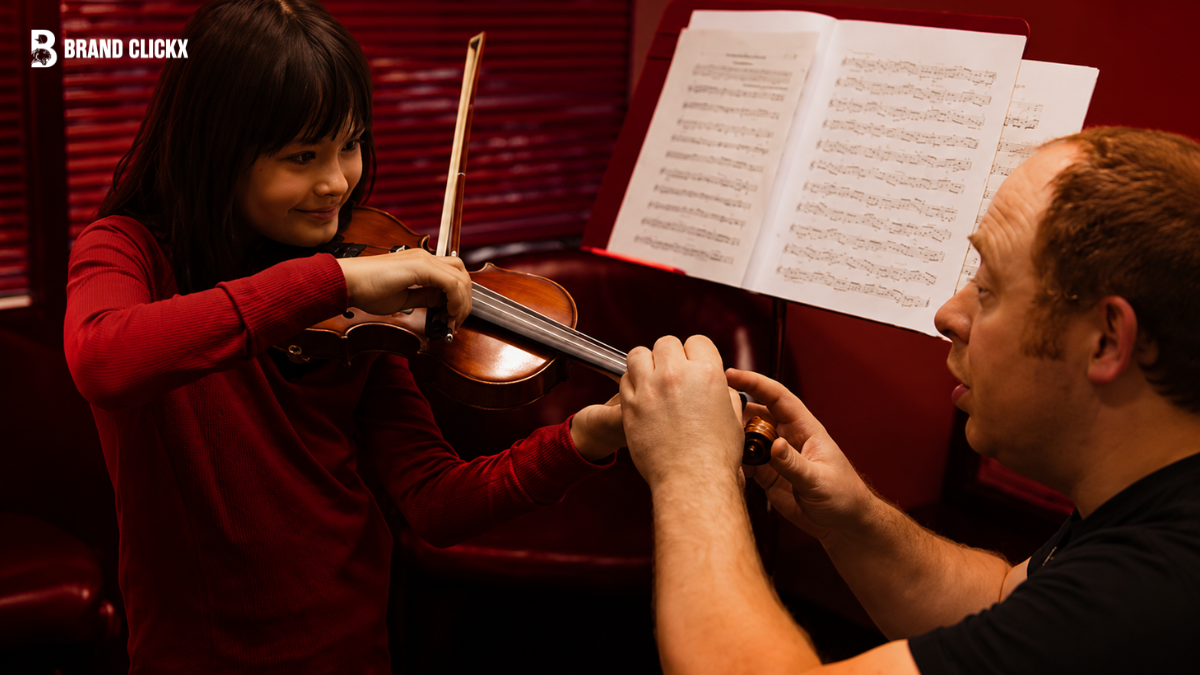
Bow Hold: The bow is held with a relaxed, curved right hand. The thumb bends slightly and rests on the underside of the stick. The pinky finger curves and rests on top. A rigid, clutched bow hold produces scratchy tone and causes arm fatigue. Getting the bow hold right in week one saves months of correction later.
Open Strings: Before placing any fingers, practice drawing the bow across each string G, D, A, E producing a clear, even tone. This trains bow control and arm weight before the left hand complicates things.
First Notes: The first-position finger placements on the A and E strings are the standard starting point. Notes B, C#, D on the A string, and F#, G, A on the E string form the foundation of most beginner pieces.
Reading Rhythms: You don’t need to read sheet music immediately, but understanding basic note values (quarter notes, half notes, whole notes) and how to count them makes learning pieces much faster from week two onward.
Violin Techniques Every Beginner Must Learn
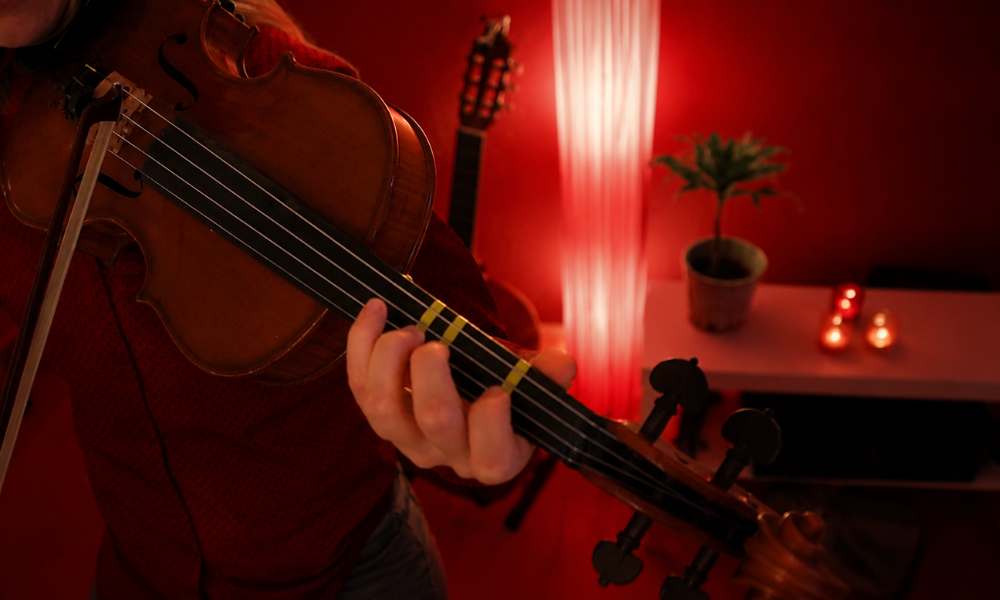
These are the building blocks. Rushing past them produces a ceiling you’ll hit within months.
1. Bow Speed and Pressure
Tone quality is controlled by three variables: bow speed (how fast you draw), bow pressure (how much weight you apply), and bow placement (where on the string between bridge and fingerboard you play). The sweet spot for most notes is two to three centimeters from the bridge. Too close produces a harsh, scratchy tone. Too far produces a thin, airy sound.
Practice long, slow bow strokes on open strings daily. This is not boring it is the foundation of everything.
2. Intonation (Playing in Tune)
Intonation is the biggest long-term challenge for violinists. Unlike a piano, there are no frets to guide your fingers you train your ear and muscle memory to find the exact pitch.
Practice slowly. Use a drone app or piano to sound the note you’re aiming for and train your ear to hear the match. Recording yourself and listening back is the fastest way to identify intonation issues your ear while playing often can’t hear what a recording reveals clearly.
3. Détaché Bowing
The standard bowing stroke for most music. A smooth, connected draw of the bow in one direction, then the other no lifting, no accenting the start of each note. Practice on single notes before applying to scales.
4. Spiccato
An off-the-string bouncing bow stroke used in faster passages. One of the more advanced bowing techniques don’t attempt it until your détaché and martelé are reliable. Usually introduced after 12–18 months of study.
5. Scales and Arpeggios
Scales are the non-negotiable daily exercise for every violinist. Not because scales are beautiful, but because they build:
- Left-hand finger strength and accuracy
- Intonation by training the ear on the same pitches daily
- Bow distribution across the full length of the bow
Start with the A major and D major scales in first position. Once those are clean, add G major. A reliable scale practice adds 5–10 minutes to daily sessions and accelerates repertoire learning significantly.
6. Shifting Positions
First position covers the notes closest to the scroll. Third position, fifth position, and higher allow you to reach higher notes. Shifting moving your left hand up the neck smoothly is introduced for most students after 6–12 months. It requires relaxed thumb and a sliding motion, not a jump.
7. Vibrato
Vibrato is the oscillating pitch movement that gives the violin its singing quality. It is not taught in the first few months vibrato requires a secure left-hand position and reliable intonation first. Attempting vibrato too early creates tension and sloppy intonation. Most teachers introduce it at 6–18 months depending on the student’s progress. It takes an additional 3–6 months of specific practice to develop a natural, consistent vibrato.
Violin Practice Tips: How to Get the Most From Every Session
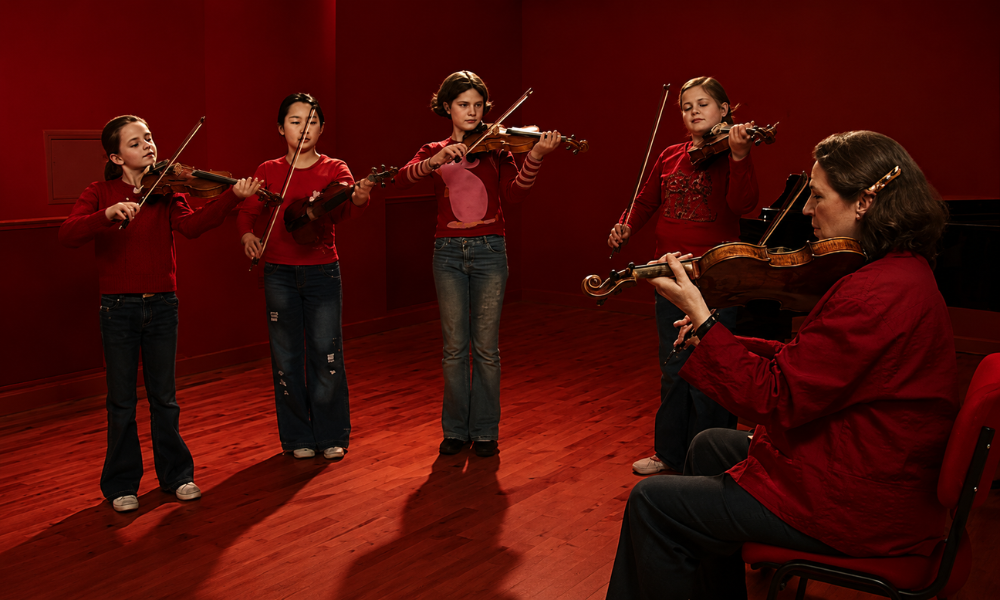
Practice Short and Often Not Long and Rarely
20 minutes of focused daily practice produces faster results than a single 3-hour weekend session. Muscle memory forms through repetition over time, not through marathon sessions.
If you’re a complete beginner, start with 15–20 minutes daily. Build to 30 minutes within the first month. Intermediate students typically practice 45–60 minutes daily. Commitment to the daily habit matters more than session length.
Fix Problems Slowly
The most common practice mistake: playing through mistakes at full speed. When you play a wrong note or a bad rhythm, slow down to the point where you can play it correctly every time. Practice the correct version until it feels automatic, then gradually speed back up.
A wrong note practiced 10 times at full speed becomes a bad habit. A correct note practiced 10 times slowly becomes muscle memory.
The Three-Section Practice Structure
Structure your sessions to cover all areas:
- Warm-up (5 minutes): Long bows on open strings, then scales slowly
- Technique work (10 minutes): A specific exercise bow control drill, shifting exercise, or scale with rhythm variations
- Repertoire (10–15 minutes): Work on your current piece focus on the hardest sections first, not the ones you already play well
Record Yourself Weekly
Your ear while playing cannot hear everything your recording reveals. Set your phone camera to video, play through your current piece, and watch it back. You’ll notice posture issues, bow contact problems, and intonation gaps that felt invisible during practice.
Use a Metronome
Every serious violinist practices with a metronome. Start at 60–70% of the target tempo for new material. Only increase the tempo when you can play the passage perfectly at the current speed. Increasing tempo before the notes are correct just trains errors faster.
Online Violin Lessons vs In-Person: Which Is Right for You?
Both work. The choice depends on your location, schedule, budget, and learning style.
| Factor | Online Lessons | In-Person Lessons |
| Cost | Lower ($20–$60/hour typical) | Higher ($40–$100+/hour typical) |
| Flexibility | High — book across time zones | Limited to local availability |
| Teacher selection | Global pool of specialists | Limited to local teachers |
| Feedback quality | Good with two cameras set up | Slightly easier for posture correction |
| Accountability | Depends on teacher/platform | Often stronger in person |
| Best for | Adults, busy schedules, rural areas | Young children, those who need hands-on guidance |
Online lessons work best when the student sets up two camera angles one from the front and one from the side so the teacher can see both bow hold and left-hand position simultaneously. Many platforms encourage this setup explicitly.
Best Online Violin Lessons and Platforms in 2026
1. Violin Lab Best for Adult Self-Paced Learning
Price: $35/month
Best for: Adults, beginners through advanced
Violin Lab offers 800+ video lessons in a structured curriculum, downloadable sheet music, interactive accompaniment players, and optional one-on-one video feedback from founder Beth Blackerby. It has helped over 40,000 adult learners since 2009. Subtitles are available in Spanish, French, Portuguese, German, Chinese, and Arabic.
2. ArtistWorks Best Structured Course With Feedback
Price: From $35/month
Best for: Beginners to intermediate
Richard Amoroso, a professional violinist with the Philadelphia Orchestra since 1998, teaches ArtistWorks’ violin curriculum. Hundreds of video lessons span all levels, and the platform’s Video Exchange system allows students to submit playing videos and receive personal feedback.
3. Lessonface Best for Live 1-on-1 Lessons
Price: Varies by teacher — typical range $40–$80/hour
Best for: Students who want a human teacher on a flexible schedule
Lessonface connects students with vetted teachers including Juilliard and Berklee alumni, MET Orchestra members, and GRAMMY nominees. Book single lessons or ongoing packages. Lessons run via Zoom with recordings accessible afterward.
4. Violinspiration Best for Song Tutorials and Expanding Repertoire
Price: Free resources + paid membership
Best for: Beginners who know basics and want song-focused learning
Run by professional violinist Julia, Violinspiration offers hundreds of song tutorials searchable by genre and artist. Free sheet music, weekly videos, and a free three-day boot camp are available before committing to paid membership.
5. MasterClass (Itzhak Perlman) Best for Inspiration and Music Mindset
Price: MasterClass annual membership ($120–$180/year)
Best for: Intermediate students, music lovers seeking masterclass content
The 15-time Grammy Award winner and Juilliard instructor teaches 19 video lessons covering fundamentals, double-stops, higher positions, career mindset, and overcoming performance barriers. This is not a curriculum course it’s a masterclass that works best alongside regular lessons.
6. Udemy Best Budget Self-Study Option
Price: $10–$30 per course (frequent sales)
Best for: Budget-conscious self-learners, those wanting specific technique courses
Over 40 violin courses from beginner to advanced, including specialized courses on vibrato, intonation, scales, and music theory. Lesson Pros two violin professors have taught over 100,000 students on the platform. One-time purchase, lifetime access.
How to Find the Right Violin Teacher
The right teacher is more important than the right platform. A good teacher corrects problems before they become habits. A bad one or the wrong fit slows progress or causes injury through poor technique instruction.
What to look for in a violin teacher:
- Formal training or performance experience (degree in music, professional performing background, or both)
- Experience teaching at your level not all skilled players are skilled teachers of beginners
- Clear communication and patience
- A structured lesson plan rather than ad-hoc “what do you want to work on today?” sessions
- Willingness to focus on fundamentals before repertoire
Questions to ask before booking:
- What method or curriculum do you use for beginners?
- How do you approach bow hold do you correct it from day one?
- What do you expect students to practice between lessons?
- Do you have experience teaching adults / children / my specific age group?
Red flags:
- Teachers who immediately launch into a piece without addressing posture and bow hold
- No structured lesson plan or progress milestones
- Unavailability between lessons when you have quick questions
- Pressure to commit to many lessons upfront before you’ve had a trial
Always book a single trial lesson before committing to ongoing sessions.
Violin Exercises: The 5 Every Beginner Should Practice Daily
These five exercises, done consistently, address the most important beginner skills.
- Long Bow Open Strings Draw the full length of the bow across each string G, D, A, E in a single slow stroke. Count to 8 while drawing down, 8 while drawing up. Focus on a smooth, even tone throughout the entire bow length. 3–5 minutes daily.
- A Major Scale, One Octave Play A–B–C#–D–E–F#–G#–A with a metronome at 60 BPM. Use separate bows for each note. Focus on intonation stop and adjust any note that doesn’t sound perfectly in tune before continuing. 3–5 minutes daily.
- String Crossing Exercise Play alternating pairs of strings D to A, A to D, G to D in a steady rhythm. Focus on smooth arm level transitions without bumping neighboring strings. This trains the right arm’s level for clean bowing.
- Left-Hand Finger Lifts Place all four fingers on the A string in first position. Lift and replace each finger slowly, one at a time, without lifting the others. This builds independent finger control and reduces tension.
- Slow Section Drill Take the hardest four-bar passage in your current piece. Play it at half speed. No exceptions for wrong notes stop, reset, repeat. Do this for 5–10 minutes before playing the piece at tempo.
Common Beginner Mistakes and How to Fix Them
Tense shoulders and neck. Stop every few minutes during practice and consciously roll your shoulders back and down. If tension returns within seconds, your posture or instrument hold needs adjustment.
Clutching the bow. Your bow hand should feel like you’re holding a bird firm enough to keep it in place, loose enough not to crush it. Squeeze a stress ball for ten seconds before practice to feel the difference between tension and relaxation in your hand.
Skipping scales. Scales feel boring. They are also the fastest route to intonation accuracy and bow control. Do them daily.
Practicing mistakes. Slow down. If you can’t play it correctly slowly, you cannot play it correctly at tempo only faster and more incorrectly.
Ignoring intonation. If notes sound wrong, don’t continue. Stop, find the correct pitch, and fix it. Playing wrong notes repeatedly trains your ears and fingers to accept incorrect pitch.
Neglecting the bow arm. Most beginners obsess over left-hand finger placement and neglect bow control. Tone quality how the violin sounds comes entirely from the right arm. Give bow technique equal attention from day one.
Violin Learning Milestones: What to Expect When
| Timeframe | Realistic Milestone |
| Week 1–2 | Holding instrument and bow correctly, producing sound on open strings |
| Week 3–4 | First simple melody using first-position notes on A and E strings |
| Month 2–3 | First octave scale, simple pieces like “Twinkle” or “Lightly Row” |
| Month 4–6 | Two-octave scales, simple pieces from Suzuki Book 1 or equivalent |
| Month 6–12 | Introduction to shifting, beginning vibrato study, more complex pieces |
| Year 1–2 | Third position comfortable, developing vibrato, Suzuki Book 3–4 level |
| Year 3–5 | Confident shifting across positions, solid vibrato, concerto repertoire |
These are realistic timelines for students practicing 20–30 minutes daily with regular lessons. Students practicing more progress faster; students practicing inconsistently progress slower not linearly.
FAQs
How long does it take to learn violin?
Most beginners play recognizable simple songs within 4–8 weeks. Sounding consistently pleasant takes 6–12 months. Reaching intermediate level with shifting and vibrato takes 2–3 years of consistent practice. “Learning violin” is a lifetime journey even professional orchestral musicians continue developing.
Can I learn violin online without a teacher?
You can make progress using structured online courses. However, a teacher even occasional video lessons significantly accelerates progress and prevents bad habits that are very hard to fix later. Students with one-on-one instruction improve up to 60% faster than those on pre-recorded courses only.
How much do violin lessons cost?
Online lessons typically cost $20–$80 per hour depending on the teacher’s credentials and platform. In-person lessons in most US cities range from $40–$100+ per hour. Structured self-paced platforms like Violin Lab cost $35/month for unlimited access.
What is the best violin for beginners?
A reliable beginner outfit in the $150–$350 range from brands like Stentor, Cecilio, or Yamaha is appropriate for most beginners. Avoid instruments under $100 — they often cannot play in tune. Renting from a local music store ($15–$30/month) is a good option for children who may need to change sizes.
Is violin harder than guitar?
Yes, for most beginners. Violin produces no tone without correct bow technique, requires training your ear to find pitch (no frets), and demands precise posture from day one. That said, violin rewards consistent effort quickly and the challenge is exactly what makes mastering it so satisfying.
What is the best age to start violin lessons?
Children can start as young as 3–4 with specialized Suzuki method teachers. Most music educators recommend 5–7 as a practical starting age. Adults can start at any age and often progress faster in early stages due to stronger focus and comprehension. There is no “too late” to start.
Do I need to read music to learn violin?
Not immediately. Many beginners start with note names, basic rhythms, and rote learning. However, developing basic music reading skill within the first few months significantly accelerates long-term progress and opens up a much wider range of repertoire.
How much should I practice as a beginner?
15–20 minutes daily for the first month. Build to 30 minutes daily by month two. Quality of practice matters more than quantity 20 focused minutes beats 60 distracted ones every time.