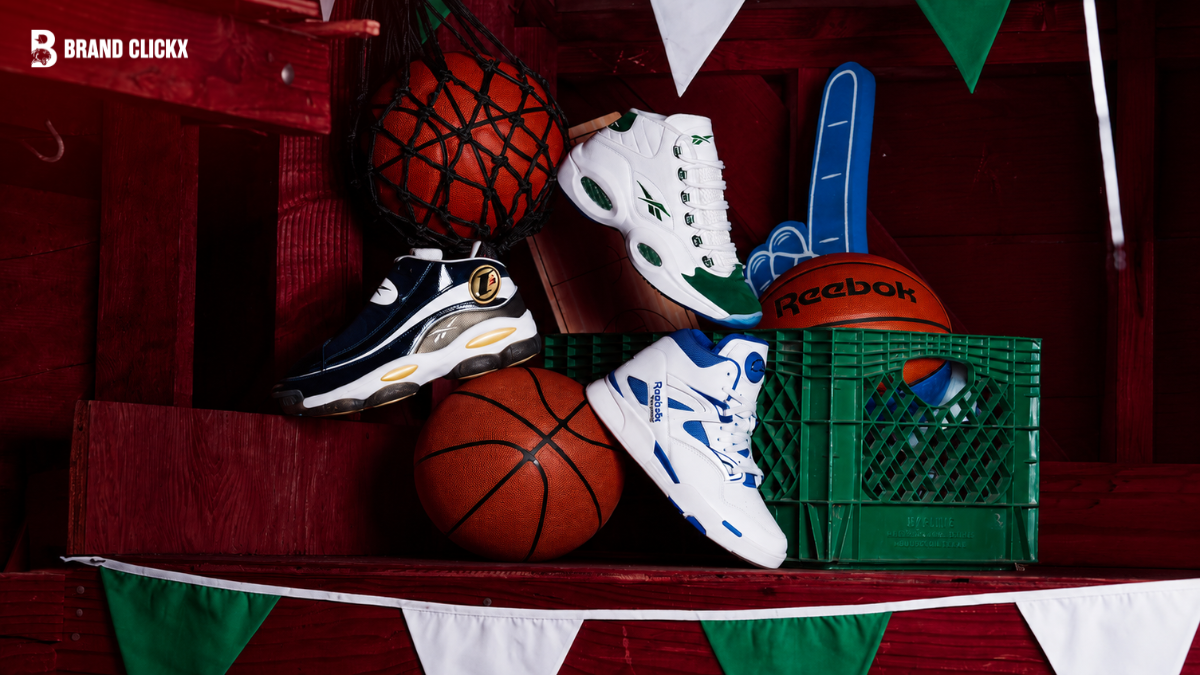
Reebok left basketball. For nearly 20 years, one of the most culturally significant brands in the sport’s history was essentially invisible on the hardwood. No performance shoes. No roster. No campaign. Just legacy.
That’s over. Reebok is back and in 2026, the comeback just got its clearest statement yet.
AI Overview
Reebok’s basketball comeback is a multi-year repositioning effort that began in earnest in 2021, accelerated with the January 2025 launch of the Engine A its first performance basketball shoe in over a decade and reached a new milestone in July 2026 with the launch of the “We Rise” campaign. The campaign features the brand’s Team RBK.B roster of emerging basketball talent and signals Reebok’s shift from nostalgia-driven retro releases to forward-looking athlete development.
The comeback is built on four pillars: legendary leadership (Shaquille O’Neal as President, Allen Iverson as Vice President of Basketball), star power in women’s basketball (Angel Reese, DiJonai Carrington, Lexie Brown), a bet on next-generation talent (Darius Acuff Jr., Matas Buzelis, Dink Pate, Nate Ament), and a performance product platform anchored by the Engine A and its evolution, the Engine A 26.
Jide Osifeso, Reebok’s Head of Basketball, described the brand’s position in the Adweek report published today: “We are still in an infancy of sorts with our return to the game but feel like we’ve found our footing. ‘We Rise’ is a message of us taking form.”
Key Takeaways
| # | Development | Detail |
| 1 | We Rise campaign launched | July 2026 black-and-white film featuring Team RBK.B roster |
| 2 | Engine A launched | January 2025 first performance basketball shoe in over a decade |
| 3 | Engine A 26 released | 2026 evolved version with RSTM midsole and Superfloat foam |
| 4 | Shaq named President | Shaquille O’Neal President of Reebok Basketball |
| 5 | Allen Iverson — VP | Vice President of Basketball, lifetime Reebok ambassador |
| 6 | Angel Reese signature shoe | Angel Reese’s signature sneaker confirmed for 2026 |
| 7 | WNBA multi-year deal | Reebok named WNBA authorized footwear supplier, December 2024 |
| 8 | Darius Acuff Jr. signing | NIL deal May 2025 Acuff 1 signature shoe announced 2026 |
| 9 | COMM. ONE film released | March 2026 short film narrated by Tobe Nwigwe |
| 10 | Jide Osifeso leading | Head of Basketball driving strategy, athlete signings, and campaign |
How Reebok Left Basketball and Why It Mattered
To understand the comeback, you need to understand the fall.
In the 1990s and early 2000s, Reebok wasn’t just in basketball it was part of basketball’s cultural identity. Shaquille O’Neal signed with Reebok before he played a single professional game and debuted in the Shaq Attaq a pump-laden high-top that came with a national TV campaign. He made the All-Star team as a starter and won NBA Rookie of the Year. Four years later, Reebok risked it all on another first-overall pick named Allen Iverson.
Iverson didn’t just endorse Reebok. He transformed it. His streetwear sensibility, cross-cultural relevance, and basketball brilliance turned the brand into a cultural institution. In 2001 the same year he led the Philadelphia 76ers to the NBA Finals and won the league MVP Iverson signed a lifetime endorsement contract with Reebok. That distinction speaks to how deep the relationship ran.
Then came the adidas acquisition in 2006. Reebok’s basketball division went quiet. The brand retreated from performance hoops while the market evolved Nike tightened its grip, Jordan Brand became its own universe, and adidas rebuilt relevance through Yeezy and Harden. For nearly 20 years, Reebok’s basketball identity existed only in retro releases and nostalgic YouTube highlight reels.
The absence left a gap. Whether that gap represents an opportunity is exactly what the next chapter of Reebok’s story is answering.
The Rebuilding Blueprint: How Reebok Structured Its Return
2021: The Statement of Intent
In 2021, under new ownership after Authentic Brands Group acquired Reebok from adidas for approximately $2.5 billion, the brand publicly committed to reclaiming its place in sport. The strategic intent was clear from the start: this wasn’t going to be a lifestyle-only brand trading on nostalgia. Reebok wanted performance credibility back.
2023: The Angel Reese Signing
The first visible signal of the new basketball strategy was the signing of Angel Reese, the LSU standout and WNBA player for the Chicago Sky. The move was deliberate and calculated. Reese was one of the most commercially marketable figures in women’s basketball culturally visible, authentically connected to Gen Z audiences, and credible on the court as one of the WNBA’s most physically dominant players.
Her first Reebok collection, “Reebok by Angel,” launched in summer 2024. It sold out. The brand had heat.
2024: Shaq, Iverson, and the WNBA Partnership
The two most iconic Reebok basketball figures in history didn’t just come back to the brand as ambassadors. They came back as executives.
Shaquille O’Neal was named President of Reebok Basketball. Allen Iverson was named Vice President. These are not ceremonial titles both men are active in the brand’s product direction, athlete recruitment strategy, and marketing positioning.
“It’s an exciting time for Reebok, the WNBA, and the game of basketball overall,” O’Neal said upon the WNBA partnership announcement. “Reebok has always been committed to supporting the growth of the sport, and now with a strong plan, the right resources, and the welcoming arms of the WNBA, we’re ready to dive in headfirst.”
In December 2024, Reebok and the WNBA announced a multi-year partnership making Reebok an authorized footwear supplier for the league. Reese and DiJonai Carrington of the Los Angeles Sparks were named as lead athlete partners. The WNBA’s Chief Growth Officer Colie Edison described it as “another step in bringing more fans to the game.” For Reebok, it was a lane the bigger brands had underestimated.
Reebok also confirmed that Reese’s signature shoe would arrive in 2026 making her only the second WNBA player in history to receive a Reebok signature shoe, after Rebecca Lobo in 1997.
January 2025: The Engine A
The Engine A was Reebok’s declaration that the comeback was real.
Launched in January 2025, the Engine A was the brand’s first genuine performance basketball shoe in more than a decade. It was not a lifestyle reissue or a retro nod to the Shaqnosis. It was built for the modern game designed to compete on performance credentials, not just cultural cache.
The launch positioned Reebok’s return differently from how most sneaker industry observers expected it. Rather than anchoring the comeback entirely to legacy athletes and heritage models, Reebok led with a new product. That decision signaled something important: the brand wanted to earn its place back, not just inherit it.
The Roster: Team RBK.B
Reebok’s basketball ambassador roster internally referred to as Team RBK.B is a carefully assembled blend of established star power and high-upside emerging talent.
Angel Reese
The centerpiece. Reese is the brand’s most visible basketball face a WNBA star, fashion presence, and cultural figure with reach well beyond sport. Her first Reebok collection sold out. Her signature shoe is coming in 2026. She starred in the “Sport is Everything” global campaign in November 2024 and the COMM. ONE film in March 2026. Reese’s multi-year partnership extension confirmed in October 2024 underlines how central she is to Reebok’s long-term basketball identity.
“Reebok has been such an amazing partner and advocate for women in sport,” Reese has said. “As strong female athletes, we can use our platform to set an example for young players coming up in the sport.”
DiJonai Carrington
The Los Angeles Sparks guard is Reebok’s second major WNBA ambassador, signed alongside Reese in the WNBA partnership announcement. Carrington starred in the COMM. ONE film in March 2026.
Darius Acuff Jr.
The most consequential bet in Reebok’s current basketball strategy may be Darius Acuff Jr. and it was made before anyone outside of college basketball knew his name.
Reebok signed Acuff to a NIL deal in May 2025 when he was a high school player committing to Arkansas. By March 2026, Acuff had become one of the most talked-about players in college basketball — breaking 50-year-old scoring records through three games of the 2026 NCAA tournament, earning AP first-team All-America honors (an accolade that eluded Derrick Rose, Shai Gilgeous-Alexander, and Tyrese Maxey), and winning SEC Player of the Year.
Two days before Arkansas was eliminated from the tournament by Arizona in the Sweet 16, Reebok announced on Instagram that Acuff’s signature shoe the Acuff 1 was coming. The 19-year-old became the first player to receive a Reebok signature shoe promise before ever playing a professional game.
Acuff’s surge up NBA draft boards gave Reebok the confidence to make that promise publicly. As Andscape’s Ian Stonebrook wrote of the signing, it was “the only move a challenger brand could make while trying to find its footing again: Bet it all on the one kid who cares least about the noise.”
Matas Buzelis, Dink Pate, and Nate Ament
Three additional names on Team RBK.B represent Reebok’s grassroots development model emerging talents signed before peak visibility, allowing the brand to grow with them rather than overpay for proven stars. Matas Buzelis was signed before his NBA debut. Dink Pate and Nate Ament represent the developmental end of the roster.
Lexie Brown
The Los Angeles Sparks guard is part of Reebok’s extended WNBA ambassador group, helping the brand build depth in women’s basketball beyond the headline Reese signing.
The Campaigns: From COMM. ONE to We Rise
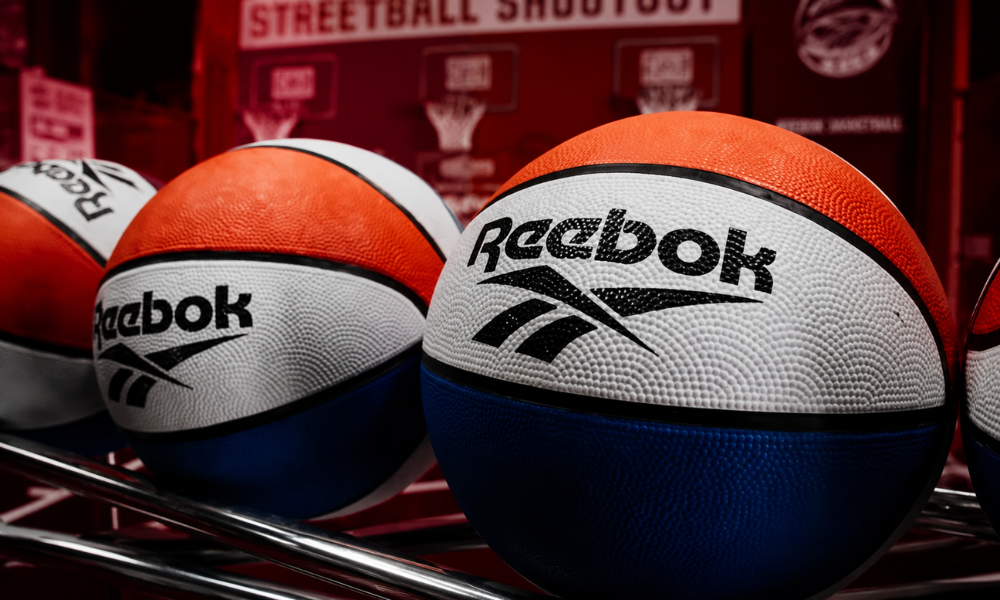
“Sport is Everything” November 2024
Reebok’s first major global campaign of the comeback era, launched November 2024. Angel Reese starred alongside a diverse roster of athletes and artists. The campaign established the brand’s tone expressive, culture-forward, not bound by convention.
“COMM. ONE” March 2026
A short film released in March 2026, narrated by musician and frequent Reebok collaborator Tobe Nwigwe. The film starred Angel Reese and DiJonai Carrington, shot with high-end cinematography that blurred the lines between sport and art. The Engine A 26 was at the center of the visual identity.
Jide Osifeso, Reebok’s Head of Basketball, described the intent: “With ‘COMM. ONE,’ we’re continuing a conversation of renaissance and a return to our rightful home, the sport of basketball. Our goal with the refreshed creative identity is to ground Reebok Basketball in a purpose centered around creativity and self-expression.”
The COMM. ONE name signals a starting point the first communiqué of a brand reestablishing its voice.
“We Rise” July 2026
The newest and most direct statement of Reebok’s basketball comeback. “We Rise” launched in July 2026, featuring the full Team RBK.B roster in a black-and-white campaign film. The aesthetic is deliberate stripped back, serious, no spectacle. It mirrors the brand’s actual position: still building, not yet arrived.
“We are still in an infancy of sorts with our return to the game but feel like we’ve found our footing,” Osifeso told Adweek on launch day. “‘We Rise’ is a message of us taking form.”
The tagline is doing double work. It speaks to the athletes rookies and rising stars still proving themselves. And it speaks to the brand a company that knows it still has something to prove.
“They still have a lot to prove,” Osifeso said of the athletes. “We’re in the exact same boat as a company.”
That kind of self-aware, honest positioning is unusual in sports marketing. It’s also strategically smart because it makes Reebok’s comeback a shared journey with its athletes rather than a manufactured narrative of inevitable triumph.
The Product: Engine A and Engine A 26
Engine A (January 2025)
The Engine A was Reebok’s declaration that the comeback had substance behind it. A performance basketball shoe, not a retro lifestyle model, built specifically for the modern game. Its launch in January 2025 ended an 18-year absence of Reebok from performance basketball footwear.
It was accompanied by Angel Reese’s “Reebok by Angel” collection debut pairing the new product direction with the brand’s most important cultural ambassador.
Engine A 26 (2026)
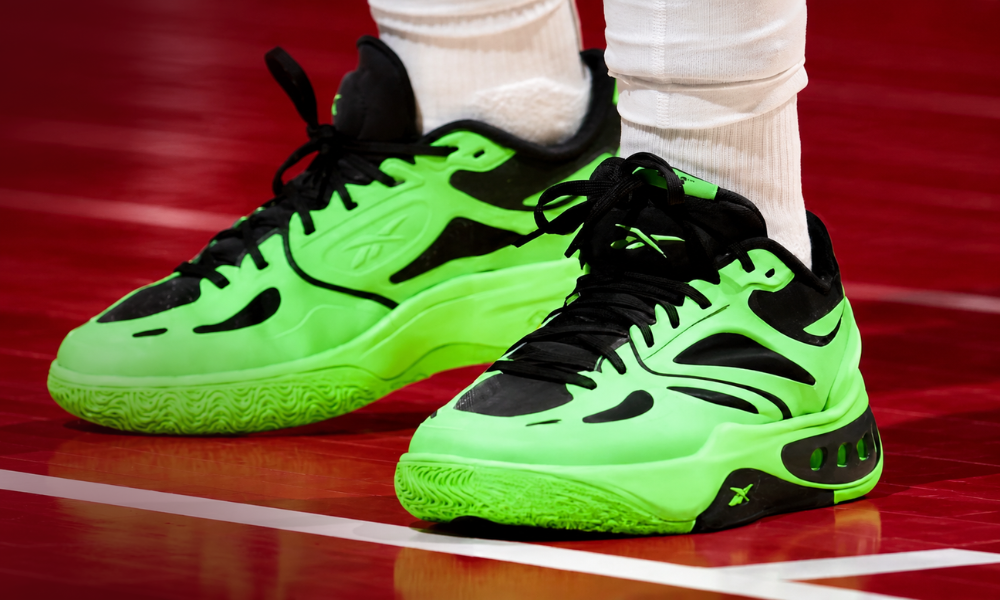
The Engine A 26 is the evolution of the original model. Key technical improvements include:
- Re-engineered upper for optimal lockdown
- Refined traction pattern for multidirectional movement
- RSTM midsole technology Reebok’s proprietary cushioning system for responsive energy return
- Superfloat foam for lightweight feel without compromising structural integrity
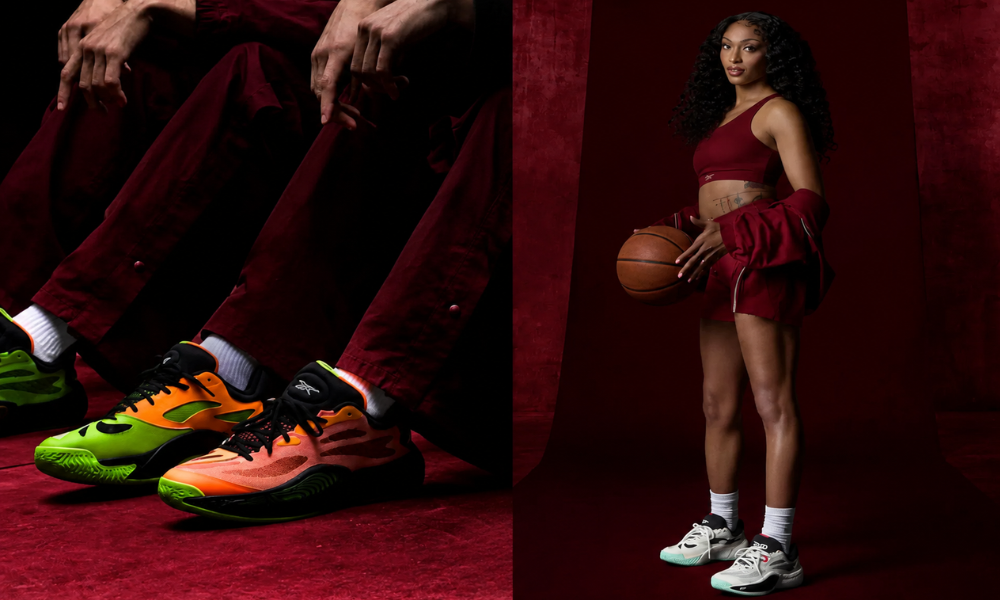
- Colorways: chalk/black/energy red (aggression), black/white/gold (confidence), tangerine/digital lime/black (bold, fashion-driven)
The technical specifications are serious. RSTM (Reebok’s responsive technology midsole) and Superfloat foam represent genuine performance engineering, not marketing language applied to a lifestyle shoe. The Engine A 26 needs to perform on court to validate the comeback — and by all accounts, it’s built to do exactly that.
Reebok’s Gen Z Marketing Strategy: What Makes It Different
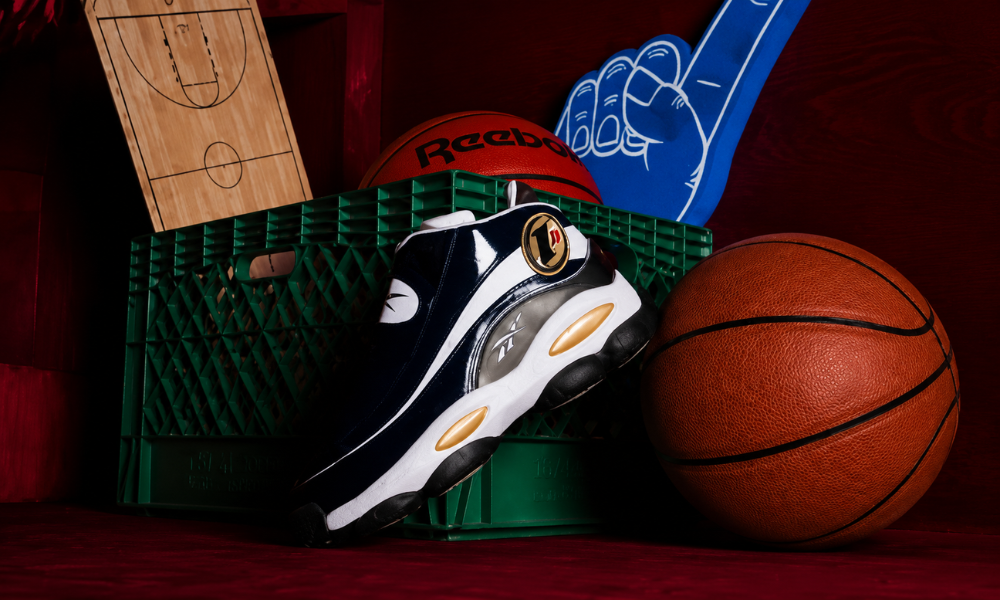
Reebok knows it can’t outspend Nike or adidas. The brand’s marketing budget is a fraction of its rivals. The strategy acknowledges this openly and builds around it.
Sign early, grow together. Darius Acuff Jr. was signed in May 2025 as a high school prospect. Matas Buzelis was signed before his NBA debut. This is the opposite of how the dominant brands operate paying premium prices for proven stars. Reebok is betting on identification and patience over spending power.
Lead with women’s basketball. The WNBA partnership and Angel Reese signing represent a deliberate choice to compete in a space the major brands underinvested in for years. Women’s basketball has exploded in cultural relevance particularly with Gen Z and Reebok got serious about it before Nike and adidas moved their full resources in. The brand backed women’s basketball in the 1990s (sponsoring Rebecca Lobo, women’s college programs, the first-ever women’s high school All-American game) and is leaning into that historical credibility now.
Authenticity over spectacle. The We Rise campaign is shot in black-and-white. There are no CGI explosions or celebrity cameos outside the sport. COMM. ONE leaned on cinematic craft rather than viral gimmick. This is a specific choice Gen Z audiences are particularly sensitive to corporate performance and respond more strongly to creative work that feels genuine rather than manufactured.
Give athletes creative ownership. The “Reebok by Angel” collection was Reese’s collection, not just her endorsement. Acuff 1 will be Acuff’s shoe. This approach mirrors what Reebok understood about Allen Iverson in the 1990s the most powerful athlete partnerships happen when the athlete’s identity drives the product, not the other way around.
The Competition: How Hard Is It Really?
Reebok’s comeback is a genuinely difficult challenge. Several structural realities of the basketball footwear market work against it.
Nike’s dominance is structural. Nike and Jordan Brand account for more than 90% of NBA sneaker sales. The pipeline of young NBA players with Nike or Jordan deals is deep, long-term, and backed by resources Reebok cannot match. NBA players compete in Nike-sponsored environments at every level AAU, college, the league itself.
Brand heat requires hype. Basketball sneaker culture in 2026 runs on social media moments, limited drops, and viral highlights. Reebok’s quiet, grassroots approach is philosophically sound but strategically slow in a market that moves at hyperspeed.
Gen Z didn’t grow up with Iverson. The Question and the Shaqnosis resonate with sneakerheads in their 30s and 40s. Gen Z consumers know those names from highlight reels and retro releases, not lived experience. Reebok needs new icons Acuff, Reese, and the next signature athlete to establish themselves before the nostalgia play has diminishing returns.
The Reebok brand ceiling is unclear. Can the brand spend at the level required to compete for the next LeBron-scale talent? Does it need to? These questions remain unanswered, and the honest answer is that the ceiling won’t be visible until Acuff reaches the NBA and Reese’s signature shoe is in the market.
What Reebok has going for it: the WNBA is growing faster than men’s basketball in cultural relevance among younger audiences. Angel Reese is a genuine star. Darius Acuff Jr. may be the next great young point guard in the NBA. The Engine A 26 is a real performance shoe. And Jide Osifeso, Shaquille O’Neal, and Allen Iverson understand basketball culture from the inside in a way that most brand executives never will.
Why This Campaign Matters Beyond Reebok
Reebok’s comeback is a case study in challenger brand strategy that every sports marketer should be watching.
The brand is operating in a market where the top two competitors have structural advantages that cannot be overcome by spending alone. Rather than pretending otherwise, Reebok has built a strategy that turns its constraints into creative decisions.
Signing athletes early instead of at peak price. Leading with women’s basketball before it became the obvious play. Centering campaigns on authenticity rather than spectacle. Building a product platform Engine A that can anchor a genuine performance narrative.
None of this is guaranteed to work. The road ahead is steep. But the clarity of the approach, the quality of the talent on roster, and the self-awareness of the messaging “We’re in the exact same boat as a company” suggest that Reebok’s basketball comeback is being built with more strategic honesty than most brand revivals manage.
FAQs
Why is Reebok making a basketball comeback?
After nearly 20 years of absence from performance basketball following the adidas acquisition in 2006, Reebok under new ownership (Authentic Brands Group) publicly committed to reclaiming its basketball identity in 2021. The combination of a growing WNBA market, nostalgia for its 90s/2000s heritage, and a new leadership structure under Shaq and Iverson created the conditions for a structured return.
What is the Reebok We Rise campaign?
We Rise is Reebok’s July 2026 basketball campaign featuring Team RBK.B the brand’s roster of rising athletes in a black-and-white film. It signals the brand’s self-aware, honest positioning as a challenger brand still building credibility in basketball. It followed the March 2026 COMM. ONE campaign film.
What is the Reebok Engine A?
The Engine A, launched January 2025, is Reebok’s first performance basketball shoe in over a decade. The Engine A 26, released in 2026, is its evolved version featuring RSTM midsole technology, Superfloat foam cushioning, and a refined traction pattern for multidirectional movement.
Who are Reebok’s basketball ambassadors in 2026?
The core Team RBK.B roster includes Angel Reese (WNBA, Chicago Sky), DiJonai Carrington, Lexie Brown, Darius Acuff Jr. (incoming NBA), Matas Buzelis, Dink Pate, and Nate Ament. Shaquille O’Neal serves as President and Allen Iverson as Vice President of Reebok Basketball.
Who is Jide Osifeso?
Jide Osifeso is Reebok’s Head of Basketball, the executive leading the brand’s return to performance basketball. He has been the primary strategic and creative voice behind the Engine A launch, athlete signings, COMM. ONE film, and We Rise campaign.
Will Reebok’s basketball comeback succeed?
Honest answer: uncertain. Reebok has the right strategy for a challenger brand early athlete bets, WNBA investment, authentic creative work, and a genuine performance shoe. But the basketball footwear market is heavily dominated by Nike and Jordan Brand, and competing for the next generation of top NBA talent will require spending levels that aren’t yet confirmed. The Darius Acuff Jr. bet and Angel Reese’s signature shoe are the two highest-stakes moments ahead.
What happened to Reebok basketball historically?
Reebok dominated basketball culture in the 1990s and early 2000s through Shaquille O’Neal (Shaq Attaq, Shaqnosis) and Allen Iverson (The Question, The Answer). After adidas acquired Reebok in 2006, the basketball division went silent. For nearly two decades, Reebok’s basketball legacy existed only in retro releases and cultural memory.