


A simple question typed into a chatbot now influences buying decisions more than many businesses expected. Instead of opening multiple tabs and comparing endless reviews, customers increasingly ask AI tools for direct recommendations. A should-I-buy-this-now thought can be answered within a matter of seconds. The response feels conversational, easier to trust and much faster to process.
This shift has changed the way people approach online research. How so? Customers no longer want to spend large amounts of time sorting through information manually, they want quick comparisons, summarized reviews and personalized suggestions that match their needs. AI tools are meeting those expectations by delivering answers in a way that feels more human and less overwhelming.
Traditional search engines still play an important role, though customer behavior is changing rapidly. Many users now prefer direct responses instead of scrolling through pages filled with links. Businesses are being pushed to rethink how they present information online because visibility alone no longer guarantees attention.
Customers Want Faster Answers
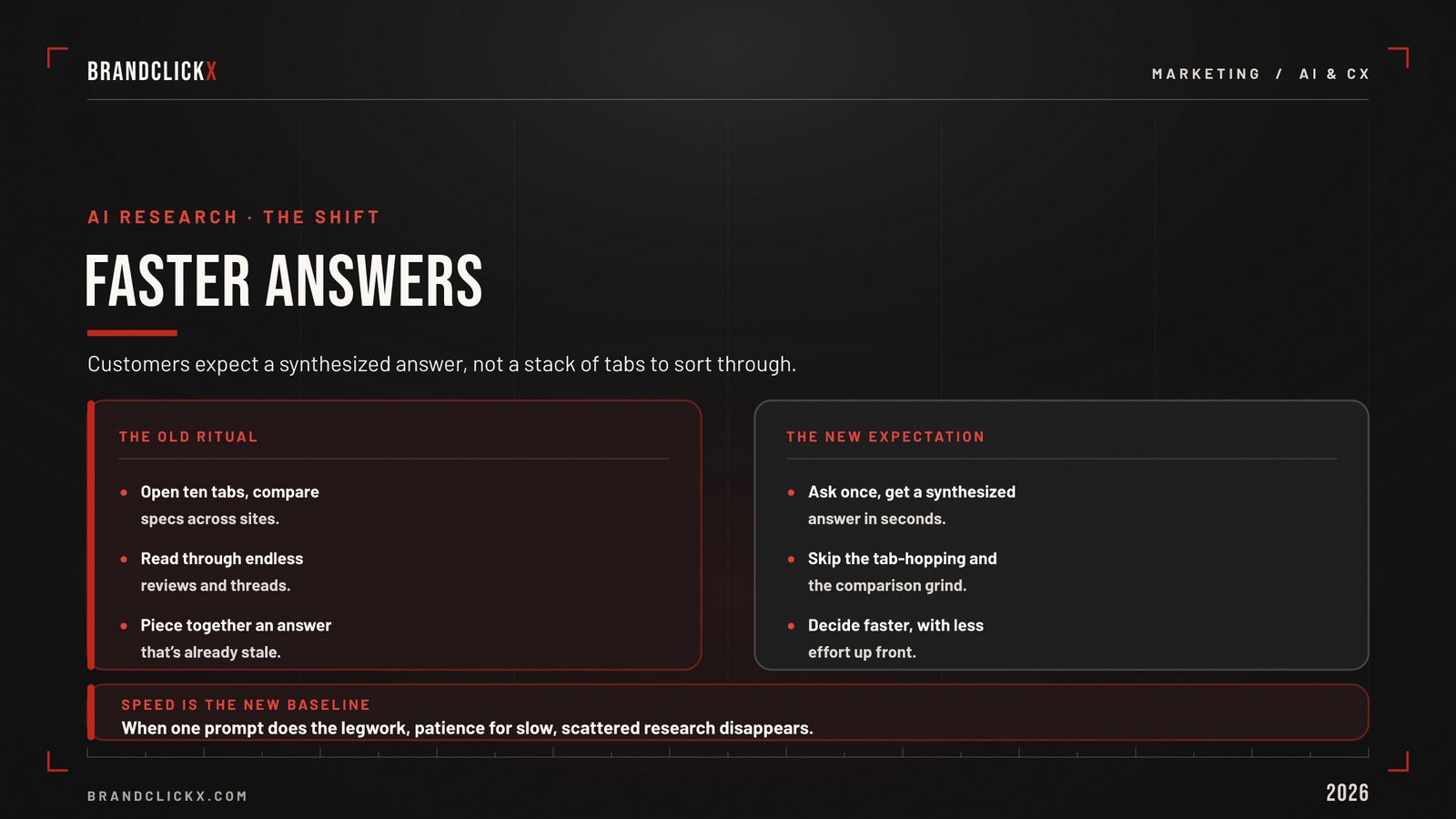
Online research once required patience. Customers compared products manually, opened review pages and spent time reading articles before making a decision. AI tools have shortened that process dramatically because information can now be summarized almost instantly. Why spend thirty minutes researching when direct recommendations can appear in seconds?
Because of this shift, many businesses are changing their content strategies to improve AI search visibility and remain present inside AI-generated answers. Visibility now depends on how clearly information can be understood and presented by AI systems instead of relying only on traditional search rankings.
Customer expectations have also changed. People now ask detailed questions instead of searching broad keywords. They expect conversational answers that feel personalized and relevant to their situation. AI assistants are increasingly being used to compare products, explain features and narrow down options before purchases happen.
For example, someone researching fitness equipment may ask an AI tool which treadmill works best for small apartments and limited budgets. Instead of visiting multiple websites, the customer receives a summarized answer immediately. If a brand does not appear in that response, it may lose attention before its website is even visited.
Research Feels More Like A Conversation
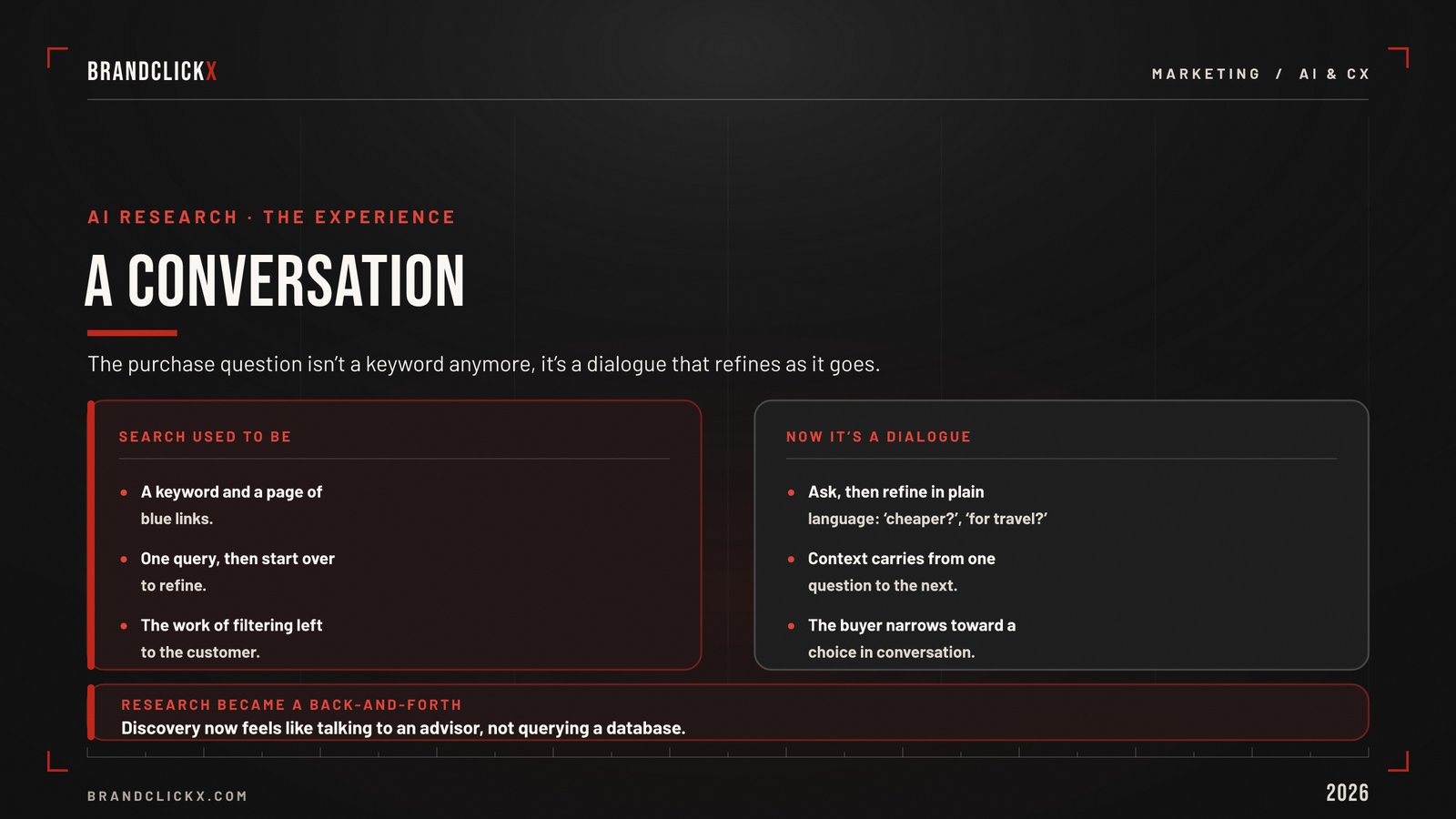
Customer search habits have changed because AI interactions feel more natural than traditional search methods. People no longer rely only on short keyword phrases, they ask detailed questions in a conversational tone and AI tools respond with organized summaries.
This shift matters because AI systems process information differently from search engines. Content that answers customer questions often performs better. Pages filled with repetitive keywords do not work the same way anymore. Businesses that communicate naturally may gain stronger visibility because AI tools prioritize clarity and relevance.
Several buying habits are changing because of AI-assisted research:
- Customers compare products through chatbot-style conversations
- Reviews are summarized instead of read one by one
- Research sessions become shorter and more focused
- Follow-up questions are asked before purchases happen
- Recommendations feel more personalized to buyers
- Decision-making becomes less mentally exhausting
These habits are influencing how businesses create online content. Clear explanations matter more because customers expect direct answers instead of vague promotional language. Confusing information may be ignored if AI systems struggle to process it properly.
Imagine someone researching meal-delivery services for a busy schedule. Instead of reading multiple comparison blogs manually, the customer may ask an AI assistant for affordable options with flexible plans. A process that once required several steps becomes condensed into one conversation.
Businesses are also being encouraged to organize information more carefully, because AI tools favor content that can be summarized quickly and accurately.
Businesses Are Rethinking The Buying Journey
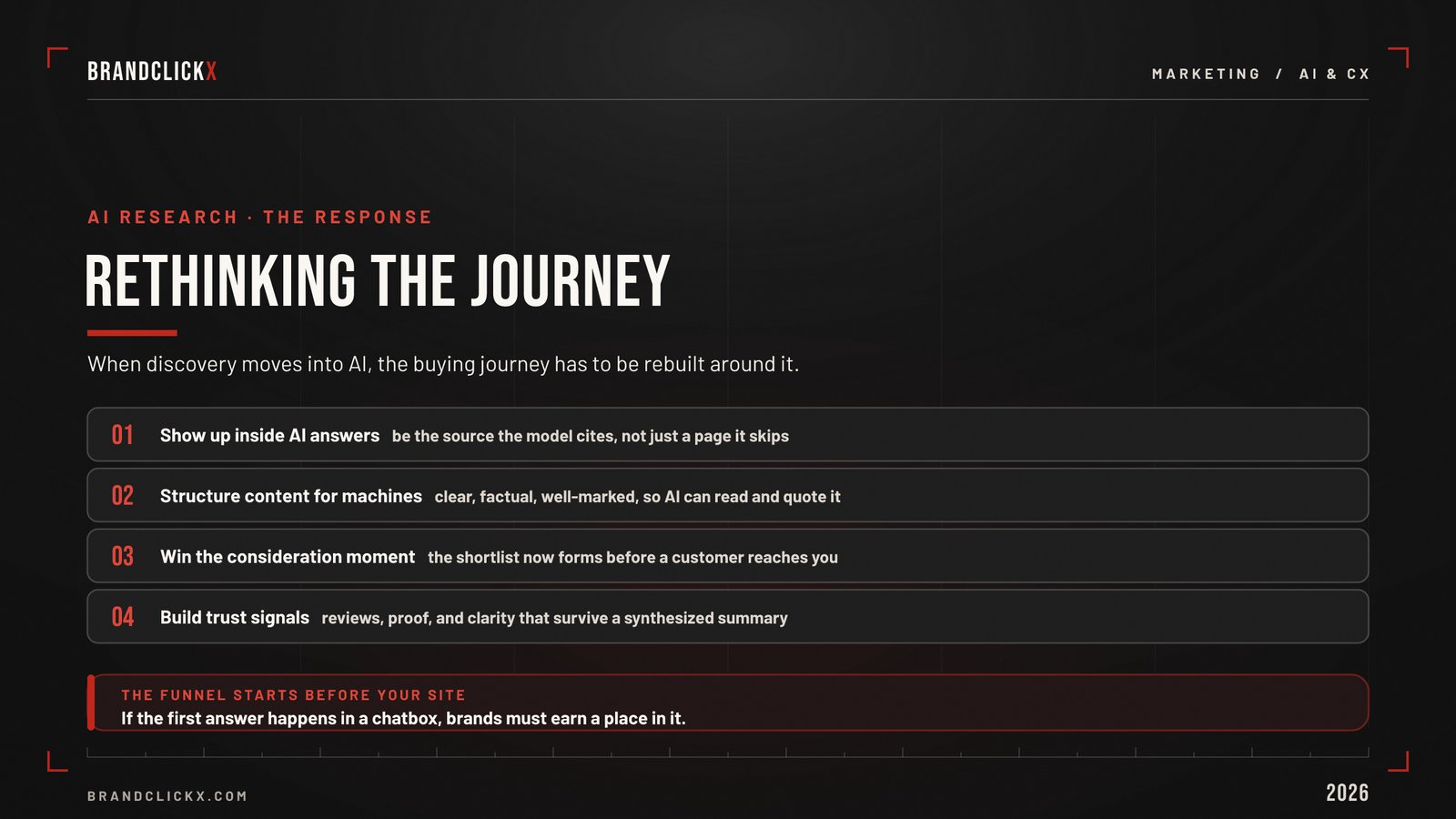
AI-driven research has changed more than search habits, it has influenced the entire buying process from the first moment of curiosity to the final purchase decision. Businesses are now paying closer attention to how customers discover information before websites are even opened.
This shift affects content creation, technical optimization and digital reputation management. Companies can no longer focus only on attracting website traffic because many customers now make decisions earlier in the research process. Quick growth in your business may become harder if competitors dominate AI-generated recommendations instead.
Customer journeys are becoming shorter because AI tools reduce the number of steps involved in research. People often move from interest to purchase much faster when information feels immediate and organized.
Would customers continue opening multiple websites if AI platforms already summarized the information effectively? In many cases, probably not. Businesses now compete inside a much smaller window of customer attention where clarity matters more than volume.
AI is not simply changing how people search online, it is changing how customers compare products, build trust and decide which brands deserve attention. Businesses that adapt to these changing habits are more likely to remain visible while customer behavior continues moving toward faster and more conversational research experiences.