A deep dive into smartphones, wearables, and smart home integration to help you pick a side.
Quick Summary:
Picking between apple vs samsung in 2026 isn’t really a phone decision. It’s a “which world do I want to live in” decision. Apple’s whole thing is calm. Your gear just works together, your data mostly stays yours, and the phone you bought sells for decent money two years later. Samsung’s thing is more. More megapixels, faster charging, a screen you can read in direct sun, and a smart home that doesn’t slam the door on outside brands. What breaks the tie? Usually whatever you already own. A MacBook on your desk means you’re basically Apple already. A Samsung TV and a fridge that runs apps mean Samsung pays off. And the two are basically tied out there in the real world. Samsung beat Apple for the global lead last quarter by a sliver, 0.6% of market share, says IDC.
Apple vs Samsung: The Short Answer First
Let me skip the suspense. Hardly anyone asking about apple vs samsung is shopping for one phone. They’re picking a team. And they’re sticking with it for the next five, six years, whether they mean to or not.
That’s the trap. A phone you can swap on a whim. An ecosystem digs in and won’t let go. By the time you own the watch, the buds, the tablet, and a drawer crammed with the right cables, walking away feels less like an upgrade and more like moving to a different city.
So, the gist:
- Go Apple if you want simple, private, and gear that quietly sorts itself out while you do nothing.
- Go Samsung if you want stronger specs, fast charging, more screen, and a smart home that welcomes almost any brand.
Both are having a great year, by the way. The market backs that up. Global shipments slid 4.1% to 289.7 million units in the first quarter of 2026, the first drop since 2023.
And yet Samsung and Apple were the only two of the top five brands to actually grow. So forget who’s “winning.” The pick comes down to what’s already in your life and how much setup you can put up with.
Apple vs Samsung Comparison Chart (2026 Flagship Lineup)
Quick reference before we get into it. Here’s the apple vs samsung comparison chart across all four corners of each ecosystem.
| Category | Apple (2026) | Samsung (2026) |
|---|---|---|
| Flagship phone | iPhone 17 / 17 Pro / 17 Pro Max | Galaxy S26 / S26+ / S26 Ultra |
| Chip | A19 | Snapdragon 8 Elite (US) / Exynos 2600 (global) |
| Top main camera | 48MP Fusion | 200MP (S26 Ultra) |
| Stylus support | No | Yes (S Pen, Ultra only) |
| Top phone storage | Up to 2TB | Up to 1TB |
| Smartwatch | Apple Watch Series 11 ($399) | Galaxy Watch 8 (from $299) |
| Earbuds | AirPods Pro 3 ($249) | Galaxy Buds 4 Pro (~$249) |
| Smart home app | Apple Home (HomeKit) | SmartThings |
| Voice assistant | Siri | Galaxy AI + Gemini |
| Phone OS | iOS | Android (One UI) |
| Cross-device handoff | Best in class | Good, more open |
A chart only takes you so far. What matters is how this stuff behaves once it’s all talking to each other, every single day.
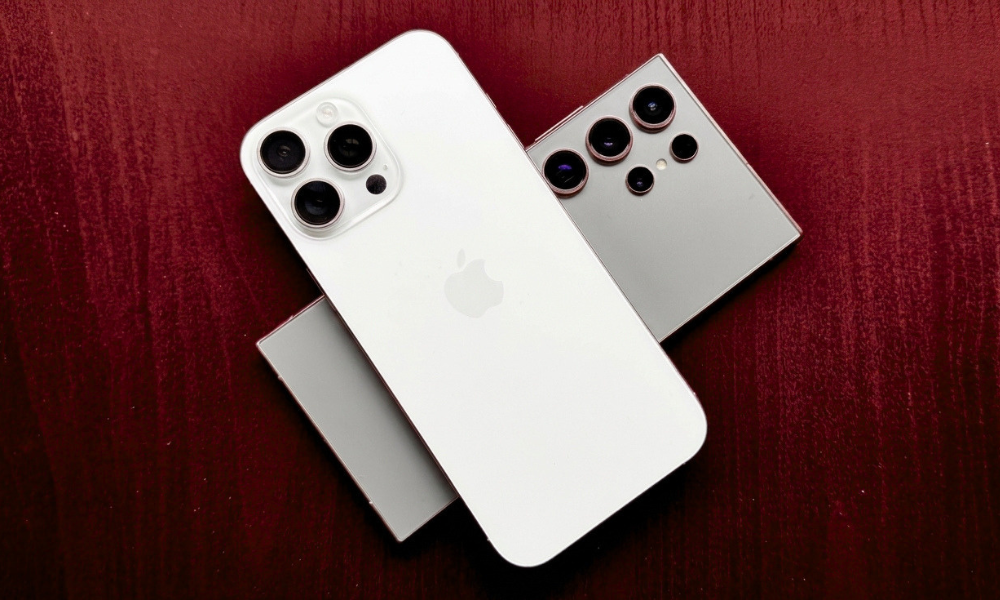
iPhone vs Samsung: The Phones That Anchor Everything
Your phone is the front door to the house. So the iphone vs samsung call carries more weight than anything else on this page.
And look how close the race got. In Q1 2026, IDC put Samsung back on top with a 2.9% year-over-year bump, almost all of it down to people wanting the Galaxy S26 Ultra.
Apple landed second on the iPhone 17 line, which grew sales 4.4% worldwide and over 30% in China alone. Real buyers split right down the middle. You’re allowed to, as well.
What Apple brings in 2026
Apple got generous this year. It quit hoarding the good stuff for Pro buyers. The plain iPhone 17 finally has the 120Hz ProMotion screen, that buttery scroll you used to pay a premium for. Storage starts at 256GB now, so you’re not coughing up extra just to keep your photos.
The A19 chip stays quick. Video? Still nobody beats it, which is half the reason your favorite creators shoot on iPhone. Then there’s resale, Apple’s quiet little superpower. A two-year-old iPhone holds its price like almost no Android phone can.
The downsides don’t vanish, though. Less to customize. No stylus. A camera leaning on smart software more than raw megapixels.
What Samsung brings in 2026
Samsung swung hard at Galaxy Unpacked back in February 2026. The S26 family comes in three flavors: S26, S26+, and the one everyone keeps bringing up, the S26 Ultra.
The Ultra’s a beast. Flat out. That 200MP main sensor grabs detail the iPhone can’t match on paper, and the zoom keeps going long after Apple taps out. The S Pen still slides into the body for notes and doodles.
And new this year, a privacy display tightens the viewing angle so the guy crammed next to you on the train gets a dim smudge instead of your texts.
Charging’s another easy Samsung win. Galaxy phones fill up faster and pack bigger batteries. The Ultra opens at $1,299, which TechRadar calls a touch pricier than Apple’s flagship in the US, level once you cross a border. One catch worth flagging: the Ultra maxes out at 1TB, while the iPhone 17 Pro Max climbs to 2TB if you actually need that much.
Phone face-off table
| Spec | iPhone 17 Pro Max | Galaxy S26 Ultra |
|---|---|---|
| Display | 6.9″ Super Retina XDR, 120Hz | 6.9″ Dynamic AMOLED 2X, 1–120Hz |
| Main camera | 48MP Fusion | 200MP |
| Zoom | Strong optical | Stronger, longer reach |
| Stylus | None | Built-in S Pen |
| Max storage | 2TB | 1TB |
| Charging | Fast (50% in ~20 min) | Faster, larger battery |
| Starting price | ~$1,199 | $1,299 |
| Best for | Video, resale, simplicity | Photos, zoom, customization |
Where’s it all land? Samsung takes the spec sheet, no argument. Apple takes the everyday feel and the money you get back at resale. Want a phone that ages well? iPhone. Want the most powerful hunk of glass you can hold? Galaxy.
Samsung vs Apple Wearables: The Watch on Your Wrist
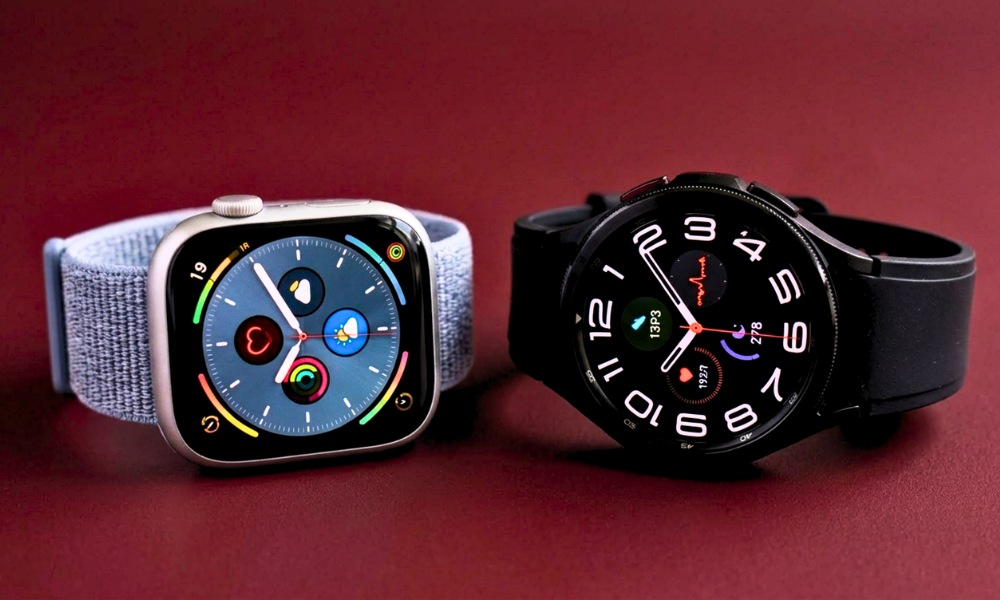
Wearables are where the samsung vs apple split turns into a wall you can’t climb. These watches refuse to cross the fence, and that one fact decides nearly everything.
The compatibility wall
Read this twice. People miss it all the time. The Apple Watch Series 11 needs an iPhone. That’s the end of the sentence. Try it with an Android phone and it won’t even get through setup.
Other way round, the Galaxy Watch 8 wants Android, and it really comes alive next to a Samsung Galaxy. So before you fall for either one, glance at the phone in your hand. That choice already got made for you, probably a while back.
How they stack up
The Series 11 is the thinnest watch Apple’s ever shipped. It’s got 5G built in, a sapphire crystal face on the titanium version, and it reads your heart rate and blood oxygen a touch more precisely. Feels fast, too. Costs $399 to get in.
The Galaxy Watch 8 starts cheaper, $299, and earns it. The screen blasts up to 3,000 nits, which your eyes will appreciate out in the August glare.
It handles sleep apnea and skin temperature nicely, and now it leans on Gemini for voice plus a built-in Running Coach. Only real gripe: aluminum and nothing fancier. No titanium option here.
| Feature | Apple Watch Series 11 | Galaxy Watch 8 |
|---|---|---|
| Starting price | $399 | $299 |
| Sizes | 42mm / 46mm | 40mm / 44mm |
| Shape | Square | Round-ish “squircle” |
| Peak brightness | High | Higher (3,000 nits) |
| Heart rate / SpO2 | Slightly more accurate | Very good |
| Sleep apnea / temp | Good | Slightly better |
| Phone needed | iPhone only | Android (best with Galaxy) |
No clever trick gets you around the wall, so match the watch to the phone and move on with your day. iPhone people, grab the Series 11. Galaxy people, you get more watch for a hundred bucks less. That’s it.
Apple vs Samsung Earbuds: Closer Than You’d Guess
Earbuds are the loosest corner of the apple vs samsung story. Both pairs feed audio to any phone over Bluetooth. The clever stuff only switches on once you’re back on home turf.
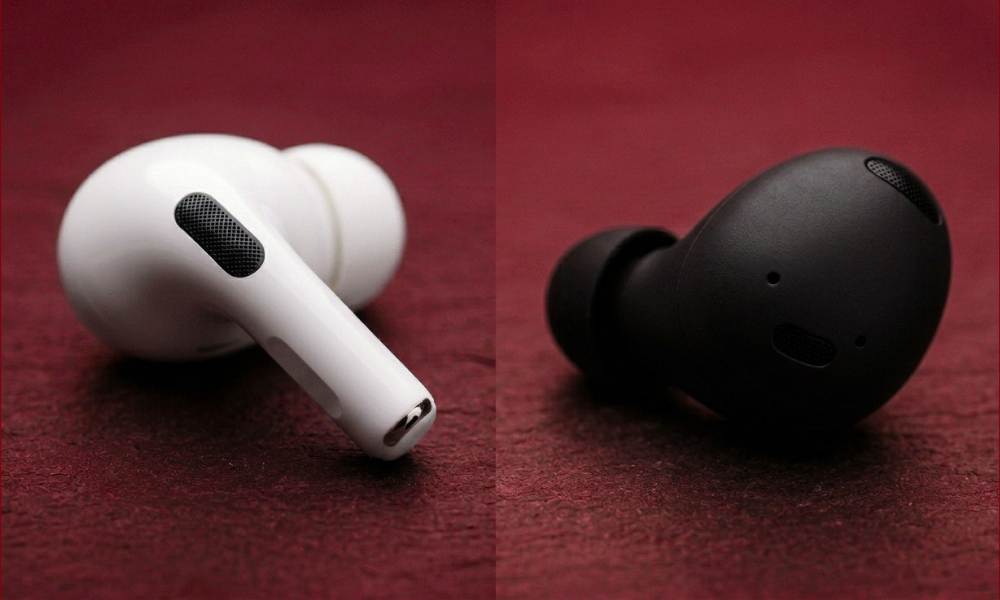
AirPods Pro 3
In Apple land these things rule. Noise canceling runs on the H2 chip and kills more racket. Battery’s good for about 8 hours with ANC on, roughly 30 once the case chips in. The trick everybody raves about is the switching. Wander from MacBook to iPad to iPhone and the audio just tags along behind you. No taps. No menus. People say telepathic. They’re not really exaggerating.
Galaxy Buds 4 Pro
Samsung’s top buds keep right up. Your voice comes through cleaner on calls, the fit sits lighter for a lot of people, and live translation covers a solid stack of languages. Pop them next to a Galaxy phone and the seamless audio tricks and Galaxy AI features all wake up.
| Feature | AirPods Pro 3 | Galaxy Buds 4 Pro |
|---|---|---|
| Price | $249 | ~$249 |
| Noise canceling | Stronger | Good |
| Call mic quality | Good | Slightly better |
| Battery (ANC on) | ~8 hours | ~6–7 hours |
| Auto device switching | Best in class (Apple gear) | Smooth (Galaxy gear) |
| Live translation | Yes | Yes |
Truth be told, the sound is close enough that most ears won’t pick a clear champ. What tips it? The phone in your pocket, same as ever. Buds reward you for staying put.
Smart Home Showdown: Apple Home vs SmartThings
Here the gap finally cracks wide open, and Samsung walks off with it for most folks. The smart home is where samsung vs apple stops being a toss-up.
Apple Home (HomeKit): the safe, private bet
Apple Home sits behind a fence. Every gadget has to clear Apple’s strict certification, which keeps things tight and private but shrinks your shopping list to almost nothing.
A HomePod or Apple TV plays the hub, and your automations mostly fire right there on the device, not off in some server farm a thousand miles away.
If privacy is the thing you care about most, this is the cleaner story, easily. HomeKit Secure Video, which crunches camera footage locally, is still the gold standard for keeping your feeds out of the cloud.
SmartThings: the flexible powerhouse
Samsung built SmartThings to talk to basically anything with a chip in it. Zigbee, Z-Wave, Wi-Fi, Thread, Bluetooth, and the freshest version of Matter, 1.4, which is a step ahead of whatever Apple, Google, and Amazon are running right now.
Here’s the part that gets me. Your Samsung gear doubles as the hub. A Samsung TV, a SmartThings Station, even the fridge can run the whole thing, so odds are you already own the brain of your setup without realizing it.
The app handles bulbs, locks, plugs, cameras, from Philips Hue to TP-Link to Ecobee, all in one place.
| Feature | Apple Home (HomeKit) | Samsung SmartThings |
|---|---|---|
| Approach | Walled garden | Open platform |
| Protocols | Matter, Thread (limited) | Zigbee, Z-Wave, Wi-Fi, Thread, Matter 1.4 |
| Hub | HomePod / Apple TV | SmartThings Station, Samsung TVs, fridges |
| Device choice | Narrower | Very wide |
| Privacy | Excellent (local processing) | Good (cloud-based) |
| Best for | Apple loyalists who value privacy | Mixed-brand homes, Samsung owners |
Not a close fight. SmartThings does more, takes more, and charges you less for the privilege. Apple Home only gets the nod when privacy beats flexibility for you, and only if you’re already buried deep in Apple’s world.
The Real Cost Nobody Talks About: Switching
This is the bit that really settles the apple vs samsung phones question, way more than any camera number.
Apple’s sharpest weapon was never one shiny feature. It’s how the whole kit just clicks. Start a text on the Mac, finish it on the phone. Copy here, paste over there on the iPad. AirDrop a photo in about two seconds. Take a call straight from your laptop. You didn’t set any of it up. It just happens.
Samsung fires back with Quick Share, DeX (which turns the phone into a desktop), and tight hooks into Windows PCs and Google’s stuff.
Genuinely good, and more open, since it reaches out to gear that isn’t Samsung. Even so, Apple’s handoff feels a notch smoother for anyone living all the way inside the garden.
Which is exactly the point. The real cost of jumping ship was never one phone’s price tag. It’s the buds, the watch, the cable drawer, and all the muscle memory you’d have to build from zero again. Add that up before you leap.
Total Price Picture: What a Full Ecosystem Costs
Buying into either side stacks up quick, and 2026 isn’t doing anyone favors. A global memory shortage has shoved component costs up everywhere, with prices jumping as much as 40 to 50 percent in some emerging markets. Here’s the rough damage for a phone, watch, and earbuds at flagship level.
| Bundle | Apple | Samsung |
|---|---|---|
| Flagship phone | ~$1,199 | ~$1,299 |
| Smartwatch | $399 | from $299 |
| Earbuds | $249 | ~$249 |
| Rough total | ~$1,847 | ~$1,847 |
At the very top, the totals basically shake hands. But Samsung leaves you more room to save, since its mid-range phones undercut Apple harder and you can mix in cheaper pieces. Apple claws some of that back later with resale prices that just won’t crater.
So, Which Ecosystem Should You Choose?
Let’s cut to it. Run yourself down the lists.
Lean Apple if you:
- Already own a MacBook, iPad, or Apple Watch
- Want gear that syncs with zero fiddling
- Take privacy and data control seriously
- Shoot a lot of video
- Plan to resell or trade in down the road
- Prefer fewer choices and less setup
Lean Samsung if you:
- Carry an Android phone or run a Windows PC
- Crave top-tier specs, big zoom, and a bright screen
- Like to customize and tinker
- Own Samsung appliances or a Samsung TV
- Want a smart home that takes any brand of device
- Hope to spend a little less for similar muscle
Neither answer is wrong. The smart play is picking the side that matches what’s already in your life, then filling in the gaps to match. Fighting your own devices costs you a little patience every single day, and that quietly piles up.
Frequently Asked Questions
Is Apple or Samsung better in 2026?
Wish I could hand you a clean winner. There just isn’t one. Samsung brings the loud hardware: bigger cameras, faster charging, lower prices. Apple brings the quiet wins: smoother syncing, real privacy, a phone that’s still worth something at trade-in. Even the sales said the same, with Samsung edging Apple by 0.6% of global share last quarter.
Can I use an Apple Watch with a Samsung phone?
No, and people find that out the hard way. The Apple Watch only ever pairs with an iPhone. On a Galaxy? The Galaxy Watch 8 is the one for you.
Do AirPods work with Samsung phones?
They’ll play your music over Bluetooth, sure. What you give up is the good part, the instant device switching and the tap-and-go setup. If you’re on a Galaxy, Galaxy Buds hand you the whole experience with none of the gaps.
Which smart home system is more flexible, Apple or Samsung?
Not close, honestly. Smart Things supports way more device types and runs the latest Matter standard, and a Samsung TV or fridge can quietly act as your hub. Apple Home keeps a shorter guest list, but it guards your privacy better.
Is it worth switching from Apple to Samsung?
Depends how deep you’re in already. Swapping a phone is painless. Swapping the watch, the buds, and every habit you’ve stacked around them is the expensive part nobody warns you about. Count what you own first, then call it.
The Final Word
The apple vs samsung fight in 2026 was never really about which phone takes a sharper photo or glows a bit brighter. It’s about which world you’d rather wake up in.
Apple sells calm. Everything lines up, everything syncs, and you barely clock it happening. Samsung sells freedom. More specs, more options, more brands let through the door, usually for fewer dollars.
So look at what’s already in your pockets, on your wrist, sitting on the shelf. Then pick the side that lets all of it move as one. That single call will serve you longer than any line on a spec sheet ever could. To read more enjoyable and informative pieces, stay tuned with BrandClickX.