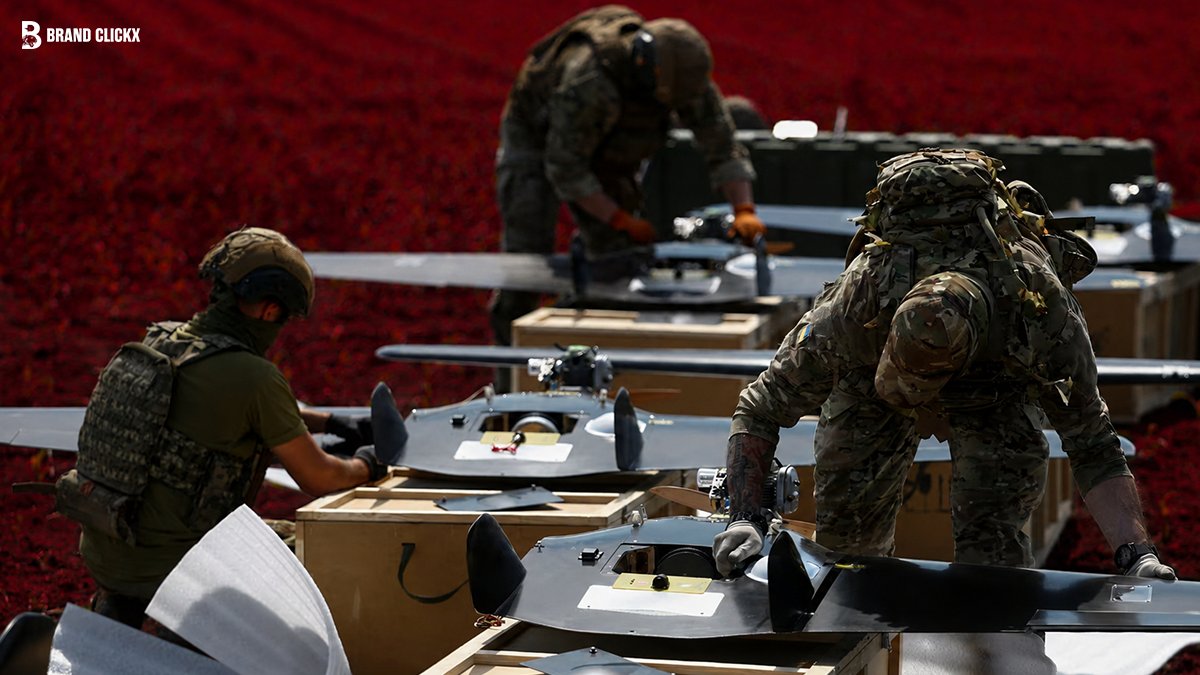
Ukraine just struck a refinery in Siberia. The facility sits nearly 2,500 kilometers from Ukrainian territory. It’s the deepest attack Ukraine has launched since the full-scale invasion began in February 2022. And it’s only the latest signal that the war in Ukraine has permanently changed how military power works.
This is a real-time look at what’s happening: the technology driving Ukraine’s drone campaign, what it’s doing to Russia, and why NATO just committed $40 billion to respond to what it’s learned.
AI Overview
Ukraine’s drone and missile campaign has entered a new phase in July 2026. On July 6, Ukrainian long-range drones struck the Omsk oil refinery in western Siberia Russia’s largest refinery for the first time, flying approximately 3,000 kilometers to reach the target. The attack completed a sweep of every one of Russia’s 11 largest gasoline-producing refineries, all of which have now been hit at least once. Ukrainian drones struck Russian oil refineries at least 194 times in the first half of 2026 alone, according to a Financial Times analysis.
The campaign has reshaped NATO’s defense investment priorities. At the NATO summit in Ankara on July 7–8, 2026, alliance members announced the NATO Drone Edge initiative a commitment to invest more than $40 billion in counter-drone capabilities over five years and train five times as many drone operators by the end of 2027.
Ukraine is simultaneously becoming a drone technology exporter. Kyiv plans to sign drone defense agreements with at least seven NATO countries by the end of 2026, selling not hardware but expertise four years of frontline experience in shooting down attack drones at scale that no other country in the world possesses.
Key Takeaways
| # | Development | Detail |
| 1 | Omsk refinery struck July 6 | Russia’s largest refinery hit for the first time, ~3,000 km from Ukraine |
| 2 | 194 refinery strikes in H1 2026 | Financial Times analysis of Ukrainian drone attacks on Russian oil infrastructure |
| 3 | FP-1 Extended Range drone | New Ukrainian drone with 3,400 km range, cost ~$50,000 per unit |
| 4 | FP-5 Flamingo cruise missile | Domestic missile with ~3,000 km range, 1,150 kg warhead, $500K–$1M per unit |
| 5 | NATO $40B Drone Edge initiative | Announced Ankara summit, July 7, 2026 counter-drone capabilities over 5 years |
| 6 | 5x drone operator training target | NATO aims to train five times more operators by end of 2027 |
| 7 | 7 NATO drone deals by end-2026 | Ukraine exporting counter-drone expertise to NATO members |
| 8 | 400+ drones toward Moscow | Ukraine launched mass drone strike ahead of Ankara NATO summit |
| 9 | Russia fuel shortages nationwide | Refinery campaign causing gasoline rationing across all 11 Russian time zones |
| 10 | Zelenskyy: “Siberia within reach” | Statement after Omsk strike declaring expansion of long-range capability |
The Omsk Strike: What Changed on July 6, 2026
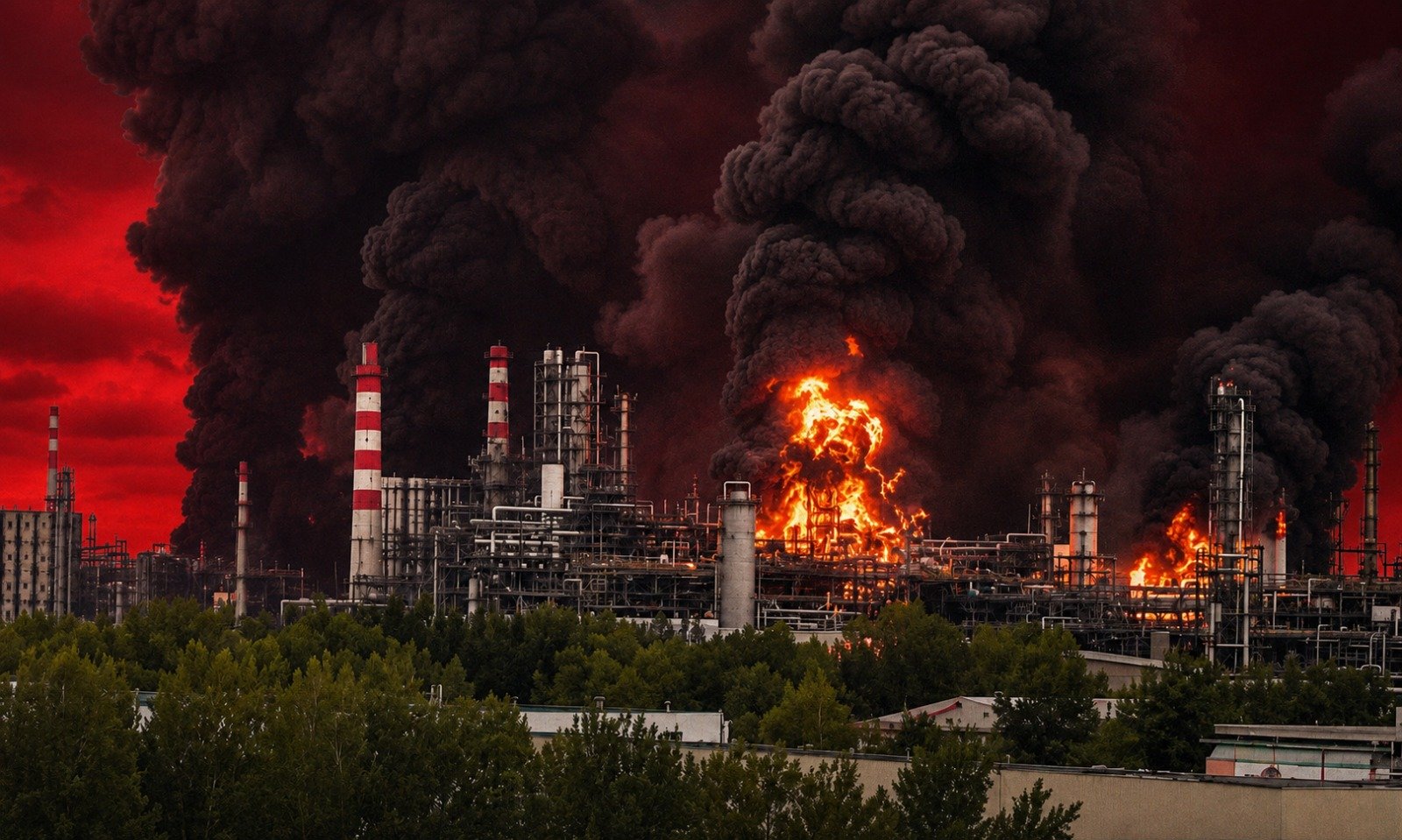
On July 6, around seven Ukrainian drones flew more than 2,500 kilometers to strike the Omsk oil refinery in western Siberia. The facility processes more than 22 million tonnes of crude oil annually roughly 10% of Russia’s total refining capacity.
The drones hit the ELOU-AVT-11 crude oil processing unit, which has a design capacity of 8.4 million tonnes per year. Fires broke out across the complex. The next day, the Omsk facility suspended sales on the Saint Petersburg International Mercantile Exchange.
This was Ukraine’s deepest drone strike since the full-scale invasion began. Before July 6, Omsk had been one of only two facilities among Russia’s ten largest refineries never successfully targeted by Ukrainian drones. The other is the Angarsk Petrochemical Company in Russia’s Irkutsk region.
Ukrainian President Volodymyr Zelenskyy declared that the strike proved Siberia was now “within reach.” He was not exaggerating. The drones used in the attack were the newly upgraded Fire Point FP-1 Extended Range a variant with modified wings and extra fuel tanks that extends range to an estimated 2,700 to 3,400 kilometers, according to designer Denys Shtilierman.
Fire Point claims to produce 300 FP-1 and similar FP-2 drones every day. At an estimated $50,000 per unit, these are not precision weapons comparable to Western cruise missiles. They are cheap, numerous, and increasingly reaching targets that were considered unreachable just six months ago.
Ukraine’s Drone Arsenal in 2026
The FP-1 Extended Range
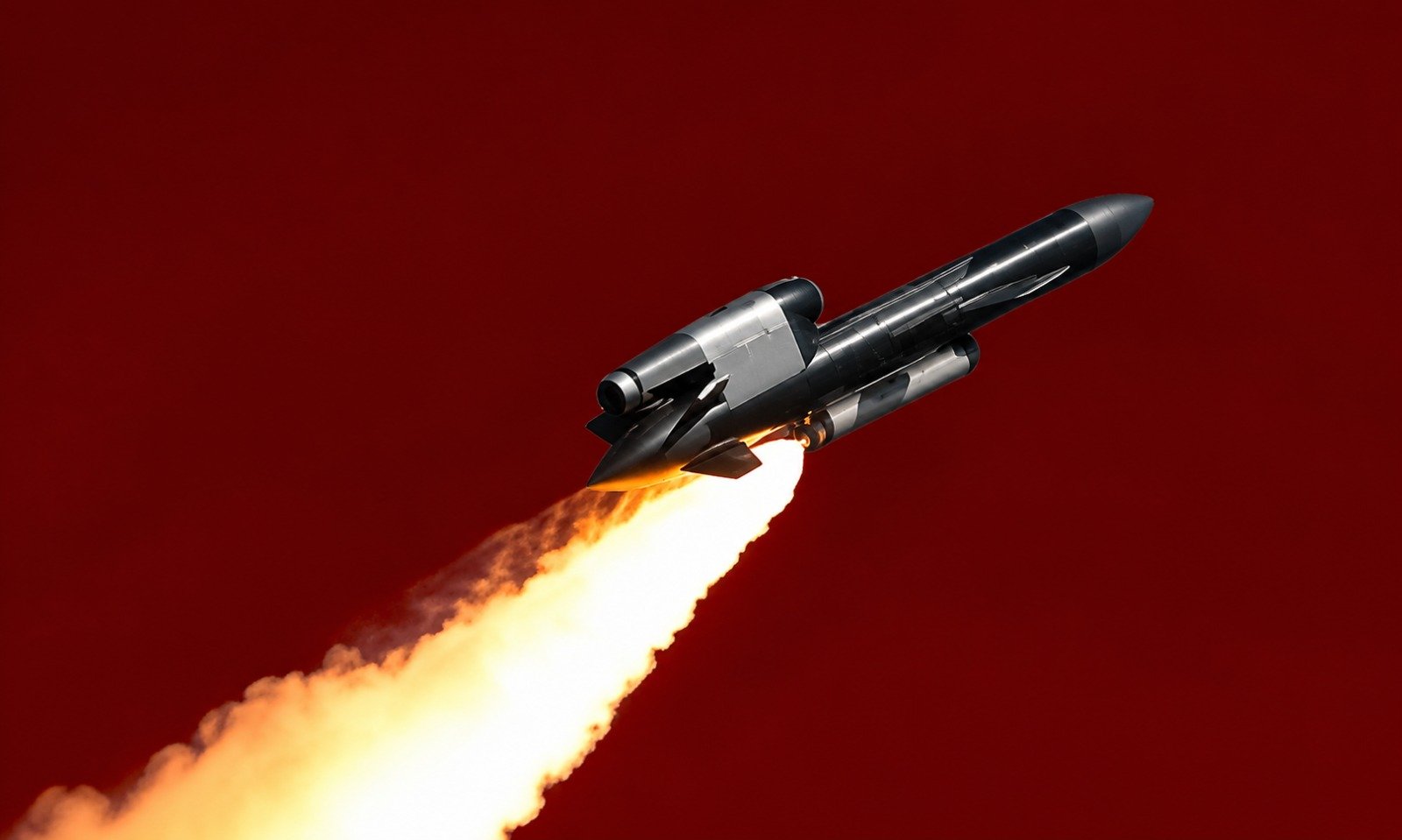
The FP-1 Extended Range is the workhorse of Ukraine’s deep-strike campaign. The modified wings visible in post-attack imagery hold additional fuel tanks, enabling the range extension from the original model’s approximately 1,000 kilometers to the new 2,700–3,400 kilometer figure.
Its unit cost of approximately $50,000 makes it affordable at scale. Ukraine can field multiple FP-1(ER) drones for the cost of a single FP-5 Flamingo cruise missile. Fire Point’s production rate of 300 units per day means Ukraine can sustain high-tempo strikes without depleting its stockpile in the way that conventional missile campaigns would.
The drones use improved inertial navigation, software updates, and machine vision to maintain accuracy when satellite navigation is jammed a critical upgrade given Russia’s extensive electronic warfare capabilities.
The FP-5 Flamingo Cruise Missile
The FP-5 Flamingo is Ukraine’s domestically developed long-range cruise missile, publicly unveiled in August 2025. At approximately 14 meters long with a 6-meter wingspan, it carries a 1,150-kilogram warhead and has a stated range of more than 3,000 kilometers.
It was built in response to Western reluctance to supply Ukraine with weapons capable of deep strikes on Russian soil. Ukraine built its own.
On June 27, Flamingo missiles struck the Titan-Barrikady defense plant in the Volgograd region a major Russian military-industrial facility under international sanctions that manufactures launchers and components for Russian missile systems. Three of five missiles fired hit their targets, the best accuracy performance the Flamingo had achieved in combat.
Production is scaling. Fire Point executives said in late 2025 that serial production would rise from 30 missiles per month to more than 200 by the end of 2026. Russia’s military bloggers have taken notice. One prominent Russian milblogger with 1.16 million followers wrote: “The danger of the Flamingo lies in the fact that the mass production of this type of weapon may acquire an industrial character, and then our air defense will be overwhelmed.”
The Energy Infrastructure Campaign
Ukraine has been systematically targeting Russia’s oil refining capacity since early 2026. The Financial Times reported that Ukrainian drones hit Russian oil refineries at least 194 times in the first half of 2026 alone, with a record monthly pace recorded in May.
The results are visible inside Russia. By mid-2026, not a single major refinery in the European part of Russia had escaped a Ukrainian drone attack. Many have been hit multiple times. The Moscow and Yaroslavl refineries have each been targeted on multiple occasions. The strikes have forced plants to cut or halt production, generating fuel shortages and gasoline rationing across all 11 Russian time zones.
Lines at gas stations, price spikes, and regional rationing are affecting commuters, farmers, transport companies, and regional economies not just the defense sector. Russia’s fuel crisis is partly a direct consequence of Ukraine’s drone campaign.
The maritime dimension has also expanded. On July 5, 72 drones were intercepted in an attack on St. Petersburg and the surrounding region, with one drone striking Vysotsk port, which handles oil, grain, coal, and liquefied natural gas. The Institute for the Study of War assessed on July 7 that Ukrainian forces struck eight Russian shadow fleet tankers, one dry cargo ship, and one ferry in the Sea of Azov, targeting vessels transporting gasoline.
NATO’s Response: The Drone Edge Initiative
$40 Billion and a Strategic Rethink
Ukraine’s drone campaign has done more to reshape NATO’s investment priorities than any doctrinal debate in the past decade.
At the NATO summit in Ankara on July 7–8, Secretary General Mark Rutte announced the NATO Drone Edge initiative. Alliance members committed to investing more than $40 billion in counter-drone capabilities over five years. The plan also includes a NATO counter-drone marketplace, expanded drone operator training under NATO Flight Training Europe, and a major procurement contract for surveillance drones through the NATO Support and Procurement Agency.
By the end of 2027, NATO aims to train five times as many drone operators as currently exist across the alliance.
“Together, we are building a drone-ready Alliance. We are leveraging the latest innovative technologies, investing in our transatlantic defence industries, and learning real-world lessons from the battlefield in Ukraine,” Rutte said at the summit.
Why Ukraine Changed the Calculation
What the Ukraine war demonstrated is that a brigade headquarters, artillery battery, radar detachment, ammunition depot, fuel site, air base, or railway node can now be observed, targeted, or struck by equipment that costs far less than the interceptor fired against it.
The cost asymmetry problem is central to NATO’s new planning. A Patriot missile interceptor costs roughly $3 to $6 million. An FP-1 drone costs $50,000. An Iranian-designed Shahed attack drone the type Russia has been launching at Ukraine in mass barrages costs even less, approximately $20,000 to $50,000. Shooting down cheap drones with expensive interceptors is mathematically unsustainable at scale.
NATO’s Layered Counter UAS Initiative (LCI-X), launched by NATO Allied Command Transformation, is explicitly designed to address this problem. A testing phase in Finland in March 2026 integrated sensors, command-and-control systems, tactical cells, and response options into a single system operating under realistic jamming and spoofing conditions drawing directly on what Ukraine learned in four years of frontline experience.
Ukraine as the World’s Counter-Drone Expert
The most consequential aspect of Ukraine’s role in NATO drone planning is not what Ukraine receives it’s what Ukraine now teaches.
Ukraine plans to sign drone defense agreements with at least seven NATO countries before the end of 2026. Six countries have already signed: Saudi Arabia, the UAE, Qatar, Azerbaijan, Latvia, and Lithuania. Additional signatures were expected at the Ankara summit.
What Ukraine is selling is not hardware. It’s knowledge. Kyiv is exporting its radar coverage systems, sensor networks, ground stations, and four years of operational experience shooting down Iranian-designed Shahed attack drones at scale a capability that no other country in the world has developed at anything close to this level.
The agreements with Latvia and Lithuania are particularly telling. Both countries experienced Ukrainian drones going off course pushed by Russian electronic warfare and striking oil depots on their territory. Latvia’s government fell in May after a Ukrainian drone struck an oil storage facility in Rezekne. Lithuania faced air raid sirens under similar circumstances. Both countries then signed drone agreements with Ukraine the country whose drones caused the incidents because they recognized that Ukraine is the only entity that can teach them how to manage this problem.
Russia’s Response
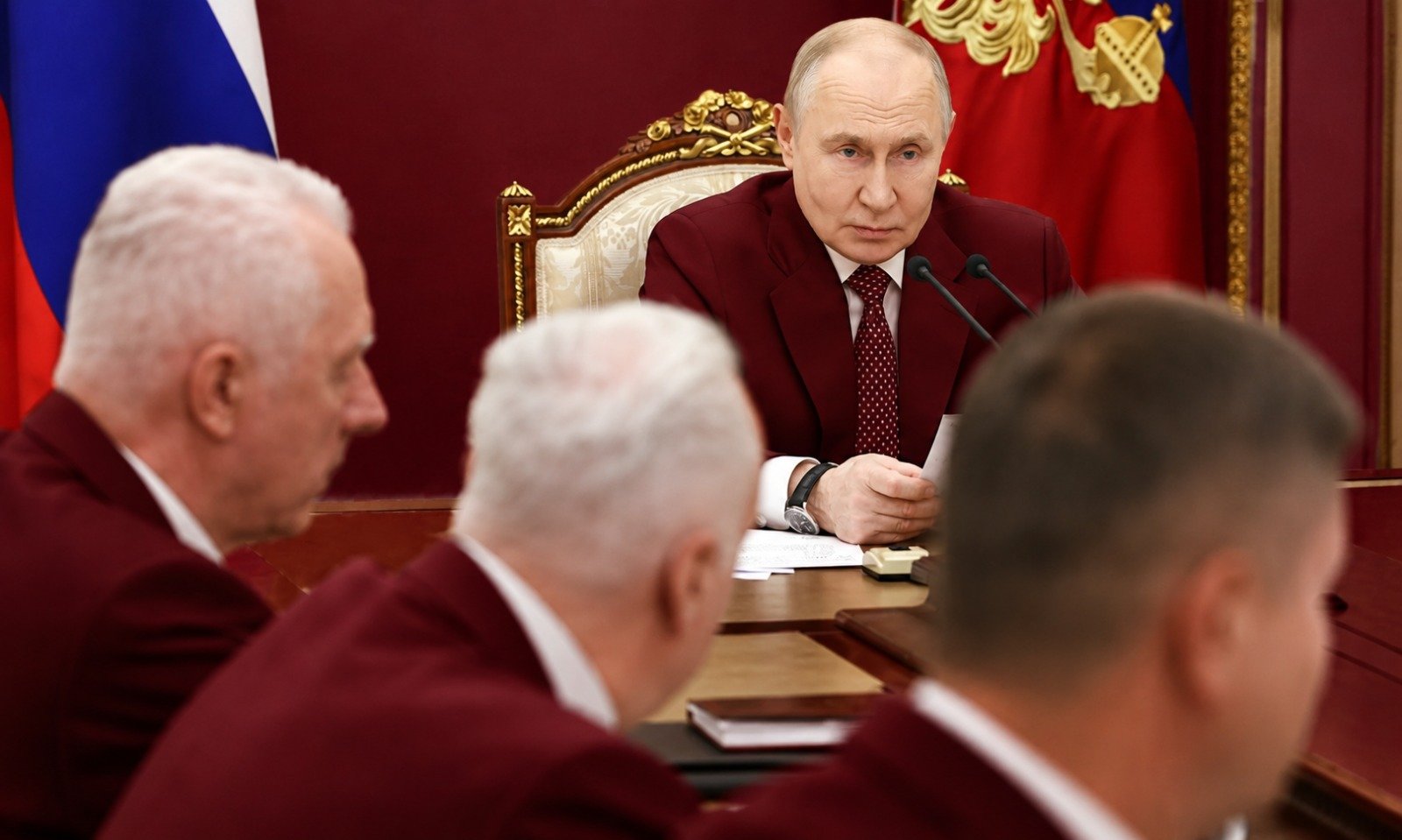
Russia has not been passive. It has scaled its own drone production and integrated unmanned systems more deeply into its overall military strategy.
The Institute for the Study of War assessed that Russian strikes on Ukrainian gas stations in Zaporizhia, Dnipropetrovsk, Sumy, Kherson, Odesa, Kharkiv, and Mykolaiv are part of a deliberate effort to replicate the effects of Ukraine’s attacks on Russia’s fuel infrastructure.
Russia has also adapted its defenses. Air defense systems have been placed on towers and tall buildings in major cities. Nets and electronic interceptors have been deployed. Russia’s multi-layered air defense network, integrating surface-to-air missiles, short-range systems, MANPAD teams, and fighter aircraft, has developed operational expertise that no other air defense force in the world has matched, as it has been continuously tested at scale.
The Omsk refinery strike, however, illustrated the limits of that defense. Seven drones flew 3,000 kilometers across Russian territory and hit one of the country’s largest industrial facilities. Russia’s air defense intercepted none of them on the approach to Omsk.
The upgraded FP-1 Extended Range flies at low altitude, making it harder to detect and track. On approach to Omsk, footage confirmed that a Russian Su-57 one of Russia’s most advanced fighters intercepted just one of the seven attacking drones. The rest reached their target.
The Escalation Risk
Ukraine’s deep-strike campaign has been described by defense experts as “pivotal in helping to stall Russia’s military momentum.” It has also “drastically raised the risk of escalation,” according to researchers quoted by CNBC this week.
Zelenskyy struck a deliberately escalatory tone ahead of the Ankara NATO summit, launching more than 400 drones toward Moscow in a mass strike on July 7. Moscow’s mayor said most were neutralized at long range, with 36 destroyed on approach to the capital. The timing hours before the NATO summit opened was not accidental. Zelenskyy urged allies at the summit to deliver “strong decisions” on air defense support.
Trump held separate calls with both Putin and Zelenskyy over the weekend before the summit and said Monday that a resolution was “getting closer than people realize.” Finnish President Alexander Stubb said at the same time that NATO countries, including the United States, support Ukrainian deep strikes as a way to increase pressure on Moscow and return it to negotiations.
The gap between those two positions Trump suggesting resolution, NATO allies endorsing escalating pressure defines the diplomatic context in which Ukraine’s drone campaign is operating.
What Modern Drone Warfare Looks Like in 2026
The Ukraine war has produced the most comprehensive real-world test of drone warfare in history. The conclusions are now influencing military doctrine globally.
Speed of innovation. Ukraine has built an innovation cycle that legacy defense companies cannot match. New technologies are deployed in weeks. Drones evolve continuously based on battlefield feedback. Cooperation between the military, domestic startups, and private industry has produced the Flamingo cruise missile and FP-1 Extended Range within a wartime economy under active bombardment.
Cost asymmetry. Cheap attack drones are forcing defenders to exhaust expensive interceptors. This asymmetry is now a core planning problem for every military alliance, not a theoretical concern.
Energy infrastructure as a military target. Ukraine’s refinery campaign has demonstrated that attacking energy production rather than frontline military assets can impose strategic costs on an adversary. Russia’s fuel crisis is a direct consequence of this targeting doctrine.
Electronic warfare and navigation. Russia’s extensive jamming has driven Ukraine to develop drones that use improved inertial navigation, machine vision, and software updates to maintain accuracy without GPS. The Omsk strike succeeded despite Russia deploying electronic warfare assets in the region.
The drone operator gap. NATO’s five-fold operator training target reflects a basic reality: the number of trained drone operators across the alliance is insufficient for the warfare environment that Ukraine has demonstrated.
FAQs
What did Ukraine strike in Omsk on July 6, 2026?
Ukrainian FP-1 Extended Range drones struck the Omsk oil refinery Russia’s largest approximately 3,000 km from Ukrainian territory. It was the deepest Ukrainian strike since the invasion began.
What is the NATO Drone Edge initiative?
A $40 billion, five-year investment in counter-drone capabilities announced at the NATO Ankara summit on July 7, 2026, including procurement, training, and a counter-drone marketplace across alliance members.
What is the FP-5 Flamingo missile?
A domestically developed Ukrainian cruise missile with a range of over 3,000 km and a 1,150 kg warhead, built to enable deep strikes on Russian territory without Western-supplied weapons.
How many times has Ukraine struck Russian oil refineries in 2026?
At least 194 times in the first half of 2026 alone, according to a Financial Times analysis. Every major refinery in European Russia has now been hit at least once.
Why is Latvia and Lithuania signing drone deals with Ukraine significant?
Both countries experienced off-course Ukrainian drones striking their territory due to Russian electronic warfare interference. Both signed drone agreements with Ukraine regardless recognizing Kyiv as the world’s leading source of operational counter-drone expertise.
Is there a risk of escalation from Ukraine’s deep strikes?
Yes. Defense analysts have warned that Kyiv’s deep-strike successes inside Russian territory have significantly raised the risk of escalation, even as Western allies broadly support the strikes as leverage in potential negotiations.