The blank page is the hardest part. These prompts do the heavy lifting giving your imagination a starting point so the story can take over.
Whether you’re a student working on a school assignment, a teacher building a lesson plan, or a writer chasing the next great idea, this list has something for you. 100+ prompts across every genre, setting, and mood ready to use today.
AI Overview
Short narrative writing prompts are one-sentence or short-paragraph story starters designed to jumpstart creative writing. They work by giving the writer a specific character, situation, or tension to respond to removing the pressure of starting from nothing. Research consistently shows that constrained prompts produce more creative output than open-ended instructions, because the constraint forces the writer to make interesting choices within limits.
These prompts are organized by category so you can find exactly what fits your mood, assignment, or classroom need. Use them as opening lines, character seeds, or plot catalysts. Change any detail that doesn’t work for you the prompt is a launch pad, not a contract.
Key Takeaways
| Category | Number of Prompts | Best For |
| Everyday Life and Identity | 12 | Journal writing, character study |
| Mystery and Suspense | 12 | Plot-driven storytelling |
| Friendship and Relationships | 10 | Middle school, emotional narrative |
| Adventure and Action | 12 | High school, genre fiction |
| Fantasy and Imagination | 12 | World-building, creative fiction |
| Science Fiction | 10 | High school, speculative writing |
| Fear and the Unexpected | 10 | Horror-adjacent, tension writing |
| Loss and Memory | 10 | Literary fiction, reflective writing |
| Humor and the Absurd | 10 | Light storytelling, classroom fun |
| First Lines (Ready to Use) | 15 | Any level, instant story starters |
How to Use These Prompts
For students: Pick any prompt and write for 10 minutes without stopping. Don’t edit. Just follow where the story goes.
For teachers: Use the “First Lines” section for timed in-class writing exercises. The category sections work well for themed unit assignments.
For writers: Use a prompt from a genre you don’t usually write in. Discomfort is where the best stories hide.
One rule: You own the story. If the prompt pulls you in an unexpected direction, follow it. The prompt is a match not the fire itself.
1. Everyday Life and Identity

These prompts ground the story in the ordinary which is where most great writing begins.
- You find a handwritten list in a library book. It reads: “Things I will never do again.” The first item is your own name.
- Your grandmother hands you a key at her 80th birthday dinner and says, “You’ll know when to use it.”
- Every morning, you take the same bus. Today, the driver is different and they know your stop before you say it.
- You’re cleaning out your old bedroom when you find a diary you don’t remember writing.
- You’ve been mispronouncing your own last name your entire life. You find out why today.
- A stranger at the coffee shop leaves before their order arrives and their cup has your name on it.
- You get a birthday card from someone who died three years ago.
- You’re telling a story about your childhood when your mother quietly says, “That’s not how it happened.”
- You’ve worn the same jacket for ten years. Today, someone stops you on the street and says it used to be theirs.
- You discover a photograph of yourself from a day you have no memory of.
- The last voicemail your father ever left you. You’ve listened to it 200 times. Today you notice something in the background you never heard before.
- You’re packing up your apartment when you find a letter you wrote to yourself five years ago, sealed and addressed: “Do not open until you’re ready.”
2. Mystery and Suspense
Every mystery starts with a question that demands an answer.
- The lights in the house across the street have been on for six days straight. Nobody comes or goes.
- A locked room in your new house has a door handle that’s warm to the touch even in winter.
- You receive a text from your own phone number: “Leave before midnight.”
- The security footage from the museum shows the painting was stolen but the thief never entered the room.
- You wake up in a hotel room with a plane ticket on the nightstand. The destination is a city that doesn’t exist on any map.
- A detective retires. On her first morning of freedom, a case file slides under her door her own unsolved disappearance from 1987.
- Everyone in the town remembers the accident. Nobody agrees on what actually happened.
- A witness to a crime gives police a perfect description of the suspect. The problem: the suspect was standing behind her the entire time.
- You’re a librarian. You notice someone checks out the same book on the same day every year but the borrower’s name is different each time.
- The last entry in the missing hiker’s journal reads: “I found it. They were right. Do not come looking.”
- Your neighbor has lived next door for 30 years. You’ve never seen them in daylight.
- A sealed envelope arrives in the mail. Inside is a photograph of a crime scene from an event that hasn’t happened yet.
3. Friendship and Relationships
The richest stories live in the space between people.
- You and your best friend made a pact at age ten: whoever moves away first has to write a letter every week. You haven’t heard from her in 15 years. Today, 780 letters arrive at once.
- The person you hated most in high school just saved your life.
- You’re at a funeral for someone you loved, sitting next to a stranger who loved them more.
- Two best friends are driving cross-country. Somewhere in Nevada, one of them says something they can’t take back.
- You’ve been lying to your closest friend for so long that the truth would end everything. Today, they ask you directly.
- A childhood friend you haven’t spoken to in 20 years sends you a single message: “I’m sorry. You were right.”
- Your sister and you haven’t spoken since your parents’ divorce. She shows up at your door on your wedding morning.
- You and your neighbor have waved hello every day for three years without ever speaking. Today their house is empty.
- Two strangers are stuck in an elevator for four hours. By the time help arrives, they know more about each other than their own families do.
- Your oldest friend asks you to keep a secret you can’t keep.
4. Adventure and Action
High stakes, fast movement, impossible choices.
- You have 12 hours to cross three countries with no money, no phone, and no ID.
- A mountain climber reaches the summit and finds a camp already set up with fresh food on the stove.
- Your ship is sinking. You have one lifeboat and 14 people.
- A courier is delivering a package they’re not allowed to open. Halfway through the journey, they realize someone is following them and the package is ticking.
- An athlete tears her ACL the morning of the Olympic final. She decides to race anyway.
- Two rival soldiers, separated from their units, have to work together to survive the night.
- A rescue diver finds something at the bottom of the ocean that the official report said wasn’t there.
- You are 20 miles from shore when the engine dies. You have a radio. You have one hour of battery. You have a choice: call for help, or use the signal to warn a ship about the storm they’re heading into.
- A train is 45 minutes from a collapsed bridge. The engineer knows. The passengers don’t.
- You’re the first person to survive a fall from that height. The doctors want to know how. You don’t remember but your body does.
- A jungle guide leads a group of tourists off-trail. Twenty minutes later, the trail is gone.
- The heist went perfectly. Everything went perfectly. That’s exactly what worries you.
5. Fantasy and Imagination
Where the rules of reality are optional.
- In your world, everyone is born with a number above their head the age at which they’ll die. Yours has always read “0.”
- Magic is real, but it runs on a strict economy: every spell takes something from you permanently. The most powerful mage in the kingdom has no memories left.
- The dragon didn’t burn the village. It came to warn them.
- Every year, the sea gives back one person who drowned in it. They return exactly as they were but they’ve seen something, and some of them can’t stop talking about it.
- You inherit a house that exists in two time periods simultaneously. The Tuesday version and the Thursday version are at war.
- A mapmaker is commissioned to draw a land that doesn’t exist yet. When she finishes, it appears.
- You are the last person on Earth who can hear the trees speaking. They’ve been trying to tell you something for years. You finally listen.
- In a world where emotions are visible glowing, colored auras that anyone can see the most dangerous person in the kingdom feels nothing at all.
- Every wish is granted. Every wish costs something the wisher didn’t agree to give.
- A knight is sent to slay a monster. The monster speaks first.
- A young girl finds a door in her grandmother’s garden that opens onto a different era every time.
- The city floats in the sky. No one alive remembers how it got there or why it can’t come down.
6. Science Fiction
The future as a mirror for the present.
- You wake up on a colony ship bound for a new planet. The mission log says you’ve been in cryo-sleep for 80 years. The crew roster shows no one else on board.
- In 2047, governments have banned personal memory storage. You still have yours, hidden in a place no scanner can find.
- The AI that runs your city has started making decisions no one programmed it to make and they’re the right ones.
- You are the last human on Earth who doesn’t have a digital twin. You’re not sure if that makes you free or alone.
- A time traveler arrives in the past with one mission: prevent a tragedy. The tragedy was her own birth.
- First contact with an alien civilization was made 11 years ago. They’ve been teaching us their language. Today, we finally understand what their first message actually said.
- In a world where you can buy extra years of life, you’re a public defender for people who can’t afford them.
- A scientist develops the ability to communicate with extinct species. The woolly mammoth has a lot to say about what killed it.
- The last library on Earth is run by a robot who has read every book and remembers none of them.
- A colony on Mars celebrates its 100th year of independence from Earth. Then Earth makes contact for the first time in a decade and they don’t sound like themselves.
7. Fear and the Unexpected
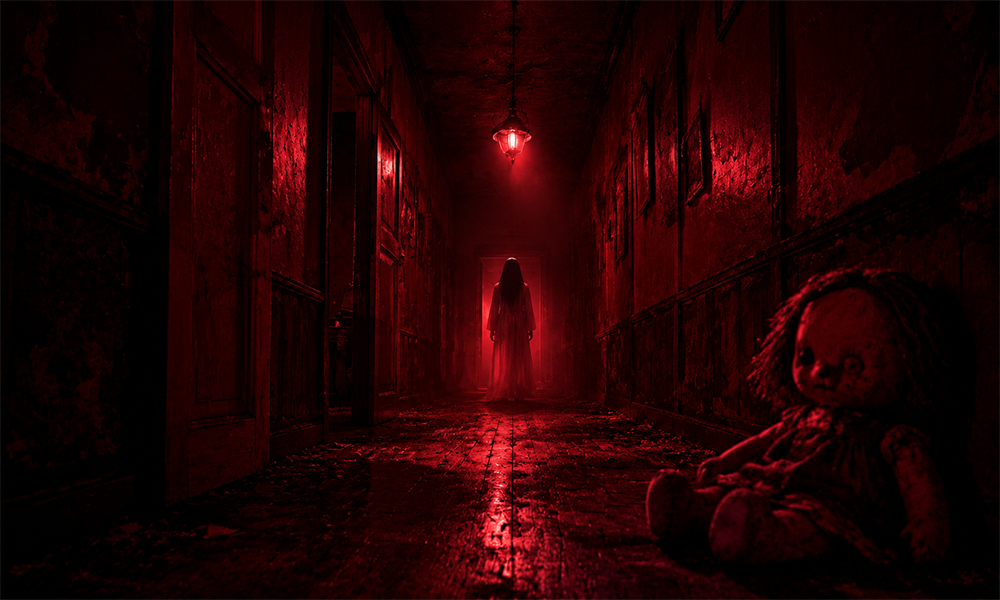
Stories that make the reader lean in closer.
- You’ve lived in this house for 20 years. Tonight, you find a room you never noticed before. It’s furnished. It’s warm. Someone has been living there.
- The new neighbor bakes cookies and brings them over. Everything about her is perfectly normal. That’s what worries you.
- You are hiking alone when you find a trail marker with your name on it.
- A child at your school insists her imaginary friend is real. This week, the imaginary friend started leaving things behind.
- You’re a nurse on the overnight shift. At 3am, a patient in a coma starts speaking in your voice.
- You move into an apartment and find the previous tenant’s grocery list on the fridge. It’s dated today.
- You’ve been taking photographs for 20 years. In every single one, there is one figure in the background you never noticed until tonight.
- The power goes out. You find candles in a drawer. The candles have already been burned down to stubs but you’ve never owned candles.
- You wake up and all the mirrors in your house are covered. You live alone.
- A child knocks on your door and asks to use the phone. She says she got lost. She names the street she’s from it was demolished in 1993.
8. Loss and Memory
The stories we carry after the people we love are gone.
- You are cleaning out your mother’s house after she dies. In the last box, you find letters addressed to you one for every year of your life, unopened.
- A man visits the same diner every Sunday because his late wife loved the coffee. A new waitress starts and she already knows how he takes it.
- You are forgetting your father’s voice. You have one home video left. You can’t bring yourself to watch it or stop yourself from pressing play.
- The house you grew up in is being torn down today. You go to say goodbye and find someone already there, saying the same thing.
- Every year on the anniversary of your best friend’s death, you write her a letter. This year, one arrives back.
- You were supposed to be on that flight. You changed your ticket at the last minute. You’ve been living a life that wasn’t supposed to be yours, and you’ve never known what to do with it.
- An elderly man is moving into assisted living. He’s allowed to bring three things. He sits with them for hours before deciding.
- A woman returns to her childhood village after 40 years to find it exactly as she left it but everyone she knew is gone, replaced by strangers who have heard stories about her.
- You are the last person alive who speaks a dying language. You have 24 hours left.
- A widower finds his wife’s voicemail on an old phone. She left it the morning she died. He has never listened to it. He listens now.
9. Humor and the Absurd
Comedy is truth wearing a funny hat.
- You are a professional mermaid hired to swim at corporate events. Today’s client is the Maritime Law Society.
- You’re a villain giving your nemesis the standard monologue and they’ve fallen asleep.
- A medieval knight is transported to the present day. His first reaction to a drive-through is not what you’d expect.
- You’re the only honest person at a town hall meeting. It goes about as well as you’d think.
- A dragon is afraid of fire. She is also the town’s appointed firefighter. Nobody knows.
- You accidentally sit down in the wrong therapy session. The group insists you stay.
- The apocalypse arrives on a Tuesday. Everyone is mildly inconvenienced.
- A wizard has mastered every spell in the known universe. He cannot, for the life of him, parallel park.
- A professional apology writer is hired to apologize for something too embarrassing to describe in the contract.
- You’re a ghost. You’ve been haunting this house for 200 years. The new family is worse than you.
10. First Lines (Ready to Use)
These are complete opening sentences. Write whatever comes next.
- “She’d been warned not to open the door. She opened the door.”
- “The last person I expected to see at my father’s funeral was my father.”
- “I knew something was wrong the moment the waiter smiled he recognized me, and I’d never been here before.”
- “She left me a voicemail every Friday for six years. This one was different.”
- “The map had a city in the center, circled in red, with the words: ‘Do not go here. I know you will anyway.'”
- “He had been lying about his name for so long that when someone finally used his real one, he didn’t answer.”
- “The snow was falling the wrong direction.”
- “I had exactly forty dollars, half a tank of gas, and the address of a person I’d been told was dead.”
- “She smiled at me across the crowded room, and I realized I had never told her my name.”
- “The letter was postmarked six months from now.”
- “We were the only two people on the train who didn’t get off at the last stop. We’d never met. We both knew what that meant.”
- “On the morning my life changed, I was trying to decide between two identical jars of peanut butter.”
- “The dog started barking at the wall three weeks ago. Yesterday, the wall barked back.”
- “My mother always said the house was alive. She was being literal.”
- “There were 12 of us when we entered the forest. We came out with 13.”
Writing Tips to Get the Most Out of These Prompts
Start in the middle. The best stories begin just before something important happens not at the very beginning of the backstory. If your prompt involves a character finding something, start at the moment they find it, not the morning they woke up.
Give your character a specific want. Every compelling narrative needs a character who wants something and can’t easily get it. Use the prompt as the situation, and invent the want yourself.
Commit to the first draft. Don’t stop to fix sentences. The goal of a prompted exercise is to generate raw material, not a finished piece. Fix it later. Follow it now.
Change what doesn’t fit. A prompt about a grandmother can become a grandfather, an aunt, a stranger. A story set in a city can move to a forest. The genre can shift. The point is the tension, not the details.
Write toward the hardest moment. Ask yourself: what is the scene this character most wants to avoid? Write toward that scene. That’s where the story lives.
How Teachers Can Use These Prompts
Timed writing (10 minutes): Use any prompt from the First Lines section. Students write without stopping. No editing until time is up. Share one sentence from wherever the story took them.
Genre exploration unit: Assign one prompt from each category over the course of a month. Students compare how their voice changes across genres.
Peer sharing exercise: Two students choose the same prompt and write independently, then compare how differently their stories developed from the same starting point.
Character development workshop: Use prompts 1–12 (Everyday Life and Identity) for character studies. Have students develop the same character across multiple prompts.
Revision workshop: Students write a prompted story in class, then workshop it the following week using peer feedback focused on one element: dialogue, setting, or opening line.
FAQs
What is a short narrative writing prompt?
A short narrative writing prompt is a sentence or short paragraph that gives a writer a character, situation, or conflict to start a story from removing the intimidation of the blank page.
How long should a response to a narrative prompt be?
There’s no rule. A prompt response can be a paragraph, a page, or a full short story. For classroom use, 300–500 words is a useful target. For personal writing, follow the story wherever it goes.
Are these prompts suitable for middle school students?
Yes. Categories 1, 3, 5, and 9 are particularly well-suited for middle school writers. The mystery, fantasy, and humor sections engage most age groups without mature content.
Can I use these prompts for high school writing assignments?
Absolutely. The science fiction, loss and memory, and suspense categories work well for high school narrative writing and can be used for both timed essays and longer creative assignments.
What makes a narrative writing prompt effective?
The best prompts introduce a specific tension or question that demands a response. Vague prompts (“write about a journey”) produce generic stories. Specific prompts (“you’re on a train that was supposed to arrive 40 years ago”) force the writer to make interesting choices.
Can I publish a story based on these prompts?
Yes. Prompts are not copyrightable in themselves, and any story you write is entirely your own original work.