

IBM chooses Stagwell as its lead creative agency a major creative agency partnership announced June 30, 2026, ending a nearly 32-year relationship with WPP’s Ogilvy. This IBM marketing transformation signals how enterprise technology companies are rethinking their agency relationships in the AI era. Stagwell agencies Code and Theory and Anomaly will operate as a unified creative team on the account, evolving IBM’s “Let’s Create Smarter Business” campaign across channels and geographies. First work from the new IBM creative partnership is expected in August 2026.
The IBM Stagwell partnership is one of the most significant global creative agency account wins of 2026. Stagwell shares rose 2.6% to 6.75% on the news, reflecting the market’s view of what a major IBM advertising campaign account of this scale means for the challenger network’s trajectory.
The Full Story: What Happened and Why
IBM chooses Stagwell as creative agency the announcement arrived June 30, 2026, following a competitive review IBM launched earlier in the year to find a partner capable of evolving its “Let’s Create Smarter Business” positioning in the age of enterprise AI.
IBM has selected Stagwell as its lead creative partner, following a competitive pitch. The company had previously worked with Ogilvy, which had a three-decade relationship with the tech giant but opted not to participate in the review which began earlier this year.</cite>
Ogilvy’s decision not to defend the account is itself significant. A three-decade incumbent agency relationship one of the longest and most storied client-agency partnerships in enterprise advertising ended not in a competitive loss but in a non-participation. What that signals about how Ogilvy viewed the pitch dynamics, or the direction IBM was heading, remains unconfirmed publicly.
The IBM creative partnership now sits with two Stagwell agencies. Stagwell’s Code and Theory and Anomaly will work together as a single, unified creative force, together providing world-class brand and campaign creativity. Working alongside IBM, Code and Theory and Anomaly will help evolve the “Let’s Create Smarter Business” campaign across channels and geographies.
What the IBM Stagwell Partnership Actually Covers
The mandate is global brand campaign work. The Stagwell IBM creative agency relationship centers specifically on evolving “Let’s Create Smarter Business” a platform IBM unveiled in late 2025 that was created jointly with Ogilvy before the relationship ended.
Code and Theory and Anomaly will work alongside IBM to evolve the “Let’s Create Smarter Business” campaign across channels and geographies. Stagwell’s first work with IBM is expected in August of this year.
The operating structure is notable. Rather than assigning the account to one Stagwell agency, IBM and Stagwell are deploying two agencies as one team under a single accountability structure. Jonathan Adashek, SVP Marketing and Communications at IBM, described the logic directly: “Code and Theory and Anomaly bring the full range of what that takes, and operating as one team, under one accountability structure, they will deliver it. The convergence of the C-Suite is where this partnership lives, and that’s where IBM will win.
Code and Theory brings technology-forward creative and digital capabilities. Anomaly brings brand strategy and campaign creativity. The combination is designed to deliver both the rigor and speed that a technology company launching global campaigns across multiple markets requires.
Why IBM Chose Stagwell: The AI and Speed Argument
Jonathan Adashek’s public statement positions the decision explicitly around speed, AI capability, and operational efficiency not just creative quality:
Code and Theory and Anomaly bring the creative and strategic strength we need, along with modern tools and an operating approach that will help us move faster, work smarter and deliver more connected experiences.”</cite>
Stagwell described the appointment as a validation of its cross-network model, which combines creative, technology and marketing capabilities to serve enterprise clients. The company said the integrated structure would help IBM maintain brand consistency while responding more quickly to evolving business and market demands.</cite>
This framing speed and AI-powered workflow as competitive differentiators is consistent with Stagwell’s broader market positioning. The network has explicitly positioned itself as a “challenger to the legacy holding companies” by building technology-forward operating models into how it runs accounts, rather than treating AI as an adjacent capability layered on top of traditional agency workflows.
For IBM, a company whose core product narrative in 2026 is enterprise AI, having a creative agency that operates through AI-enabled workflows isn’t just operationally convenient it’s thematically consistent. A technology company arguing that AI makes business smarter needs an agency whose own operations reflect that argument.
Stagwell’s IBM Win in Context: 2026 New Business Momentum
This IBM brand marketing and advertising industry news adds to a strong run of Stagwell agency news in 2026. The agency account win represents a meaningful expansion into the global technology sector, and marketing agency news trackers are pointing to it as the biggest creative agency partnership announcement of the mid-year period.
The network had already won a major global media assignment from IBM Storyboard18 noted that IBM previously named Omnicom as global media agency of record, while Stagwell wins IBM account on the creative side creating a split between media and creative that is increasingly common for global enterprise accounts of this scale.
The Stagwell clients roster has been growing at the enterprise level, and IBM adds IBM brand marketing and IBMadvertising campaign work at global scale. The first work from the new partnership is expected to launch in August 2026. For Stagwell, the win adds a major global technology client and helped lift shares about 2.6% on Tuesday.
The market response shares up 2.6% to 6.75% depending on the source reflects the revenue and credential signal that an IBM account carries. Stagwell creative services at this enterprise scale strengthen the challenger network’s pitch for other global technology accounts.
The End of Ogilvy’s 32-Year Relationship with IBM
The IBM advertising agency shift represents one of the most significant client relationship endings in recent advertising history. Ogilvy and IBM had worked together for nearly 32 years a relationship that produced some of the most recognized enterprise advertising of the last three decades.
The decision by Ogilvy not to participate in the competitive review is the detail most worth understanding. Incumbent agencies choose not to defend in reviews for various reasons: confidence that the outcome is predetermined, concern that the pitch terms disadvantage the incumbent, resource constraints, or a strategic decision that a client’s changing direction no longer aligns with the agency’s core positioning.
Ogilvy has not publicly explained its decision. What is publicly confirmed is that the “Let’s Create Smarter Business” campaign platform created jointly by IBM and Ogilvy will now be evolved by Stagwell’s agencies. The platform itself survives the relationship change; the incumbent that co-created it does not.
What Stagwell Is and Why IBM Chose a Challenger Network
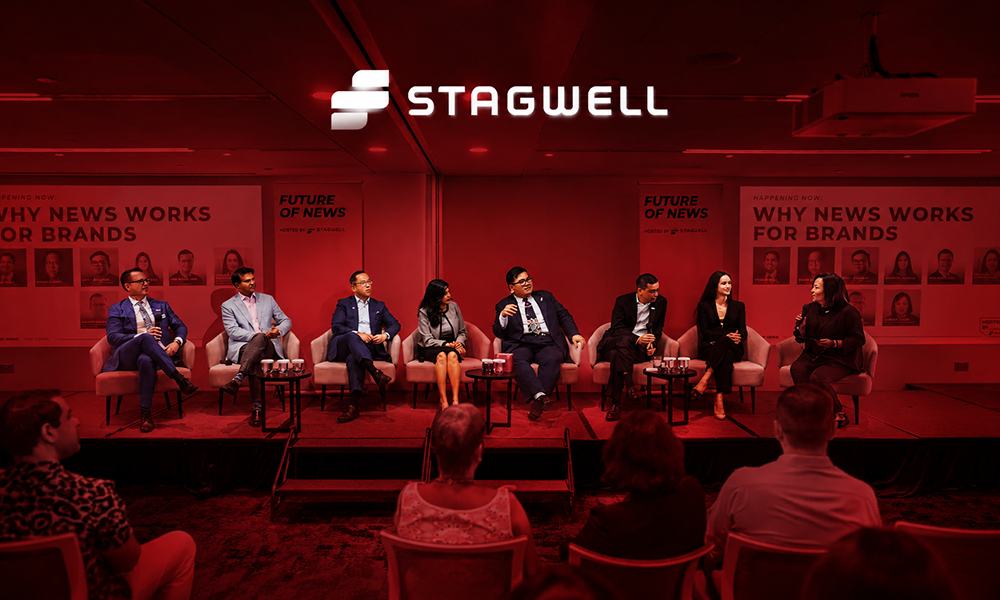
For readers less familiar with Stagwell: it is a publicly traded (NASDAQ: STGW) marketing network founded in 2012, structured explicitly as a “global challenger network” competing against the established holding companies WPP, Publicis, Omnicom, and Interpublic Group.
Stagwell’s differentiation argument is built on three pillars: speed, technology integration, and a cross-network operating model that allows multiple specialized agencies to work as one team rather than as siloed units competing for billings. The IBM IBM marketing strategy partnership leverages all three.
Stagwell’s technology-forward operating model ensures the creative work stays connected, consistent and moving at the speed IBM’s business demands.
Recent Stagwell activity reinforces the technology credentials. The network recently partnered with Microsoft Advertising to become the first to integrate Copilot directly into live media campaigns a June 23, 2026 announcement that preceded the IBM creative win by one week and demonstrates the kind of AI-forward positioning that would appeal to an enterprise AI company.
What This Means for the Advertising Industry
The IBM Stagwell partnership carries advertising industry news implications beyond the account itself.
Challenger networks can win enterprise technology accounts. The holding company model has historically dominated large global enterprise creative agency work. Stagwell winning IBM as its IBM branding agency demonstrates the challenger network model is competitive at the highest level.
The “Let’s Create Smarter Business” platform signals IBM’s brand direction. This IBM advertising campaign platform, positioning IBM at the intersection of human ingenuity and AI capability, is the creative foundation Stagwell inherits. The creative agency partnership is built on evolving, not rebuilding, this foundation.
Speed and technology integration beat tenure. Ogilvy’s 32-year tenure didn’t prevent IBM from seeking a faster, more technology-forward operating model. The message to every incumbent agency: relationship longevity is not a substitute for operational capability.
The media/creative split at IBM is now formalized. With Omnicom handling media and Stagwell handling creative, IBM joins the growing list of major advertisers managing these functions through separate specialist relationships rather than a single integrated holding company. This split is now the norm in IBM marketing strategy and across the enterprise marketing sector.
IBM’s Agency Ecosystem in 2026
As of June 30, 2026, IBM’s global agency structure across the main functions looks like this:
- Creative (global brand and campaign): Stagwell Code and Theory + Anomaly
- Media (global media buying and planning): Omnicom Media Group
- Previous creative incumbent: Ogilvy (WPP) 32-year relationship ended
This split reflects the broader trend in enterprise marketing: large technology companies are increasingly separating media, creative, and data functions across specialist agencies rather than consolidating under one holding company.
Key Takeaways
- IBM chose Stagwell over Ogilvy though Ogilvy chose not to defend in the review, ending a nearly 32-year client relationship.
- Code and Theory and Anomaly operate as one team under a unified accountability structure Stagwell’s cross-network model, not a single-agency assignment.
- The “Let’s Create Smarter Business” campaign continues Stagwell inherits the platform co-created by IBM and Ogilvy.
- First work launches August 2026 giving the new IBM advertising agency relationship a short ramp-up window before its first public output.
- Stagwell shares rose 2.6–6.75% on the announcement a market signal of the account’s credential and revenue significance.
- IBM’s media account went to Omnicom creative and media are now split across two different holding companies/networks.
FAQ:
Which agencies within Stagwell are handling the IBM account?
Code and Theory and Anomaly, operating as a unified single team under one accountability structure.
What campaign is the IBM Stagwell partnership focused on?
Evolving the “Let’s Create Smarter Business” platform across channels and geographies. First work is expected in August 2026.
Why did Ogilvy lose the IBM account?
Ogilvy opted not to participate in the competitive review. IBM and Ogilvy had a relationship spanning nearly 32 years. The reason for non-participation has not been publicly explained by either party.
Who handles IBM’s media buying?
Omnicom Media Group handles IBM’s global media account, separate from the Stagwell creative relationship.
What is Stagwell?
Stagwell (NASDAQ: STGW) is a publicly traded global marketing network founded as a challenger to traditional holding companies, positioning its agencies around technology-forward, AI-enabled workflows.
The Bigger Picture
IBM choosing Stagwell as its creative agency is a meaningful industry signal, not just an account change.
It reflects what enterprise technology clients in 2026 want from their agencies: speed, technology integration, and modern operating models that match the pace of the business, not the quarterly cadence of a legacy agency review cycle. The 32-year relationship Ogilvy held with IBM was built on consistency and deep brand understanding. The relationship Stagwell is being hired to build is explicitly about moving faster.
This decision marks the end of its nearly 32-year partnership with WPP’s Ogilvy. The shift comes as IBM aims to refine its branding surrounding enterprise artificial intelligence and enhance its marketing strategies.
For Stagwell, this is a validation moment proof that a challenger network built around technology and speed can win the kind of global enterprise mandate that once required the scale and infrastructure of a traditional holding company. For the industry, it’s a reminder that tenure and relationship depth have limits, and that the agencies winning the next generation of enterprise accounts will be the ones that can credibly argue they move at the speed of business, not just the speed of creative production.