Quick Answer
A year has 52 weeks, plus one extra day that refuses to behave.
In a leap year, it is 52 weeks and two extra days. If you want the exact figure, 365 divided by 7 is about 52.14, which is the kind of number that makes a spreadsheet sigh.
And in some years, like 2026, the official count is actually 53. More on that troublemaker below.
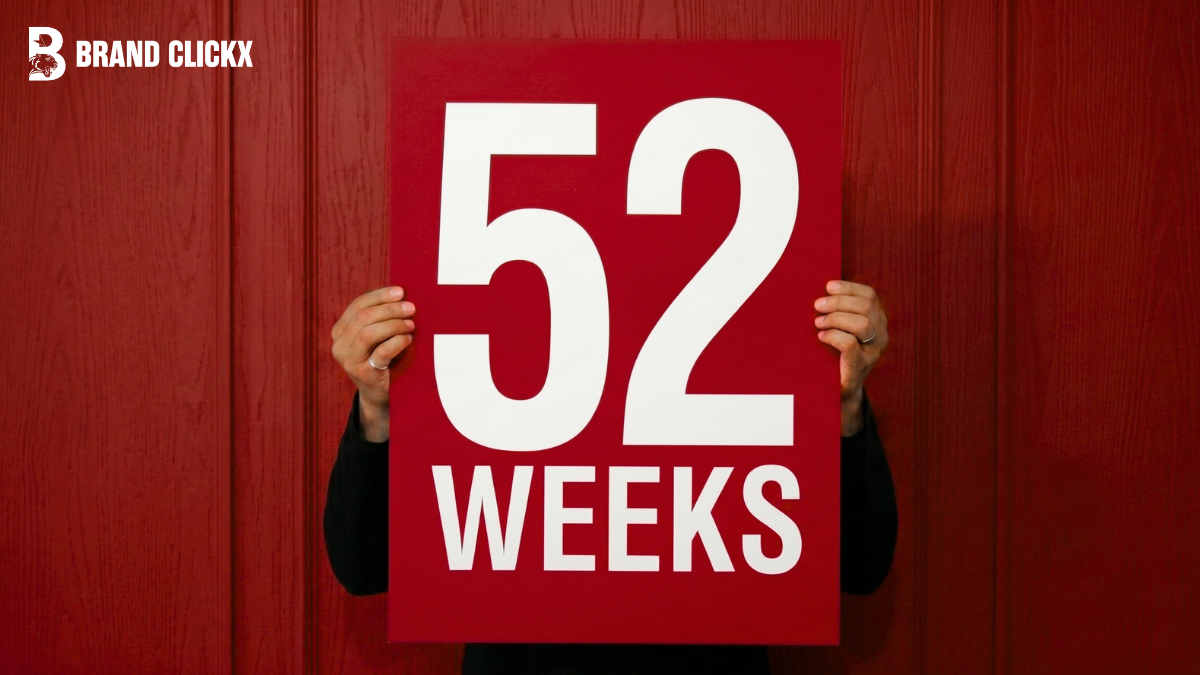
You came for a number, so here it is again, framed and on the wall.
Fifty-two weeks. One leftover day. Two if it is a leap year.
That should be the end of it. A clean 52, everybody goes home.
Except math has a little attitude problem.
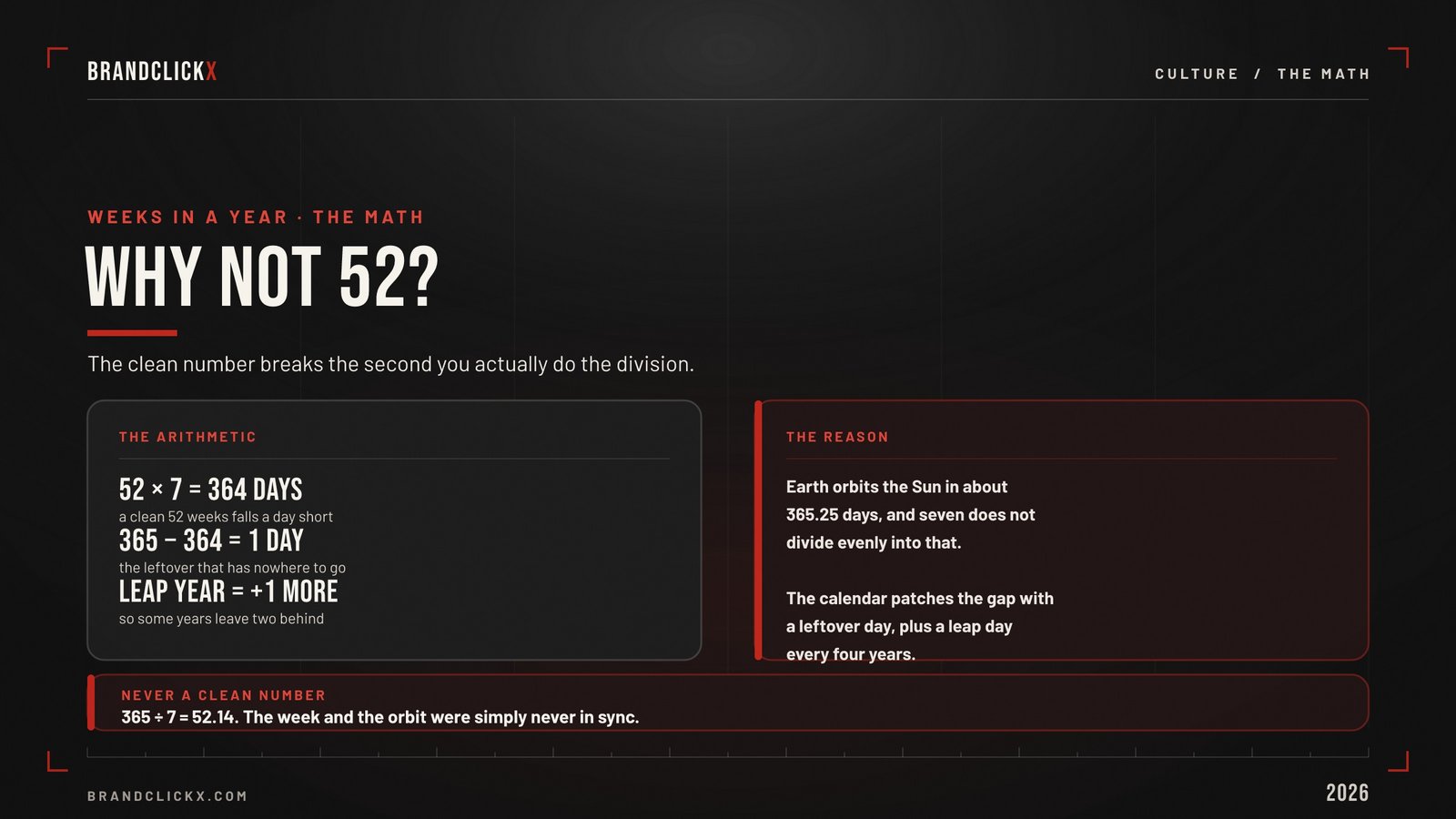
Fifty-two weeks is 364 days. A year is 365. So every single year, the calendar quietly hands you one extra day with nowhere to put it, like a puzzle piece from a different box.
That stray day is the reason your birthday drifts.
It is why a date that was a Monday this year shows up on a Tuesday next year, then leaps two days after a leap year. The day does not vanish. It just shoves the whole calendar one notch forward, every twelve months, forever.
Small detail. Surprisingly powerful.
So Why Isn’t It Exactly 52?
Blame the planet, not the calendar.
Earth takes roughly 365.25 days to circle the sun. Seven does not divide neatly into 365, and it really does not divide into 365.25. We built a tidy seven-day week and tried to lay it over a messy orbit, and the seams never quite line up.
The leap day is our patch for that quarter-day.
Every four years we add a February 29 to stop the seasons from slowly sliding into the wrong months. Useful. Necessary. Also the reason leap years carry 52 weeks and two leftover days instead of one.
Think of the week as a tenant and the year as an apartment.
The week fits fifty-two times. Then there is this one extra day standing in the hallway with a suitcase, every year, politely refusing to leave. The calendar has simply learned to live with it.
The 53-Week Plot Twist (Yes, Really)
Here is where it gets fun, and where 2026 starts showing off.
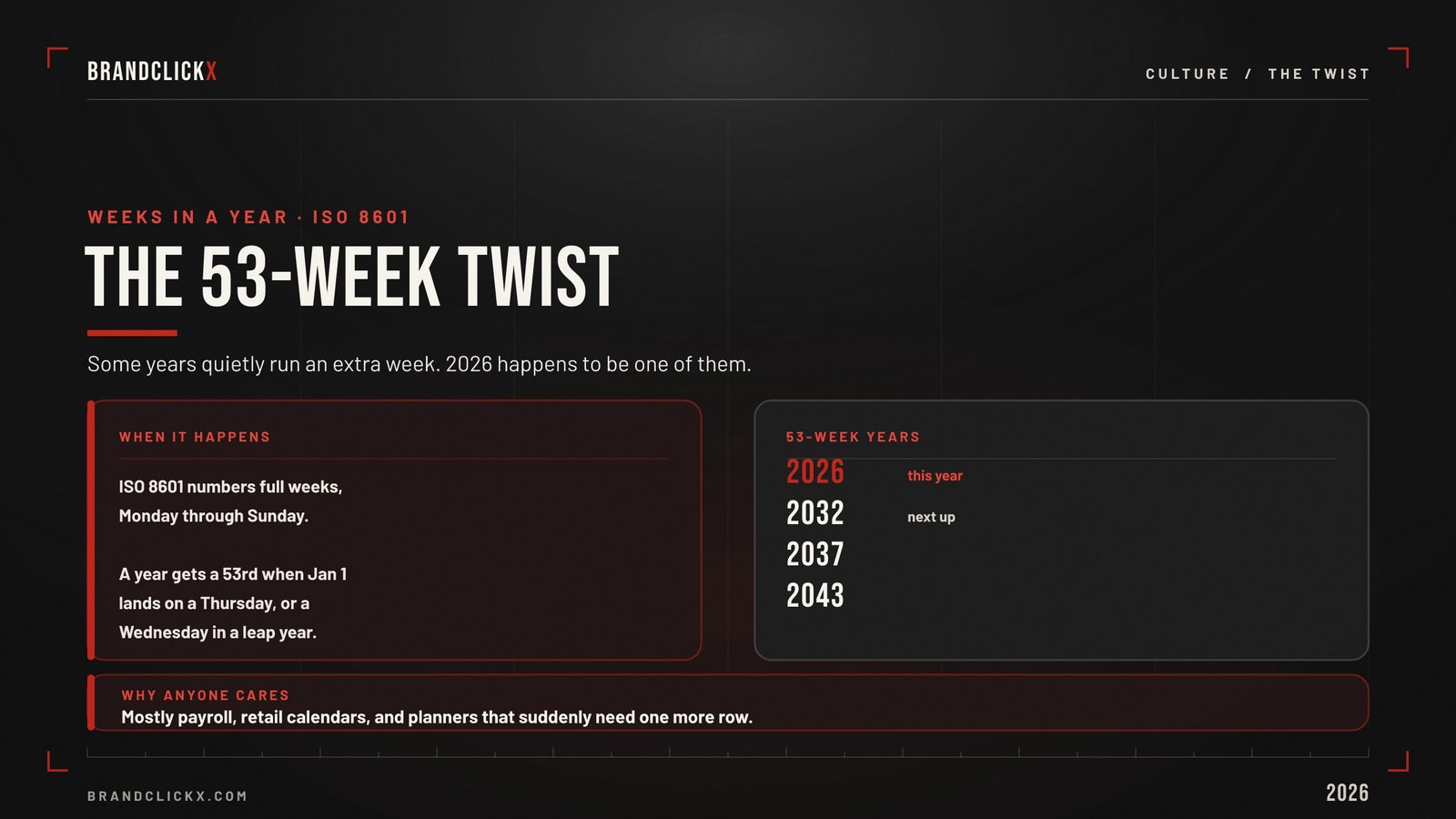
Most years have 52 weeks. But under the ISO 8601 week-numbering system, the one businesses, payroll teams, and software actually run on, some years officially carry 53.
The rule is oddly specific.
A year gets a 53rd week when January 1 lands on a Thursday, or on a Wednesday in a leap year. It happens roughly once every five or six years. The leftover days pile up just enough to spawn a whole bonus week.
And 2026 is one of them.
January 1, 2026 fell on a Thursday, which means this year runs a full 53 weeks instead of the usual 52. The next ones after this are 2032, 2037, and 2043, if you like to plan your existential crises in advance.
It sounds like trivia. It is not, if you run anything.
Why It Matters: A 53-week year quietly breaks year-over-year comparisons. Retailers, payroll systems, and anyone reporting “this week versus last year” can drift by a full week unless they adjust. Every few years, the calendar adds a week and dares your dashboard to notice.
The Numbers People Actually Want Next
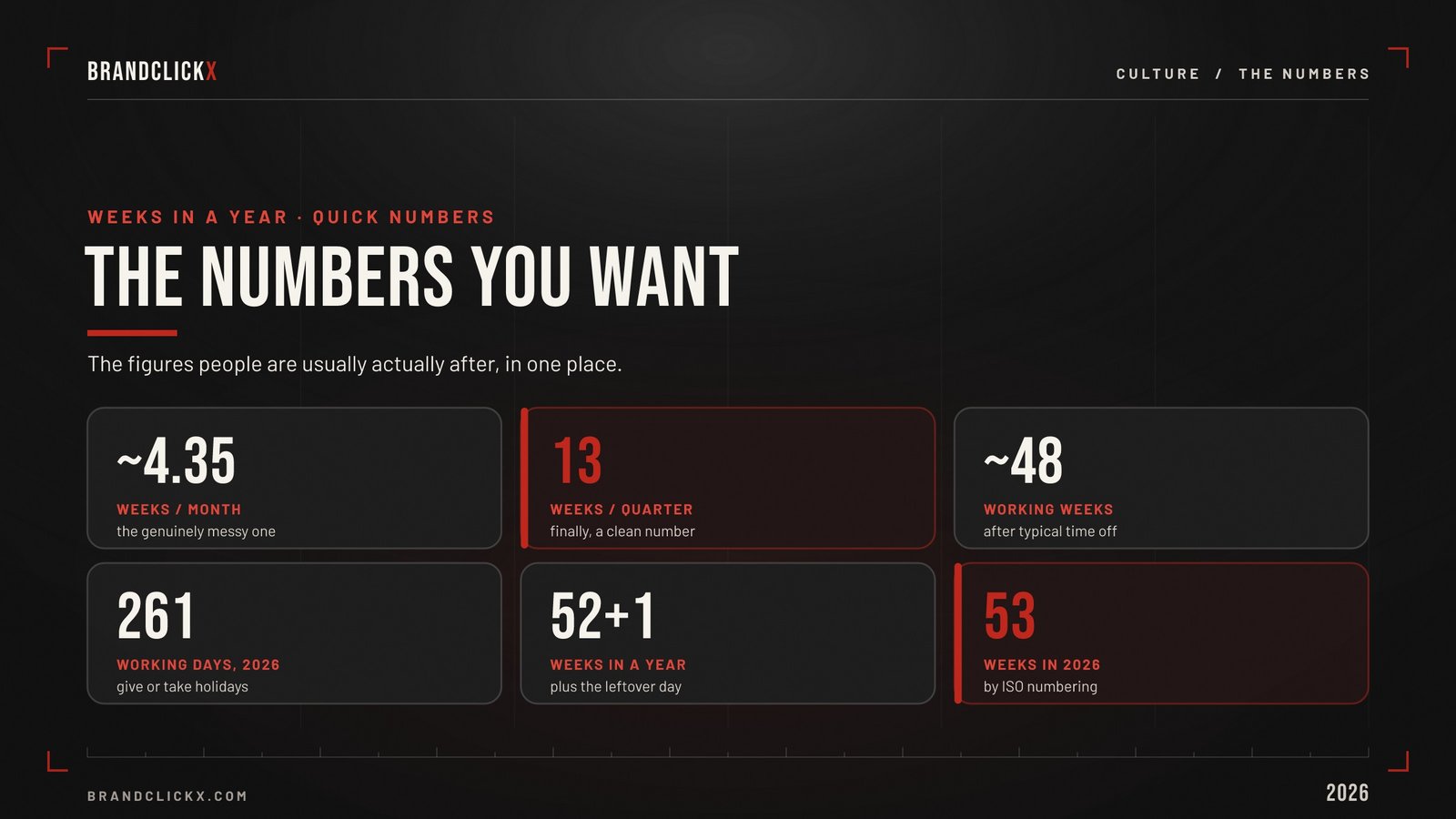
Once you know it is 52, the follow-up questions arrive like clockwork. Here they are, sorted.
| The question | The honest answer |
| Weeks in a year | 52, plus 1 leftover day (2 in a leap year) |
| Weeks in a leap year | Still 52, just with an extra day of leftovers |
| Weeks in a month | About 4.35 on average (52 ÷ 12) |
| Weeks in a quarter | Exactly 13, the one clean number in this whole article |
| Working weeks in a year | Around 48 after holidays and vacation |
| Working days in 2026 | About 261, Monday to Friday |
| Weeks in 2026 specifically | 53, the rare long year |
Notice that quarters are the only tidy figure in the bunch.
Thirteen weeks, four times over, equals 52. It is the rare place where the calendar stops being petty and just cooperates. No wonder finance teams cling to quarters like a life raft.
We Measure Our Lives in Weeks Now
Here is the part nobody searches for but everybody feels.
We have quietly become a culture that runs on weeks. Not years, not days. Weeks. Sprint cycles last two of them. Content calendars are built in them. Streaks, habit trackers, and “week in review” emails have turned the week into the unit of a modern life.
That shift is more emotional than it looks.
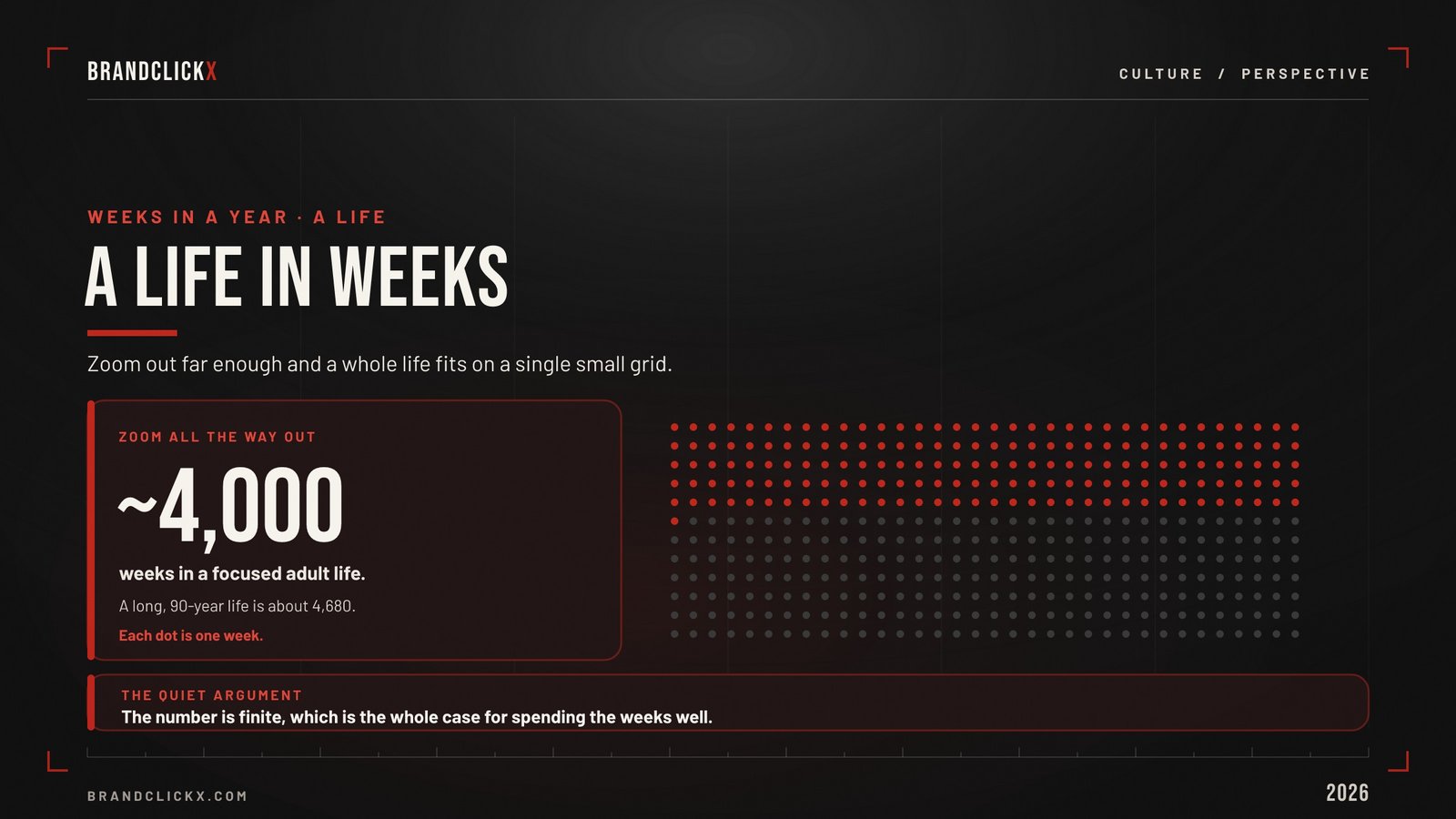
There is a well-known visualization, popularized by the blog Wait But Why, that maps a long human life as a grid of roughly 4,000-something weeks. One small box per week. The whole thing fits on a single page.
It is a quietly devastating image.
Because 52 stops feeling like a lot when you realize how few of those rows you actually get. Suddenly the leftover day and the bonus week are not annoying. They are a rounding error on something precious.
So maybe that is the real answer to the question.
A year holds 52 weeks. What you do with them is the part the calendar cannot calculate.
The Takeaways, Minus the Filler
- A year has 52 weeks and 1 extra day. A leap year has 52 weeks and 2 extra days. The leftover day is normal, not a glitch.
- It is never exactly 52 because 52 weeks is only 364 days, and Earth did not consult the calendar before setting its orbit.
- Some years have 53 ISO weeks, including 2026, whenever January 1 hits a Thursday (or a Wednesday in a leap year).
- Quarters are the clean number. Thirteen weeks each, four times, equals a perfect 52.
- Working weeks land near 48 once holidays and vacation come out, even though the calendar shows 52.
Frequently Asked Questions
How many weeks are in a year?
A normal year has 52 weeks and 1 extra day, because 365 divided by 7 is about 52.14. A leap year has 52 weeks and 2 extra days. So the everyday answer is 52, with a leftover day that never quite fits into a clean week.
Why isn’t a year exactly 52 weeks?
Because 52 weeks adds up to only 364 days, and a year is 365. That single stray day is why the calendar never divides cleanly and why the same date falls on a different weekday from one year to the next.
Can a year have 53 weeks?
Yes. Under the ISO 8601 week system used in business and software, a year has 53 weeks when January 1 falls on a Thursday, or on a Wednesday in a leap year. 2026 is one of these rare 53-week years, with the next ones in 2032, 2037, and 2043.
How many working weeks are in a year?
Most people effectively work around 48 weeks a year once holidays and vacation are subtracted, even though the calendar holds 52. In raw terms, a typical year has roughly 260 to 261 working days, Monday to Friday.
How many weeks are in a month?
On average, about 4.35 weeks per month, since 52 weeks divided by 12 is roughly 4.33. Most months are really four weeks plus a few stubborn extra days, which is exactly why no month except February ever feels tidy.
The Bottom Line
The answer is 52. The fun is in everything that 52 refuses to cover.
One rogue day every year. A second one in leap years. A surprise 53rd week every few years, including this one. A calendar that drifts, a birthday that wanders, and a planet that never agreed to round numbers in the first place.
So the next time someone asks how many weeks are in a year, you can give them the two-second answer.
Then, if you are feeling generous, tell them about the extra day standing in the hallway with its suitcase. It has been there the whole time.