Key Takeaways
- Businesses Behind the World’s Biggest Fortunes: The world’s largest fortunes are usually built through ownership rather than salaries.
- Technology companies dominate many of the world’s biggest fortunes.
- Amazon combines retail, cloud computing, advertising, and other businesses.
- Alphabet transformed Google Search into a much broader technology ecosystem.
- Meta built enormous scale around social platforms and digital advertising.
- Nvidia’s AI infrastructure has created a new source of wealth.
- LVMH proves that luxury brands can create enormous long-term fortunes.
- Berkshire Hathaway shows that disciplined investing can build wealth over decades.
- Billionaire rankings change because asset values change.
- Net worth should not be confused with available cash.
Quick Answer
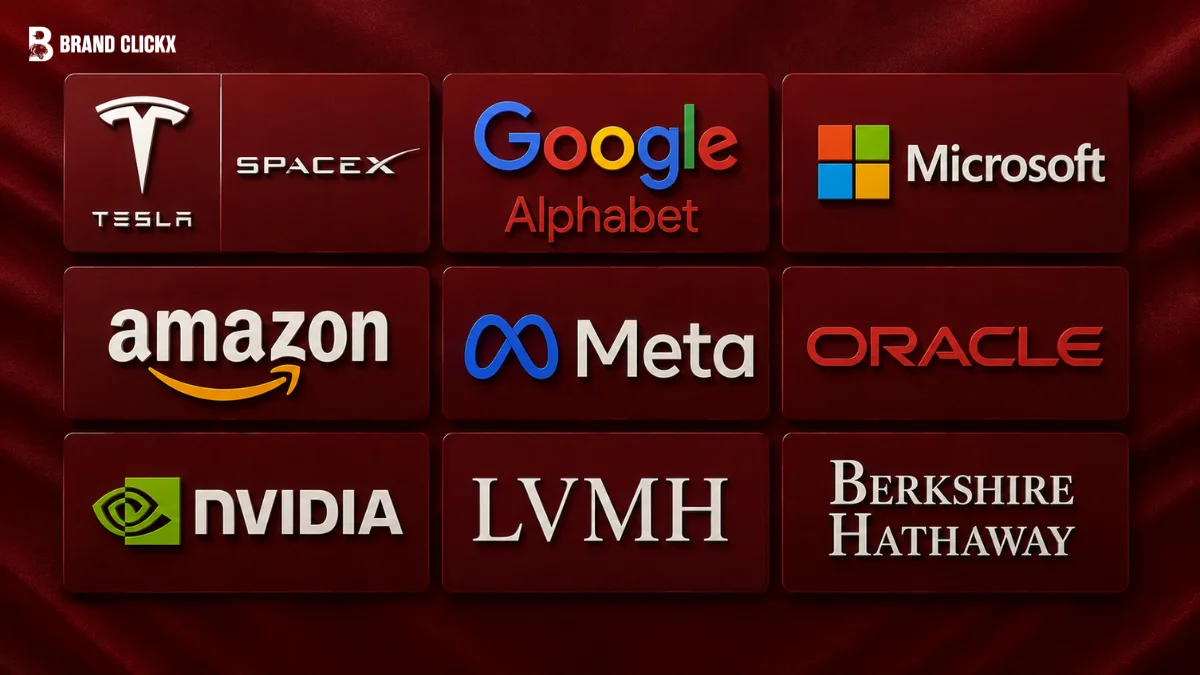
The biggest fortunes in 2026 are closely connected to companies such as Tesla, SpaceX, Alphabet, Amazon, Meta, Oracle, Nvidia, LVMH, Berkshire Hathaway, and Microsoft.
Their founders, major shareholders, and long-term investors became wealthy mainly because they owned valuable shares rather than simply earning large salaries.
| Billionaire | Major Business | Main Industry | How the Fortune Was Built |
|---|---|---|---|
| Elon Musk | Tesla, SpaceX | Electric vehicles, space, technology | Company ownership |
| Larry Page | Alphabet | Search, advertising, technology | Google ownership |
| Sergey Brin | Alphabet | Search, advertising, technology | Google ownership |
| Jeff Bezos | Amazon | E-commerce, cloud computing | Amazon ownership |
| Mark Zuckerberg | Meta | Social media, advertising, AI | Meta ownership |
| Larry Ellison | Oracle | Enterprise software and cloud | Oracle ownership |
| Jensen Huang | Nvidia | Semiconductors and AI | Nvidia ownership |
| Bernard Arnault & family | LVMH | Luxury goods | Family ownership |
| Warren Buffett | Berkshire Hathaway | Investments, insurance, businesses | Long-term investing |
1. Tesla and SpaceX: The Businesses Behind Elon Musk’s Fortune
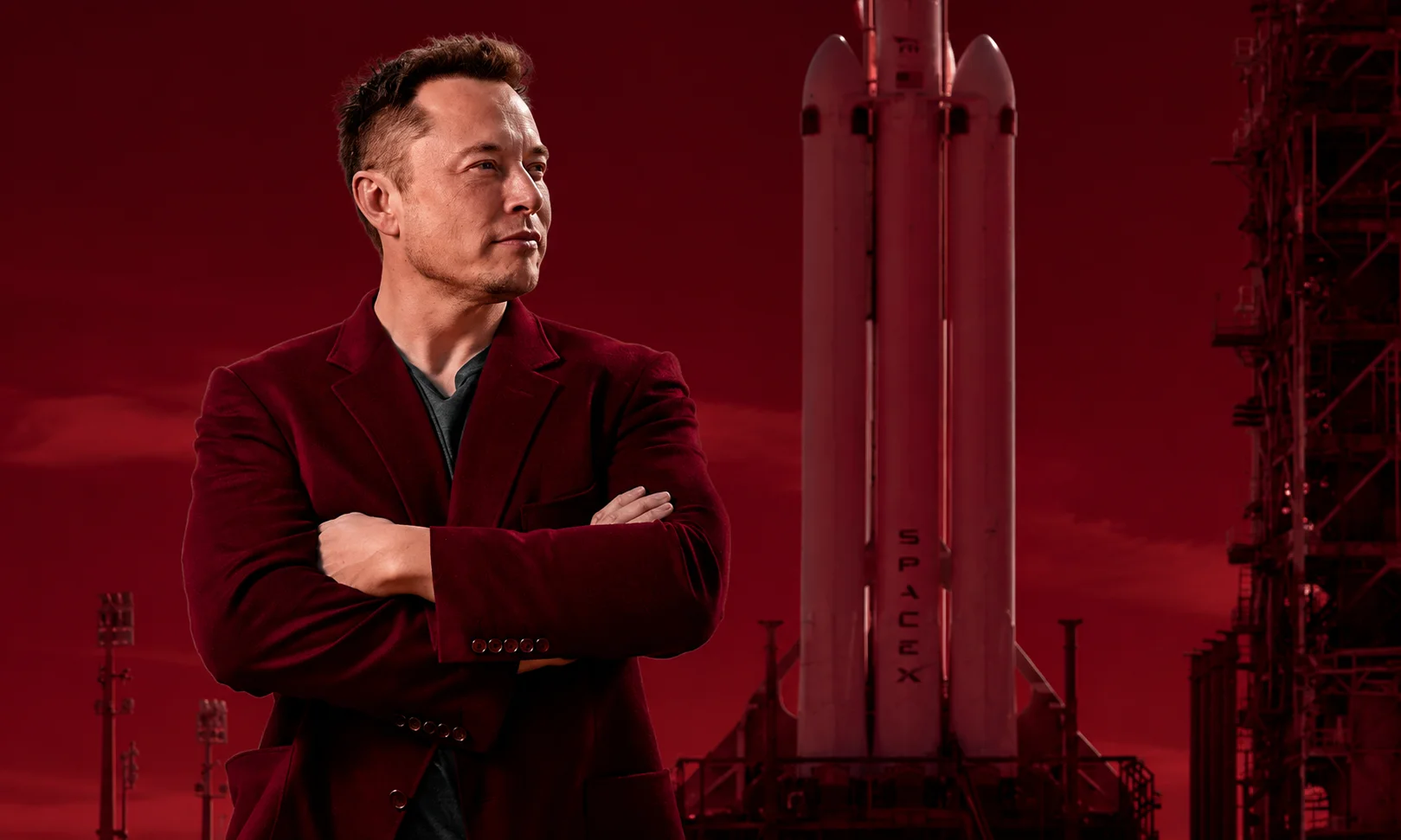
Elon Musk’s fortune is strongly connected to his ownership of major technology companies, especially Tesla and SpaceX.
Tesla helped transform the electric vehicle market while also building businesses around energy products and related technology. Musk became an important early investor in Tesla and has led the company as CEO since 2008.
SpaceX added another major part to the story. Its business focuses on space transportation and related technologies, making it very different from Tesla while still contributing significantly to Musk’s overall wealth.
The important lesson is that Musk’s fortune does not come from salary alone. It is closely tied to the market value of companies in which he owns significant stakes.
2. Alphabet: The Google Fortune
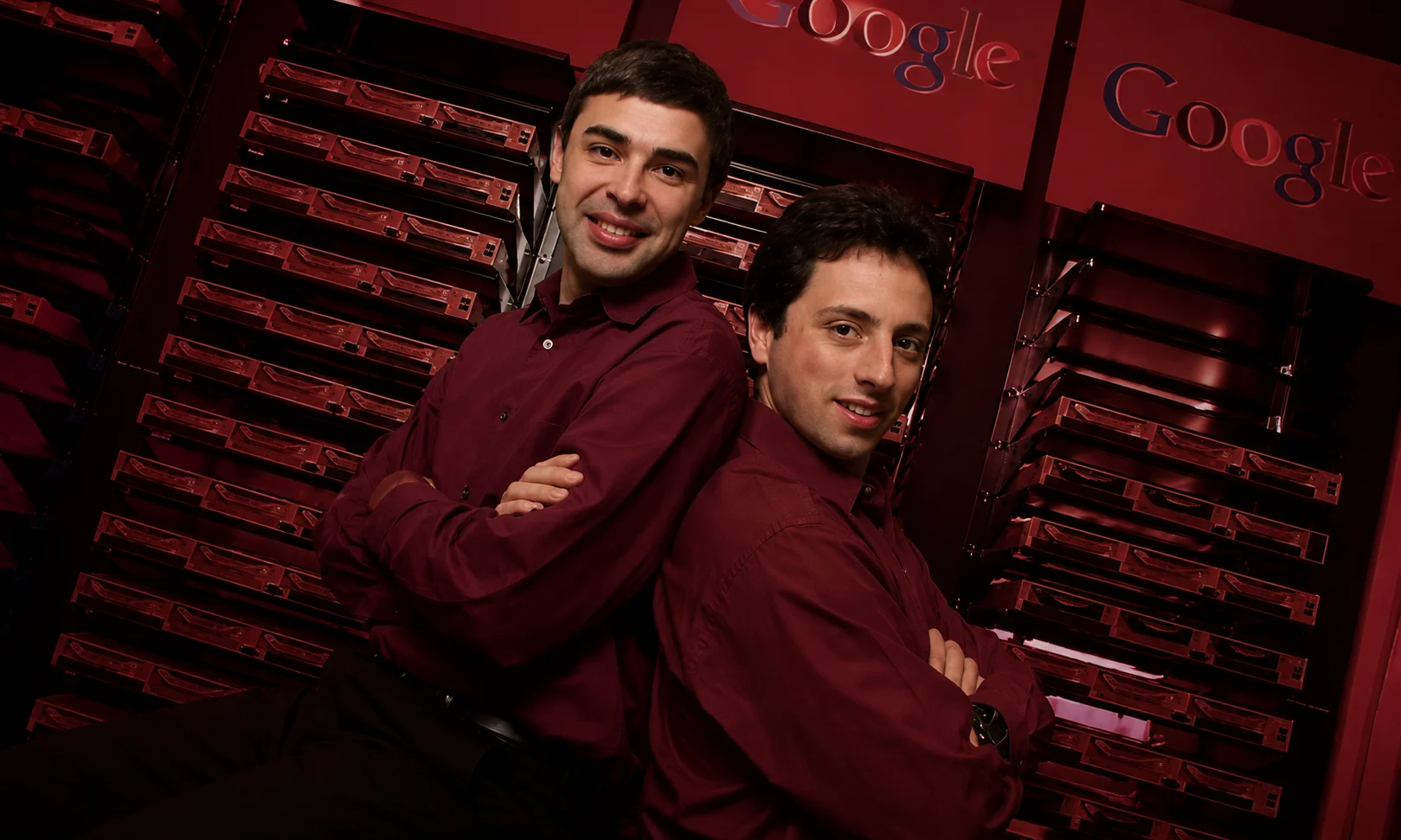
Larry Page and Sergey Brin built their fortunes through Google, which later became part of Alphabet.
Google started as a search engine, but the business expanded into advertising, YouTube, cloud computing, hardware, artificial intelligence, and other technology products.
Page and Brin stepped away from day-to-day leadership roles at Alphabet, yet they remain major shareholders. Forbes identifies both as controlling shareholders and board members.
This shows how an ownership stake can continue creating wealth long after a founder stops running the company every day.
Why Google Became So Valuable
Google’s strength comes from connecting several businesses around a huge digital ecosystem.
Search brings users. Advertising monetizes attention. YouTube adds video. Google Cloud serves businesses. AI adds another layer of potential growth.
That combination has helped turn one internet product into a global technology group.
3. Amazon: More Than an Online Store
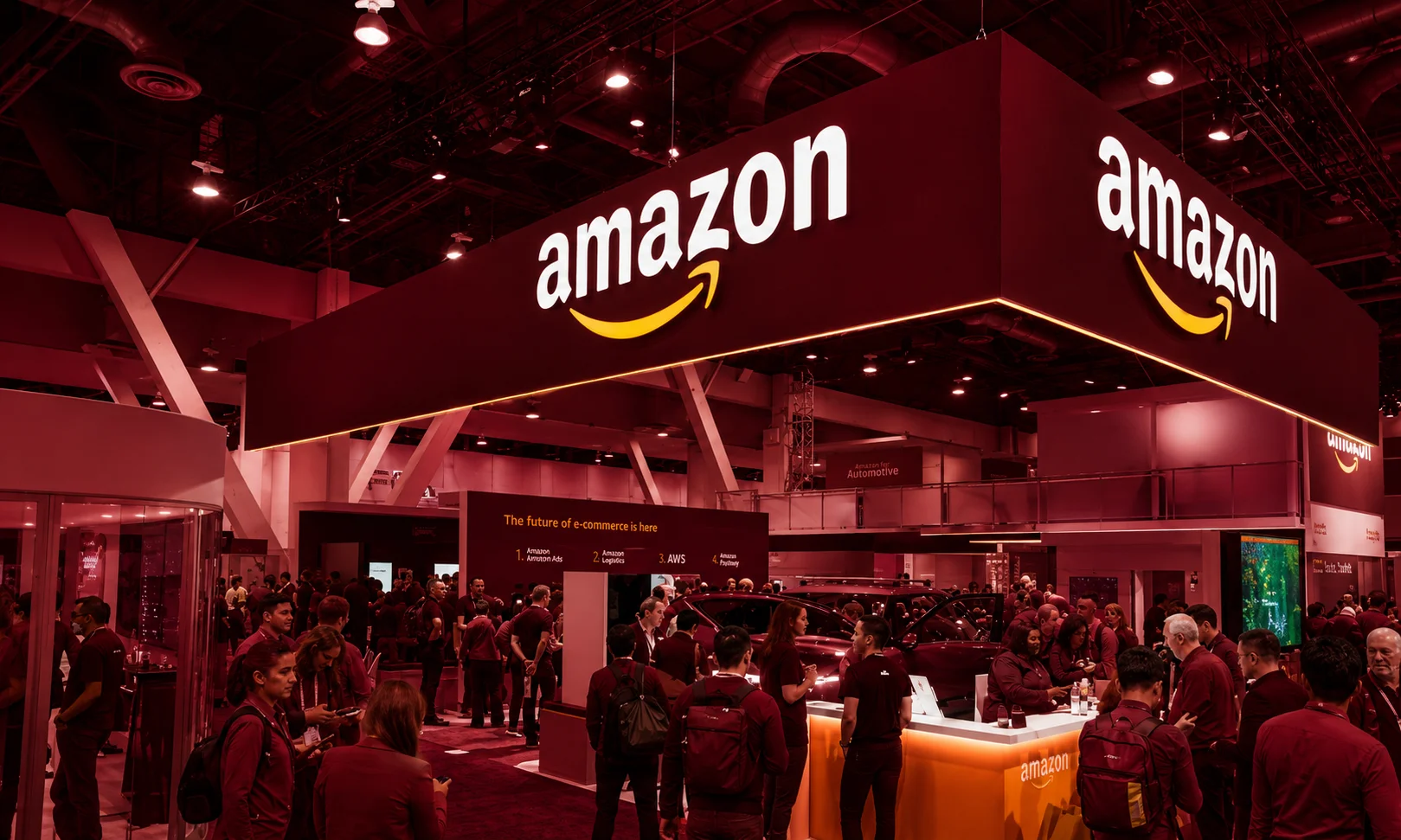
Jeff Bezos founded Amazon in 1994, initially building an online bookselling business before expanding into a much larger company. Forbes ranks Bezos among the world’s wealthiest people through his Amazon holdings.
Amazon now operates across several major areas, including online retail, logistics, cloud computing, advertising, devices, and subscription services.
AWS Changed the Business
One of Amazon’s most important developments was Amazon Web Services.
AWS allows companies, governments, developers, and organizations to rent computing infrastructure instead of building everything themselves.
This created a second major engine alongside Amazon’s retail business. Amazon has also developed a significant advertising operation, giving the company several different ways to generate revenue.
4. Meta: Turning Social Networks Into a Global Business
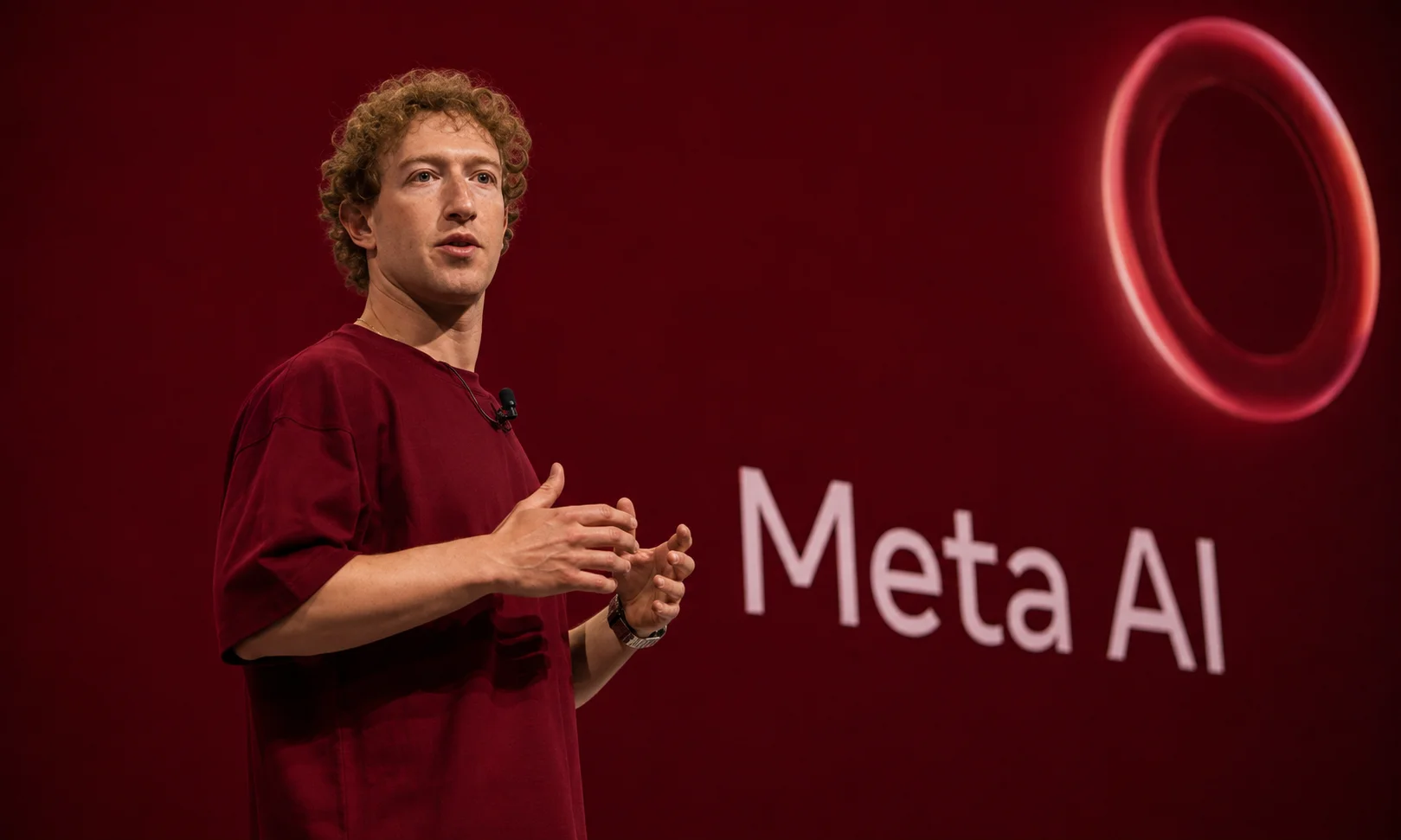
Mark Zuckerberg’s fortune is primarily connected to Meta Platforms, the company behind Facebook, Instagram, Messenger, and WhatsApp.
Meta’s core business is heavily based on digital advertising. In 2025, Meta reported $200.97 billion in total revenue, with $196.18 billion coming from advertising. Its Family of Apps averaged 3.58 billion daily active people in December 2025.
That scale explains why Meta became such a powerful wealth-creation machine.
The Bigger Meta Strategy
Meta is also investing heavily in artificial intelligence, virtual reality, augmented reality, and smart glasses.
The company separates its operations into Family of Apps and Reality Labs. While advertising remains the dominant source of revenue, Meta continues investing in technologies that could shape its future.
5. Oracle: Enterprise Software Built a Massive Fortune
Larry Ellison’s wealth comes primarily from Oracle, the enterprise technology company he co-founded.
Oracle built its reputation around databases and business software before expanding deeply into cloud infrastructure and other enterprise technologies.
Ellison remains closely connected to the company and owns a large portion of its shares. Forbes’ 2026 annual ranking placed him among the world’s richest people.
Oracle demonstrates an important point: enormous fortunes can be created by serving businesses rather than consumers.
Companies may not always be household names, but the software running their databases, financial systems, applications, and cloud workloads can be extremely valuable.
6. Nvidia: The AI Chip Business
Jensen Huang’s fortune comes from Nvidia, which he co-founded in 1993.
Nvidia became famous for graphics processors, but its role in artificial intelligence has dramatically increased its importance. Modern AI systems require enormous amounts of computing power, and Nvidia’s hardware and software ecosystem has become central to that market.
Nvidia’s investor site lists its 2026 annual report and regulatory filings, reflecting the company’s continued position as a major public technology business.
The Nvidia story also shows how fortunes can grow when a company becomes essential infrastructure for a major technological shift.
7. LVMH: Luxury Can Create Generational Wealth

Not every huge fortune comes from Silicon Valley.
Bernard Arnault and his family built one of the world’s largest luxury businesses through LVMH, whose portfolio includes major fashion, beauty, jewelry, retail, and beverage brands.
Forbes’ 2026 list placed Bernard Arnault and family among the world’s richest fortunes, describing Arnault as the leader of an empire containing 75 fashion and cosmetics brands, including Louis Vuitton and Sephora.
LVMH’s business is divided into areas such as Wines & Spirits, Fashion & Leather Goods, Perfumes & Cosmetics, Watches & Jewelry, and Selective Retailing. Its 2025 figures show how diversified the group has become.
The Power of Luxury Brands
Luxury businesses have a different advantage from technology companies.
A strong luxury brand can command premium prices, create customer loyalty, and remain desirable across generations. That combination can produce substantial profits and long-term shareholder value.
8. Berkshire Hathaway: Warren Buffett’s Investment Machine
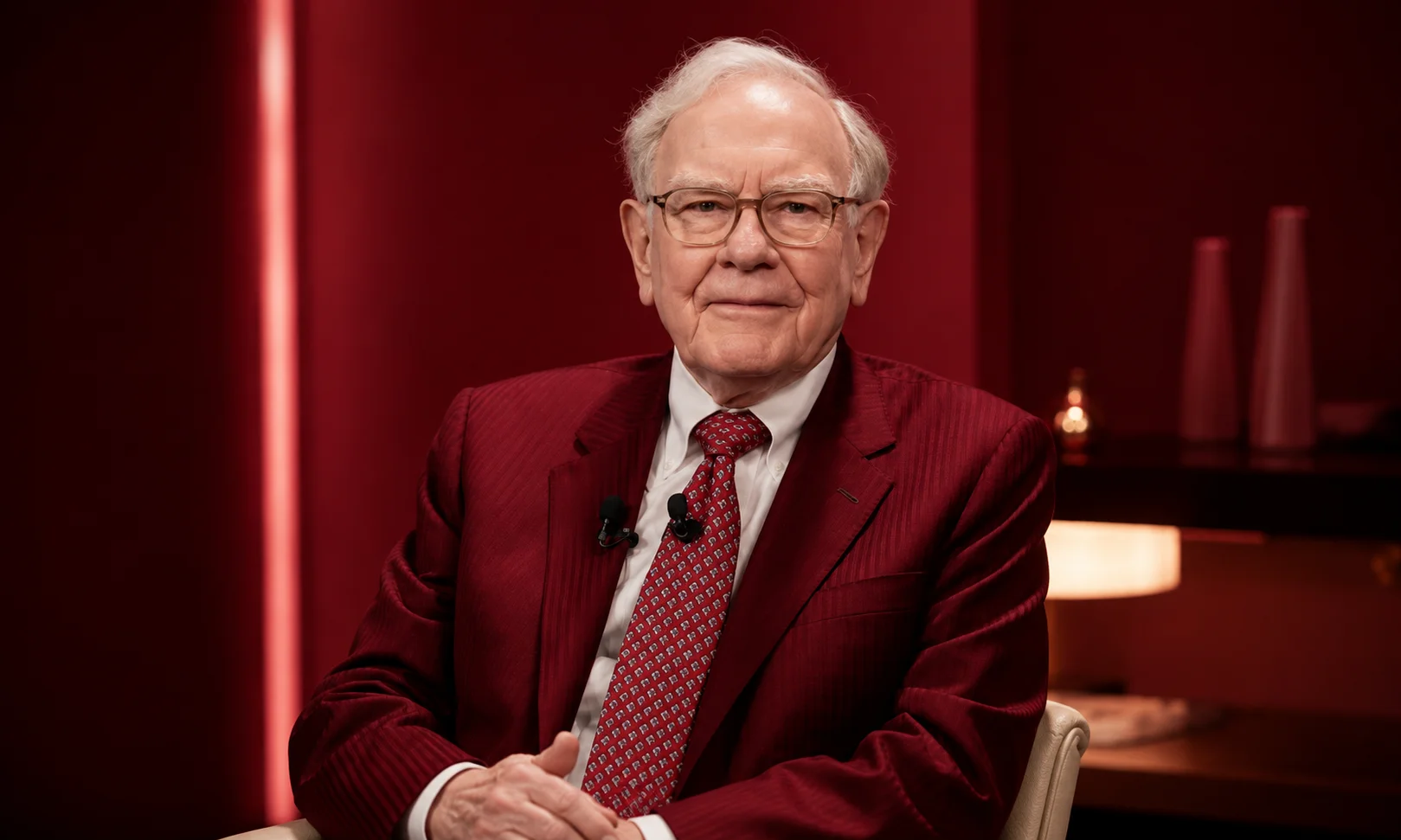
Warren Buffett’s fortune follows a very different path.
Rather than creating a technology platform or launching a consumer brand, Buffett built wealth through Berkshire Hathaway and decades of disciplined investing.
Berkshire owns businesses across insurance, railroads, utilities, energy, manufacturing, retail, and other areas.
Its 2025 annual report shows major operations including GEICO, BNSF, Berkshire Hathaway Energy, and several insurance businesses.
Why Berkshire Is Different
Berkshire’s model is based on owning productive businesses and investments for long periods.
This makes Buffett an important example of how patience, capital allocation, reinvestment, and ownership can create enormous wealth without founding a global technology company.
9. Microsoft: The Fortune Behind Software and Cloud
Microsoft created one of the most important technology fortunes of the modern era.
Its business grew from personal computer software into a much broader technology company covering productivity software, enterprise services, cloud computing, gaming, cybersecurity, and artificial intelligence.
Microsoft continues to publish detailed annual reports and financial disclosures through its investor relations operation. Its recent reporting also highlights the importance of cloud and AI to the company’s growth strategy.
Bill Gates is no longer Microsoft’s chief executive, but the company remains a major part of the historical foundation of his fortune.
What Do the World’s Biggest Fortunes Have in Common?
Although these businesses operate in completely different industries, several patterns appear repeatedly.
| Wealth Pattern | Example | Why It Matters |
|---|---|---|
| Large ownership stake | Tesla | Rising company value can increase personal wealth |
| Network effects | Google, Meta | More users can make the platform more valuable |
| Infrastructure | Nvidia, Amazon | Businesses can become essential to other companies |
| Strong brands | LVMH | Premium products can support high margins |
| Capital allocation | Berkshire Hathaway | Reinvestment can compound wealth over decades |
| Innovation | Microsoft, Oracle | New products can expand an established business |
| Multiple businesses | Amazon, Alphabet | Diversification can create additional growth engines |
Why Ownership Matters More Than Salary
One of the biggest misconceptions about billionaire wealth is that these people became rich because they received enormous salaries.
In many cases, the more important factor is equity ownership.
If someone owns 10% of a company worth $100 billion, that stake has a theoretical market value of $10 billion. If the company’s value rises to $200 billion, the same stake could be worth $20 billion.
The opposite is also true. If the share price falls, the person’s estimated fortune can drop quickly.
That is why billionaire net worth figures can change dramatically from one day to another.
Common Mistakes When Looking at Billionaire Wealth
Mistaking Net Worth for Cash
A billionaire’s net worth is not the same as money sitting in a bank account.
Much of the wealth may be represented by company shares, private-company stakes, investment holdings, property, or other assets.
Assuming One Company Explains Everything
Some fortunes are connected to several companies and investments.
Musk, for example, has major business interests beyond Tesla, while Buffett’s wealth is connected to Berkshire’s broad collection of businesses and investments.
Treating Rankings as Permanent
Rich lists change constantly because public company valuations change.
Forbes’ annual 2026 list used March 1 market data, while its real-time ranking updates with changing market conditions.
Frequently Asked Questions
Which companies created the world’s biggest fortunes?
Major examples include Tesla, SpaceX, Alphabet, Amazon, Meta, Oracle, Nvidia, Microsoft, LVMH, and Berkshire Hathaway.
How do founders become billionaires?
Founders usually become extremely wealthy by retaining shares in companies that become highly valuable. Their net worth rises as the value of those holdings increases.
Is billionaire wealth mostly cash?
No. A large portion is generally tied to shares and other assets. The value can therefore move up or down with markets.
Which industry has created the most modern billionaire fortunes?
Technology has produced many of today’s largest fortunes, especially through software, internet platforms, cloud computing, semiconductors, and AI. However, finance, luxury goods, retail, manufacturing, and other sectors remain important.
Can a private company create a huge fortune?
Yes. A founder can become extremely wealthy when investors place a high valuation on a private company and the founder owns a significant stake.
Conclusion
The businesses behind the world’s biggest fortunes are surprisingly different, but the underlying idea is often the same: ownership of something that becomes extremely valuable.
Google turned information and advertising into a global platform. Amazon connected commerce with cloud computing. Meta monetized enormous social networks. Nvidia became a key player in AI computing, while LVMH built value through powerful luxury brands. Berkshire Hathaway followed another path by combining investing with ownership of operating businesses.
The bigger lesson is that extraordinary fortunes are usually connected to extraordinary business scale, strong ownership positions, and years of compounding value.
For readers interested in business, technology, wealth, brands, and the companies shaping the modern economy, BrandClickX is a useful place to continue exploring how major businesses build influence and value.