
Every article has a moment that makes you pause. Imagine opening an app or using a device you’ve loved for years, only to find that after a major acquisition, it feels unfamiliar. Features disappear, updates slow down, and the community that once made the product special quietly moves on.
That pattern sits at the heart of acquisitions destroyed tech brand value. While mergers promise growth and innovation, history shows they can also erase years of customer trust and brand equity.
In this article, you’ll discover why some of the biggest technology deals became cautionary tales, explore 13 real-world examples, and learn what founders, investors, and business leaders can take away from them.
AI Overview
Technology acquisitions are often designed to create value, but many fail because companies underestimate the importance of culture, customer trust, and product identity. When integration is rushed, or monetization takes priority over user experience, even iconic brands can lose their market position.
This article examines 13 major acquisitions that damaged tech brand value, explains why they failed, and highlights practical lessons for future mergers.
Key Takeaways
- Most failed tech acquisitions result from poor integration rather than the acquisition itself.
- Brand value depends as much on customer trust as financial performance.
- Cultural clashes frequently lead to the loss of key talent and slower innovation.
- Overpaying for a company increases pressure to generate short-term returns, often hurting long-term value.
- Successful acquisitions preserve what made the acquired company valuable instead of replacing it.
- Real-world case studies reveal recurring patterns that modern businesses can avoid.
What are acquisitions that destroyed tech brand value?
Acquisitions that destroyed tech brand value are corporate takeovers where poor strategic decisions, cultural conflicts, weak integration, or excessive monetization reduced the acquired company’s reputation, customer loyalty, innovation, and financial value. These failures often lead to major write-downs, brand decline, or complete product shutdowns.
Why Do Acquisitions Destroy Tech Brand Value?

Many executives view acquisitions as the fastest way to gain new technology, customers, or market share. On paper, the strategy makes sense because combining two companies should create greater value than either could achieve alone.
The reality is often very different.
Technology companies rely on loyal users, talented engineers, and strong communities. Unlike physical assets, these strengths cannot simply be transferred from one owner to another.
When an acquiring company changes the product too quickly, removes the original leadership, or focuses only on quarterly profits, customers begin to lose confidence. That loss of trust usually happens long before financial reports reveal the damage.
According to the research behind this article, destructive acquisitions generally follow the same pattern. A company pays a premium during a period of market excitement, struggles with integration, introduces aggressive monetization, and eventually faces declining users and significant write-downs.
The history of technology mergers over the past three decades shows that protecting brand identity is often more valuable than completing the acquisition itself.
What Is Brand Value?
Brand value is more than a company’s logo or name. It represents the confidence customers have in a product, the loyalty they show over time, and the reputation built through consistent innovation.
For technology companies, brand value also includes developer ecosystems, online communities, and customer expectations. These assets are difficult to measure but extremely easy to damage.
When a trusted platform suddenly changes direction after an acquisition, users rarely wait to see whether things improve. Instead, they often move to a competitor that better reflects their expectations.
That is why many tech acquisition failures happen even when the acquired technology itself remains strong.
Why Companies Acquire Technology Businesses
Most acquisitions begin with positive intentions.
Companies typically pursue acquisitions to:
- Enter new markets faster.
- Acquire innovative products.
- Gain engineering talent.
- Expand intellectual property.
- Strengthen their competitive position.
When these goals align with customer needs, acquisitions can create lasting value.
However, problems begin when leadership believes purchasing a successful company automatically guarantees future success.
History repeatedly proves that buying innovation is much easier than preserving it.
13 Acquisitions That Destroyed Tech Brand Value
1. AOL and Time Warner (2000)

The AOL and Time Warner merger remains one of the most famous examples of failed tech acquisitions.
The $164 billion deal aimed to combine AOL’s internet dominance with Time Warner’s media empire. Instead, it exposed deep differences between a fast-moving internet company and a traditional media business.
Those cultural differences quickly became impossible to ignore.
Decision-making slowed, integration became increasingly complex, and the expected synergies never materialized. According to AOL Time Warner’s 2002 Annual Report, the company recorded a historic $98.7 billion annual net loss, still regarded as the largest corporate annual loss in history.
The merger eventually unraveled, and the companies separated in 2009.
Lesson: Even the largest acquisitions cannot succeed if corporate cultures move in completely different directions.
2. Microsoft and Nokia Mobile (2013)
Microsoft hoped purchasing Nokia’s mobile business for $7.2 billion would strengthen Windows Phone and create a serious competitor to Apple and Android devices.
Instead, the deal became one of the biggest tech merger failures of the smartphone era.
Although Nokia remained respected for hardware quality, Windows Phone never attracted enough application developers or consumer demand to challenge its rivals.
Microsoft eventually wrote down $7.6 billion in 2015 and eliminated approximately 7,800 jobs, effectively ending its smartphone ambitions. These figures are documented in Microsoft’s financial reporting referenced in the research report.
The Nokia handset brand gradually disappeared from Microsoft’s long-term strategy.
Lesson: Strong hardware cannot compensate for a weak software ecosystem.
3. HP and Autonomy (2011)
HP’s acquisition of British software company Autonomy illustrates why due diligence matters as much as strategy.
HP paid $11.1 billion for Autonomy in 2011, expecting the acquisition to strengthen its enterprise software business.
Only a year later, HP announced an $8.8 billion write-down, arguing that accounting irregularities had significantly inflated Autonomy’s value.
The legal consequences continued for years.
In March 2026, London’s High Court rejected an appeal by the estate of late tech tycoon Mike Lynch, solidifying an order to pay Hewlett Packard Enterprise (HPE) roughly £920 million ($1.24 billion) to cover damages, interest, and costs related to the fraudulent 2011 acquisition of Autonomy, according to the official High Court judgment referenced in the research.
The case remains one of the clearest examples of how inadequate due diligence can transform an ambitious acquisition into a long-term legal and financial crisis.
Lesson: No acquisition is worth rushing if financial information has not been thoroughly verified.
4. Yahoo and Tumblr (2013)
When Yahoo acquired Tumblr for $1.1 billion, the goal was clear: attract a younger audience and revive Yahoo’s position in social media.
At first, the deal looked promising. Tumblr had a passionate creator community, a distinctive identity, and millions of loyal users.
The problems started after integration.
Yahoo pushed aggressive advertising strategies and introduced policies that many long-time users felt undermined the platform’s culture. Instead of protecting Tumblr’s identity, the company focused on generating faster revenue.
That decision proved costly.
According to the research report, Yahoo eventually sold Tumblr to Automattic in 2019 for less than $3 million, wiping out 99.7% of the acquisition’s value.
Few destroyed brand value acquisitions illustrate the cost of ignoring community trust more clearly.
Lesson: Community-driven platforms succeed because of their users, not just their technology.
5. eBay and Skype (2005)
eBay believed Skype would improve communication between buyers and sellers.
The company spent $2.6 billion, expecting voice calls to become a key part of online transactions.
Customers had different preferences.
Most eBay users preferred communicating through written messages rather than speaking directly with strangers. The expected product synergy never appeared.
Only two years later, eBay recorded a $900 million write-down, acknowledging that the acquisition had failed to meet expectations.
This remains one of the most discussed bad tech acquisitions because both businesses were successful independently, but they never fit together strategically.
Lesson: Buying two successful companies does not guarantee they belong together.
6. Google and Motorola Mobility (2012)
Google acquired Motorola Mobility for $12.5 billion, making headlines across the technology industry.
Many believed Google wanted to become a major smartphone manufacturer.
That wasn’t the full story.
According to the research, Google’s primary objective was Motorola’s extensive patent portfolio, which helped defend Android against patent litigation.
Once that objective was achieved, Google sold Motorola Mobility to Lenovo in 2014 for $2.9 billion.
From a branding perspective, Motorola lost momentum, while Google’s hardware ambitions shifted elsewhere.
Although the patents remained valuable, Motorola’s consumer brand never recovered its former strength.
Lesson: When intellectual property becomes the priority, the consumer brand may become secondary.
7. Sprint and Nextel (2005)
Sprint’s $36 billion merger with Nextel looked like an opportunity to create a stronger telecommunications company.
Instead, it became one of the largest tech M&A failures in history.
The two businesses relied on different network technologies, making integration far more difficult than executives expected.
Corporate culture also became a major obstacle.
According to the research report, Sprint announced a $30 billion goodwill impairment in 2008 after the merger failed to deliver expected value.
Eventually, the Nextel brand disappeared completely.
Lesson: Technology compatibility matters just as much as financial planning.
8. News Corp and MySpace (2005)
Before Facebook became dominant, MySpace was the world’s largest social networking platform.
News Corp purchased it for $580 million, hoping to build a digital media powerhouse.
Corporate bureaucracy slowed product development.
Meanwhile, Facebook continued improving its platform and attracted users looking for a cleaner, faster experience.
According to the research, News Corp later sold MySpace for $35 million, representing about a 94% loss in value.
The decline wasn’t caused by a lack of users.
It happened because innovation slowed while competitors moved faster.
Lesson: Fast-growing technology companies require continuous innovation, not heavy corporate control.
9. Yahoo and GeoCities (1999)
GeoCities helped shape the early internet by allowing people to create personal websites and online communities.
Yahoo purchased the platform for $3.57 billion during the dot-com boom.
After the acquisition, Yahoo introduced stricter commercial policies and gradually removed many of the community-driven features that made GeoCities unique.
The platform steadily lost its identity.
In 2009, Yahoo shut GeoCities down completely, ending one of the internet’s earliest online communities.
This example shows that mergers that failed tech businesses often destroy culture long before revenue declines.
Lesson: Digital communities cannot be managed like traditional corporate assets.
Why These Acquisitions Failed in Similar Ways
Although these companies operated in different industries, their failures followed remarkably similar patterns.
Overpaying During Market Hype
Several companies purchased businesses at peak valuations because they feared missing the next big opportunity.
That pressure created unrealistic expectations and left little room for long-term integration.
Culture Was Treated as an Afterthought
Developers, founders, and creative teams often built the very products customers loved.
When those people left after acquisition, innovation slowed almost immediately.
Short-Term Revenue Replaced Long-Term Trust
Many acquirers attempted to justify expensive purchases through faster monetization.
More advertising, policy changes, and product redesigns often pushed loyal users toward competitors.
Customers Noticed Before Investors Did
Financial losses usually appeared years after the acquisition.
Customers, however, recognized declining product quality much earlier and quietly migrated elsewhere.
These recurring patterns explain why many tech company acquisition mistakes continue to repeat despite decades of M&A experience.
10. HP and Compaq (2002)
HP acquired Compaq for $25 billion to strengthen its position in the personal computer market. While the deal increased HP’s size, it also sparked intense debate among shareholders and industry analysts.
Instead of reinforcing HP’s premium reputation, the merger shifted greater focus toward lower-margin PC sales. According to the research report, HP’s stock fell by roughly 50%, and CEO Carly Fiorina eventually left the company.
The acquisition wasn’t a complete business failure, but it weakened HP’s brand positioning for years.
Lesson: Bigger isn’t always better if growth comes at the expense of brand identity.
11. Microsoft and aQuantive (2007)
Microsoft purchased digital advertising company aQuantive for $6.3 billion to compete with Google’s growing advertising business.
The acquisition was largely a defensive move rather than one built around operational strengths.
Microsoft struggled to integrate aQuantive’s advertising technology into its broader ecosystem. As a result, the company announced a $6.2 billion write-down in 2012, nearly eliminating the deal’s value.
It remains one of Microsoft’s largest acquisition write-offs.
Lesson: Buying a competitor’s advantage doesn’t automatically give you the same competitive advantage.
12. Cisco and Flip Video (2009)
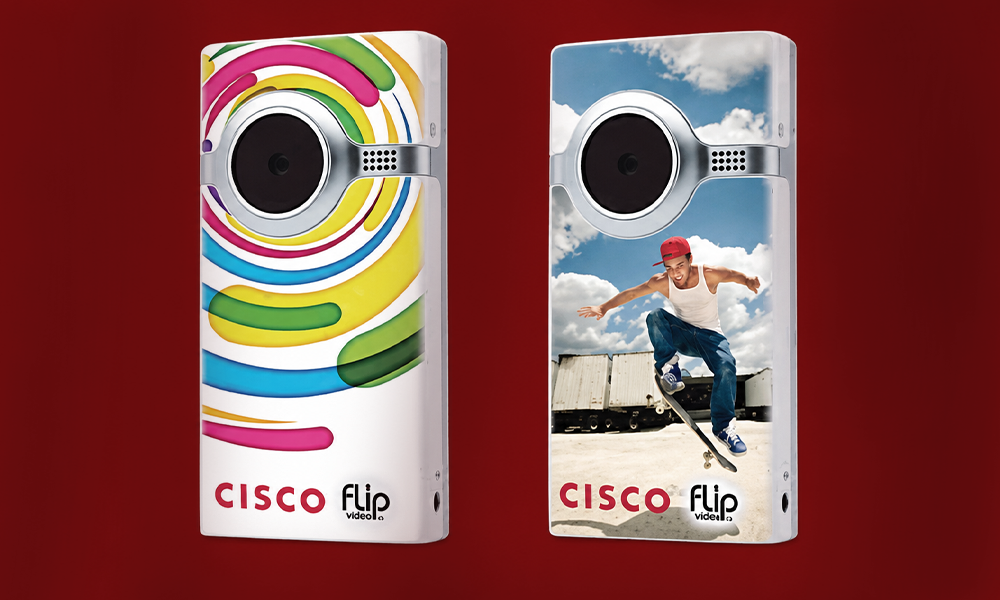
When Cisco acquired Flip Video for $590 million, pocket video cameras were still popular among consumers.
The technology landscape changed almost immediately.
Smartphone cameras improved rapidly, eliminating the need for dedicated video cameras. Cisco shut down the Flip business in 2011 because demand had largely disappeared.
Unlike other acquisitions, this failure wasn’t caused by poor integration alone.
It also reflected a failure to anticipate changing consumer behavior.
Lesson: Market timing can destroy an acquisition even when integration is well managed.
13. Oracle and Sun Microsystems (2010)
Oracle acquired Sun Microsystems for $7.4 billion, gaining control of valuable technologies such as Java, Solaris, and SPARC.
The acquisition delivered important enterprise assets, but many developers believed Oracle’s priorities changed significantly after the purchase.
According to the research report, Oracle emphasized software licensing and legal enforcement while reducing investment in several hardware and open-source initiatives.
Although Oracle benefited commercially, Sun’s developer-friendly reputation weakened considerably.
Lesson: Protecting enterprise revenue should not come at the cost of losing developer trust.
Common Patterns Behind Acquisitions Destroyed Tech Brand Value
Looking across all 13 examples, the same warning signs appear repeatedly.
| Failure Pattern | Real Example | Result |
| Cultural mismatch | AOL–Time Warner | Innovation slowed and integration failed |
| Poor due diligence | HP–Autonomy | Multi-billion-dollar write-down and years of litigation |
| No product synergy | eBay–Skype | Customers ignored the combined offering |
| Forced monetization | Yahoo–Tumblr | Community abandoned the platform |
| Technology incompatibility | Sprint–Nextel | Costly integration failures |
| Ignoring market shifts | Cisco–Flip | Product became obsolete within two years |
These examples show that failed technology mergers rarely collapse because of a single mistake. Instead, several strategic errors combine until the original value disappears.
Successful vs. Failed Acquisitions
Not every acquisition ends badly. The difference often lies in how the acquiring company manages the transition.
| Successful Approach | Failed Approach |
| Preserve the acquired brand | Replace the original identity quickly |
| Keep founders involved | Lose key leadership early |
| Integrate gradually | Force immediate organizational changes |
| Prioritize customer experience | Focus only on short-term revenue |
| Support existing communities | Alienate loyal users with major policy changes |
Companies such as Google with YouTube and Meta with Instagram largely allowed those platforms to maintain their own identities during the early years. Many of the acquisitions discussed earlier took the opposite approach.
Practical Application: How to Evaluate Future Tech Acquisitions
Whether you’re an investor, founder, executive, or marketer, you can evaluate an acquisition before the headlines settle.
Ask these questions:
- Does the acquisition solve a real strategic problem?
- Growth alone isn’t enough. There should be a clear business purpose.
- Are the company cultures compatible?
- Culture influences innovation, employee retention, and customer experience.
- Will the acquired brand remain independent?
- Brands often retain more value when their identity is preserved.
- Is leadership staying after the deal?
- Founder departures frequently reduce innovation and long-term vision.
- Is customer trust being protected?
- Aggressive monetization may improve short-term revenue while damaging long-term loyalty.
Common Mistakes to Avoid
- Paying inflated prices because of market hype.
- Ignoring due diligence.
- Changing products too quickly.
- Removing successful leadership teams.
- Prioritizing quarterly profits over customer relationships.
- Assuming size automatically creates synergy.
Following this checklist won’t guarantee success, but it can help identify risks before they become expensive mistakes.
The Future of Tech Acquisitions
The research suggests the technology industry is becoming more cautious.
In 2026, increasing regulatory scrutiny has encouraged companies to consider partnerships, minority investments, and licensing agreements instead of massive acquisitions.
Another important trend is protecting community-driven platforms.
Businesses increasingly recognize that user trust is part of the product itself. Destroying that trust can erase years of growth far faster than any balance sheet predicts.
Conclusion
Think back to that favorite app or device that suddenly felt different after changing owners.
In many cases, the technology didn’t become worse overnight. What changed was the vision, the culture, and the relationship with the people who trusted the brand.
The history of acquisitions destroyed tech brand value shows that the most successful deals aren’t always the biggest or the most expensive. They’re the ones that protect what made the acquired company valuable in the first place.
For technology companies, trust is rarely listed as an asset on a balance sheet. Yet history repeatedly proves it may be the most valuable asset of all.
Frequently Asked Questions
Why do acquisitions destroy tech brand value so often?
Technology companies depend on innovation, talented people, and loyal communities. When an acquiring company changes leadership, culture, or product direction too quickly, those advantages begin to disappear. Most failures result from poor integration, cultural conflict, or unrealistic expectations rather than the acquisition alone.
What is considered the worst tech acquisition in history?
Many analysts consider AOL’s merger with Time Warner the worst example. According to the AOL Time Warner Annual Report, the company reported a $99 billion annual loss in 2002, making it one of the largest corporate write-downs ever recorded. The deal became a symbol of excessive optimism during the dot-com era.
Why did HP’s acquisition of Autonomy fail?
HP purchased Autonomy for $11.1 billion, but later announced an $8.8 billion write-down after alleging accounting irregularities. The dispute resulted in years of litigation, and in 2026 the UK High Court ordered the estate of founder Mike Lynch to pay more than £700 million, according to the research report.
Can a damaged technology brand recover after an acquisition?
Recovery is possible, but it is difficult. Tumblr is one example where new ownership under Automattic shifted back toward a community-focused approach after Yahoo’s unsuccessful stewardship. Rebuilding trust, however, usually takes much longer than losing it.
What is the biggest lesson from these failed tech acquisitions?
The biggest lesson is that acquiring technology is easier than preserving its value. Companies that respect culture, retain leadership, and protect customer trust have a much better chance of creating lasting value than those focused only on financial returns.