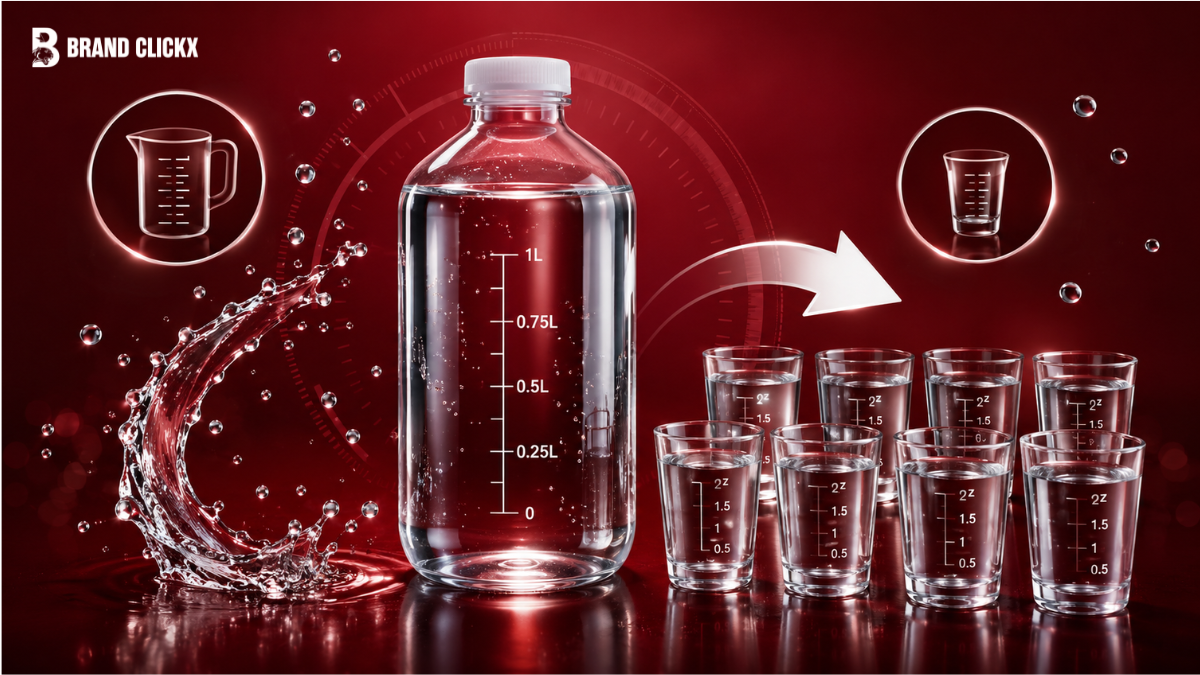
The short answer: 1 liter = 33.814 US fluid ounces or 35.195 UK (Imperial) fluid ounces.
But which one applies to you depends on where you are and what recipe you’re following. This guide covers both conversions, the exact formulas, a full chart from 0.25L to 5L, common bottle sizes, and the mistakes that trip most people up.
AI Overview
A liter is a metric unit of volume equal to 1,000 milliliters. A fluid ounce is an imperial unit of volume used primarily in the United States and United Kingdom. The two systems define a “fluid ounce” differently, which is why there are two correct answers to this question.
1 liter = 33.814 US fluid ounces (used in the United States, Guam, US Virgin Islands) 1 liter = 35.195 UK/Imperial fluid ounces (used in the UK, Canada, Australia, Ireland, and other Commonwealth countries)
For most people reading a US recipe, using a US measuring cup, or tracking water intake in ounces 33.814 fl oz per liter is the number to use.
Key Takeaways
| Conversion | Value |
| 1 liter → US fluid ounces | 33.814 fl oz |
| 1 liter → UK fluid ounces | 35.195 fl oz |
| 1 US fluid ounce → mL | 29.5735 mL |
| 1 UK fluid ounce → mL | 28.4131 mL |
| 1 liter → mL | 1,000 mL |
| Formula: Liters to US oz | Liters × 33.814 |
| Formula: US oz to liters | Ounces ÷ 33.814 |
| Formula: Liters to UK oz | Liters × 35.195 |
| Formula: UK oz to liters | Ounces ÷ 35.195 |
Quick Answer
If you’re in the United States: 1 liter = 33.814 US fluid ounces
If you’re in the UK, Canada, Australia, or Ireland: 1 liter = 35.195 Imperial fluid ounces
The most common error people make is using UK fluid ounces in a US recipe, or vice versa. The difference is small per ounce about 1.04 mL but it compounds in larger quantities.
Why Are There Two Different Answers?
The US and UK historically defined their measurement systems independently, and neither matched the other exactly.
The US fluid ounce is based on the wine gallon used in England before 1824. After the US adopted the international inch in 1959, one US fluid ounce was fixed at exactly 29.5735295625 mL. There are 128 US fluid ounces in a US gallon.
The UK (Imperial) fluid ounce was redefined in 1824 when Britain overhauled its entire weights and measures system. The Imperial gallon was set at 4.54609 liters, making one UK fluid ounce exactly 28.4130625 mL. There are 160 Imperial fluid ounces in an Imperial gallon.
Because the liter is a metric unit and stands independent of both systems, converting it to fluid ounces produces different results depending on which ounce definition you use.
The Formula
Liters to US Fluid Ounces
Ounces = Liters × 33.814
Examples:
- 1 liter × 33.814 = 33.814 fl oz
- 1.5 liters × 33.814 = 50.721 fl oz
- 2 liters × 33.814 = 67.628 fl oz
US Fluid Ounces to Liters
Liters = Ounces ÷ 33.814
Examples:
- 32 oz ÷ 33.814 = 0.946 liters
- 64 oz ÷ 33.814 = 1.893 liters
- 128 oz ÷ 33.814 = 3.785 liters (approximately 1 US gallon)
Liters to UK Fluid Ounces
Ounces = Liters × 35.195
Examples:
- 1 liter × 35.195 = 35.195 fl oz
- 1.5 liters × 35.195 = 52.793 fl oz
- 2 liters × 35.195 = 70.390 fl oz
UK Fluid Ounces to Liters
Liters = Ounces ÷ 35.195
Liters to Ounces Conversion Chart
US Fluid Ounces (most common)
| Liters | US Fluid Ounces | Nearest Common Measure |
| 0.25 L | 8.454 fl oz | 1 cup (US) |
| 0.5 L | 16.907 fl oz | ~17 fl oz |
| 0.75 L | 25.361 fl oz | ~25 fl oz |
| 1 L | 33.814 fl oz | ~34 fl oz |
| 1.25 L | 42.268 fl oz | ~42 fl oz |
| 1.5 L | 50.721 fl oz | ~51 fl oz |
| 1.75 L | 59.175 fl oz | ~59 fl oz |
| 2 L | 67.628 fl oz | ~68 fl oz |
| 2.5 L | 84.535 fl oz | ~85 fl oz |
| 3 L | 101.442 fl oz | ~101 fl oz |
| 3.5 L | 118.349 fl oz | ~118 fl oz |
| 4 L | 135.256 fl oz | ~135 fl oz |
| 4.5 L | 152.163 fl oz | ~152 fl oz |
| 5 L | 169.070 fl oz | ~169 fl oz |
UK Imperial Fluid Ounces
| Liters | UK Fluid Ounces |
| 0.25 L | 8.799 fl oz |
| 0.5 L | 17.598 fl oz |
| 1 L | 35.195 fl oz |
| 1.5 L | 52.793 fl oz |
| 2 L | 70.390 fl oz |
| 2.5 L | 87.988 fl oz |
| 3 L | 105.585 fl oz |
| 4 L | 140.780 fl oz |
| 5 L | 175.975 fl oz |
Ounces to Liters Conversion Chart (US)
| US Fluid Ounces | Liters |
| 8 fl oz (1 cup) | 0.237 L |
| 12 fl oz | 0.355 L |
| 16 fl oz | 0.473 L |
| 16.9 fl oz | 0.500 L (half liter) |
| 20 fl oz | 0.591 L |
| 24 fl oz | 0.710 L |
| 32 fl oz | 0.946 L |
| 33.814 fl oz | 1.000 L |
| 40 fl oz | 1.183 L |
| 48 fl oz | 1.420 L |
| 64 fl oz | 1.893 L |
| 67.628 fl oz | 2.000 L |
| 128 fl oz | 3.785 L (1 US gallon) |
Common Bottle Sizes in Ounces and Liters
These are the sizes you’ll encounter most often in stores and kitchens:
| Bottle Size | US Fluid Ounces | Liters |
| Small water bottle | 8 fl oz | 0.237 L |
| Standard water bottle | 16.9 fl oz | 0.500 L (half liter) |
| Large water bottle | 20 fl oz | 0.591 L |
| Standard sports bottle | 24 fl oz | 0.710 L |
| Standard soda bottle | 33.814 fl oz | 1.000 L |
| Standard wine bottle | 25.36 fl oz | 0.750 L |
| Large soda bottle | 67.628 fl oz | 2.000 L |
| Standard spirit bottle (US) | 25.36 fl oz | 0.750 L |
The 16.9 fl oz bottle is the most common water bottle size sold in the US. Two of them equal almost exactly 1 liter (33.8 fl oz). For practical purposes, buying two 16.9 oz bottles gives you one liter.
Fluid Ounces vs Dry Ounces: An Important Distinction
This is the most common confusion in measurement conversion.
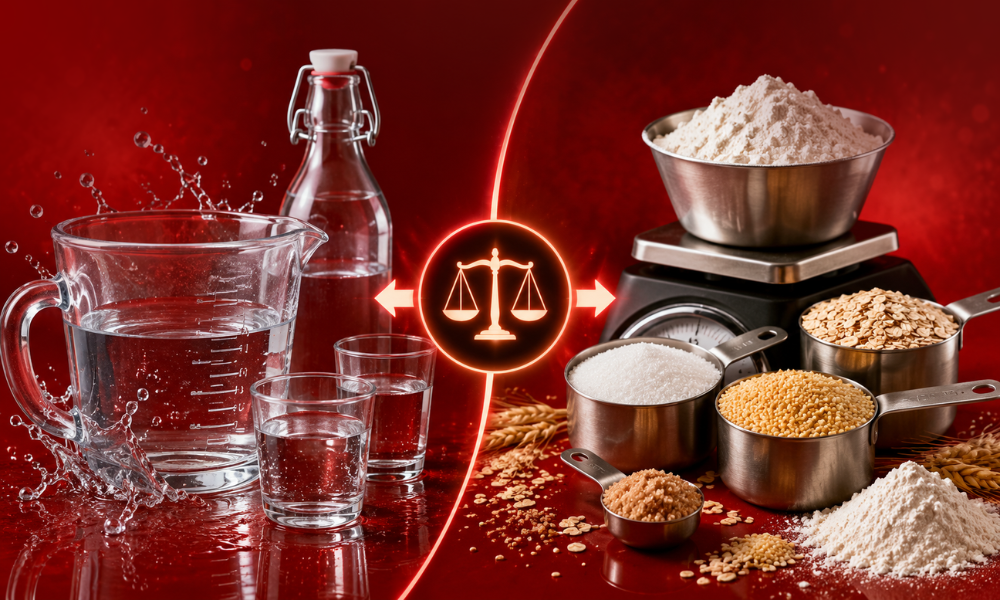
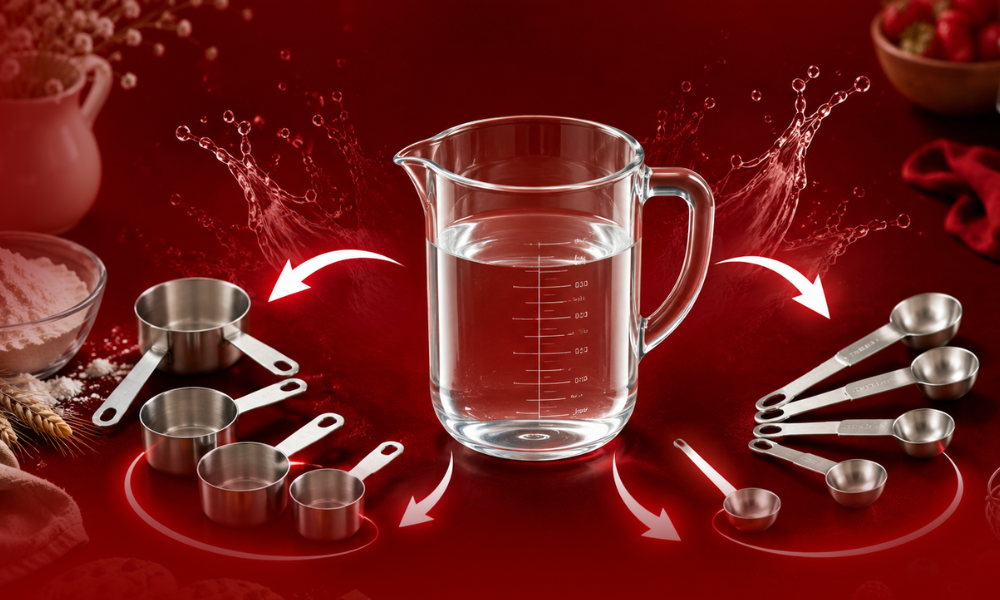
A fluid ounce (fl oz) measures volume how much space a liquid takes up. All conversions in this article are fluid ounces.
A dry ounce (oz) measures weight (mass) how heavy something is.
They are not interchangeable. Asking “how many dry ounces are in a liter?” doesn’t have a single answer, because it depends entirely on the density of the substance. A liter of water weighs 33.814 fluid ounces in volume but approximately 35.27 dry (weight) ounces, because water has a density close to (but not exactly) 1 g/mL at room temperature. A liter of honey weighs far more. A liter of cooking oil weighs less.
Whenever you see a recipe call for ounces of liquid water, milk, juice, oil, broth it means fluid ounces. Use the 33.814 conversion for US recipes.
Kitchen Conversion: Liters to Cups, Tablespoons, and Teaspoons
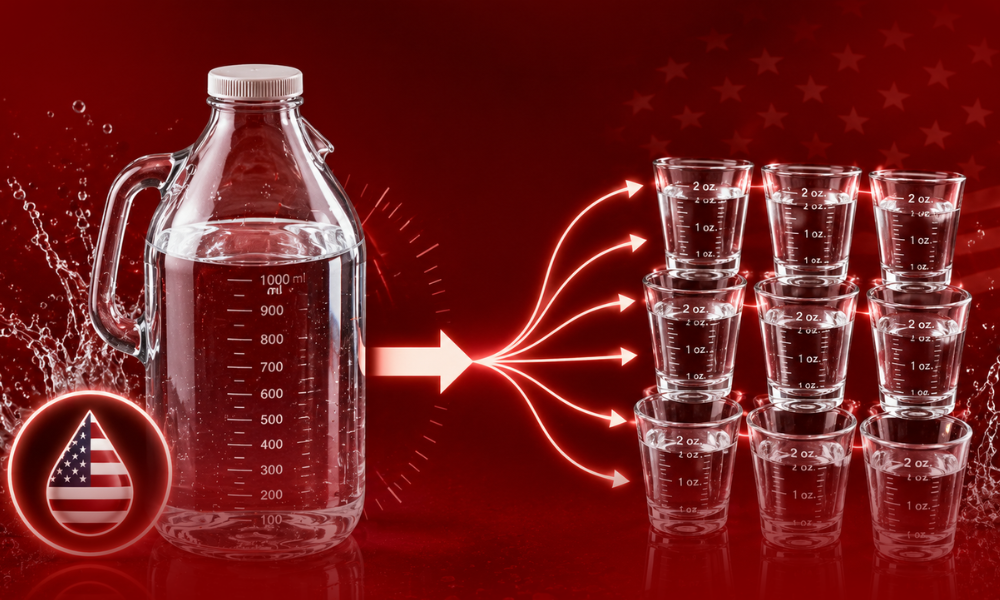
For cooking and baking, here’s how liters relate to other common US kitchen measurements:
| Liters | US Cups | US Tablespoons | US Teaspoons |
| 0.25 L | ~1.057 cups | ~16.9 tbsp | ~50.7 tsp |
| 0.5 L | ~2.113 cups | ~33.8 tbsp | ~101.4 tsp |
| 1 L | ~4.227 cups | ~67.6 tbsp | ~202.9 tsp |
| 1.5 L | ~6.340 cups | ~101.4 tbsp | ~304.3 tsp |
| 2 L | ~8.454 cups | ~135.3 tbsp | ~405.8 tsp |
For quick kitchen use: 1 liter is approximately 4 and a quarter US cups. A recipe calling for 1 liter of liquid is essentially asking for 4 cups plus 3–4 tablespoons.
Practical Examples for Daily Use
Water intake tracking: Most hydration recommendations are given in liters (the US recommendation of “8 glasses of water” assumes 8oz glasses, which equals about 1.9 liters daily). One liter = roughly 33.8 fl oz = four 8-oz glasses.
Cooking from international recipes: A British recipe calling for 500ml of milk is asking for 17.6 UK fluid ounces or 16.9 US fluid ounces. The difference matters more when recipes scale up. At 2 liters, you’d be off by nearly 3 fluid ounces (2.6 oz) using the wrong system.
Wine and spirits: A standard wine bottle is 750mL which is 25.36 US fluid ounces or 26.4 UK fluid ounces. A standard US spirit bottle (750mL) contains exactly 25.36 US fl oz.
Sports hydration: A 32 fl oz water bottle holds 0.946 liters just under a liter. A 40 fl oz bottle holds 1.183 liters.
Common Conversion Mistakes to Avoid
Assuming 32 oz equals 1 liter. A common rounding error. 32 fl oz is actually 0.946 liters about 54mL short of a full liter. In a recipe, that shortfall can affect the result.
Mixing up US and UK ounces. If you’re following a British recipe and using US measuring tools, your “fluid ounce” is slightly larger. At 1 liter, the difference is about 1.38 fluid ounces small but meaningful in baking.
Confusing fluid ounces with weight ounces. A liter of water weighs about 33.8 fluid ounces in volume, but weighs 35.27 ounces by mass. The two are close for water, but diverge significantly for denser liquids like honey or lighter ones like alcohol.
Rounding too aggressively for precise tasks. Saying “1 liter is about 34 ounces” is fine for a casual recipe. For pharmaceutical, scientific, or baking applications where precision matters, use 33.814.
Which System Should You Use?
Use US fluid ounces (33.814 per liter) when:
- Following an American recipe
- Using a US measuring cup or pitcher
- Tracking water intake from a US fitness app
- Reading a US nutrition label
Use UK/Imperial fluid ounces (35.195 per liter) when:
- Following a British, Irish, or older Canadian recipe
- Using measuring tools marked in UK measurements
- The recipe comes from Australia, New Zealand, or South Africa
When in doubt: Check your measuring cup. Most modern cups sold in the US show both milliliters and US fluid ounces on the same scale. If yours shows only “oz,” verify which system it uses before converting.
FAQs
How many ounces in a liter?
There are 33.814 US fluid ounces in 1 liter, or 35.195 UK Imperial fluid ounces. The answer depends on which fluid ounce system you’re using.
Is 32 oz the same as 1 liter?
No. 32 US fluid ounces equals 0.946 liters about 54mL short of a full liter.
How many 16.9 oz water bottles make 1 liter?
Approximately 2 bottles. Two 16.9 fl oz bottles equal 33.8 fl oz, which is just under 1 liter.
How many fl oz is a 2-liter bottle?
A 2-liter bottle holds 67.628 US fluid ounces, or approximately 70.390 UK fluid ounces.
What is the formula to convert liters to ounces?
Multiply liters by 33.814 for US fluid ounces. Example: 1.5 liters × 33.814 = 50.72 fl oz.
How many ounces is 500mL?
500mL (0.5 liters) equals 16.907 US fluid ounces, or approximately 17.6 UK fluid ounces.
How many ounces in 1.5 liters?
1.5 liters equals 50.721 US fluid ounces, or approximately 52.793 UK fluid ounces.
What’s the difference between a fluid ounce and a dry ounce?
A fluid ounce measures volume (liquid space). A dry ounce measures weight (mass). They are not interchangeable, and liter conversions use fluid ounces only.