
Quick Answer
Self discipline isn’t a fixed personality trait or a mental muscle you grind down through willpower. Research increasingly shows it’s a combination of environmental design, habit strength, and identity, people with strong self control succeed not by resisting temptation more heroically, but by structuring their lives so they encounter less temptation in the first place.
Psychologist Angela Duckworth’s research found that self-discipline outpredicts IQ in academic performance, and her broader work on grit shows that consistency compounds more reliably than raw talent. The 21 discipline habits below are organized around what actually works: system design over motivation, identity over intensity, and small, repeatable consistency over heroic effort.
The Science: Why Willpower Alone Doesn’t Work

Roy Baumeister’s “ego depletion” theory once dominated this conversation, the idea that willpower is a muscle that fatigues with use, so the decisions you make at 9pm are worse than the ones you make at 9am. It’s intuitive, and it shaped a generation of productivity advice.
But subsequent replication studies found mixed evidence for ego depletion as originally described. More recent research reframes what we call willpower as four separate components: environmental design (what’s available and how easy it is to access), habit strength (automatic behavior that skips conscious decision-making), identity and motivation (what you believe about who you are), and state factors (sleep, stress, blood sugar).
This matters because it changes the entire strategy. If self-discipline were a depleting resource, the answer would be rationing willpower carefully. If it’s actually system design, the answer is removing the need for willpower altogether. The 21 habits below lean heavily on the second model, because that’s what the evidence actually supports.
Foundation Habits: Environment Over Willpower
1. Design your environment before you trust your discipline
Duckworth’s research on situational self-control describes this directly: the partygoer who sits far from the drinks, the dieter who asks the waiter to skip the dessert cart. You don’t need more self-control if temptation never has a chance to compete for your attention. Remove the trigger, not just the response to it.
2. Make the right choice the easy choice
James Clear’s Atomic Habits formalized this as the Four Laws of Behavior Change: make it obvious, attractive, easy, and satisfying. If the gym bag is packed by the door, going becomes the path of least resistance. Friction decides far more behavior than motivation does.
3. Make the wrong choice harder, not impossible
The inverse works too. Log out of distracting apps instead of just closing the tab. Leave your phone in another room during deep work. Adding even 10 seconds of friction to a bad habit measurably reduces how often you do it.
4. Protect your state factors first
Sleep deprivation, poor blood sugar regulation, and chronic stress all degrade self-control before a single decision gets made. No discipline habit outperforms a full night’s sleep. Treat sleep and meals as part of your discipline system, not separate from it.
Identity Habits: Becoming, Not Just Doing
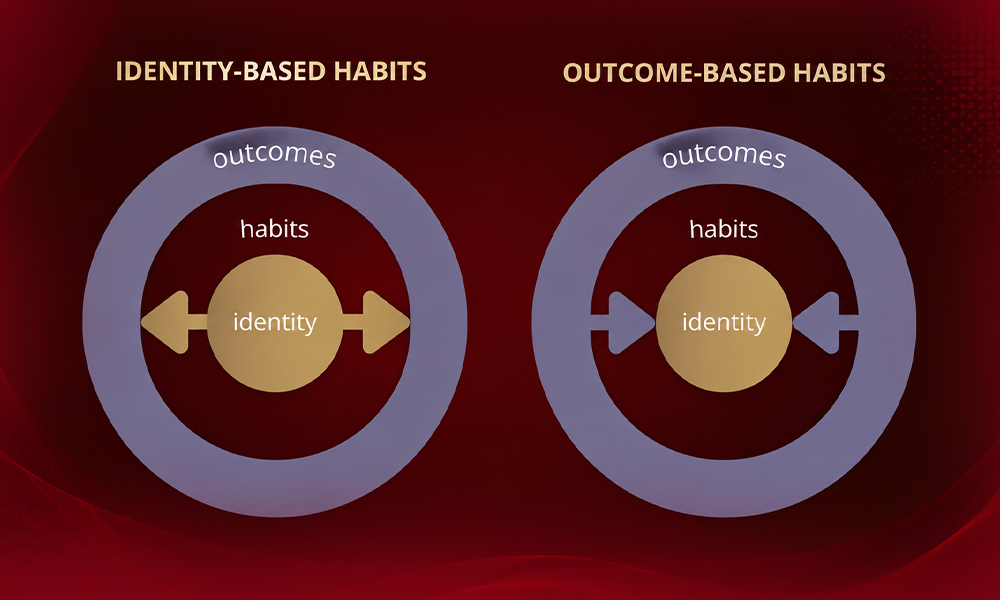
5. Build identity-based habits, not outcome-based ones
Clear’s research distinguishes between “I want to run a marathon” and “I am a runner.” The second frames every small action as evidence of identity, which sustains behavior long after initial motivation fades. Self-discipline gets easier when it confirms who you already believe you are.
6. Use Duckworth’s “Hard Thing Rule”
Duckworth applies a simple family rule: everyone commits to one hard thing, finishes what they start (no quitting mid-commitment, only at natural endpoints), and chooses the hard thing themselves. Autonomy plus commitment, disguised as personal choice, builds discipline more durably than external pressure.
7. Track grit, not just streaks
Grit, Duckworth’s term for sustained passion and perseverance toward long-term goals, predicts achievement more reliably than talent. A missed day doesn’t erase grit. Quitting the goal entirely does. Judge your consistency over months, not days.
8. Reconnect daily actions to a long-term reason
Self-control and grit are correlated but distinct: some people resist temptation well without pursuing any dominant goal, while others pursue a goal relentlessly but lose discipline elsewhere. Anchoring daily habits to a clear long-term “why” keeps both systems pointed the same direction.
Habit-Stacking and System Habits
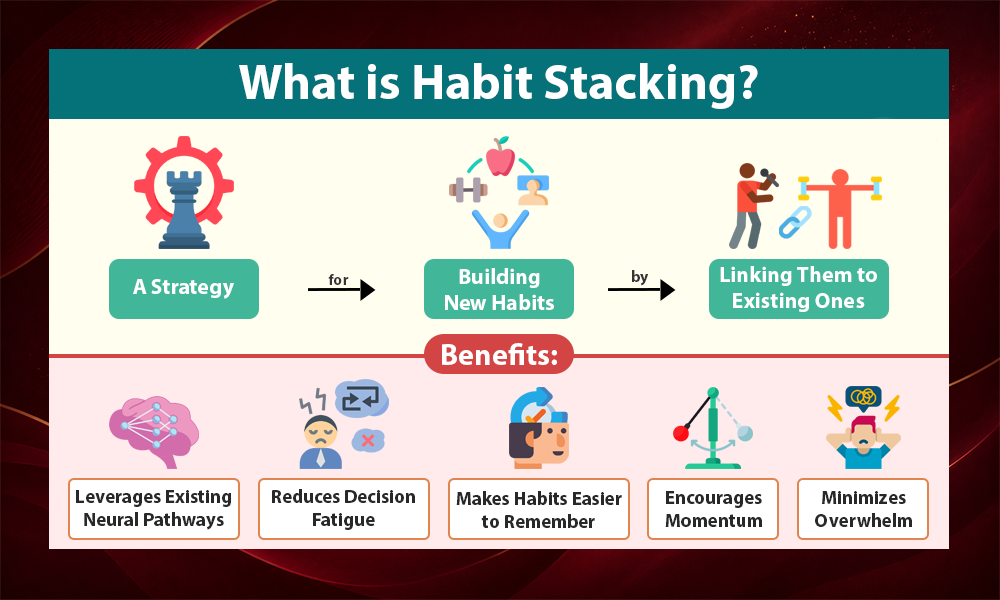
9. Stack new habits onto existing ones
Charles Duhigg’s habit loop, cue, routine, reward, works best when the cue is something already automatic. Attach a new behavior to brushing your teeth, making coffee, or sitting down at your desk. A stable existing habit is a stronger anchor than willpower will ever be.
10. Use the two-minute rule to beat procrastination
Clear’s two-minute rule shrinks any habit down to its smallest possible starting action: “read before bed” becomes “read one page.” The goal isn’t the full habit on day one, it’s making starting so easy that resistance has nothing to grab onto.
11. Batch your hardest decisions into one sitting
Decision fatigue is real, even if the depletion-muscle metaphor was oversimplified. Plan tomorrow’s hardest task tonight, when you’re not also trying to execute it. Removing in-the-moment decisions is one of the most consistent productivity habits across high performers.
12. Build a restart protocol, not a perfection standard
Habit plateaus and missed days are normal, not evidence of failed discipline. A simple restart protocol, no guilt spiral, no “starting over from zero,” just resuming tomorrow, keeps one bad day from becoming a abandoned month.
Self-Control Habits in the Moment
13. Use proactive avoidance over in-the-moment resistance
Duckworth’s process model of self-control found that situational strategies deployed early in a tempting situation work better than fighting the impulse once it’s fully formed. Decide your response before the temptation arrives, not during it.
14. Practice the pause before reacting
A few seconds of deliberate pause before responding to a craving, an urge, or an emotional trigger interrupts the automatic loop. This isn’t about suppressing the impulse forever, just creating enough space to choose deliberately instead of reactively.
15. Reframe instead of just resisting
Self-regulation research shows that changing how you think about a situation, distancing yourself from it, reframing the meaning, often works better than gritting your teeth and white-knuckling through. “This craving will pass in 10 minutes” is more sustainable than “I must not give in.”
16. Reduce the number of daily willpower demands
Every choice draws on the same limited attention and regulation system, even if it doesn’t deplete a literal muscle. Simplifying low-stakes decisions (a consistent breakfast, a uniform-style wardrobe) frees capacity for the decisions that actually matter.
Productivity and Success Habits

17. Protect a daily deep work block
Cal Newport’s research on deep work shows that distraction-free, cognitively demanding focus produces outsized results compared to fragmented attention. One protected, undistracted block daily builds more consistency than scattered effort across the whole day.
18. Make progress visible
Habit tracking systems work because visible progress reinforces the behavior that created it. Seeing a streak, a chart, or a simple checkmark turns an abstract goal into concrete, immediate feedback, closing the loop between effort and evidence.
19. Choose deliberate practice over passive repetition
Research on expert performance consistently finds that effortful, focused practice, not just hours logged, predicts skill development. Grittier performers in Duckworth’s spelling bee research won by accumulating more deliberate practice, not by having more natural talent.
20. Set the size of the challenge correctly
Duckworth’s own research on confidence-building emphasizes calibrating difficulty: too easy builds nothing, too hard breeds avoidance. The habits that build real self-discipline sit just past your current comfort zone, not miles beyond it.
21. Review weekly, not just daily
Daily self-discipline habits compound, but only if you periodically zoom out. A short weekly review, what worked, what didn’t, what needs adjusting, turns trial and error into an actual system instead of repeated, unexamined failure.
How These 21 Habits Work Together
These habits aren’t a checklist to complete all at once. They cluster into four reinforcing categories: environment design (1-4) removes the need for willpower, identity habits (5-8) sustain motivation long-term, system habits (9-12) make consistency automatic, in-the-moment self-control habits (13-16) handle real-time temptation, and productivity habits (17-21) convert discipline into actual results.
Pick two or three from different categories rather than attempting all 21 simultaneously. Discipline habits compound; they don’t stack instantly.
Key Takeaways
- Self-discipline is system design, not willpower. People with strong self-control succeed by encountering fewer temptations, not by resisting more heroically.
- Ego depletion is more complicated than the muscle metaphor suggests. Environment, habit strength, identity, and state factors explain self-control better than a single depleting resource.
- Self-discipline outpredicts IQ academically. Duckworth’s research found self-discipline a stronger predictor of academic performance than intelligence measures.
- Grit and self-control are related but distinct. Sustained passion toward a long-term goal and moment-to-moment impulse control are two separate skills worth building deliberately.
- Consistency beats intensity. A loose, sustainable system practiced for years outperforms an intense one abandoned after a few weeks.
FAQ: Self-Discipline
What is self-discipline really, according to research?
Modern research frames it as a combination of environmental design, habit strength, identity, and state factors, not a single depleting willpower reserve.
Is willpower actually a limited resource?
The original “ego depletion” theory has had mixed replication results. Current evidence suggests self-control depends more on system design than a fixed daily reserve.
How is grit different from self control?
Self control is resisting moment-to-moment temptation; grit is sustained passion and perseverance toward a long-term goal. They’re correlated but measurably distinct.
What’s the fastest way to build a discipline habit?
Shrink it. Clear’s two-minute rule, starting with the smallest possible version of a habit, removes the resistance that kills most attempts before they begin.
Why do discipline habits fail after a few weeks?
Most failures come from treating discipline as constant intensity rather than sustainable consistency. A missed day isn’t failure; abandoning the system entirely is.
The Bigger Picture
The popular image of self-discipline, gritted teeth, heroic willpower, “just try harder”, doesn’t match what the research actually shows. The people who sustain consistency for years aren’t fighting harder battles than everyone else. They’ve simply removed most of the battles in the first place.
That reframe matters. If you’ve failed at discipline before, the problem likely wasn’t a character flaw. It was a system that demanded constant willpower instead of designing willpower out of the equation.
Build the environment first. Let identity carry what motivation can’t. Stack habits onto what’s already automatic. That’s not a lesser version of discipline, it’s what the research says self-discipline actually is.