What’s Confirmed
- The US and Iran signed a memorandum of understanding (MOU) on June 17, 2026, establishing a ceasefire and a 60-day window of toll-free passage through the Strait of Hormuz.
- On June 25, 2026, Iran’s Islamic Revolutionary Guard Corps (IRGC) fired drones at commercial ships in the Strait of Hormuz; one drone struck the Singapore-flagged cargo vessel M/V Ever Lovely.
- President Trump publicly called the attack a “foolish violation” of the ceasefire.
- On June 26, 2026, US Central Command (CENTCOM) carried out retaliatory strikes on Iranian missile and drone storage sites and coastal radar installations.
- Iran’s IRGC said it took counteraction against the US strikes near Sirik Island and warned of further response.
- Trump did not declare the ceasefire over, but said he “didn’t like” the Iranian strike and told reporters “you’ll find out” when asked about consequences.
The Exact Timeline
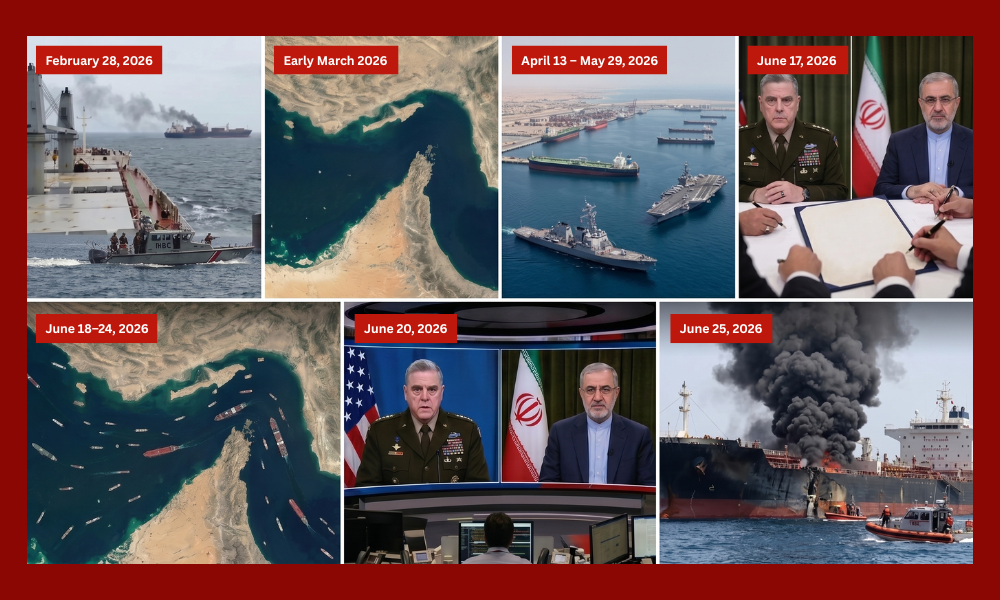
- June 17, 2026: Trump and Iranian President Masoud Pezeshkian signed a 14-point memorandum of understanding, brokered primarily by Pakistan with Qatar facilitating. The deal went into effect the next day.
- June 18, 2026: The ceasefire and reopening of the Strait of Hormuz began taking effect; the US lifted its naval blockade of Iranian ports.
- June 21, 2026: US and Iranian delegations held direct technical talks at the Bürgenstock resort in Switzerland, with Vice President JD Vance leading the US side.
- June 25, 2026: The IRGC fired at least four one-way attack drones at ships transiting the strait. Three were intercepted; one struck the Ever Lovely’s upper deck, damaging the bridge. No casualties were reported. The UN’s International Maritime Organization (IMO) paused its evacuation of stranded vessels in response.
- June 26, 2026: Trump posted on Truth Social calling the strike a “foolish violation” of the ceasefire agreement. CENTCOM then conducted retaliatory strikes, describing Iran’s actions as “unwarranted aggression” that “clearly violated the ceasefire.” Iran’s IRGC said it took counteraction near Sirik Island and vowed a “swift and decisive” response “at a time and place of our choosing.”
What Trump Actually Said
Speaking to reporters Friday, Trump confirmed the US shot down three of the four drones and acknowledged the fourth caused damage to the cargo ship. Asked directly whether he still considered the ceasefire to be in place, he said: “I don’t like the fact that they took a shot yesterday.” When a reporter pressed on whether Iran would face consequences, Trump replied only, “You’ll find out,” before a follow-up where he added, “We’re going to respond. You’re going to find out.”
Notably, Trump’s public statements stopped short of declaring the ceasefire over or announcing a return to broader war. CENTCOM’s strikes were framed as a direct, proportional response to the specific drone attack rather than a resumption of the wider military campaign against Iran.
Why Iran Attacked the Ship in the First Place
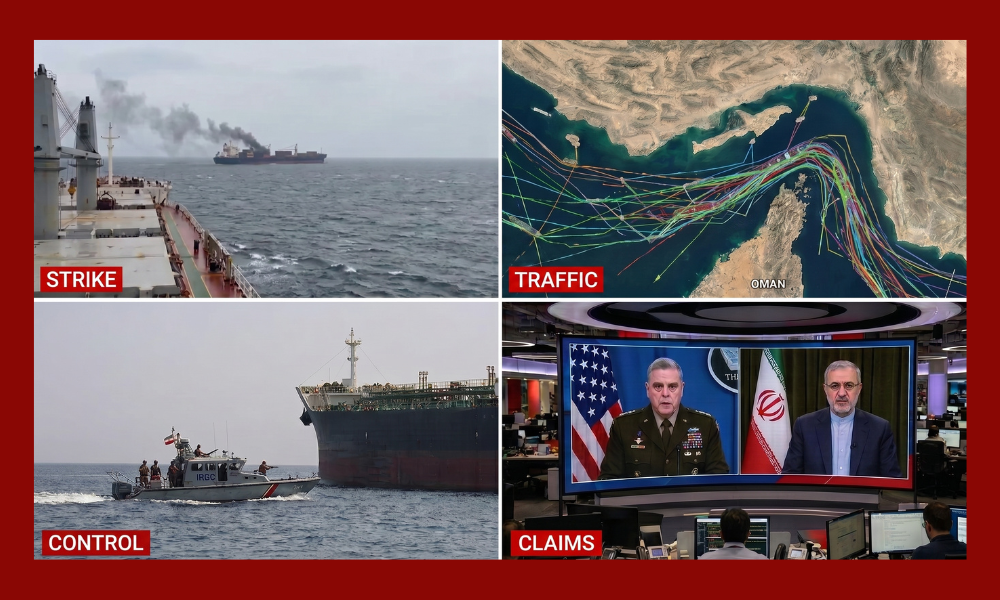
The strike did not happen in isolation. In the days before the attack, Iran’s IRGC had explicitly warned that it would not guarantee safe passage to ships using routes it had not authorized. Iran’s Persian Gulf Strait Authority — the body Iran set up to manage strait transit — stated that any vessel using a route outside its designated framework would not be covered by safe passage guarantees or insurance protections.
This connects to an unresolved dispute at the center of the ceasefire deal: who controls the Strait of Hormuz, and whether Iran can charge tolls. The MOU’s fifth paragraph commits Iran to using its “best efforts” to ensure safe, toll-free passage for 60 days, but the agreement did not spell out detailed enforcement conditions. The US has pushed ships toward a southern route along Oman’s coast; Iran has insisted vessels use a northern route closer to its own coastline and seek its permission first. A senior US administration official had separately said the expectation all along was for Iran to “assert their rights as aggressively as they can” regarding tolls, suggesting Washington anticipated friction over this specific issue.
The Lebanon Complication
The US-Iran ceasefire is not happening in a vacuum — it’s tangled up with a separate, parallel conflict between Israel and Hezbollah in Lebanon, which Iran has tied to its own compliance.
Iran has stated it will not fully abide by its agreement with the US if Israel continues operations against Hezbollah in Lebanon, even though Israel was not a signatory to the US-Iran MOU and has said it is not bound by it. Israel and Hezbollah separately agreed to their own ceasefire roughly a week before the Hormuz drone strike, but fighting has continued at a reduced intensity.
Hezbollah’s leader, Naim Qassem, said Friday the group would not disarm and demanded Israel “withdraw completely” and “unconditionally” from Lebanon. Israeli forces have continued issuing evacuation warnings to Lebanese civilians in areas near their occupied “security zone.”
Separately, Secretary of State Marco Rubio announced Friday that Israel and Lebanon’s government had agreed to a framework aimed at “lasting peace and security” — though Hezbollah was not part of those negotiations and has previously rejected similar arrangements.
What Remains Unresolved
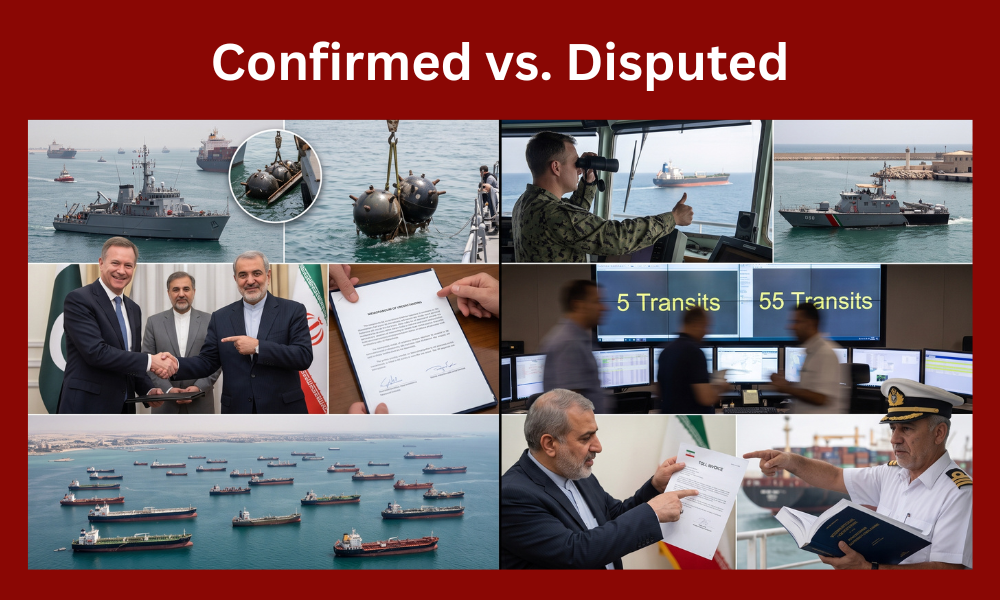
Several disputes are actively unresolved as of this writing:
- Strait control and tolling. The US insists the strait is “open to all” toll-free; Iran maintains it has authority to designate routes and has not ruled out future fees once the 60-day window ends.
- Iran’s frozen funds. Trump has repeatedly said unfrozen Iranian funds will be used exclusively to purchase American wheat, corn, and soy. Iranian officials, including Parliament Speaker Mohammad Bagher Ghalibaf, have publicly denied agreeing to this.
- Nuclear inspections. The head of the UN’s International Atomic Energy Agency has said he expects Iran to eventually allow inspectors back into the country, but no confirmed timeline has been set.
- Lebanon’s role in the broader deal. Iran has linked its own compliance to events in Lebanon, a country it has no direct control over and that involves a separate set of actors (Israel and Hezbollah) not bound by the US-Iran agreement.
Frequently Asked Questions
Is the US-Iran ceasefire still in effect right now?
As of this writing, neither side has formally declared the ceasefire over. Trump did not announce a return to broader war, and CENTCOM described its retaliatory strikes as a direct response to Iran’s drone attack rather than a resumption of the full military campaign.
What exactly did Iran do that Trump called a violation?
Iran’s IRGC fired at least four attack drones at commercial ships transiting the Strait of Hormuz on June 25, 2026. One struck the Singapore-flagged cargo vessel Ever Lovely, damaging its bridge; the US shot down the other three.
Did the US strike Iran in response?
Yes. CENTCOM confirmed it struck Iranian missile and drone storage locations and coastal radar sites on June 26, 2026, calling it a response to Iran’s “unwarranted aggression” against commercial shipping.
How did Iran respond to the US strikes?
Iran’s IRGC said it took counteraction near Sirik Island, claimed to have repelled the attack, and warned that any further incidents would be met with a “swift and decisive” response.
Is the Israel-Hezbollah situation connected to the US-Iran ceasefire?
Yes, indirectly. Iran has said it won’t fully comply with its agreement with the US if Israeli operations against Hezbollah in Lebanon continue, even though Israel is not a signatory to the US-Iran deal and says it isn’t bound by it.