Audio technology has evolved dramatically over the last decade.
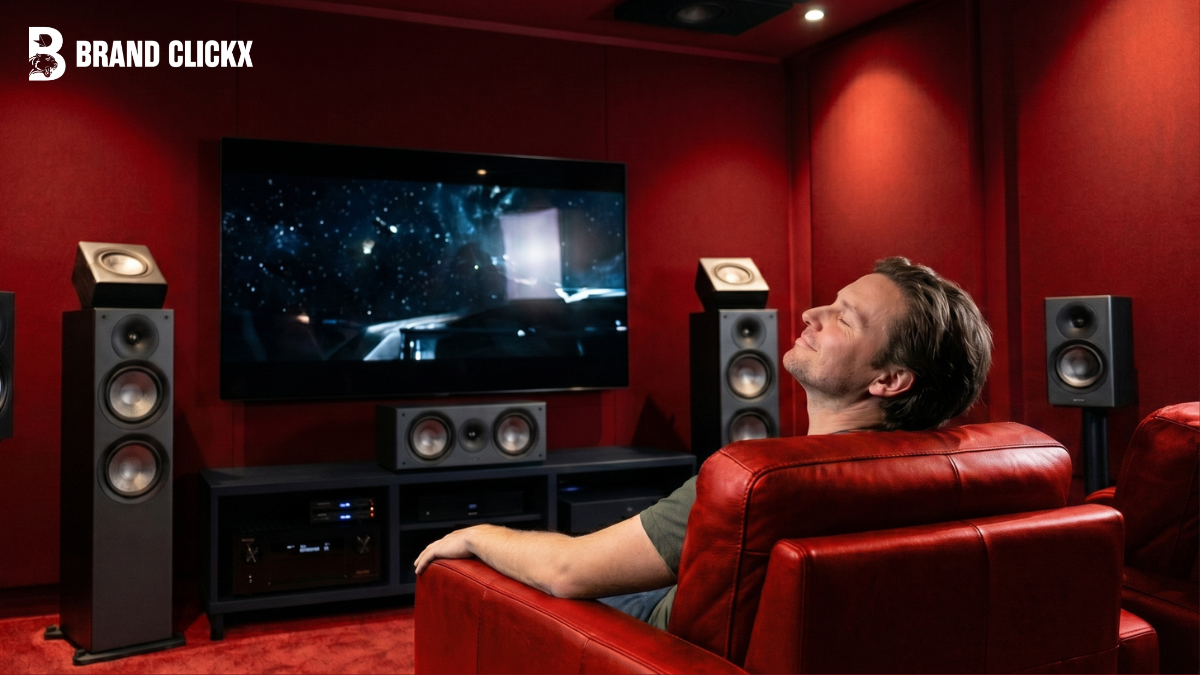
From traditional stereo speakers to advanced home theater systems, consumers now expect immersive sound experiences that make movies, games, and music feel more realistic than ever before.
One technology has become the gold standard for modern immersive audio systems: Dolby Atmos.
Originally developed by Dolby Laboratories for cinema environments, Dolby Atmos has rapidly expanded into televisions, smartphones, gaming consoles, streaming platforms, wireless headphones, automobiles, and advanced home theater systems.
Unlike traditional surround sound systems that assign sound to fixed speaker channels, Dolby Atmos introduces three-dimensional object-based audio capable of placing sound anywhere in a virtual space.
This guide explains everything about Dolby Atmos, how it works, where it is used, why it matters, and how it is reshaping the future of sound technology.
What Is Dolby Atmos
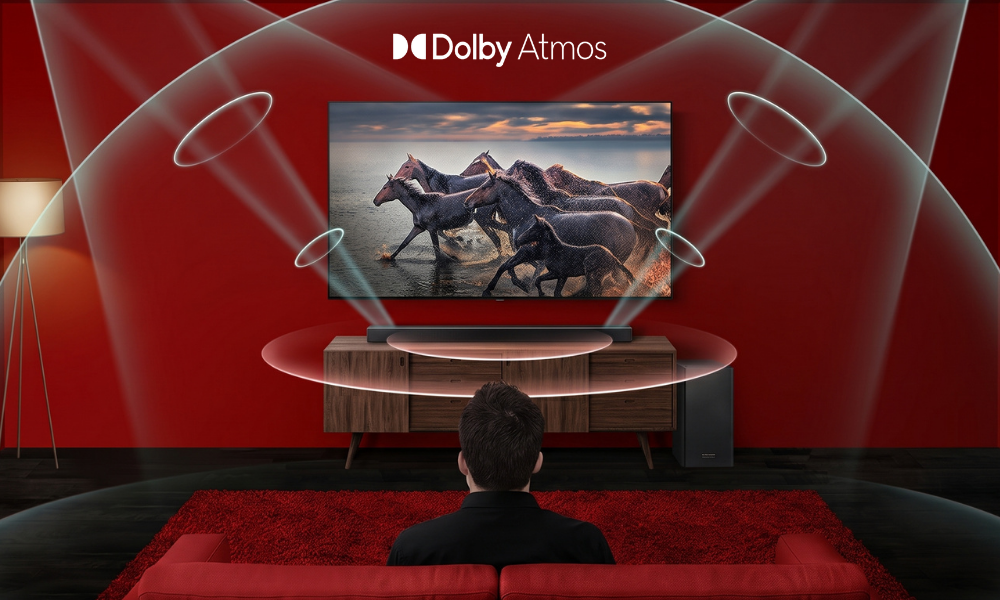
Dolby Atmos is an advanced surround sound technology that creates immersive three-dimensional audio environments by treating sounds as independent objects rather than assigning them to fixed speaker channels.
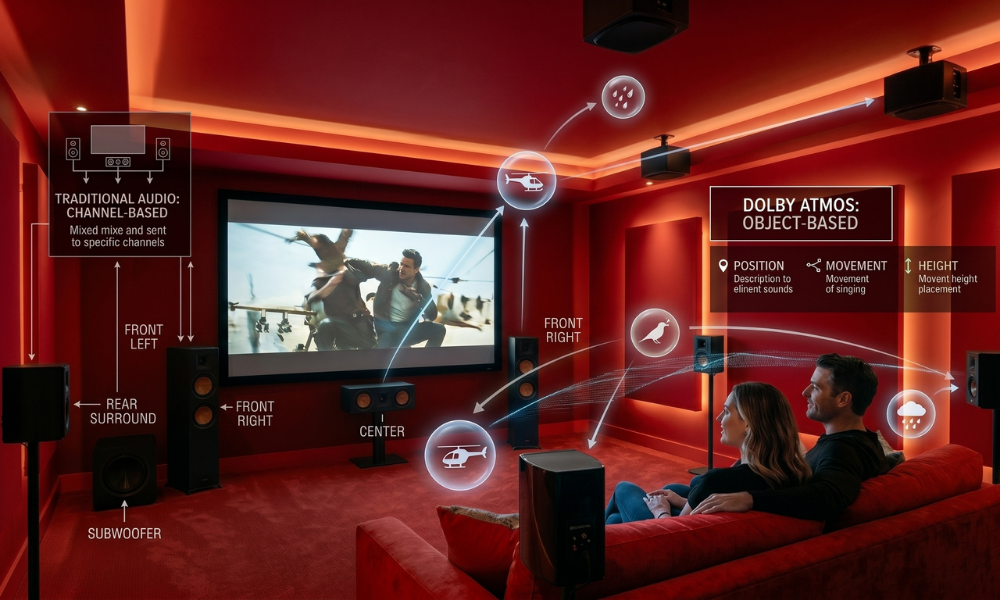
Traditional surround systems such as stereo, 5.1 surround, and 7.1 surround use channel-based audio.
In these systems, sound engineers decide which speaker outputs specific sounds.
Dolby Atmos changes this completely.
Instead of fixed channels, audio engineers assign metadata to individual sound objects.
The audio processor then places those sounds dynamically throughout a three-dimensional listening space.
This creates more realistic sound movement.
For example:
Instead of hearing a helicopter from only rear speakers, Dolby Atmos can make the helicopter sound move directly above your head while shifting forward realistically.
This creates true spatial audio immersion.
How Dolby Atmos Works
Traditional sound systems operate through channel-based audio architecture.
Example:
5.1 surround sound includes:
- Front left speaker
- Front right speaker
- Center speaker
- Rear left speaker
- Rear right speaker
- Subwoofer
Each sound gets assigned to one speaker channel.
Dolby Atmos uses object-based audio rendering.
Instead of channels, sound engineers create independent audio objects.
Each object carries metadata that tells the system:
- Position
- Distance
- Direction
- Movement trajectory
- Height placement
The playback system calculates real-time speaker positioning automatically.
This allows dynamic sound movement around the listener.
The result feels dramatically more realistic.
Why Dolby Atmos Is Different
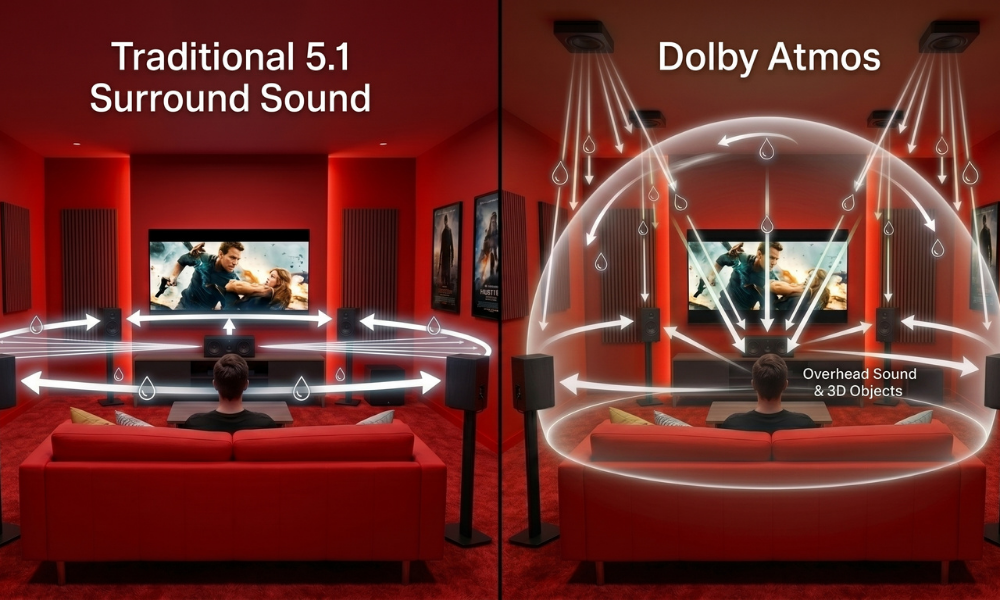
The biggest innovation is vertical sound positioning.
Traditional surround sound moves horizontally.
Dolby Atmos adds height.
This creates a full 360-degree sound field.
Imagine watching an action movie.
Traditional audio:
Rain sounds come from side speakers.
Rain sounds feel like they are falling above your head.
This creates cinematic immersion impossible with older sound systems.
Dolby Atmos vs Traditional Surround Sound
Stereo Audio
Stereo uses two channels.
- Left speaker
- Right speaker
Good for music but limited immersion.
5.1 Surround Sound
Uses six channels.
- Front speakers
- Rear speakers
- Center channel
- Subwoofer
Good for movies but lacks vertical positioning.
7.1 Surround Sound
Adds two additional rear channels.
Better directionality but still channel-based.
Dolby Atmos
Uses object-based sound rendering.
Supports:
- Horizontal positioning
- Vertical positioning
- Dynamic sound movement
- Adaptive speaker rendering
Atmos creates true three-dimensional audio.
Dolby Atmos Speaker Configuration
Atmos supports multiple speaker layouts.
Common configurations include:
5.1.2 Setup
- 5 surround speakers
- 1 subwoofer
- 2 overhead speakers
Beginner home theater setup.
7.1.2 Setup
- 7 surround speakers
- 1 subwoofer
- 2 height speakers
Improved immersion.
7.1.4 Setup
- 7 speakers
- 1 subwoofer
- 4 overhead speakers
Premium home theater experience.
Ceiling Speakers
Installed directly overhead.
Best Atmos experience.
Upward Firing Speakers
Speakers bounce sound off ceilings to simulate overhead audio.
Popular in soundbars.
Dolby Atmos Soundbars
Many consumers experience Atmos through soundbars.
Popular Atmos soundbars include:
- Sonos Arc
- Samsung HW-Q990D
- Sony HT-A7000
- LG S95TR
Soundbars simulate immersive surround sound without complex speaker installations.
They have become the most popular Atmos consumer product category.
Dolby Atmos in Movies
Atmos first gained attention in cinema.
Hollywood studios adopted Atmos rapidly because filmmakers gained unprecedented control over audio positioning.
Major movie studios now master films specifically for Atmos playback.
Examples include:
- Dune
- Avatar: The Way of Water
- Top Gun: Maverick
- Oppenheimer
Action sequences become dramatically more immersive.
Dolby Atmos Streaming Platforms
Streaming companies increasingly support Atmos audio.
Major supported platforms include:
- Netflix
- Disney+
- Apple TV+
- Amazon Prime Video
- Max
Streaming has accelerated Atmos adoption globally.
Premium subscription tiers usually unlock Atmos support.
Dolby Atmos for Gaming
Gaming has become one of the fastest growing Atmos categories.
Modern games increasingly use immersive audio to improve realism.
Supported gaming platforms include:
- Xbox
- Windows
- PC gaming systems
Supported titles increasingly render positional 3D sound environments.
Benefits include:
- Better enemy detection
- Improved spatial awareness
- More immersive environments
- Realistic environmental sound
Competitive gaming benefits significantly from precise sound positioning.
Xbox Dolby Atmos Setup
Many gamers search for Atmos setup instructions.
Basic setup requires:
- Compatible HDMI connection
- Atmos-supported headset or soundbar
- Install Dolby Access application
- Enable spatial audio settings
- Configure supported game output
Gaming audio becomes noticeably more immersive.
Dolby Atmos for Music
Atmos is no longer limited to movies.
Music production has shifted toward spatial audio mixing.
Artists increasingly release Atmos-supported music.
Supported platforms include:
- Apple Music
- Tidal
- Amazon Music
Artists can position instruments in three-dimensional space.
Listeners hear far more separation and detail.
Dolby Atmos Headphones
Headphones now simulate Atmos using software virtualization.
Popular Atmos headphones include:
- Sony WH-1000XM5
- AirPods Pro
- SteelSeries Arctis Nova Pro
The system processes directional cues digitally.
Even without physical surround speakers, listeners experience spatial audio.
Dolby Atmos vs DTS:X
Atmos competes directly against another audio technology called DTS:X.
DTS
offers similar immersive sound processing.
Main differences:
Dolby Atmos:
- Larger ecosystem
- More studio adoption
- Better streaming support
- Wider consumer device support
DTS:X:
- More flexible speaker placement
- Smaller market penetration
Atmos currently dominates consumer adoption.
Devices Supporting Dolby Atmos
Atmos now exists across consumer electronics.
Supported devices include:
Smartphones
- Samsung Galaxy S25 Ultra
- iPhone 16 Pro
TVs
- LG Electronics OLED TVs
- Samsung Electronics Neo QLED
- Sony Group Bravia series
Laptops
- Gaming laptops
- Premium ultrabooks
- Creator workstations
Atmos has moved far beyond cinema.
Dolby Vision and Dolby Atmos
Consumers often confuse Atmos with Dolby Vision.
Difference:
Dolby Vision
Improves video quality.
Focuses on:
- HDR brightness
- Contrast
- Color accuracy
Dolby Atmos
Improves sound quality.
Focuses on:
- Spatial audio
- Sound positioning
- Immersion
Many premium streaming services combine both technologies.
Together they create premium viewing experiences.
Audio Engineers and Film Production
Film studios increasingly master audio specifically for Atmos environments.
Sound engineers now mix:
- Dialogue layers
- Environmental sounds
- Directional movement
- Vertical sound effects
- Cinematic object positioning
Modern blockbuster production relies heavily on Atmos mastering pipelines.
Audio production workflows have fundamentally changed.
Future of Dolby Atmos
Spatial audio technology continues evolving rapidly.
Future development areas include:
Virtual Reality
VR headsets require realistic 3D audio environments.
Augmented Reality
AR systems need precise environmental sound rendering.
Automotive Audio
Luxury cars increasingly integrate Atmos speaker systems.
AI Audio Rendering
Artificial intelligence now helps dynamically optimize sound positioning.
Immersive Computing
Future computing environments rely heavily on spatial sound interfaces.
Atmos sits at the center of this transition.
Is Dolby Atmos Worth It
For most consumers, yes.
Atmos provides measurable improvements for:
- Movies
- Gaming
- Music
- Home theater
- Premium streaming
Benefits become especially noticeable in:
- Action films
- Open-world games
- Concert recordings
- High-end home entertainment systems
Budget users may prefer simpler systems.
Serious entertainment enthusiasts benefit greatly.
Frequently Asked Questions
What is Dolby Atmos
Dolby Atmos is immersive object-based surround sound technology that creates three-dimensional audio environments.
What does Dolby Atmos mean
It means sound can move dynamically around the listener in three-dimensional space.
Is Dolby Atmos better than 5.1 surround sound
Yes. Atmos adds vertical audio positioning and object-based rendering.
Does Netflix support Dolby Atmos
Yes. Netflix supports Atmos on premium plans for compatible devices.
Can headphones use Dolby Atmos
Yes. Software virtualization allows spatial audio processing through supported headphones.
Is Dolby Atmos good for gaming
Yes. Atmos improves positional accuracy and immersion significantly.
Final Thoughts
Dolby Atmos has fundamentally transformed modern audio engineering.
By moving beyond traditional channel-based surround sound into object-based spatial audio rendering, Atmos created a new standard for entertainment technology.
From blockbuster cinema and streaming platforms to competitive gaming, premium headphones, smartphones, and future virtual reality systems, Atmos continues expanding rapidly.
As immersive computing grows, Dolby Atmos will likely become the foundation for next-generation digital audio experiences.
The future of sound is no longer simply left and right.
It is fully three-dimensional.