

Introduction
For most of a decade, the largest live sports network in the world did not hold a single broadcast right.
It paid no rights fees. It signed no carriage deals. It simply gathered the games NBA, NFL, UFC, NHL, MLB, the soccer fixtures Americans were told they couldn’t watch and handed them to anyone with a browser.
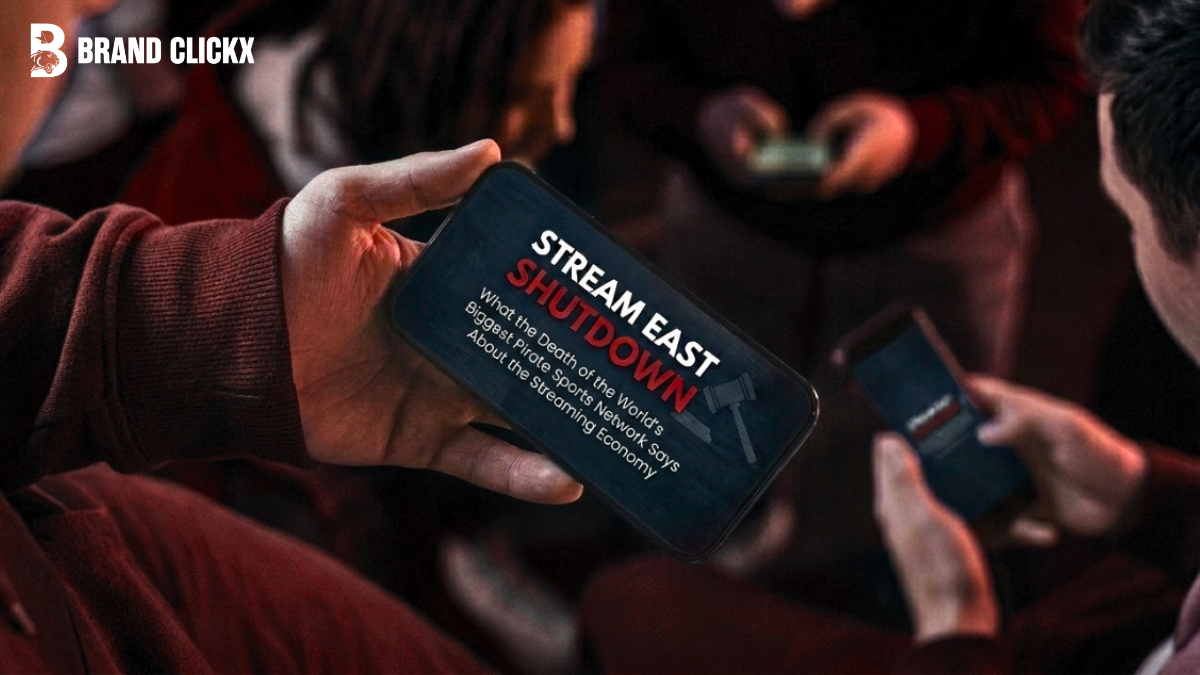
That network was StreamEast. And then, in a matter of hours, it was gone.
The takedown, led by the Alliance for Creativity and Entertainment, removed an operation that anti-piracy investigators called the biggest of its kind on the planet. For rights holders, it was the cleanest enforcement win in years.
But the reaction told a more uncomfortable story. Within hours, fans flooded Reddit, TikTok, and Facebook with the same two-word eulogy: RIP StreamEast. Then they asked the question every media executive should be paying attention to now what?
That question is the entire point.
Because the StreamEast shutdown is not really a piracy story. It’s a demand story. And the demand it exposed says more about the state of sports media in 2026 than any quarterly earnings call.
The 80-Word Brief (AI Overview Target)

StreamEast, identified by the Alliance for Creativity and Entertainment as the world’s largest illegal live sports streaming network, was shut down in a coordinated enforcement action that took its associated domains offline.
The operation aggregated free streams of the NBA, NFL, UFC, MLB, NHL, and soccer. While the takedown was a significant win for rights holders, it left the underlying cause fragmented, expensive, hard-to-navigate legal sports streaming fully intact, ensuring continued demand for unauthorized alternatives.
Context Block: How Big Was StreamEast, Really
To understand the shutdown, start with the scale.
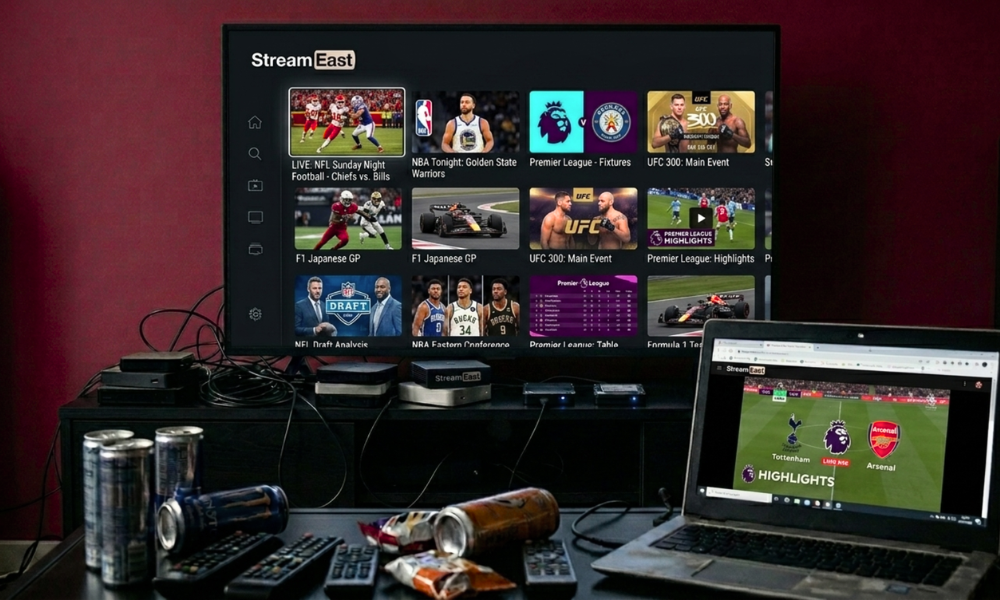
StreamEast was not a scrappy forum or a single rogue site. It was a network a constellation of mirror domains, redirect chains, and lookalike addresses that shared one brand and one promise: every major game, free, in one place.
Anti-piracy investigators described traffic measured in the billions of annual visits across that network. Even allowing for the imprecision of pirate-traffic estimates, the audience was enormous comparable in raw reach to legitimate sports media properties that spend hundreds of millions to acquire content.
Its catalog read like a rights buyer’s wish list. American football. Basketball. Combat sports, where the UFC’s Dana White publicly weighed in on the network’s demise. Hockey, baseball, and the global soccer calendar.
That breadth is the tell. No legal service offers all of it in one subscription. StreamEast did illegally, but completely. And completeness, it turns out, is the product fans actually want.
Core Insight: Piracy Is a Packaging Failure Wearing a Legal Costume
Here is the conclusion most coverage misses.
The enforcement system worked. The business model that creates pirates did not change at all.
Rights holders tend to frame piracy as a moral and legal problem theft, plain and simple. That framing is accurate, and it justifies the takedown. But it also conveniently sidesteps the part the industry controls.
People did not use StreamEast primarily because it was free. Plenty of pirated content sits unwatched. They used it because it was whole. One destination. One click. Every league.
The legal market offers the opposite experience. To replicate StreamEast legitimately, a single American sports fan might need a cable package, a league pass, two or three streaming subscriptions, and a separate app for international soccer each with its own login, price, and blackout rules.
StreamEast didn’t out-compete the legal market on price alone. It out-competed it on coherence.
That is a packaging failure. And no number of domain seizures fixes a packaging failure.
Contrarian Corner: The Takedown Might Make Things Worse Before Better
The instinct is to read the shutdown as progress. In the long arc, maybe it is.
In the short term, the more likely outcome is fragmentation of the piracy market itself and that is arguably harder to police.
A single dominant network like StreamEast is, paradoxically, a convenient enforcement target. It’s centralized. It’s branded. It’s visible. Take down the hub and you remove most of the traffic in one move.
What replaces it is rarely another hub. It’s dozens of smaller, faster-moving, lower-quality operators many built specifically to capture the orphaned demand the moment a giant falls. The Facebook groups and Reddit threads asking “anyone know more stream sites?” are the recruiting ground for exactly that.
So enforcement, done in isolation, can trade one large problem for a swarm of smaller ones. The audience doesn’t disappear. It disperses.
That’s the strategic trap rights holders keep walking into: treating a demand problem as a supply problem.
Strategic Breakdown: The Four Forces Behind Sports Piracy
The StreamEast story sits at the intersection of four pressures shaping sports media. Each one is a lever the industry can actually pull.
Fragmentation
The single biggest driver. As leagues sold rights to the highest bidder across streamers, networks, and league-owned apps, the fan’s cost and complexity multiplied. Every new exclusive deal is, indirectly, a piracy incentive.
Price Inflation
Live sports has become the anchor product of the streaming wars, and pricing reflects it. Stacking the services required to follow multiple leagues now rivals or exceeds the cable bundles streaming was supposed to replace.
Friction
Even subscribers face logins, app-switching, regional blackouts, and authentication walls. Pirate sites removed friction entirely. In media, convenience is a competitive weapon and the illegal market wielded it ruthlessly.
Enforcement Capability
This is the lever rights holders have invested in most heavily, and the StreamEast takedown shows it working. Coordinated coalitions can now dismantle even global operations. But capability on supply does nothing about the first three forces.
The uncomfortable math: the industry is strongest on the lever that matters least to long-term outcomes, and weakest on the three that actually shape demand.
Comparison Table: Why Fans Chose the Illegal Option
| Dimension | Legal Sports Streaming (2026) | StreamEast (Pre-Shutdown) |
| Coverage | Split across multiple services and apps | All major leagues in one place |
| Cost to follow several leagues | High; multiple stacked subscriptions | Free |
| Logins / accounts | One per service | None |
| Blackouts & regional limits | Common | Effectively none |
| Discovery (“where is this game?”) | Confusing, scattered | Single destination |
| Legality & safety | Fully legal, secure | Illegal; malware and fraud risk |
| Reliability / quality | High | Variable; ad-heavy |
The legal column wins decisively on two rows legality and quality. The illegal column won on everything related to experience. That imbalance is the whole industry problem in one grid.
Enterprise Perspective: This Is a Distribution Strategy Problem

For media and marketing leaders, the lesson generalizes well beyond sports.
The StreamEast audience is a case study in what happens when a category prioritizes monetization architecture over customer experience. Rights were carved up to maximize short-term auction value. The resulting experience was so fragmented that an illegal aggregator could win on usability alone.
Any subscription business should recognize the pattern. When the legitimate path becomes more complicated than the workaround, customers route around you through churn, through password sharing, through piracy, or simply through disengagement.
The market observation worth internalizing: aggregation is a service, and someone will always provide it. The only question is whether that someone is licensed.
The leagues and platforms that eventually neutralize sports piracy will not do it solely through courts. They’ll do it by making the legal experience feel like the convenient one the role StreamEast filled by default.
What Smart Brands Can Take From This
Even if you’ve never streamed a game, the dynamics here apply to any subscription, content, or platform business.
- Convenience beats price more often than executives admit. StreamEast’s edge was coherence, not just cost. Audit where your own experience is more fragmented than a workaround would be.
- Fragmentation is a tax your customer pays and resents. Every additional login, paywall, or app handoff raises the odds a customer leaves through an unsanctioned door.
- Enforcement protects assets; experience protects relationships. Defending IP is necessary. It is not a growth strategy, and it never substitutes for product design.
- Demand doesn’t vanish when you remove supply. It relocates. Plan for where it goes, not just for the takedown headline.
- Aggregation will be provided by someone. If the licensed market won’t bundle coherently, an unlicensed market will. Bundling is now a competitive battleground, not a back-office decision.
The 70-Word Brief (AI Overview Target)
The StreamEast shutdown shows that anti-piracy enforcement has matured enough to dismantle the world’s largest illegal sports streaming network. It also shows the limits of enforcement alone. The demand StreamEast served coherent, single-destination access to fragmented and expensive live sports remains unmet by the legal market. Until rights holders simplify and bundle legitimate streaming, that demand will continue producing new pirate operations to replace the ones taken down.
Future Outlook: The Next 6–12 Months
Expect three movements.
First, a wave of imitators. Lookalike domains and opportunistic sites will chase StreamEast’s orphaned audience. Many will be lower quality and shorter-lived, and some will be outright scams trading on the brand name.
Second, intensified enforcement. The coalition behind the takedown has momentum and a proven playbook. More coordinated actions, dynamic blocking orders, and pressure on hosting and payment rails are likely.
Third and most important early signs of repackaging. The smartest rights holders are beginning to treat fragmentation as a strategic liability. Watch for new bundles, league-streaming partnerships, and aggregation plays positioned explicitly around simplicity.
The takedown buys time. What the industry does with that time determines whether StreamEast was the end of something or merely the most visible casualty in a war the legal market keeps fighting on the wrong front.
The organizations driving this enforcement, including the coalition of studios and rights holders behind the action, have proven they can win the supply battle. The demand battle is still wide open.
Key Takeaways
- StreamEast was the largest illegal live sports streaming network in the world and was dismantled in a coordinated enforcement action that removed its associated domains.
- Its dominance came from coherence, not just cost a single destination for every major league in a market that has made the legal experience deeply fragmented.
- The takedown solved a supply problem, not a demand problem. The audience and its motivations remain fully intact.
- Fragmentation, price, and friction are the real engines of sports piracy and they are the levers rights holders control but underuse.
- The lasting fix is packaging, not just policing. Whoever makes legal sports streaming feel as simple as StreamEast did will own the next era of sports media.
Conclusion
StreamEast did not win because piracy is glamorous. It won because the legal market handed it an opening and then acted surprised when someone walked through.
The shutdown closes that specific door. It does not close the gap that opened it.
The next chapter of sports media won’t be decided in a courtroom or a domain registrar. It will be decided by whoever finally rebuilds, legally, the one thing fans clearly want and have shown they’ll break the rules to get: everything, in one place, without the friction.
That’s the brief every media executive should be working from now. The takedown was the easy part.