

A brand is more than a logo, color scheme, or company name. It is the overall feeling people on a business, including its message, products, services, design, positioning, and customer experience. When a company changes direction, enters a new market, targets a different audience, or simply outgrows its existing identity, rebranding can help bring the business and its public image back into coordination.
However, rebranding is not simply about creating a new logo. A successful rebrand starts with a real business need and then changes the parts of the brand that are no longer required. This guide explains
- What rebranding is?
- When a business should consider it?
- Different types of rebranding
- Step-by-step process
- Expected costs and timelines.
- Common mistakes.
- Lessons from major rebranding examples.
What Is Rebranding?

Rebranding is the process of changing the presentation of a business and the understanding of customers. The scope can be small or extensive. A company might change its colors, text styles, website, and visual style while keeping its name and basic market position.
Another company may change its name, audience, positioning, messaging, products, and customer experience. The purpose is not change for change’s sake. The purpose is to make the brand better reflect the company’s current business direction.
For example, a software company may have started by serving individual users but later move toward large businesses. If the company has grown or changed, but its old website and marketing messages still focus on individual customers, they may no longer accurately represent what the company does today. A rebrand can help reduce that difference.
Types of Rebranding
Brand Refresh
Updates an existing identity while keeping its basic direction.
Repositioning
Changes how customers understand the company in the market.
Corporate Rebranding
Changes the identity of the wider organization rather than just one product.
Product Rebranding
Changes the identity, name, packaging, or positioning of a particular product or product line.
Merger or Acquisition Rebranding
Creates a shared or new identity after businesses combine.
Geographic Rebranding
Adapts a brand for a new country, region, or market.
Digital Rebranding
Focuses on websites, applications, social profiles, digital products, and online customer experiences.
Rebranding vs. Brand Refresh
Rebranding and a brand refresh are often used as if they mean the same thing, but they can involve very different levels of change.
A brand refresh normally updates an existing identity while preserving much of what customers already recognize. This might include a cleaner logo, updated text style, improved colors, new photography, or a redesigned website.
A rebrand is usually broader. It can change the company’s positioning, messaging, identity, name, target audience, or customer experience.
| Factor | Brand Refresh | Rebranding |
| Scope | Small to moderate | Moderate to major |
| Logo | Usually refined | May be redesigned |
| Name | Usually stays | May change |
| Messaging | Improved | May be substantially rewritten |
| Positioning | Mostly retained | May change |
| Main purpose | Modernize | Redefine or realign |
| Business impact | Usually lower | Usually higher |
If the business is still fundamentally the same but its presentation feels dated, a refresh may be enough. If the business itself has changed significantly, a broader rebrand may make more sense.
Partial vs. Complete Rebrand
Not every company needs to change everything. A partial rebrand updates selected parts of the identity while keeping the core brand recognizable. A complete rebrand can change several major elements, including strategy, positioning, messaging, name, visual identity, and customer experience.
| Situation | Better Approach |
| Visual identity feels outdated | Partial rebrand |
| Existing name is valuable | Partial rebrand |
| Only a few elements need improvement | Partial rebrand |
| Business direction changed greatly | Complete rebrand |
| Target market changed significantly | Complete rebrand |
| Existing identity no longer represents the company | Complete rebrand |
For example, a restaurant that keeps its name and menu but updates its logo, website, packaging, and visual style may only need a partial rebrand.
A company that changes its name, target audience, market position, and identity may need a complete rebrand.
Why Do Companies Rebrand?
Businesses rebrand for many reasons, but the main reason is that the existing identity no longer fits the company’s needs.
The Brand Looks Outdated
Design expectations change. A visual identity that worked well years ago may now make the business appear less relevant or less competitive.
An updated identity can make the company feel more current without necessarily changing its basic approach.
The Business Has Changed
A company may introduce new products, services, business models, or customer groups. An identity built around the old business can become too narrow. Rebranding can help communicate the broader offering.
The Target Audience Has Changed
A business may discover that its strongest opportunity lies with a different customer group. The language, visual identity, and positioning that appealed to the original audience may not work as well for the new one.
The Company Is Entering New Markets
International expansion or movement into a new industry can create new branding requirements. A name, message, or visual identity that works in one market may not communicate the same idea elsewhere.
The Brand Lacks Differentiation
If customers cannot easily explain what makes a business different from competitors, the company may need clearer positioning and messaging.
A Merger or Acquisition Has Changed the Business
When two businesses combine, their existing identities may no longer represent the new organization. A shared identity can help establish a clear direction.
The Company Has a Reputation Problem
Some businesses rebrand after serious reputation problems. However, a new logo cannot repair poor products, weak service, or deeper operational failures. The underlying problem must be addressed first.
The Rebranding Process: Step by Step
A practical rebranding process can be divided into nine stages.
1. Research
Audit the current brand, audience, competitors, market, and customer perception.
2. Direction
Decide what the new brand should communicate and how it should be positioned.
3. Identity
Develop the new name, logo, visual system, messaging, and other required elements.
4. Testing
Review important changes with relevant audiences and stakeholders before the public launch.
5. Guidelines
Create clear brand guidelines explaining how the identity should be used.
6. Asset Updates
Update websites, packaging, advertisements, documents, social profiles, signs, and other materials.
7. Employee Rollout
Prepare employees before customers see the new identity.
8. Launch
Introduce the new brand consistently across major channels.
9. Monitoring
Track customer reactions and business results after launch.
When Should a Business Rebrand?
A business should consider rebranding when there is a clear gap between what the company is today and what its brand communicates. Warning signs include:
- The business has outgrown its current identity.
- Customers misunderstand what the company offers.
- The target audience has changed.
- The market position no longer fits the business.
- Different parts of the company look unrelated.
- A merger or acquisition has changed the organization.
- The business is entering a new market.
- The current identity makes future growth difficult.
- The brand no longer connects with its intended customers.
One useful question can clarify the decision:
What specific business problem will this rebrand solve?
If the answer is clear, rebranding may be justified. If the only reason is that the logo looks old, a smaller refresh may be the better option.
What to Consider Before Rebranding
Before changing the identity, businesses should understand what they already have.
Review Current Brand Performance
Look at customer feedback, engagement, sales patterns, website performance, and other relevant information. This helps identify strengths and improvements.
Understand the Brand Story
The brand should still communicate the company’s purpose, values and direction. If those have changed, the identity may need to change with them.
Protect Existing Brand Equity
A recognizable name, color, symbol, or visual element may already have significant value. Removing familiar elements can create unnecessary confusion.
Study the Target Audience
Understand what customers expect, what they value and how they currently see the company.
Study Competitors
Competitor research can reveal gaps in the market and opportunities for differentiation. The goal should be to find a distinctive position rather than follow another company.
Set the Budget
The cost is not limited to strategy and design. A rebrand may also require updates to websites, packaging, signs, advertising, documents, uniforms, social profiles and other customer touchpoints.
Prepare Employees
Employees use the brand every day. They should understand why the company is changing and how to use the new identity correctly.
What Can Change During a Rebrand?
A rebrand can affect almost every point where customers interact with a company.
| Brand Element | Possible Change |
| Name | Company or product name |
| Logo | Symbol, wordmark, or overall design |
| Visual identity | Colors, fonts, imagery, graphics |
| Messaging | Main message, tagline, value proposition |
| Products | Names, presentation, or structure |
| Customer experience | Important customer interactions |
| Marketing | Advertising, social content, brochures |
| Digital presence | Website, app, social profiles |
| Internal materials | Documents, templates, uniforms |
Not every project requires all of these changes. The strongest approach is to change the elements that support the new business direction.
Benefits of Rebranding
A well-planned rebrand can provide several benefits.
Stronger recognition: A clear and consistent identity can make a company easier to remember.
Better customer connection: Updated messaging can speak more directly to the intended audience.
Clearer positioning: Customers can better understand what the company represents.
Greater flexibility: A broader identity can support new products, services, and markets.
Better employee alignment: Employees have a clearer identity to represent.
Stronger differentiation: A distinctive brand can help separate the business from competitors.
Support for growth: A brand that fits the company’s future can make expansion easier.
The real value is not simply making the business look better. It is making the company clearer, more relevant, and easier to recognize.
Risks of Rebranding
Rebranding can also create serious problems when it is poorly planned.
Customer Confusion
Customers may not immediately understand that the new identity belongs to the same company.
Loss of Recognition
Removing familiar elements too quickly can weaken existing brand memory.
Unexpected Costs
A project can become expensive when the company discovers how many old materials need to be replaced.
Employee Resistance
Employees may struggle with the new identity if they do not understand the reason for the change.
Inconsistent Implementation
Using the old identity in some places and the new identity elsewhere can make a company look disorganized.
Negative Customer Reaction
Customers may dislike a major change, especially when familiar elements disappear without a clear explanation.
Solving the Wrong Problem
A rebrand cannot repair poor products, weak service, or operational problems unrelated to brand identity.
How Long Does Rebranding Take?
The timeline depends on the project’s size, approval process, testing requirements, and number of assets involved.
| Project | Approximate Timeline |
| Small visual refresh | 3–6 weeks |
| Full identity system | 6–8 weeks |
| Identity plus website | 8–12 weeks |
| Larger rebrand | Several months |
| Enterprise or multi-market rebrand | 6–18 months or longer |
A small business with one website can move much faster than a company with hundreds of products, stores, signs, packages, and regional teams.
How to Launch a Rebrand
A successful launch should be organized rather than sudden. Start by choosing a clear launch date and working backward from it. Before launch, update the most important customer touchpoints, including the website, social profiles, packaging, signs, advertising, and marketing materials.
Employees, agencies, partners, and suppliers should also know when the new identity becomes active. When continuity is important, companies can explain the change clearly and reassure customers that the business itself has not disappeared.
After launch, check every major channel for old logos, incorrect information, broken pages, and inconsistent branding. A rebrand is not finished when the new logo is announced. It becomes real when customers consistently experience the new identity across the business.
How to Measure Rebranding Success
The correct measurements depend on the original reason for the rebrand. Useful measures can include:
- Brand awareness
- Customer perception
- Website traffic
- Engagement
- Conversions
- Customer inquiries
- Leads
- Sales
- Customer retention
- Customer growth
The most important point is to connect measurement to the original goal.
If the purpose of the rebrand was to reach a younger audience, total follower numbers alone may not tell the full story. The company should also examine whether the intended audience is actually responding differently.
Successful Rebranding Examples
Airbnb
Airbnb introduced its Bélo symbol in 2014 as part of the company’s evolving brand identity. The change showed how a growing digital company can create a recognizable visual identity that represents a larger brand idea.
Lesson: A visual identity can communicate more than the name of a company.
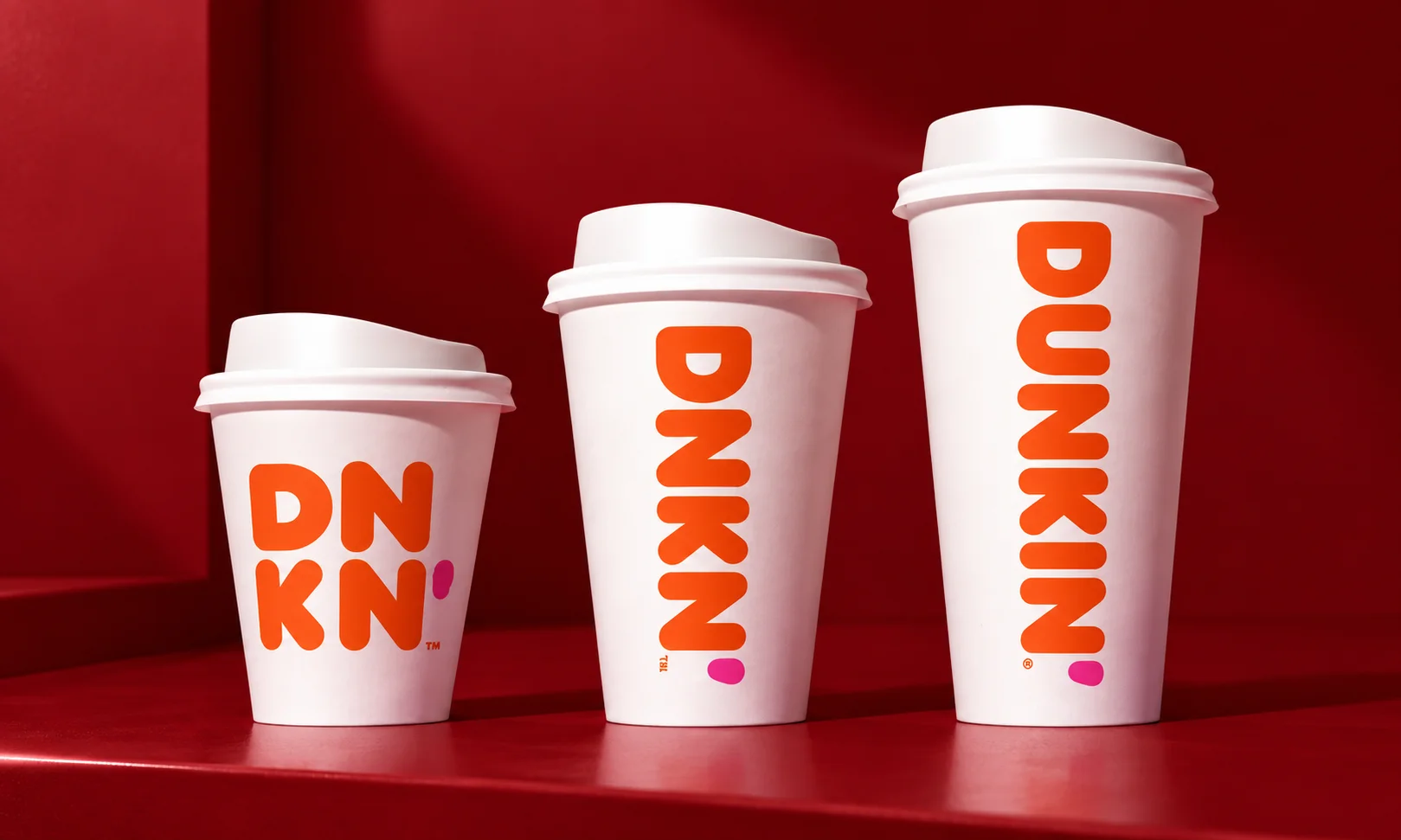
Dunkin
Dunkin’ officially adopted its shorter name in January 2019. The company retained familiar visual elements while moving beyond a name centered only on donuts.
Lesson: A rebrand does not require throwing away everything customers already recognize.
Burberry
Burberry introduced a new logo and Thomas Burberry monogram in 2018 as part of a broader effort to refresh the brand and strengthen its luxury positioning.
Lesson: A company can modernize while still respecting its heritage.
Rebranding Examples That Fell Short
Gap
In 2010, Gap introduced a new logo online and quickly faced strong customer criticism. The company returned to its familiar blue-box logo within days.
Lesson: Strong brand recognition should be considered before replacing familiar elements.
Tropicana
Tropicana changed its packaging in 2009, but customers reacted negatively to the redesign. The company soon reversed the change. An academic study found that sales of the affected Pure Premium line fell 20% over the comparison period during the redesign and estimated the cost of the redesign at about $27 million.
Lesson: Packaging can be an important part of brand recognition, particularly for products competing on crowded shelves.
Is It Time to Rebrand Your Business?
Before starting, ask whether the current brand still represents the business.
Do customers understand what the company offers? Is there a clear reason for changing? Will the new identity help the intended audience? Can the company afford the rollout? Can employees support the new direction? Can the results be measured?
If the answers point toward a clear business need, rebranding may be worth the investment. If the only problem is that the existing design feels slightly old, a brand refresh may be enough.
Common Rebranding Mistakes
The most common mistakes include:
- Changing the logo before identifying the real problem
- Starting without a clear business goal
- Ignoring existing customers
- Copying competitors
- Changing too many things without a clear reason
- Underestimating implementation costs
- Failing to prepare employees
- Skipping customer testing
- Ignoring the customer experience
- Failing to measure results
Before making a major change, ask three questions:
Why are we changing it? Who will benefit? How will we know it worked?
If those questions cannot be answered clearly, the project may need more planning.
Final Verdict
Rebranding can be a powerful business tool, but it should never be treated as a simple logo makeover.
The strongest rebrands begin with a real business problem. They use research to understand customers, protect valuable brand recognition, define a clear market position, and change only the elements that need to change.
A successful rebrand also requires consistent implementation. The new identity should work across the website, products, packaging, advertising, social media, customer service, and internal materials.
In 2026, the best rebrands are not simply the ones that look modern. They are the ones that make a business clearer, more relevant, easier to recognize, and better prepared for its next stage of growth.
FAQ
What is rebranding?
Rebranding is the process of changing how a business presents itself and how customers understand it. It can involve the visual identity, messaging, positioning, name, products, or customer experience.
What is the difference between rebranding and a brand refresh?
A brand refresh makes an existing brand feel more current while preserving most of its identity. A rebrand usually involves larger changes to the company’s positioning, identity, or market direction.
How much does rebranding cost?
There is no fixed price. Small projects may cost a few thousand dollars, while larger agency and enterprise projects can reach tens or hundreds of thousands of dollars. In Pakistan, professional projects can range from tens of thousands to several hundred thousand rupees depending on scope.
How long does a rebrand take?
A small visual project may take several weeks. A full identity can take around two months, while projects involving websites, packaging, or larger rollouts can take several months. Enterprise projects may take a year or longer.
Can a rebrand fail?
Yes. A rebrand can fail when it ignores customers, removes valuable recognition, lacks a clear strategy, or tries to solve a non-brand problem through design alone.
Should every business change its name during a rebrand?
No. A name should only change when there is a strong reason. If the existing name is recognized and still fits the business, keeping it can protect valuable brand equity.
Is rebranding necessary for every growing business?
No. Some growing businesses only need a brand refresh, clearer messaging, stronger positioning, or better customer communication.
How do you know if a rebrand worked?
Compare the results with the original goals. Useful measures can include brand awareness, customer perception, website performance, customer behavior, leads, sales, retention, and other business metrics connected to the reason for the rebrand.