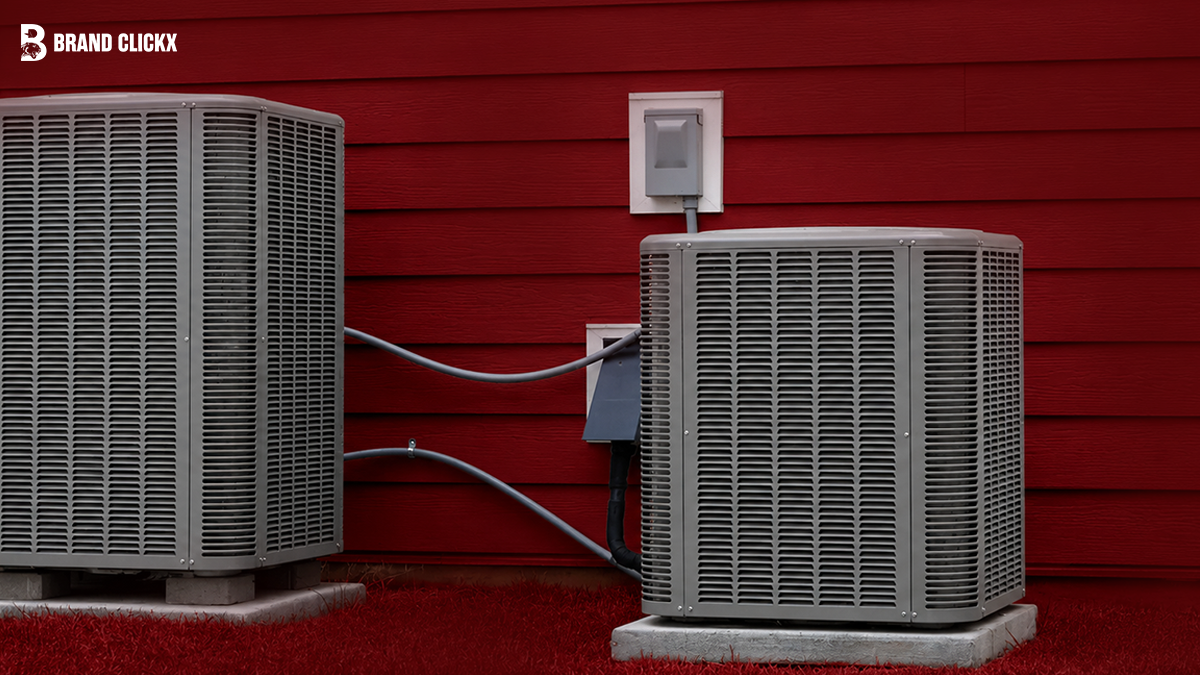
Commercial HVAC in Fort Worth is not a luxury it is a business necessity. When summer temperatures regularly push past 100°F and sudden Texas cold fronts hit the city overnight, a failing heating or cooling system does not just make employees uncomfortable. It disrupts productivity, drives customers away, and in healthcare or food service settings, can create compliance and safety issues within hours.
This guide covers everything Fort Worth business owners need to know: what commercial HVAC services include, how commercial systems differ from residential ones, which companies serve the area, what services cost, and how to choose the right contractor for your building.
AI Overview
Commercial HVAC in Fort Worth, TX encompasses the installation, maintenance, repair, and replacement of heating, ventilation, and air conditioning systems for offices, retail centers, warehouses, restaurants, medical facilities, schools, and industrial buildings across Tarrant County. Fort Worth’s extreme climate summers regularly hitting 100–110°F and winters occasionally dropping below freezing during sudden cold fronts puts commercial HVAC systems under significant stress, making regular professional maintenance particularly important for North Texas businesses.
The Fort Worth commercial HVAC market is served by approximately 19 verified commercial HVAC providers, according to ServiceAgent’s Q4 2026 directory, with average ServiceAgent scores of 8.5/10 across the field. Top-rated providers include Tom’s Commercial (in business since 1960), Impact Mechanical DFW, Moss Heating & Cooling, Williamson’s AC Contracting, Willard Cooling Heating Plumbing & Electrical (since 2007), and Service Experts Fort Worth. Commercial HVAC service costs in Fort Worth range from $75–$150 for a diagnostic visit to $15,000–$150,000+ for full system installations depending on building size and system type.
Key Takeaways
| Detail | Information |
| Fort Worth summer highs | Regularly 100–110°F among the most demanding conditions for commercial cooling |
| Peak demand months | July–August (book maintenance in October for best pricing) |
| Commercial vs residential | Commercial systems handle larger loads, use different refrigerants, require NATE-certified or state-licensed technicians |
| Quarterly inspection requirement | Local regulations require quarterly checks for most commercial HVAC systems |
| Diagnostic visit cost | $75–$150 (tip: confirm fee applies toward repair if work proceeds) |
| Annual maintenance plan cost | $200–$500+ per unit depending on system type and size |
| Rooftop unit (RTU) installation | $8,000–$30,000+ depending on tonnage |
| Chiller system installation | $30,000–$150,000+ for large commercial buildings |
| 24/7 emergency service | Available from multiple Fort Worth providers confirm before signing a service agreement |
| Priority for healthcare/food service | Faster emergency response needed verify this explicitly with any prospective contractor |
Why Fort Worth’s Climate Makes Commercial HVAC Critical
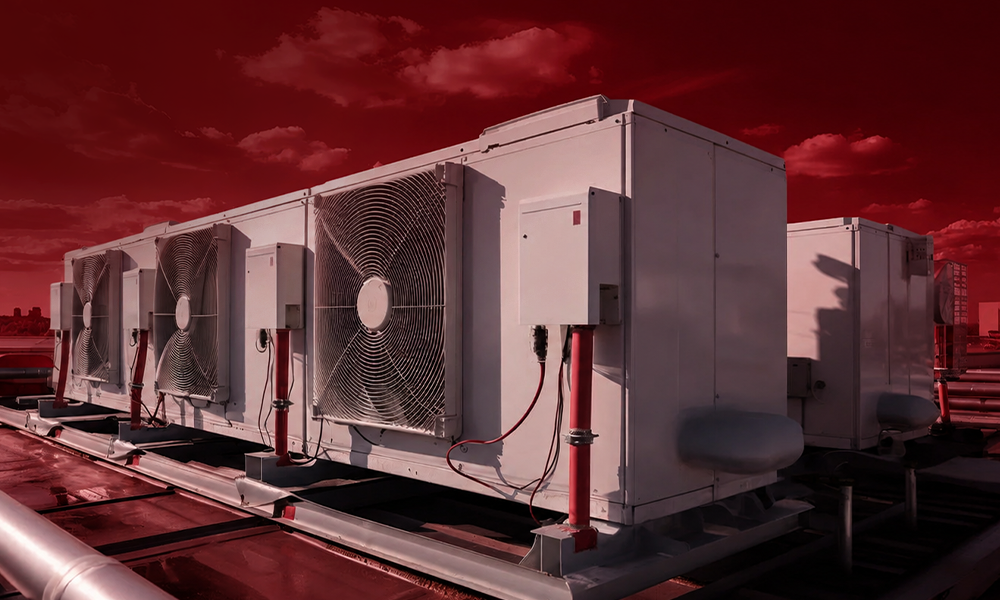
Fort Worth sits in North Texas with a humid subtropical climate that tests commercial HVAC systems harder than almost any other major US city. Understanding the specific local pressures helps explain why commercial HVAC investment is so significant here.
Summer: Fort Worth regularly records temperatures above 100°F from June through August, with July and August being the most extreme months. A commercial cooling system running continuously at peak demand during a Texas summer degrades faster than one in a moderate climate. Compressor failures, refrigerant leaks, and condenser issues spike during this period. Businesses without maintenance agreements often find themselves competing for emergency technician availability in the same week that dozens of other buildings experience failures.
Winter: Texas cold fronts are notorious for arriving with little warning. Fort Worth has experienced multiple significant winter weather events in recent years including the February 2021 freeze that caused catastrophic HVAC system failures across the region. Commercial heating systems, particularly older ones, can fail during the first significant cold snap of the season if they have not been properly maintained. Pipes freeze. Heat exchangers crack. Businesses that discovered heating failures at the start of a freeze event found technician wait times stretching to 48–72 hours or more.
Spring: Severe hail is common across North Texas in spring. Hail damage to condenser fins and outdoor units is a significant and frequently overlooked cause of reduced commercial HVAC efficiency. A post-hail-season inspection checking condenser coils, fins, and refrigerant lines for damage is standard practice for well-maintained Fort Worth commercial buildings.
Year-round humidity: Fort Worth’s humidity makes indoor air quality management a year-round concern. Commercial ventilation and air handling systems that are not properly maintained allow humidity levels to rise, increasing mold risk and reducing air quality in ways that can affect employee health, product quality (in food service or pharmaceutical settings), and equipment performance.
Commercial vs Residential HVAC: The Key Differences
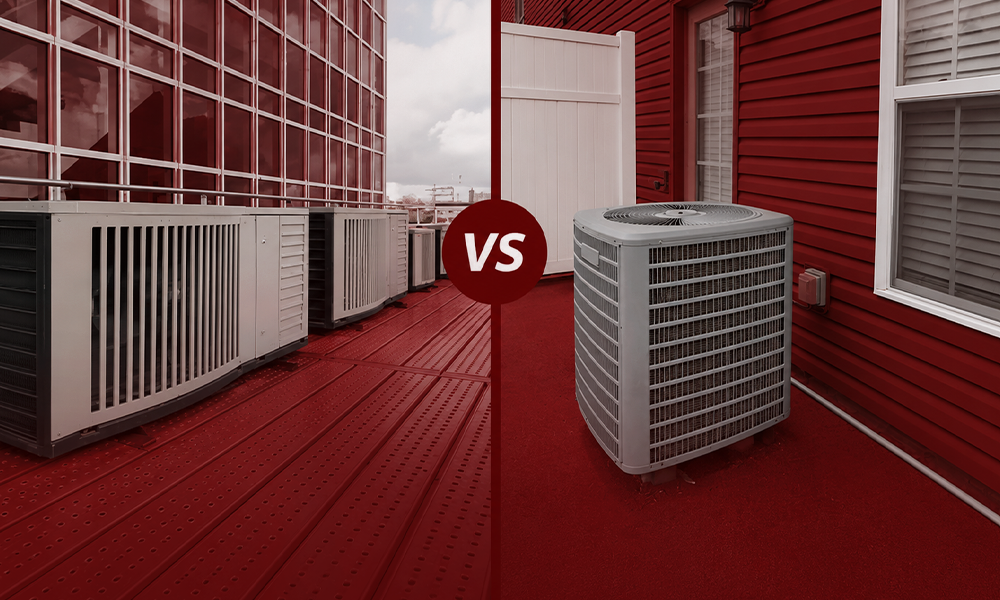
Many Fort Worth business owners first encounter commercial HVAC as an upgrade from a residential background. Understanding what makes commercial systems genuinely different matters for budgeting, contractor selection, and maintenance planning.
System size and capacity: Commercial systems are sized in tons of cooling capacity, with most small commercial buildings requiring 5–20 tons and larger facilities requiring far more. A standard residential system is 1.5–5 tons. Commercial systems handle significantly larger loads more square footage, higher occupancy, commercial kitchen heat loads, server room cooling requirements and are built to operate continuously under those loads.
System type: Residential buildings almost universally use split systems an indoor air handler and an outdoor condenser. Commercial buildings use a wider range of configurations:
- Rooftop Units (RTUs): The most common system for mid-size commercial buildings self-contained units mounted on the roof, connecting directly to ductwork below. Simple to service, excellent for retail, office, and warehouse applications.
- Chiller Systems: Used for large buildings (hospitals, universities, office towers). A central chiller cools water that circulates through air handlers throughout the building. Complex to maintain but extremely efficient at scale.
- Variable Refrigerant Flow (VRF) Systems: Advanced multi-zone systems used in modern office buildings and hospitality properties. Allow different zones to operate at different temperatures simultaneously and are highly energy-efficient.
- Packaged Units: Fully self-contained systems with all components in one cabinet common in small commercial applications.
- Boiler and Air Handler Systems: Common in older Fort Worth commercial buildings a central boiler provides heating, air handlers distribute conditioned air.
Refrigerant regulations: Commercial systems are subject to stricter EPA Section 608 refrigerant handling requirements than residential systems. All Fort Worth commercial HVAC contractors must hold EPA Section 608 Universal certification to legally handle refrigerants. This is a baseline credential to verify when hiring any commercial HVAC company.
Texas licensing: Commercial HVAC contractors in Texas must hold a state HVAC contractor’s license issued by the Texas Department of Licensing and Regulation (TDLR). Verify this before hiring unlicensed contractors operating on commercial systems are not just a legal risk but a safety one.
Complexity and access: Commercial systems typically serve multiple zones, integrate with Building Automation Systems (BAS), require equipment access from rooftops or mechanical rooms, and have more complex controls than residential systems. Technicians working on commercial equipment should have NATE (North American Technician Excellence) certification, ideally at the Master Technician level for large-scale commercial work.
Commercial HVAC Services in Fort Worth
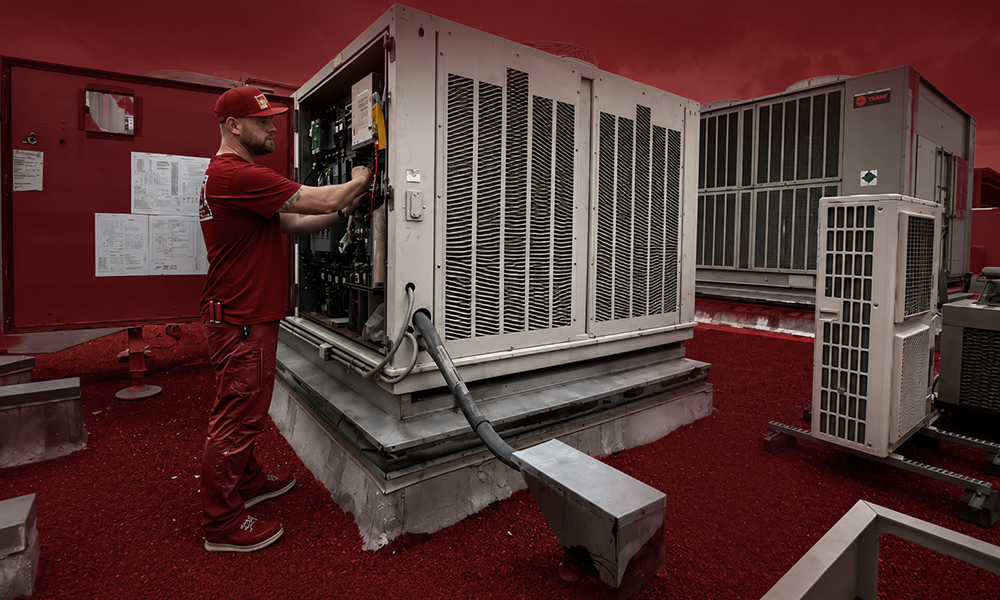
A full-service commercial HVAC contractor in Fort Worth covers the following service categories.
Installation
Commercial HVAC installation in Fort Worth is required for:
- New construction office buildings, retail centers, restaurants, healthcare facilities, industrial buildings
- System replacement when existing equipment reaches end of life (typically 15–25 years for commercial systems)
- Capacity expansion when a building adds square footage or significantly changes its use
- Refrigerant system upgrades transitioning from older refrigerants being phased out under EPA regulations
Installation for a new commercial system begins with a Manual J load calculation a formal engineering assessment of the building’s cooling and heating load requirements based on square footage, occupancy, insulation, window area, and local climate data. Any contractor who skips this step and sizes a system by rule of thumb or building square footage alone is not following professional installation practice.
Key installation services include rooftop unit installation, VRF system design and installation, ductwork design and installation, chiller and boiler system installation, refrigeration system installation, and Building Automation System (BAS) integration.
Maintenance and Preventive Service
Local Fort Worth regulations require quarterly HVAC inspections for most commercial buildings. Beyond regulatory compliance, consistent preventive maintenance is the single most cost-effective investment a Fort Worth business can make in its HVAC system.
A standard commercial HVAC preventive maintenance visit includes:
- Filter inspection and replacement
- Coil cleaning (evaporator and condenser)
- Refrigerant level check
- Electrical connection inspection and tightening
- Belt and pulley inspection
- Thermostat and controls calibration
- Condensate drain clearing
- Fan blade inspection
- Lubrication of moving parts
- Safety control testing
- System performance documentation
Most commercial HVAC contractors in Fort Worth offer annual or quarterly maintenance agreements that cover these visits at a fixed price, often including priority scheduling for emergency service and discounts on repairs. These plans typically run $200–$500 per unit per year for light commercial systems, with pricing scaling for larger or more complex equipment.
The return on investment from preventive maintenance is well-documented: regular maintenance reduces major repair costs significantly, extends equipment life, and maintains energy efficiency. An unmaintained commercial rooftop unit can lose 5–10% of its rated efficiency per year meaning a 10-ton unit effectively running at 8 tons within two seasons.
Repair
Commercial HVAC repair in Fort Worth should be treated as time-sensitive for most business applications. Common commercial repair issues include:
Compressor failure: The most expensive single-component repair in a commercial system. A failed compressor typically costs $1,500–$8,000+ to replace depending on system size, and often signals that a full system replacement is worth evaluating if the unit is more than 10 years old.
Refrigerant leaks: EPA regulations prohibit venting refrigerant and require leak detection and repair in commercial systems above a certain size. A qualified Fort Worth technician must perform refrigerant work verify EPA 608 certification before allowing any contractor to handle refrigerant.
Electrical failures: Contactors, capacitors, disconnect boxes, and control boards are common failure points in commercial systems running under heavy load during Fort Worth summers.
Ductwork issues: Leaking or improperly balanced ductwork can account for 20–30% energy loss in commercial systems. Duct sealing and air balancing services address this.
Thermostat and controls failures: In buildings with Building Automation Systems, controls failures require technicians familiar with the specific BAS platform (Honeywell, Johnson Controls, Siemens, and others).
Drain line clogs: Condensate drain lines in Fort Worth’s humid climate clog frequently if not cleaned during preventive maintenance visits, causing water damage to ceilings and flooring.
Emergency Service
Fort Worth’s commercial HVAC emergency market is busiest in July and August, when system failures during extreme heat events create urgent situations for businesses of all types. Healthcare facilities, food service operations, data centers, and any business with temperature-sensitive inventory need same-day or faster response.
When evaluating commercial HVAC contractors, confirm emergency availability explicitly ask what the after-hours response time guarantee is, whether emergency rates apply, and whether emergency service is included in a maintenance agreement or charged separately.
Fort Worth’s Commercial HVAC Sectors and Specific Needs
Different industries in Fort Worth face distinct commercial HVAC challenges.
Healthcare (Texas Health Harris Methodist, Cook Children’s, JPS Health Network area): Medical facilities require precise temperature and humidity control, specialized air handling for infection control, redundant systems to ensure continuous operation, and compliance with ASHRAE Standard 170 for healthcare ventilation. Commercial HVAC contractors serving medical facilities must understand these requirements.
Industrial and Warehousing (Alliance Corridor, Loop 820, I-35W): Fort Worth’s extensive industrial and logistics infrastructure in the Alliance area and along major highway corridors requires large-tonnage cooling for warehouses, process cooling for manufacturing, and ventilation systems for facilities with high heat or fume generation.
Restaurants and Food Service (Sundance Square, West 7th, Clearfork): Kitchen exhaust systems, makeup air units, and the cooling loads generated by commercial kitchen equipment create unique HVAC challenges for Fort Worth’s restaurant industry. Grease management in exhaust systems is a fire code issue as well as an HVAC one.
Office Buildings (Downtown, TCU area, Westbend): Modern Fort Worth office buildings increasingly use VRF systems or advanced BAS-integrated rooftop units that allow zone control for different office areas. Older Downtown Fort Worth buildings often have legacy chiller or boiler systems that require contractors with experience on older equipment.
Education (Fort Worth ISD, TCU, Tarrant County College): Large educational campuses with irregular occupancy schedules benefit significantly from Building Automation Systems that modulate HVAC operation based on occupancy. School districts and universities in Fort Worth manage very large portfolios of commercial HVAC equipment across dozens of buildings.
Retail (Hulen Mall, Ridgmar Mall, Clearfork): High foot traffic and variable occupancy create significant cooling loads in Fort Worth retail. Rooftop unit systems dominate this sector.
Top Commercial HVAC Companies in Fort Worth
Based on verified review data, years of operation, commercial credentials, and service scope, these are the most consistently recommended commercial HVAC providers serving Fort Worth.
Tom’s Commercial, Inc. In business since 1960 the longest-standing dedicated commercial HVAC operation in Fort Worth. Tom’s Commercial offers installation, repair, maintenance, and emergency service for businesses across the city, with a 100% satisfaction guarantee and maintenance plans that include priority scheduling, repair discounts, and no trip charges during business hours. Phone: (817) 857-7400.
Impact Mechanical DFW A full-service commercial mechanical contractor serving Fort Worth with HVAC installation, repair, maintenance, chiller systems, boilers, and 24/7 emergency response. Documented service areas include Downtown Fort Worth, the Medical District, Alliance, West Fort Worth, and communities across Tarrant County. Strong reputation for industrial, healthcare, and multifamily applications.
Moss Heating & Cooling Serves the Dallas–Fort Worth metro with commercial HVAC solutions for offices, retail, healthcare, and mixed-use buildings. Full-range services from new construction installation through routine maintenance.
Willard Cooling, Heating, Plumbing & Electrical Fort Worth-based multi-service company operating since 2007, offering commercial HVAC alongside plumbing and electrical services. Shield Membership maintenance program includes two annual precision tune-ups, priority scheduling, and discounted repairs.
Williamson’s AC Contracting Based in White Settlement with extensive Fort Worth commercial HVAC experience. Specializes in light-to-moderate commercial HVAC work with 24/7 availability. Strong Google review profile reflecting consistent service quality.
Service Experts Fort Worth National brand with Fort Worth presence offering commercial AC repair, commercial heating service, and complete system installation. ACE-certified technicians, 24/7 customer support, and same-day commercial service availability.
Ideal Partners 100+ years of combined experience across the team. Full commercial HVAC services including installation, repair, maintenance, and indoor air quality for Fort Worth and DFW area businesses.
Lawrence Air Conditioning & Heating High-volume Fort Worth operator with 827 Google reviews averaging 5.0 stars the strongest review profile among Fort Worth HVAC providers in ServiceAgent’s Q4 2026 directory.
Commercial HVAC Costs in Fort Worth: What to Budget
These figures are planning ranges based on Fort Worth market data. Always obtain at least two written quotes before committing to any significant commercial HVAC work.
Diagnostic / Service Call: $75–$150. Most legitimate contractors charge this fee, which should credit toward repair costs if work proceeds. Be cautious of advertised “$29 service calls” these are frequently high-pressure sales tactics.
Refrigerant Recharge: $300–$800+ depending on refrigerant type and quantity. R-22 refrigerant (used in older systems) is significantly more expensive than R-410A due to phase-out regulations.
Compressor Replacement: $1,500–$8,000+ depending on tonnage and system type.
Rooftop Unit Replacement (small commercial): $8,000–$20,000 for a 5–10 ton unit including labor.
Rooftop Unit Replacement (large commercial): $20,000–$60,000+ for 15–30 ton units.
VRF System Installation: $25,000–$100,000+ for a multi-zone office building system.
Chiller System Installation: $30,000–$150,000+ for large commercial and industrial applications.
Annual Maintenance Plan: $200–$500 per light commercial unit annually. Larger or more complex systems scale accordingly.
Emergency After-Hours Service: Expect a premium of $50–$150+ above standard labor rates for after-hours emergency calls.
Fort Worth seasonal pricing tip: Demand peaks in July and troughs in October. Booking non-urgent replacements and installations in September October typically yields better contractor availability and in some cases better pricing than peak-season work.
How to Choose a Commercial HVAC Contractor in Fort Worth
Five questions to ask before signing any commercial HVAC service agreement.
- Are you licensed and insured for commercial work in Texas? Verify TDLR HVAC contractor license. For commercial work, also confirm general liability insurance and workers’ compensation coverage. Request certificates of insurance any legitimate contractor provides these without hesitation.
- Do your technicians hold EPA Section 608 Universal certification? Required by federal law for anyone who handles refrigerants. No exceptions.
- What is your emergency response time guarantee? For businesses where a system failure creates immediate operational or safety issues, confirm in writing what response time you can expect after hours.
- What does your maintenance agreement actually cover? Ask for a written scope of service. Compare what is included filter changes, coil cleaning, refrigerant checks, priority scheduling, emergency call fees before comparing prices.
- Can you provide references from commercial clients in my industry? A contractor who has serviced restaurants but not medical facilities may not be the right choice for a healthcare application. Industry-specific experience matters for commercial HVAC.
FAQs
What is commercial HVAC?
Commercial HVAC refers to heating, ventilation, and air conditioning systems designed for commercial buildings offices, retail stores, warehouses, restaurants, healthcare facilities, and industrial spaces. Commercial systems are larger, more complex, and regulated differently than residential systems.
How often should commercial HVAC be serviced in Fort Worth?
Local Fort Worth regulations require quarterly inspections for most commercial HVAC systems. In practice, most commercial buildings benefit from at least two comprehensive maintenance visits per year (spring and fall) plus quarterly filter checks.
How much does commercial HVAC cost in Fort Worth?
Costs vary widely by service type. Diagnostic visits run $75–$150. Annual maintenance plans are $200–$500 per unit. System replacements range from $8,000 for small rooftop units to $150,000+ for large chiller systems. Always get multiple written quotes.
What is the best commercial HVAC company in Fort Worth?
Tom’s Commercial (in business since 1960), Impact Mechanical DFW, and Lawrence Air Conditioning & Heating consistently earn strong ratings across verified review platforms. The best choice for your business depends on your specific system type, building size, and industry.
Do I need a commercial HVAC contractor or can a residential company do the work?
For most commercial applications, you need a contractor with commercial experience and credentials. Commercial systems are larger, more complex, and subject to different regulations than residential systems. Verify TDLR commercial licensing and ask for commercial references.
What should I do if my commercial HVAC fails in summer?
Call a commercial HVAC contractor immediately and ask about emergency service availability. Document the failure with photos. While waiting for service, open windows if safe to do so, reduce occupancy if the heat is dangerous, and contact your HVAC maintenance provider if you have a service agreement maintenance plan customers typically receive priority scheduling.