Quick Answer
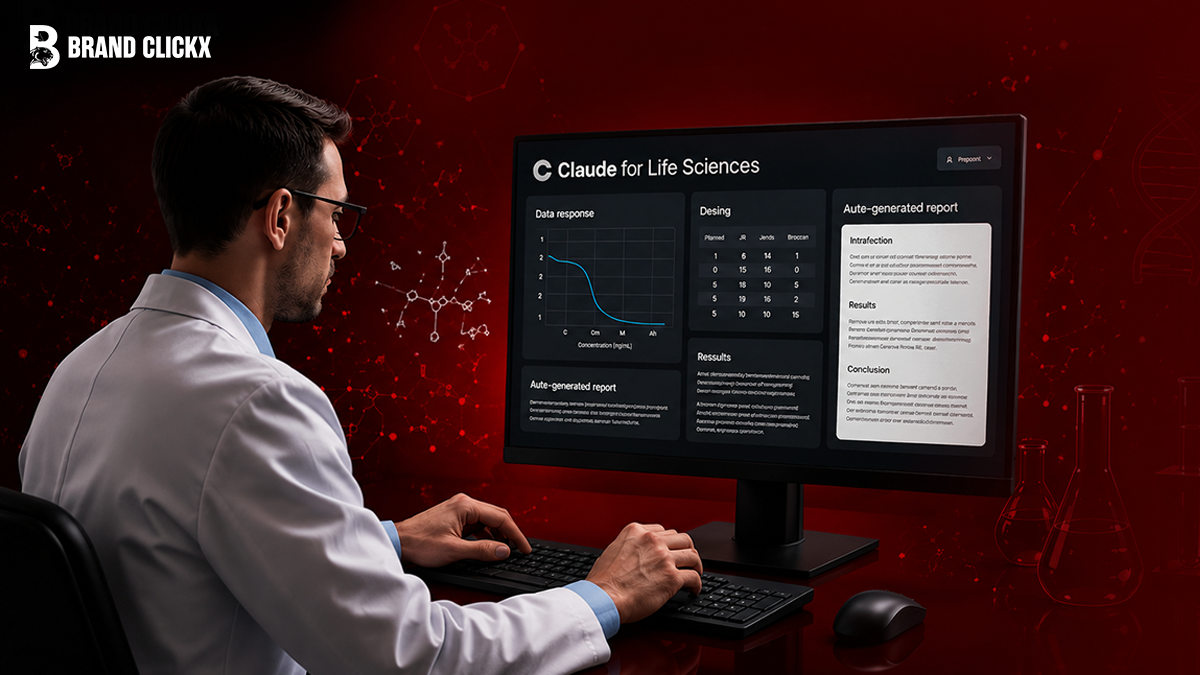
Claude Science is an AI workbench for scientists launched by Anthropic on June 30, 2026. It consolidates the tools, databases, and computing resources researchers use daily into one environment replacing the fragmented cycle of PubMed, Jupyter, R, and cluster terminals with a single coordinated AI workflow for scientists.
It is not a new AI model. Anthropic is explicit on this point: Claude Science runs on the same Claude models already available to everyone today, including Claude Opus 4.8. The Anthropic Claude Science workbench is available in beta for Claude Pro, Max, Team, and Enterprise users, and runs locally on macOS or Linux or connects to a remote machine over SSH or an HPC login node.
What Problem Claude Science Solves

Scientific research is operationally painful in ways that rarely get discussed outside the lab. As an AI research assistant built specifically for researchers, Claude Science for AI for scientific research addresses a genuine operational problem: context-switching between tools is where scientific productivity dies.
A biologist running a computational experiment might touch UniProt, PDB, Ensembl, ClinVar, ChEMBL, GEO, PubMed, and a preprint server each with its own schema, query language, and file format before writing a single line of analysis code in R or Python, visualizing it in Jupyter, and submitting the job to a cluster terminal.
Scientific research is often tedious. Researchers must work across dozens of databases, each with their own schema, contend with file formats that require bespoke data pipelines and viewers, and transition between a roster of tools: PubMed, Jupyter, R, a cluster terminal, and more.
Claude Science collapses that workflow into a single environment. Researchers ask questions in plain language. Specialist agents query and synthesize across the relevant sources. Figures, code, and manuscripts come back in one place with full reproducibility trails attached.
As Anthropic CEO Dario Amodei said at the launch event: “It’s going to be a general purpose technology that helps us to make sense of that complexity, in its full complexity, better.”
Claude Science Features: What It Actually Does
60+ Pre-Configured Scientific Databases
Claude Science is pre-configured for genomics, single-cell, proteomics, and cheminformatics, backed by more than 60 scientific databases. When you ask Claude Science a question in plain language, specialist agents query and synthesize across all of these sources so you don’t have to navigate them individually.
The database set covers the core of modern life sciences: UniProt, PDB, Ensembl, Reactome, ClinVar, ChEMBL, GEO, and dozens more. The point isn’t that these databases are new it’s that they’re queryable in plain English through one interface rather than through disconnected API calls and format conversions.
Multi-Agent Architecture
Claude Science uses a generalist coordinating agent with access to more than 60 curated skills and connectors. That agent can spin up specialist sub-agents to divide complex tasks, or hand work to custom “expert” agents a researcher has built for their own pipelines.
A separate reviewer agent checks citations and calculations before anything moves toward publication an important feature given the documented problem of AI-assisted writing producing hallucinated references. TechCrunch notes correctly that this is still the same underlying model checking itself, not an independent external truth source, which is worth keeping in mind when evaluating citation accuracy.
Reproducible, Auditable Scientific Artifacts
Claude Science displays proteins, structures, and molecules natively, with every result reproducible and traced to its code. When it generates a figure, Claude Science includes the exact code and environment that produced it, a plain-language description of how it was created, and the full message history. This allows you to understand the inputs, making the work easier to validate and reproduce even months later.
The platform natively renders 3D protein structures, genome browser tracks, chemical structures, and other rich scientific artifacts. Researchers can request figure edits in plain language remove gridlines, change an axis to log scale and the agent edits its own code. Every output carries an auditable history.
Compute Management at Scale
For large analyses, Claude Science manages compute resources directly. It drafts a plan, asks the researcher before using new resources, allows decisions to be reviewed or revoked, and then submits jobs to the lab’s existing HPC clusters via SSH or to Modal compute on demand scaling from a single GPU to hundreds as needed.
Because the app runs on a lab’s own infrastructure, sensitive datasets never leave it. Only the context needed for each computational step is sent to Claude, addressing a genuine privacy concern for labs working with proprietary or patient-linked data.
Session Forking
Researchers can fork a session at any point to try a different approach without losing the original. This enables parallel hypothesis exploration without the overhead of rebuilding the environment from scratch for each branch.
The NVIDIA Partnership
Claude Science uses the skills in NVIDIA’s BioNeMo Agent Toolkit to connect natively to the life sciences models and libraries in BioNeMo, including Evo 2, Boltz-2, and OpenFold3.
This integration gives Claude Science access to state-of-the-art biological foundation models for sequence analysis, protein structure prediction, and molecular design tools researchers already use and trust without requiring them to manage separate API keys, environments, or integrations.
Who Is Using Claude Science: Beta Case Studies

Anthropic named three early users at launch, each illustrating a different research use case.
Manifold Bio A biotech company designing medicines that target specific tissues used Claude Science to nominate targets for its latest experiments, weighing surface expression, trafficking, and safety while incorporating context from prior programs. This is AI for biomedical research applied to drug discovery target selection.
Jérôme Lecoq, Allen Institute A neuroscientist used Claude Science to build a multi-agent computational review template with approximately 20 custom skills for writing long-form scientific literature reviews a clear example of research automation applied to the review process.
Stephen Francis, UCSF Brain Tumor Center An associate professor and epidemiologist used Claude Science to support studies on the molecular epidemiology of glioma, demonstrating the scientific research AI in clinical research contexts.
Anthropic also named Novo Nordisk as a customer case study, signaling that pharmaceutical organizations are already working with the platform.
Across beta testing, Claude AI for researchers was applied to tasks including single-cell RNA sequencing analysis, CRISPR screen design, protein structure prediction, cheminformatics, and long-form scientific reviews. The early focus on AI for biology research reflects the life sciences-first positioning, though the broader name implies expansion across scientific domains.
Claude Science Access and Pricing
Who can use it: Claude Science is available in beta for Claude Pro, Max, Team, and Enterprise subscribers. Team and Enterprise users require their admin to enable it first.
Platforms: macOS and Linux, locally or connected to a remote machine over SSH or HPC login node.
Academic discount: Anthropic offers a Team plan with discounted seats for active scientific labs at academic institutions and nonprofit research organizations.
AI for Science grant program: Anthropic is supporting up to 50 Claude Science AI for Science projects with up to $30,000 in API credits each. Modal is also providing up to $2,000 in compute for select projects. The program is focused on postdoctoral and graduate projects across biomedical research. Applications are open through July 15, 2026, with award notifications by July 31. Projects run September 1 to December 1, 2026.
Claude Science vs. Competitors
Claude Science is not the only AI workbench competing for the scientific research market. Google launched “Gemini for Science” at Google I/O in May 2026, which it explicitly positioned as “a scientific workbench on your desktop,” bundling science skills across 30+ life-science databases and its AI co-scientist hypothesis engine.
The strategic difference Anthropic is betting on: not a new model, not better benchmarks, but better workflow integration. As TechBuzz summarized the bet, the real battlefield in enterprise AI is shifting from model performance to vertical workflow optimization, and life sciences is a smart beachhead because pharmaceutical and biotech organizations already spend heavily on research infrastructure and have workflows complex enough that integration genuinely saves money.
Claude Science’s emphasis on reproducibility and auditable artifacts also addresses a specific pain point that generic AI tools have created more AI-assisted research means more hallucinated citations slipping into papers, and the reviewer agent is a direct product response to that problem.
What Claude Science Is Not
Anthropic is explicit: Claude Science is not a new AI model and not a more capable model for biology. It runs the same Claude models already available to everyone today, with no special scientific training beyond what’s already in the existing Claude family.
This is a meaningful distinction from competitors positioning their scientific AI products as purpose-built biological models. Anthropic’s bet is that workflow consolidation not model capability is the primary bottleneck for most computational researchers.
The reviewer agent checking citations is also still the same underlying model checking itself, not an independent external verification source, which is an important limitation to understand before trusting it for publication-level fact-checking.
Key Takeaways
- Claude Science is a workflow product, not a new model. It runs existing Claude models with the same access and no special biological training, competing on integration and usability rather than model capability.
- The core value proposition is consolidation. 60+ databases, compute management, multi-agent workflows, and reproducible artifact generation replace a fragmented stack of tools researchers currently stitch together manually.
- Reproducibility is a first-class feature. Every figure includes the code and environment that produced it, addressing a genuine and growing reproducibility crisis in AI-assisted research.
- Beta access is available now on Pro, Max, Team, and Enterprise plans on macOS and Linux, with a $30,000 grant program open until July 15, 2026.
- The early focus is life sciences but the name implies expansion. Claude Science is currently optimized for genomics, proteomics, structural biology, and cheminformatics but Anthropic’s branding suggests broader scientific domains are on the roadmap.
FAQ: Claude Science
What is Claude Science?
An AI workbench for scientific research launched by Anthropic on June 30, 2026, combining 60+ scientific databases, multi-agent AI, compute management, and reproducible artifact generation in one environment.
Is Claude Science a new AI model?
No. Anthropic explicitly states it runs on existing Claude models including Claude Opus 4.8, with no special access or biological fine-tuning.
Who can access the Claude Science app?
Anyone on Claude Pro, Max, Team, or Enterprise plans. Team and Enterprise users require admin activation. Academic and nonprofit labs can access discounted Team plan seats.
What scientific fields does Claude Science support?
Currently focused on life sciences: genomics, single-cell analysis, proteomics, structural biology, and cheminformatics, with 60+ databases pre-configured across these domains.
Is there a Claude Science beta grant program?
Yes. Anthropic is awarding up to $30,000 in credits to up to 50 postdoctoral and graduate research projects. Applications close July 15, 2026.
The Bigger Picture
Claude Science represents Anthropic’s most significant push into scientific research since launching Claude for Life Sciences in October 2025. The product is notable not because it introduces a new biological AI capability, but because it is the most direct statement yet that the primary bottleneck for AI-assisted science isn’t model intelligence it’s workflow friction.
Whether that bet pays off depends on whether researchers trust a consolidated platform enough to replace the idiosyncratic, lab-specific stacks they’ve built over years. That trust is harder to build than any model, and it’s likely to be the more defensible competitive advantage if Claude Science can earn it.
The first real answer will come from the research organizations now testing the beta. The grant program through July 15 is the most direct way to get structured feedback from scientists who will push the platform harder than any internal evaluation could.