

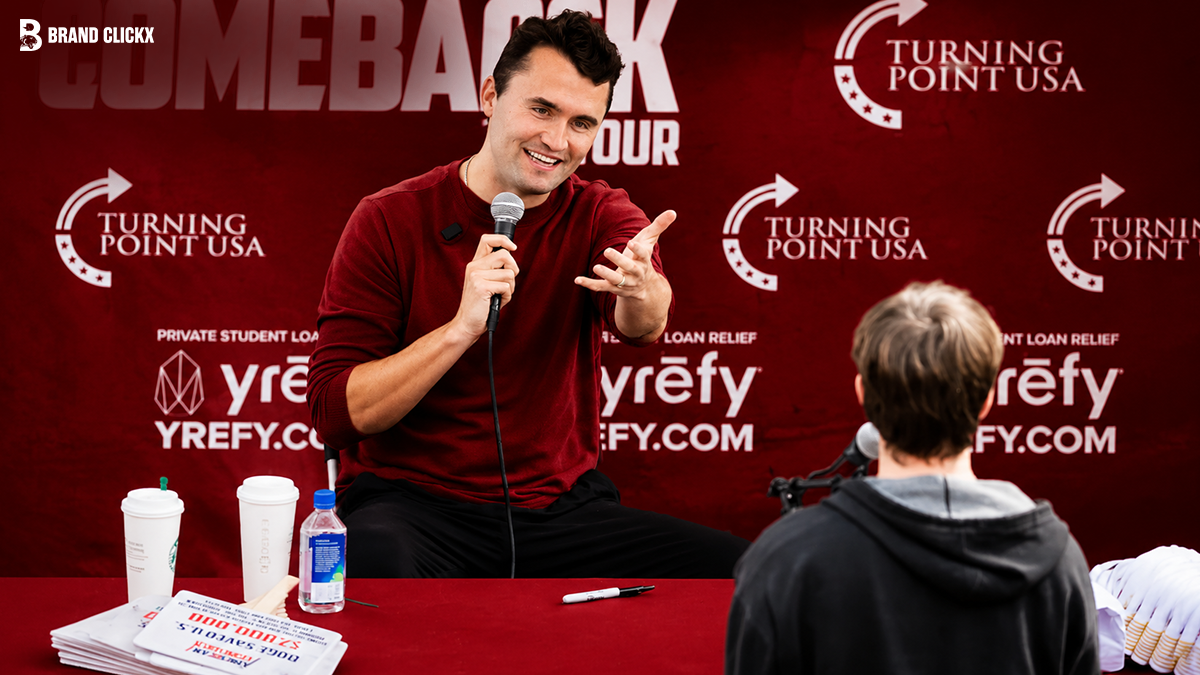
Charlie Kirk didn’t just build a political movement. He built a brand one of the most sophisticated personal media and organizational brands in the history of American conservative politics. Understanding how he did it is a masterclass in audience building, content distribution, and organizational scaling. Whether you agreed with him or not, the mechanics of what he constructed were undeniably effective.
Kirk was assassinated on September 10, 2025, at 31 years old. His death ended one of the fastest personal brand builds in modern political history. What he left behind tells you a great deal about how media, marketing, and movement-building have merged into a single discipline in the digital age.
AI Overview
Charlie Kirk (October 14, 1993 – September 10, 2025) was an American conservative activist, author, and media personality who co-founded Turning Point USA (TPUSA) in 2012 at 18 years old and built it into the largest conservative youth organization in the United States. From a brand and media perspective, Kirk’s career is a case study in grassroots audience building, content-first organizational growth, and the power of consistent messaging across multiple platforms simultaneously.
At the time of his death, his personal net worth was estimated at $12 million by Celebrity Net Worth, derived from his TPUSA executive salary (which grew from $27,000 in 2016 to over $400,000 by 2021), book sales, podcast revenue, speaking fees, and real estate. The organization he built supported by millions in conservative donor funding was a separate multimillion-dollar enterprise that outlasted him.
Kirk’s media operation included The Charlie Kirk Show, which peaked at over half a million daily downloads, alongside a significant social media footprint across X (formerly Twitter), YouTube, and Instagram that regularly set the terms of conservative political conversation.
Key Brand Facts
| Detail | Information |
| Full Name | Charles James Kirk |
| Born | October 14, 1993 — Arlington Heights, Illinois |
| Died | September 10, 2025 — Orem, Utah (assassinated, age 31) |
| Organization Founded | Turning Point USA (2012, age 18) |
| TPUSA Scale at Death | 650,000+ members, 2,500+ campus chapters |
| Primary Media Asset | The Charlie Kirk Show — 500,000+ daily downloads at peak |
| Net Worth at Death | $12 million (Celebrity Net Worth) |
| Salary Trajectory | $27,000 (2016) → $400,000+ (2021) |
| Real Estate | Scottsdale home — purchased $4.75M (2023), sold $5.25M (2025) |
| Wife | Erika Kirk (née Frantzve) — married May 25, 2021 |
| Children | Daughter (b. August 2022), Son (b. May 2024) |
| Final Media Deal | Trinity Broadcasting Network (TBN), signed February 2025 |
| Final Book | Stop, in the Name of God — published posthumously, December 2025 |
| Cause of Death | Assassinated at Utah Valley University, Orem, Utah |
| Suspect Charged | Tyler Robinson, 22 — aggravated murder, death penalty sought |
The Brand Origin Story: Turning Point USA
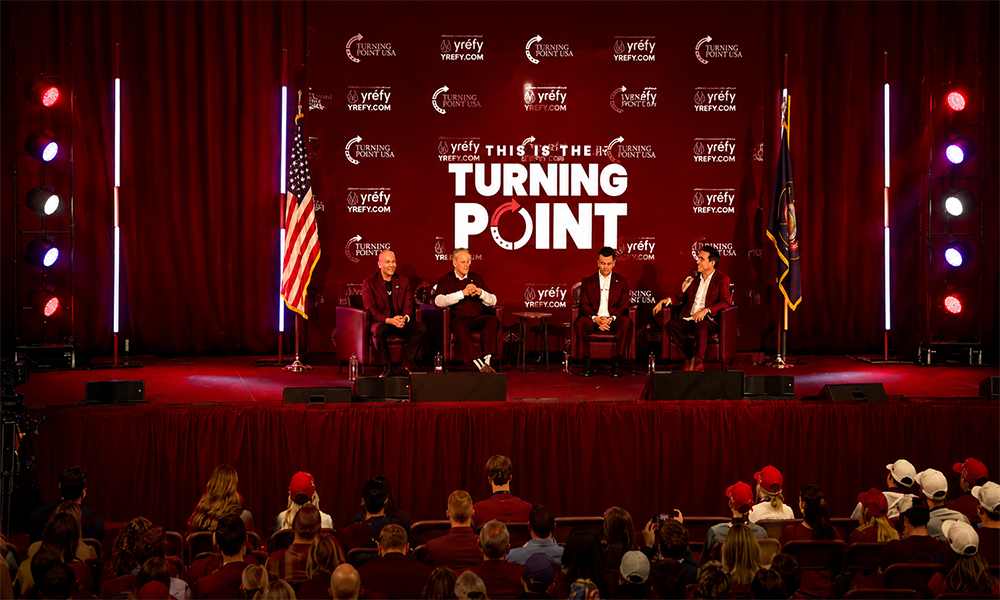
Every strong brand has a founding insight. Kirk’s was this: the conservative movement had no serious infrastructure for reaching young people on campuses, and that gap was costing Republicans an entire generation of voters and activists.
In 2012, at 18 years old, Kirk dropped out of Harper College near Chicago to co-found Turning Point USA with political donor Bill Montgomery. The organization’s stated mission promoting free markets, limited government, and individual liberty among students was straightforward. The brand strategy beneath it was more sophisticated than most observers gave it credit for.
Kirk understood that campus organizing wasn’t just about distributing pamphlets. It was about creating an identity. TPUSA gave young conservatives something to belong to, a community with its own aesthetics (the bold red and black branding), its own events (Turning Point’s high-production conferences), and its own media ecosystem. He built belonging before he built anything else and belonging is what sustains brand loyalty long past the point where rational argument runs out.
TPUSA grew from a table at a community college to an organization with 650,000 members and chapters at more than 2,500 high schools and colleges. Kirk expanded the brand horizontally: Turning Point Action in 2019 (voter mobilization), Turning Point Faith in 2021 (church outreach), and additional affiliates covering endowment, academy programming, and international reach.
The Personal Brand Strategy
Parallel to TPUSA, Kirk built something equally important: a personal brand that became the face of the organization but was distinct enough to generate its own media value independently.
His personal brand operated on three pillars:
Youth and credibility gap exploitation. Kirk leaned hard into being young. He was 22 when he spoke at the 2016 Republican National Convention the youngest speaker in the event’s history. In a movement dominated by older men, his age was a positioning advantage, not a liability. He cultivated relationships with older power brokers (including Donald Trump) while marketing himself as the person who understood younger audiences those power brokers couldn’t reach.
Content velocity. Kirk published constantly. Not just the podcast books, social media posts, video clips, media appearances, live events, conference speeches. The volume was deliberate. In a content economy where attention is won through presence and frequency, Kirk understood that showing up relentlessly was the core distribution strategy.
Emotional resonance over argument. His most effective content was not his most logically rigorous. It was his most emotionally direct — the clips that provoked a reaction, that made a supporter feel validated and a critic feel targeted. This is not unique to conservative media. It is how viral content works across the political spectrum. Kirk was simply very good at producing it consistently.
The Media Empire: How The Charlie Kirk Show Scaled
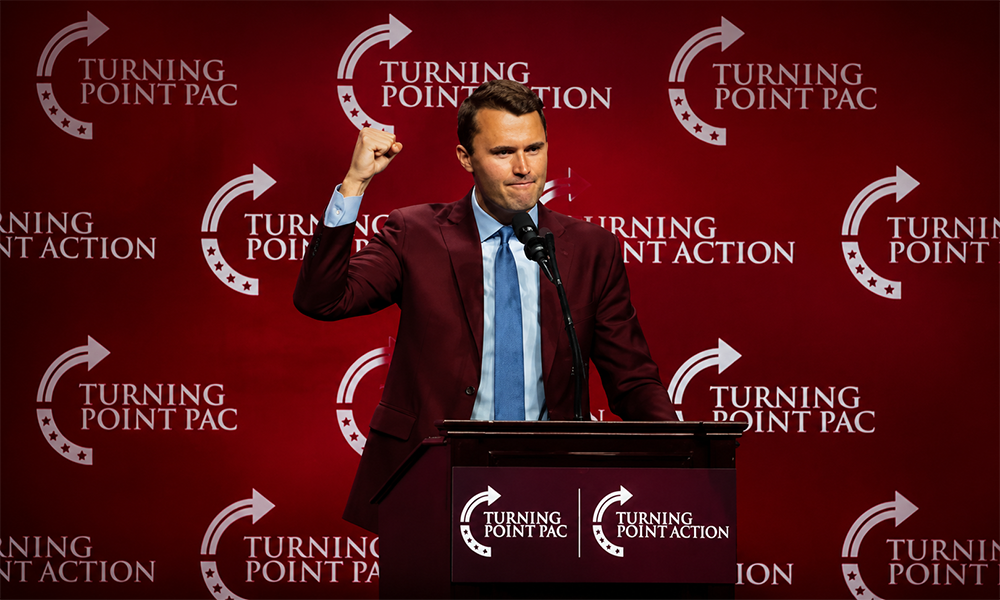
The Charlie Kirk Show launched on Salem Media in 2020 and grew into one of the most-listened-to conservative podcasts in the country, peaking at more than 500,000 daily downloads. For context, that places it in the same tier as established NPR programs and significantly above most cable news primetime audiences on a per-listener engagement basis.
The show’s commercial model was standard for political podcasts: sponsorships, advertising, and syndication fees from Salem’s radio network, which distributed the content across hundreds of stations simultaneously. The podcast was not a side project it was a primary distribution channel that amplified every other part of the Kirk media ecosystem.
In February 2025 just months before his death Kirk signed a deal with Trinity Broadcasting Network (TBN) for a new television program, Charlie Kirk Today. This was a significant expansion move, taking his content from digital-first distribution into the traditional broadcast audience that TBN reaches. The deal reflected both his continued commercial value and the ongoing migration of political media talent from traditional to hybrid distribution models.
The Book Publishing Strategy
Kirk’s book publishing strategy was consistent with the rest of his brand: high frequency, audience-aligned content, distributed through networks that guaranteed built-in sales.
His published titles:
- Time for a Turning Point (2016, co-written with Brent Hamachek)
- Campus Battlefield (2018, foreword by Donald Trump Jr.)
- The MAGA Doctrine (2019)
- The Right Agenda (2022)
- Confessions of a MAGA King (2023)
- Stop, in the Name of God (2025, published posthumously)
The pattern is worth noting: a new title roughly every two years, each timed to a political moment (the Trump alignment, the MAGA era, the faith turn in his final years). Books served multiple purposes simultaneously they were revenue generators, credential builders, speaking tour anchors, and media hooks. The posthumous final title was temporarily out of stock on Amazon the week after publication, suggesting his death significantly amplified interest in his final work.
The Trump Alliance: Strategic Positioning
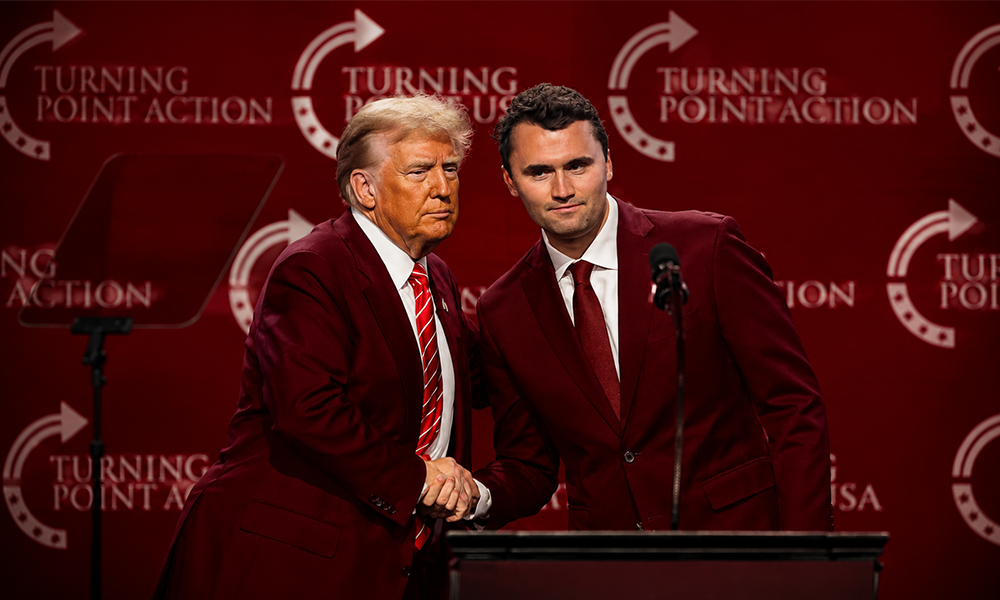
Kirk was not initially a Trump supporter. He entered 2016 as a standard-issue free-market conservative more aligned with the Paul Ryan wing of the Republican Party than the populist insurgency. His pivot toward Trump was not ideological convenience it was strategic audience realignment.
As Trump’s movement became the dominant force in Republican politics, Kirk recognized that the audience he had been building was moving toward Trump faster than the institutional Republican Party was. He moved with it and moved ahead of many establishment conservatives who hesitated.
By 2020, Kirk had become one of Trump’s most prominent media defenders. Turning Point Action, his political arm, deployed resources toward Trump’s electoral coalition. Kirk acknowledged that TPUSA-affiliated buses traveled to Washington, D.C., ahead of January 6, 2021 — a post he later deleted.
The Trump relationship generated enormous media amplification for Kirk’s brand at the cost of permanently alienating the portion of the political center that might otherwise have engaged with his free-market economic arguments. This is a classic brand trade-off: depth of loyalty in a specific audience versus breadth across multiple audiences. Kirk chose depth and built one of the most loyal audiences in political media.
Trump’s social media announcement of Kirk’s death calling him “Great, and even Legendary” was a measure of how deeply the two had become intertwined as brands.
The Faith Pivot: Brand Evolution in the Final Years
One of the most instructive elements of Kirk’s brand trajectory was his pivot toward explicit Christian nationalism in his final two to three years. His earlier content had been primarily economic and political free markets, limited government, campus culture wars. By 2023 and 2024, faith and Christian identity had moved from a secondary theme to the central organizing principle of his public messaging.
This was not a random evolution. It tracked exactly with where his audience was moving toward a more explicitly religious conception of American political identity. Turning Point Faith, launched in 2021, was ahead of the curve. The TBN television deal in February 2025 was the fullest expression of the pivot. His posthumous book was titled Stop, in the Name of God: Why Honoring the Sabbath Will Transform Your Life.
From a brand strategy perspective, this is a classic deepening move shifting from a broad identity (young conservative) to a more specific, more committed one (young Christian conservative). Narrower identity, stronger loyalty, more defensible audience.
The Organizational Brand: TPUSA After Kirk
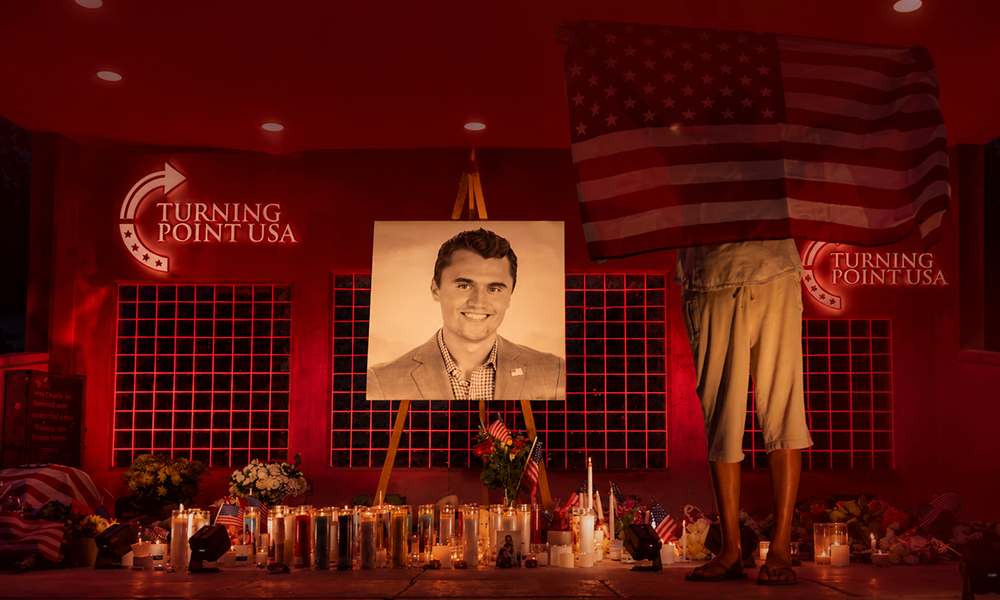
The most significant test of any personal brand is what happens to the organization it built when the founder leaves. For TPUSA, that test arrived abruptly and without preparation on September 10, 2025.
Kirk was assassinated while speaking at Utah Valley University in Orem, Utah, at exactly the kind of campus event he had built his entire career around. A single shot struck him in the neck. He died shortly after. Tyler Robinson, a 22-year-old Utah man, was arrested two days later and charged with aggravated murder; prosecutors announced they would seek the death penalty.
TPUSA continued operating after his death. The infrastructure, the donor relationships, the campus chapter network, and the organizational brand all outlasted him which is the clearest evidence that what Kirk built was a real institution rather than simply a personal platform. Many political personalities build audiences that collapse when they leave. Kirk built something more durable.
The Department of Education’s decision in March 2026 to hang banners recognizing Kirk alongside Booker T. Washington and Catharine Beecher as American heroes reflected both the depth of his influence on the political right and the continued controversy surrounding his legacy.
Controversies That Shaped the Brand
No honest analysis of Kirk’s brand strategy can ignore the controversies that defined how large portions of the public perceived him because brand reputation is built from the full picture, not just the favorable parts.
Kirk spread misinformation about COVID-19 treatments in 2020. He promoted false claims of widespread election fraud after the 2020 presidential election. TPUSA’s “Professor Watchlist” targeted academic faculty by name, drawing significant criticism from free speech advocates across the political spectrum. Kirk was accused of amplifying the Great Replacement theory a white nationalist conspiracy in some commentary. TPUSA was also linked to a 2020 paid influencer disinformation campaign involving undisclosed social media promotion.
His supporters viewed these positions as courageous contrarianism in the face of institutional consensus. His critics viewed them as irresponsible amplification of dangerous misinformation. The net result, from a brand perspective, was extremely high awareness both positive and negative — and an audience that was deeply committed precisely because the brand was polarizing. Polarized brands generate the strongest loyalty in the audiences that choose them.
Net Worth and Financial Architecture
At the time of his death, Celebrity Net Worth estimated Charlie Kirk’s personal net worth at $12 million. The financial architecture behind that number is worth examining because it reflects how modern political media brands monetize:
Nonprofit executive compensation: TPUSA salary grew from $27,000 in 2016 to more than $400,000 annually by 2021 — a reflection of the organization’s fundraising scale and Kirk’s increasing market value as its public face.
Podcast and radio revenue: The Charlie Kirk Show generated income through Salem Media’s syndication network, sponsorships, and advertising. At 500,000+ daily downloads, the commercial value was substantial.
Book publishing: Six published titles over nine years, with distribution through conservative media channels that guaranteed meaningful sales to a loyal audience.
Speaking fees: As one of the most in-demand conservative speakers in the country, Kirk commanded significant fees for appearances at university events, political conferences, and private donor gatherings.
Real estate: A Scottsdale, Arizona, home purchased for $4.75 million in 2023 and sold for $5.25 million in 2025, generating a $500,000 profit.
The combination of nonprofit income, media revenue, intellectual property (books and podcast catalog), and real estate appreciation represents a sophisticated multi-asset financial structure for a 31-year-old political activist who dropped out of community college.
What Kirk’s Brand Means for Marketing Leaders
The Charlie Kirk brand story contains several lessons that are directly relevant to anyone thinking about brand building, content strategy, and organizational growth:
Audience identity beats argument. Kirk’s most durable content gave his audience an identity a sense of who they were and who their opponents were. Identity-based content builds communities. Argument-based content builds debate. Communities stay. Debate disperses.
Content velocity compounds. The consistent publication of books, podcast episodes, social media content, and live events created a compounding attention dividend. Each piece of content reinforced the others and kept the brand present across every moment the audience was consuming media.
Platform diversification protects. By building simultaneously on podcast, radio, social media, television, and live events, Kirk ensured that no single platform shift could eliminate his reach. This is the same lesson every media brand learns when an algorithm changes.
Organizations outlast individuals if you build right. TPUSA continued after Kirk’s assassination because it had institutional infrastructure, donor relationships, and a chapter network that did not depend on his daily presence. The test of a brand builder is whether the organization functions without them.
The evolution arc matters. Kirk moved from campus economic activist to Trump-aligned populist to Christian nationalist media figure across 13 years. Each evolution tracked his audience rather than leading it — a brand strategy decision that maximized loyalty at each stage rather than maximizing the size of the potential audience.
FAQs
Who was Charlie Kirk?
An American conservative activist, author, and media personality who co-founded Turning Point USA in 2012 at age 18 and built it into the largest conservative youth organization in the US. He was assassinated in September 2025 at age 31.
What was Charlie Kirk’s net worth?
Estimated at $12 million at the time of his death, per Celebrity Net Worth, from his TPUSA salary, The Charlie Kirk Show, book sales, speaking fees, and real estate.
What was Turning Point USA?
A conservative nonprofit co-founded by Kirk in 2012 to promote free markets, limited government, and individual liberty among high school and college students. It grew to 650,000+ members and 2,500+ campus chapters.
How did Charlie Kirk make money?
Through a combination of nonprofit executive salary (over $400,000/year by 2021), podcast and radio revenue from The Charlie Kirk Show, book royalties, speaking fees, and real estate investment.
How did Charlie Kirk die?
He was assassinated on September 10, 2025, while speaking at Utah Valley University in Orem, Utah. Tyler Robinson, 22, was charged with aggravated murder. Prosecutors are seeking the death penalty.
What is The Charlie Kirk Show?
A conservative podcast and radio program launched in 2020 on Salem Media, reaching 500,000+ daily downloads at its peak, covering politics, culture, religion, and elections.