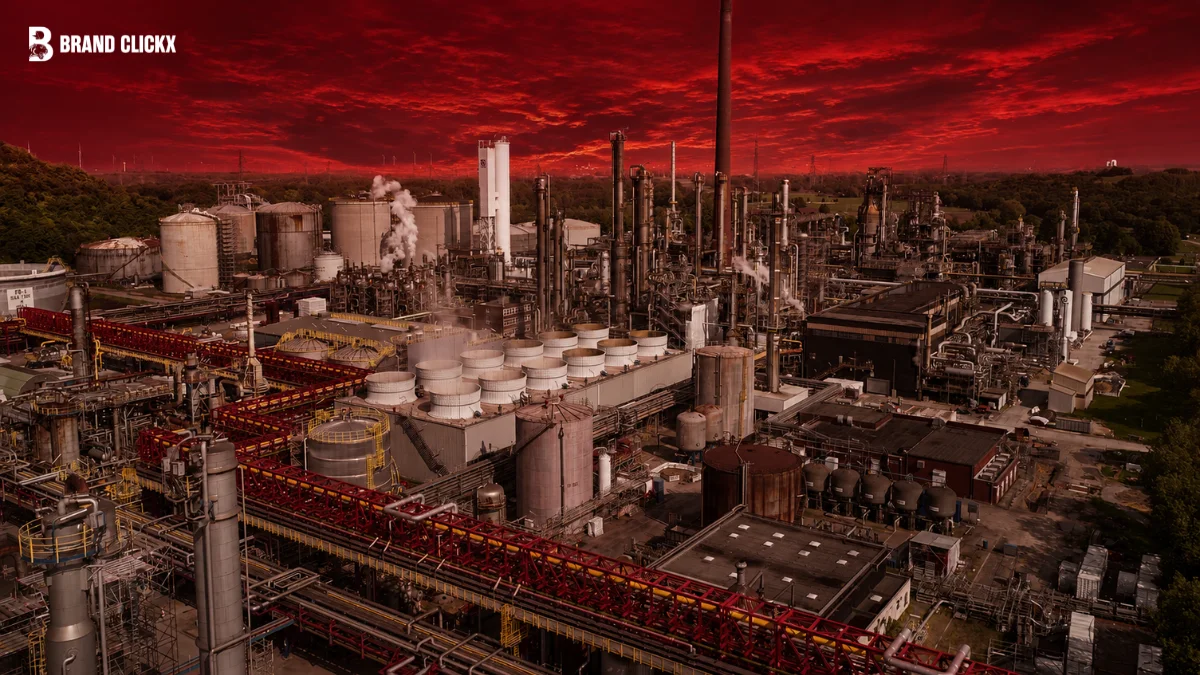
The buyer, Klesch Group, now owns two German refineries and one in Denmark assembled entirely from assets that Shell, Equinor and BP no longer wanted. Financial terms were not disclosed.
Summary
BP completed the sale of its Gelsenkirchen refinery and related businesses to Klesch Group on 3 August 2026, transferring 1,800 employees and a facility processing 12 million tonnes of crude a year. BP expects the deal to cut underlying operating expenditure by around $1 billion. It reduces BP’s global refining portfolio to five sites, down from roughly 15 in 2006.
Key Takeaways
- BP completed the sale of Gelsenkirchen to Klesch Group on 3 August 2026
- The refinery processes 12 million tonnes of crude a year at 265,000 bpd
- Around 1,800 employees transferred with the business
- Financial terms were not disclosed
- BP expects a ~$1 billion reduction in underlying operating expenditure
- Analysts estimated $1.3–1.7 billion of liabilities removed from BP’s balance sheet
- BP’s refining portfolio falls to five sites, from around 15 in 2006
- Klesch also owns Heide in Germany, bought from Shell, and Kalundborg in Denmark, bought from Equinor
- BP retains its Aral business in Germany
What the Deal Covers
| Detail | |
| Asset | Gelsenkirchen refinery and related businesses, Germany |
| Buyer | Klesch Group |
| Agreed | 19 March 2026 |
| Completed | 3 August 2026 |
| Capacity | 12 million tonnes crude per year; 265,000 bpd crude distillation |
| Employees transferred | ~1,800 |
| Price | Not disclosed |
The refinery produces petrol, diesel, jet fuel, heating oil and more than 50 other products, primarily for the chemical industry. BP describes it as playing an important role in supplying western Germany with fuels and petrochemicals.
BP retains its Aral business in Germany, so this is an exit from German refining rather than from the German market.
What BP Gets
The financial case is about removing costs and liabilities rather than raising cash — which is why the price was not disclosed.
- ~$1 billion reduction in underlying operating expenditure
- Free cash flow accretive, based on Gelsenkirchen’s historical performance
- Analysts previously estimated the deal removes $1.3 to $1.7 billion in liabilities, including pension obligations, provisions and short-term liabilities
- Refining cash breakeven expected to fall by around $3 per barrel by 2027
- Structural cost reduction target raised to $6.5–7.5 billion by 2027 — roughly 30% of BP’s 2023 cost baseline
Richard Harding, BP’s interim executive vice president for downstream, framed it as concentrating capital on assets and markets where BP can be most competitive.
The sale sits inside a broader $20 billion divestment programme aimed at cutting debt and improving returns.
The Number That Tells the Real Story
BP operated or held interests in around 15 refineries in 2006. It has five today.
| Year | Refineries |
| 2006 | ~15 |
| 2016 | 10 |
| August 2026 | 5 |
The remaining portfolio:
- Cherry Point — Bellingham, Washington
- Whiting — Hammond, Indiana
- Castellón — Spain
- Lingen — Germany
- Rotterdam Europoort — Netherlands
Only Whiting and Rotterdam have capacity of 400,000 bpd or above, and between them they account for the majority of BP’s roughly 1.3 million bpd of group-wide crude cracking capacity.
That concentration is the point. BP has spent two decades shedding mid-sized, complex, standalone refining assets in favour of a small number of large integrated ones.
Further sales cannot be ruled out, though BP says the remaining five will continue serving key customers and markets.
Who Klesch Group Is
A specialist in acquiring refineries that oil majors have decided to exit.
The pattern is consistent:
| Asset | Acquired from | Year |
| Heide Refinery, Germany | Shell | 2010 |
| Kalundborg Refinery, Denmark | Equinor | 2022 |
| Gelsenkirchen, Germany | BP | 2026 |
Three refineries, three major-oil vendors, sixteen years.
BP’s own release describes Klesch as “an independent European refiner” with refining experience and an established presence in Germany, and states that Klesch “plays a strategically important role in supporting the security of critical fuel supply and transportation energy needs across Germany and Denmark.”
A note on the “US investor” framing. Klesch Group is founded and led by Gary Klesch, an American businessman, and the group operates from Europe. Descriptions vary between “US investor” and “independent European refiner” depending on whether the focus is ownership or operations. Both are defensible; anyone using either should be aware of the distinction.
Why This Matters Beyond BP
Klesch now owns two of Germany’s refineries, and Germany’s refining sector is under sustained pressure.
The sale means a privately held group, rather than a listed oil major, controls a meaningful share of the capacity supplying western Germany with fuels and petrochemicals.
That has a governance implication. A listed major discloses quarterly, faces investor scrutiny and publishes capital plans. A private group does not. Germany’s fuel supply security now depends more heavily on decisions made outside public reporting.
BP was explicit that the sale followed its conclusion that a new owner would be better placed to take the refinery forward to support its long-term future — which is the polite formulation for an asset the seller was unwilling to keep investing in.
Whether Klesch invests differently is the open question. Its model has been to acquire assets majors are exiting, which implies a different cost structure and different return expectations rather than simply better management.
The Wider Context
European refining has been contracting for years under pressure from Asian and Middle Eastern capacity, tightening emissions rules, and demand uncertainty as transport electrifies.
BP’s decision follows its divestment of Castrol, and comes under a restructuring programme prioritising debt reduction and shareholder returns.
Forbes reports the divestment plan is being pursued under new chief executive Meg O’Neill.
The strategic logic is defensible. A refinery producing more than 50 products largely for the chemical industry is a complex operation to run well, and BP concluded it was not the best owner. Selling to someone whose business model is exactly that kind of asset is more coherent than closing it.
Frequently Asked Questions
What did BP sell?
Its Gelsenkirchen refinery in Germany and related businesses, to Klesch Group. The deal was agreed on 19 March 2026 and completed on 3 August. Around 1,800 employees transferred as part of the transaction.
How much did it sell for?
Financial terms were not disclosed. BP framed the benefit in terms of removing costs and liabilities rather than proceeds, expecting a roughly $1 billion reduction in underlying operating expenditure.
How big is the Gelsenkirchen refinery?
It processes approximately 12 million tonnes of crude oil per year, with 265,000 barrels per day of crude distillation capacity, producing petrol, diesel, jet fuel, heating oil and more than 50 other products.
How many refineries does BP have now?
Five: Cherry Point and Whiting in the United States, and Castellón, Lingen and Rotterdam in Europe. BP operated or held interests in around 15 refineries in 2006 and ten by 2016.
Who is Klesch Group?
An independent refiner founded by American businessman Gary Klesch, operating in Europe. It acquired the Heide refinery in Germany from Shell in 2010 and the Kalundborg refinery in Denmark from Equinor in 2022.
Is BP leaving Germany?
No. BP has exited German refining at Gelsenkirchen but retains the Lingen refinery and will continue supporting German customers through its businesses, including the Aral fuel retail brand.
Why did BP sell?
It concluded a new owner would be better placed to support the refinery’s long-term future. The sale forms part of a $20 billion divestment programme aimed at cutting debt, reducing costs and improving returns.
What does this mean for German fuel supply?
Gelsenkirchen remains operational under new ownership and continues supplying western Germany. Control has shifted from a listed oil major with public reporting obligations to a privately held group.
Conclusion
The headline number is a billion dollars of operating expenditure removed. The more revealing one is five.
BP has shed two thirds of its refining estate in twenty years, and what remains is concentrated in a handful of large integrated sites where scale still works. Gelsenkirchen mid-sized, complex, producing over fifty products for the chemical industry was exactly the profile that no longer fitted.
The buyer has now built a three-refinery portfolio entirely from assets Shell, Equinor and BP each decided to walk away from. That is either a contrarian value strategy or a bet that European refining has been written down too far.
Germany will find out which, and it will do so without quarterly disclosures.