
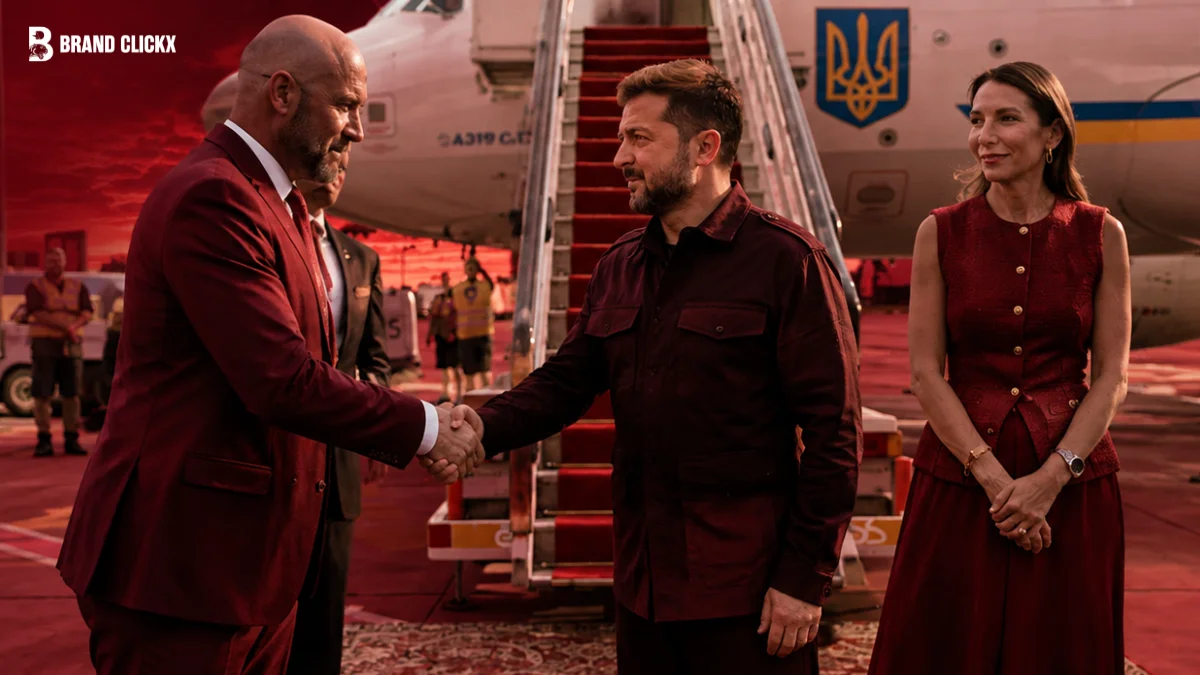
Ukraine’s president made his first visit to Serbia on Friday, in what a senior Ukrainian official called an attempt to “pull the Serbs away from Russia’s side.” Serbia’s president spent the day confirming that its position has not changed.
Summary
Volodymyr Zelenskyy arrived in Belgrade on Friday 7 August 2026 for his first visit to Serbia, one of the few European countries maintaining friendly relations with Moscow. The two-day visit covers economic ties, EU accession and security. On the same day, President Aleksandar Vucic stated directly that Serbia’s refusal to sanction Russia “has not changed and this will remain so.”
Key Takeaways
- Zelenskyy arrived in Belgrade on Friday 7 August for his first visit to Serbia
- The two-day agenda covers economic ties, EU accession, energy and security
- Vucic stated the same day that Serbia’s refusal to sanction Russia is unchanged
- Serbia relies almost entirely on Russia for energy, including natural gas
- Vucic has twice visited Ukraine and twice declined to sign joint declarations
- Russia accused Serbia last year of supplying arms to Ukraine via NATO states
- Serbia’s EU accession is stalled over its Moscow ties and democratic backsliding
- A Ukrainian official described the trip as an attempt to pull Serbia from Russia’s side
What Is Happening
Zelenskyy posted video of his arrival on Telegram, ahead of two days of talks with Vucic and other officials.
His stated agenda: “We will be speaking about expanding economic ties between our countries, relations with the European Union, and other things that can work for our peoples, as well as security issues.”
Vucic said the leaders would discuss EU accession bids alongside economic and energy cooperation.
The visit was announced by Vucic’s office late Thursday, before Zelenskyy’s own office had confirmed it an unusual sequencing that itself says something about who wanted the meeting publicised.
Why “Russian Influence Wanes” Overstates It
Vucic ruled out any change on sanctions the day Zelenskyy arrived.
His words on Friday: “As far as sanctions are concerned, let me tell you directly: Serbia has established its policy.” He added that Serbia’s position “has not changed and this will remain so for the time being.”
Two structural facts sit behind that. Serbia relies almost entirely on Russia for its energy supplies, and Russia is its main natural gas supplier. Vucic has justified his refusal to sanction Moscow by citing historic ties between the two Slavic nations.
And the pattern is established. Vucic has travelled to Ukraine twice for summits on European support for Kyiv — and each time refused to sign the joint declaration calling for tougher sanctions on Moscow.
He also attended Moscow’s Victory Day celebrations on 9 May, drawing a rebuke from the EU.
This is hedging, not switching. Serbia keeps showing up and keeps declining to sign.
What Each Leader Gets From It
Djordje Vlajic, a senior editor at the independent Belgrade news agency Fonet, offered the clearest reading — and it credits both sides with political motives rather than conviction.
On Zelenskyy: he “is sending a message to Russia that he is taking over of its key allies in the Balkans.”
On Vucic: he “wants to keep the link alive with the EU and send a signal to Brussels that he shares their position about the war.”
A senior Ukrainian official told AFP the trip was an attempt to “pull the Serbs away from Russia’s side.”
Neither objective requires Serbia to change policy. Zelenskyy gets the optics of a Russian ally receiving him in Belgrade. Vucic gets to demonstrate European engagement without signing anything.
The Pressure Vucic Is Actually Under
Serbia’s EU accession is stalled, and it has been told it could lose access to EU funds.
The obstacles are twofold: its ties to Moscow, and what reporting describes as general democratic backsliding under Vucic.
He has also faced a year of youth-led protests following a November 2024 train station disaster that killed 16 people.
That context reframes the visit. Hosting Zelenskyy is a low-cost signal to Brussels at a moment when Vucic needs one — and it costs nothing in Moscow’s currency, because the sanctions position is unchanged.
What Serbia Has Actually Done for Ukraine
More than its rhetoric suggests, which is the genuinely interesting part.
- Serbia has provided aid to Ukraine
- It has promised to help rebuild the country after the war
- Russia accused Serbia last year of exporting arms to Ukraine through NATO member states, calling it a “stab in the back”
That arms allegation is the most substantive item. If accurate, Serbia has been materially assisting Ukraine’s war effort while formally refusing to sanction Russia — which is a more sophisticated position than either “pro-Russian” or “pivoting West” captures.
The earlier groundwork also matters. Ukraine’s first lady Olena Zelenska and then-foreign minister Dmytro Kuleba made the first visit by senior Ukrainian figures to Belgrade since the 2022 invasion, touring the city and attending the signing of a university cooperation agreement. Vucic made his own first official visit to Ukraine on 11 June, for the Ukraine-Southeast Europe Summit in Odesa.
Relations have been warming incrementally for some time. Friday was the culmination rather than a rupture.
What to Watch
The test is not whether the visit happens. It is what Serbia signs.
Vucic has attended and declined twice already. If this visit produces a joint declaration, a signed security arrangement, or any movement on sanctions, that would represent genuine realignment.
If it produces warm photographs, economic cooperation agreements and a restatement that sanctions policy is unchanged, it confirms the existing pattern.
On the Russian side, Reuters noted the visit will likely sour relations between Belgrade and Moscow. Watch whether Russia responds through energy pricing or supply the lever it actually holds.
Frequently Asked Questions
When did Zelenskyy visit Serbia?
He arrived in Belgrade on Friday 7 August 2026 for a two-day visit, his first to Serbia. Vucic’s office announced the trip late on Thursday, before Zelenskyy’s own office had confirmed it.
What is on the agenda?
Economic ties, both countries’ European Union accession bids, energy cooperation and security issues, according to statements from both presidents ahead of the meeting.
Has Serbia sanctioned Russia?
No. Vucic said on the day of Zelenskyy’s arrival that Serbia’s policy is established, has not changed, and will remain so for the time being. He cites historic ties between the two Slavic nations.
Why does Serbia maintain ties with Russia?
Serbia relies almost entirely on Russia for its energy supplies, and Russia is its main natural gas supplier. Historical, religious and political ties also underpin significant pro-Russian sentiment within Serbia.
Has Serbia helped Ukraine at all?
Yes. Serbia has provided aid and promised to assist post-war reconstruction. Russia accused Serbia last year of exporting arms to Ukraine through NATO member states, describing it as a “stab in the back.”
How does this affect Serbia’s EU bid?
Serbia’s accession is stalled, partly over its relationship with Moscow and partly over democratic backsliding. It has been told it could lose access to EU funds. Hosting Zelenskyy signals engagement with Brussels.
Have the two leaders met before?
Yes, on several occasions since the invasion. Vucic travelled to Ukraine twice for summits, including the Ukraine-Southeast Europe Summit in Odesa in June, but declined to sign joint declarations calling for tougher sanctions.
Does this mean Serbia is turning away from Russia?
Not on the available evidence. Vucic reiterated his sanctions position on the day of the visit, and Serbia’s energy dependence on Russia is unchanged. The visit indicates engagement rather than realignment.
Conclusion
The visit is genuinely significant. A Ukrainian president being received in Belgrade would have been difficult to imagine in 2022, and it will not be welcome in Moscow.
But the framing of Russian influence receding does not survive the day’s own statements. Vucic used the occasion to confirm that Serbia will not sanction Russia and Serbia still buys nearly all its energy from Moscow.
What Friday demonstrated is that Vucic can host Zelenskyy without conceding anything, and that this is precisely why he was willing to. The measure of change is not who lands in Belgrade. It is what gets signed before they leave.