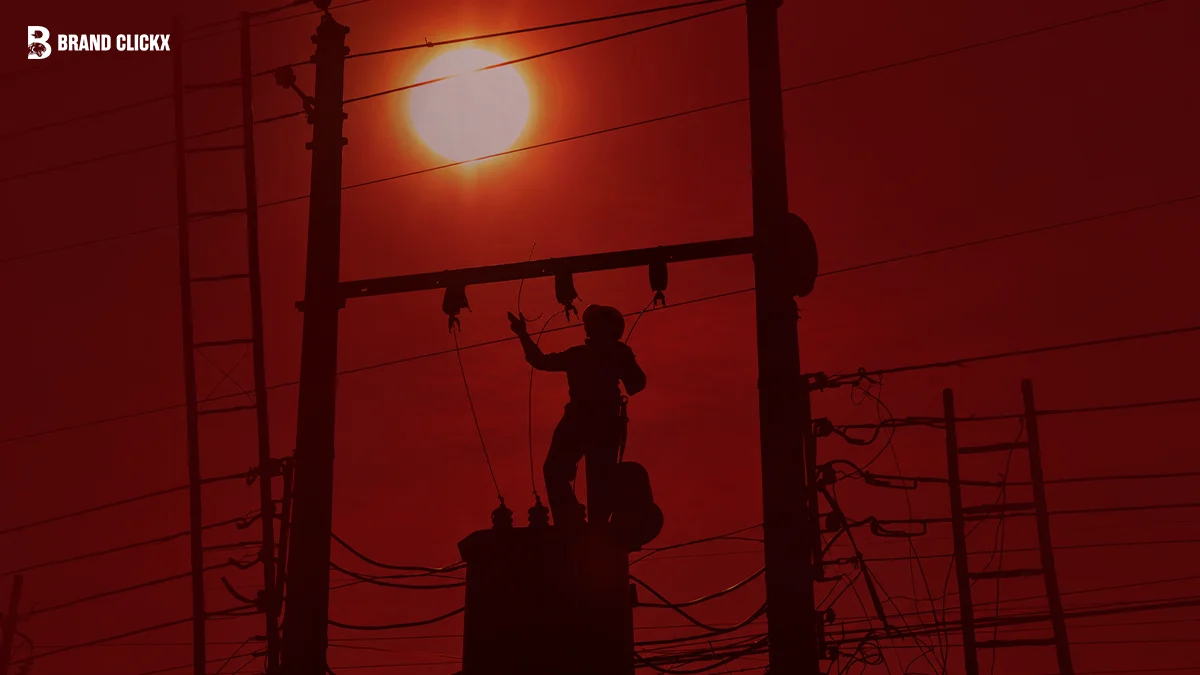
The Strait has squeezed Asian LNG since February. But the blackouts hitting Bangladesh this week trace to a single accident at an LNG terminal on 22 July and a system with no slack left to absorb it.
Published: Tuesday, 4 August 2026 | BrandClickX News Desk
Note: This is a developing energy situation across multiple countries. Figures below were accurate at publication and change daily. Anyone in an affected region should follow their national power authority for current load-shedding schedules.
Summary
Bangladesh recorded a power generation shortfall of around 3,000MW in the early hours of Sunday 2 August 2026, with rotating load-shedding across the country. The immediate trigger was a 22 July accident at an Excelerate Energy-operated LNG terminal, which cut pipeline gas supply by more than 17%. The underlying vulnerability comes from the Strait of Hormuz disruption that began in February.
Key Takeaways
- Bangladesh’s power shortfall reached around 3,000MW in the early hours of 2 August
- The average daily deficit rose from 320MW to 1,482MW in a week
- The immediate cause was a 22 July accident at an Excelerate-operated LNG terminal
- That accident cut Bangladesh’s pipeline gas supply by more than 17%
- Hormuz disruption since February removed the market slack to absorb it
- 84% of crude and 83% of LNG transiting Hormuz in 2024 went to Asia
- Singapore’s electricity is roughly 95% gas-dependent; Bangladesh’s about 66%
- South Korea, Thailand and Bangladesh have increased coal generation
What Is Happening Right Now
Bangladesh’s power deficit has quadrupled in a week.
| Measure | Figure |
| Average daily shortfall, last week | 1,482 MW |
| Average daily shortfall, previous week | 320 MW |
| Shortfall on 1 August | 2,174 MW |
| Peak shortfall, early Sunday 2 August | ~3,000 MW |
| Sustained level, Sunday noon to evening | Above 2,000 MW every hour |
Distribution companies are rotating load-shedding across areas for hours at a time, leaving consumers without electricity at intervals throughout the day and night.
Rural areas are absorbing the worst of it. The Rural Electrification Board supplies about 75% of Bangladesh’s electricity consumers, and distributors there are rationing for extended periods.
Earlier in the crisis, residents in Noakhali reported seven to eight hours of daily load-shedding. One resident in Chatkhil described receiving no more than five to six hours of electricity in 24 hours, arriving in bursts of 30 to 40 minutes.
The Immediate Cause Is Not the Strait
This is the part the framing usually gets wrong, and it matters.
The Daily Star attributes the current deterioration to a specific event: an accident on 22 July at a liquefied natural gas terminal operated by Excelerate Energy, which cut the country’s pipeline gas supply by more than 17%.
That is a domestic infrastructure failure, not a shipping blockade.
But the two are connected, and the connection is the real story. In a normally supplied market, losing 17% of pipeline gas would be absorbed by buying spot LNG cargoes. Bangladesh cannot do that at current prices and current availability, because the Hormuz disruption has removed the slack from the entire Asian market.
The accident is the trigger. The absence of any buffer to absorb it is the Hormuz effect.
Why Asia Carries This Disproportionately
The Strait of Hormuz is, in practical terms, an Asian waterway.
According to the US Energy Information Administration, of the volumes transiting the Strait in 2024:
- 84% of crude oil was bound for Asian markets
- 83% of LNG was bound for Asian markets
- China, India, Japan and South Korea alone accounted for 59% of that LNG
Singapore’s foreign minister called the closure “in a sense, an Asian crisis”, noting that roughly 80% of the oil and nearly 90% of the LNG passing through go to the region.
The vulnerability is not evenly distributed. Electricity systems differ enormously in how exposed they are to gas:
| Country | Gas dependence in electricity |
| Singapore | ~95% |
| Bangladesh | ~66% |
Countries with coal-heavy systems — India, Indonesia, China, Vietnam — can partially fuel-switch. Malaysia, Thailand and especially Singapore have limited domestic energy resources and far less room to manoeuvre.
How the Crisis Developed
The Strait closed within days of the war beginning.
On 28 February 2026, US and Israeli forces launched a joint offensive against Iran. Iran moved to close the Strait of Hormuz.
By 4 March, maritime traffic had fallen below 10% of pre-war levels, pushing oil to around $95 a barrel and sharply raising Asian LNG prices.
S&P Global described it as an unprecedented shock to LNG markets. LNG tanker traffic through the Strait halted entirely, and facilities in Qatar and the UAE including the Ras Laffan complex temporarily shut, with force majeure declared to affected buyers.
Before the conflict, Gulf producers supplied almost a fifth of global LNG.
A note on conflicting figures. One market site reported crude “flirting with $130” on 4 March and 20 million barrels a day halted. Better-sourced accounts put oil at around $95 that day. We have used the lower figure and would treat the higher one with caution.
The Regional Picture
Pakistan. The shutdown of imported LNG-based power plants removed roughly 15% of electricity from the national grid. Outages ran up to five hours on 13–14 April and around seven hours on 15–16 April. Power Minister Awais Leghari said the month-long load-shedding ended in early May after an LNG cargo arrived — an illustration of how thin the margin is when a single shipment changes national conditions.
China. Banned exports of diesel, petrol and aviation fuel until at least the end of March to pre-empt domestic shortages. That forced Southeast Asian buyers who relied on Chinese fuel exports to find alternatives.
Regional refined products. Asian export volumes of jet fuel, diesel and petrol fell to their lowest levels in years. April 2026 exports ran roughly 3 million barrels a day below the average of the three months before the conflict.
Southeast Asia. The IEA’s 2026 Southeast Asia Energy Outlook found the disruption exposed major structural risks, producing shortages of petrochemical feedstocks, chemical products and the liquefied petroleum gas many households use for cooking. That last point matters this is not only an electricity story.
The Coal Consequence
Countries are burning more coal, and that is the predictable outcome rather than a surprise.
South Korea, Thailand and Bangladesh have ramped up coal generation to compensate for halted LNG imports.
Louis Gave put the logic bluntly to a Jefferies audience: coal is and remains the cheapest way to produce electricity “if you don’t care, and if you don’t price the environmental costs.”
There is a counter-current. China’s electric vehicle adoption reduced its oil demand by roughly 1 million barrels a day in 2024, and renewables accounted for 80% of its new electricity demand. Countries that had built domestic generation capacity before the crisis have been substantially better insulated than those that had not.
That is the clearest policy lesson available from this episode, and it was available before it started.
Timeline
| Date | Development |
| 28 Feb 2026 | US-Israeli offensive begins; Iran moves to close Hormuz |
| 4 Mar 2026 | Traffic below 10% of pre-war levels; oil around $95 |
| Mar 2026 | Qatar and UAE LNG facilities shut; force majeure declared |
| Mar 2026 | China bans refined fuel exports |
| 13–16 Apr 2026 | Pakistan outages reach seven hours |
| 1 May 2026 | Pakistan load-shedding ends after an LNG cargo arrives |
| 17 Jun 2026 | US-Iran memorandum includes Hormuz transit provisions |
| 16 Jun 2026 | IEA publishes Southeast Asia Energy Outlook |
| 22 Jul 2026 | Accident at Excelerate-operated LNG terminal in Bangladesh |
| 1–2 Aug 2026 | Bangladesh shortfall reaches ~3,000MW |
Expert Analysis
Three things are true, and conflating them produces bad reporting.
The Hormuz disruption is real and structural. Traffic fell below 10% of normal, Gulf producers who supply a fifth of global LNG declared force majeure, and prices rose sharply. Asia absorbed most of that because Asia is where the cargoes were going.
The current Bangladesh blackouts have a specific domestic trigger. A terminal accident on 22 July cut pipeline gas by 17%. Attributing this week’s 3,000MW shortfall directly to Iran overstates the causal chain.
The two combine in a way that is worse than either alone. A 17% supply loss is survivable in a market with available spot cargoes at affordable prices. It is not survivable in a market where Gulf supply is constrained and prices have risen. Hormuz did not cause the accident; it removed the ability to recover from one.
The structural point the IEA is making is about resilience rather than blame. Systems with 95% or 66% gas dependence and limited storage have no absorptive capacity. Zero Carbon Analytics put it directly: of all commodities, LNG is the most exposed to geopolitical shocks, and conflicts magnify its inherent volatility.
What would actually change this: diversified generation, meaningful storage, and regional supply agreements. None of those can be built during a crisis, which is the uncomfortable part.
Frequently Asked Questions
Why is Bangladesh having power cuts?
An accident on 22 July at an Excelerate Energy-operated LNG terminal cut pipeline gas supply by more than 17%. With Asian LNG markets already tight because of the Strait of Hormuz disruption, replacement cargoes have been hard to secure affordably.
How bad are the outages?
The shortfall reached about 3,000MW in the early hours of 2 August and stayed above 2,000MW every hour from noon to evening. Distribution companies are rotating load-shedding, with rural areas facing the longest cuts.
How does the Strait of Hormuz affect Asia?
The US Energy Information Administration found 84% of crude oil and 83% of LNG transiting the Strait in 2024 went to Asian markets. Singapore’s foreign minister described the closure as, in a sense, an Asian crisis.
Which countries are most exposed?
Those with high gas dependence and limited domestic resources. Singapore’s electricity is about 95% gas-generated and Bangladesh’s about 66%. Coal-heavy systems in India, Indonesia, China and Vietnam have more scope to fuel-switch.
Is Pakistan still facing blackouts?
Pakistan’s power minister said month-long load-shedding ended in early May after an LNG cargo arrived. Outages had reached about seven hours daily in mid-April after LNG-fired plants shut, removing roughly 15% of grid capacity.
Are countries burning more coal?
Yes. South Korea, Thailand and Bangladesh have ramped up coal generation to replace halted LNG imports. Analysts note coal remains the cheapest generation option when environmental costs are not priced in.
What did the IEA find?
Its 2026 Southeast Asia Energy Outlook found the Hormuz disruption exposed major structural risks, causing shortages of petrochemical feedstocks, chemical products and the liquefied petroleum gas many households use for cooking.
When will supply normalise?
Unclear. Transit remains restricted and volatile, with intermittent disruptions keeping flows below normal. Gulf producers supplied almost a fifth of global LNG before the conflict, and that capacity has not fully returned.
Conclusion
The blackouts in Bangladesh this week were not caused by Iran. They were caused by an accident at a gas terminal on 22 July.
What Iran caused was the absence of any way to fix it. In a functioning market, a 17% pipeline shortfall is a purchasing problem solved within days. In a market where a fifth of global LNG supply has been disrupted since February, it becomes 3,000MW of rationed power and eight-hour cuts in rural Noakhali.
That is the actual mechanism by which a distant conflict reaches a household with no electricity to charge a battery. Not directly, but by removing every margin that would otherwise have absorbed an ordinary industrial accident.