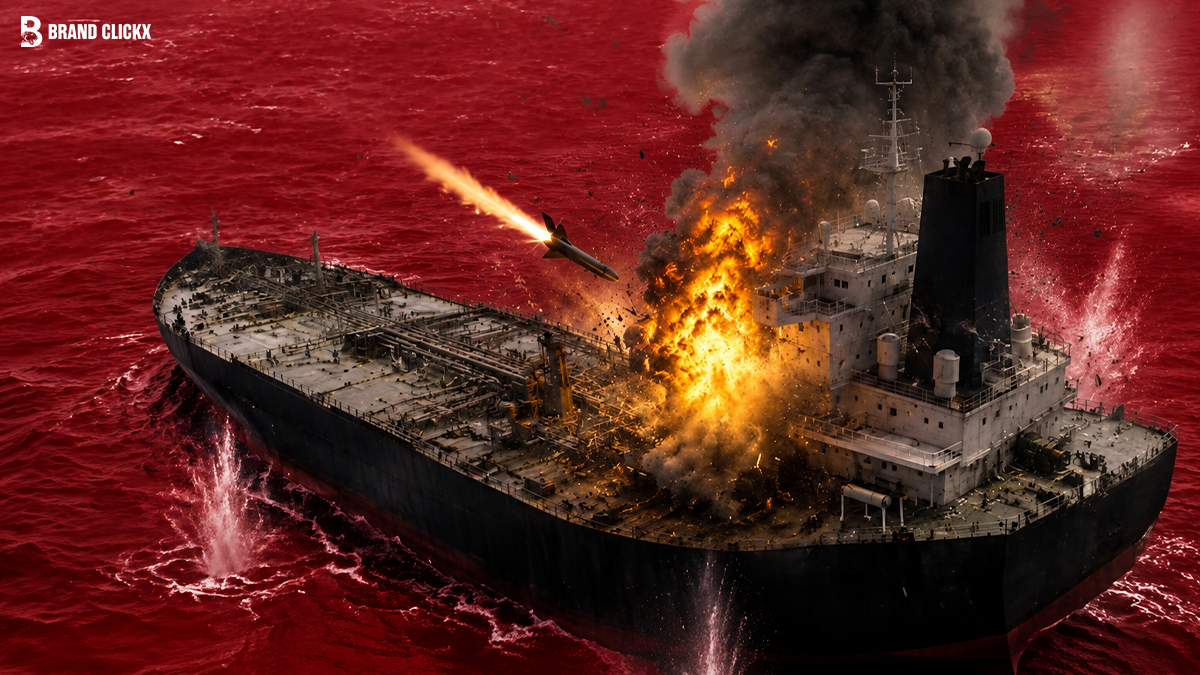
Yemen’s Houthi rebels attacked two Saudi oil tankers in the Red Sea early Thursday July 23, 2026. At the same time, the United States carried out strikes on Iran for the 12th night in a row. The two events together mark a significant widening of the Middle East conflict that began in late February 2026.
AI Overview
Yemen’s Houthi rebels, who are backed by Iran, said on Thursday that they attacked two Saudi Arabian oil tankers named Encelia and Layla in the Red Sea using ballistic missiles, cruise missiles, and drones. They said the tankers had violated a naval blockade the Houthis had placed on Saudi Arabia.
Saudi Arabia’s state news agency confirmed that one of the tankers, the Encelia, caught fire after being hit. All crew members on board were reported safe.
The US military carried out its 12th straight night of strikes against Iran. US Central Command said the strikes were designed to reduce Iran’s ability to attack ships in the Strait of Hormuz. Iran’s Revolutionary Guard said it attacked US forces at bases in Kuwait in response.
The Strait of Hormuz, through which about one fifth of the world’s oil and gas normally travels, has been largely closed since Iran shut it down in February 2026 when the US and Israel began their military campaign against Iran.
Key Facts
| Detail | Information |
| Date of attacks | Thursday, July 23, 2026 |
| Houthi targets | Two Saudi oil tankers: Encelia and Layla |
| Weapons used by Houthis | Ballistic missiles, cruise missiles, and drones |
| Encelia status | Fire on board, confirmed by Saudi state media; all crew safe |
| Where the attack happened | Red Sea, about 130 km southwest of Saudi Arabia’s Al Shuqaiq |
| Houthi reason given | Tankers violated their naval blockade on Saudi Arabia |
| US strikes on Iran | 12th consecutive night |
| US Central Command goal | Reduce Iran’s ability to attack ships in the Strait of Hormuz |
| Iran response | Revolutionary Guard said it attacked US forces at bases in Kuwait |
| Strait of Hormuz status | Largely closed since Iran shut it down in February 2026 |
| Trump warning | Said the US will destroy one bridge or power plant in Iran each time Iran attacks a ship |
| Diplomatic progress | No signs of progress in peace talks as of July 23 |
The Houthi Attack on Saudi Tankers
The Houthis announced the attack early Thursday through their SABA news agency. They said they struck two tankers called Encelia and Layla in the Red Sea. According to the Houthis, the tankers were targeted because they had violated a maritime blockade the group had placed on Saudi Arabia.
The Houthis said they used ballistic missiles, cruise missiles, and drones in the attack.
Saudi Arabia’s state news agency SPA confirmed the attack. Citing an official source at the General Transport Authority, SPA said the Encelia caught fire at the front of the ship after being struck. All crew members were reported safe.
The British maritime risk group Vanguard said the Encelia, which is a Saudi-flagged tanker, was hit on its right side by an unknown projectile about 130 km southwest of Saudi Arabia’s Al Shuqaiq port in the Red Sea.
The UK Maritime Trade Operations agency, which monitors shipping safety in the region, also confirmed it received a report of an incident in the same area.
A maritime security source said the Encelia sent out a distress call over VHF radio, reporting it had been struck by a missile while near the outer limits of Saudi Arabia’s Jizan port in the Red Sea, and that it was on fire.
This appears to be the first Houthi attack on a vessel since the group announced its maritime blockade against Saudi Arabia earlier in the week. The Houthis said they imposed the blockade in response to a Saudi blockade on Yemen and a recent attack on the airport in Sanaa, Yemen’s rebel-held capital.
Why This Matters
The Houthi attack on Saudi tankers threatens to open a new front in the conflict. Until now, the main flashpoint has been the Strait of Hormuz between Iran and Oman. A major escalation in the Red Sea would affect a second critical global shipping route.
The Red Sea connects Europe and Asia through the Suez Canal. The Bab el-Mandeb Strait, at the southern end of the Red Sea near Yemen, is one of the world’s busiest shipping lanes. The Houthis have attacked ships in this area before, particularly in 2023 and 2024 in response to the Gaza war.
US Strikes on Iran: 12th Night in a Row
US Central Command announced it completed its 12th consecutive night of strikes against Iran. The statement said the strikes targeted Iranian military command centers, air defense systems, coastal radar sites, and missile and drone capabilities.
CENTCOM said the goal was to “further degrade Iran’s ability to threaten civilian mariners and commercial vessels transiting regional waters.”
Iran’s Response: Attacks on US Bases in Kuwait
Iran’s Revolutionary Guard said on Thursday that it attacked US forces at bases in Kuwait in response to the American strikes. The IRGC confirmed the attacks saying it launched missiles and drones at US military positions in Kuwait.
This follows a pattern of exchanges between the two sides. Iran has previously targeted US forces at bases in Kuwait, Bahrain, Jordan, and Oman since the conflict began in late February 2026.
Trump’s Warning About the Strait of Hormuz
Before the latest round of strikes, President Trump posted a warning on social media. He wrote: “From this point forward, any time the Islamic Republic of Iran shoots at a ship in the Strait of Hormuz, whether it be by Missile, Rocket, Drone, or any other device or weapon, the United States will bomb and destroy ONE BRIDGE OR POWER PLANT.”
This warning followed earlier US strikes in which American forces destroyed bridges inside Iran in response to Iranian attacks on shipping.
Background: How This Conflict Started
The US and Israel launched a military campaign against Iran on February 28, 2026, targeting Iranian military sites. Iran responded by closing the Strait of Hormuz to foreign shipping.
The Strait of Hormuz is one of the world’s most important waterways. Before the conflict, about one fifth of the world’s oil trade and 20 percent of its liquefied natural gas passed through it. The closure has caused significant disruption to global energy supply and pushed up fuel prices worldwide.
Iran says it has the right to control traffic in the strait and has discussed potentially charging fees on ships that pass through. The US and international law experts say the strait is an international waterway that must remain open to all ships.
Since the conflict began, the US has conducted repeated nightly strikes on Iranian military targets. Iran has repeatedly attacked US bases across the Gulf region in response. A memorandum of understanding aimed at stopping the fighting was signed in June 2026, but exchanges of strikes have continued despite it.
As of July 23, there are no signs of progress in diplomatic efforts to end the conflict.
What Happened to Shipping
The closure of the Strait of Hormuz has had major effects on global trade.
Shipping companies suspended operations in the strait after Iran began attacking vessels. Some ships turned back, others waited in port. The price of oil and other goods rose sharply worldwide as a result.
The UK Maritime Trade Operations agency and several maritime security firms have been monitoring the situation and issuing alerts to ships in the area throughout the conflict.
US Service Members Killed
The conflict has resulted in US military casualties. According to ABC News reporting from earlier in the week, US lawmakers called for an end to the conflict after three US soldiers were killed, bringing the reported total of US military deaths in the conflict to 17 as of recent reports.
FAQs
Who are the Houthis and why are they attacking Saudi ships?
The Houthis are a rebel group that controls much of Yemen, including the capital Sanaa. They are backed by Iran. They have been in a war with Saudi Arabia for years. They say they attacked the Saudi tankers because the vessels violated a naval blockade the Houthis imposed on Saudi Arabia earlier this week.
What happened to the tankers Encelia and Layla?
The Houthis said they hit both tankers with missiles and drones. Saudi Arabia’s state media confirmed the Encelia caught fire. All crew members on the Encelia were reported safe. There was no separate confirmed report on the Layla as of Thursday morning.
Why is the US striking Iran?
The US and Israel launched a military campaign against Iran on February 28, 2026. The US says its current nightly strikes are aimed at reducing Iran’s ability to attack ships in the Strait of Hormuz, a critical global shipping route.
What is the Strait of Hormuz and why is it important?
The Strait of Hormuz is a narrow waterway between Iran and Oman. Before the conflict, about one fifth of the world’s oil and 20 percent of its liquefied natural gas traveled through it. Iran closed it to foreign shipping in February 2026 after the US-Israeli strikes began.
What did Iran do in response to the US strikes?
Iran’s Revolutionary Guard said it attacked US forces at bases in Kuwait. Iran has also previously struck US bases in Bahrain, Jordan, and Oman during this conflict.
Is there a ceasefire in place?
Both sides signed a memorandum of understanding in June 2026 aimed at stopping the fighting. However, strikes from both sides have continued since then, and as of July 23 there are no signs of progress in peace talks.