A small brand can spend a lot of money bidding on Amazon’s biggest category keyword and still lose money on every click. The bigger brand already has more reviews, more sales, more visibility, and a much larger budget. It can afford to keep bidding even when the cost is high.
That is why an Amazon ads strategy for a smaller brand should not focus on beating the biggest advertiser. It should focus on finding searches and placements where the brand has a real chance to win. These can include specific searches, long-tail keywords, competitor product pages, and temporary gaps when a bigger brand is out of stock or has a weak listing.
The goal is not to appear everywhere. The goal is to spend money where the sale can actually make sense.
There is another important point: not all Amazon ad spending brings in new customers. Some of it is simply the cost of protecting your position on Amazon. In other words, part of your ad budget may be rent, not growth.
Key Takeaways
- Do not waste money trying to win Amazon’s most expensive keywords.
- Look for specific searches, competitor products, and temporary gaps.
- Keep brand-defense spending separate from customer-acquisition spending.
- Fix your product listing before sending more paid traffic to it.
- Treat Amazon’s reported ROAS as a useful number, not proof that every sale came from the ad.
Why Amazon Is a Search Engine, Not a Retail Media Network
Amazon may call itself a retail media platform, but for a challenger brand, much of the advertising experience looks like paid search.
A shopper goes to Amazon because they already want something. They type a search, look at the results, click on a product, and may buy it within minutes.
That makes Amazon very different from advertising on a website where people are simply browsing.
For example, someone searching for “running shoes for flat feet” already has a clear need. If your product matches that need, getting in front of that shopper can be valuable.
This is where sponsored products matter. These ads put individual products in front of shoppers while they are searching or browsing Amazon. Advertisers pay when shoppers click, and Amazon decides which products appear based on factors such as the bid and how relevant the product is.
For a smaller brand, this creates both a problem and an opportunity. A well-planned content marketing strategy can complement paid advertising by helping brands educate potential customers and build awareness beyond individual ad placements.
The problem is that the biggest brand can often spend much more.
The opportunity is that the biggest brand does not need to win every search.
The 3 Positions a Challenger Can Win
The biggest mistake a small brand can make is trying to win the same auctions as the market leader. Instead, a small business growth strategy should focus on identifying affordable opportunities where the brand can compete effectively without matching the biggest advertisers’ budgets.
Instead, ask:
Where can we win without paying the market leader’s price?
1. Long-tail and specific searches
The first opportunity is very specific searches.
A smaller brand may struggle to compete for “protein powder.” But it may have a better chance with something like:
- “unflavored pea protein for smoothies”
- “plant protein for sensitive stomach”
- “protein powder without artificial sweetener”
These searches have fewer shoppers, but those shoppers often know exactly what they want.
The bigger brand may not care enough about these smaller searches to spend heavily on them.
Start by looking at the search terms that already bring people to your products. You can also look at customer reviews, competitor listings, and Amazon’s search-term reports to find the words real shoppers use.
Then separate the strongest searches into their own campaigns.
This is where sponsored products optimization becomes important. Instead of putting your whole budget into broad keywords, give more money to searches that bring the right shoppers and reduce spending on searches that rarely convert.
The advantage may last for months. But it can also disappear quickly if a bigger competitor notices the opportunity.
2. Competitor-conquest placements
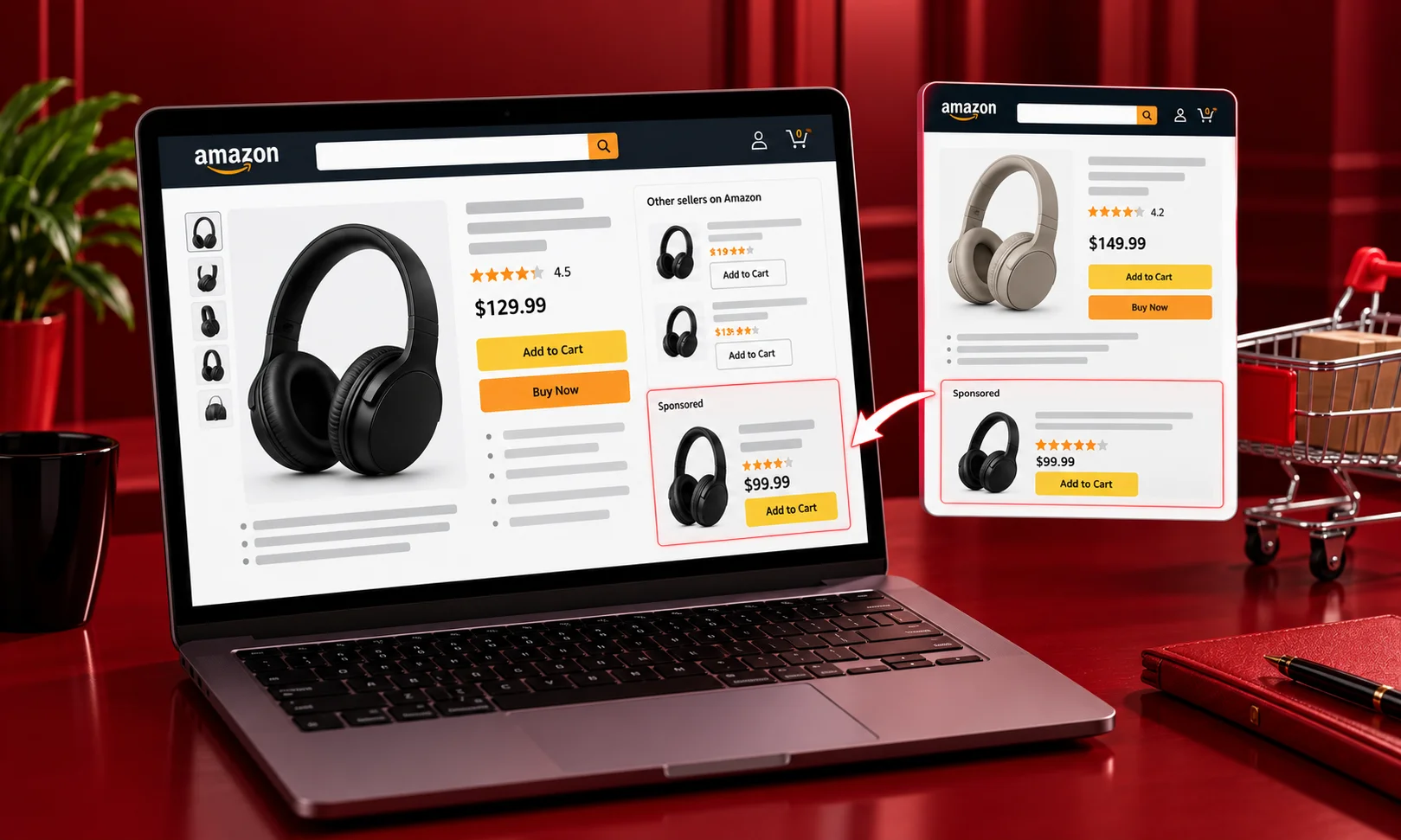
The second opportunity is advertising on competitor product pages.
Competitor conquest targeting means showing your product to shoppers who are already looking at another brand.
This can work when you have a clear reason for the shopper to switch.
Maybe your product:
- costs less
- has better reviews
- offers a larger pack
- has a feature the competitor does not have
- solves a specific problem better
But do not automatically target the biggest competitor.
A product with millions of sales and thousands of reviews may be very expensive to compete against. A smaller competitor with a weaker product page may be a much better target.
Check the numbers before increasing your bids.
The opportunity can also disappear quickly. A competitor can lower its price, improve its listing, increase its advertising, or launch a promotion.
3. Gaps in the leader’s defense
The third opportunity is a temporary weakness.
A market leader might:
- run out of stock
- stop advertising a keyword
- have poor product images
- have a weak title
- lose an important placement
- fail to explain an important product benefit
These gaps can give smaller brands a chance.
Search your important keywords regularly. Look at which brands appear, what they are promising, whether they are in stock, and whether their listings actually match what the shopper wants.
You do not always need to beat the market leader permanently.
Sometimes you only need to take advantage of a gap while it exists.
The Spend That Is Actually Rent
Should you bid on your own brand name?
Usually, yes, but do it carefully.
If competitors are showing their products when people search for your brand, your ads can help protect those shoppers.
But there is an important problem.
Someone who searches for your brand may already want to buy from you. If they click your ad and purchase, Amazon may give that sale to the ad.
But would they have bought anyway?
Research by Andrey Simonov, Chris Nosko, and Justin Rao, published in Marketing Science in 2018, found that brand advertising had a small causal effect when competitors were not present. However, competitors could take some clicks away when they appeared on those brand searches. Simonov, Nosko, and Rao, 2018, journal article.
The lesson is not to stop advertising your own brand.
The lesson is to understand why you are spending.
Keep your brand-defense campaigns separate from campaigns designed to find new customers.
| Spend type | What it does | What to check |
| Brand defense | Protects your existing shoppers | Are competitors taking clicks? |
| Category acquisition | Finds new shoppers | Are you gaining new customers? |
| Competitor conquest | Targets competitor shoppers | Do those shoppers actually convert? |
| Gap capture | Uses temporary opportunities | Does the opportunity make money? |
If you mix all these campaigns together, your total ROAS can look great even when very little new demand is being created. Effective marketing performance measurement helps brands distinguish between advertising that generates genuinely new customers and spending that simply protects existing sales. Some of this spending is simply the cost of staying visible on Amazon.
That is why it can be better to think of it as rent.
The Listing Is the Campaign
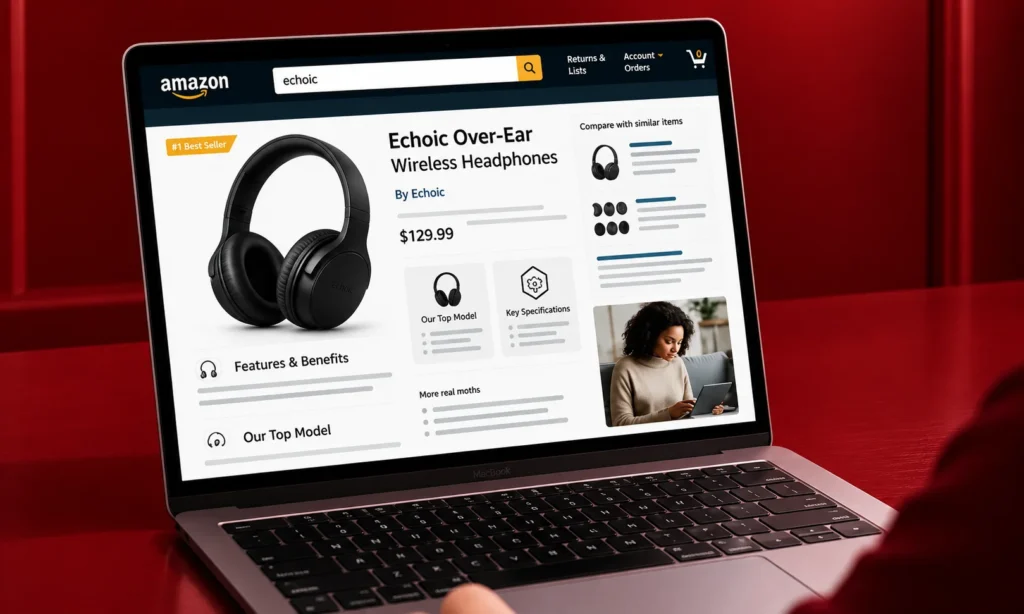
What should you fix before spending anything?
Fix your product listing first.
If shoppers arrive at your product page and do not want to buy, more advertising will not solve the problem.
Focus on 4 basic areas:
- Images: Make the product easy to understand at a glance.
- Title: Clearly explain what the product is and who it is for.
- Product information: Keep important details clear and organized.
- Reviews: Build enough customer trust to reduce buying hesitation.
Think about it this way:
You are paying Amazon to bring someone to your store.
If the store looks confusing, you are paying for people to walk in and leave.
A weak listing can therefore cost you twice. First, you pay for the click. Then the shopper does not buy.
A strong listing can have the opposite effect. More people buy from the same traffic, making your advertising budget more useful. Using data-driven content can help brands understand what information shoppers need, improve product messaging, and make better decisions about how to present their products.
That is why a smaller brand should usually focus on a few strong products instead of advertising every product in its catalog.
Amazon reported that US wellness brand Juna used Sponsored Products around its main product and later reported 300% sales growth and a 5.5 ROAS. These figures were based on advertiser-provided data, so they should be treated as a case study rather than a guarantee. Amazon Ads, 2024, platform case study.
The bigger lesson is simple:
Do not pay to send traffic to a product that is not ready to sell.
When the Demand-Side Platform Is Worth It
When is Amazon DSP worth using?
For most small challenger brands, it should not be the first advertising channel they add.
Amazon DSP allows brands to reach shoppers beyond normal Amazon search ads. It can reach audiences across Amazon properties and third-party websites and can support both on-site and off-site advertising. Amazon Ads, 2026, platform documentation.
That can be useful for a brand that already has a working Amazon advertising model.
But DSP can require a much bigger budget.
Amazon says managed-service DSP campaigns generally have a $50,000 minimum spend, although the amount can vary by country. Amazon Ads, 2026, platform documentation.
For a challenger brand, I would not move into DSP simply because competitors are doing it.
A practical internal rule is:
Do not make DSP a major channel until your Sponsored Products campaigns are already producing repeatable results and you can comfortably spend around $10,000–$15,000 a month on testing without taking money away from your strongest search campaigns.
That is a strategic recommendation, not an Amazon requirement.
DSP makes more sense when you have a clear reason to use it, such as reaching people who viewed your product, supporting a major launch, or reaching shoppers outside immediate Amazon searches.
Measuring It Honestly
How accurate is Amazon attribution?
It is useful for understanding what Amazon credits to your ads, but it should not automatically be treated as proof that the advertising created the sale.
Amazon’s attribution system can credit purchases after eligible ad clicks or views. For some advertising products, Amazon uses a last-touch system, which means the most recent eligible advertising interaction can receive credit. Amazon Ads, 2026, platform documentation.
This matters because a shopper may already have planned to buy your product.
If they see your ad, click it, and buy, Amazon can count that as an advertising conversion.
But the real question is:
Would they have bought without the ad?
That is the question a challenger brand needs to answer.
Look at 3 different views:
- Amazon’s numbers: What the platform says the ads generated.
- Business numbers: Total sales and profit.
- Incrementality: What extra sales happened because of the advertising.
Incrementality is the hardest one to measure.
If you cannot run a proper holdout test, use smaller tests. Reduce spending on selected branded terms and see what happens to total sales. Compare branded and nonbranded sales. Compare similar products or markets where possible.
You should also connect Amazon results with your own first-party data, such as customer and sales information, rather than relying only on the advertising dashboard.
This is the basis of better closed-loop measurement: connecting advertising activity to actual business results.
Amazon Attribution can also help measure traffic from eligible external channels such as search, social, display, video, email and affiliate marketing. Amazon Ads, 2026, platform documentation.
The rule is simple:
Do not call Amazon’s reported ROAS incremental ROAS unless you have evidence that the ads created additional sales.
For a deeper explanation of this measurement problem, see the existing measurement article.
The Challenger Amazon Ads Audit
Before increasing your budget, run this quick audit:
| Question | If the answer is “No” |
| Is the product listing strong enough to convert? | Fix the listing |
| Do we know our best specific-intent searches? | Review search-term data |
| Are brand-defense campaigns separate? | Separate them |
| Are competitors bidding on our brand? | Check the search results |
| Do we have 3–5 realistic competitor targets? | Research competitors |
| Are we checking competitor stock and listings? | Start a weekly check |
| Do we separate branded and nonbranded sales? | Fix reporting |
| Can we identify new customers? | Add that view |
| Can we afford more testing without hurting our best campaigns? | Do not expand yet |
This is not about spending less for the sake of spending less.
It is about knowing what each dollar is supposed to do.
The Read
Can a challenger build a lasting position on Amazon?
Yes, but not by trying to copy the market leader.
A small brand should not enter every expensive auction and hope a bigger budget will somehow appear. It should find the searches the leader ignores, target competitors where there is a real reason to switch, and take advantage of temporary gaps.
It should also be honest about defensive advertising.
If you are paying to protect shoppers who already know your brand, that may be necessary. But it does not mean you acquired those customers.
The audit I would run this week is simple:
Take your Amazon ad spend and divide it into 4 buckets: acquisition, competitor conquest, brand defense, and waste.
Then ask one uncomfortable question:
If Amazon could not take credit for the sale, which of these campaigns would you still pay for?
That answer is a much better starting point for an Amazon ads strategy than the ROAS number at the top of your dashboard.