The streaming industry has entered a different phase in 2026.
A few years ago, the main goal was simple: get more subscribers. Today, that is not enough. Streaming companies are raising prices, adding advertising, buying sports rights, creating bundles and trying harder to keep people from cancelling.
That tells us something important.
Streaming is still growing, but the easy-growth period is mostly over.
The industry is moving from a race for subscribers to a race for retention, advertising revenue and profitability.
So if you are researching the streaming industry in 2026, looking only at subscriber numbers will give you an incomplete picture. You also need to look at advertising, churn, content costs, sports, consumer behavior and the growing importance of free streaming.
Streaming Industry in 2026: The Short Answer
The streaming industry is the business ecosystem that delivers video, audio or live content over the internet instead of relying mainly on traditional cable, satellite or broadcast distribution.
In 2026, the industry is becoming more mature and competitive. Subscription growth is slowing, prices are increasing, and ad-supported services such as AVOD and FAST are becoming more important.
The biggest change is economic: streaming companies are now trying to make more money from each viewer instead of simply collecting as many subscribers as possible.
Key Takeaways
- Streaming is still a major growth industry, but growth is becoming harder.
- Subscription video remains important, but advertising is becoming a much bigger revenue source.
- Consumers are mixing ad-supported and ad-free services instead of paying for everything.
- Sports are one of the strongest tools for attracting and retaining subscribers.
- FAST and AVOD are giving consumers more free or low-cost alternatives.
- Price increases are creating subscription fatigue and increasing churn.
- The biggest streaming platform is not necessarily the leader by every measurement.
- The future will be shaped by bundles, advertising, AI, sports rights and profitability.
What Is the Streaming Industry?
The streaming industry includes businesses that deliver digital content over the internet for immediate playback.
Netflix, Prime Video and Disney+ are obvious examples, but the industry is much larger than subscription services.
It also includes:
- SVOD: Subscription Video on Demand
- AVOD: Advertising Video on Demand
- FAST: Free Ad-Supported Streaming Television
- TVOD: Transactional Video on Demand
- Live streaming: Real-time internet video
- Hybrid services: Platforms combining subscriptions, advertising and live programming
This is why the term streaming industry can sometimes be confusing. One market report may measure subscription video, while another measures online video, streaming rights, live streaming or the broader video-content economy.
These numbers should not simply be added together.
The industry is an ecosystem, not one single market.
How Big Is the Streaming Industry in 2026?
There is no single number that accurately represents the entire streaming industry.
Different research companies use different definitions and market boundaries. But the available forecasts show that streaming-related markets are still expanding.
| Market | 2026 Estimate | Forecast |
| Global video content | $596.2B | $914.6B by 2031 |
| Global SVOD | $188.28B | $262.74B by 2031 |
| Streaming rights | $42.24B | $60.01B by 2031 |
| Live sports streaming | $14.10B | $23.89B by 2031 |
| OTT TV series | $78.06B | $126.90B by 2031 |
| Live streaming | $92.8B | $404.3B by 2033 |
These forecasts measure different parts of the ecosystem, so they should be read separately.
The more useful conclusion is this:
Streaming is no longer a small replacement for television. It has become a major global media distribution system.
But growth is not happening in the same way everywhere.
Some markets are still adding viewers quickly. Mature markets are more focused on pricing, retention, advertising and profitability.
How Does the Streaming Industry Make Money?
Streaming companies now use several business models at the same time.
1. SVOD
Users pay a monthly or yearly subscription.
Netflix and many premium streaming services built their businesses around this model.
The problem is that households can only afford so many subscriptions. When every service raises its price, people start cancelling or rotating between platforms.
2. AVOD
AVOD gives users free or cheaper access in exchange for advertising.
This model is becoming more attractive because a subscriber who pays less can still generate valuable advertising revenue.
3. FAST
FAST services provide free, ad-supported television-like channels over the internet.
The experience is closer to traditional television, but the delivery is digital.
Services such as Tubi and Pluto TV show why free streaming remains important.
4. Live Streaming
Sports, news, concerts and other live events create another valuable part of the streaming economy.
Live content is especially important because people are less likely to delay watching it.
5. Hybrid Models
The industry is increasingly mixing these models.
A company might offer:
- a cheaper ad-supported subscription
- a premium ad-free plan
- live programming
- free channels
- rentals or purchases
- bundles with other services
This flexibility is becoming one of the biggest competitive advantages in streaming.
Biggest Streaming Platforms in 2026
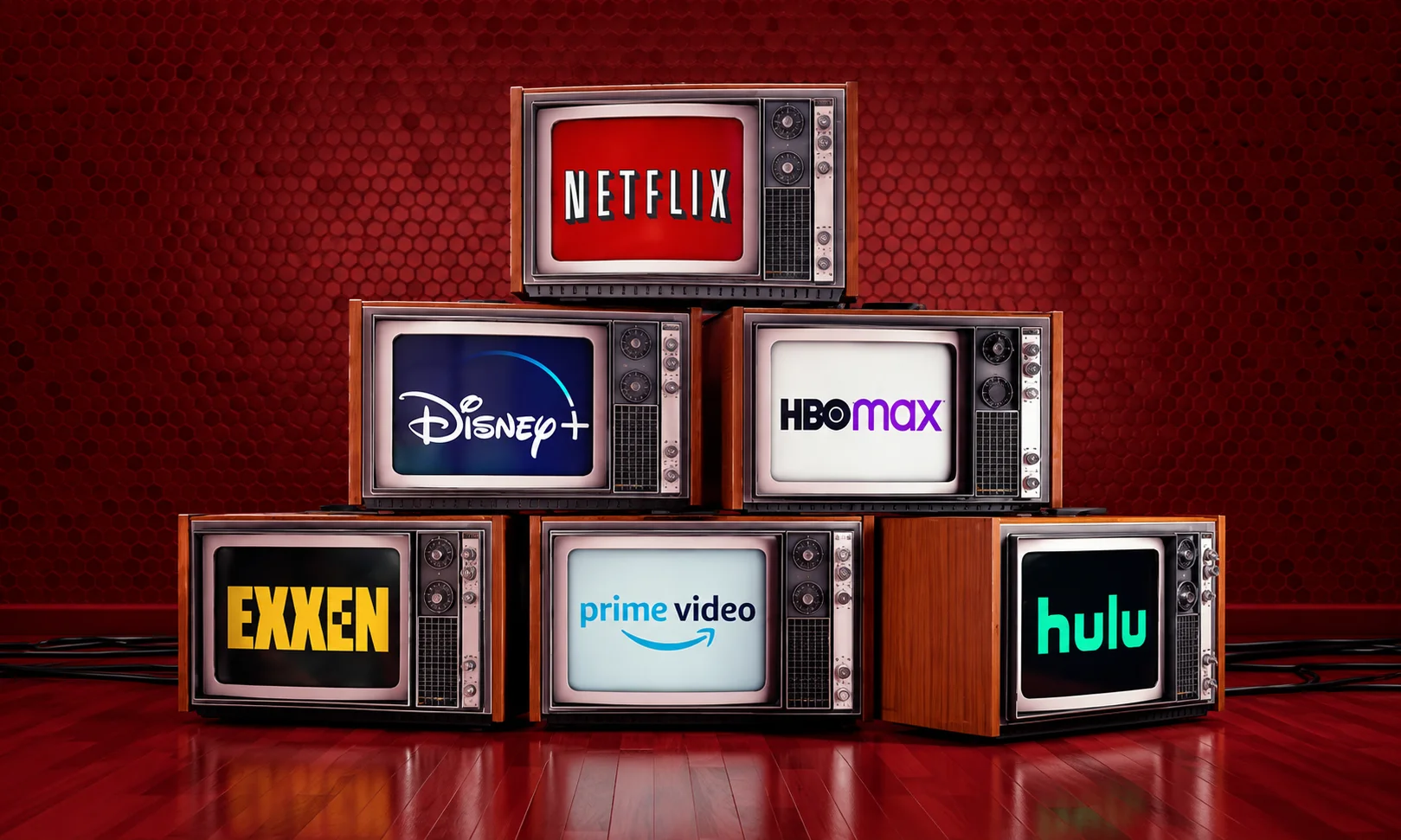
There is no single way to decide which platform is “the biggest.”
Subscribers, viewers, revenue, watch time and profitability can produce different rankings.
| Platform | Main Strength |
| Netflix | Global subscription scale and original content |
| Prime Video | Amazon ecosystem and broad content offering |
| Disney+ | Major franchises and family entertainment |
| YouTube | Massive free and creator-driven video ecosystem |
| Tubi | Free ad-supported streaming |
| Pluto TV | FAST channels and free viewing |
| Peacock | Sports and NBCUniversal content |
| DAZN | Sports-focused streaming |
One important point is worth remembering when reading streaming statistics: viewers are not the same thing as subscribers.
A platform can have a large global audience without having the same number of paying customers.
That distinction prevents a lot of misleading comparisons.
Streaming Advertising Is Becoming a Bigger Business
Advertising may be the biggest change happening inside the streaming industry right now.
Consumers are tired of continuously rising subscription prices. Streaming companies also need new ways to increase revenue without endlessly raising prices.
So both sides are moving toward ad-supported plans.
The supplied 2026 research estimates put ad-supported streaming revenue above $45 billion, with ad-supported tiers becoming a major part of subscription-video economics.
The trend is visible in consumer behavior too. More users are choosing cheaper plans with advertising.
There is a tradeoff.
Consumers save money.
Streaming companies gain another source of revenue.
Advertisers get access to valuable connected-TV audiences.
But there is a limit.
Too many commercials can make streaming feel like traditional television again.
That balance will become very important. In the U.S., streaming ad minutes per hour increased substantially during 2026, showing how aggressively platforms are testing the advertising model.
Why Are Streaming Prices and Churn Rising?
The old streaming pitch was:
“Pay less than cable and get more choice.”
That still matters, but the economics have changed.
Premium shows are expensive. Sports rights are expensive. Original productions are expensive. And acquiring new customers is harder than it was during the early streaming boom.
As a result, platforms have increased prices.
The supplied research puts average streaming price increases at around 11.8% over the previous 12 months.
Consumers are responding in a very practical way.
They cancel services they are not using.
They subscribe again when a major show arrives.
They move to cheaper ad-supported tiers.
They bundle services.
This behavior is sometimes called subscription fatigue, and it is one of the biggest challenges facing the streaming industry.
The question is no longer simply:
How many subscribers can we get?
It is:
How long will they stay, and how much revenue can we generate from them?
Why Sports Matter So Much to Streaming
Sports have become one of streaming’s strongest weapons.
A normal television show can be watched tomorrow.
A football match, championship fight or major tournament usually cannot.
That makes live sports valuable for three reasons:
- Acquisition — people subscribe to watch the event.
- Retention — they may keep the service for the entire season.
- Advertising — live audiences are attractive to advertisers.
The global live sports streaming market in the supplied research is estimated at $14.10 billion in 2026, with a forecast of $23.89 billion by 2031.
This explains why streaming platforms continue fighting for sports rights.
Sports are not just content.
They are a subscription and advertising strategy.
What Are Consumers Actually Doing?
Consumers are not necessarily choosing between “television” and “streaming” anymore.
Many households use both.
They may have one or two paid streaming services, rotate another service when a favorite show arrives, watch free FAST channels, use YouTube and still keep traditional television for local news or sports.
This creates a more complicated media environment.
People are also becoming more price-conscious.
Instead of paying for every premium service, viewers increasingly ask:
“What am I actually watching here?”
That question is important for the future of the streaming industry.
A service with hundreds of shows does not automatically have high value. One popular series, major sports package or strong franchise can sometimes influence a consumer’s decision more than a huge content library.
SVOD vs AVOD vs FAST
| Model | Payment | Advertising | Best For |
| SVOD | Subscription | Usually lower/optional | Premium content |
| AVOD | Free or cheaper | Yes | Low-cost viewing |
| FAST | Free | Yes | TV-like channel experience |
| TVOD | Pay per title | Usually limited | New movies/events |
| Hybrid | Mixed | Mixed | Flexible platforms |
The important trend is that these models are starting to overlap.
The streaming industry is becoming less about choosing one business model and more about combining several.
10 Streaming Industry Trends Shaping 2026
1. Ad-supported streaming is becoming normal
Advertising is moving from an alternative revenue stream toward a core part of streaming economics.
2. Subscription growth is slowing
Mature markets are approaching saturation, making retention more important than raw acquisition.
3. Price increases are changing consumer behavior
Higher prices are encouraging consumers to downgrade, cancel, rotate or bundle services.
4. FAST is growing
Free streaming gives consumers another option when premium subscriptions become too expensive.
5. Sports rights are becoming more valuable
Live sports can create both subscriber demand and advertising opportunities.
6. Bundling is returning
Instead of subscribing to many individual services, consumers increasingly have reasons to choose bundles.
7. Content quality matters more than content quantity
Streaming companies cannot keep spending endlessly just to fill libraries.
A smaller number of strong titles can be more valuable than hundreds of forgettable ones.
8. AI is entering the streaming experience
AI can improve recommendations, subtitles, dubbing, content discovery, advertising and personalization.
The goal is not simply to add an AI button. The real value is helping viewers find something they actually want to watch.
9. Streaming is becoming more global
Different regions have different prices, viewing habits, local content requirements and leading platforms.
There is no single global streaming strategy.
10. Profitability is replacing subscriber growth as the main story
This may be the biggest trend of all.
Streaming companies are being judged more heavily on revenue, margins, advertising performance and cash generation.
Regional Streaming Markets Are Different
The U.S. often dominates conversations about streaming, but it does not represent the entire world.
In Asia-Pacific, local platforms and major technology companies have significant influence.
Latin America has strong growth opportunities but different pricing and consumer economics.
Europe has a mature streaming market with growing interest in advertising, FAST and hybrid services.
Emerging markets can be especially sensitive to subscription prices, making free and low-cost streaming important.
So a company cannot simply copy its U.S. strategy and expect the same result everywhere.
Local content, payment methods, pricing and mobile usage all matter.
What Is the Future of the Streaming Industry?
I do not think streaming is replacing every other form of television.
It is becoming the main distribution layer around which different forms of video are organized.
The next phase will probably be less exciting than the early streaming boom, but more economically important.
We are likely to see:
- More ad-supported plans
- More FAST channels
- More sports streaming
- More bundles
- Greater use of AI personalization
- More localized content and dubbing
- Stronger pressure on content spending
- More focus on profitability
- Continued competition between free and paid services
Some market forecasts are extremely aggressive, especially for live streaming and broader video markets. These should be treated as forecasts, not guaranteed outcomes.
The safer conclusion is that streaming still has room to grow, but the industry has moved from expansion at almost any cost to disciplined growth.
FAQ
Is the streaming industry still growing in 2026?
Yes. Streaming-related markets continue to expand, but the type of growth is changing. Mature services are dealing with slower subscriber growth, higher churn and stronger pressure to generate profits.
Is streaming replacing cable?
Streaming is taking a larger share of television viewing, but cable and traditional television are not disappearing overnight. Live news, local programming and sports still give traditional TV an important role.
What is the difference between SVOD, AVOD and FAST?
SVOD is subscription-based video. AVOD uses advertising to support free or cheaper video access. FAST provides free, ad-supported channels that feel more like traditional linear television.
Why are streaming services becoming more expensive?
Content production, sports rights, technology and customer acquisition all cost money. As subscriber growth slows, platforms are using price increases and advertising to improve revenue from existing audiences.
Will advertising become the future of streaming?
Advertising will probably become one of the industry’s most important revenue sources, but subscriptions are not going away. The strongest platforms are likely to use a mixture of subscriptions, advertising, bundles and other revenue models.
What is the biggest trend in streaming in 2026?
The biggest shift is from subscriber growth to monetization. Streaming companies now care not only about how many people use their services, but how much revenue, engagement and long-term value those users create.
Conclusion
The streaming industry in 2026 is not the same industry that existed during the early cord-cutting boom.
The easy part was getting people to try streaming.
The harder part is keeping them.
Consumers now have too many choices, higher prices and limited budgets. Streaming companies therefore have to prove their value through better content, smarter pricing, advertising, sports, bundles and personalization.
That is why I would not judge the future of streaming by subscriber numbers alone.
The real question is whether streaming companies can turn audiences into sustainable businesses.
And in 2026, that is where the most interesting competition is happening.