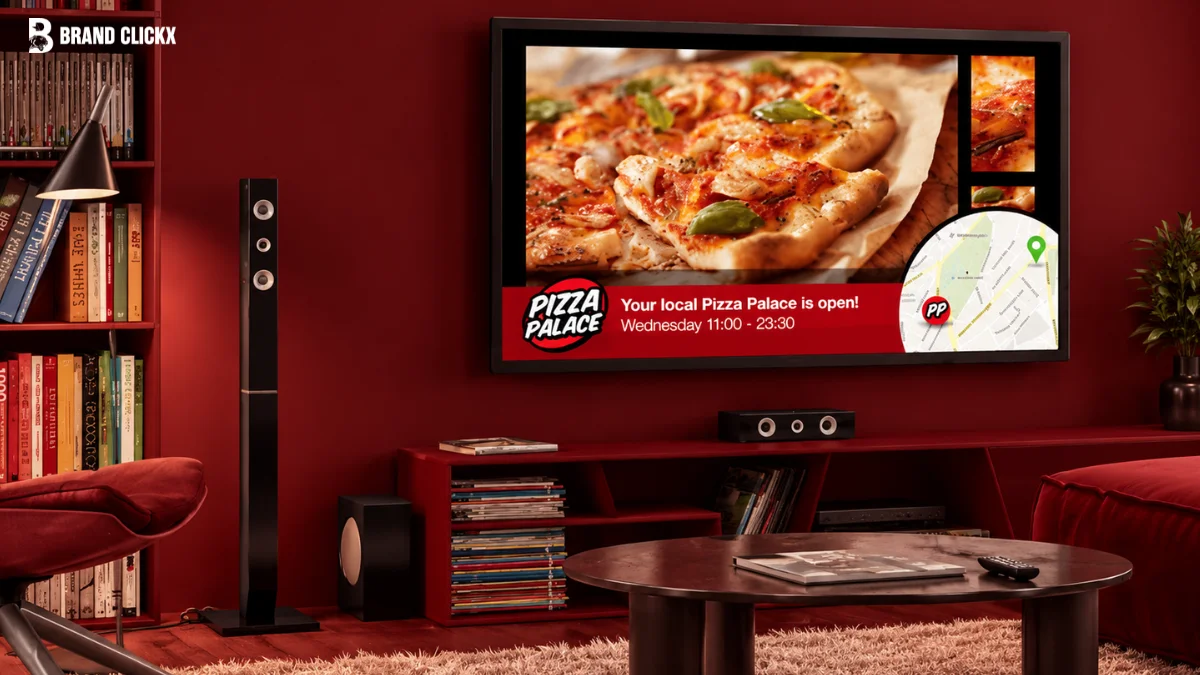
A few years ago, TV advertising usually meant buying a time slot and hoping the right people were watching. Today, the same big screen can be part of a much more measurable digital campaign. That shift is what makes connected TV advertising so interesting for marketers.
CTV lets you reach people while they watch streaming content on smart TVs, Roku, Fire TV, Apple TV, gaming consoles, and other connected devices. More importantly, it brings some of the targeting and measurement ideas from digital advertising into the television environment.
But CTV isn’t simply “TV advertising on the internet.” There are different types of inventory, buying methods, targeting options, measurement problems, and costs to understand before putting money into a campaign.
This guide explains how CTV advertising works in 2026, where CTV ads appear, how much they cost, how businesses measure results, and where the channel can go wrong.
What Is Connected TV Advertising?
Connected TV advertising is the delivery of digital ads to internet-connected television screens, including smart TVs, streaming devices, and gaming consoles. Unlike traditional TV, CTV campaigns can use audience data for targeting and provide more digital-style measurement. CTV can be bought directly from media companies or programmatically through platforms such as DSPs.
Key Takeaways
- CTV advertising puts digital ads on internet-connected TV screens.
- CTV is different from OTT: CTV describes the screen or device, while OTT describes internet-based content delivery.
- Advertisers can use household, demographic, behavioral, contextual, and first-party signals for targeting.
- Programmatic CTV allows advertisers to buy inventory through DSPs rather than negotiating every placement manually.
- Measurement can include reach, completion rate, branded search lift, conversions, and incremental sales.
- CTV costs vary widely depending on audience, inventory, platform, targeting, geography, and buying method.
- Fraud, frequency, identity matching, and measurement remain important problems to solve.
What Is CTV Advertising?
Connected TV advertising is digital advertising delivered to internet-connected television screens, such as smart TVs, Roku, Fire TV, Apple TV, and gaming consoles. It allows advertisers to combine the large-screen experience of television with digital targeting, programmatic buying, and more measurable campaign outcomes.
What Is Connected TV Advertising?
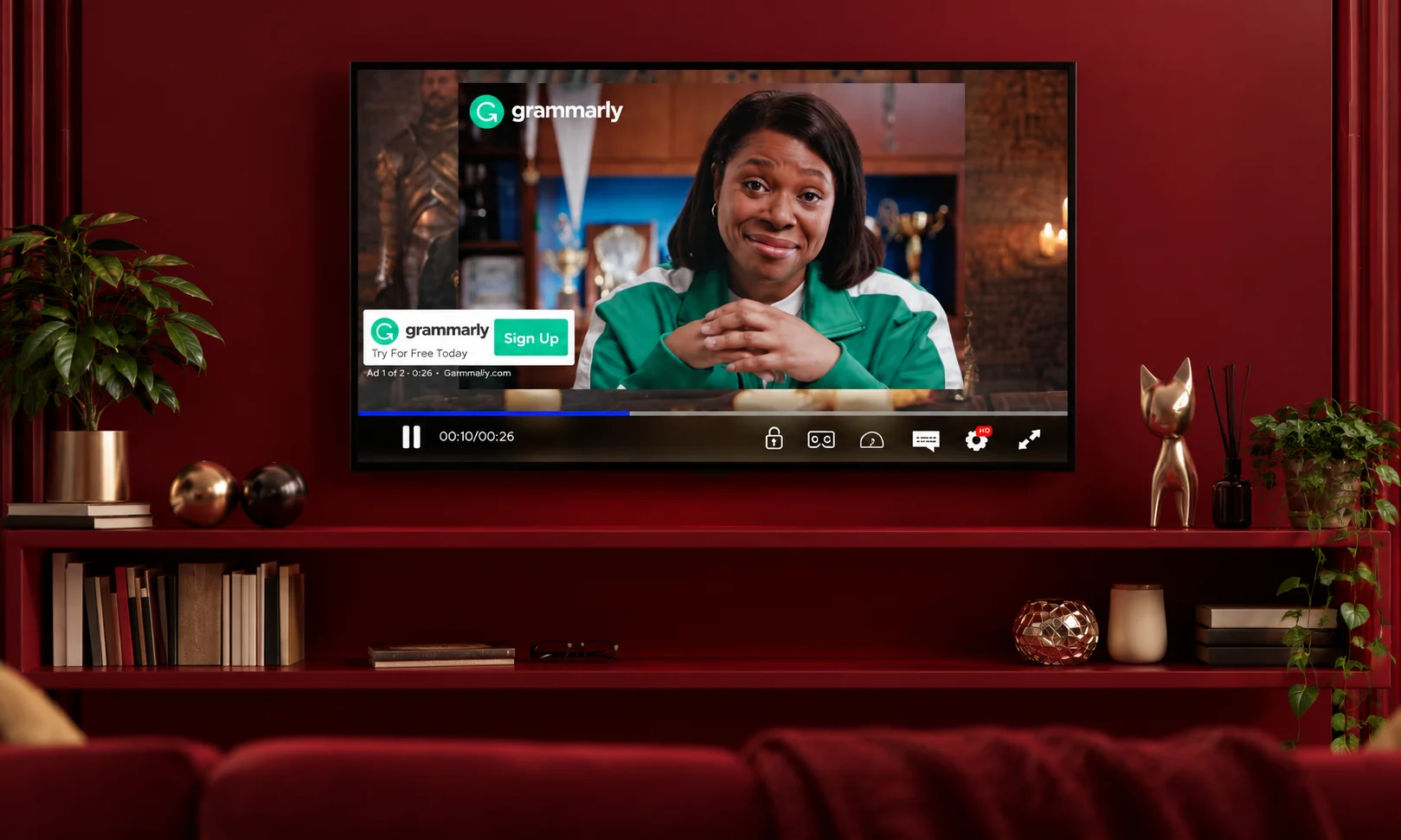
At its simplest, CTV advertising means showing ads on a television that connects to the internet.
That could be a Samsung smart TV running a streaming app. It could be a Roku device plugged into an older television. It could also be a gaming console being used to watch streaming video.
The important distinction is the screen.
A phone, laptop, or tablet can also stream the same content, but those devices aren’t normally counted as CTV inventory. eMarketer’s definition focuses on digital advertising appearing on connected-TV devices, including home-screen ads and in-stream video.
This gives marketers something that traditional television struggled to provide: a television environment with data-driven buying.
You can choose an audience, control frequency, test creative, compare different inventory sources, and connect exposure with other marketing signals.
That doesn’t make CTV perfect. It simply makes television buying more measurable and flexible.
CTV vs OTT vs Linear TV
These terms are often mixed together, which creates unnecessary confusion.
CTV
CTV refers primarily to the connected television environment.
Examples include:
- Smart TVs
- Roku
- Amazon Fire TV
- Apple TV
- Chromecast
- PlayStation
- Xbox
OTT
OTT, or over-the-top, refers to video content delivered over the internet instead of through traditional cable or satellite distribution.
OTT content can appear on TVs, phones, tablets, and computers.
So, a useful way to remember it is:
CTV = where the ad is seen.
OTT = how the content is delivered.
Linear TV
Linear TV follows the traditional broadcast or cable model. The viewer watches scheduled programming, and advertisers generally buy audience or time-based inventory.
CTV is more flexible because the ad decision can involve data, audience segments, device information, content signals, and automated bidding.
| Factor | CTV | Linear TV | Digital Video |
| Main screen | Connected TV | Television | Phone, desktop, tablet |
| Targeting | Household and audience signals | Broad audience | Individual/user signals |
| Buying | Direct or programmatic | Mostly traditional/direct | Programmatic or direct |
| Measurement | Digital + TV metrics | Reach and GRPs | Clicks, conversions, viewability |
| Creative | Video, interactive, shoppable | Video | Video and interactive |
| Main strength | TV experience + data | Mass reach | Digital performance |
The lines are getting less clear, though. Streaming platforms increasingly operate across the same media ecosystem, and advertisers are planning CTV alongside other digital screens rather than treating television as a completely separate channel.
How Does CTV Advertising Work?

The technical side can look complicated, but the basic process is straightforward.
1. The advertiser creates a campaign
You start by defining the goal.
That might be:
- Brand awareness
- Website traffic
- Product consideration
- Sales
- App installs
- Store visits
- Incremental reach
Your goal should influence how you buy and measure the campaign.
2. You choose a buying platform
Programmatic advertisers may use a demand-side platform such as The Trade Desk, Amazon DSP, Google Display & Video 360, or Viant.
The DSP connects the advertiser with available CTV inventory.
3. You define the audience
Depending on the platform, targeting can include household characteristics, demographics, interests, behavioral signals, location, contextual information, and first-party data.
The key difference from old-school television is that you aren’t simply saying, “Put my commercial on this program.”
You’re defining the type of household or audience you want to reach.
4. The ad opportunity is evaluated
When a viewer opens a streaming service, an advertising opportunity can become available.
In programmatic buying, the platform evaluates that opportunity against campaign rules such as audience, budget, frequency, placement, and bid.
5. The ad is delivered
An ad server or supply-side platform helps manage the available inventory.
Technologies such as server-side ad insertion can place the advertisement into the streaming experience.
From the viewer’s perspective, it simply looks like a normal commercial break.
6. Results are measured
After exposure, advertisers can look beyond basic impressions.
Depending on the campaign, useful signals can include:
- Video completion
- Reach
- Frequency
- Branded search lift
- Website activity
- Product-page views
- Conversion activity
- Incremental sales
- Return on ad spend
This final step is where CTV becomes particularly interesting for performance marketers.
Where Do CTV Ads Appear?
CTV inventory is much broader than Netflix-style streaming commercials.
You can find CTV advertising across several environments.
Smart TV platforms
Examples include Samsung TV Plus, LG Channels, and VIZIO WatchFree+.
These environments can include both streaming content and home-screen advertising.
Streaming devices
Roku, Fire TV, Apple TV, and other streaming devices provide another major source of CTV inventory.
Some advertising can also appear directly on the device’s home screen.
FAST channels
FAST means Free Ad-Supported Streaming Television.
Services such as Pluto TV, Tubi, Samsung TV Plus, and LG Channels offer free streaming content supported by advertising.
For advertisers, FAST can provide additional reach without requiring the viewer to pay for a subscription.
Ad-supported streaming services
Major streaming businesses have expanded their advertising options.
Netflix, Disney+, Hulu, Amazon Prime Video, and Paramount+ are examples of platforms with ad-supported offerings.
The market is still changing quickly. In 2026, eMarketer highlighted growing ad loads, interactive formats, shoppable advertising, and stronger connections between CTV and retail media.
Gaming consoles
PlayStation and Xbox can also become part of the connected-TV environment when viewers use them for streaming.
That makes gaming devices another part of the broader CTV inventory ecosystem.
CTV Targeting: How Advertisers Find the Right Audience
Targeting is one of the biggest reasons marketers move from traditional TV toward CTV.
But good targeting doesn’t mean targeting everything possible.
More data isn’t automatically better.
A practical CTV campaign usually starts with the audience that actually matters to the business.
Household targeting
CTV is particularly useful for household-level advertising.
For example, a furniture company may want to reach households showing signals related to home improvement rather than simply buying everyone watching a particular television program.
Demographic targeting
Advertisers can use characteristics such as age or household composition when available through the relevant platform or data provider.
Behavioral targeting
Some platforms allow advertisers to use behavioral or purchase-related signals.
This can help move CTV beyond pure awareness.
Contextual targeting
Instead of focusing entirely on who the viewer is, contextual targeting considers what they’re watching.
For example, a sports brand may want its creative around sports-related content.
This approach can also reduce reliance on individual identity data.
First-party data
Brands with customer data can use it to create audiences or help measure whether existing customers and prospects are being reached.
This is becoming more important as privacy expectations and identity technology continue to change.
How Much Does CTV Advertising Cost in 2026?
There isn’t one universal CTV advertising cost.
That answer may sound frustrating, but it’s the honest one.
The price can change depending on the audience, platform, inventory quality, geography, targeting, campaign size, season, and buying method.
Some industry guides place common CTV CPMs around the $20–$40 range, while premium inventory can cost considerably more. Treat those figures as market benchmarks rather than fixed prices because individual campaigns can be very different.
Your real question should therefore be:
What will I pay to reach the audience I actually need?
A cheap CPM isn’t useful if the inventory doesn’t reach potential customers.
Likewise, a higher CPM can make sense if the audience quality, incremental reach, or conversion value justifies it.
eMarketer’s current U.S. forecast tracks CTV advertising as a distinct digital advertising category, including home-screen display and in-stream video on CTV devices.
Is CTV Advertising Affordable for Small Businesses?
It can be, but I wouldn’t recommend starting by trying to imitate a national brand.
A small business should begin with a clear audience and a controlled test.
For example, instead of buying broad CTV inventory across an entire country, a local company could focus on a specific market and a tightly defined customer group.
The first goal should be learning.
Which audience responds?
Which creative performs?
How often are people exposed?
Does branded search increase?
Do website visits or sales move?
Once those answers become clearer, the campaign can grow.
CTV becomes expensive when marketers treat it as a branding exercise without deciding how success will be measured.
Who Should Use CTV Advertising?
CTV can make sense for:
- E-commerce brands
- Consumer packaged goods companies
- Local and regional businesses
- SaaS companies with a strong consumer audience
- Automotive businesses
- Financial services
- Travel brands
- Retailers
- Entertainment businesses
- Large awareness campaigns
It is especially interesting for businesses that already understand their audience and have a way to measure downstream behavior.
Who Should Avoid CTV Advertising?
CTV probably isn’t your first choice if you have:
- No clear target audience
- No usable video creative
- No measurement plan
- A product with extremely low customer value
- No realistic budget for testing
- No way to evaluate whether the campaign worked
That doesn’t mean CTV is permanently off the table.
It means you should fix the basics before buying more media.
The Biggest Benefits of CTV Advertising

1. Television-sized attention
The large screen still matters.
CTV combines the familiar television environment with digital delivery.
2. Better audience control
Advertisers can move beyond broad program-based buying and use audience signals.
3. More flexible measurement
CTV can connect media exposure with search, website behavior, product engagement, and conversions.
4. Multiple inventory options
Advertisers can choose from premium streaming services, FAST channels, smart-TV environments, home screens, and other inventory.
5. Programmatic buying
Programmatic CTV makes it possible to manage campaigns through DSPs and automate parts of the buying process.
6. New creative formats
CTV isn’t limited to a traditional 30-second commercial.
Interactive, pause, QR-code, and shoppable formats are becoming more important as platforms look for ways to make TV advertising more actionable. eMarketer identifies interactive and shoppable formats as important 2026 developments.
CTV Measurement: What Should You Actually Track?
This is where many campaigns become unnecessarily complicated.
Start with the business objective.
If you’re running an awareness campaign, reach and frequency matter.
If you’re trying to generate demand, branded search lift may be useful.
If you’re selling online, product-page visits and conversions can become important.
For larger campaigns, incremental lift is often more meaningful than simply asking whether someone who saw an ad later converted.
A simple measurement framework looks like this:
| Campaign goal | Useful metrics |
| Awareness | Reach, frequency, completed views |
| Consideration | Site visits, branded searches |
| Lead generation | Qualified leads, conversion rate |
| E-commerce | Product views, purchases, revenue |
| Retail | Sales lift, new-to-brand buyers |
| Cross-channel | Incremental reach, assisted conversions |
The main lesson is simple: don’t judge CTV using only the metric that’s easiest to report.
The Problems With CTV Advertising
CTV has plenty of advantages, but pretending the ecosystem is clean would be a mistake.
Fraud
CTV fraud remains a serious concern.
DoubleVerify reported a sharp increase in CTV fraud activity in 2026, highlighting how attractive the growing channel has become to fraudulent actors.
That means advertisers need verification, supply-path controls, and careful inventory selection.
Frequency problems
A household can see the same advertisement repeatedly.
That’s not always bad, but excessive frequency can waste budget and annoy viewers.
eMarketer has also highlighted the growing importance of frequency management and creative variety as CTV audiences become more saturated.
Measurement gaps
CTV sits between traditional television and digital advertising.
Different platforms can use different definitions, identifiers, and measurement methods.
That makes cross-platform reporting difficult.
Privacy
CTV can involve household and device-level data, which creates legitimate privacy considerations.
Advertisers should understand where audience data comes from, what permissions apply, and how identifiers are being used.
Inventory quality
Not every CTV impression is equally valuable.
A premium streaming environment and an unknown low-quality app should not automatically be treated as equivalent just because both produce an impression.
CTV vs Programmatic vs Addressable TV
These terms describe different parts of the ecosystem.
CTV describes the connected-TV environment.
Programmatic CTV describes an automated method of buying CTV inventory.
Addressable TV describes the ability to deliver different advertisements to different households watching television content.
They can overlap, but they aren’t interchangeable terms.
Understanding that distinction will save you from making poor buying decisions.
A Real 2026 Example: Roku and Amazon DSP
One useful example comes from Amazon Advertising’s work with Roku.
The case study reported that Roku CTV advertising bought through Amazon DSP generated 55% new-to-brand sales in the reported campaign. It also reported that increasing spend by 10% produced a 5.6% lift in branded search and a 6.4% lift in Amazon detail-page views.
The lesson isn’t that every CTV campaign will produce those numbers.
It is that CTV can be evaluated beyond completed video views when the measurement setup is designed properly.
That’s a much more useful way to think about performance.
Three CTV Ideas Many Basic Guides Miss
1. More impressions don’t necessarily mean more reach
If the same households keep receiving your ads, impression growth can hide a reach problem.
The better question is:
How many additional people are we actually reaching?
That is why frequency and incremental reach deserve attention alongside impressions.
2. Creative fatigue can arrive quickly
A good CTV campaign isn’t necessarily built around one perfect commercial.
You may need different creative angles, messages, lengths, or calls to action depending on where and how people encounter the ad.
A strong media plan can still underperform if viewers see the same creative too many times.
3. CTV should not live in a separate reporting box
People don’t watch TV and then stop being internet users.
They search, browse, compare products, visit websites, and purchase across other devices.
So the smarter question isn’t “Did CTV get the sale?”
It’s:
Did CTV contribute to the customer journey?
That shift changes how you plan and measure the channel.
Practical Application: How I’d Structure a First CTV Campaign
If you’re new to CTV, don’t make the first campaign unnecessarily complicated.
Step 1: Pick one business objective
Choose awareness, consideration, leads, sales, or incremental reach.
Don’t try to optimize for everything at once.
Step 2: Define the audience
Start with the customer you actually want.
Use the strongest available first-party, demographic, contextual, geographic, or behavioral signals.
Step 3: Choose inventory carefully
Decide whether premium streaming, FAST channels, smart-TV inventory, home-screen placements, or a combination makes sense.
Don’t select inventory only because its CPM looks cheap.
Step 4: Prepare multiple creatives
Have variations ready.
Test different hooks, offers, opening scenes, and calls to action where the budget allows.
Step 5: Set frequency controls
Decide how often you want the same household to see the advertisement.
This is one of the easiest areas to overlook.
Step 6: Connect CTV with the rest of your marketing
Your CTV campaign shouldn’t operate in isolation.
Watch branded search, website activity, direct traffic, paid search, social performance, and sales trends alongside the campaign.
Step 7: Evaluate before scaling
Don’t increase the budget simply because impressions look good.
Look for evidence that the campaign is creating useful incremental reach or business results.
Where Is CTV Advertising Going in 2026 and Beyond?
The direction is becoming fairly clear.
CTV is moving away from being treated purely as a television awareness channel.
Advertisers increasingly want performance measurement, retail connections, audience data, cross-screen planning, and more actionable formats.
The scale of the market reflects that shift. eMarketer’s current forecast treats CTV as a distinct and established digital advertising category, while its 2026 analysis describes CTV as an established pillar of video advertising rather than a niche experiment.
The other major change is the growing importance of live and premium content.
Sports, news, entertainment, and creator-led programming can give CTV advertisers environments where television-level attention and digital buying come together.
At the same time, advertisers will need better frequency management, cleaner measurement, stronger fraud protection, and more useful contextual data.
The technology is improving, but the basic marketing rule hasn’t changed:
Buying more media doesn’t fix a weak strategy.
Conclusion
The biggest change in television advertising isn’t that the TV screen disappeared. It’s that the screen became connected.
That is why connected TV advertising has become such an important channel for modern marketers. You can still tell a strong visual story on a large screen, but you can now bring audience data, programmatic buying, frequency controls, and more measurable outcomes into the process.
The opportunity is real, but so are the problems. Fraud, fragmented measurement, poor inventory, and creative fatigue can quickly turn a promising campaign into an expensive experiment.
If you’re considering CTV, start smaller than your ambition. Define the audience, choose the inventory carefully, decide what success means, and measure what happens beyond the impression.
Good CTV isn’t about making television look like digital advertising. It’s about using the strengths of both.
Frequently Asked Questions
What exactly is connected TV advertising?
Connected TV advertising means showing digital ads on internet-connected TVs and devices such as Roku, Fire TV, Apple TV, and smart TVs. It combines TV-style video with digital targeting and measurement.
What is the difference between CTV and OTT?
CTV refers to the TV screen or device, while OTT refers to video delivered over the internet. OTT can be watched on TVs, phones, tablets, and computers.
How much does CTV advertising cost in 2026?
There is no fixed price. Costs depend on the platform, audience, targeting, inventory, and campaign size, with many industry benchmarks placing CTV CPMs in the tens of dollars.
Is CTV advertising good for small businesses?
Yes, if you have a clear audience and a measurable goal. Starting with a small test is usually better than committing a large budget immediately.
What are the benefits of CTV advertising?
CTV offers large-screen video, audience targeting, programmatic buying, flexible inventory, and better measurement than traditional TV in many cases.
How do you measure CTV advertising?
Common metrics include reach, frequency, completed views, branded search, website activity, conversions, and sales lift. The right metric depends on your campaign goal.
Is CTV better than traditional TV?
Not always. Traditional TV can provide broad reach, while CTV offers more targeting and measurement options.
Is CTV the same as programmatic advertising?
No. CTV is the advertising environment, while programmatic is a way to buy advertising automatically. CTV inventory can be purchased programmatically or directly.
What should advertisers watch out for with CTV?
Watch for fraud, poor-quality inventory, high frequency, measurement gaps, and privacy issues. Good inventory selection and proper measurement can reduce these problems.