

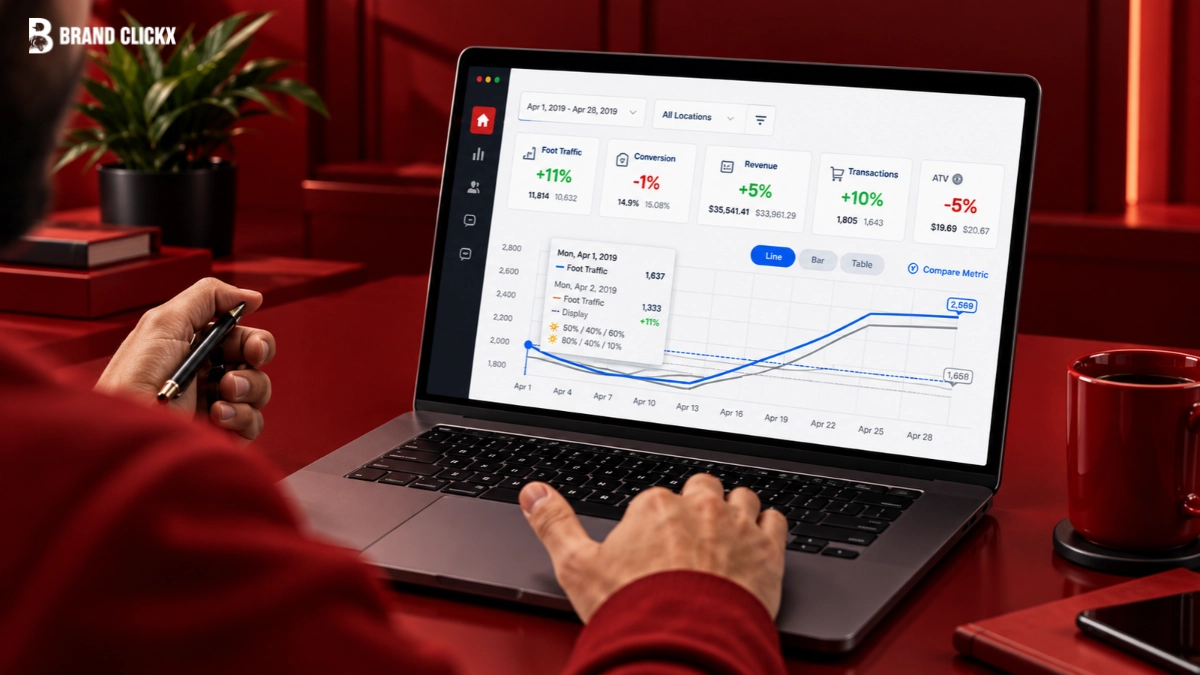
Retail media standards already exist. The harder problem is getting networks to use them consistently enough for buyers to compare results. The IAB and Media Rating Council published their Retail Media Measurement Guidelines in January 2024. IAB Europe followed with its own standards in April 2024 and updated them to V2.1 in January 2026. Its certification program now gives retailers and ad tech companies a way to demonstrate audited compliance.
That makes retail media standards adoption the bigger story in 2026. The industry no longer needs another argument for creating standards. It needs more networks to use them and more buyers to demand proof. The gap matters because retail media keeps taking a larger share of advertising budgets. Buyers need reporting they can compare when they move money between networks.
Key takeaways
- Major retail media measurement standards already exist.
- IAB, MRC and IAB Europe provide major industry frameworks.
- Public certification shows adoption but does not show universal adoption.
- Buyer contracts can turn voluntary standards into commercial requirements.
- Buyers can set their own reporting rules before the market reaches wider agreement.
Why did standards become the issue?
Retail media grew quickly while networks developed their own reporting systems. Buyers therefore faced different definitions and reporting practices across retailers. The IAB’s 2023 research found that 62% of surveyed RMN buyers called the lack of measurement standards a top challenge to continued growth.
The money moving into the channel made that problem more important. The same IAB study found that 52% of buyers increasing RMN investment expected to move money from other digital platforms and 36% expected to move money from linear TV, print and out-of-home. That trade budget shift gives buyers more reason to compare networks before they move the next dollar.
The technical differences belong in the separate measurement piece. This article looks at the industry question: who creates the standards, who has publicly demonstrated adoption and what can push more networks toward common reporting.
Who sets retail media measurement standards?
No single organisation controls the entire retail media measurement system. Several industry groups create frameworks, support adoption or represent the buyers who use them.
IAB and MRC
The IAB and MRC created the major U.S. retail media measurement framework. The IAB Retail Media Measurement Working Group developed the guidelines with participation from retailers, brands, agencies, ad tech companies and measurement providers. The final guidelines cover onsite, offsite, online and in-store retail media.
The MRC adds a standards and audit structure. Its current standards library lists the Retail Media Measurement Guidelines as a January 2024 measurement guideline. MRC’s broader accreditation process uses minimum standards for the services it audits.
IAB Europe
IAB Europe created its own commerce media measurement framework for the European market. It published the first version in April 2024 and released V2.1 on January 22, 2026, after a public comment period. V2.1 also sits at the center of IAB Europe’s Retail Media Certification Programme.
Advertiser groups
Advertiser groups add buyer pressure rather than formal enforcement. The ANA published its Retail Media Measurement Standardization report on August 18, 2026. The report establishes an initial framework designed to improve outcome comparability.
The IAB/MRC working group also shows how broad the standards process has become. Its participants included retailers such as Amazon, Kroger, Target and Walmart alongside brands, agencies, technology companies and measurement providers. That gives the standards broad industry participation, but participation does not automatically prove that every participant adopted every provision.
So who sets retail media measurement standards? In practice, bodies such as IAB, MRC and IAB Europe create major frameworks while advertiser groups and industry participants shape their development and push for wider use.
What has actually been published?

The market now has several published frameworks rather than one unfinished proposal. The IAB/MRC guidelines establish principles for transparency and consistency and cover areas such as audience measurement, ad delivery, viewability, incrementality, reporting and transparency. They aim to give buyers and sellers a common measurement framework across different retail media environments.
IAB Europe V2.1 adds more regional detail. The 2026 update includes standardised definitions for gross and net sales, new quick-commerce metrics, a formal definition of incrementality and updated guidance around new-to-brand and new-to-category timeframes.
The IAB and IAB Europe also published joint in-store retail media definitions and measurement standards in December 2024. Those standards address ad formats and store zones and build on the IAB/MRC framework.
That matters for formats such as sponsored products. A retailer can keep its own commercial reporting while still using a recognised framework for the relevant measurement. The standards create a common base rather than forcing every retailer to produce an identical report.
Where does retail media standards adoption stand in 2026?
Retail media standards adoption has moved into formal certification, but the public evidence does not support a claim of universal adoption. IAB Europe’s certification list currently names two certified retail media networks: Albert Heijn and Nectar 360. Albert Heijn received certification on September 16, 2025, for static onsite display ads and onsite sponsored products. Nectar 360 received certification on June 15, 202,6 for display and video ad products on off-site properties.
What has been certified?
IAB Europe’s public certification list provides a useful view of documented adoption. Albert Heijn holds certification for specific on-site products while Nectar 360 holds certification for specific off-site products. These certifications show verified compliance within defined scopes rather than blanket certification across every retail media activity.
What does certification cover?
The scope matters. IAB Europe notes that certain areas of sponsored-product measurement fell outside Albert Heijn’s audit. A certified network can therefore have certification that covers specific products and measurement areas rather than its entire operation. IAB Europe also introduced a transition period for its updated V2.1 standard. Participants could use earlier versions during the six-month transition while moving toward the new framework.
Why does certification matter?
Certification gives buyers something more concrete than a network saying it supports industry standards. IAB Europe’s programme uses independent audits to demonstrate compliance with its measurement framework.
That creates an important distinction. A network can participate in standards work, support standardisation or publish compatible reporting without holding public certification. Buyers should check the exact certification or accreditation rather than treat general support as proof of adoption.
Why does adoption keep stalling?

Adoption has several barriers and they do not all come from the measurement rules themselves.
Commercial incentives
Standardised reporting makes networks easier to compare. That helps buyers, but it can also expose differences in results, attribution or reporting practices. A network therefore has limited commercial reason to change its reporting system unless buyers create pressure.
Technical systems
Retailers built their advertising operations at different times and with different technology. Changing reporting definitions can require changes to data collection, processing, reporting and internal systems.
That work can become harder when a network has several products, data sources or legacy systems. The standard may look simple on paper while the implementation requires changes across the reporting stack.
Lack of enforcement
IAB and MRC guidelines create a recognised framework, but they do not automatically force every retail media network to comply. IAB Europe has added a certification route to demonstrate audited compliance, but certification still depends on organisations entering the programme and completing the process.
The result creates a familiar cycle. Buyers want comparable reporting before they shift budgets. Networks have limited incentive to change without buyer pressure. Buyers then keep accepting network-specific reports because they still need access to the audiences and first-party data those networks provide.
What would actually force adoption?
The strongest pressure would come from the buying process. Advertisers can make comparable measurement part of the requirements for new contracts and renewals.
Buyer contracts
When large advertisers make standardised reporting a condition of a new contract or renewal, the network faces a direct commercial reason to meet that requirement. Buyers can also specify the reporting definitions they expect before a campaign begins. That removes uncertainty after the money has already moved.
Independent audits
Audit requirements could strengthen that pressure. A buyer can ask for independent accreditation or certification instead of accepting a network’s own statement about compliance. This gives procurement teams a clearer way to separate documented compliance from general support for industry standards.
Industry consolidation
Industry consolidation could also make the process easier. If buyers concentrate spending among fewer networks, they can put more negotiating pressure behind common reporting requirements.
Of these options, buyer contracts offer the clearest route because they connect measurement standards directly to spending decisions. IAB Europe’s certification programme gives buyers another mechanism they can reference when asking networks to demonstrate compliance. The industry does not need to wait for every network to volunteer. Buyers can make comparable measurement part of the deal.
What should a buyer do while waiting?
Buyers can create their own baseline before the market reaches broader adoption.
Use the Buyer Standards Checklist
- Define each core metric. Put the exact definition in the contract.
- Set attribution rules. Agree on the attribution window and method before the campaign starts.
- Separate network metrics. Mark retailer-specific measures that do not follow the agreed framework.
- Check certification. Ask whether the relevant product or measurement service holds current certification or accreditation.
- Document incrementality. Agree on the test method before using incremental results.
- Record data sources. State where first-party data and other inputs enter the measurement process.
- Control changes. Require notice before the network changes a material reporting definition.
This gives the buyer a consistent reporting baseline even when networks use different systems.
The Read
Comparable retail media reporting should expand over the next two years, but I would not expect every network to produce an identical report by 2028. The evidence points to gradual adoption rather than a single industry switch. IAB Europe already operates a certification programme. Its public list shows certified networks. The ANA published a new standardisation framework in August 2026 and the IAB/MRC framework remains active.
The next move belongs with buyers. At the next renewal, ask the network to identify which parts of its report follow an independent industry standard and which parts use its own definition. That turns standardisation from an industry goal into a buying requirement.
Frequently Asked Questions
What are retail media measurement standards?
Retail media measurement standards provide common rules for measuring and reporting advertising activity across retail environments. Major frameworks cover areas such as audience measurement, ad delivery, viewability, incrementality and reporting. They give buyers and sellers a shared base while allowing networks to keep additional network-specific reporting.
Who sets retail media standards?
IAB and MRC created a major U.S. retail media measurement framework while IAB Europe created a European commerce media framework. The ANA also develops buyer-focused guidance around measurement standardisation. Retailers, brands, agencies and technology companies participate in the wider standards process.
Have retail media networks adopted the standards?
Some networks have publicly demonstrated adoption through certification. IAB Europe’s current certification list names Albert Heijn and Nectar 360 with specific certified products. The public evidence does not establish universal adoption across all retail media networks, so buyers should check each network’s current certification or accreditation.
Why is retail media reporting not comparable?
Retailers built different reporting systems and use different commercial measurement practices. Industry standards can create common definitions, but they do not automatically change every network’s technology or reporting process. Buyers also continue to value network-specific audiences and first-party data, which gives networks room to keep additional first-party reporting.
What is comparable reporting?
Comparable reporting lets a buyer evaluate results from different networks using the same core definitions and measurement rules. Networks can still provide additional proprietary insights. The important point is that the core reporting gives the buyer a common base before the buyer examines network-specific information.
Will retail media measurement ever be standardised?
The industry has already standardised important parts of retail media measurement and continues to expand those frameworks. Full uniformity remains harder because networks operate in different environments and use different technology. The more realistic path combines common measurement standards with network-specific reporting rather than one identical report from every retailer.