If you sell products online, you have probably noticed something strange over the last few years: retailers are not just selling products anymore. They are also selling the attention of the people who come to buy those products.
That is basically where retail media comes in.
Amazon has been doing this for years, but now Walmart, Target, Kroger, Instacart, Home Depot and many other retailers have their own advertising businesses. And it is not limited to a sponsored product at the top of a search page anymore. Retail media now reaches websites, apps, social platforms, streaming TV and even screens inside physical stores.
The interesting part is that retailers know something Google or Meta may not know: what shoppers actually bought. That purchase data is a big reason brands are moving more advertising money into retail media.
AI Overview: What Is Retail Media?
Retail media is advertising sold by a retailer or marketplace using its own digital or physical advertising space and, often, first-party shopper data.
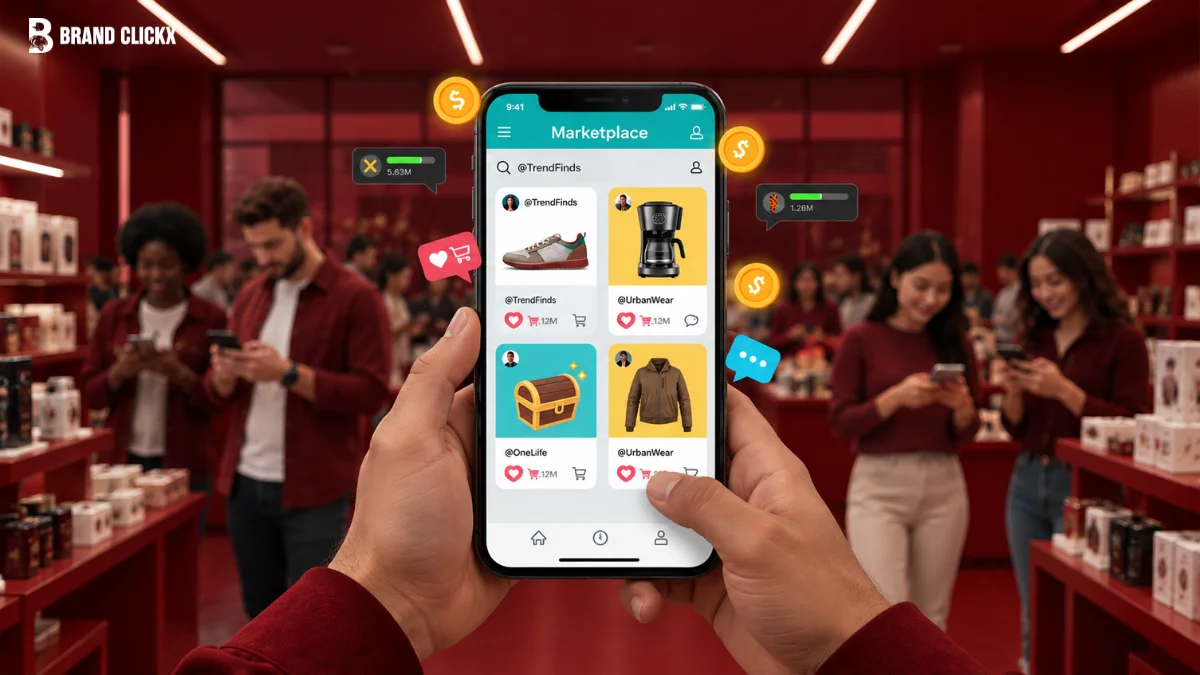
A simple example is Amazon Sponsored Products. A shopper searches for “running shoes,” and a brand pays to have its product appear in a sponsored position.
But retail media can also include:
- Ads on retailer search results
- Sponsored product listings
- Product-page advertising
- Homepage banners
- Display and video ads
- Retailer app advertising
- Off-site programmatic advertising
- Connected TV (CTV)
- Social advertising using retailer audiences
- In-store digital screens
- Digital shelf displays
- Cart and checkout advertising
The important difference is the connection to commerce.
A retailer can potentially connect an ad impression with a product view, add-to-cart action and eventual purchase. That makes retail media much more interesting than simply buying another banner ad.
Key Takeaways
- Retail media connects advertising with real shopping activity.
- A retail media network (RMN) is the advertising business or platform operated by a retailer.
- Onsite, offsite and in-store are the three main retail media environments.
- First-party shopper and purchase data is one of the biggest advantages of RMNs.
- ROAS is useful, but it does not automatically prove that advertising created additional sales.
- Incrementality is becoming much more important as retail media budgets grow.
- Amazon is the largest player, but Walmart, Target, Instacart, Kroger and others have built serious advertising businesses.
- Retail media is moving beyond sponsored search into CTV, social, programmatic, physical stores and AI-driven campaign management.
- The biggest problem is no longer simply getting data. It is making different retailers, platforms and measurement systems work together.
What Is Retail Media?
Think about the last time you visited a large ecommerce website.
You search for a product. You see several results. Some have a small “Sponsored” label. You click one. Maybe you see a banner on the product page. Later, you see an ad for the same brand somewhere else.
That is retail media in its simplest form.
The retailer has valuable digital real estate, an audience of shoppers and information about shopping behavior. Instead of giving all that attention away for free, it sells advertising access to brands.
This creates a three-way relationship:
Retailer → provides audience, inventory and data
Brand → pays for advertising
Shopper → sees the advertising while shopping
The retailer can then use its transaction data to report what happened after the ad was shown. This is why retail media is often described as a closed-loop advertising model.
Retail Media vs. Retail Media Network
These terms are related, but they are not exactly the same. Retail media is the broader advertising channel. A retail media network is the advertising operation/platform a retailer uses to sell and manage that media.
For example, Walmart Connect is Walmart’s retail media business. Amazon Ads provides advertising products across Amazon’s marketplace and other properties.
The industry also uses the wider term commerce media, which can include marketplaces, delivery platforms, financial services companies and other businesses that have valuable transaction or customer data.
The boundaries are getting blurry.
How Does Retail Media Work?
The basic process is actually easier than all the industry terminology makes it sound. Imagine a shopper searching for coffee on a retailer’s website.
1. The shopper searches
The retailer already knows what the person is looking for because the search happens on its own site or app.
2. Brands compete for the opportunity
Advertisers create campaigns, choose products, audiences, budgets and bids. Depending on the platform, the ad may then enter an auction or ranking system.
3. The retailer decides which ad to show
Price matters, but it is not always simply “highest bidder wins.” Relevance, expected performance, product information and other platform-specific factors can influence the result.
4. The shopper sees the ad
This could be a sponsored product, banner, video, recommendation or another format.
5. The retailer tracks what happens
If the shopper buys the advertised product, the retailer may connect the purchase back to the campaign.
That is the part brands care about most.
Instead of stopping at:
“We received 2 million impressions.”
the conversation can move toward:
“How many people bought the product, and how much additional business did the campaign create?”
That second question is much harder to answer properly, but it is also much more valuable.
The 3 Main Types of Retail Media
Retail media used to be heavily focused on retailer websites. That has changed. Today, I normally find it easier to understand the ecosystem by dividing it into three areas.
1. Onsite Retail Media
This is advertising on the retailer’s own website or app.
Common examples include:
- Sponsored Products
- Sponsored Brands
- Sponsored Search
- Product-page ads
- Homepage banners
- Category-page placements
- Native recommendations
- Video ads
Onsite advertising is usually closest to the purchase. Someone searching for “protein powder” is already showing commercial intent. That is very different from interrupting someone who is watching a random YouTube video. This is one reason onsite retail media remains so important.
2. Offsite Retail Media
Here things get more interesting. Retailers can use their first-party audience data to activate advertising away from their own websites.
Depending on the network, this can include:
- Programmatic display
- Social media
- Connected TV
- Online video
- Audio
- Other publisher inventory
For example, Walmart Connect has expanded retail-powered advertising into social and programmatic environments, allowing advertisers to use Walmart audiences beyond Walmart’s own website.
The idea is simple: Use retailer shopping data to find valuable audiences outside the retailer.
3. In-Store Retail Media
This is the part people sometimes forget. Retail media does not have to be digital e-commerce advertising. Physical stores have advertising inventory too.
Think about:
- Digital screens
- Endcaps
- Smart displays
- Shelf-edge screens
- In-store audio
- Shopping carts
- Checkout screens
- QR-enabled displays
In-store media is growing, but measurement is still less mature than many online formats. IAB has specifically highlighted operational complexity, inconsistent standards and comparability as problems for in-store measurement.
That is important because showing an ad inside a store is easy. Proving what that ad actually caused is harder.
Biggest Retail Media Networks in 2026
There is no single “best” retail media network.
The right network depends heavily on where your customers shop and what you sell.
| Retail media network | Best known for |
| Amazon Ads | Ecommerce search, sponsored products, display and video |
| Walmart Connect | Retail + omnichannel audiences |
| Target Roundel | Target shopper audiences and brand advertising |
| Instacart Ads | Grocery and online shopping |
| Kroger Precision Marketing | Grocery shopper data |
| Home Depot Orange Apron Media | Home improvement |
| Lowe’s Media Network | Home improvement |
| Best Buy Ads | Electronics |
| CVS Media Exchange | Health, wellness and pharmacy |
| Macy’s Media Network | Fashion and department-store audiences |
Amazon is still the giant in this market, but I would not make the mistake of assuming that automatically makes Amazon the right choice for every brand. If your customer buys groceries every week, a grocery-focused network may give you a much better audience. If you sell home improvement products, Home Depot or Lowe’s may be more relevant.
The question should not be:
“Which network is biggest?”
It should be:
“Which network gives me useful access to the shoppers I actually need?”
Retail Media Ad Formats
The number of formats has expanded quite a bit.
Sponsored Product Ads
These are probably the easiest format to understand. Your product appears when somebody searches or browses for something relevant. They are particularly useful for capturing existing demand.
Display Ads
Display can appear on homepages, category pages, product pages and sometimes outside the retailer. These are useful when the goal is broader awareness or consideration.
Video and CTV
Retailers increasingly want their shopper data to work with streaming video. This gives brands a way to combine the reach of TV-like advertising with commerce measurement. Walmart Connect, for example, has expanded programmatic CTV capabilities using Walmart’s audience data.
Social Advertising
Retailers are also connecting their shopper audiences with social platforms. This matters because social is excellent for discovery, while retailer data can add stronger purchase context.
In-Store Advertising
Digital screens, checkout displays, carts and other physical placements bring retail media into the store. It is a much more traditional-looking advertising environment, but the data and measurement layer make it part of the newer retail media ecosystem.
How Much Does Retail Media Cost?
This is one area where many retail media guides become too vague. There is no universal retail media price.
Depending on the retailer and format, you may encounter:
- CPC pricing
- CPM pricing
- Sponsored-product auctions
- Fixed placements
- Programmatic buying
- Managed-service fees
- Platform or technology fees
- Minimum campaign commitments
For a sponsored product campaign, you might pay when someone clicks. For a display or CTV campaign, CPM is more common. For larger programs, there may also be additional technology, data or managed-service costs.
So instead of asking:
“What is the average retail media cost?”
I would ask four questions:
- What am I paying for?
- What is included in the fee?
- What is the minimum commitment?
- How does the retailer define attributed sales?
That last question is especially important. Two networks can report “ROAS” while using different attribution windows and rules. So comparing the numbers without checking the methodology can lead you to a very wrong conclusion.
How to Build a Retail Media Strategy
You don’t need to be on every network. In fact, spreading a small budget across six or seven networks can create a measurement nightmare. Start with the retailer where your customers already shop.
Step 1: Start with the business goal
Decide what you actually want.
Is it:
- More sales?
- New customers?
- Product launches?
- More visibility?
- Better digital shelf position?
- Repeat purchases?
- Higher market share?
Different goals can require different formats.
Step 2: Pick the right products
Don’t automatically advertise your entire catalog.
Start with products that already have:
- Good availability
- Competitive pricing
- Strong product pages
- Reviews
- Healthy margins
- Enough demand
There is little point in driving traffic to a product that is constantly out of stock.
Step 3: Fix the product page
This is an underrated part of retail media. If your ad gets the click but the product page is weak, increasing the advertising budget will not solve the problem.
Check:
- Product title
- Images
- Description
- Reviews
- Ratings
- Price
- Availability
- Product specifications
Advertising gets people to the shelf. The shelf still has to sell the product.
Step 4: Start with high-intent placements
For many brands, sponsored search or product advertising is a sensible starting point because shoppers are already looking for something. Then expand into display, video, CTV or offsite campaigns when you have enough data and a clear reason to do so.
Step 5: Test instead of guessing
Run controlled tests where possible.
Change one meaningful variable at a time:
- Audience
- Creative
- Bid
- Product
- Placement
- Budget
- Geography
Otherwise, you may get a better number without knowing what actually caused it.
How Should You Measure Retail Media?
This is where I would spend more time than most beginner guides recommend. Retail media reporting can look fantastic. Lots of impressions. Lots of clicks. A nice ROAS number. And yet the campaign may not have created as much additional business as the report suggests.
Why? Because some people would have bought the product anyway.
ROAS
ROAS means:
Revenue ÷ Advertising Cost
If you spend $10,000 and the platform attributes $40,000 in sales, the reported ROAS is 4x.
Useful? Yes. Enough to prove the campaign worked? No. NIQ makes this distinction very clearly: ROAS measures efficiency, not causality. It does not tell you how many sales would have happened without the advertising.
Incrementality
Incrementality asks a better question:
How many additional sales happened because of the advertising?
That usually requires some kind of comparison.
For example:
- Test vs. control groups
- Geographic experiments
- Holdout audiences
- Econometric models
- Matched-market tests
IAB’s current guidance discusses experiments, counterfactual models, econometric approaches and hybrid methods for measuring incremental impact.
You don’t necessarily need the most complicated method. You need a method that matches the business question and gives you enough confidence to make a decision.
Why Retail Media Measurement Is Still Messy
This is probably the biggest weakness in the retail media industry today. A brand may advertise on Amazon, Walmart, Instacart and Target.
Now imagine each platform gives you:
- Different attribution windows
- Different definitions
- Different dashboards
- Different audience data
- Different reporting delays
- Different ways of calculating ROAS
Suddenly, “Which channel performed best?” becomes a much harder question.
Skai’s 2026 research found that only 15% of surveyed advertisers described their organizations as very or extremely effective at measuring retail media performance. Incrementality was the biggest measurement challenge, cited by 75% of respondents.
That tells me something important. Retail media’s biggest problem is no longer just access to data. It is turning all that data into comparable, trustworthy decisions.
Retail Media vs. Google Ads vs. Meta Ads
These channels overlap, but they are not the same.
| Channel | Main strength | Typical intent |
| Retail media | Shopper and purchase data | High |
| Google Ads | Search intent | High |
| Meta Ads | Audience and discovery | Low to medium |
| SEO | Organic search visibility | Varies |
| Trade marketing | Retailer/supplier relationship | Commerce-focused |
Google is excellent when someone is actively searching. Meta is powerful for discovery and audience-based advertising. SEO can bring traffic without paying for every click.
Retail media has a different advantage: it sits very close to the transaction. That does not make it automatically better. It makes it useful for a different part of the customer journey.
Retail Media vs. Trade Marketing
These two are often confused.
Trade marketing is the broader relationship between brands and retailers around selling products.
It can include:
- Promotions
- Discounts
- Retailer incentives
- Displays
- Shelf placement
- Joint campaigns
Retail media is the advertising side of that ecosystem. There is definitely overlap, especially when a brand pays for sponsored placements or digital shelf visibility. The big change is that retail media brings a much stronger technology and data layer into the conversation.
The Biggest Advantages of Retail Media
It reaches shoppers close to purchase
Someone searching a retailer’s website is often already considering a product.
Retailers have valuable first-party data
The data comes from actual shopping behavior rather than only inferred interests.
Sales can often be connected to campaigns
This is one of the biggest attractions for performance marketers.
It works across the funnel
Retail media is no longer just bottom-of-funnel search. With display, social, video and CTV, retailers can sell awareness and consideration inventory too.
It can support omnichannel campaigns
The strongest programs increasingly connect online and physical shopping behavior.
The Downsides Nobody Should Ignore
Retail media is not perfect.
Measurement is fragmented
This is the biggest issue.
Retailers control the ecosystem
Most RMNs are walled gardens. The retailer controls much of the data, inventory and reporting.
Costs can rise quickly
When many brands compete for valuable shopper attention, auctions become expensive.
Ad overload is a real risk
More ads do not automatically mean better advertising.
WARC’s 2026 research found that simulated shopping environments on Amazon and Walmart produced a 47% reduction in memory encoding when ads were present compared with generic off-site environments. WARC also found that higher creative quality produced a 12% lift in short-term brand choice among undecided shoppers.
That is a useful warning. Retail media needs to improve the shopping experience, not simply fill every available space with another sponsored message.
Retail Media Trends to Watch in 2026
1. Incrementality is moving to the center
Brands increasingly want to know what advertising caused, not just what it touched.
NIQ reports that 67% of CMOs plan to increase retail media investment in 2026, while only 53% believe current RMNs provide adequate measurement and attribution for reliable incrementality measurement. That gap is going to keep pressure on retailers.
2. CTV and offsite advertising will keep expanding
Retailers want their valuable shopper data to work outside their own websites.
That makes CTV, social and programmatic especially important.
3. In-store media is becoming more sophisticated
Digital screens, smart displays and other formats are bringing retail media into physical stores. The technology is moving quickly. Measurement needs to catch up.
4. AI will handle more campaign work
AI is already being used for:
- Audience analysis
- Creative variations
- Bid optimization
- Campaign recommendations
- Reporting
- Product recommendations
- Forecasting
But I would be careful with the idea that AI can simply “run the campaign.”
Good automation still needs good product data, clean measurement and sensible business goals.
5. Retail media is becoming more omnichannel
The future is not just:
Amazon search ad → Amazon purchase
It is increasingly:
CTV → social → retailer website → store visit → purchase
The challenge is connecting those touchpoints without pretending the measurement is more precise than it really is.
Is Retail Media Worth It?
For many product brands, yes. But I would not recommend entering retail media simply because everyone is talking about it.
It makes the most sense when:
- Your products already sell through the retailer
- Customers are actively searching for them
- Your product pages convert reasonably well
- Inventory is reliable
- You have enough margin to support advertising
- You can measure more than clicks
- You have a clear testing plan
It becomes less attractive when the product has weak demand, poor reviews, bad availability or margins that cannot support paid acquisition.
Advertising cannot repair a bad product-market fit. It can amplify what is already working. That is why I would treat retail media as part of the overall ecommerce strategy, not as a replacement for SEO, Google Ads, social media, or brand building.
A Simple Retail Media Launch Checklist
Before spending money, check these things:
Product
- Is the product in stock?
- Is pricing competitive?
- Are reviews strong?
- Is the product page complete?
Audience
- Do people already shop for this category on the retailer?
- Does the retailer have useful audience data?
Campaign
- What is the actual goal?
- Which products are being promoted?
- Which placements will be tested?
Measurement
- What counts as a conversion?
- What attribution window is being used?
- How is ROAS calculated?
- Can incrementality be tested?
Business
- What is the acceptable acquisition cost?
- What margin is available?
- When will the campaign be scaled or stopped?
This small checklist can save a lot of wasted budget.
Where Retail Media Is Going Next
The retail media industry has moved beyond the “new advertising channel” stage.
It is becoming part of the infrastructure connecting advertising, ecommerce, customer data and physical retail. That is why measurement is becoming so important.
The market is growing fast, but growth alone is not the interesting part anymore. WARC expects global retail media spending to reach $223.4 billion in 2027, representing 15.2% of total worldwide advertising spend. At the same time, WARC expects growth excluding Amazon to slow to 9.8% in 2027.
So the next phase will probably be less about launching another retail media network and more about making existing networks better.
Better measurement. Better creative. Better audience activation. Better connections between online and offline shopping. And, hopefully, fewer ads that simply get in the shopper’s way.
Final Take
Retail media looks simple from the outside. bA retailer puts an ad in front of a shopper. A brand pays. Someone buys.
But once you work through the details, it becomes a much bigger system involving shopper data, auctions, product feeds, audience targeting, ecommerce, stores, CTV, attribution and increasingly AI.
That is also why I would not judge a retail media campaign only by the biggest ROAS number on the dashboard.b The better question is whether the advertising is creating profitable, incremental business.
If it is, keep investing. bIf it is not, no amount of impressive-looking reporting will change the economics.bAnd that, in my view, is where retail media is heading in 2026: away from simply selling more ad inventory and toward proving that the inventory actually helps brands and retailers grow.
Frequently Asked Questions
What is retail media in simple terms?
Retail media is advertising sold by retailers using their websites, apps, stores, audiences and shopper data. A simple example is paying Amazon or Walmart to show your product to shoppers who are already searching for something related.
What is a retail media network?
A retail media network is the advertising platform or business operated by a retailer. It allows brands to buy advertising inventory and, depending on the network, use retailer audience and purchase data for targeting and measurement.
Is Amazon a retail media network?
Yes. Amazon operates one of the world’s largest retail media businesses through Amazon Ads. It offers sponsored products, sponsored brands, display, video and other advertising formats.
What are the three types of retail media?
The easiest way to classify retail media is onsite, offsite and in-store. Onsite advertising appears on retailer websites and apps. Offsite advertising uses retailer audiences on external media such as social, display and CTV. In-store media includes digital screens, displays, audio and other physical-store advertising.
What is the difference between retail media and Google Ads?
Google Ads is primarily built around Google’s search and advertising ecosystem. Retail media is tied directly to a retailer or commerce platform and can use retailer shopping and transaction data. Both can capture high-intent customers, but the data and measurement environments are different.
Is ROAS enough to measure retail media?
No. ROAS is useful for understanding advertising efficiency, but it does not prove that advertising caused the reported sales. Incrementality testing is better suited to answering the causal question: what additional sales happened because of the advertising?
Why is retail media growing?
The main reasons include the value of first-party shopper data, ecommerce growth, demand for measurable advertising and the need for alternatives to some traditional audience and tracking methods. Retailers have also realized that their customer relationships and transaction data can become valuable advertising businesses.
Is retail media only for large brands?
No. Smaller brands can use retail media too, particularly when they already have products listed on a retailer and can start with focused, high-intent campaigns. The challenge is making sure the budget is large enough to generate useful data without spreading spend too thin.