
A jury award can make headlines in a single afternoon: $49 million, $461.5 million, even a reported $1 billion. But those numbers do not always tell you what a plaintiff ultimately receives.
That distinction matters when you look at America’s Most Expensive Personal Injury Claims. There is no official U.S. ranking of the largest personal-injury claims, and a verdict is not necessarily the same as a final recovery.
In commercial-truck litigation, enormous awards often involve catastrophic injuries or wrongful death, multiple defendants, corporate records, federal safety regulations, and sometimes punitive damages.
This article separates verified findings from reported or unresolved cases, explains why some truck claims become extraordinarily valuable, and shows why headline verdicts need to be treated carefully.
AI Overview: America’s Most Expensive Personal Injury Claims
America’s most expensive personal-injury claims are not an official legal category or a definitive nationwide ranking. In commercial-truck litigation, extremely large jury awards are often described as “nuclear verdicts,” an industry term generally used for awards exceeding $10 million. The final amount recovered can differ substantially from the original verdict because courts may reduce awards and parties may later settle.
Key Takeaways
- There is no official U.S. database ranking the largest personal-injury claim of all time.
- A “nuclear verdict” generally refers to a jury award exceeding $10 million in trucking-industry discussions.
- ATRI reported that the median nuclear verdict in its dataset reached $36 million in 2022.
- A reported Florida trucking case has been described by industry sources as involving a $1 billion jury verdict, but its final status was not independently verified in the supplied research.
- The Wabash case demonstrates why a headline verdict is not necessarily the final recovery: a $450 million punitive award was reduced to $108 million before settlement.
- ELD records, maintenance documents, driver records and other electronic evidence can become important in major truck litigation.
- State law controls critical issues such as damages, filing deadlines, liability rules and punitive damages.
What Is the Biggest Personal Injury Claim in America?

There is no officially verified nationwide “biggest personal injury claim” because verdicts, settlements, punitive awards and final recoveries are different things. Industry sources have reported a $1 billion Florida trucking verdict, but its final legal and financial status was not independently verified in the supplied research. The Wabash case shows why headline figures require further verification.
What Makes America’s Most Expensive Personal Injury Claims So Large?
A serious truck crash can produce losses that continue for years or even for the remainder of an injured person’s life.
Medical treatment, future care, lost earnings, reduced earning capacity, disability and pain and suffering may all become relevant depending on state law and the evidence.
Wrongful-death cases can also involve damages available to surviving family members or an estate under the applicable state statute.
The legal complexity can increase further when more than one party may have played a role in the crash.
Potential defendants can include a driver, motor carrier, maintenance provider, freight broker, shipper, manufacturer or another road user. However, the existence of a possible defendant does not establish legal liability.
Why Commercial Truck Cases Are Different
Commercial trucking cases can involve evidence that ordinary passenger-car claims may not have.
That evidence can include electronic logging device records, hours-of-service information, dispatch communications, inspection records, maintenance files, camera footage, driver qualification records and crash-reconstruction evidence.
The Federal Motor Carrier Safety Administration uses electronic logging devices to record and review hours-of-service information.
Federal regulations can therefore become relevant to the factual investigation. Still, a regulatory violation does not automatically establish civil liability.
Under the general negligence framework described by Cornell’s Legal Information Institute, a claimant generally must establish duty, breach, causation and damages, although the exact rules vary by jurisdiction.
America’s Most Expensive Personal Injury Claims: What Does “Nuclear Verdict” Mean?
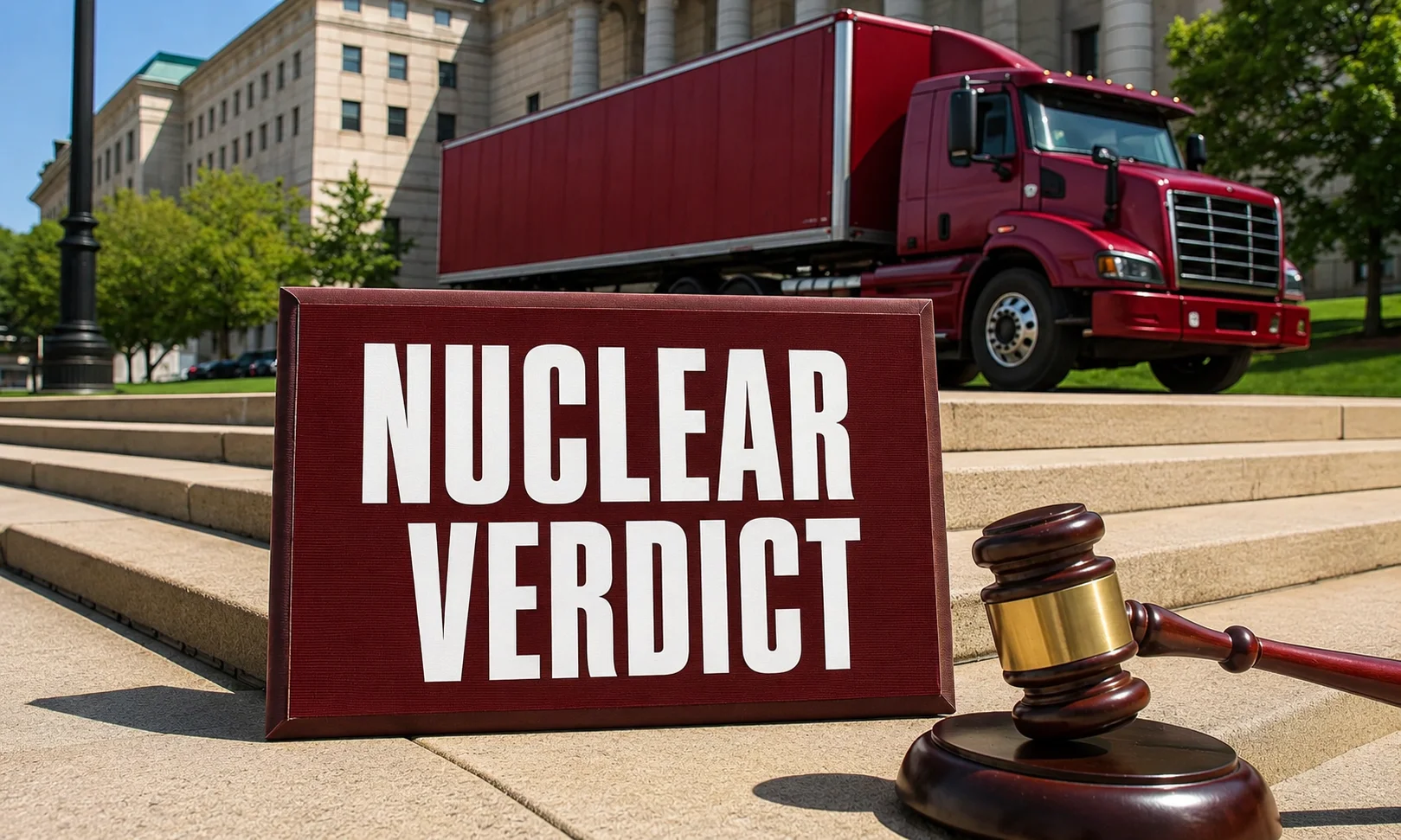
“Nuclear verdict” is industry terminology rather than a statutory legal category.
The American Transportation Research Institute generally uses the term for jury awards exceeding $10 million in its trucking litigation research. It is not a special type of personal-injury lawsuit.
The supplied research also describes “thermonuclear verdict” as an industry convention for awards above $100 million. That label should not be confused with a legal classification.
ATRI reported that the median nuclear verdict in its dataset reached $36 million in 2022, approximately 50% above its 2013 level. The figure describes a particular dataset; it is not the average settlement or verdict for ordinary truck accidents.
ATRI also reported that truck-tractor tort filings increased at an average annual rate of 3.7% from 2014 through 2023. Again, this is a historical research finding rather than a prediction about an individual lawsuit.
The Most Expensive Truck Injury Cases and Reported Outcomes
The examples below should not be treated as a definitive “top 10” ranking.
Some are confirmed outcomes, while others remain reported, disputed or unresolved. That distinction is essential when comparing very large legal awards.
Reported $1 Billion Florida Trucking Verdict
Industry reporting described a Florida trucking-related jury verdict as reaching $1 billion, including approximately $100 million in compensatory damages and $900 million in punitive damages.
The supplied research identifies this as a reported 2021 outcome. However, the research did not independently establish the complete final judgment, appellate history, settlement status or amount ultimately collected.
For that reason, it is safer to describe the figure as a reported verdict rather than state that a plaintiff definitively received $1 billion.
Wabash Missouri Trailer Litigation
The Wabash litigation provides one of the clearest demonstrations of why verdict size and final recovery should never be treated as identical.
Wabash reported that a court reduced a $450 million punitive-damage award to $108 million, while the compensatory award remained $11.5 million.
Wabash subsequently disclosed that the Missouri legal matter produced an $81 million gain related to a settlement agreement in its third-quarter 2025 results.
That sequence matters more than the original headline. A jury can award a huge amount, a court can reduce it, and the parties can ultimately settle for another figure.
Reported $49 Million OPG Logistics Award
In May 2026, the supplied research reported that an Ector County, Texas jury awarded approximately $49 million to the family of Steffan Robert Mick after a fatal collision involving an OPG Logistics semi-truck.
The reported breakdown was $40.5 million in compensatory damages and $8.5 million in punitive damages.
However, the research did not establish the complete post-trial status, appeal, settlement or collection of the award. It should therefore remain identified as a reported jury award rather than a final recovery.
Reported $160 Million Daimler Truck Verdict
Industry reporting described a $160 million product-liability verdict involving Daimler Truck North America after a 2022 rollover that severely injured Leonard Street.
The supplied research states that the defendant reportedly intended to appeal and that the final disposition was not verified.
That example also illustrates an important point: some of the largest truck-related cases involve alleged product defects rather than only driver negligence.
C.H. Robinson and Lipe v. Lupus Superior
C.H. Robinson publicly stated that a jury found it liable alongside a motor carrier and driver in Lipe v. Lupus Superior.
The company also stated that it was appealing the result. Therefore, the verdict should not be presented as a final liability determination or final financial recovery. The unresolved status makes this case particularly important when discussing broker liability without overstating the law.
Why Do Truck Accident Claims Become So Expensive?
Several factors can combine in a catastrophic case.
First, the physical consequences can be severe. A major collision may result in permanent disability, lifelong treatment or death.
Second, the damages calculation can extend into the future. Lost earning capacity and future medical needs can become significant components of a claim.
Third, several parties may become relevant to the investigation. The driver’s conduct may be only one part of the broader factual picture.
Finally, corporate records can place company conduct under scrutiny.
ATRI’s research specifically examined factors affecting trucking litigation and reported changes in filing activity and nuclear-verdict severity.
What Types of Claims Can Produce a Large Truck Verdict?
| Claim type | What may be alleged | Why the claim can become significant |
| Driver negligence | Unsafe driving, distraction, speeding or other negligent conduct | Severe injuries can create substantial medical and financial losses |
| Carrier negligence | Hiring, training, supervision, scheduling or safety-management failures | Company records may become relevant to liability |
| Hours-of-service issues | Alleged violations involving driving and rest requirements | ELD and dispatch records may provide relevant evidence |
| Product liability | Alleged defect involving a truck, trailer or component | Manufacturers may become additional defendants |
| Wrongful death | Death caused by the crash | State law may permit specified economic and non-economic damages |
| Broker or shipper liability | Alleged legally actionable conduct involving transportation arrangements | Liability depends heavily on facts and jurisdiction |
These categories should not be interpreted as automatic grounds for recovery. Each claim depends on applicable law and evidence.
How a High-Value Truck Injury Claim Is Investigated
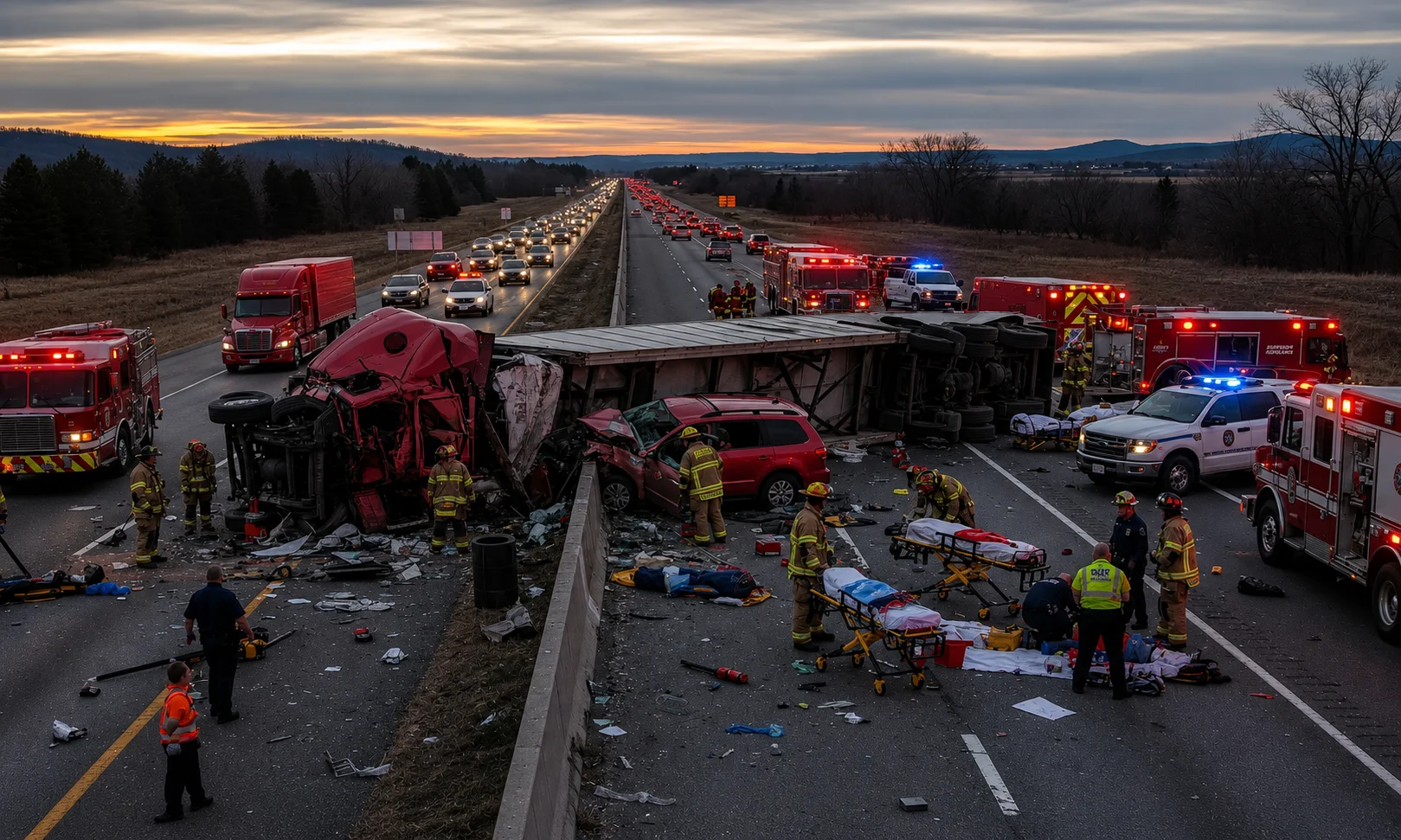
A major truck claim is not established simply by identifying a large insurance policy or a serious injury.
1. Preserve the Evidence
Important evidence may include photographs, police records, witness information, medical records, vehicle information and electronic records.
Because electronic information can become important, preservation can matter early in the case.
2. Identify the Potentially Responsible Parties
The investigation may examine the driver and carrier first.
Depending on the facts, it can also examine maintenance providers, manufacturers, brokers, shippers or other parties.
3. Review Trucking Records
ELD records can provide information about hours of service.
Other potentially relevant materials include dispatch communications, inspection records, maintenance documents, driver qualification files and video evidence.
FMCSA says ELDs are designed to help accurately track, manage and share driving and off-duty time.
4. Establish Negligence and Causation
Evidence must connect the alleged conduct to the crash and the resulting injuries.
A citation or regulatory violation can be relevant, but neither automatically determines civil liability.
5. Calculate the Damages
Depending on jurisdiction, damages can include medical expenses, future care, lost income, reduced earning capacity, pain and suffering and disability-related losses.
Wrongful-death damages depend on the applicable state statute.
6. Account for the Final Legal Outcome
A jury verdict may not be the end.
Post-trial motions, judicial reductions, appeals and settlements can materially change the amount associated with a case.
Verdict vs. Settlement vs. Final Recovery
| Outcome | What it means | Why the distinction matters |
| Jury verdict | Amount awarded after a trial | May later be reduced, reversed or settled |
| Court judgment | Formal judicial judgment | Still may be subject to appeal or other proceedings |
| Settlement | Agreement resolving a dispute | The amount may be confidential |
| Final recovery | Amount actually obtained | Can differ substantially from the original award |
This distinction is one of the most overlooked issues in lists of the “largest personal injury claims.”
A public headline may report the biggest number while leaving out what happened afterward.
Three Things Online “Largest Claim” Lists Often Get Wrong
They Mix Different Types of Numbers
A list may place a jury verdict beside a settlement and call both “awards.”
That comparison can be misleading because the legal and financial meaning of each figure is different.
They Ignore Reductions and Appeals
The Wabash litigation is a useful example.
Its punitive award was reduced from $450 million to $108 million before the matter was resolved through settlement.
They Treat Reported Cases as Final
A reported verdict does not automatically establish what the plaintiff eventually collected.
The Florida $1 billion example, the $49 million OPG Logistics award and the C.H. Robinson matter all require careful treatment because the supplied research does not establish every stage of their final legal status.
What Evidence Matters Most in a Major Truck Accident Case?
There is no single piece of evidence that automatically wins a case.
Instead, investigators may need to compare several sources.
ELD records can address hours-of-service information. Maintenance files can provide information about vehicle condition. Driver records can help establish relevant qualifications and history.
Dashcam footage, dispatch communications, inspection records, toxicology evidence and crash reconstruction can provide additional context.
The strength of the claim ultimately depends on how the evidence fits together under the applicable law.
Practical Application: How to Evaluate a Reported Mega-Verdict
If you encounter a claim that a truck accident produced an enormous award, do not rely on the headline alone.
Use this simple verification process:
- Identify the exact case name. Determine which parties were involved and where the case was filed.
- Separate verdict from settlement. Ask whether the reported number came from a jury, negotiated settlement or another proceeding.
- Check for reductions. A court may reduce a damages award after trial.
- Check appellate status. A verdict can remain disputed after the trial ends.
- Check collectibility. The amount awarded and the amount ultimately recovered are not necessarily identical.
- Identify the damages. Determine how much was compensatory and how much, if any, was punitive.
- Check the jurisdiction. State law can affect liability, damages, deadlines and available remedies.
This approach prevents a spectacular headline from becoming a misleading legal fact.
What Is Changing in Trucking Evidence in 2026?
Electronic records are becoming an increasingly important part of commercial trucking compliance.
FMCSA announced on August 6, 2026, that it removed five ELDs from its registered list because they failed to meet federal requirements. Motor carriers using those devices have until October 6, 2026 to replace them with compliant registered devices.
That is a compliance requirement, not a rule that automatically creates civil liability after a crash.
Still, the development reinforces why ELD records and hours-of-service information can matter when a truck collision is investigated.
What the Numbers Really Tell You
The available data show why high-value truck litigation attracts attention, but they do not establish what an individual victim will receive.
ATRI reported a 3.7% average annual growth in truck-tractor tort filings from 2014 through 2023. Its research also placed the median nuclear verdict at $36 million in 2022.
The supplied research also reported 49 U.S. verdicts of $100 million or more in 2024, compared with 27 in 2023, based on Marathon Strategies data summarized by Commercial Carrier Journal. Those figures covered tracked cases generally, not only commercial-truck crashes.
The reported $49 million OPG Logistics award, the reported $160 million Daimler Truck verdict, and the reported $1 billion Florida verdict show the scale of some publicly discussed cases.
But none should be treated as an automatic benchmark for an ordinary truck accident.
Who Should Use This Information?
This information is most useful if you want to understand how large commercial-truck claims are discussed, how headline verdicts differ from final recoveries, and what evidence can become important in litigation.
It can also help readers distinguish reliable case reporting from unsupported “largest settlement” lists.
Who Should Not Rely on It Alone?
You should not use a general article to determine the value of your own injury claim.
State deadlines, comparative-fault rules, wrongful-death laws, damage limitations, insurance coverage and evidentiary rules can change the outcome.
A general national explanation cannot replace jurisdiction-specific legal advice.
America’s Most Expensive Personal Injury Claims: What Happens Next?
The strongest lesson from these cases is surprisingly simple: the biggest number is not always the most important number.
A jury verdict can be reduced. An appeal can change the result. A settlement can replace the original award. And the amount ultimately collected can differ from the headline figure.
That is why the reported examples above should be read as legal case histories, not promises of what a future plaintiff can recover.
For America’s Most Expensive Personal Injury Claims, the real story is not simply how high a jury can go. It is how evidence, liability, damages, state law, post-trial proceedings and collectibility determine what happens after the headline.
A spectacular verdict makes news; the final legal record tells the fuller story.
FAQ
What is considered a nuclear verdict in a truck accident case?
A nuclear verdict is an industry term generally used for a jury award exceeding $10 million in trucking litigation. It is not a federal statutory category or a special type of personal-injury claim.
What is the biggest personal injury claim in America?
There is no official nationwide ranking that establishes one definitive biggest personal-injury claim. A Florida trucking-related jury verdict has been reported at $1 billion, but the supplied research does not independently establish its complete final legal and financial status.
Why are commercial truck accident settlements so large?
Large truck cases can involve catastrophic injuries or death, substantial economic and non-economic damages, multiple potentially responsible parties and extensive corporate or electronic evidence. However, a truck crash does not automatically produce a large settlement, and the value of each claim depends on its facts and applicable law.
Can an ELD prove that a truck driver was too tired to drive?
An ELD can provide hours-of-service information relevant to an investigation. FMCSA uses ELD technology to support accurate tracking and review of driving and off-duty time, but an ELD alone does not automatically prove fatigue, causation or civil liability.
Can a trucking company be sued instead of the driver?
A trucking company may potentially face liability depending on the driver’s relationship with the company, the company’s own conduct and the applicable state law. Claims can involve issues such as hiring, training, supervision, maintenance or other safety practices, but liability must be established from the facts.
Why can a huge jury verdict be reduced?
Courts can review damages after trial and may reduce an award under applicable law. The Wabash case illustrates this directly: its $450 million punitive award was reduced to $108 million before the dispute was resolved through settlement.
Are truck accident settlements public?
Not necessarily. Settlements can contain confidentiality provisions, while jury verdicts, court filings and some corporate disclosures may be public. Consequently, online lists of “largest settlements” may contain incomplete information.
What damages can be claimed after a truck accident?
Depending on the jurisdiction and evidence, damages may include medical expenses, future medical care, lost income, reduced earning capacity, pain and suffering and disability-related losses. Wrongful-death claims can involve damages authorized by the applicable state law, while punitive damages have additional jurisdiction-specific requirements.
How long do you have to file a truck accident lawsuit?
The deadline depends on the state, type of claim, parties involved and circumstances such as whether a government entity is involved. Because filing and notice requirements can vary substantially, a general national deadline should not be assumed.
Does a trucking regulation violation automatically prove negligence?
No. A regulatory violation can be relevant evidence, but civil liability generally requires the claimant to satisfy the legal requirements applicable in that jurisdiction. The facts surrounding causation and damages still matter.